Finding a chair that combines genuine ergonomic support with a weight capacity of 400 pounds or more isn’t just about comfort—it’s about health, productivity, and dignity at your workspace. For years, the big and tall community has been forced to choose between flimsy “heavy-duty” chairs that creak under pressure and medical-grade seating that looks like it belongs in a hospital. That gap is finally closing, but navigating the market requires more than glancing at a weight rating sticker.
The difference between a chair that merely holds you and one that actively supports your body through 8+ hour workdays comes down to engineering details most manufacturers don’t advertise. This guide cuts through marketing fluff to examine the structural DNA of truly capable seating. Whether you’re 6'5" with broad shoulders or need rock-solid reliability for daily use, understanding these fundamentals will save you from expensive mistakes and potential injury.
Top 10 Big & Tall Ergonomic Chairs for 400 lbs
Detailed Product Reviews
1. Veratric Ergonomic Office Chair: 400LBS Computer Desk Chair Comfy-Black Big and Tall Office Chair with Lumbar Support & Headrest-Gaming Chairs for Adults-Executive Office Rolling Chairs for Home Work

Overview: The Veratric Ergonomic Office Chair is a robust seating solution engineered for big and tall users supporting up to 400 pounds. It features advanced ergonomic adjustments including a 3D headrest, dynamic lumbar support, and breathable mesh construction, making it suitable for extended work sessions in home office environments.
What Makes It Stand Out: This chair excels with its multi-dimensional adjustability. The 3D headrest moves vertically and angularly, while the lumbar support adapts to your spine’s curve. Unique 2D armrests offer height adjustment and 90-degree pivot, and the 90-120° rocking function with lock adds versatility. The double-layer mesh provides exceptional airflow.
Value for Money: Priced at $139.99, this chair competes with premium models costing twice as much. The comprehensive 5-year warranty and 24-hour customer support demonstrate exceptional value. You’re getting heavy-duty construction, extensive customization, and durability that makes it a wise long-term investment for demanding users.
Strengths and Weaknesses: Strengths include the 400-pound capacity, superior adjustability across multiple touchpoints, breathable mesh for temperature regulation, and outstanding warranty coverage. The armrest pivot feature allows easy desk tucking. Weaknesses may include a firmer mesh feel that doesn’t suit all preferences, and assembly could take 30-45 minutes despite video instructions.
Bottom Line: For big and tall users seeking comprehensive ergonomic features at a mid-range price, this Veratric chair delivers exceptional value. Its robust construction and generous warranty make it a reliable home office investment.
2. Fizzin Ergonomic Office Chair, 400 LBS Computer Chairs with Adjustable Lumbar Support, Breathable Mesh Desk Chair Ergonomic with Thickened Cushion, Comfy Home Office Desk Chair (Black)

Overview: The Fizzin Ergonomic Office Chair offers heavy-duty support for users up to 400 pounds at a budget-friendly price point. Designed for individuals 5'4" to 6'3", it provides essential ergonomic adjustments including lumbar support, headrest, and reversible armrests, making it an accessible option for comfortable home office seating.
What Makes It Stand Out: This chair stands out primarily for its aggressive pricing while maintaining robust weight capacity. The adjustable lumbar support moves forward/backward and vertically, while the headrest offers 3.9 inches of height adjustment. The 125° tilt function exceeds many competitors, and the reversible armrests provide flexibility for different body types.
Value for Money: At just $97.00, this is the most affordable 400-pound capacity ergonomic chair available. While it only includes a 1-year warranty, the price-to-feature ratio is unmatched. It’s perfect for budget-conscious buyers who refuse to compromise on weight capacity and basic ergonomic functionality.
Strengths and Weaknesses: Strengths include exceptional affordability, solid 400-pound capacity, good adjustability for the price, and silent casters for smooth mobility. The thickened cushion adds comfort. Weaknesses include the shorter 1-year warranty, potentially less durable materials over time, and limited armrest adjustability compared to premium models.
Bottom Line: If budget is your primary concern but you need heavy-duty capacity, the Fizzin chair is unbeatable. It delivers essential ergonomic features at an entry-level price, making it ideal for cost-conscious shoppers.
3. Luckyear Office Chair Ergonomic Desk Chair-400lbs Big and Tall Heavy Duty, Wide & Soft 3D Modeling Foam Cushion Home Office Desk Chair with Adjustable Seat Height, Executive Computer Task Chair

Overview: The Luckyear Office Chair positions itself as a premium heavy-duty option with its standout 5.2-inch thick molded sponge cushion and extra-wide 21.06-inch seat. Supporting up to 400 pounds, it targets users prioritizing seat comfort and durability for extended sitting periods in home or executive office settings.
What Makes It Stand Out: This chair’s defining feature is its luxurious cushioning—the thickest in this category. The 3D molded foam retains shape while providing exceptional pressure relief. Additionally, it boasts BIFMA-certified base and SGS 4-level gas cylinder, professional-grade certifications that ensure safety and longevity rare at this price point.
Value for Money: At $169.99, it’s the priciest option but justifies cost through superior cushioning and certified components. The thick seat and breathable mesh back create a premium sitting experience. While more expensive, the build quality and hip protection features make it worthwhile for users with specific comfort needs.
Strengths and Weaknesses: Strengths include the exceptionally thick and wide seat cushion, professional certifications (BIFMA, SGS), breathable mesh back, and 400-pound capacity. The molded foam provides superior hip support. Weaknesses include higher price, potentially excessive bulk for smaller spaces, and fewer adjustment features compared to some competitors.
Bottom Line: For those prioritizing seat comfort above all else, the Luckyear chair is worth the premium. Its thick cushioning and certified construction make it ideal for users spending 8+ hours daily at their desk.
4. HYLONE Big and Tall 400lbs Heavy Duty Office Chair, 5" Thickened Seat Ergonomic Desk Chair with Adjustable Armrests, Home Office Computer Chairs for Long Hours Mesh Executive Chair(Black)

Overview: The HYLONE Big and Tall Office Chair emphasizes stability and versatility with its extra-large 28-inch five-star base and 5-inch thickened seat cushion. Supporting 400 pounds, it’s designed for various settings from offices to laboratories, offering reliable comfort for users between 5'5" and 6'2" during extended use.
What Makes It Stand Out: This chair’s massive 28-inch base provides exceptional stability, preventing wobble even at full height. The 5-inch thick streamlined cushion offers substantial padding without excessive bulk. Flip-up arms add versatility for different tasks, and the breathable nylon mesh back improves durability and cooling compared to standard mesh.
Value for Money: Priced at $149.99, this chair offers excellent stability and cushioning for the mid-range price. The 24-month free parts warranty provides decent protection. While not the cheapest, its stable base and thick seat make it a solid value for users prioritizing security and comfort over advanced adjustments.
Strengths and Weaknesses: Strengths include outstanding stability from the oversized base, thick seat cushion, flip-up armrests for flexibility, smooth casters on multiple surfaces, and good breathability. Weaknesses include limited adjustability compared to premium ergonomic chairs, longer assembly time (30 minutes), and less sophisticated lumbar support.
Bottom Line: The HYLONE chair excels in stability and simplicity. It’s perfect for users wanting a sturdy, no-fuss heavy-duty chair with good cushioning and basic ergonomic features for long work hours.
5. Veratric Office Chair Ergonomic Desk Chair Comfy: 400LBS Mesh Computer Chair Ergonomic Gaming Chairs with Wheels Adjustable Lumbar Support and Flip up Armrest-Swivel Executive Chairs Long Hours(Black)

Overview: This Veratric Office Chair variant focuses on versatility with flip-up armrests and premium cushioning for users up to 400 pounds. It balances ergonomic support with flexibility, featuring dynamic lumbar support and a 3.15-inch high-density foam cushion designed for long-hour comfort in gaming or executive office environments.
What Makes It Stand Out: The flip-up armrests provide exceptional flexibility, allowing you to push the chair completely under desks or use it without arm obstructions. The “cloud-like” 3.15-inch foam cushion offers plush comfort while maintaining support. Combined with dynamic lumbar support and double-layer mesh, it adapts to both work and gaming scenarios.
Value for Money: At $139.99, this model matches its sibling’s price while offering different advantages. The flip-up arms and premium cushioning provide unique value. Backed by a 5-year warranty, it’s competitively priced against chairs with similar flexibility features, making it a smart choice for multi-purpose use.
Strengths and Weaknesses: Strengths include versatile flip-up armrests, comfortable foam cushioning, dynamic lumbar support, breathable double-layer mesh, and excellent warranty. The 400-pound capacity ensures durability. Weaknesses include slightly thinner cushioning than some competitors, limited armrest adjustability (height only), and the rocking function may feel restrictive to some.
Bottom Line: This Veratric chair is ideal for users wanting armrest flexibility and plush cushioning. Its versatile design suits both office work and gaming, making it a practical choice for home offices with multiple uses.
6. BOLISS Office Chair 400lbs Mesh Ergonomic Super Soft Wide Cushion Computer Desk Chair Height Adjustable Arms(Black)

Overview:
The BOLISS Office Chair delivers heavy-duty performance for users up to 400 pounds, combining ergonomic design with practical features. Its high-back mesh construction promotes airflow during extended sitting sessions, while the reinforced nylon base ensures stability. Designed for 8+ hour workdays, this chair targets larger users seeking reliable lumbar support and lasting comfort without the premium price tag of executive models.
What Makes It Stand Out:
The 4.5-inch thick molded foam cushion sets this chair apart, using high-density construction that mimics memory foam’s resilience while maintaining shape over years of use. The generous 20.5-inch seat width provides exceptional freedom of movement. The contouring lumbar support structure specifically aligns with spinal curvature, while height-adjustable padded armrests and tilt-tension control offer personalized positioning. The SGS-certified gas lift adds crucial safety assurance for heavy-duty use.
Value for Money:
At $179.99, this chair positions itself as a mid-range heavy-duty option that undercuts premium competitors by $50-100 while retaining essential features. The inclusion of a one-year warranty and 24-hour customer support adds significant value. Compared to standard office chairs rated for 250 pounds, the reinforced construction and specialized cushioning justify the price premium for users needing higher weight capacity.
Strengths and Weaknesses:
Strengths include the superior molded foam cushion that outperforms standard cut foam, breathable mesh back for temperature regulation, robust 400-pound capacity, and straightforward 15-20 minute assembly. The adjustable armrests and reclining function enhance versatility. Weaknesses include the nylon base (less durable than steel alternatives), limited color options, and basic lumbar adjustment without micro-tuning capabilities.
Bottom Line:
The BOLISS chair is an excellent choice for heavy users prioritizing seat comfort and cooling mesh design. While it lacks some premium adjustments, its durable construction and thoughtful cushioning make it a reliable daily workhorse worth the investment.
7. CAPOT Ergonomic Mesh Office Chair, Adjustable Lumbar High Back Desk Chair 400lbs, 4D Flip-up Arms, 3-Level Tilt Backrest, 3D Headrest, PU Wheels, Swivel Rolling Computer Seating for Long Desk Work

Overview:
The CAPOT Ergonomic Mesh Office Chair represents a premium solution for heavy users demanding extensive customization. Supporting up to 400 pounds, this chair combines micro-adjustable lumbar support with a 3D headrest and 4D armrests for precise ergonomics. Designed for individuals 5'5" to 6'2", it targets serious home office workers logging 8+ hour days. The Aerovith Mesh and stainless steel base signal high-end construction.
What Makes It Stand Out:
The standout feature is the 8-level micro-adjust lumbar system offering 2 inches of precise support targeting the L1-L5 vertebrae, reportedly reducing back pressure by 50%. The 4D flip-up arms provide unprecedented positioning flexibility, while the 3D headrest accommodates various neck positions. The exclusive Aerovith Mesh enhances cooling and increases pelvic support by 30%. BIFMA X5.1 certification ensures commercial-grade reliability.
Value for Money:
At $224.99, this chair commands a premium but delivers professional-grade features rivaling $300+ office chairs. The stainless steel base, certified components, and extensive adjustability justify the cost for users requiring precise ergonomic tuning. The leak-proof SGS gas lift prevents the sinking issue common in cheaper chairs, protecting your investment long-term.
Strengths and Weaknesses:
Major strengths include unparalleled lumbar micro-adjustment, premium Aerovith Mesh, robust steel base, silent PU wheels, and space-saving flip-up arms. The BIFMA certification guarantees durability. Potential weaknesses are the higher price point, complexity that may overwhelm casual users, and the 19.3" seat depth which might feel shallow for some larger users.
Bottom Line:
For serious home office workers needing precise ergonomic control, the CAPOT chair justifies its premium price. The micro-adjust lumbar alone makes it worth considering if you struggle with back pain from generic chairs.
8. Office Chair, 400lbs Heavy Duty Ergonomic Desk Office Chair with Flip-Up Arms, Home Office Desk Chairs with Adjustable Seat Height & Lumbar Support for Heavy People, Computer Task Chair

Overview:
This heavy-duty office chair offers 400-pound capacity at a budget-friendly price point, blending PU leather cushioning with a breathable mesh back. The waterfall seat design promotes proper posture, while flip-up arms save space in compact home offices. Certified by both SGS and BIFMA, it provides essential ergonomic adjustments including rocking function and lumbar support for users seeking reliable performance without breaking the bank.
What Makes It Stand Out:
The dual SGS and BIFMA certifications at this price point are remarkable, ensuring safety standards often missing in budget heavy-duty chairs. The 90-125° rocking range exceeds many competitors, while the waterfall seat edge reduces thigh pressure effectively. The 3-level cylinder provides smooth height adjustment, and the flip-up arms offer workspace flexibility. The combination of leather seat and mesh back creates a hybrid cooling solution.
Value for Money:
At $132.99, this chair delivers exceptional value, undercutting most 400-pound capacity chairs by $40-90. The dual certifications alone justify the price, while the rocking function and adjustable lumbar support add features typically reserved for mid-range models. For budget-conscious heavy users, it represents the minimum viable product with proven safety credentials.
Strengths and Weaknesses:
Strengths include unbeatable price-to-certification ratio, versatile rocking function, space-saving flip-up arms, and the hybrid leather-mesh design. The 360° swivel and smooth casters work well on multiple surfaces. Weaknesses include the thinner 3.15-inch cushion that may compress over time, basic 1.2-inch lumbar adjustment, and less premium materials throughout. Assembly instructions may be less clear than premium brands.
Bottom Line:
This chair is the smart choice for heavy users on a tight budget who refuse to compromise on safety certifications. While cushioning is modest, the certified construction and essential features make it a practical entry-level option.
9. 400lbs Executive Office Chair with Flip-Up Armrests, Big and Tall Computer Chair for Heavy People, Heavy Duty Ergonomic Comfy Chair, Breathable PU Leather (Black)

Overview:
This executive-style office chair caters to heavy users seeking a professional aesthetic with practical features. Supporting 400 pounds, it combines breathable PU leather with ergonomic design elements including flip-up armrests and customizable rocking. The chair emphasizes simplicity and space efficiency, making it suitable for both compact home offices and traditional workspaces where appearance matters alongside functionality.
What Makes It Stand Out:
The executive design language distinguishes it from utilitarian mesh chairs, offering a more professional appearance. The flip-up armrests maximize space efficiency, allowing the chair to tuck completely under desks. The customizable rocking tension provides personalized relaxation, while the firm seat cushion maintains support without sagging. The assembly note about screwing in 60% before final tightening shows attention to practical assembly challenges.
Value for Money:
Priced at $169.99, this chair sits in the competitive mid-range for heavy-duty seating. It offers executive styling typically costing $200+ while maintaining core functionality. The price reflects the PU leather upholstery and heavy-duty mechanism, though the lack of explicit certifications is concerning at this price point. You’re paying partially for aesthetics over advanced adjustability.
Strengths and Weaknesses:
Strengths include the professional executive appearance, space-saving flip-up arms, rocking function (90-120°), and firm supportive cushioning. The height adjustment accommodates various desk setups. Weaknesses include vague feature specifications, no mentioned safety certifications (SGS/BIFMA), basic lumbar support without adjustability details, and limited information about materials and warranty. The assembly warning suggests potential design quirks.
Bottom Line:
Choose this chair if executive style is your priority and you need heavy-duty capacity without premium pricing. However, the absence of certifications means you should verify weight ratings personally before purchasing.
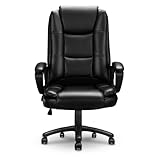
10. OFIKA Home Office Chair, 400LBS Big and Tall Computer Chair Heavy Duty Design, Ergonomic High Back Cushion Lumbar Back Support, Adjustable Executive Leather with Armrest
Overview:
The OFIKA Home Office Chair delivers 400-pound capacity at an aggressively low $79.99 price point, making heavy-duty seating accessible to budget-conscious buyers. This executive-style chair features leather upholstery, double-padded cushioning, and basic ergonomic adjustments. With assembly taking just 10-15 minutes, it targets users wanting immediate comfort without complex setup or premium features.
What Makes It Stand Out:
The price is the most striking feature—significantly undercutting all competitors while maintaining the 400-pound rating. The double-padded foam seat cushion provides initial comfort, while the segmented backrest design attempts ergonomic support. The quick assembly process is a genuine advantage for non-technical users. The high-back design covers basic neck and spine support needs.
Value for Money:
At $79.99, this chair redefines budget heavy-duty seating, costing less than half of most alternatives. However, the extreme price raises questions about material quality, long-term durability, and true weight capacity. Without SGS or BIFMA certifications mentioned, the rating is unverified. It’s suitable for light-to-moderate use but may not withstand daily 8-hour stress at maximum capacity.
Strengths and Weaknesses:
Strengths include the incredibly low price, easy assembly, leather upholstery aesthetic, and basic adjustability (height and recline). The double-padded seat feels comfortable initially. Weaknesses are the lack of safety certifications, unspecified materials, no mention of warranty, limited adjustability (no armrest adjustment mentioned), and questionable long-term durability. The 42.8"-46.6" seat height range seems unusually high.
Bottom Line:
Only consider this chair if budget is your absolute constraint and you verify the return policy. For regular heavy-duty use, invest more in a certified chair. This is a temporary solution, not a long-term investment.
Understanding Weight Capacity Ratings
When a chair claims “400 lb capacity,” that number tells only a fraction of the story. Weight ratings in the seating industry exist on a spectrum of testing standards, and the difference between marketing claims and real-world performance can be stark.
The Difference Between Static and Dynamic Weight Limits
Static weight capacity measures how much dead weight a chair can hold when perfectly still—essentially a lab test that doesn’t reflect actual use. Dynamic capacity, the more meaningful metric, accounts for movement, shifting, and the repeated stress of sitting down and standing up. A chair rated for 400 lbs static might only handle 300 lbs dynamic, which explains premature failures. Look for manufacturers who explicitly state dynamic weight ratings or BIFMA compliance at the target weight.
Why the 400 lbs Threshold Matters
The 400-pound mark represents a critical engineering breakpoint. Below this, manufacturers can use standard components with minor reinforcements. At 400 lbs and beyond, every element—from the gas cylinder to the tilt mechanism—requires purpose-built design. This threshold typically indicates reinforced Class 4 gas lifts, heavy-duty casters, and steel-plated bases rather than aluminum alloys.
Core Ergonomic Features for Big & Tall Users
Standard ergonomic features don’t scale linearly. A lumbar support that works for a 150-lb user can feel like a hard knob to someone larger, while seat pans that taper cause pressure points rather than distribute weight.
Lumbar Support Systems That Actually Work
Effective lumbar support for larger users requires both height adjustability and depth adjustment—typically 2 inches of in-out movement. Fixed lumbar curves often miss the mark entirely. Look for systems with a wide support surface (minimum 8 inches across) that can be positioned precisely at your L4-L5 vertebrae. Some advanced systems use air cells or dual-density foam that conforms without bottoming out.
Seat Depth and Width: The Critical Measurements
A 20-inch seat depth minimum prevents pressure behind the knees for users over 6'2". Width matters equally—a 22-inch seat pan provides necessary hip room without forcing you to squeeze between armrests. Pay attention to the distance between armrests, not just seat width. Contoured edges that slope downward prevent cutting off circulation when you shift your weight.
Armrest Adjustability and Positioning
Three-dimensional armrest adjustment becomes non-negotiable at higher weight capacities. They must support your forearms without transferring stress to your shoulders. Look for width adjustability that expands to at least 22 inches between rests, height ranges spanning 7-8 inches, and pivoting tops that angle with your natural arm position. The armrest structure should bolt directly to the seat frame, not just the base.
Frame and Construction Fundamentals
The skeleton of a heavy-duty chair determines its lifespan more than any other factor. This is where most budget options cut corners, hiding weaknesses beneath plush padding.
Heavy-Duty Base Materials Explained
Five-point bases are standard, but the material composition separates durable from dangerous. Nylon bases reinforced with glass fiber can work up to 350 lbs, but true 400+ lb chairs need aluminum or steel bases. Look for bases where the cylinder receptacle is a solid, welded component rather than a pressed fitting. The radius from center to caster should exceed 13 inches for stability.
Cylinder Quality and Height Range
Class 4 gas cylinders are the minimum for 400-lb capacity, but cylinder stroke length matters equally. A 4-inch stroke accommodates users from 5'8" to 6'6" when combined with proper seat depth. Premium chairs use cylinders with nitrogen-charged chambers and steel walls exceeding 2mm thickness. The cylinder should sink smoothly under weight without any “stick-slip” sensation.
The Importance of Reinforced Mechanisms
The tilt mechanism bears the brunt of dynamic forces. Look for steel mechanisms (not nylon) with thick side plates and robust springs. The mechanism should be bolted through the seat pan with at least four grade-8 bolts. Some manufacturers use “reinforced” marketing language while only adding minimal steel inserts—inspect product photos for mechanism thickness visible from underneath.
Material Science in High-Capacity Seating
Upholstery and cushioning face extreme stress in heavy-duty applications. The wrong materials compress permanently within months, destroying ergonomic support.
Mesh vs. Upholstery for Larger Users
Quality heavy-duty mesh must have high tensile strength and substantial backing. Look for mesh with weight ratings specifically stated—some meshes rated for 300 lbs will sag and tear at 400+. Triple-layer mesh systems with reinforcing scrims work best. For upholstery, commercial-grade fabric (double-rub count exceeding 100,000) or genuine leather (not bonded) prevents premature wear. Vinyl may crack under sustained heavy use.
Foam Density and Compression Ratings
Foam quality is measured in density (lbs per cubic foot) and IFD (Indentation Force Deflection). For 400+ lb capacity, you need foam with 2.5+ lb density and IFD ratings above 50. Multi-layer foam systems work better than single slabs—typically a firm base layer (3.0+ density) topped with a comfort layer. Memory foam toppers should be at least 3 inches thick to prevent bottoming out.
Adjustability: Beyond Basic Height Changes
A chair that doesn’t move with your body throughout the day becomes a static torture device. Advanced adjustability isn’t luxury—it’s necessity.
Tilt Mechanisms and Recline Tension
Heavy-duty users need tilt tension controls that actually respond to their weight. Look for knobs that adjust through multiple full rotations, not just a quarter-turn. The recline should engage smoothly at any point, without a “falling backward” sensation. Some premium chairs offer independent back angle adjustment separate from seat tilt.
Synchro-Tilt vs. Knee-Tilt: Which is Better?
Synchro-tilt mechanisms (where the seat and back move in a 2:1 ratio) generally work better for larger users because they maintain relatively constant eye level and reduce shear forces on the thighs. Knee-tilt can create a “perching” feeling that increases pressure on the shins. However, synchro-tilt requires more robust engineering to handle 400+ lbs, so verify the mechanism’s weight-specific design.
Durability Indicators and Warranty Coverage
A warranty reveals what manufacturers truly believe about their product’s longevity. Vague promises hide weak construction.
What a Real Warranty Looks Like
Meaningful warranties for heavy-duty chairs span 5-10 years and specifically cover the weight capacity. Read the fine print—some “lifetime” warranties exclude the cylinder and casters, which are the first components to fail. The best warranties offer free parts shipping and don’t require you to pay return shipping for defective components. Look for brands that warranty foam compression and fabric wear, not just mechanical parts.
Red Flags in Product Descriptions
“Bariatric-style” without specific weight testing, “reinforced” without material specifications, and “heavy-duty” applied to chairs under $300 should raise immediate concerns. Vague assembly instructions that don’t mention torque specs for bolts suggest the manufacturer hasn’t engineered for high-stress use. Be wary of chairs with weight ratings that jump in large increments (e.g., 250 lbs to 400 lbs) without visible design changes.
Common Buying Mistakes to Avoid
Even informed buyers fall into traps when urgency meets limited options. Recognizing these patterns saves money and frustration.
Focusing Only on Weight Rating
A 500-lb rated chair with a 19-inch seat depth will still be uncomfortable for a 6'4" user. Conversely, a chair with perfect dimensions but a 350-lb rating poses safety risks. The magic happens when capacity, dimensions, and ergonomic features align. Always cross-reference your height, weight, and hip width against all three specs.
Ignoring Seat Dimensions
Manufacturers often list overall chair width, not seat width between armrests. A 28-inch overall width might only offer 18 inches of usable seat space. Request the “armrest-to-armrest” measurement. Similarly, seat depth is measured from the front edge to where it meets the backrest, not the total cushion length.
Overlooking Caster and Floor Compatibility
Standard casters rated for carpet fail on hard floors under heavy loads, and hard-floor casters can crack under 400+ lbs. Look for dual-wheel casters with reinforced axles and weight-rated wheels. Some chairs require specialized casters that cost extra but prevent floor damage and chair instability.
Testing and Shopping Strategies
You can’t test a chair’s 400-lb capacity in a showroom for 30 seconds. Smart evaluation requires specific techniques.
What to Look for In-Person
Sit fully and shift your weight abruptly—any wobble or creak indicates weakness. Check armrest stability by leaning heavily on one side. Inspect the base where the cylinder inserts; you should see a solid metal collar, not plastic. Ask to see the mechanism underneath—if they won’t show you, that’s your answer. Test all adjustment levers under load; they should move smoothly with your weight in the chair.
Online Shopping Checklist
When buying sight unseen, demand detailed photos of the mechanism, base, and cylinder. Request the actual BIFMA test report (reputable brands provide this). Read negative reviews first, filtering for comments from users near the weight capacity. Check the return policy—restocking fees on a $800 chair can be painful. Contact customer service with specific technical questions; their responsiveness predicts post-purchase support.
Maintenance and Longevity
A quality heavy-duty chair should last a decade, but only with proper care. Neglect accelerates wear exponentially under high loads.
Daily Care Tips
Wipe down the cylinder daily with a dry cloth to prevent dust from scoring the seal. Periodically tighten all visible bolts—check them monthly for the first six months as components settle. Keep casters free of hair and debris, which forces the chair to work harder and stresses the base. Adjust tilt tension seasonally; foam and mechanisms settle over time.
When to Replace Components
Replace casters at the first sign of wobble or uneven rolling—this prevents base damage. Gas cylinders typically last 3-5 years under heavy use; if the chair slowly sinks during the day, the seal is failing. Upholstery tears should be repaired immediately to prevent foam degradation. Most manufacturers sell replacement parts; buying them proactively before discontinuation is wise.
Frequently Asked Questions
How do I know if a chair’s weight rating is legitimate or just marketing?
Look for BIFMA certification specifically tested at or above the advertised weight. Reputable manufacturers publish test reports showing dynamic load testing, cylinder cycle counts, and caster durability results. Be skeptical of chairs claiming 400+ lbs capacity without specifying dynamic vs. static ratings or showing mechanism details.
What’s the minimum seat width I should accept for a 400-lb capacity chair?
For most users at this weight capacity, you need a minimum of 21 inches between armrests, with 22-24 inches being ideal. Remember to measure your hip width at the widest point while seated, then add 2 inches for comfortable movement and clothing. Seat pan width is less important than armrest-to-armrest distance.
Can a mesh chair really support 400 lbs without sagging?
Yes, but only specific heavy-duty mesh systems. Look for three-layer mesh with a reinforcing scrim, specifically rated for high weight capacities. The mesh should feel taut but not hard, with minimal stretch when pressed firmly. Budget mesh chairs will sag within months; quality heavy-duty mesh maintains tension for years.
Is there a height limit for big and tall chairs?
Most quality 400-lb chairs accommodate users up to 6'6", but check the cylinder stroke and seat depth together. You need a seat depth of at least 20 inches and a cylinder that provides 4+ inches of adjustment range. Some manufacturers offer extra-tall cylinders as an option. Always verify the backrest height ensures lumbar support hits your lower back correctly.
Why do heavy-duty chairs cost so much more than regular office chairs?
The price reflects material upgrades throughout: steel mechanisms instead of nylon, Class 4 cylinders vs. Class 2, aluminum bases instead of plastic, high-density foam, and reinforced casters. Each component costs 3-5x more, and the manufacturing tolerances are tighter. A $200 chair uses $40 in components; a $800 heavy-duty chair uses $300+ in components.
Should I choose a headrest on a big and tall chair?
Headrests are beneficial if you’re over 6'2" and experience neck fatigue, but only if they’re height and angle adjustable. Fixed headrests often hit mid-back for tall users. The headrest should attach to the backrest with a solid metal bracket, not plastic, and support at least 50 lbs of pressure without deflecting.
How often should I replace a heavy-duty office chair?
With proper maintenance, a quality 400-lb rated chair should last 7-10 years. Replace it when the cylinder fails to hold height, the mechanism develops play or creaking, foam compression exceeds 1.5 inches, or you notice any cracks in the base. Don’t wait for catastrophic failure; gradual degradation erodes ergonomic support and risks injury.
What’s the difference between big and tall vs. bariatric chairs?
Bariatric chairs typically start at 500-lb capacity and prioritize durability over ergonomics, often lacking sophisticated adjustments. Big and tall chairs (400-500 lb range) balance heavy-duty construction with ergonomic features like lumbar support, tilt functions, and adjustability. Bariatric chairs are medical equipment; big and tall chairs are professional tools.
Can I use a heavy-duty chair on hardwood floors?
Yes, but you must use the correct casters. Standard hard-floor casters may crack under 400+ lbs. Look for reinforced soft-wheel casters specifically rated for both heavy loads and hard surfaces, or consider a chair mat with a weight capacity matching your chair. Some manufacturers offer specialized heavy-duty rollerblade-style wheels that distribute weight better.
What maintenance voids the warranty on these chairs?
Using non-approved casters, disassembling the mechanism, exceeding the weight capacity even temporarily, or using harsh cleaners on upholstery typically voids warranties. Most warranties also require professional installation if offered. Always keep your original receipt and register your product promptly, as some brands require registration within 30 days for full coverage.