When your workday stretches into double digits and your standing desk keeps you perched at counter height, ordinary office chairs simply don’t make the cut. Drafting chairs with memory foam seats have emerged as the unsung heroes for professionals who split their time between sitting and standing, offering a rare combination of elevated positioning and cloud-like comfort that traditional task chairs can’t match. But not all memory foam drafting chairs are created equal, and choosing the wrong one can turn your eight-hour shift into a lesson in regret.
The difference between a chair that energizes you through marathon work sessions and one that leaves you shifting uncomfortably every twenty minutes lies in the details most product descriptions gloss over. From foam density ratings that determine how well the cushion springs back after months of use, to foot ring adjustability that can make or break your circulation, the specifications tell a story that goes far beyond marketing buzzwords. Understanding these nuances before you buy isn’t just smart shopping—it’s an investment in your spinal health, productivity, and daily comfort.
Top 10 Drafting Chairs with Memory Foam Seats for Long Shifts
Detailed Product Reviews
1. WITTLONG 400lbs Office Drafting Chair Wide Dual Seat Cushion for High Standing Desk with Lumbar Support and Enlarged Adjustable Footring-Black

Overview: The WITTLONG drafting chair specifically targets users requiring robust support, accommodating up to 400 pounds through its BIFMA-certified construction. Engineered for high standing desks and creative workstations, it features a unique dual-layer cushion system and comprehensive adjustability for professional environments where standard chairs fail.
What Makes It Stand Out: The innovative dual-seat cushion combines plush outer foam with a firm inner core, delivering exceptional comfort that resists sagging. The enlarged adjustable footring and height-adjustable armrests accommodate diverse body types. Mute PU wheels ensure silent mobility—crucial for shared studios. Its ergonomic lumbar support maintains natural spinal curvature during extended sessions.
Value for Money: At $209.99, this sits in the premium mid-range for heavy-duty seating. While pricier than basic models, its 400-pound capacity, certified safety standards, and durable construction justify the investment for larger users who typically face limited options costing $300+. The integrated cushion system eliminates aftermarket pad purchases.
Strengths and Weaknesses: Pros: Exceptional weight capacity; BIFMA certification ensures durability; dual-layer cushions prevent pressure points; silent operation; comprehensive adjustability; sturdy footring. Cons: Higher price deters budget buyers; bulkier footprint not suitable for compact spaces; limited color options; assembly requires two people.
Bottom Line: An excellent choice for larger individuals seeking a durable drafting chair that won’t degrade under heavy use. The WITTLONG justifies its price through robust construction and thoughtful ergonomics, making it worthwhile for professionals working 6+ hours daily at elevated surfaces.
2. Office Star DC Series Adjustable Drafting Chair with Foot Ring and Sculptured Foam Seat, Black Vinyl
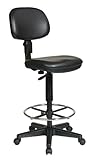
Overview: This commercial-grade drafting chair from Office Star delivers essential ergonomic features at an accessible price point. The DC Series combines a sculptured foam seat with practical adjustments, targeting professionals who need reliable performance for drafting tables, standing desks, and creative workstations without premium costs.
What Makes It Stand Out: GREENGUARD certification distinguishes this chair, ensuring low chemical emissions for healthier indoor air quality—crucial for enclosed studios. The one-touch pneumatic height adjustment and heavy-duty nylon base provide commercial durability rated for continuous use. Its compact 23.5-inch width fits smaller workspaces while maintaining full functionality.
Value for Money: At $138.99, this chair represents outstanding value for commercial environments. It undercuts most competitors while offering certified safety and environmental standards. The vinyl upholstery offers easy cleaning, reducing long-term maintenance costs for high-traffic settings like design studios and architectural offices.
Strengths and Weaknesses: Pros: Affordable commercial-grade construction; GREENGUARD certified; easy-clean vinyl; smooth dual-wheel casters; space-efficient design; one-touch height adjustment. Cons: 250-pound implicit capacity limits heavier users; basic lumbar support lacks adjustability; vinyl feels less breathable than mesh; footring adjustment is basic; no armrests.
Bottom Line: A smart, budget-conscious choice for commercial spaces and average-sized users. The Office Star DC Series prioritizes essential functionality and environmental responsibility, making it ideal for studios needing multiple chairs without compromising on commercial certification or durability.
3. HYLONE 400lbs Big and Tall Heavy Duty Drafting Chair 5" Thickened Seat Tall Office Chair Flip-Up Armrests Ergonomic Chair with Lumbar Support and Adjustable Footrest Ring Standing Desk Chair (Black)

Overview: HYLONE’s heavy-duty drafting chair addresses the big-and-tall market with a 400-pound capacity and enhanced ergonomic features. Its versatile design adapts to standing desks, bars, and creative workstations, offering professional-grade support across multiple environments from offices to laboratories.
What Makes It Stand Out: The 5-inch thickened seat cushion with breathable nylon mesh back creates an optimal balance of plush comfort and temperature regulation. Flip-up armrests provide space-saving flexibility, while the massive 28-inch five-star base ensures exceptional stability at maximum height extension. The 24-month free parts warranty demonstrates manufacturer confidence rare in this category.
Value for Money: At $169.99, this chair delivers premium heavy-duty features at a mid-market price. The combination of weight capacity, thick cushioning, and multi-surface rubber casters typically commands $200+ elsewhere. The included warranty adds tangible long-term value and peace of mind for intensive daily use.
Strengths and Weaknesses: Pros: Superior 5-inch cushioning; flip-up armrests for versatility; excellent stability from wide base; breathable mesh back; strong warranty support; smooth mobility on all floors; easy assembly. Cons: Utilitarian aesthetic lacks premium finish; footring adjustment knob could be more robust; armrest padding is firm; limited color selection.
Bottom Line: This chair hits the sweet spot for big-and-tall users seeking comfort and durability without breaking the bank. HYLONE’s thoughtful features and warranty make it a compelling alternative to pricier competitors, perfect for users needing reliable support across varied work surfaces.
4. WITTLONG 400lbs Wide Mid-Back Office Drafting Chair with Extra Seat Cushion for High Standing Desk with Lumbar Support and Enlarged Adjustable Footring(Gray)

Overview: WITTLONG’s gray variant elevates their heavy-duty line with refined materials and enhanced breathability. This mid-back drafting chair maintains the 400-pound capacity while introducing mesh backing and molded foam construction for improved long-term comfort in warm environments.
What Makes It Stand Out: The one-piece foam-molded cushions resist collapse better than layered alternatives, maintaining shape during marathon work sessions. The strong breathable mesh back prevents heat buildup—a common issue with solid-back drafting chairs. The ergonomic back frame follows natural spinal curvature more precisely than standard flat designs.
Value for Money: At $229.99, this is the premium offering in WITTLONG’s lineup. The price increase over the black model reflects upgraded materials and mesh construction. For users in warm climates or those working 8+ hours daily, the temperature regulation justifies the $20 premium over its sibling product through reduced fatigue.
Strengths and Weaknesses: Pros: Superior breathability via mesh back; molded foam retains shape longer; ergonomic frame design; maintains high weight capacity; quiet PU wheels; professional gray finish; BIFMA certified. Cons: Highest price among reviewed chairs; mid-back design offers less upper support; mesh may sag over years; limited adjustability beyond standard ranges; footring could be larger.
Bottom Line: Best suited for professionals prioritizing temperature control and cushion longevity. The WITTLONG gray model commands a premium but delivers targeted benefits for intensive use, making it worth the investment for hot environments or all-day seating.
5. Office Star DC Series Drafting Chair with Sculptured Seat and Back, Built-in Lumbar Support and Adjustable Foot Ring, Icon Black Fabric

Overview: This Office Star variant enhances the DC Series with advanced adjustability features while maintaining commercial-grade credentials. It targets users needing precise ergonomic tuning beyond basic height adjustments, offering customization typically found in chairs costing twice as much. The sculptured design provides built-in lumbar support.
What Makes It Stand Out: Independent back height and seat depth adjustments provide rare customization in this price class, allowing users to fine-tune support for different torso lengths. The built-in lumbar support is integrated into the contoured design rather than added as an afterthought. Maintaining GREENGUARD certification ensures continued environmental responsibility.
Value for Money: At $150.60, this chair offers professional-grade adjustability near budget pricing. The ability to modify back height and seat depth usually commands $200+, making this exceptional value for ergonomic purists. Commercial approval adds credibility for business purchasers seeking certified equipment.
Strengths and Weaknesses: Pros: Advanced back height/seat depth adjustments; integrated lumbar support; GREENGUARD certified; commercial durability; precise ergonomic tuning; affordable pricing; heavy-duty nylon base. Cons: Implicit 250-pound capacity; basic fabric may stain; narrower seat limits larger users; footring adjustment less sophisticated; no armrests included.
Bottom Line: An ergonomic bargain for average-sized users seeking customization. The Office Star DC Series with enhanced adjustability punches above its weight class, delivering premium features without the premium price tag—ideal for detail-oriented professionals wanting tailored support in commercial or home offices.
6. WITTLONG 400lbs Double Seat Cushion Tall Office Drafting Chair for Standing Desk with Lumbar Support and Enlarged Adjustable Stool (Grey Frame Grey Fabric)

Overview: The WITTLONG drafting chair targets heavy-duty users seeking premium comfort for standing desk setups. With a 400-pound weight capacity and double-layer foam cushioning, this chair combines robust construction with ergonomic design. The grey-on-grey aesthetic suits modern office environments while promising extended sitting comfort.
What Makes It Stand Out: Its dual-cushion system uses qualitative foam that resists collapsing, eliminating the need for aftermarket seat pads. The chair features adjustable height armrests and a curved back frame designed to cradle the lumbar region. BIFMA certification ensures durability, while breathable mesh prevents heat buildup during long work sessions.
Value for Money: At $259.99, this chair sits in the upper-mid range, but justifies its price through superior weight capacity and integrated comfort features. Comparable heavy-duty chairs often exceed $300, and the included ergonomic adjustments typically cost extra on budget models. For users over 250 pounds, this represents long-term value.
Strengths and Weaknesses: Strengths include exceptional weight capacity, durable foam that maintains shape, comprehensive lumbar support, and smooth mute PU wheels. Weaknesses are its premium pricing that may deter casual users, potentially bulky footprint in smaller spaces, and limited color options. The armrest adjustability range may not suit all body types.
Bottom Line: Ideal for heavier users or those prioritizing all-day comfort at standing desks. The WITTLONG’s durability and ergonomic features make it a worthwhile investment despite the higher price point.
7. Flash Furniture Harper Ergonomic Mid-Back Mesh Drafting Chair with Black Fabric Seat and Adjustable Foot Ring

Overview: Flash Furniture’s Harper drafting chair delivers essential ergonomic features at an accessible price point. Designed for architects, designers, and standing desk users, this mid-back chair provides breathable mesh support and a padded fabric seat. The black aesthetic integrates seamlessly into most workspaces.
What Makes It Stand Out: The chair’s primary appeal lies in its affordability without sacrificing core functionality. It features CAL 117 fire-retardant foam for safety compliance, an adjustable foot ring for leg support, and a pneumatic height adjustment spanning 26.5-32.5 inches. The compact 26.25" footprint suits smaller studios and offices.
Value for Money: At $139.14, this represents excellent entry-level value. While lacking premium materials, it covers the drafting chair fundamentals—height adjustability, basic ergonomics, and safety certification. Competitors at this price often use lower-grade components or skip fire safety standards.
Strengths and Weaknesses: Strengths include competitive pricing, breathable mesh back, safety-certified foam, and straightforward assembly. Weaknesses are the mid-back design offering limited upper back support, unspecified weight capacity likely below 300 pounds, and basic padding that may compress over time. Armrests are notably absent.
Bottom Line: A solid budget choice for average-sized users needing occasional to moderate use. The Harper chair delivers drafting functionality without frills, making it perfect for home studios or cost-conscious buyers.
8. TAKE UR SEAT® Deluxe Drafting Lab Stool Chair, 18’’ Adjustable Footring, 10’’ Adjustable Height, 450 lbs seat Capacity, Heavy Duty, Shipped Within 24 Hours (Glide Non-Rolling)

Overview: This industrial-grade drafting stool prioritizes stability and heavy-duty performance. With an impressive 450-pound capacity and non-rolling glides, it’s engineered for laboratory, workshop, and clinical environments where mobility is secondary to security. The quick shipping appeals to urgent needs.
What Makes It Stand Out: Beyond its class-leading weight capacity, the chair offers rare seat depth and back height adjustments, allowing precise ergonomic tuning. The stain, water, and chemical-repellent surfaces withstand harsh environments. Non-rolling glides prevent unwanted movement on smooth floors, while the 3-12 inch adjustable foot ring accommodates various user heights.
Value for Money: At $134.99, this stool dramatically undercuts competitors while offering superior capacity and specialized features. Lab chairs with similar specs typically cost $200+. The 24-hour shipping adds value for time-sensitive purchases.
Strengths and Weaknesses: Strengths include highest-in-class weight capacity, industrial-grade materials, dual adjustment mechanisms, and exceptional price. Weaknesses are the lack of wheels limiting mobility, utilitarian aesthetics unsuitable for modern offices, and potentially complex adjustments for casual users. The non-rolling design may frustrate those expecting standard caster mobility.
Bottom Line: Perfect for industrial, medical, or educational settings requiring maximum durability and stability. The TAKE UR SEAT stool offers unmatched capacity and value, though office workers should consider mobility needs before purchasing.
9. Realspace® Laristo Mesh/Fabric Mid-Back Drafting Chair, Black, BIFMA Compliant

Overview: Realspace’s Laristo drafting chair balances professional aesthetics with functional design for elevated workspaces. The mid-back profile targets users at drafting tables, countertops, and sit-stand desks. BIFMA compliance ensures commercial-grade reliability in home or office settings.
What Makes It Stand Out: The chair combines a breathable mesh back with high-density foam cushioning for temperature regulation and comfort. Its 1-touch pneumatic adjustment simplifies height changes across a 25-9/16" to 35-7/16" range. The integrated adjustable footrest provides consistent leg support throughout the range of motion.
Value for Money: Priced at $219.78, the Laristo occupies the mid-range sweet spot. While more expensive than budget options, the BIFMA certification and reputable brand name justify the premium over generic alternatives. However, it lacks armrests and advanced lumbar adjustments found in pricier competitors.
Strengths and Weaknesses: Strengths include brand reliability, safety compliance, generous height range, and breathable construction. Weaknesses are the mid-back limiting upper support, absence of armrests, unspecified weight capacity likely around 250 pounds, and basic adjustability compared to ergonomic-focused models. The aesthetic is functional but uninspired.
Bottom Line: A dependable mainstream choice for standard office environments. The Laristo suits users wanting brand assurance and basic drafting functionality without premium complexity.
10. Office Star DC Series Adjustable Drafting Chair with Foot Ring and Sculptured Foam Seat, Icon Black Fabric

Overview: Office Star’s DC Series drafting chair emphasizes environmental responsibility and commercial durability. The sculptured foam seat and back provide contoured support for extended use at elevated workstations. Its GREENGUARD certification appeals to health-conscious buyers.
What Makes It Stand Out: GREENGUARD certification for low chemical emissions distinguishes this chair in a crowded market. The heavy-duty nylon base and dual-wheel carpet casters ensure commercial-grade mobility. Sculptured foam offers ergonomic shaping often absent at this price point, while the one-touch pneumatic adjustment simplifies daily use.
Value for Money: At $155.99, this chair delivers commercial features at consumer pricing. The environmental certification adds value for office managers and eco-conscious buyers. While lacking premium adjustments, it undercuts many commercial-grade alternatives by $100+.
Strengths and Weaknesses: Strengths include eco-certification, commercial approval, durable construction, and ergonomic foam contouring. Weaknesses are the smaller 17.25" x 17.5" seat dimensions that may feel cramped for larger users, limited style options, and absence of armrests or advanced lumbar support. The 11.75" back height provides minimal upper back coverage.
Bottom Line: An excellent choice for environmentally aware buyers and commercial settings. The Office Star chair prioritizes air quality and durability over plush features, making it ideal for shared workspaces.
Why Memory Foam Changes Everything for Extended Seating
Memory foam has revolutionized seating for long shifts, but its benefits extend far beyond the initial “ahh” moment when you first sit down. The viscoelastic material responds to body heat and weight, creating a custom mold that distributes pressure evenly across your seat. This pressure redistribution is critical for professionals who remain seated for 4-6 hour stretches, as it prevents the pressure points that lead to numbness, discomfort, and long-term circulation issues.
The Science Behind Pressure Relief
Traditional foam compresses uniformly, creating high-pressure zones under your sit bones and thighs. Quality memory foam, typically rated at 3-5 pounds per cubic foot density, uses your body temperature to soften only where needed. This creates a floating sensation that reduces compression on your sciatic nerve and allows blood to flow freely. For drafting chair applications, where you’re already dealing with increased leg pressure from the higher seating position, this pressure relief becomes even more critical.
Heat Retention: The Double-Edged Sword
Here’s where many buyers get tripped up. Standard memory foam traps heat, which can turn your comfortable chair into a sweaty nightmare by hour three. Premium drafting chairs combat this with gel-infused memory foam or open-cell structures that improve airflow by up to 30%. Some manufacturers layer perforated foam over a ventilated base, creating channels that wick away body heat. When evaluating chairs, look for terms like “temperature neutral” or “airflow technology” rather than just “gel-infused,” as the implementation matters more than the marketing label.
Ergonomic Adjustability: Beyond the Cushion
A memory foam seat is only as good as the chair’s ability to position it correctly relative to your body and workspace. The ergonomic features surrounding that plush cushion determine whether you’ll maintain healthy posture or slowly slump into a painful C-curve by the end of your shift.
Seat Height and Foot Ring Positioning
Drafting chairs typically offer seat heights from 24 to 34 inches, but the magic is in the foot ring placement. A foot ring that adjusts independently of the seat height is non-negotiable for proper ergonomics. Your feet should rest flat on the ring with your thighs parallel to the floor, creating a 90-degree angle at your knees. If the foot ring moves with the seat, you’ll find yourself either dangling your legs or perching awkwardly. Look for a 6-8 inch vertical adjustment range on the foot ring itself.
Tilt Mechanisms and Tension Control
The synchro-tilt mechanism is the gold standard for drafting chairs, reclining the backrest at a 2:1 ratio to the seat pan. This maintains the natural curve of your spine as you lean back. More importantly, adjustable tilt tension lets you customize the resistance to your body weight. A 150-pound designer will need significantly less tension than a 250-pound architect. Without this adjustment, you’ll either struggle to recline or feel like you’re falling backward.
Armrest Adjustability Standards
Four-dimensional armrests—adjustable for height, width, depth, and pivot—allow you to support your arms while drawing, typing, or performing precision work. The key spec often overlooked is the height range: look for armrests that lower to at least 7 inches from the seat pan. This prevents shoulder hunching when you’re working on detailed tasks. Flip-up arms offer a compromise for tight spaces, but they rarely provide the same stability as fixed 4D options.
Lumbar Support Systems in Drafting Chairs
Memory foam seats are pointless if your lower back is screaming by noon. Drafting chairs face a unique challenge: the elevated seating position increases the load on your lumbar region, making proper support non-negotiable.
Fixed vs. Dynamic Lumbar
Fixed lumbar supports are molded into the backrest, typically offering 3-4 inches of protrusion. While adequate for short periods, they don’t adapt to your movements. Dynamic lumbar systems, often using a spring-loaded mechanism or adjustable air bladder, maintain constant contact as you shift positions. For shifts longer than five hours, dynamic support reduces lower back fatigue by up to 40% compared to static designs.
Height-Adjustable Backrests
Your lumbar curve sits between 5 and 9 inches above your seat pan, depending on your height. A backrest that adjusts vertically by at least 3 inches ensures the support hits your spine’s sweet spot. Quick test: when sitting upright, the lumbar bulge should nestle into the natural curve of your lower back without forcing you forward. If you feel pressure or have to lean back to meet it, the positioning is wrong.
Seat Geometry: What the Specs Don’t Tell You
Manufacturers love to boast about seat dimensions, but the relationship between width, depth, and contouring determines real-world comfort more than raw measurements.
Width, Depth, and the “Waterfall” Edge
A seat width of 19-21 inches accommodates most body types, but depth is where drafting chairs often fail. The seat should allow 2-3 inches between the back of your knees and the seat edge. The waterfall edge—a gentle downward curve at the front—prevents the edge from digging into your thighs, which is crucial when your legs are already angled downward from the elevated position. Some premium models offer adjustable seat depth, a feature worth its weight in gold for shared workstations.
Foam Density and Layering Strategies
Single-layer memory foam compresses quickly under constant use. Look for chairs using a dual-layer approach: a high-density foam base (2.5-3 PCF) for structure, topped with 2-3 inches of memory foam (4-5 PCF) for comfort. This layering prevents bottoming out while maintaining that signature memory foam feel. The indentation load deflection (ILD) rating, rarely listed but worth asking about, should be 12-16 for the top layer—soft enough to mold, firm enough to support.
Build Quality Indicators That Predict Longevity
That initial comfort means nothing if the chair starts wobbling after six months. Drafting chairs endure more stress than standard office chairs due to their height, making build quality paramount.
Frame Materials: Nylon, Steel, and Aluminum
Nylon frames with fiberglass reinforcement offer an excellent strength-to-weight ratio, typically supporting 250-300 pounds. Steel frames are heavier but can handle 350+ pounds consistently. Aluminum provides the premium option—lightweight, corrosion-resistant, and incredibly strong, but expect to pay a premium. The telltale sign of quality is the connection points: metal-on-metal fasteners with lock washers indicate a chair built to last, while plastic bosses that receive screws often strip over time.
Cylinder Class Ratings Explained
The gas cylinder controls height adjustment and bears your full weight. Class 3 cylinders are the minimum acceptable for drafting chairs, rated for 300 pounds and 100,000 cycles. Class 4 cylinders, found on premium models, support up to 400 pounds and 200,000 cycles. A chair that slowly sinks throughout the day has a failing cylinder—often a sign of cutting corners. Look for SGS or TÜV certification on the cylinder, which indicates independent testing.
Base and Mobility: Stability in Motion
A drafting chair’s elevated center of gravity makes base design critical. A tip-over at 30 inches high can cause serious injury, yet many buyers overlook stability features.
Base Diameter and Weight Distribution
The standard 24-inch five-star base works for office chairs, but drafting chairs need 26-28 inches for stability at maximum height. The base should be weighted, with most quality chairs placing 60% of the weight in the base and 40% in the seat. This prevents the chair from feeling top-heavy. A simple test: at maximum height, the chair should feel planted when you lean to reach something, not like it’s about to tip.
Caster Types for Different Flooring
Soft polyurethane casters protect hardwood but can feel sluggish on carpet. Hard nylon casters roll smoothly on carpet but scratch hard floors. The solution? Dual-wheel casters with a soft tread and hard core, or better yet, specify your flooring when buying—many manufacturers offer different caster options. For technical workspaces, consider braking casters that lock when you stand, preventing the chair from rolling away.
Armrest Configurations for Specialized Work
The right armrest setup depends entirely on your tasks. A drafter making precise pencil strokes has different needs than a lab technician entering data.
4D Adjustability vs. Flip-Up Arms
4D arms provide unparalleled customization but add complexity and potential failure points. Look for armrests with individual locking mechanisms for each adjustment dimension—this prevents drift during use. Flip-up arms offer clean side access, essential for sliding the chair under a drafting table, but rarely provide the same ergonomic support. The pivot function, often overlooked, angles the armrests inward to support your forearms during keyboard work, reducing wrist strain.
When to Go Armless
For artists, architects, and anyone who needs unrestricted shoulder movement, armless drafting chairs eliminate interference. The trade-off is increased spinal load—without arm support, your upper body weight concentrates on your spine. If you go armless, prioritize an extra-deep seat (21+ inches) and a backrest that reclines to at least 110 degrees to distribute weight more evenly.
Weight Capacity and Durability Standards
Weight ratings are more than just numbers—they indicate the overall robustness of the chair’s components. A chair rated for 300 pounds uses stronger materials throughout than one rated for 250.
Understanding BIFMA Certification
The Business and Institutional Furniture Manufacturers Association (BIFMA) tests chairs for durability, stability, and safety. A BIFMA-certified drafting chair has survived drop tests, tilt tests, and castor durability tests. However, BIFMA tests to the listed weight capacity only. A chair rated for 250 pounds and certified by BIFMA will pass at 250 pounds but may fail at 260. For safety and longevity, choose a chair rated at least 50 pounds above your body weight.
Real-World vs. Listed Weight Limits
Manufacturers often test static weight (slowly applied pressure) rather than dynamic weight (sitting down quickly, leaning, shifting). The real-world limit is typically 15-20% lower than the listed capacity. If you’re 200 pounds, don’t buy a chair rated for exactly 200 pounds. Additionally, consider your work tools—a 180-pound architect with 20 pounds of reference books and equipment regularly on their lap needs a chair rated for 250+ pounds.
Aesthetic Considerations for Professional Environments
Your chair needs to perform, but in client-facing studios or modern labs, it also needs to look the part. The good news is that ergonomic doesn’t have to mean industrial.
Mesh vs. Upholstered Backrests
Mesh backrests offer superior breathability and a contemporary look, but the quality varies dramatically. High-end mesh uses a woven polyester-elastomer blend that provides firm, consistent support. Cheap mesh stretches and sags within months. Upholstered backrests, wrapped in vinyl or fabric over foam, offer more traditional aesthetics and can incorporate memory foam for consistent support. For clean environments like labs, vinyl is wipeable; for comfort, fabric breathes better.
Color Psychology in Workspace Design
Black and gray dominate drafting chairs for a reason—they hide wear and convey professionalism. But color impacts productivity. Blue tones promote calm focus, green reduces eye strain, and red can boost energy for detail-oriented tasks. If you choose a bold color, ensure the upholstery is solution-dyed rather than surface-dyed—pigment penetrates the entire fiber, preventing fade marks from cleaning or sun exposure.
Price-to-Value Analysis for Serious Buyers
The drafting chair market spans from $150 budget models to $1,200+ premium designs. Understanding what you gain at each tier prevents both overspending and false economy.
The $200 vs. $500 vs. $800+ Divide
Sub-$200 chairs typically feature single-density foam, Class 2 cylinders, and nylon bases without reinforcement. They feel fine initially but degrade noticeably within a year. The $400-$600 sweet spot offers dual-layer foam, Class 3 cylinders, 4D arms, and BIFMA certification—suitable for 8-hour shifts. At $800+, you get Class 4 cylinders, aluminum bases, dynamic lumbar, and warranties exceeding five years. For daily use exceeding six hours, the mid-tier minimum pays for itself in prevented discomfort.
Warranty Terms as Value Indicators
A five-year warranty on the frame and cylinder with two years on upholstery indicates manufacturer confidence. Lifetime warranties often exclude wear items like casters and armrest pads—read the fine print. The best warranties are transferable and include free parts shipping. A company that makes you pay $20 shipping for a replacement cylinder under warranty is nickel-and-diming you.
Maintenance and Care for Longevity
Even premium drafting chairs require maintenance to maintain their comfort and safety features. Proper care extends lifespan by 3-5 years.
Cleaning Memory Foam Without Damage
Never saturate memory foam with liquid cleaners. Use a fabric vacuum attachment weekly to remove debris, and spot-clean stains with a 50/50 water and white vinegar solution applied sparingly with a cloth. For deep cleaning, some chairs feature zippered seat covers that can be removed and professionally cleaned. Always air-dry memory foam completely before use—trapped moisture breeds mold and breaks down foam structure.
Cylinder Maintenance and Prevention
The gas cylinder is the most common failure point. Prevent premature wear by avoiding sitting down hard from a standing position. Once a month, raise the chair to maximum height, then lower it completely three times to redistribute lubricant. If you notice sinking, immediately stop using the chair—a failing cylinder can drop suddenly, causing injury. Replacement cylinders cost $30-$60 and are user-installable on most models.
Common Buying Mistakes That Lead to Returns
Even informed buyers make errors. These pitfalls account for 70% of drafting chair returns, according to ergonomic equipment suppliers.
Ignoring Return Policies and Trial Periods
A 30-day return policy sounds generous, but your body needs 2-3 weeks to adjust to a new chair. Look for 60-day minimum trial periods with free return shipping. Some manufacturers offer “comfort guarantees” allowing returns even after light use. Beware restocking fees—15-20% is common, turning a $500 chair into a $400 loss if it doesn’t work out.
Disregarding Foot Ring Quality
The foot ring is not an afterthought. It should adjust smoothly and lock securely with a metal clamp, not a plastic knob. Plastic foot rings crack under pressure, and rings that don’t lock will slowly drift down, forcing you to constantly readjust. The diameter matters too—18 inches provides adequate foot space without interfering with your chair base. Some premium models offer textured foot rings that prevent slipping in socked feet.
Who Actually Needs a Drafting Chair with Memory Foam?
Not every elevated workspace requires a drafting chair. Understanding your workflow helps determine if the investment makes sense.
Standing Desk Users and Hybrid Workers
If you spend 60% of your day standing and 40% sitting, a drafting chair with memory foam provides quick, comfortable seating without lowering your desk. The key is finding a model with a seat height range that matches your elbow height when standing—measure this before buying. For hybrid workers, the memory foam prevents the “dead leg” feeling that comes from intermittent sitting.
Architects, Designers, and Lab Technicians
These professionals benefit most from the combination of height and comfort. Architects and designers need the elevation for drafting tables and the comfort for long design sessions. Lab technicians require easy cleaning and the ability to perch at various heights for different equipment. For these users, dual-wheel casters and vinyl upholstery become as important as the memory foam itself.
Gamers and Content Creators
Standing desk gamers and streamers are an emerging market for drafting chairs. The elevated position improves camera angles and screen visibility, while memory foam prevents fatigue during 12-hour streaming sessions. However, gamers should prioritize models with reclining backrests (120-135 degrees) and headrests, as gaming posture differs from professional drafting posture.
How to Properly Test a Drafting Chair Before Committing
If possible, always test before buying. Showroom tests reveal issues that specs can’t capture.
The 30-Minute Sit Test
Sit in the chair for 30 minutes at your actual working height. Bring a laptop or paperwork to simulate real use. Pay attention to pressure points that develop after 15 minutes—initial comfort often fades. Test all adjustments mid-session; levers should operate smoothly without sticking. Stand and sit down several times to test cylinder stability and base wobble.
Measuring Your Workspace
Your drafting table or standing desk should be 8-12 inches above your seated elbow height. Measure from the floor to your elbows while sitting in the chair at your preferred height, then ensure your work surface falls in this range. Account for any keyboard trays or monitor arms. Don’t forget clearance—drafting chairs have larger footprints than task chairs; ensure you have 36 inches of space to roll back from your desk.
Frequently Asked Questions
How long does memory foam in drafting chairs typically last before losing support?
High-density memory foam (4+ PCF) in quality drafting chairs maintains its support properties for 5-7 years with daily use. Lower density foam (2-3 PCF) may start to compress permanently within 2-3 years, creating a “hammock” effect. Signs of degradation include visible indentations that don’t recover within 30 minutes and bottoming out when you sit. Rotating your sitting position and maintaining a healthy weight for the chair’s rating extends foam life significantly.
Can I use a drafting chair with memory foam on carpeted floors?
Yes, but you need hard nylon or dual-wheel casters designed for carpet. Standard soft casters sink into carpet fibers, making the chair difficult to move and potentially damaging the carpet. For thick carpet (over 1/2 inch pile), consider a chair mat to reduce rolling resistance and prevent caster wear. Some manufacturers offer specialized carpet casters with larger wheels that distribute weight better.
What’s the ideal seat height range for someone 5'6" using a standing desk?
At 5'6", your ideal drafting chair seat height range is approximately 24-30 inches from the floor. This allows your feet to rest flat on the foot ring with your thighs parallel to the floor. For a standing desk at 42-45 inches, this seat height positions your elbows at the recommended 90-110 degree angle. Always measure your specific desk height and body proportions, as torso length varies significantly among people of the same height.
How does memory foam in drafting chairs compare to gel seats for long shifts?
Memory foam contours to your entire body shape, providing pressure relief across the entire seat surface. Gel seats excel at pressure point reduction but can feel firmer and don’t mold to your shape as completely. For shifts exceeding six hours, high-quality memory foam generally outperforms gel in overall comfort. However, some premium chairs combine both, using a gel layer over memory foam for the best of both worlds—pressure relief and cooling.
Are drafting chairs with memory foam suitable for people with sciatica?
Yes, when properly adjusted. The key is ensuring the memory foam is dense enough (4+ PCF) to prevent pressure on the sciatic nerve at the glutes. The elevated foot ring must support your feet to reduce lower back compression. Combine the chair with proper lumbar support positioned at your belt line. Some users with sciatica benefit from a slight forward tilt (5-10 degrees) to open the hip angle, but this should be tested gradually as it can increase pressure on the knees.
What maintenance is required for the gas cylinder in drafting chairs?
Gas cylinders are largely maintenance-free but benefit from periodic cycling. Once monthly, raise the chair to full height, then lower it completely 3-5 times to redistribute internal lubricant. Avoid sitting down hard from a standing position, which can damage the seals. If the chair begins sinking, stop using it immediately—this indicates seal failure and potential safety risk. Quality cylinders last 5-10 years; replacement is straightforward on most models with a pipe wrench and rubber mallet.
**Can the memory foam seat be replaced if it wears out?
**
In most drafting chairs, the memory foam is integrated into the seat pan and not designed for user replacement. Some premium models ($600+) feature zippered seat covers that allow access to the foam, and replacement foam inserts can be custom-cut. However, this requires upholstery skills. A more practical approach is using a memory foam seat cushion on top of the worn seat as a temporary fix. For chairs under $400, replacement is usually more cost-effective than repair when the foam fails.
How important is BIFMA certification for drafting chairs used in home offices?
BIFMA certification matters regardless of location. The certification tests stability, durability, and safety under load—critical factors when you’re sitting 30 inches off the ground. Home office users often keep chairs longer than commercial users, making durability even more important. Non-certified chairs may use thinner metal, weaker casters, or inferior cylinders that fail catastrophically. The certification adds minimal cost but provides assurance the chair won’t collapse under normal use.
What’s the difference between a drafting chair and a stool with memory foam?
Drafting chairs feature backrests and often armrests, providing full ergonomic support for extended sitting. Stools are backless, promoting “active sitting” and encouraging posture changes. For shifts longer than three hours, drafting chairs are superior for spinal health. Stools work well for highly mobile tasks where you’re constantly turning or standing/sitting rapidly. Some hybrid designs offer low-back support without a full backrest, splitting the difference for specific applications like dental work or laboratory tasks.
Should I choose a drafting chair with a headrest for 10+ hour shifts?
For shifts exceeding eight hours, a headrest significantly reduces neck and shoulder strain, especially during phone calls or screen viewing. The headrest should adjust at least 4 inches vertically and 30 degrees in angle to fit your neck curve. However, it must not interfere with your work posture—when upright and working, your head should float above the rest, making contact only during brief reclines. Detachable headrests offer flexibility if you find it interferes with focused tasks.