Your RGB gaming setup is more than just a collection of glowing components—it’s a statement of personal style and a tool for immersive digital experiences. From pulsating RAM modules to reactive keyboard lighting that dances with every keystroke, you’ve carefully curated every photon of color. But there’s one critical element that often gets overlooked in the quest for the ultimate battlestation: the desk itself. The right gaming desk doesn’t just hold your gear; it becomes an integral part of your RGB ecosystem, amplifying effects, managing cables, and creating a cohesive visual experience that transforms your entire room.
As the foundation of your setup, your desk influences everything from lighting diffusion to ergonomic comfort during marathon gaming sessions. Whether you’re streaming to thousands of viewers or diving into single-player adventures, the surface beneath your equipment plays a surprisingly crucial role in how your RGB elements perform and interact. Let’s explore what makes a gaming desk truly transformational for RGB enthusiasts, diving deep into the features, technologies, and considerations that separate a simple table from a purpose-built RGB command center.
Top 10 Gaming Desks with RGB
Detailed Product Reviews
1. AODK 59 Inch Gaming Desk with USB Charging Ports & LED Light- Reversible Computer Desk with Storage Shelves & Monitor Stand, Modern Gamer Desk Table with Fabric Drawers & Side Hook, Carbon Fiber Black

Overview: The AODK 59-inch gaming desk targets serious PC enthusiasts with panoramic “fish tank” cases like the Lian Li O11 or Hyte Y60. At $169.99, it elevates your tempered glass chassis to eye level on a dedicated platform, transforming your rig into a room centerpiece while protecting it from floor dust.
What Makes It Stand Out: The integrated RGB LED strip beneath the monitor shelf syncs with your PC’s lighting, creating a cohesive streaming-ready atmosphere. Three built-in fabric drawers solve the workspace sacrifice problem typical of desk-mounted PCs, hiding cables and accessories for a minimalist aesthetic. A dedicated side shelf with overhead board displays collectibles without obstructing your rig’s view.
Value for Money: Positioned in the mid-premium range, this desk justifies its price through specialized features competitors lack. The reinforced industrial steel frame and thick desktop support heavy glass-panel builds without wobbling—a crucial investment protection for expensive hardware. While pricier than generic desks, its case-specific design eliminates the need for separate monitor stands or PC mounts.
Strengths and Weaknesses: Strengths include the elevated PC stand for showcase builds, robust construction for heavy rigs, integrated cable management, and dedicated display space. The RGB integration enhances immersion. Weaknesses: the 59-inch size may overwhelm small rooms, and the reversible design could sacrifice some stability. The fabric drawers, while functional, may not match everyone’s premium aesthetic expectations.
Bottom Line: Perfect for gamers who’ve invested in showcase PCs, this desk delivers targeted functionality that generic gaming desks miss. If you own a panoramic case and want to display it properly, the AODK is worth every penny. For standard builds, more affordable options exist.
2. PRAISUN 61.7" Gaming Desk with LED Lights & Outlets, Computer Desk with 3 Fabric Drawers, PC Desk with PC Case Stand & Movable Storage Shelves, Monitor Stand, Reversible, Carbon Fiber Black

Overview: The PRAISUN 61.7-inch gaming desk delivers impressive features at just $89.99, making it a standout budget option. It combines app-controlled RGB lighting with comprehensive charging solutions and versatile storage, catering to gamers who want premium aesthetics without breaking the bank.
What Makes It Stand Out: The mobile app controls 60,000+ colors, timers, and music sync across 12-color fade and 8 flashing modes—features typically found on desks twice the price. Seven charging options (4 AC outlets, 2 USB ports, 1 USB-C) sit centrally for easy access. The recessed PC case stand elevates glass-panel builds for maximum RGB visibility.
Value for Money: Exceptional. At $89.99, you’re getting app-controlled lighting, extensive power options, a reversible design, movable shelves, and three fabric drawers. Competitors at this price point rarely offer such comprehensive features. The 2-position adjustable monitor stand adds ergonomic value, while the mesh grid with S-hooks provides clever cable and headphone storage.
Strengths and Weaknesses: Strengths include unbeatable price-to-feature ratio, advanced RGB customization, multiple charging ports, and flexible configuration. The movable shelf adapts to different setups. Weaknesses: build quality may not match premium brands, and the FSC-certified wood desktop might be thinner than higher-end alternatives. The app connectivity could be less reliable than premium systems.
Bottom Line: An incredible value proposition for budget-conscious gamers. If you want maximum features for minimal investment, the PRAISUN dominates its price bracket. While it may lack the rock-solid feel of premium desks, its feature set and flexibility make it a smart choice for most gamers.
3. SEDETA L Shaped Gaming Desk, Home Office Computer Desk with 2 Drawer and Bookshelf, L Shaped Gaming Desk with LED Light, Glass Cabinet and Storage Bag, Corner Desk with Storage Shelves, Black

Overview: The SEDETA L-shaped gaming desk commands $199.99 with its corner-filling design and exceptional storage capacity. Measuring 61 inches tall with a 23.6-inch wide desktop, it maximizes vertical and horizontal space, making it ideal for gamers who need extensive organization alongside their setup.
What Makes It Stand Out: Five-tier open shelves, two glass display cabinets, two fabric drawers, and a multifunctional storage bag create unprecedented storage versatility. The L-shaped configuration naturally separates gaming and work zones. Glass cabinets with doors protect collectibles while maintaining visibility, and the RGB LED strip offers 60,000+ colors via app control.
Value for Money: The price reflects its substantial storage and L-shaped footprint. While more expensive than standard desks, it replaces multiple furniture pieces—bookshelf, display case, and storage unit. The built-in power strip with 3 outlets and 2 USB ports adds convenience. For corner spaces needing maximum utility, it’s competitively priced against buying separate components.
Strengths and Weaknesses: Strengths include massive storage capacity, L-shaped ergonomic layout, protected glass display cabinets, and comprehensive cable management. The tall bookshelf unit maximizes vertical space. Weaknesses: the large footprint requires substantial room space, and assembly is likely complex. At $199.99, it’s a significant investment. The fabric drawers may feel less premium than wooden alternatives.
Bottom Line: Ideal for gamers needing serious storage in a corner setup. If you have the space and want an all-in-one solution, the SEDETA delivers exceptional organizational capabilities. For compact rooms or minimalists, simpler desks offer better value.
4. Casaottima 48 Inch Gaming Desk with Hutch & 3 Fabric Drawers, Computer Desk with USB Ports & LED Lights, Reversible Pc Gamer Table with Monitor Stand for Home Office, Carbon Fiber Black

Overview: The Casaottima 48-inch gaming desk balances affordability and functionality at $89.99. Its compact design targets gamers and students in smaller spaces, offering essential features like LED lighting, USB ports, and storage without overwhelming limited square footage.
What Makes It Stand Out: At just 48 inches, it fits where larger desks cannot while still providing three fabric drawers and a hutch for vertical storage. The integrated monitor stand promotes ergonomic viewing, and the LED lights add modern ambiance. The reversible design adapts to different room layouts, making it versatile for dorm rooms or small apartments.
Value for Money: Strong. For $89.99, you get LED lighting, USB charging, storage drawers, a monitor stand, and a hutch—features often missing in compact desks. It eliminates the need for separate monitor risers and storage solutions. While smaller than premium options, its thoughtful design maximizes utility per square inch, outperforming many similarly priced basic desks.
Strengths and Weaknesses: Strengths include space-efficient design, affordable price point, built-in storage, and modern aesthetics. The hutch adds vertical storage without increasing floor footprint. Weaknesses: limited surface area restricts multi-monitor setups, and the 48-inch size may feel cramped for elaborate gaming rigs. Build quality is adequate but not exceptional. The smaller PC stand may not accommodate full-tower cases.
Bottom Line: Perfect for students or gamers with space constraints. If you need a feature-rich desk that fits in tight quarters, the Casaottima delivers exceptional value. For expansive multi-monitor setups, consider larger alternatives. It’s a smart, practical choice for small-space living.
5. Loomie Computer Desk with Power Outlet & Led Light, 63" Large Wing-Shaped Gaming Desk with Full Monitor Stand, Wireless Charging, RGB Mouse Pad,Headphone Hook,Studio Desk with Storage Shelf for Live

Overview: The Loomie 63-inch wing-shaped desk distinguishes itself at $129.79 with its unique aerodynamic design and streaming-focused features. The generous surface accommodates 1-3 monitors while the distinctive shape adds modern flair to any gaming or studio environment.
What Makes It Stand Out: The wing-shaped silhouette creates a cockpit-like feel, while wireless charging and an RGB mouse pad deliver premium conveniences rarely bundled at this price. The full-length monitor stand spans the entire desk, supporting multiple displays ergonomically. A dedicated headphone hook and cable management holes cater to streamers and content creators.
Value for Money: Excellent mid-range value. The combination of wireless charging, RGB mouse pad, LED lighting, and extensive power options (2 outlets, 2 USB ports) typically costs more when purchased separately. The 63-inch carbon fiber surface and steel construction offer durability, while the lower storage shelf adds functionality without cluttering the desktop.
Strengths and Weaknesses: Strengths include the unique wing design, wireless charging integration, comprehensive RGB setup, and robust 63-inch surface. The full monitor stand is ergonomically superior. Weaknesses: the wing shape may not suit all room layouts, and assembly could be more complex than rectangular desks. At 63 inches, it requires substantial space. The wireless charging pad placement might interfere with mouse positioning for some users.
Bottom Line: A standout choice for streamers and gamers wanting a distinctive, feature-packed desk. The Loomie combines style and substance, offering premium features at a reasonable price. If you have the space and appreciate its unique design, it’s a compelling alternative to generic rectangular desks.
6. Casaottima 48 Inch Gaming Desk with Storage & LED Lights, Reversible Computer Desk with Display Shelves & Fabric Drawer, Modern Gamer Desk Table with Side Headphone Hook, Carbon Fiber Black

Overview: The Casaottima 48 Inch Gaming Desk delivers a feature-rich experience at an accessible price point. This carbon fiber-textured workstation combines practical storage solutions with customizable RGB lighting, making it suitable for both gaming and productivity tasks. The reversible design adapts to any room layout, while multiple storage options keep your setup organized.
What Makes It Stand Out: The comprehensive storage system sets this desk apart. Unlike basic gaming desks, it includes a fabric drawer, elevated PC tower platform, bottom shelf, and dual headphone hooks. The LED system offers 16 colors and 10 dynamic modes with remote-controlled timing—features typically found on premium models. The reversible shelf design provides unmatched flexibility for left or right-handed configurations.
Value for Money: At $79.99, this desk undercuts most competitors while offering superior storage integration. Comparable desks with similar LED features and storage options typically retail for $120-$150. The inclusion of a fabric drawer and reversible design at this price point represents exceptional value, particularly for budget-conscious gamers seeking a complete solution.
Strengths and Weaknesses: Strengths include versatile storage options, customizable reversible layout, robust carbon fiber surface with water resistance, and comprehensive LED lighting. The 48-inch width comfortably accommodates dual monitors. Weaknesses include particleboard construction that may not match solid wood durability, and the LED strip quality might not satisfy premium enthusiasts. Assembly, while straightforward, requires careful attention to reversible components.
Bottom Line: The Casaottima 48 Inch Gaming Desk is an outstanding choice for gamers seeking maximum functionality without breaking the bank. Its storage versatility and LED customization make it ideal for organized, atmospheric setups. Highly recommended for budget to mid-range gaming stations.
7. MOTPK Gaming Desk with Power Outlet & LED Lights, Computer Desk 48 Inch with PC Storage Shelf, Gaming Table with Carbon Fiber Texture, Gamer Desk, Gift for Boys Men, Black

Overview: The MOTPK Gaming Desk elevates the gaming workstation with integrated power delivery and expansive storage. This 48-inch desk features a built-in power outlet, full-sized monitor shelf, and Z-shaped steel frame designed for stability. It bridges the gap between basic gaming desks and premium workstations.
What Makes It Stand Out: The integrated power outlet with three AC ports and two USB connections eliminates cable clutter and keeps devices charged. The full-sized monitor shelf supports 40 lbs while creating additional storage underneath—an intelligent space-saving solution. The updated Z-shaped leg design provides exceptional stability compared to traditional straight-leg designs.
Value for Money: Priced at $109.99, this desk competes directly with mid-range offerings while delivering premium features. The built-in power strip alone justifies the $30 premium over basic models, considering equivalent standalone power solutions cost $25-$40. Combined with the robust monitor shelf and steel frame, it offers compelling value for serious gamers.
Strengths and Weaknesses: Strengths include integrated power outlets, sturdy Z-frame construction, spacious monitor shelf, and 20-mode LED lighting. The two-layer storage shelf accommodates full-sized PC towers. Weaknesses include the 48-inch length may feel cramped for ultra-wide monitor setups, and the power outlet placement might interfere with certain configurations. The carbon fiber texture is aesthetic-only, not genuine carbon fiber.
Bottom Line: The MOTPK Gaming Desk is perfect for tech-heavy setups requiring constant device charging. Its power integration and sturdy build make it ideal for gamers and content creators. A solid investment for those prioritizing functionality and cable management.
8. GTPLAYER Gaming Desk 55 Inch with LED Lights, Large Computer Desk with Mouse Pad for Home Office, T-Shaped Carbon Fibre Surface PC Game Workstations with Headphone Hook
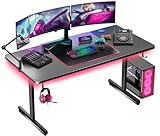
Overview: The GTPLAYER Gaming Desk 55 Inch offers expansive workspace and premium build quality at a competitive price. This large-format desk features a genuine carbon fiber surface, integrated mouse pad, and customizable LED lighting. The T-shaped leg design ensures stability across the generous 55-inch width.
What Makes It Stand Out: The built-in full-desk mouse pad provides seamless mouse tracking across the entire surface—a gamer-centric feature rarely included standard. The 55-inch width accommodates triple monitor setups comfortably. Rounded corners enhance safety without compromising the modern aesthetic. The one-year warranty and professional support demonstrate manufacturer confidence.
Value for Money: At $99.99, this desk delivers size and features typically found in $130-$160 models. The integrated mouse pad ($20-$30 value) and extended warranty make it particularly attractive. While lacking integrated power outlets, the sheer surface area and build quality provide excellent return on investment for users needing maximum space.
Strengths and Weaknesses: Strengths include generous 55-inch workspace, durable carbon fiber surface, included mouse pad, safety-focused rounded corners, and reliable warranty support. The T-frame provides excellent stability. Weaknesses include limited storage options beyond the headphone hook, no integrated power, and the LED lighting is less comprehensive than some competitors. The larger footprint may not suit small rooms.
Bottom Line: The GTPLAYER 55 Inch Desk is ideal for gamers needing maximum surface area for multiple monitors and peripherals. Its quality construction and included accessories make it a top choice for spacious setups. Recommended for dedicated gaming rooms or large home offices.
9. HLDIRECT 47 Inch Gaming Desk with LED Lights, Large RGB Computer Gaming Desk Table with Cup Holder Headphone Hook Mouse Pad, Ergonomic Modern Carbon Fiber Mesa Gamer Pc Work Home Office Desks, Black

Overview: The HLDIRECT 47 Inch Gaming Desk introduces innovative engineering with its ZZ mechanical structure, delivering exceptional stability for demanding setups. This desk features app-controlled RGB lighting, FSC-certified wood construction, and a comprehensive accessory package. It supports up to 150 lbs dynamic load, making it suitable for monitor arms and heavy equipment.
What Makes It Stand Out: The patented ZZ design divides the frame into two independent triangular structures, dramatically improving stability over traditional designs. App-controlled RGB lighting with 4×4 strip configuration offers professional-grade customization. The FSC-certified wood demonstrates environmental responsibility, while the included cup holder, headphone hook, and XL mouse pad provide complete out-of-box functionality.
Value for Money: At $92.99, this desk offers engineering innovation typically seen in $150+ premium models. The ZZ frame design and app-controlled lighting justify the mid-range price. Combined with eco-friendly materials and comprehensive accessories, it presents exceptional value for performance-focused buyers.
Strengths and Weaknesses: Strengths include revolutionary ZZ frame stability, app-controlled RGB lighting, high weight capacity (150-200 lbs), eco-certified materials, and complete accessory set. The cable management system maintains clean aesthetics. Weaknesses include the 47-inch width may limit ultra-wide monitor setups, and the app dependency may not appeal to all users. Assembly requires more precision due to the advanced frame design.
Bottom Line: The HLDIRECT Gaming Desk is perfect for enthusiasts seeking cutting-edge stability and smart lighting control. Its robust construction and eco-conscious materials make it ideal for heavy setups. Highly recommended for serious gamers and professionals requiring monitor arm support.
10. AODK L Shaped Gaming Desk with Led Lights, 51 Inch Reversible Gaming Computer Desk with Display Shelves, PC Gamer Desk Gamer Table with Storage Bag, L Desk for Game, Black

Overview: The AODK L Shaped Gaming Desk maximizes corner space with its 51-inch reversible design, display shelves, and integrated LED lighting. This desk features a dedicated CPU display platform, side-mounted fabric storage bag, and expansive legroom. It transforms corner spaces into immersive gaming command centers.
What Makes It Stand Out: The dual display shelves and dedicated CPU platform create a showcase-worthy setup, perfect for collectors and streamers. The L-shaped design optimizes corner space while providing expansive legroom for comfortable extended sessions. The reversible configuration allows flexible placement, and the side fabric bag offers convenient accessory storage without cluttering the main surface.
Value for Money: At $109.98, this L-shaped desk competes with basic corner desks while offering premium features like LED lighting, display shelves, and reversible design. Comparable L-shaped gaming desks with similar features typically cost $140-$180. The showcase design elements provide added value for streamers and enthusiasts who prioritize aesthetics.
Strengths and Weaknesses: Strengths include space-efficient L-shaped design, display shelves for collectibles, dedicated CPU platform with improved airflow, reversible configuration, and immersive LED lighting. The expansive legroom enhances comfort. Weaknesses include the 51-inch total length splits to smaller individual sections, limiting single-monitor size. The particleboard construction may not support extremely heavy equipment. Corner placement may not suit all room layouts.
Bottom Line: The AODK L Shaped Gaming Desk excels for corner setups and streamers wanting display space. Its thoughtful design maximizes both function and aesthetics in compact areas. Ideal for gamers seeking a showcase-worthy corner command center without premium pricing.
The RGB Gaming Desk Revolution
Why Your Desk Matters More Than You Think
The surface beneath your glowing peripherals does far more than provide stability. A thoughtfully designed RGB gaming desk acts as a canvas that either enhances or diminishes your carefully planned lighting scheme. Matte black surfaces absorb light differently than glossy white ones, creating distinct ambient effects that can make colors pop or mute them entirely. The desk’s material composition affects how LED strips reflect and diffuse, potentially turning harsh direct lighting into a smooth gradient that washes across your entire gaming space.
Beyond aesthetics, desk construction impacts performance. Vibration from mechanical keyboards, subwoofers, or enthusiastic mouse movements can travel through inferior surfaces, affecting sensitive streaming microphones or causing monitor wobble that distracts during competitive play. Premium gaming desks incorporate dampening technologies and reinforced structures that isolate your equipment, ensuring your RGB showmanship never compromises functionality.
The Psychology of Immersive Gaming Spaces
RGB lighting influences mood, focus, and performance through chromotherapy principles and environmental psychology. Your gaming desk serves as the anchor point for this psychological impact. When RGB elements sync across your desk edges, monitor backlights, and PC components, they create a unified field of color that reduces visual fragmentation. This cohesion minimizes cognitive load, allowing your brain to process game information more efficiently rather than constantly adjusting to disparate light sources.
Research into gaming performance shows that consistent ambient lighting reduces eye strain during extended sessions. A desk designed with integrated RGB features positions light sources at optimal angles, preventing glare on monitors while providing enough ambient illumination to maintain alertness. The psychological boundary between “gaming space” and “room” becomes more defined, triggering a mental shift into performance mode the moment you sit down.
Essential Features That Define Premium RGB Gaming Desks
Cable Management Systems for Clean Aesthetics
Nothing kills RGB ambiance faster than a rat’s nest of cables blocking light pathways and creating chaotic shadows. Modern gaming desks address this with multi-layer cable management that goes beyond simple clips. Look for desks with dedicated cable trays running the full length of the frame, grommet holes positioned strategically for monitor and peripheral routing, and channels integrated directly into the desk legs.
The best systems include magnetic covers that snap over cable runs, maintaining clean lines while allowing easy access for reconfiguration. Some designs feature raised monitor stands with hollow interiors, letting you route display cables completely out of sight. This attention to detail ensures your RGB lighting reflects off smooth surfaces rather than tangled wires, maximizing the visual impact of every LED.
Surface Materials and Texture Considerations
Your desk’s surface material dramatically affects how RGB lighting behaves in your space. Tempered glass tops create stunning under-glow effects, allowing light to pass through and reflect off underlying metallic frames. However, glass requires anti-glare treatment to prevent monitor reflections and fingerprint visibility that can detract from the clean aesthetic.
Carbon fiber laminate offers a high-tech appearance that complements RGB setups while providing a smooth, consistent texture for mouse tracking. The subtle weave pattern diffuses light interestingly without creating hotspots. For traditionalists, powder-coated MDF or solid wood with matte finishes provides excellent light absorption, making surrounding RGB elements appear more vibrant by contrast. The key is selecting a material that aligns with your desired lighting diffusion characteristics.
Frame Construction and Stability Factors
RGB setups often house substantial investments—multiple monitors, full-tower PCs, streaming equipment, and extensive lighting arrays. Your desk’s frame must handle significant weight without flexing, which can stress glass surfaces and misalign precisely positioned RGB strips. Steel frames with reinforced crossbars offer superior stability, while aluminum provides adequate strength with lighter weight for repositioning.
Pay attention to connection points where RGB components might attach. Some frames include pre-drilled mounting holes for LED channels or controller boxes. Anti-wobble adjustable feet become crucial when you’ve invested in synchronized lighting that shouldn’t shake during intense gaming moments. A stable frame ensures your RGB patterns remain steady and predictable, maintaining the professional appearance of your battlestation.
RGB Integration Methods
Desks approach RGB integration through two primary philosophies: built-in lighting arrays and mounting-ready designs. Built-in systems embed LED strips within the desk’s edges, often protected by translucent polycarbonate diffusers that create smooth light bars rather than pinpoint diodes. These systems typically include integrated controllers and power management, simplifying setup but limiting customization.
Mounting-ready desks prioritize flexibility, featuring channels, rails, and attachment points where you can install third-party RGB strips exactly where you want them. This approach suits enthusiasts who prefer specific brands for ecosystem synchronization or want to create complex lighting patterns beyond simple edge glow. Consider whether you value plug-and-play convenience or customization freedom when evaluating integration methods.
Size and Spatial Planning
RGB setups require more surface area than traditional gaming stations. Between monitor light bars, desk mat edge lighting, PC placement, and potential streaming gear, a 60-inch desk often becomes the practical minimum for serious setups. Depth matters equally—30 inches provides adequate space for monitor distance while allowing room for rear-mounted LED strips without interfering with wall placement.
Measure your room’s dimensions carefully, accounting for how RGB lighting will interact with surrounding walls. A desk positioned too close to a wall wastes potential for rear projection effects, while one too far forward may leave insufficient space for accent lighting behind monitors. The ideal size balances your equipment needs with the spatial requirements for optimal light dispersion.
Understanding RGB Desk Lighting Technologies
Direct Integration vs. Add-On Solutions
Direct integration means the desk ships with lighting pre-installed and powered through the frame itself. These systems often connect via USB to your PC, allowing software control alongside other peripherals. The advantage lies in cleaner installation and warranty coverage for the entire lighting system. However, proprietary systems may lock you into specific software ecosystems.
Add-on solutions treat the desk as a platform for your chosen RGB components. This approach requires more initial effort—measuring, cutting, and programming strips—but rewards you with unlimited creative potential. You might combine addressable WS2812B strips with Philips Hue play bars, creating layers of lighting that respond to different game events. The trade-off involves managing multiple power supplies and potential software conflicts.
Software Ecosystem Compatibility
Your RGB gaming desk should integrate seamlessly with existing software like Razer Chroma, Corsair iCUE, or MSI Mystic Light. Check for desks that advertise direct SDK integration with these platforms, allowing you to sync desk lighting with keyboard, mouse, and PC components through a single interface. Some manufacturers provide open APIs for community-developed plugins, future-proofing your investment.
Investigate whether the desk’s lighting controller supports motherboard RGB headers. Direct 5V or 12V connections enable synchronization through BIOS-level controls, eliminating software overhead. For streamers, consider desks compatible with OBS plugins that trigger lighting changes based on scene transitions, subscriber alerts, or donation events—turning your desk into an interactive broadcast element.
Customization and Syncing Capabilities
Beyond basic color cycling, premium RGB desks offer per-zone addressability, letting you assign different effects to different desk sections. Imagine a wave effect flowing from left to right during gameplay, or static colors demarcating specific functional zones—red for your streaming area, blue for your gaming space. This granularity transforms your desk from a passive light source into an active gameplay element.
Syncing capabilities extend beyond your PC ecosystem. The most advanced desks support HDMI or DisplayPort pass-through, analyzing on-screen content to create real-time ambient lighting that extends beyond your monitor. This technology, similar to Philips Ambilight, requires significant processing power but creates unparalleled immersion. Evaluate whether the desk includes a dedicated processing unit or relies on your PC’s resources, as this affects gaming performance.
Ergonomics Meet Aesthetics
Height Adjustability for Dynamic Gaming
Static desks force compromises between seated and standing positions, but RGB enthusiasts face additional challenges. When you stand, viewing angles to RGB elements shift, potentially creating glare or obscuring effects. Electric height-adjustable desks with programmable memory positions let you save optimal lighting configurations for both seated and standing postures.
Consider desks with synchronized RGB height indicators—lights that change color as the desk rises, providing visual feedback. Some models integrate anti-collision sensors that flash warning colors when encountering obstacles, protecting both your equipment and the desk mechanism. This fusion of ergonomic function and RGB feedback creates a more intuitive user experience.
Monitor Positioning and Eye Level Alignment
RGB setups often include monitor backlights that require precise positioning relative to walls and desk edges. Your desk should support monitor arms through robust grommet mounting options or reinforced surfaces that can handle clamp pressure without cracking glass or crushing laminate edges. The ideal setup positions your primary monitor so its bottom bezel sits 2-3 inches above desk level, creating space for front-facing RGB strips.
Desk depth directly impacts viewing distance. For 27-inch monitors, a 30-inch deep desk positions you at roughly arm’s length—optimal for both viewing comfort and RGB light perception. Too close, and you’ll see individual LEDs; too far, and ambient effects lose impact. The desk’s front edge should be beveled or rounded to prevent wrist pressure while keeping RGB edge lighting visible from your seating position.
Keyboard and Mouse Placement Optimization
RGB mechanical keyboards and gaming mice represent significant investments in both performance and aesthetics. Your desk must provide a stable, consistent surface that doesn’t flex or resonate during intense use. Look for desks with reinforced keyboard tray areas or full-surface stability guarantees. Some designs include subtle positioning guides—laser-etched marks that help you place your keyboard at the exact optimal angle relative to your monitor.
Mouse pad compatibility matters enormously. Extended RGB mouse pads require completely flat surfaces without seams or texture changes. Desks with seamless edge banding prevent mouse pad edges from catching, while slightly textured surfaces provide grip without interfering with mouse sensor accuracy. Consider how the desk’s surface color contrasts with your mouse pad’s RGB edges—dark surfaces make colors appear more saturated.
Material Science in Modern Gaming Desks
Tempered Glass Surfaces and Light Diffusion
Tempered glass gaming desks create stunning under-glow effects but require careful engineering. Quality glass tops feature etched undersides that diffuse LED light evenly, preventing hotspotting where individual diodes become visible. The glass thickness affects both safety and optics—8mm provides adequate strength while allowing sufficient light transmission. Some designs incorporate tinted glass (smoke or bronze) that shifts RGB colors subtly, creating unique aesthetic signatures.
The frame beneath glass tops should be powder-coated white or metallic to maximize reflectivity. Black frames absorb too much light, reducing overall brightness. Consider edge treatments—polished edges create prism effects that scatter RGB light interestingly, while beveled edges provide cleaner lines. Remember that glass surfaces amplify fingerprints and dust, requiring more frequent cleaning to maintain pristine RGB reflections.
Carbon Fiber Textures and Light Absorption
Carbon fiber laminate offers the perfect middle ground between glass aesthetics and traditional desk functionality. The textured surface diffuses light directionally, creating subtle highlights that change as you move around the desk. This dynamic quality adds depth to static RGB setups without requiring animated effects. The material’s inherent darkness makes surrounding RGB elements appear brighter through contrast.
However, carbon fiber’s texture can interfere with optical mouse sensors at very low DPI settings. Premium gaming desks use micro-textured carbon fiber—enough to catch light interestingly but smooth enough for pixel-precise tracking. The material’s heat resistance also matters for streamers using hot lights or for setups where gaming laptops vent directly onto the desk surface.
Wood and Laminate Options for RGB Setups
Solid wood desks bring warmth to RGB setups that can otherwise feel cold and technological. Hardwoods like maple or birch provide stable, flat surfaces that support even the largest mouse pads. The key lies in finish selection—matte polyurethane coatings prevent glare while allowing easy cleaning. Some artisans create desks with resin-filled voids containing embedded LED strips, creating organic light patterns that contrast beautifully with technological RGB components.
High-pressure laminate (HPL) offers wood aesthetics with superior durability and consistent flatness. Premium laminates include anti-static properties that protect sensitive electronics from discharge. When selecting wood or laminate for RGB setups, prioritize lighter finishes that reflect ambient lighting upward, creating a subtle uplight effect that reduces eye strain during dark gaming sessions.
Spatial Planning for Multi-Monitor RGB Setups
Desk Depth and Viewing Distance
Multi-monitor RGB configurations demand careful depth calculations. For dual 27-inch monitors, a 30-inch deep desk positions the primary screen at a comfortable viewing distance while leaving room for rear-mounted light bars. Triple monitor setups often require 36-inch depth to prevent the outer monitors from feeling too close to your peripheral vision.
Consider how RGB monitor backlights interact with wall distance. Desks positioned 12-18 inches from walls create optimal space for rear-projection effects, allowing light to spread and diffuse before hitting the surface. Too close, and you get harsh hotspots; too far, and the effect becomes diluted. Some gaming desks include integrated spacers or wall-distance guides to help you position them optimally.
Width Requirements for Triple Monitor Arrays
A triple monitor setup with 27-inch displays requires at least 70 inches of desk width to accommodate monitor bezels and mounting hardware. RGB setups need additional space for lighting controllers, stream decks, and accent lighting. Plan for 80 inches minimum if you want side-mounted LED strips or corner RGB towers.
The desk’s width also affects cable routing. Wider desks require more robust cable management systems to prevent voltage drop across long LED strip runs. Look for desks with multiple power access points along their length, reducing the need for unsightly extension cords that disrupt clean RGB aesthetics.
Corner vs. Straight Desk Configurations
Corner desks maximize surface area in limited spaces but create unique RGB challenges. The 90-degree angle can cause color inconsistencies where LED strips bend, and corner shadows may appear if lighting isn’t carefully planned. Premium corner gaming desks include curved transition pieces with integrated diffusers that maintain consistent light quality around corners.
Straight desks offer simpler RGB implementation and better symmetry for streaming camera angles. They also allow for easier rear projection onto walls. However, they may require more room lengthwise. Consider your space’s shape and how RGB light will interact with room corners—corner desks can create immersive wraparound effects, while straight desks provide cleaner, more focused lighting zones.
Power Management and Electrical Considerations
Built-in Power Strips and USB Hubs
RGB setups consume significant power—LED strips, controllers, and hubs can easily draw 100+ watts. Built-in power strips with surge protection prevent cascading failures that could damage expensive components. Look for desks with power delivery (PD) USB-C ports that can charge laptops while simultaneously powering RGB controllers, reducing cable clutter.
The placement of power access points matters. Side-mounted power strips keep cables away from primary RGB zones, while under-desk mounting hides power bricks but may interfere with leg room. Premium designs include removable power modules that let you position outlets exactly where needed for your specific RGB configuration.
Managing Power Cables with RGB Setups
RGB lighting requires low-voltage DC power, creating a separate cable ecosystem from your AC-powered monitors and PC. The best gaming desks include segregated cable channels—one for high-voltage AC lines, another for low-voltage RGB wiring. This separation prevents electromagnetic interference that can cause LED flickering or color inaccuracies.
Consider desks with integrated power supply mounting brackets. Placing RGB power supplies under the desk but within ventilated enclosures keeps them accessible while hiding transformer boxes. Some designs include voltage display panels that show real-time power draw, helping you monitor your RGB setup’s electrical load and prevent overloading circuits.
Surge Protection for Expensive Equipment
A single power surge can destroy thousands of dollars of RGB-equipped gear. Gaming desks with built-in surge protection rated at least 4000 joules provide first-line defense. Better models include isolated filter banks that separate “dirty” motor loads (like height-adjustable mechanisms) from sensitive electronics, preventing back-feed interference.
For RGB enthusiasts, consider desks with sequential power-on features. These systems activate outlets in stages, preventing inrush current from multiple LED strips and PC components from tripping breakers. Some include battery backup integration points, letting you connect a UPS specifically for your RGB controllers to maintain lighting during brief outages—crucial for streamers.
Acoustic Properties of Gaming Desk Materials
How Desk Surfaces Affect Microphone Quality
Streamers and competitive gamers rely on clear voice communication, but desk surfaces can sabotage audio quality. Hard, reflective surfaces like glass create echo and reverb that microphones pick up, muddying your voice. The ideal RGB gaming desk includes acoustic damping layers beneath the primary surface—often thin rubber or cork composites that absorb sound without affecting stability.
Some manufacturers engineer desks with angled surfaces that deflect sound away from microphone positions rather than directly back. The texture also matters; micro-textured surfaces scatter sound waves more effectively than smooth ones, reducing focused reflections. If streaming is a priority, consider desks with optional acoustic panel attachments that mount discreetly along the rear edge, absorbing sound while maintaining RGB visibility.
Vibration Dampening for Streaming Setups
Mechanical keyboards, especially those with RGB lighting, transmit vibrations through desk surfaces that sensitive condenser microphones detect as rumble. Premium gaming desks incorporate elastomeric isolation mounts at key stress points—where monitor arms clamp, where keyboards rest, and where PC cases sit. These mounts absorb vibrations before they propagate through the desk.
For extreme cases, consider desks with floating surface designs. A thin top layer (where your gear sits) connects to the main frame through dampening mounts, creating a mechanical isolation barrier. This design maintains structural rigidity while preventing vibration transmission. The floating layer can even include its own RGB elements, creating subtle motion effects that aren’t affected by typing vibrations.
Future-Proofing Your RGB Gaming Investment
Modular Design and Expandability
RGB technology evolves rapidly, with new standards like ARGB Gen2 and proprietary ecosystems emerging yearly. Modular gaming desks feature replaceable RGB modules—edge strips, controller boxes, and diffuser channels that you can swap without replacing the entire desk. This design philosophy extends to cable management, with removable trays and clip systems that adapt to new connector types.
Look for desks with standard mounting patterns (VESA for monitor arms, 80/20 aluminum extrusion compatibility for custom accessories). These standards ensure you can attach future RGB innovations without drilling or permanent modifications. Some forward-thinking designs include blank faceplates where you can install aftermarket controller displays or touch panels as they become available.
Compatibility with Emerging RGB Standards
The RGB landscape fragments across multiple protocols: 5V addressable, 12V analog, USB-controlled, and Wi-Fi/Bluetooth-enabled systems. Future-proof desks include multi-voltage headers and universal controller mounting points. The most advanced models feature swappable controller modules—pop out the old Razer Chroma module, insert the new Corsair iCUE module, maintaining full ecosystem compatibility.
Consider desks with built-in wireless charging pads that can be firmware-updated to support future device communication protocols. Some manufacturers partner with RGB ecosystem leaders to ensure early access to SDK updates. This commitment means your desk’s lighting capabilities evolve alongside your other peripherals, preventing premature obsolescence.
Budget Considerations Without Compromising Quality
Price vs. Performance Sweet Spots
Entry-level RGB gaming desks ($200-400) typically offer basic edge lighting and simple cable management. These suit casual gamers but lack the robust construction needed for heavy, expensive setups. The mid-range ($400-800) represents the optimal balance—steel frames, comprehensive cable systems, and quality diffusers that create professional lighting effects without boutique pricing.
Premium desks ($800+) justify their cost through materials like tempered glass, electric height adjustment, and ecosystem integration that simplifies complex setups. However, the law of diminishing returns applies above $1200—you’re paying for exotic materials and marginal improvements. For most RGB enthusiasts, the $600-800 range provides 90% of premium features at a reasonable investment level.
Long-term Value Over Initial Cost
A $300 desk that sags under your triple-monitor RGB setup within a year costs more than a $700 desk that lasts five. Evaluate warranty terms specifically covering RGB components—LED lifespan, controller replacement, and diffuser clarity guarantees. Premium desks often include 3-5 year warranties on electronics, protecting your investment.
Consider resale value. Desks from established gaming brands retain 40-60% of their value after two years, while generic furniture store desks become nearly worthless. Factor in the cost of your time—a desk that takes 30 minutes to assemble versus 4 hours represents significant value. The best RGB gaming desks use tool-free assembly for RGB components, letting you upgrade without disassembling the entire frame.
Maintenance and Care for RGB Gaming Desks
Cleaning Electronic Components Safely
RGB desks accumulate dust that dims lighting output and affects heat dissipation. Use compressed air with a static-safe nozzle to clean controller boxes and LED channels monthly. For diffuser strips, microfiber cloths slightly dampened with isopropyl alcohol remove grime without scratching. Never spray cleaners directly onto electronic components—moisture can seep into connector housings.
Glass surfaces require special care. Ammonia-based cleaners can damage anti-reflective coatings, reducing clarity. Opt for dedicated glass cleaners or distilled water with a drop of dish soap. Clean in circular motions to prevent streaks that become visible under RGB lighting. For textured surfaces like carbon fiber, soft-bristled brushes dislodge debris from grooves without damaging the finish.
Preventing RGB LED Degradation
LED brightness degrades over time, typically losing 30% output after 50,000 hours. Reduce unnecessary operation by programming your desk’s RGB system to power down when your PC sleeps. Avoid maximum brightness settings—running LEDs at 80% brightness doubles their lifespan while providing nearly identical visual impact due to logarithmic human light perception.
Heat accelerates LED degradation. Ensure your desk’s LED channels include ventilation slots, and don’t block them with cable bundles. In hot climates, consider adding small heat sinks to controller chips. Some premium desks include thermal sensors that automatically dim LEDs when temperatures exceed safe thresholds, protecting your investment without manual intervention.
Community and Customization Culture
DIY RGB Desk Modifications
The RGB gaming community thrives on modification. Common DIY upgrades include replacing stock LED strips with higher-density addressable alternatives, adding aluminum channels for better diffusion, and installing custom controllers like Arduino-based solutions for unique effects. Before modifying, verify your desk’s warranty terms—some manufacturers void coverage if you open controller housings.
Popular modifications involve integrating desk lighting with room-scale smart home systems. Using ESP32 microcontrollers, enthusiasts create desks that respond to room occupancy sensors, time of day, or even weather conditions. The most advanced mods include capacitive touch sensors embedded in the desk surface, letting you change lighting by touching specific zones—no visible controls needed.
3D Printed Accessories and Integration
The intersection of 3D printing and RGB desks enables limitless customization. Community-designed accessories include diffuser clips that hold custom-length LED strips, cable management grommets with integrated cable strain relief, and monitor stand extensions that position backlights perfectly. Sites like Thingiverse host thousands of free designs specifically for popular gaming desk models.
Consider printing your own controller enclosures with integrated cable routing and ventilation patterns optimized for your specific components. PETG filament offers heat resistance for enclosures near power supplies, while translucent PLA diffuses light softly for custom accent pieces. The ability to iterate designs means you can perfect your RGB integration over time, evolving your desk alongside your setup.
Frequently Asked Questions
How much should I expect to spend on a quality RGB gaming desk?
Quality RGB gaming desks typically range from $400 to $800 for most enthusiasts. This price bracket includes steel frame construction, integrated cable management, and reliable LED systems with software compatibility. Budget-conscious buyers can find decent options around $300, but these often compromise on stability and RGB brightness. Premium models exceeding $1000 offer exotic materials and advanced features, but the performance gains diminish significantly beyond the $800 mark.
Can I add RGB lighting to my existing non-RGB desk?
Absolutely. Add-on RGB solutions like adhesive LED strips, monitor light bars, and under-desk lighting kits can transform any desk. The key is selecting high-quality diffusers to avoid harsh hotspots and ensuring your desk’s surface can support adhesive mounts without damage. For the best results, choose aluminum channels that screw into the desk underside rather than relying on adhesive alone, which can fail over time.
What desk surface material works best for RGB setups?
Tempered glass creates the most dramatic under-glow effects but requires careful maintenance. Carbon fiber laminate offers the best balance of aesthetics, durability, and mouse performance. Matte-finish wood or laminate provides excellent contrast, making surrounding RGB elements appear more vibrant. Avoid high-gloss surfaces that create monitor reflections and show fingerprints prominently under RGB lighting.
How do I prevent RGB desk lights from causing monitor glare?
Position LED strips at least 2 inches behind your monitor’s plane, angling them slightly downward. Use diffusers to soften light output and choose desks with recessed LED channels that direct light away from screens. Many premium desks include anti-glare baffles—small fins that block direct light paths to monitors while allowing ambient glow to escape. Software brightness control also helps; run desk LEDs at 60-70% brightness to reduce glare while maintaining ambiance.
Are built-in RGB desks better than DIY solutions?
Built-in desks offer convenience, warranty coverage, and clean integration but limit customization. DIY solutions provide unlimited creative freedom and often cost less, but require technical skill and time investment. For most users, a hybrid approach works best: purchase a desk designed for RGB compatibility (with channels and power access) but install your preferred LED strips and controllers. This gives you the best of both worlds—structural quality and personalization.
What size desk do I need for a triple-monitor RGB setup?
Plan for a minimum of 70 inches width and 30 inches depth for triple 27-inch monitors with RGB backlights. This provides adequate space for monitor bezels, mounting hardware, and side-mounted LED strips. If you include additional RGB elements like desk mat lighting or corner accent towers, extend width to 80 inches. Remember to measure your room’s wall space, ensuring enough clearance for rear projection effects.
How important is cable management for RGB desks?
Critical. Poor cable management blocks light paths, creates shadows, and ruins the clean aesthetic that makes RGB setups impressive. Effective RGB desks include segregated cable channels for AC and DC lines, preventing electromagnetic interference that causes LED flickering. Look for designs with removable cable trays and magnetic covers that maintain accessibility while hiding clutter. Budget at least 20% of your desk budget for quality cable management accessories if they’re not included.
Can RGB desk lighting sync with my games?
Yes, through several methods. Desks with native SDK integration (Razer Chroma, Corsair iCUE) sync directly with supported games. Others use HDMI/DisplayPort pass-through devices that analyze screen content in real-time. Software solutions like Wallpaper Engine or third-party RGB controllers can also mirror game colors to desk lighting. Verify compatibility with your specific games and whether the sync method introduces input lag, which matters for competitive play.
Do RGB gaming desks require special power outlets?
Most RGB desks operate within standard 120V/15A circuits, but high-end setups with multiple LED strips, height adjustment motors, and powered USB hubs can approach circuit limits. Calculate total draw: a typical desk might use 100W for LEDs, 200W for motors, plus your PC and monitors. If your circuit also powers room lighting or other equipment, consider a dedicated 20A circuit. Built-in surge protection is essential, and a UPS specifically for your RGB controllers prevents settings loss during outages.
How long do RGB LEDs in gaming desks typically last?
Quality SMD LEDs last 50,000+ hours before reaching 70% brightness—over 17 years at 8 hours daily use. However, heat, voltage fluctuations, and manufacturing defects can shorten this. Premium desks use name-brand LEDs (like Epistar or Cree) with documented lifespans and include thermal management. Cheaper models may use unbranded LEDs that degrade noticeably within 2-3 years. Running LEDs at reduced brightness and ensuring adequate ventilation significantly extends their usable life.