Your startup’s five-person team won’t stay that way for long. Whether you’re projecting 50% headcount growth next year or simply need furniture that adapts to hybrid work experiments, static desks are a financial black hole. Every reorganization, every new hire, every pivot in workflow becomes a costly exercise in dumpster rentals and replacement orders. Modular workstations flip this script entirely—transforming your office into a dynamic asset that expands, contracts, and evolves as fluidly as your business strategy does.
But not all “modular” claims hold equal weight. A truly scalable workstation system operates like building blocks engineered for enterprise-level durability while offering the flexibility of LEGO bricks. The difference lies in understanding architectural principles, material integrity, and ecosystem compatibility before you sign that purchase order. Let’s decode what separates furniture that grows with you from expensive mistakes that look good in a showroom but collapse under the weight of real-world business agility.
Top 10 Modular Workstations for Business
Detailed Product Reviews
1. TooCust 2 Person Cubicle Desk with Privacy Panels - 95”L x 47”W x 47”H L Shaped Cubicle Desks for Office, Wood and Metal Office Workstations, Cubicles Privacy Business Furniture

Overview: The TooCust 2 Person Cubicle Desk delivers a professional L-shaped workstation solution designed for modern office environments. Measuring 94.5" x 47.2" x 47.2", this system provides two distinct workspaces with integrated privacy panels, making it ideal for collaborative yet focused work settings. The combination of wood and metal construction positions it as a mid-tier commercial furniture option.
What Makes It Stand Out: The standout feature is the six upgraded dividers crafted from eco-friendly bamboo fiber and premium linen fabric, offering superior sound absorption compared to standard hardboard panels. The reinforced 1.5-inch steel frame with upgraded triangle brackets supports an impressive 300 lbs per station. Its modular L-shaped design allows multiple units to connect, creating scalable office layouts, while built-in cable management grommets maintain clean aesthetics.
Value for Money: At $929.99, this two-person system costs approximately $465 per workstation. Traditional cubicle installations often exceed $1,500 per person, while basic desk pairs lack privacy features. This product bridges the gap between expensive custom installations and budget desks, offering commercial-grade durability with thoughtful privacy solutions at a reasonable price point.
Strengths and Weaknesses: Strengths include premium bamboo fiber panels, high weight capacity, flexible modular configuration, integrated cable management, and commercial durability. Weaknesses involve a higher price than basic desk alternatives, a large footprint unsuitable for compact offices, and limited aesthetic customization options. The L-shape may not suit all work styles.
Bottom Line: This TooCust cubicle system excels for small businesses and growing teams seeking professional privacy solutions without custom installation costs. The eco-friendly panels and sturdy construction justify the investment for offices prioritizing employee focus and modular flexibility.
2. VIRTRON 6 Person Workstation, Modular Office Cubicle Desk with Power Outlets & USB-C, Staff Desk Workstation with Mobile Storage Cabinets & Privacy Panels for Commercial Office Workspace (Black)

Overview: The VIRTRON 6 Person Workstation represents a comprehensive team desk solution that integrates three two-person units into a cohesive 16-22 foot system. Designed for commercial environments, this black workstation includes full-height privacy panels, integrated power, and mobile storage, addressing the complete needs of modern collaborative teams in a single package.
What Makes It Stand Out: Each desk features a built-in power hub with 2 AC outlets, USB, and USB-C ports, eliminating messy extension cords. The under-desk mobile storage cabinets with smooth casters provide flexible personal storage that adapts to evolving layouts. Full-height privacy panels minimize distractions while maintaining an open feel. The modular design allows seamless expansion as teams grow.
Value for Money: Priced at $2,578.89, this six-person system breaks down to roughly $430 per workstation. Comparable individual desks ($250 each) plus power solutions ($75) and storage ($100) would cost approximately $425 per person, making VIRTRON competitively priced for an all-in-one, professionally integrated system that saves assembly and compatibility headaches.
Strengths and Weaknesses: Strengths include integrated power delivery, mobile storage flexibility, modular scalability, commercial-grade melamine surfaces, and full-height privacy panels. Weaknesses are the substantial upfront investment, significant space requirements (approximately 20 feet), potential overkill for teams under four people, and limited color options. The fixed configuration may restrict creative office layouts.
Bottom Line: Ideal for expanding departments, call centers, and collaborative offices, this VIRTRON workstation delivers exceptional value for businesses needing a turnkey solution. The integrated power and storage eliminate common workspace friction points, making it a smart investment for productivity-focused teams.
3. Offee Modular Computer Office Desk, Modern Style Small Study Writing Workstation Table for Home & Business, Large (55" x 28")

Overview: The Offee Large Modular Desk offers a 55" x 28" modern workstation designed for home offices and small business environments. Combining solid wood particle board with a carbon steel frame, this desk prioritizes simplicity and mobility without sacrificing professional aesthetics, making it suitable for dynamic work settings where flexibility matters.
What Makes It Stand Out: Its minimalist design features clean edges, sleek metal legs, and a neutral wood tone that integrates seamlessly into contemporary spaces. The simple structure enables effortless transportation and quick assembly, a significant advantage for startups and remote workers who relocate frequently. The 30" height is ergonomically optimized for comfortable typing and studying.
Value for Money: At $259.81, this desk sits in the sweet spot between budget flat-pack furniture and premium solid wood options. Comparable models from brands like GreenForest or SHW range from $180-$320, making Offee competitively priced for its size and construction quality. The easy mobility adds value for businesses with evolving space needs.
Strengths and Weaknesses: Strengths include affordable pricing, lightweight mobility, straightforward assembly, modern minimalist aesthetic, and a spacious 55" surface. Weaknesses involve particle board construction rather than solid wood, lack of integrated storage or cable management, potential stability concerns under heavy equipment loads, and limited size options within the product line.
Bottom Line: This Offee desk excels for home offices, freelancers, and small startups seeking an affordable, stylish, and portable workstation. While it lacks advanced features, its simplicity and value make it an excellent entry-level professional desk that doesn’t compromise on modern design principles.
4. Offee Modular Computer Office Desk, Modern Style Small Study Writing Workstation Table for Home & Business, Standard (47" x 24")

Overview: The Offee Standard Modular Desk provides a compact 47.2" x 23.6" workstation solution for space-constrained environments. Sharing the same modern aesthetic and construction approach as its larger sibling, this scaled-down version targets ultra-small offices, dorm rooms, and minimalist workspaces where every square foot counts while maintaining professional appearance.
What Makes It Stand Out: This desk delivers the same core benefits—easy mobility, quick assembly, and modern design—in a more compact and affordable package. The 30" height maintains ergonomic comfort while the reduced footprint fits where larger desks cannot. Its carbon steel frame and particle board construction ensure durability despite the smaller scale.
Value for Money: At $199.00, this represents exceptional value for a dedicated workstation. It’s priced competitively against budget brands while offering better mobility and assembly convenience. For startups furnishing multiple stations, the cost savings compound significantly compared to $250-$300 alternatives, making it ideal for bootstrapped businesses.
Strengths and Weaknesses: Strengths include an ultra-affordable price point, minimal space requirements, lightweight portability, simple assembly, and clean modern styling. Weaknesses are the limited 47" surface restricting multi-monitor setups, particle board durability concerns, absence of cable management or storage features, and potentially reduced stability for heavier equipment compared to larger models.
Bottom Line: Perfect for tight quarters and budget-conscious buyers, the Offee Standard Desk proves that good things come in small packages. It sacrifices surface area for affordability and flexibility, making it an intelligent choice for solo entrepreneurs, students, and small office deployments where cost and space efficiency are paramount.
5. Tribesigns 19FT Conference Table, Large Rectangle Conference Room Table, Long Meeting Seminar Table Business Tables for 16-22 People (Six Tables)
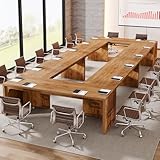
Overview: The Tribesigns 19FT Conference Table system comprises six modular rectangular tables that combine to create a massive meeting surface accommodating 16-22 people. Designed for versatility, each 78.74" x 23.23" section can be used individually or linked together, offering unprecedented flexibility for businesses with varying meeting room requirements and space constraints.
What Makes It Stand Out: The modular six-table design allows infinite reconfiguration—from boardroom-style long tables to collaborative pod arrangements. E1-level manufactured wood with a thick metal frame supports 200 lbs per section while showcasing natural wood grain. The simplistic aesthetic elevates modern office ambiance without complicated embellishments, and straightforward assembly reduces setup friction.
Value for Money: At $1,099.99 for the complete system, each table section costs approximately $183. Traditional fixed conference tables seating 20+ people typically range from $2,500-$5,000, making Tribesigns remarkably affordable. The ability to reconfigure and use tables separately provides additional value impossible with monolithic alternatives.
Strengths and Weaknesses: Strengths include modular flexibility, excellent price per seat, easy assembly, E1-grade materials, and multi-purpose usage for meetings or communal workspaces. Weaknesses involve potential seam visibility between sections, stability concerns when fully extended, lack of integrated power or cable management, and the need to store unused sections. The modular design may feel less prestigious than a single slab table.
Bottom Line: This Tribesigns system is a game-changer for growing businesses needing adaptable meeting space without breaking the budget. The modular approach sacrifices some seamless aesthetics for unparalleled flexibility and value, making it an excellent choice for dynamic offices where conference room functions frequently change.
6. Bush Business Furniture 60-inch 2 Person Office Cubicle Desk with Storage Set, Double Workstation, Hustle Collection, White and Platinum Gray
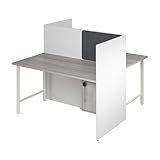
Overview: The Bush Business Furniture Hustle Collection delivers a commercial-grade cubicle solution designed for dynamic two-person workspaces. This 60-inch double workstation combines privacy-focused design with robust construction, making it ideal for small businesses, startups, or home offices requiring professional-grade furniture that meets ANSI/BIFMA standards. The integrated storage and power management create a self-contained productivity zone.
What Makes It Stand Out: Keypad-locked under-desk cabinets provide security rare in this price tier, allowing custom combinations for safeguarding personal items. The desktop power grommets feature both USB-A and USB-C ports, future-proofing your charging capabilities. Bush’s 10-year manufacturer warranty demonstrates exceptional confidence in durability. The modular design enables seamless expansion as your team grows, while melamine-finished surfaces resist scratches and stains from intensive 40+ hour work weeks.
Value for Money: At $838.90, this workstation represents solid value for commercial furniture. Comparable systems with security features and power integration often exceed $1,000. The included storage cabinets, integrated cable management, and tackboards eliminate additional accessory purchases. When factoring in the decade-long warranty and ANSI/BIFMA certification, the cost-per-year-of-use becomes highly competitive for budget-conscious businesses.
Strengths and Weaknesses: Strengths include robust 200-pound weight capacity per desk, secure keypad locks, comprehensive power solutions, and expandable modularity. The melamine finish provides excellent durability, while wire management maintains clean aesthetics. Weaknesses are limited to two color options and a compact 60-inch width that may feel restrictive for users requiring expansive surface area. Assembly requires time and precision, and the cubicle design may not suit open-plan preferences.
Bottom Line: This is an excellent investment for small businesses prioritizing security, durability, and scalability. The Hustle Collection workstation delivers commercial quality at a mid-range price, making it ideal for growing teams needing private, productive environments without enterprise-level budgets.
7. Nuipesn 63" L-Shaped Executive Desk with Locking Drawers - Modern Commercial Grade Business Office Furniture - Heavy Duty Wood Computer Workstation with Full Privacy Panel & Cable ManagementWalnut

Overview: The Nuipesn L-Shaped Executive Desk targets professionals seeking a sophisticated, secure workstation with flexible configuration options. This 63-inch corner desk combines executive aesthetics with practical locking storage and a full privacy panel, making it suitable for home offices, executive suites, or reception areas. The reversible design accommodates both left and right-handed users, while the walnut finish adds warmth to modern workspaces.
What Makes It Stand Out: The reversible storage cabinet is a standout feature, allowing left or right-side installation without compromising stability. The integrated locking system secures both drawers and cabinets, protecting confidential documents—a critical feature for legal, medical, or financial professionals. The full-length privacy panel provides leg coverage and a cohesive front-facing appearance, essential for client-facing offices. The built-in cable box keeps cords organized and surfaces clutter-free.
Value for Money: Priced at $849.99, this desk competes well with executive furniture costing $1,000+. The combination of locking storage, privacy panel, reversible design, and cable management typically requires purchasing separate accessories. For professionals handling sensitive information, the security features alone justify the price premium over standard desks. The commercial-grade designation suggests durability that outweighs cheaper alternatives.
Strengths and Weaknesses: Strengths include flexible reversible layout, comprehensive locking storage, effective cable management, and professional privacy panel. The thick, wear-resistant desktop supports heavy equipment. Weaknesses include potential color variation due to lighting and display settings, heavy weight complicating assembly and relocation, and particle board construction despite “heavy duty” claims. The compact 32-inch depth may limit workspace for some users.
Bottom Line: This desk excels for security-conscious professionals needing a flexible, private workspace. While assembly requires effort, the reversible design and locking features make it a smart investment for home offices or small businesses handling confidential work. The walnut finish adds executive presence without luxury pricing.
8. Bush Business Furniture Universal 108W 6 Piece Modular Storage Set with Floor and Wall Cabinets in Platinum Gray

Overview: This comprehensive six-piece storage system from Bush Business Furniture addresses comprehensive organizational needs for offices, garages, or commercial spaces. The Universal collection includes tall cabinets, floor units, and wall-mounted options, providing a complete solution for storing everything from office supplies to tools. Designed for commercial durability, these platinum gray cabinets offer flexible configuration to maximize vertical and horizontal space.
What Makes It Stand Out: The all-in-one bundle eliminates the guesswork of piecing together compatible storage. Mixing tall narrow cabinets with drawer units and wall-mounted options creates unprecedented flexibility. Commercial-quality construction ensures these units withstand years of heavy use, while adjustable shelving accommodates items of various sizes. The modular design allows side-by-side or separate placement, adapting to unique room layouts and evolving storage needs.
Value for Money: At $1,525.83, this represents significant upfront investment but delivers exceptional long-term value. Purchasing comparable commercial cabinets individually would easily exceed $2,000. The system’s versatility across office, garage, or laundry room applications maximizes return on investment. Fixed and adjustable shelving future-proofs the purchase, while ANSI/BIFMA quality standards ensure durability that outlasts cheaper consumer-grade alternatives.
Strengths and Weaknesses: Strengths include comprehensive six-piece coverage, commercial-grade durability, highly configurable layout, and adjustable shelving. The platinum gray finish suits modern aesthetics. Weaknesses include high initial cost that may deter budget buyers, requirement for 16-inch stud spacing limiting wall cabinet placement, and potential need for additional tools and hardware. The industrial aesthetic may not suit residential decors.
Bottom Line: This modular storage set is ideal for businesses or homeowners seeking a one-time, comprehensive organizational solution. While the price requires commitment, the commercial quality and flexibility justify the investment for those tired of replacing flimsy storage. Perfect for offices, workshops, or multi-purpose rooms needing serious, scalable storage capacity.
9. Offee Modular Computer Office Desk, Modern Style Small Study Writing Workstation Table for Home & Business, Team Desk – 4 Person (94" x 47")
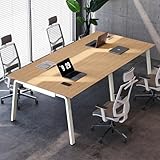
Overview: The Offee Modular 4-Person Desk offers a minimalist, collaborative workspace solution for modern offices. Spanning 94 x 47 inches, this team desk accommodates four users in a compact footprint, making it ideal for startups, small offices, or co-working spaces. The combination of solid wood particle board and carbon steel frame balances affordability with professional stability, while the clean-lined design integrates seamlessly into contemporary environments.
What Makes It Stand Out: The four-person capacity at under $500 is remarkable, democratizing collaborative furniture for budget-conscious businesses. The modular system scales from single-person to multi-person configurations, allowing consistent aesthetics as teams grow. Carbon steel frames provide commercial-grade stability without the commercial price tag. The minimalist design emphasizes functionality over ornamentation, perfect for dynamic environments where furniture must adapt quickly to changing needs.
Value for Money: At $469.42, this desk delivers extraordinary value. Comparable four-person workstations typically start at $800+, making this nearly 50% less expensive. The simple structure reduces assembly time and shipping costs, savings passed to consumers. While materials are mid-tier, the price point allows startups to furnish entire offices without compromising on collaborative space design. The durability suffices for intensive business use at a fraction of typical costs.
Strengths and Weaknesses: Strengths include unbeatable price for four-person capacity, sturdy steel frame, easy mobility, quick setup, and space-efficient minimalist design. The modular system offers scalability. Weaknesses include lack of privacy panels, basic features without cable management or storage, particle board tops vulnerable to moisture, and limited aesthetic options. The 47-inch width provides minimal personal space per user.
Bottom Line: This desk is a game-changer for startups and collaborative workspaces on tight budgets. While it sacrifices premium materials and individual privacy, the four-person capacity and sturdy construction at this price are unmatched. Perfect for teams prioritizing interaction over isolation and budget over luxury.
10. Tribesigns L-Shaped Executive Desk, Large Office Desk with 3-Drawer File Cabinet, Industrial Corner Computer Table with Drawers, Business Workstation for Home Office (Black, 83")
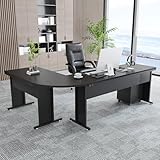
Overview: The Tribesigns L-Shaped Executive Desk delivers massive workspace and abundant storage at an entry-level price point. The 83 x 63-inch industrial-style corner desk dominates rooms with its generous surface area, accommodating multiple monitors, printers, and accessories. A matching three-drawer rolling file cabinet provides integrated storage, while the reversible design ensures compatibility with any office layout. The black steel frame and rustic brown finish create a bold industrial aesthetic.
What Makes It Stand Out: The sheer size-to-price ratio is exceptional—83 inches of workspace for $313 is virtually unmatched. The included rolling file cabinet with full-extension letter/A4 drawer adds $100+ value typically sold separately. Reversible configuration provides layout flexibility without additional cost. Adjustable feet accommodate uneven floors while protecting surfaces. The industrial design trend adds character to home offices tired of generic furniture.
Value for Money: At $313.49, this desk redefines budget workspace value. Comparable L-shaped desks with storage exceed $500, making this 40% cheaper. The thick particle board and steel frame construction, while not premium, offers adequate durability for home office use. The three-drawer cabinet alone justifies nearly half the price. For users needing maximum space on minimum budget, this represents an unparalleled proposition.
Strengths and Weaknesses: Strengths include enormous desktop space, included file cabinet, reversible design, sturdy steel frame, adjustable feet, and striking industrial style. The two small drawers plus file drawer offer versatile storage. Weaknesses include particle board construction susceptible to moisture and scratches, heavy weight complicating assembly, industrial aesthetic unsuitable for traditional offices, and potential longevity concerns under heavy daily use.
Bottom Line: This desk is the ultimate budget champion for space-hungry home offices. While materials reflect the price, the massive surface, included storage, and reversible design deliver features typically found in desks twice the cost. Perfect for users prioritizing space and storage over premium materials, and those embracing industrial decor. An outstanding value proposition for home-based professionals.
Understanding Modular Workstation Architecture
Modular workstations aren’t merely desks on casters. True modularity begins at the structural level, where each component—panels, work surfaces, storage, and support systems—functions as an independent yet interconnected element. Think of it as an office furniture operating system rather than a static object.
The DNA of True Modularity
Look for systems where vertical support posts accept multiple horizontal configurations without drilling or permanent modification. The best architectures use universal connection points that remain consistent across product generations. This means a panel you buy today should clip seamlessly into a support structure manufactured five years from now. Manufacturers who maintain backward compatibility demonstrate commitment to long-term scalability.
Decoupled vs. Integrated Systems
Decoupled systems separate power, data, and structural elements, allowing you to upgrade technology infrastructure without touching the furniture skeleton. Integrated systems bundle these together, often looking sleeker but creating costly rip-and-replace scenarios when your bandwidth needs evolve. For scaling businesses, decoupled architecture provides insurance against technological obsolescence.
Key Scalability Indicators to Evaluate
Scalability isn’t a marketing term—it’s a measurable set of attributes that predict how furniture will perform under organizational stress. Before investing, pressure-test these critical indicators.
Expansion Potential Beyond Catalogs
Request engineering specifications that show maximum run lengths for beam-supported worksurfaces. Can the system support a 20-desk linear configuration without additional legs? How many stacking panels can vertical posts support before requiring reinforcement? These engineering limits define your future floorplan possibilities more than any glossy brochure.
Component Interoperability Metrics
Ask vendors for a “modularity coefficient”—the percentage of components that work across different product families within their ecosystem. A coefficient above 85% indicates robust design thinking. Below 60% suggests you’re buying into a fragmented system that will create dead inventory as your needs change.
The ROI of Investing in Scalable Furniture
The sticker shock of quality modular systems often masks their superior lifetime value. Calculate total cost of ownership across a 7-10 year horizon to reveal the real economics.
Cost Per Employee Over Time
Traditional furniture requires full replacement every 3-5 years during growth phases. Modular systems amortize across multiple reconfigurations. A $1,200 modular station reconfigured five times costs $240 per use-cycle, while five $600 static desks purchased sequentially cost $3,000 total. The math becomes more compelling when you factor in installation and disposal costs.
Avoiding Organizational Churn Costs
Every day your team spends in a disruptive office move is a day of lost productivity. Modular systems enable overnight reconfigurations that keep departments operational. One mid-sized company reported saving 47 working days annually by eliminating move-related downtime—translating to roughly $23,000 in recovered payroll value.
Core Components That Define Flexibility
Not all moving parts create meaningful flexibility. Focus on components that unlock multiple configuration scenarios rather than gimmicky adjustments.
Panel Systems as Spatial Currency
Panels should function as vertical real estate—accepting worksurfaces at any height, supporting monitors, integrating storage, and providing acoustic separation. The most scalable systems offer panels in 12-inch increments with universal mounting rails that run full-height. This granularity lets you create phone booths today and team pods tomorrow using identical parts.
Work Surface Topology
Rectangular desks are flexibility killers. Look for worksurfaces that function as puzzle pieces—120-degree angles for collaborative pods, tapered ends for aisle optimization, and bridge sections that connect primary desks without additional supports. The ability to create U-shaped, V-shaped, or organic layouts from standard components multiplies your floorplan options exponentially.
Spatial Planning for Growing Teams
Buying modular furniture without a spatial growth model is like buying a server without considering data capacity. Your physical space needs predictive planning.
The 30-60-90 Day Density Model
Map your floorplan at three densities: current headcount (30-day), projected six-month growth (60-day), and 18-month capacity (90-day). Quality modular systems should accommodate all three without looking empty at 30 days or cramped at 90 days. This often means starting with lower panel heights and adding vertical elements as density increases.
Growth Modeling with Modular Grids
Establish a modular grid based on your furniture’s smallest panel unit—typically 24 or 30 inches. Overlay this grid on your floorplan and code each square by function: individual work, collaboration, circulation. As you grow, you can “redistrict” these zones by moving panels rather than buying new furniture, treating your office like a dynamic electoral map.
Material Quality and Durability Standards
Scaling businesses can’t afford furniture that shows wear after two reconfigurations. Commercial-grade materials separate scalable investments from disposable furniture.
Substrate Integrity
High-pressure laminate (HPL) on 45-pound density particleboard withstands hundreds of disassembly/reassembly cycles. Cheaper melamine on 32-pound board delaminates after 3-4 moves. Request substrate specifications and warranty coverage for “reconfiguration-related wear”—a telltale sign of durability confidence.
Finish Longevity Testing
Ask for independent test data on finish durability: scratch resistance (ASTM D3363), mar resistance (ASTM D5178), and chemical resistance (ASTM D1308). Scalable systems should maintain appearance through 50+ reconfigurations. Vendors who can’t provide this data are selling static furniture with wheels, not true modular systems.
Cable Management and Technology Integration
The best modular workstation is useless if each reconfiguration requires an electrician. Scalable cable management is infrastructure, not an accessory.
Busbar Power Distribution
Look for ceiling-fed or floor-fed power systems that use busbars running through support posts. These allow hot-swapping power modules without touching building infrastructure. A workstation move becomes a simple unplug-and-reconnect operation rather than a $200 electrical service call.
Data Infrastructure Futures
Category 6A cabling is today’s standard, but your furniture should accommodate fiber optics and power-over-ethernet (PoE) devices without retrofitting. Systems with 2-inch diameter cable chases and removable covers provide the headroom for technology migrations you can’t yet predict.
Ergonomics and Employee Wellness
Scalable furniture must scale across human bodies, not just floorplans. One-size-fits-all ergonomics creates health liabilities as teams grow.
Adjustment Range Specifications
Seat-height adjustability should accommodate 5th percentile females to 95th percentile males—roughly 15.5 to 21.5 inches. Worksurface height adjustability (sit-stand) should offer at least a 12-inch range. Anything less means you’re buying furniture that fits only a portion of your future workforce.
Wellness Certification Depth
BIFMA level certification indicates basic commercial suitability, but look for LEVEL 2 or 3 for comprehensive sustainability and wellness criteria. For sit-stand systems, ANSI/BIFMA G1-2013 compliance ensures ergonomic adjustability meets scientific standards. These certifications become more valuable as your headcount—and OSHA exposure—grows.
Acoustic Management in Open Layouts
As density increases, acoustic privacy becomes the primary driver of employee satisfaction. Modular systems must address sound, not just sightlines.
Panel NRC Ratings
Noise Reduction Coefficient (NRC) measures sound absorption. Panels with NRC 0.75 or higher absorb 75% of sound energy. For scaling teams, specify panels with different NRC values: lower (0.50) for collaborative zones, higher (0.90) for focused work areas. This acoustic zoning prevents the “cocktail party effect” in dense layouts.
Active Acoustic Integration
The most forward-thinking systems integrate active sound masking emitters directly into panel tops, creating zones of acoustic privacy without permanent ceiling installations. This decouples your acoustic strategy from your lease terms—a critical advantage for growing businesses that may relocate.
Aesthetics and Brand Identity Alignment
Scalable doesn’t mean sterile. Your furniture should reinforce brand identity across every configuration, not dilute it.
Color System Longevity
Specify manufacturers that maintain color consistency across 5+ year production cycles using the RAL or Pantone systems, not proprietary names. This ensures new components match existing ones when you expand. Request “colorfastness to light” ratings (ISO 105-B02) of 6 or higher to prevent fading that makes new additions visibly mismatched.
Customization Without Custom Costs
Look for systems offering “mass customization”—standard components that accept custom laminates, edge profiles, or screen prints without tooling charges. This lets you brand workstations at scale while maintaining component interchangeability. The best systems store your custom finishes in their system, guaranteeing availability for future orders.
Installation and Reconfiguration Logistics
The true cost of furniture includes the labor to move it. Scalable systems minimize this through intelligent engineering.
Tool-Free Assembly Benchmarks
Quality modular systems achieve full reconfiguration using only a hex key and rubber mallet. Anything requiring power tools or specialized skills creates dependency on installers. Time your vendor’s team assembling a 4-person pod: under 90 minutes indicates true tool-free efficiency. Over 3 hours suggests “modular” marketing more than engineering.
Move Management Services
Elite vendors offer digital twin software that maps your current layout and simulates reconfigurations before touching furniture. They provide move kits with component bags, instructional QR codes, and even AR apps showing new layouts through your phone. This service layer separates furniture suppliers from workspace partners.
Vendor Selection Criteria
The right manufacturer relationship determines long-term scalability more than any single component choice.
Ecosystem Longevity Track Record
Research how long the vendor has maintained component compatibility across product generations. Companies like Herman Miller and Steelcase have maintained some system interoperability for decades. Newer entrants may offer lower prices but risk orphaning your furniture if they pivot designs or exit the market.
Support Infrastructure Depth
Evaluate the vendor’s ability to provide replacement parts 7-10 years post-purchase. Do they maintain a “legacy parts” warehouse? What’s their average lead time for discontinued component substitutes? A vendor’s commitment to backward compatibility is proven by their service organization, not their sales team.
Budget Planning for Phased Rollouts
Smart scaling requires financial models that match furniture investment to revenue growth, not premature bulk purchases.
Cost Segmentation Strategy
Divide your budget into three buckets: foundation (support posts, power), variable (worksurfaces, panels), and accessories (storage, screens). Allocate 50% to foundation components that remain constant, 35% to variable elements you add as you hire, and 15% to accessories that improve experience. This prevents over-buying while ensuring core infrastructure supports growth.
Leasing vs. Buying Modular Assets
Some manufacturers offer furniture-as-a-service models where you pay per workstation per month, with reconfigurations included. For startups with uncertain 12-month headcounts, this converts CapEx to OpEx and eliminates disposal risk. The break-even point typically occurs at 18-24 months—perfect for venture-funded growth cycles.
Sustainability and Environmental Impact
Scaling businesses face increasing scrutiny on their environmental footprint. Modular furniture offers sustainability advantages if specified correctly.
Cradle-to-Cradle Certification
Look for C2C Certified products at the Silver level or higher. This ensures components can be truly recycled at end-of-life, not downcycled. The modular nature should extend to material separation—panels where fabric, substrate, and metal disconnect without tools for clean recycling streams.
Carbon Footprint Per Reconfiguration
Request lifecycle assessment data showing carbon impact per reconfiguration cycle. Quality systems generate under 5kg CO2e per desk moved (mostly transportation) versus 50kg+ for new purchases. Over ten reconfigurations, this becomes a meaningful component of your corporate carbon strategy.
Future-Proofing Your Investment
The workplace is evolving faster than ever. Your furniture must anticipate changes you can’t yet name.
Emerging Work Pattern Accommodation
Specify systems with components for “activity-based working”—mobile pedestals that become visitor seating, panels that flip into whiteboards, worksurfaces that adjust to lounge height. These multi-modal components let you experiment with hoteling, neighborhoods, and other emerging concepts without new purchases.
Technology Agnostic Design
The rise of AR/VR workstations, personal climate control devices, and AI-powered ergonomics requires furniture that accommodates unknown devices. Specify systems with universal mounting standards (VESA for screens, 80/20 t-slot extrusions for accessories) rather than proprietary solutions. This turns your workstation into a hardware platform rather than a closed appliance.
Frequently Asked Questions
How do I calculate the true cost per seat for modular versus static furniture?
Calculate total cost of ownership over your lease term: initial purchase + estimated reconfigurations (number of moves × $200 per station for labor) + disposal costs at end-of-life. Modular systems typically show 40-60% lower TCO for businesses that reconfigure more than twice annually.
What’s the minimum team size where modular workstations make financial sense?
The breakeven point is typically 15-20 employees. Below that, the premium for modularity may not justify reconfiguration frequency. However, if you’re in a high-growth industry projecting 50%+ annual headcount increases, start modular at 10 employees to avoid replacing everything within 18 months.
Can I mix components from different modular systems?
Generally no—competing systems use proprietary connection geometries. However, some manufacturers design “bridge” components for popular third-party systems. Better strategy: select a primary ecosystem and specify “modular-compatible” accessories like monitor arms and lighting from third parties using universal mounting standards.
How do I ensure color matching when adding components two years later?
Specify finishes using RAL or Pantone codes, not vendor color names. Request a color sample bonded to actual substrate material and store it in a dark environment. Order new components referencing this physical sample, not digital swatches. Reputable vendors maintain dye lot records and can match within a Delta E of 2.0 (imperceptible to human eye).
What’s the realistic lifespan of a commercial modular workstation?
Structural components (posts, beams) last 15-20 years. Worksurfaces and panels show wear after 7-10 years in high-use environments. The key advantage: you can replace worn components individually rather than entire stations. Budget for 30% component refresh at year 8 to maintain appearance and functionality.
How do modular systems handle standing desk motors and cables after multiple moves?
Quality systems use quick-disconnect electrical couplings rated for 500+ cycles. Motors should be self-calibrating with automatic end-stop learning. Specify cable carriers with service loops that accommodate height adjustment without straining connections. After 10+ moves, have a technician inspect motor mounts for loosening—most manufacturers offer affordable tune-up services.
Are there tax advantages to modular furniture for growing businesses?
Under IRS Section 179, modular furniture qualifies for immediate deduction up to $1,160,000 (2023 limit) if 50%+ business use. The real advantage comes in asset depreciation: modular components can often be depreciated individually over 7 years versus the entire system, providing better tax flexibility during growth phases. Consult a tax advisor for MACRS classification.
How do I convince leadership to pay the modular premium?
Frame it as risk mitigation, not furniture. Calculate the cost of a poorly planned office move: lost productivity (2-3 days × headcount × average salary), IT disruption, employee dissatisfaction. Present modular as “workplace insurance” that enables strategic pivots. Most executives understand paying 20% more upfront to avoid a $50,000 mistake later.
What’s the best way to pilot modular workstations before full commitment?
Lease a 4-6 person pod for 90 days through a furniture-as-a-service provider. Configure it three different ways (individual desks, collaborative pod, phone booth setup) to test reconfiguration ease. Survey users on ergonomics and acoustic privacy. Use this data to refine specifications before purchasing for the entire office.
How do I measure if my modular investment is actually being utilized?
Implement occupancy sensors that track desk usage patterns across reconfigurations. Measure “configuration velocity”—how often teams actually move furniture versus planned moves. High velocity (3+ reconfigs/year) confirms ROI. Low velocity may indicate cultural resistance requiring change management, or that you overspecified modularity for your actual work patterns.