Tax season doesn’t have to mean drowning in a sea of crumpled paper receipts or frantically searching through email folders for that one deductible expense from March. The right receipt scanner can transform this annual nightmare into a streamlined, stress-free process that takes minutes instead of hours. But with countless options flooding the market, each promising to be your financial savior, how do you separate genuinely powerful tools from digital paperweights?
This comprehensive guide cuts through the marketing noise to equip you with the knowledge to evaluate receipt scanners like a seasoned accountant. We’ll explore the technology that powers these devices, the features that truly matter for tax preparation, and the strategic considerations that align with your specific financial situation. Whether you’re a freelancer tracking gig economy income, a small business owner managing complex expenses, or an individual maximizing personal deductions, understanding these fundamentals will save you time, money, and potentially protect you during an audit.
Top 10 Receipt Scanners for Tax-Time Organization
Detailed Product Reviews
1. ScanSnap iX2400 High-Speed Simple One-Touch Button Color Document, Photo & Receipt Scanner with 100 Page Auto Document Feeder for Mac or PC, Black
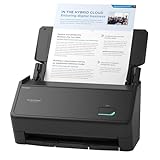
Overview: The ScanSnap iX2400 represents the next generation in Fujitsu’s popular document scanner line, succeeding the reliable iX1400. This powerhouse handles up to 45 pages per minute through its generous 100-sheet automatic document feeder, making short work of paper piles. Designed for both Mac and PC users, it connects via stable USB and features one-touch operation that automates the entire scanning workflow from image cleanup to organization.
What Makes It Stand Out: The standout feature is its intelligent automation engine that detects document size, removes blank pages and streaks, de-skews, and rotates automatically. The Quick Menu allows drag-and-drop scanning directly into your favorite applications, while ScanSnap Home software provides comprehensive document, receipt, and photo management in one integrated platform.
Value for Money: At $368.11, the iX2400 sits in the mid-to-high range for desktop scanners. However, its 45ppm speed, large ADF capacity, and sophisticated cleanup features justify the premium over budget models. Compared to enterprise scanners costing twice as much, it delivers professional-grade results for home and small office use.
Strengths and Weaknesses: Strengths include exceptional scanning speed, reliable USB connectivity, robust automatic image enhancement, and versatile media handling. The 100-page ADF minimizes reloading interruptions. Weaknesses include the lack of wireless connectivity, which limits placement flexibility, and the price point may be steep for occasional users.
Bottom Line: The ScanSnap iX2400 is an excellent choice for home offices and small businesses prioritizing speed, reliability, and automated document processing. If you don’t need wireless and want hassle-free, high-volume scanning, this scanner delivers outstanding performance and value.
2. Canon imageFORMULA R40 Office Document Scanner Receipt Edition, for PC and Mac, Scan & Extract Data to QuickBooks Online, Color Duplex Scanning, Auto Document Feeder, Easy Setup for Office Or Home Use

Overview: The Canon imageFORMULA R40 Receipt Edition is a specialized document scanner designed for small businesses and home offices focused on financial document management. Capable of scanning up to 40 pages per minute with duplex capability, this scanner excels at converting paper receipts and invoices into digital data. Its single-button operation simplifies the scanning process, while included software streamlines workflow integration.
What Makes It Stand Out: The R40’s primary differentiator is its receipt-specific functionality. The included CaptureOnTouch software with QuickBooks Online plugin automatically extracts key data—payee, amount, date—and uploads directly to your accounting system. This eliminates manual data entry, saving countless hours for bookkeepers and small business owners managing expenses.
Value for Money: Priced at $241.00, the R40 offers compelling value for its target audience. While general-purpose scanners are available for less, none provide the seamless QuickBooks integration and receipt-processing optimization. For businesses tracking numerous expenses, the time savings quickly offset the investment.
Strengths and Weaknesses: Strengths include excellent receipt and invoice processing, intuitive single-button operation, respectable 40ppm speed, and direct cloud service integration. The scanner handles various document sizes effectively. Weaknesses include software that’s heavily skewed toward receipt management, potentially limiting versatility for users needing advanced photo scanning or complex document routing.
Bottom Line: The Canon imageFORMULA R40 Receipt Edition is ideal for small business owners, accountants, and freelancers who prioritize expense management. If QuickBooks integration and receipt digitization are your primary needs, this scanner offers unmatched convenience and efficiency at a reasonable price.
3. ScanSnap iX1600 Wireless or USB High-Speed Cloud Enabled Document, Photo & Receipt Scanner with Large Touchscreen and Auto Document Feeder for Mac or PC, 17 watts, Black

Overview: The ScanSnap iX1600 positions itself as the premium wireless solution in Fujitsu’s lineup, catering to both individual users and small teams. With a large color touchscreen interface, it scans at 40 pages per minute and offers dual Wi-Fi and USB connectivity. The scanner supports up to 30 customizable profiles, allowing different users to access personalized shortcuts and destinations directly from the device.
What Makes It Stand Out: The iX1600’s most impressive feature is its team-oriented design. Multiple users can select their profiles from the touchscreen, sending scans to their preferred destinations—PCs, Macs, Chromebooks, mobile devices, or cloud services—without a computer. Built-in Wi-Fi enables placement anywhere with network access, untethered from a workstation.
Value for Money: At $504.17, this is a premium-priced scanner. The cost is justified for multi-user environments where wireless flexibility and profile management boost productivity. For solo users, however, the premium may be harder to justify compared to the wired iX2400, which offers faster scanning at a lower price.
Strengths and Weaknesses: Strengths include excellent wireless connectivity, intuitive touchscreen operation, robust multi-user support, comprehensive cloud service integration, and versatile ScanSnap Home software. Weaknesses are its premium pricing and slightly slower speed (40ppm) than the less expensive iX2400. The Wi-Fi setup may challenge less tech-savvy users.
Bottom Line: The ScanSnap iX1600 is the best choice for households or small offices with multiple users needing flexible scanning options. If wireless convenience and personalized workflows are priorities, the investment pays dividends in convenience and shared productivity.
4. IX500 Fujitsu Scansnap Receipt Scanner for Mac & PC - USB High Speed Cloud Enabled Document, Photo Scanners - ADF with Duplex Scanning - Comes with 16v, USB 3.0 Cable (Renewed)

Overview: The IX500 Fujitsu ScanSnap is a renewed high-speed document scanner offering premium features at a discounted price point. This refurbished model provides wireless connectivity and USB 3.0 performance with automatic duplex scanning through its ADF. Designed for both Mac and PC, it aims to deliver cloud-enabled scanning capabilities that made the original IX500 popular among productivity enthusiasts.
What Makes It Stand Out: As a renewed product, the IX500’s primary appeal is value. You get Fujitsu’s reputable scanning technology—including wireless scanning freedom and advanced image processing—at roughly 40% off original retail. The scanner maintains the core functionality of handling documents, photos, and receipts with the convenience of cable-free operation.
Value for Money: At $299.99, this renewed unit presents an attractive middle-ground option. It’s significantly cheaper than the iX1600 while offering similar wireless capabilities. The savings must be weighed against the risks inherent in refurbished electronics, though Fujitsu’s renewal process typically includes testing and certification.
Strengths and Weaknesses: Strengths include affordable wireless scanning, USB 3.0 speed, duplex capability, and trusted Fujitsu brand heritage. The price is compelling for budget-conscious buyers wanting premium features. Weaknesses include limited warranty coverage, potential wear from previous use, and vague specifications regarding exact speed and ADF capacity in the listing.
Bottom Line: The renewed IX500 suits cost-conscious buyers comfortable with refurbished equipment. If you want wireless scanning and duplex capability without paying full price, it’s a smart compromise. Verify warranty terms and ensure the renewal certification meets your risk tolerance before purchasing.
5. IRIScan Express 4-Portable Scanner 8PPM simplex, USB, Document Scanner, 8PPM, Receipt Scanner, Full OCR Readiris, Windows Black
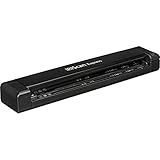
Overview: The IRIScan Express 4 is an ultra-portable document scanner designed for mobile professionals and occasional users. Weighing less than one pound and powered entirely by USB, this compact device scans up to 8 pages per minute in simplex mode. Despite its small footprint, it offers high-precision resolutions up to 1200 dpi, making it suitable for documents and receipts on the go.
What Makes It Stand Out: Portability is the Express 4’s defining characteristic. Requiring no wall outlet and fitting easily in a laptop bag, it enables scanning anywhere you have a USB connection. The inclusion of full OCR Readiris software adds value, allowing conversion of scanned documents into editable and searchable formats without additional software purchases.
Value for Money: At $81.20, this is the most affordable scanner in the comparison. For mobile professionals, students, or occasional home users, it provides essential scanning capabilities without a significant investment. While slower than desktop models, the price reflects its niche purpose rather than performance limitations.
Strengths and Weaknesses: Strengths include extreme portability, USB-powered convenience, lightweight design, high resolution options, and included OCR software. It’s ideal for travel and minimal desk space. Weaknesses are its slow 8ppm speed, simplex-only scanning, lack of ADF, and limited duty cycle, making it unsuitable for high-volume tasks.
Bottom Line: The IRIScan Express 4 is perfect for mobile workers needing occasional scanning capabilities. If you prioritize portability over speed and volume, this affordable, USB-powered scanner delivers surprising quality and convenience in a pocket-sized package.
6. FI-6130Z Fujitsu Duplex Sheet-Fed Receipt Document Scanner with 24V & USB 2.0 Cable (Renewed)

Overview: The FI-6130Z is a renewed duplex sheet-fed scanner from Fujitsu designed for document and receipt digitization. This refurbished unit offers professional-grade scanning capabilities at a reduced price point, though with a critical limitation: it only supports Windows XP through Windows 10, making it incompatible with Windows 11 systems.
What Makes It Stand Out: This scanner’s primary advantage is its genuine duplex scanning capability, allowing simultaneous two-sided scanning that dramatically improves workflow efficiency. The renewed status provides access to enterprise-level hardware at a fraction of original cost. Its sheet-fed design handles various document types reliably, while the robust construction ensures it can withstand heavy daily use in office environments.
Value for Money: At $179.99, this renewed unit costs significantly less than new comparable duplex scanners, which typically start around $400. For businesses still operating on Windows 10 or earlier, it represents exceptional value. However, the OS limitation and renewed status mean no manufacturer warranty, so buyers must weigh savings against potential longevity concerns.
Strengths and Weaknesses: Pros include genuine duplex scanning, professional build quality, versatile document handling, and substantial cost savings. Cons are the critical Windows 11 incompatibility, renewed status with limited warranty, USB 2.0 connectivity (slower than modern standards), and potential driver support issues as Windows 10 approaches end-of-life.
Bottom Line: The FI-6130Z is a solid choice for Windows 10 and earlier users needing reliable duplex scanning on a budget. Its renewed status delivers professional features affordably, but the OS restriction makes it unsuitable for modern systems. Verify your operating system before purchasing.
7. Scanner Bin - The Clever Document Scanning Solution
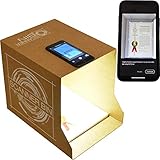
Overview: Scanner Bin is an innovative smartphone accessory that transforms your mobile device into a document scanner, not a scanner itself. This simple $12.95 solution addresses common smartphone scanning frustrations by providing a controlled environment for capturing documents, photographs, and receipts with improved consistency and quality.
What Makes It Stand Out: This product’s brilliance lies in its simplicity and eco-conscious design. It creates optimal scanning conditions—controlled lighting, contrasting background for edge detection, and stable positioning—eliminating the variability of handheld smartphone scanning. Its dual-purpose design functions as a desk-side organizer when not scanning, and it’s specifically recommended for visually impaired users due to its simplified setup.
Value for Money: At under $13, this is the most economical scanning solution available. It leverages your existing smartphone camera and free apps like Adobe Scan or CamScanner, avoiding the cost, space, and e-waste of traditional flatbed scanners. The manufacturer claims results comparable to 1200 DPI flatbeds, making it a fraction of the cost of even budget scanners.
Strengths and Weaknesses: Pros include ultra-low price, portability, eco-friendly design, accessibility features, and compatibility with powerful free scanning apps. Cons require owning a smartphone, manual operation limits batch processing, scan quality depends on your phone’s camera, and it’s unsuitable for high-volume scanning needs.
Bottom Line: Scanner Bin is perfect for occasional scanning, budget-conscious users, and those prioritizing sustainability. While not replacing dedicated scanners for heavy use, it cleverly optimizes smartphone capabilities for document digitization at an unbeatable price.
8. Epson Workforce ES-55R Mobile Receipt and Document Scanner with Receipt Management Software for PC and Mac
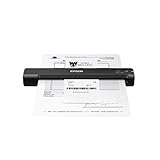
Overview: The Epson ES-55R is a purpose-built mobile scanner designed for receipt and document management on the go. Weighing under 10 ounces and USB-powered, this compact device includes robust receipt management software without requiring a subscription, targeting professionals who need to digitize expenses while traveling.
What Makes It Stand Out: This scanner’s integrated receipt management software automatically extracts and categorizes key data, minimizing manual entry errors. It seamlessly exports to QuickBooks, Quicken, TurboTax, and Excel CSV formats, creating a streamlined expense workflow. The automatic feeding mode accepts sheets as they’re inserted, boosting productivity despite its portable size.
Value for Money: At $289.95, the ES-55R sits in the premium mobile scanner category. However, the included software (typically a subscription service) adds significant value. For mobile professionals and small business owners tracking expenses, the time saved on data entry justifies the cost compared to manual methods or cheaper scanners lacking intelligent software.
Strengths and Weaknesses: Pros include included receipt management software, excellent third-party accounting integration, extreme portability, USB-powered convenience, and fast 5.5-second scanning. Cons are the high price for a simplex scanner, single-page manual feeding limiting batch scanning, and no Wi-Fi connectivity for wireless operation.
Bottom Line: The Epson ES-55R excels for mobile receipt management and expense tracking. Its intelligent software integration makes it worth the premium for business travelers and freelancers, though document-heavy users may prefer a duplex model. The software inclusion alone makes it a smart investment for accounting automation.
9. Fujitsu PA03656-B005 Scansnap Ix500 Clr Dupl 600dpi Perp Usb3.0 Wl Ios/android Pc&mac

Overview: The ScanSnap iX500 represents Fujitsu’s flagship desktop scanning solution, delivering high-performance document digitization at 25 pages per minute. This premium scanner supports both USB 3.0 and Wi-Fi connectivity, offering one-button simplicity while maintaining compatibility with PCs, Macs, and mobile devices through iOS and Android apps.
What Makes It Stand Out: The iX500’s standout feature is its blazing 25ppm color duplex scanning combined with wireless capability, allowing placement anywhere in your workspace. The one-touch operation eliminates complex settings, while the 600dpi optical resolution ensures exceptional clarity. Wi-Fi connectivity enables direct scanning to mobile devices without computer intervention, a rare feature in desktop scanners.
Value for Money: Priced at $539.99, this is a significant investment aimed at serious users. However, its speed, duplex capability, and wireless features rival commercial-grade scanners costing twice as much. For home offices, small businesses, or professionals digitizing years of paperwork, the time savings and reliability justify the premium over slower, simpler models.
Strengths and Weaknesses: Pros include exceptional scanning speed, reliable duplex operation, versatile Wi-Fi and USB connectivity, broad OS and mobile compatibility, and professional build quality. Cons are the high price point, potentially excessive for casual users, larger desktop footprint compared to portable models, and it may be overkill for simple receipt scanning needs.
Bottom Line: The ScanSnap iX500 is ideal for high-volume scanning environments where speed and efficiency matter. It’s a workhorse that justifies its premium price through performance and reliability. For users facing large backlogs of documents, this scanner will pay for itself in time saved. Casual users should consider more affordable options.
10. IRIScan Anywhere Simplex Wireless mobile document scanner v6 : scanners for computers battery|15PPM|Simplex|WIFI|battery|PDF editor|USB powered|document scanner|scan to Word, PDF, XLS, receipt scanner

Overview: The IRIScan Anywhere 6 is a portable document scanner designed for mobile professionals needing wireless flexibility. This battery-powered scanner operates at 15ppm in simplex mode, offering Wi-Fi connectivity and the ability to scan directly to editable formats like Word, PDF, and Excel without a computer connection.
What Makes It Stand Out: True portability defines this scanner—battery operation and USB power options let you scan anywhere. The included PDF editor and ability to scan to editable Office formats add significant value for mobile workflows. Wi-Fi connectivity (point-to-point) eliminates cable clutter, while maintaining the same 15ppm speed for both color and black-and-white documents.
Value for Money: At $128.94, this mid-range portable scanner balances features and affordability. It’s significantly cheaper than high-end portables like the Epson ES-55R, yet offers Wi-Fi connectivity that many budget models lack. The included software capabilities enhance value, though the simplex-only scanning limits efficiency compared to duplex models in this price range.
Strengths and Weaknesses: Pros include battery and USB power options, Wi-Fi connectivity, fast 15ppm simplex scanning, included PDF editor, and scan-to-Office functionality. Cons are simplex-only scanning (no duplex), point-to-point Wi-Fi doesn’t support router connections limiting network integration, and build quality may not match premium brands for heavy use.
Bottom Line: The IRIScan Anywhere 6 suits mobile professionals needing wireless scanning flexibility at a reasonable price. Its battery power and format versatility make it ideal for field work, though the simplex limitation means it’s best for lower-volume tasks. Consider this for portability over speed and duplex capabilities.
Why Receipt Organization Matters More Than Ever
The IRS Compliance Reality
The IRS has fully embraced digital documentation, but their standards are precise and unforgiving. Digital copies are acceptable only when they contain all the information from the original receipt and are properly stored in a system that prevents alteration. A quality receipt scanner doesn’t just create an image—it generates a legally compliant digital record with intact metadata, proper resolution, and tamper-evident storage protocols. During an audit, the difference between a casually snapped smartphone photo and a properly scanned, OCR-processed receipt could mean the difference between accepted deductions and costly disallowances.
Financial Benefits Beyond Taxes
Beyond surviving audits, organized digital receipts unlock strategic financial advantages. Real-time expense tracking reveals spending patterns that inform quarterly estimated tax payments, preventing underpayment penalties. Clean digital records accelerate loan applications, rental agreements, and insurance claims. Perhaps most valuably, they eliminate the psychological burden of financial clutter, freeing mental energy for revenue-generating activities rather than document archaeology.
Understanding Receipt Scanner Technology
What Makes a Receipt Scanner “Smart”
Modern receipt scanners transcend simple image capture through intelligent processing pipelines. The “smart” designation applies to systems that automatically detect receipt boundaries, correct perspective distortion, adjust for poor lighting, and extract meaningful data without manual intervention. Look for devices and apps that offer batch processing capabilities—feeding multiple receipts at once and separating them intelligently. The true intelligence lies not in scanning, but in the downstream automation that categorizes expenses, flags anomalies, and syncs with your broader financial ecosystem.
OCR Technology Explained
Optical Character Recognition is the cornerstone of any serious receipt management system, but not all OCR is created equal. Basic OCR converts images to text; advanced OCR understands context. It recognizes that “Starbucks” likely represents a meal expense, while “Shell” indicates fuel, automatically suggesting categories. The technology has evolved to handle faded thermal paper, crumpled surfaces, and even handwritten notes. When evaluating OCR capabilities, consider accuracy rates on real-world receipts—not pristine test documents—and whether the system learns from your corrections to improve over time.
Mobile vs. Desktop Scanning Solutions
The mobile versus desktop debate hinges on your workflow rather than inherent superiority. Mobile apps excel at point-of-capture processing—scanning receipts before they get lost in your wallet, with GPS tagging for location verification. Desktop scanners, particularly sheet-fed models, dominate volume processing, handling hundreds of receipts in a single session. Hybrid solutions that sync seamlessly between both platforms offer the best of both worlds, letting you capture on-the-go and manage in bulk later. Consider your receipt volume, travel frequency, and whether you need to scan oversized documents like contracts or just standard receipts.
Key Features That Separate Good from Great
Optical Character Recognition (OCR) Accuracy
Accuracy percentages advertised by manufacturers often reflect ideal conditions. In practice, OCR performance varies dramatically based on receipt quality, font styles, and language. The best systems achieve 95%+ accuracy on degraded thermal paper and can parse complex receipts with multiple tax lines, discounts, and payment methods. Critically, evaluate whether the OCR engine preserves line-item details—essential for separating business meals from personal items on mixed receipts—or just captures totals. Multi-language support becomes crucial if you travel internationally or purchase from foreign vendors.
Cloud Storage Integration
Cloud connectivity transforms receipt scanning from a filing exercise into a collaborative financial management system. Evaluate not just storage capacity, but synchronization speed, offline access capabilities, and version control. Does the system maintain audit trails showing when receipts were scanned and by whom? Can you share specific expense reports with your accountant without granting full account access? Consider exit strategies—can you bulk export your data in standard formats if you switch providers, or are you locked into a proprietary ecosystem?
Multi-Format Receipt Handling
Your scanner must handle the receipt ecosystem’s diversity: thermal paper prone to fading, emailed PDFs, handwritten tip adjustments, and increasingly, QR code-based digital receipts. Advanced systems process all these formats within a single workflow, extracting data from email attachments automatically and merging digital receipts with scanned physical ones. For businesses, the ability to handle invoices, purchase orders, and shipping manifests alongside standard receipts eliminates the need for multiple systems.
Search and Retrieval Capabilities
Finding a specific receipt six months later tests a system’s true value. Beyond basic keyword search, advanced systems offer filtered searches by date ranges, amounts, vendors, categories, and even payment methods. Some leverage AI to enable natural language queries like “lunch with client in Chicago last October.” Consider whether the search indexes line-item details—crucial when you remember buying “printer ink” but not the store name. Tagging systems and custom labels add another retrieval layer for project-based or client-billable expenses.
Tax Category Automation
The ultimate time-saver is intelligent categorization that aligns with IRS schedules. Systems pre-loaded with tax-specific categories (Schedule C for freelancers, Form 2106 for employees, medical expense categories) reduce manual sorting dramatically. The best solutions learn your patterns—recognizing that your monthly Adobe subscription is always “Software” and your coworking space membership is “Office Expense.” They also flag potentially non-deductible expenses, like personal items on mixed receipts, preventing costly classification errors.
Software Ecosystem Considerations
Integration with Accounting Platforms
A receipt scanner that doesn’t integrate with your accounting software creates double data entry work. Native integrations with QuickBooks, Xero, FreshBooks, or Wave should sync categorized expenses automatically, attaching receipt images to transaction records. Evaluate whether integrations are bidirectional—can your accounting software’s chart of accounts sync back to the scanner, ensuring consistent categories? API access for custom integrations becomes essential for businesses with specialized ERP systems or industry-specific accounting tools.
Tax Software Compatibility
Direct export to TurboTax, H&R Block, or TaxAct eliminates manual transcription during filing season. The ideal system generates IRS-compliant reports that map directly to tax form line items, with receipts hyperlinked or attached for easy reference. Some advanced platforms offer accountant portals where tax professionals can review and adjust categorizations before import. Consider whether the system supports prior-year comparisons, helping you identify missing deductions by flagging categories where current-year spending deviates significantly from historical patterns.
Mobile App Experience
A powerful desktop scanner loses value if its mobile companion app feels like an afterthought. Evaluate mobile apps based on offline functionality—can you scan receipts on a flight without Wi-Fi and sync later? Camera quality optimization matters; the best apps guide you to position receipts correctly and automatically capture when focused. Check whether the mobile version supports the same categorization rules and approval workflows as the desktop version, ensuring consistency across your team.
Data Export Options
Vendor lock-in is a legitimate concern. Prioritize systems offering multiple export formats: PDF reports with embedded images, CSV files for spreadsheet analysis, and JSON or XML for data migration. Bulk export capabilities should maintain folder structures and metadata, not just dump unlabeled images. Some systems offer automated backup to third-party cloud storage like Dropbox or Google Drive, providing redundancy and independence from the scanner’s own storage infrastructure.
Security and Privacy Imperatives
Data Encryption Standards
Your receipts contain sensitive financial information—vendor names, purchase amounts, partial credit card numbers. End-to-end encryption during transmission and AES-256 encryption at rest are non-negotiable standards. Investigate whether the provider holds SOC 2 Type II certification, indicating rigorous security audits. For businesses handling client expenses, HIPAA compliance may be necessary. The encryption conversation extends to mobile apps—are scanned images stored temporarily on your device in an encrypted format, or could they be recovered by someone with physical access to your phone?
GDPR and Privacy Law Compliance
Even US-based users benefit from GDPR-compliant services, as these platforms offer stronger privacy controls. Evaluate whether you can permanently delete data, not just “archive” it, and whether the provider uses your data for machine learning training (and if so, whether you can opt out). For businesses with European clients or operations, GDPR compliance becomes legally mandatory. The right to data portability ensures you can extract your information in a usable format, a feature that benefits everyone regardless of location.
Secure Cloud Storage Protocols
Understand where your data physically resides. US-based servers may be preferable for IRS audit scenarios, while some providers offer regional storage options. Multi-factor authentication should be mandatory for account access, with single sign-on (SSO) options for business accounts. Regular security audits and penetration testing demonstrate a provider’s commitment to data protection. For maximum security, some systems offer local-only storage options, where cloud sync is disabled entirely—ideal for handling highly sensitive financial documents.
Cost Analysis: Beyond the Price Tag
Subscription Models vs. One-Time Purchase
The receipt scanner market has shifted toward subscription models, but both approaches have merit. Subscriptions typically include ongoing OCR improvements, unlimited cloud storage, and customer support, spreading costs over time. One-time purchases appeal to users comfortable managing their own storage and willing to forgo feature updates. Calculate the three-year total cost of ownership—subscriptions often exceed the price of a standalone scanner during this period, but may deliver superior value through time savings. Consider whether family plans or business tiers offer better per-user pricing if multiple people need access.
Hidden Costs to Watch For
Beware of tiered pricing that limits monthly scans, charges extra for premium OCR accuracy, or requires add-ons for essential integrations. Some platforms charge per exported report or limit data retrieval after canceling a subscription. Hardware scanners may require proprietary ink cartridges or maintenance kits. Cloud storage plans often start generous but become costly as your receipt archive grows. Factor in the cost of your time—if a cheaper scanner requires manual correction of 20% of receipts, the “expensive” option with 99% accuracy may be more economical.
ROI Calculation for Your Situation
Quantify the value: how many hours do you currently spend organizing receipts? What’s your hourly rate? A $200 annual subscription that saves 10 hours at $50/hour delivers $300 in net value. For businesses, factor in faster reimbursement cycles, reduced accountant fees due to cleaner records, and captured deductions that would otherwise be lost. The ROI calculation should also include risk mitigation—what’s the potential cost of an audit without proper documentation? Many users find that capturing just one previously missed $500 deduction justifies the entire year’s subscription cost.
Industry-Specific Requirements
Real Estate and Property Management
Real estate professionals juggle property-specific expenses, tenant improvements, and mileage tracking. Your scanner needs project-based tagging to assign receipts to specific properties, mileage log integration for property visits, and the ability to handle 1099 contractor payments documented through receipts. Look for systems that separate capital improvements from repairs and maintenance—crucial for depreciation schedules. The ability to store property-related documents like inspection reports alongside receipts creates a comprehensive property file for eventual sale.
Freelancers and Gig Economy Workers
Gig workers face unique challenges: irregular income, mixed personal/business expenses, and quarterly estimated tax payments. Your ideal scanner offers aggressive categorization for home office deductions, automatic mileage tracking from receipt locations, and integration with payment platforms like PayPal, Venmo, and Cash App. The system should recognize platform-specific fee structures—Uber’s service fees, Airbnb’s cleaning fees—and categorize them correctly. Since many gig workers lack employer benefits, robust medical expense and retirement contribution tracking becomes essential for maximizing deductions.
Small Business Owners
Small businesses need multi-user access with role-based permissions—employees can submit receipts, managers can approve, and accountants can access reports. Purchase order matching links receipts to approved spending, preventing unauthorized purchases. Inventory purchase tracking should integrate with cost of goods sold calculations. For businesses with vehicles, the system must separate fuel, maintenance, and lease payments while tracking business versus personal mileage. The ability to handle employee expense reimbursements with direct deposit integration streamlines internal processes.
Medical Expense Tracking
Medical expense scanners must handle Explanation of Benefits (EOB) forms, prescription receipts, and mileage to medical appointments. Look for systems that differentiate between deductible medical expenses and non-deductible wellness costs. Integration with Health Savings Accounts (HSAs) and Flexible Spending Accounts (FSAs) ensures proper allocation of pre-tax dollars. The ability to track expenses for multiple family members separately, while generating a combined tax report, simplifies complex family medical situations. Since medical expenses often span multiple years, long-term data retention without price increases is crucial.
Implementation Best Practices
Creating a Scanning Workflow
Establish a consistent routine: scan receipts within 24 hours of purchase, set a weekly review session to categorize uncategorized items, and perform monthly reconciliations against bank statements. For teams, define clear submission deadlines—perhaps all receipts due by the 5th of the following month. Use automation rules to handle recurring expenses automatically, reserving manual review for anomalies. The workflow should include a “pending” category for receipts requiring manager approval or additional documentation, preventing bottlenecks.
Naming Conventions That Work
Develop a systematic file naming approach: YYYYMMDD_Vendor_Amount_Category_Project.pdf creates instantly searchable records. For example, 20240315_OfficeDepot_127.43_OfficeSupplies_WebsiteRedesign.pdf tells the complete story. Avoid special characters that cause cross-platform compatibility issues. Consistent naming enables bulk operations and prevents the “IMG_20240315_142301.jpg” chaos that makes receipts impossible to locate later. Train any team members on this convention to maintain organizational consistency.
Backup Strategies
Follow the 3-2-1 rule: three copies of your data, on two different media types, with one offsite. Your scanner’s cloud storage counts as one offsite copy, but maintain a local backup on an external hard drive and perhaps a second cloud service. Monthly exports to a read-only archive format protect against vendor data loss or account lockout. For critical business receipts, consider blockchain-based verification services that create immutable records, providing ultimate audit protection. Test your backup restoration process annually—having backups you can’t restore is worthless.
Regular Reconciliation Habits
Monthly reconciliation against bank and credit card statements catches missing receipts before they become lost forever. Set aside the first Saturday morning of each month for this task. Use your scanner’s transaction import feature to match scanned receipts to cleared transactions, identifying unsubstantiated spending that may be personal or fraudulent. This practice also reveals recurring subscriptions you’ve forgotten about, providing opportunities to cut unnecessary expenses. For businesses, reconciliation should be a formal accounting procedure with sign-offs, not an informal check.
Common Pitfalls and How to Avoid Them
The “Scan and Forget” Syndrome
Scanning receipts without reviewing categorization creates a digital junk drawer. The OCR might misread a $1000 purchase as $100, dramatically understating deductions. Implement a mandatory review step for receipts over a certain threshold—perhaps $75—to verify accuracy. Quarterly, run reports by category to spot anomalies: if “Meals” seems unusually high, drill down to identify misclassified personal groceries or data entry errors. The goal is active management, not passive accumulation.
Mixed Personal and Business Expenses
The single receipt containing both your business lunch and personal snack creates categorization nightmares. Advanced scanners allow line-item splitting, assigning each product to separate categories. For true separation of concerns, maintain dedicated business credit cards and bank accounts—then configure your scanner to auto-categorize transactions from those accounts as business expenses. When mixing is unavoidable, develop a habit of immediately highlighting business items on the receipt before scanning, creating a visual cue for later categorization.
Ignoring Digital Receipts
Focusing solely on paper receipts misses 40-60% of modern transactions. Configure automatic email forwarding rules to send digital receipts directly to your scanning system. Browser extensions can capture online purchase confirmations with a single click. For subscription services, set up automatic import from your bank that links to the original digital invoice. The best systems create a unified inbox for all receipt types, preventing the dangerous separation of paper and digital records.
Poor Image Quality Issues
Blurry scans, cut-off edges, and shadow interference render OCR useless and may be rejected during audits. Use scanner apps with edge detection and capture confirmation—don’t just snap and hope. For desktop scanners, clean the glass weekly and replace feed rollers annually to maintain optimal performance. Store physical receipts flat in a dedicated envelope until scanning; folded receipts create permanent creases that obscure text. If a receipt is already faded, scan in high-contrast black-and-white mode, which sometimes extracts more detail than color.
Future-Proofing Your Choice
AI and Machine Learning Advancements
The next generation of receipt scanners employs generative AI to understand context beyond text extraction. These systems can infer that a receipt from a hotel in a city where you attended a conference is likely a business expense, even without explicit categorization. They’ll soon predict tax implications of purchases in real-time, alerting you to potential audit red flags before you submit. When evaluating platforms, investigate their AI roadmap—are they incrementally improving OCR, or fundamentally rethinking receipt intelligence?
Blockchain for Receipt Verification
Emerging blockchain solutions create cryptographically verified receipts that cannot be altered after scanning, providing unprecedented audit protection. While still nascent, this technology promises to eliminate disputes over receipt authenticity. Some forward-thinking platforms are beginning to offer optional blockchain verification for high-value transactions. Even if you don’t adopt this immediately, choosing a scanner from a company actively exploring blockchain ensures you’ll have access to these features as they mature, rather than being stuck with legacy technology.
Emerging Standards and Regulations
The IRS continues evolving its digital documentation standards, with potential future requirements for real-time reporting and standardized data formats. The best scanner companies participate in industry standards bodies and proactively update their systems to comply with new regulations. Look for providers with a history of rapid compliance updates—those that immediately supported the TCJA changes in 2018, for instance. This adaptability ensures your system won’t become obsolete when tax laws change, protecting your investment and maintaining audit readiness.
Frequently Asked Questions
Do I really need a dedicated receipt scanner for taxes, or can I just use my phone camera?
While smartphone cameras can capture receipt images, dedicated scanner apps and hardware offer crucial advantages: automatic OCR with 95%+ accuracy, IRS-compliant metadata preservation, integrated categorization, and audit-proof storage systems. For occasional personal expenses, a phone might suffice, but anyone with regular business deductions benefits from purpose-built technology that transforms images into searchable, organized financial data rather than just photo albums of receipts.
What OCR accuracy rate should I expect from a premium receipt scanner?
Top-tier receipt scanners deliver 95-99% accuracy on clear, standard receipts, dropping to 85-90% on faded thermal paper or damaged receipts. The key metric isn’t just accuracy, but correction workflow speed—how quickly can you fix the 5% of errors? Premium systems learn from corrections, improving accuracy on your specific receipt types over time. Be skeptical of 100% accuracy claims; even human data entry isn’t perfect, and receipts vary wildly in quality and format.
Are digital receipts accepted by the IRS during an audit?
Yes, the IRS accepts digital receipts provided they contain all information from the original (vendor, date, amount, items purchased) and are stored in a system that prevents alteration. Simply taking a photo isn’t sufficient—you need a system that maintains the digital file as a reliable, unaltered record. The best practice is using a scanner that creates tamper-evident files with audit trails showing when the receipt was captured and that it hasn’t been modified since.
How long should I keep scanned receipts?
The standard IRS recommendation is three years from the filing date, but seven years is safer if you’ve underreported income by more than 25%. For property-related receipts (home improvements, rental property expenses), keep records until you sell the asset plus three years. Since digital storage is inexpensive, adopting a “keep forever” policy for scanned receipts eliminates guesswork. Just ensure your storage system remains accessible—migrate data to new platforms every 3-5 years to avoid format obsolescence.
Can receipt scanners handle receipts from other countries and currencies?
Premium scanners offer multi-language OCR and automatic currency conversion using the transaction date’s exchange rate. This is crucial for business travelers and digital nomads. Look for systems that preserve original currency amounts while converting for tax reporting, satisfying IRS requirements for foreign expense documentation. Some platforms maintain updated exchange rate databases and even adjust for historical rates, ensuring accuracy on receipts from years past.
What’s the difference between cloud-based and local storage for receipt management?
Cloud storage offers accessibility from any device, automatic backup, and seamless syncing but requires ongoing subscriptions and raises privacy concerns. Local storage gives you complete control and one-time costs but demands manual backup discipline and limits multi-device access. Hybrid approaches provide the best balance: scan locally for sensitive receipts, sync business expenses to the cloud for accessibility. Evaluate your comfort with third-party data storage and whether you need real-time collaboration features that cloud platforms excel at providing.
How much time should I realistically expect to save using a receipt scanner?
Most users reduce receipt management time by 70-80%. What previously took 3-4 hours monthly—sorting, entering data, filing—drops to 30-45 minutes with a quality scanner. The real time savings appear during tax preparation: organized digital records eliminate the typical 10-15 hour receipt scramble in April. Factor in intangible time savings too—no more searching for lost receipts or requesting duplicates from vendors. The break-even point is typically 20-30 receipts per month; below that volume, manual methods may be adequate.
What security features are essential for protecting my financial data?
Mandatory features include end-to-end encryption (in transit and at rest), two-factor authentication, SOC 2 Type II certification, and clear data deletion policies. For businesses, role-based access controls ensure employees see only their expenses while managers see team-wide reports. Check if the provider undergoes regular third-party security audits and whether they offer bug bounty programs—signs of serious security commitment. Avoid services that don’t clearly state their encryption standards or that monetize by selling anonymized data.
Can I scan receipts that are already faded or damaged?
Advanced scanners with image enhancement algorithms can often extract readable text from surprisingly poor-quality receipts. Techniques include contrast amplification, shadow removal, and thermal paper color restoration. For severely damaged receipts, some services offer human verification where staff manually review and correct OCR results. As a last resort, if you have the credit card statement showing the transaction, pair it with a photo of the faded receipt—the combination often satisfies IRS documentation requirements when the original is illegible.
What happens if my scanner misreads a receipt and I don’t catch the error?
Uncorrected OCR errors can lead to underclaimed deductions or, worse, inflated expenses that trigger audits. Most systems flag receipts with low OCR confidence for manual review, but some errors slip through. Implement a monthly reconciliation process comparing scanned totals to bank statements—this catches systematic errors quickly. For critical high-value receipts, manually verify OCR results immediately. During an audit, if an error is discovered, you can amend your return; the penalty is typically just interest on the underpaid tax, not punitive fines, provided the error was unintentional. The key is demonstrating reasonable care through systematic review processes.