Your office equipment is quietly draining your budget every single day. From the laser printer that never sleeps to the space heater under Karen’s desk, phantom power and inefficient devices can account for up to 20% of your monthly electricity bill. Smart plugs with energy monitoring have evolved from nifty home gadgets into essential business tools that transform how modern offices manage power consumption. They don’t just turn things on and off—they provide granular insights that help you make data-driven decisions about your energy usage, equipment replacement schedules, and sustainability initiatives.
But here’s the challenge: not all energy-monitoring smart plugs are built for the demands of a commercial environment. The difference between a consumer-grade device and one that can handle your office’s unique requirements could mean the difference between actionable intelligence and frustrating data gaps. This comprehensive guide walks you through everything you need to know before investing in this technology, from critical safety certifications to advanced features that actually move the needle on your bottom line.
Top 10 Smart Plugs with Energy Monitoring for Office
Detailed Product Reviews
1. Kasa Matter Smart Plug w/ Energy Monitoring, Compact Design, 15A/1800W Max, Super Easy Setup, Works with Apple Home, Alexa & Google Home, UL Certified, 2.4G Wi-Fi Only, White, KP125M (4-Pack)

Overview: The Kasa KP125M 4-Pack introduces Matter compatibility to TP-Link’s smart plug lineup, enabling cross-platform control across Apple Home, Alexa, Google Home, and SmartThings. These compact 15A outlets feature energy monitoring and connect via 2.4GHz Wi-Fi. The Matter standard allows direct device-to-device communication on your local network, ensuring continued operation during internet outages—a significant reliability upgrade over cloud-dependent alternatives.
What Makes It Stand Out: Matter certification future-proofs your smart home investment, eliminating ecosystem lock-in. The local LAN control capability keeps automations running when internet fails. Energy monitoring tracks consumption patterns to identify waste. The UL-certified flame-retardant design and compact form factor that prevents outlet blocking demonstrate thoughtful engineering. Voice control via Siri, Alexa, or Google Assistant provides true hands-free convenience.
Value for Money: At $9.48 per plug, this 4-pack offers competitive pricing for Matter-certified devices. While basic smart plugs cost less, the premium of $2-3 per unit is justified by cross-platform compatibility and offline reliability. For whole-home deployment, this bundle provides substantial savings over individual purchases while delivering enterprise-grade features.
Strengths and Weaknesses: Strengths include broad ecosystem support, reliable LAN control, detailed energy monitoring, compact design, UL certification, and two-year warranty. Weaknesses are 2.4GHz-only connectivity limiting placement options, and potentially complex Matter setup for novices requiring compatible hubs. The initial configuration demands patience but pays dividends in reliability.
Bottom Line: Ideal for building a future-proof Matter-based smart home. The 4-pack delivers excellent per-unit value and comprehensive coverage for most households. If cross-platform compatibility and local reliability are priorities, these represent a worthwhile investment that will serve your smart home for years.
2. Kasa Smart Plug, Matter Compatible, Energy Monitoring, Compact Design, 15A/1800W Max, Super Easy Setup, Works with Apple Home, Alexa & Google Home, UL Certified, 2.4G Wi-Fi Only, White, KP125M(2-Pack)

Overview: The Kasa KP125M 2-Pack delivers identical Matter-certified technology in a smaller quantity for targeted deployments. These smart plugs provide energy monitoring, 15A/1800W capacity, and work across all major platforms through Matter integration. The compact, UL-certified design ensures safety while preserving adjacent outlets. Setup via the Kasa app enables control from anywhere, while Matter certification guarantees local network operation during internet disruptions.
What Makes It Stand Out: Matter compatibility eliminates ecosystem lock-in, allowing seamless operation with Apple Home, Alexa, Google Home, and SmartThings simultaneously. The local LAN control keeps critical automations running offline. Energy monitoring provides actionable insights into device consumption. This 2-pack serves as a perfect trial size before committing to larger bundles, reducing financial risk while testing compatibility.
Value for Money: At $11.37 per plug, the per-unit cost exceeds the 4-pack but remains reasonable for a starter set. You’re paying a modest premium for flexibility. Compared to buying two single plugs separately, this bundle saves approximately 15%. For users needing only a couple of smart outlets—perhaps for a lamp and coffee maker—this avoids over-purchasing while still delivering Matter’s benefits.
Strengths and Weaknesses: Strengths include future-proof Matter support, offline LAN control, energy monitoring, multi-platform voice control, and compact safety-certified design. Weaknesses involve 2.4GHz-only Wi-Fi and the steeper learning curve of Matter setup. The two-plug quantity may prove insufficient for whole-home automation, requiring additional purchases later.
Bottom Line: Perfect entry point for Matter-curious smart home enthusiasts. Purchase this 2-Pack to verify compatibility with your preferred ecosystem before scaling up. The reliability and cross-platform support justify the cost for high-priority devices where internet-independent operation is essential. A smart, low-risk introduction to Matter technology.
3. Govee Smart Plug with Energy Monitoring, WiFi Bluetooth Plug Work with Alexa and Google Assistant, 15A Smart Outlets with Timer & Group Controller, No Hub Required, ETL&FCC Certified for Home, 4 Pack

Overview: Govee’s 4-Pack Smart Plugs prioritize affordability while delivering robust energy monitoring capabilities. These outlets connect via WiFi or Bluetooth, working exclusively with Alexa and Google Assistant. Real-time tracking of power, current, and voltage provides granular consumption data through the Govee Home App. Each 15A plug supports scheduling, timers, and group control without requiring a hub, making them accessible for beginners.
What Makes It Stand Out: The $7.20 per plug price point dramatically undercuts brand-name competitors while offering superior real-time monitoring. Bluetooth connectivity serves as a reliable backup for setup and local control when WiFi struggles. Group control simplifies managing multiple devices simultaneously. The ability to review historical data up to one year helps identify long-term energy trends and waste patterns effectively.
Value for Money: This represents exceptional value—approximately 25% cheaper than Matter-enabled alternatives. For Alexa/Google-centric homes, the lack of Matter support is irrelevant. You’re getting premium features like real-time energy monitoring at budget plug prices. The four-pack quantity suits whole-room or small-home deployment without breaking the bank, making smart home technology genuinely accessible.
Strengths and Weaknesses: Strengths include unbeatable pricing, real-time energy monitoring, dual connectivity options, comprehensive scheduling, and ETL/FCC safety certifications. Weaknesses are limited ecosystem support (no Apple HomeKit or SmartThings), absence of Matter’s local network resilience, and potential app quality gaps compared to more mature platforms. No offline control during internet outages.
Bottom Line: Best budget option for Alexa/Google households that don’t require Matter. The energy monitoring capabilities exceed expectations at this price tier. Skip if you’re invested in Apple HomeKit or want future-proofing; otherwise, this 4-Pack delivers outstanding functionality and value. Perfect for renters or first-time smart home users wanting maximum features for minimal investment.
4. Kasa Smart Plug Power Strip HS300, Surge Protector with 6 Individually Controlled Smart Outlets and 3 USB Ports, Works with Alexa & Google Home, No Hub Required , White
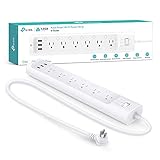
Overview: The Kasa HS300 reimagines the power strip as a smart home command center, offering six individually controlled outlets plus three USB ports in a single surge-protected unit. Each outlet can be monitored and controlled separately through the Kasa app or voice commands via Alexa and Google Assistant. ETL-certified surge protection shields expensive electronics from power spikes, while energy monitoring identifies consumption hogs. This consolidation reduces clutter and cost compared to multiple individual smart plugs.
What Makes It Stand Out: Having six smart outlets in one surge protector eliminates the need for multiple smart plugs, reducing clutter and cost. Each outlet can be named and controlled separately, while USB ports provide convenient charging. Surge protection adds a critical safety layer rarely found in smart plug solutions. Energy monitoring per outlet pinpoints which devices waste power. This all-in-one design is perfect for entertainment centers, computer desks, or small business applications where multiple devices cluster.
Value for Money: At $39.98, you’re paying roughly $6.50 per smart outlet while receiving surge protection and USB charging essentially free. Six individual Kasa smart plugs would cost nearly twice as much. For centralized device management, no better value exists. The surge protection alone justifies the price premium over basic power strips, making this a financially sound investment for protecting expensive equipment.
Strengths and Weaknesses: Strengths include consolidation of multiple outlets, individual control, surge protection, USB charging, and per-outlet energy monitoring. Weaknesses involve bulkier form factor, lack of Matter support, potential outlet crowding with large adapters, and no Apple HomeKit compatibility. The 3-prong plug may block other wall outlets.
Bottom Line: Perfect solution for device-dense areas like entertainment centers or workstations. The surge protection and granular outlet control create a practical, cost-effective alternative to multiple wall plugs. Ideal for renters or anyone wanting sophisticated control without permanent installation. Delivers professional-grade features at a consumer-friendly price point.
5. Kasa Smart Plug Mini with Energy Monitoring, Smart Home Wi-Fi Outlet Works with Alexa, Google Home & IFTTT, Wi-Fi Simple Setup, No Hub Required (KP115), White

Overview: The Kasa KP115 Mini targets users needing a single, reliable smart outlet with advanced automation capabilities. This compact plug adds energy monitoring and voice control to any device while supporting IFTTT for complex trigger-based actions. Designed in Silicon Valley and trusted by over 5 million users, it carries UL certification with overheating protection and a child-safe sliding cover. The 2.4GHz Wi-Fi setup is straightforward through the established Kasa ecosystem.
What Makes It Stand Out: IFTTT integration enables sophisticated automations connecting your plug to countless web services and devices beyond basic voice commands. The sliding safety cover provides child protection rarely seen in smart plugs. Overheating protection and fireproof shell minimize burn hazards. The compact size ensures adjacent outlets remain usable. Being part of the mature Kasa platform guarantees reliable performance and regular updates.
Value for Money: At $22.99 for a single plug, the per-unit cost is steep compared to multi-pack alternatives. However, this is justified for specific applications requiring just one monitored outlet—perhaps for a space heater or window AC unit where IFTTT integration adds safety through temperature-based triggers. For whole-home deployment, larger bundles offer superior economics. The premium reflects Kasa’s reputation for reliability and comprehensive safety features.
Strengths and Weaknesses: Strengths include IFTTT support, robust safety features (overheating protection, child cover), compact design, trusted brand reputation, and energy monitoring. Weaknesses are high per-unit cost, lack of Matter support, 2.4GHz-only connectivity, and limited quantity for the price. No local LAN control during internet outages.
Bottom Line: Best suited for targeted single-outlet applications where IFTTT integration or enhanced safety features are non-negotiable. Ideal for controlling high-wattage appliances like heaters, where overheating protection provides peace of mind. Consider multi-packs for broader deployment. A premium, reliable choice for specific use cases demanding maximum safety and automation flexibility.
6. Govee Smart Plug with Energy Monitoring, WiFi Bluetooth Plug Work with Alexa and Google Assistant, 15A Smart Outlets with Timer & Group Controller, No Hub Required, ETL&FCC Certified for Home, 2 Pack

Overview: The Govee Smart Plug offers a compelling entry point into home automation with its dual WiFi and Bluetooth connectivity. This 2-pack bundle provides real-time energy monitoring for tracking power consumption, current, and voltage through the Govee Home App. With support for Alexa and Google Assistant, these 15A-rated outlets enable voice control and remote operation without requiring a dedicated hub.
What Makes It Stand Out: The Bluetooth backup connection distinguishes Govee from competitors, ensuring reliable local control even when WiFi falters. The comprehensive energy monitoring provides daily, weekly, monthly, and yearly data reviews up to 12 months, helping identify wasteful consumption patterns. Safety credentials are robust with full ETL and FCC certification plus fire-resistant materials, making these plugs suitable for high-power appliances like coffee makers.
Value for Money: At $9.50 per plug, this 2-pack sits in the budget-friendly sweet spot. The dual connectivity feature typically commands premium pricing elsewhere, making this an exceptional value. While lacking advanced Matter certification, the energy monitoring capabilities rival more expensive alternatives, delivering professional-grade insights without the professional-grade price tag.
Strengths and Weaknesses: Strengths: Bluetooth+WiFi redundancy ensures consistent connectivity; impressive energy monitoring granularity; strong 15A capacity for appliances; excellent safety certifications; intuitive scheduling and group control features. Weaknesses: No 5G WiFi support limits placement flexibility; lacks Matter certification for future-proofing; 2-pack may be insufficient for whole-home deployments; app ecosystem less mature than established competitors.
Bottom Line: The Govee Smart Plug excels for budget-conscious buyers prioritizing energy awareness and reliable connectivity. The Bluetooth backup provides peace of mind, while robust safety features make it ideal for appliance control. Perfect for apartments or starter smart homes, though power users should consider Matter-certified alternatives for long-term ecosystem compatibility.
7. TP-Link Tapo Smart Plug Mini, Matter Compatible, Compatible with Alexa, Google Home & Samsung SmartThings, Energy Monitoring, 15A, UL Certified, 2.4G Wi-Fi Only, Tapo P110M(4-Pack)

Overview: TP-Link’s Tapo P110M represents the next generation of smart plugs with full Matter certification, ensuring seamless interoperability across all major smart home platforms. This 4-pack delivers comprehensive energy monitoring with billing system integration, allowing users to visualize actual electricity costs. The 15A capacity and UL certification provide confidence for controlling everything from lamps to high-power appliances.
What Makes It Stand Out: Matter compatibility is the headline feature, future-proofing your investment and eliminating ecosystem lock-in. The overcharge prevention system automatically cuts power based on user-defined thresholds, protecting devices and conserving energy. Advanced billing integration enables off-peak scheduling for cost optimization, while the Tapo app provides in-depth statistics with crystal-clear visualizations that surpass typical smart plug apps.
Value for Money: At $6.75 per plug, this is the most economical option per unit among competitors while offering premium features. Matter certification alone justifies the price premium over non-certified alternatives. The 4-pack quantity strikes an optimal balance between bulk savings and deployment flexibility, making whole-room automation affordable without excessive upfront investment.
Strengths and Weaknesses: Strengths: Matter certification ensures cross-platform compatibility; sophisticated energy tracking with billing integration; intelligent overcharge protection; excellent per-unit pricing; UL safety certification; robust scheduling capabilities. Weaknesses: 2.4GHz WiFi only may limit performance in congested environments; setup complexity increases with Matter provisioning; 4-pack might be overkill for single-room applications; requires compatible Matter hub for full ecosystem benefits.
Bottom Line: The Tapo P110M is the definitive choice for forward-thinking smart home enthusiasts. Matter certification eliminates platform anxiety while advanced energy management delivers tangible cost savings. The exceptional per-unit price makes it easy to recommend for both expanding existing systems and building new Matter-compliant networks from scratch.
8. Emporia Energy Monitoring Smart Plug, WiFi Smart Outlet Plug Works with Alexa and Google Home - 15a WiFi Outlet with Timer, Mobile App, Home Energy Monitor, Scheduling - 2.4ghz WiFi Only (4 Pack)

Overview: Emporia’s smart plugs target the energy-conscious consumer with professional-grade monitoring capabilities. This 4-pack enables detailed tracking of standby power waste and appliance consumption through the Emporia app. Compatible with Alexa and Google Home, these plugs support 10A continuous load (15A peak) and emphasize eliminating phantom power draw to reduce electricity bills and extend device lifespan.
What Makes It Stand Out: The laser focus on energy elimination rather than just monitoring sets Emporia apart. The app provides actionable insights specifically designed to identify and eliminate wasteful standby power, translating data into direct savings. Smart scheduling allows precise minute-level control, while remote access ensures you can correct forgotten devices from anywhere. The 4-pack configuration encourages whole-home energy audits rather than single-device control.
Value for Money: At $8.75 per plug, Emporia positions itself in the mid-range while delivering specialized energy management tools. The professional-grade monitoring features typically appear in more expensive systems, making this attractive for conservation-focused users. However, the 10A continuous rating limits applications compared to full 15A competitors, slightly diminishing overall value for high-power appliance control.
Strengths and Weaknesses: Strengths: Exceptional energy monitoring focused on waste reduction; intuitive bill-saving recommendations; reliable scheduling and remote access; good quantity for whole-home deployment; straightforward Alexa/Google integration. Weaknesses: 10A continuous limit restricts high-power appliance usage; 2.4GHz-only connectivity; lacks Matter certification; no advanced safety auto-shutoff features; app interface less polished than major brands.
Bottom Line: Emporia smart plugs serve a specific audience: homeowners prioritizing energy savings over maximum power capacity. The monitoring insights genuinely help reduce waste, making this ideal for eco-conscious users and those with high electricity costs. Avoid for heavy-duty appliances, but excellent for electronics, fans, and lighting control where standby power is the primary concern.
9. TP-Link 𝗧𝗮𝗽𝗼 Smart Plug Wi-Fi Mini, Energy Monitoring, Compatible with Alexa & Google Home & Samsung SmartThings, Timer, 15A/1800W Max, ETL Certified, 2.4G Wi-Fi Only, Tapo P115(4-Pack)

Overview: The TP-Link Tapo P115 combines robust safety features with comprehensive energy monitoring in a compact mini design. This 4-pack delivers 15A/1800W capacity suitable for demanding appliances while providing detailed energy statistics and estimated billing costs through the Tapo app. Voice control via Alexa and Google Assistant pairs with remote management capabilities for complete smart home integration without hub requirements.
What Makes It Stand Out: Intelligent safety features differentiate the P115 from basic smart plugs. The smart charging function automatically stops power flow when devices reach battery capacity, preventing overcharging and extending battery life. Auto-shutoff protection guards against electrical overload by disconnecting devices that exceed safe power thresholds. Combined with billing system integration and off-peak scheduling, these features create a proactive rather than reactive smart home experience.
Value for Money: Priced at $8.25 per plug, the P115 offers premium safety and energy features at a mid-range price point. The 4-pack delivers economies of scale while maintaining flexibility for multi-room deployment. While lacking Matter certification, the advanced protective features and sophisticated energy tracking provide tangible value that justifies the modest premium over basic smart plugs.
Strengths and Weaknesses: Strengths: Advanced auto-shutoff and overcharge protection; detailed energy tracking with cost estimation; high 15A/1800W capacity; ETL safety certification; seamless voice assistant integration; effective scheduling for off-peak savings. Weaknesses: No Matter support limits future interoperability; 2.4GHz WiFi restriction; 4-pack may be excessive for casual users; Tapo ecosystem less universal than Kasa; setup requires separate app installation.
Bottom Line: The Tapo P115 excels for users prioritizing device protection and energy optimization. The intelligent safety features provide peace of mind for expensive electronics, while billing integration delivers actionable cost savings. This 4-pack suits families and tech-savvy homeowners who want sophisticated automation without Matter ecosystem complexity. A smart balance of protection, monitoring, and value.
10. TP-Link 𝗧𝗮𝗽𝗼 Smart Plug Wi-Fi Mini, Energy Monitoring, Compatible with Alexa & Google Home & Samsung SmartThings, Timer, 15A/1800W Max, ETL Certified, 2.4G Wi-Fi Only, Tapo P115(2-Pack)

Overview: This 2-pack variant of TP-Link’s Tapo P115 delivers the same robust feature set as its 4-pack counterpart in a more modest quantity for smaller-scale deployments. These mini smart plugs provide comprehensive energy monitoring, intelligent safety features, and voice control compatibility with Alexa, Google Home, and SmartThings. The 15A/1800W capacity handles demanding appliances while ETL certification ensures safe operation.
What Makes It Stand Out: The P115’s intelligent protection features shine in this accessible 2-pack format. Smart charging automatically terminates power when devices reach user-defined battery levels, preventing overnight overcharging damage. The auto-shutoff mechanism actively monitors power draw and disconnects appliances exceeding safe thresholds, protecting both devices and home electrical systems. These proactive safety measures, combined with detailed energy tracking and cost estimation, create a compelling package for protecting valuable electronics.
Value for Money: At $10.00 per plug, this 2-pack carries a slight premium compared to the 4-pack version but remains competitively priced for the feature set. The higher per-unit cost is offset by reduced initial investment, making it ideal for targeted applications like home office setups or bedroom device management. Users pay marginally more for flexibility, avoiding unused inventory while still accessing premium safety and energy features.
Strengths and Weaknesses: Strengths: Identical advanced safety features as 4-pack version; intelligent overcharge protection prevents battery degradation; auto-shutoff guards against electrical faults; precise energy tracking with billing visualization; high power capacity for appliances; ETL certified reliability. Weaknesses: Highest per-unit price in the Tapo P115 line; no Matter certification for future-proofing; 2.4GHz WiFi limitation persists; limited quantity reduces whole-home automation value; requires Tapo app ecosystem.
Bottom Line: The Tapo P115 2-pack serves targeted smart home applications perfectly. Purchase for specific high-value device protection rather than whole-home coverage. The intelligent safety features justify the modest premium for bedrooms, offices, or entertainment centers where overcharging and overload risks are highest. An excellent entry point to premium smart plugs without committing to bulk quantities.
Why Energy Monitoring Matters in Modern Offices
The Hidden Cost of Phantom Power
Phantom load—energy drawn by devices in standby mode—costs businesses billions annually. Your office copier, coffee machine, and even phone chargers consume power 24/7, regardless of whether they’re actively used. Energy-monitoring smart plugs reveal these silent budget killers by providing real-time wattage readings and cumulative consumption data. In a typical 20-person office, identifying and eliminating phantom loads can save between $500 and $1,200 per year, depending on your electricity rates and equipment inventory.
Sustainability Goals and Corporate Responsibility
Investors, clients, and employees increasingly evaluate companies based on their environmental impact. Detailed energy analytics from smart plugs generate the concrete data needed for sustainability reports and LEED certification applications. Instead of estimating your carbon footprint, you’ll have precise measurements showing exactly how much energy your conference room AV system or development server rack consumes. This data becomes powerful storytelling material for marketing teams and satisfies stakeholder demands for transparent environmental stewardship.
What Makes a Smart Plug “Smart”?
Beyond Remote Control: Core Functionality
The term “smart plug” has become diluted in the marketplace. True office-grade smart plugs offer far more than smartphone-controlled on/off switches. They function as micro-meters, continuously sampling voltage, current, and power factor at intervals as frequent as every second. This creates a detailed profile of each device’s electrical behavior, revealing patterns invisible to standard utility meters. Look for devices that support at least 15 amps continuous load and provide measurements within ±1% accuracy for reliable business decisions.
The Energy Monitoring Difference
Energy monitoring transforms a simple switch into a diagnostic tool. By tracking kilowatt-hours, apparent power, reactive power, and power factor, these devices help you identify not just energy waste, but equipment degradation. A compressor drawing 15% more power than last month might indicate it’s time for maintenance before a catastrophic failure occurs. This predictive capability turns your power management system into an early warning network for critical office infrastructure.
Essential Features to Look For
Real-Time Energy Tracking Capabilities
Office environments demand immediate feedback, not delayed reports. High-quality smart plugs refresh their power readings every 1-5 seconds, allowing you to watch energy consumption change as devices cycle through operational states. This granularity matters when diagnosing issues like a malfunctioning HVAC unit or determining if that “energy-efficient” replacement printer actually lives up to its claims. The best systems display this data through web dashboards accessible from any browser, eliminating the need to squint at tiny smartphone screens during business hours.
Historical Data and Reporting
Raw real-time data becomes actionable through robust historical analysis. Seek platforms that store at least 12 months of data, enabling year-over-year comparisons that account for seasonal variations. Exportable CSV reports and API access allow integration with existing business intelligence tools, letting you correlate energy usage with occupancy rates, production schedules, or even outdoor temperature. Some advanced systems automatically generate ENERGY STAR portfolio manager reports, streamlining compliance with efficiency programs.
Integration with Office Ecosystems
Your smart plugs shouldn’t exist in a silo. Native integration with platforms like Microsoft Teams, Slack, or Google Workspace enables automated alerts when devices exceed power thresholds or when the office enters “away” mode. Compatibility with broader building management systems through protocols like BACnet or Modbus allows your plugs to communicate with HVAC and lighting controls, creating truly responsive environments. Always verify that the device’s API documentation is publicly available and well-maintained before committing to a platform.
Safety Certifications and Overload Protection
Commercial electrical loads differ significantly from residential use. Ensure any smart plug you consider carries UL or ETL certification specifically for commercial applications, not just residential ratings. Overload protection should trigger at 80% of the device’s rated capacity, not at the absolute maximum. Look for models with thermal fuses that permanently disconnect power if internal temperatures exceed safe limits, preventing fire hazards in unattended equipment closets or under desks where airflow is restricted.
Connectivity Options: Wi-Fi vs. Hub-Based
Wi-Fi models offer simpler deployment for smaller offices but can overwhelm your wireless network when deployed at scale. A single smart plug generates hundreds of small data packets hourly, and fifty devices can create noticeable congestion. Hub-based systems using Zigbee or Z-Wave offload this traffic onto a separate mesh network, maintaining office Wi-Fi performance while supporting hundreds of devices. For enterprise environments, consider Power over Ethernet (PoE) models that eliminate wireless concerns entirely and provide the most reliable connectivity.
Office-Specific Considerations
Multi-User Access and Permissions
Unlike home use, offices require role-based access controls. Your IT team needs full administrative rights, while facilities managers might only need scheduling capabilities, and employees should control only their immediate workspace. Look for platforms supporting SAML single sign-on (SSO) integration with your corporate directory service. This prevents the security nightmare of shared passwords and ensures immediate deactivation when employees leave the company.
Scheduling for Business Hours
Sophisticated scheduling goes beyond simple on/off timers. The best systems support conditional scheduling based on occupancy sensors, calendar integration, or even network presence detection. Configure your hot-desking monitors to power down only when both the desk is unoccupied and it’s outside business hours. Create holiday schedules that automatically adjust for three-day weekends, and implement gradual wake-up sequences that stagger startup currents to prevent circuit breaker trips on Monday mornings.
Grouping Devices by Department or Zone
Office energy management requires organizational hierarchy. Your platform should allow nested grouping—perhaps “3rd Floor” contains “Marketing,” which contains individual workstations. This structure enables chargeback accounting, where departments receive accurate utility bills based on actual consumption. It also facilitates targeted energy-saving campaigns, letting you challenge the engineering team to reduce their server lab consumption while the accounting department focuses on their printer fleet.
Advanced Features That Add Value
Power Quality Monitoring
Premium smart plugs measure voltage sag, swell, and frequency drift—issues that damage sensitive electronics over time. If your office experiences flickering lights or mysterious equipment failures, power quality data helps you document issues for your utility provider or justify installing power conditioners. This feature proves especially valuable in older buildings or locations with unreliable grid infrastructure, where poor power quality might be costing you thousands in premature equipment replacement.
Cost Calculation and Budget Tracking
Manual rate calculations are tedious and error-prone. Advanced platforms let you input your utility’s complex rate structure—including time-of-use pricing, demand charges, and tiered rates—to generate accurate cost forecasts. Set departmental energy budgets and receive proactive alerts when spending trends suggest you’ll exceed allocations. Some systems even integrate with utility APIs to pull real-time pricing, automatically shifting non-critical loads to off-peak hours for maximum savings.
Automation and Scene Creation
Scene-based control transforms individual plugs into coordinated systems. Create a “Presentation Mode” that dims lights, lowers projector screens, and powers on AV equipment with a single command. Implement an “End of Day” scene that secures sensitive equipment, powers down non-essential devices, and leaves security systems untouched. The most powerful platforms support conditional logic—like only activating the “Weekend Shutdown” scene if the office access control system shows no remaining personnel.
Installation and Setup Best Practices
Network Requirements for Office Environments
Before purchasing, audit your network infrastructure. Each Wi-Fi smart plug requires a strong, consistent signal. Conduct a wireless site survey to identify dead zones, particularly in equipment closets or interior offices. For hub-based systems, plan your mesh network topology—Zigbee devices should be spaced no more than 30 feet apart with minimal interference. Consider creating a dedicated IoT VLAN to isolate smart plug traffic from critical business systems, improving both security and network performance.
Placement and Electrical Considerations
Never plug smart plugs into power strips or daisy-chain them—the energy monitoring becomes inaccurate, and you risk overloading circuits. Install them directly in wall outlets, preferably on dedicated circuits for high-power equipment. For server rooms or IT closets, consider models with pass-through outlets that don’t block adjacent sockets. In open office plans, use locking outlet covers to prevent accidental disconnection of monitoring equipment, ensuring data continuity.
Data Privacy and Security Concerns
Understanding Data Collection Practices
Your energy data reveals sensitive business information—operating hours, occupancy patterns, and even production schedules. Scrutinize privacy policies to confirm data isn’t sold to third parties or used for targeted advertising. Prefer vendors offering local data processing options where information stays within your network. For cloud-based systems, verify SOC 2 Type II compliance and encryption standards for data at rest and in transit. The vendor should provide a data processing agreement (DPA) that complies with GDPR or CCPA requirements.
Securing Your Smart Office Network
Change default passwords immediately and disable unnecessary features like remote access from outside your corporate network. Enable two-factor authentication for all administrative accounts. Regularly firmware updates—ideally through an automated system that patches devices during maintenance windows. Conduct quarterly security audits using tools that scan for vulnerable IoT devices on your network. Remember, each smart plug is a network-connected computer; treat it with the same security rigor as a workstation.
Troubleshooting Common Issues
Connectivity Dropouts and Solutions
Smart plugs in metal buildings or interior rooms may experience intermittent connectivity. For Wi-Fi models, install dedicated access points in utility areas. Zigbee and Z-Wave networks can heal themselves, but only if you have sufficient device density—add powered repeater devices in problem areas. If dropouts persist, check for IP address conflicts and ensure your DHCP pool is large enough. Some enterprise-grade plugs support static IP assignment, preventing lease renewal issues that cause brief disconnections.
Inaccurate Readings: Calibration and Fixes
Calibration drift occurs over time, especially in high-temperature environments. Compare your smart plug’s readings against a calibrated clamp meter annually. If discrepancies exceed 2%, most quality devices support manual calibration offsets through their configuration interface. Inaccuracies also stem from poor power factor in certain equipment—motors and fluorescent lights confuse basic meters. Invest in plugs that measure true RMS power, which accurately captures complex loads and provides reliable data for mixed office environments.
Maximizing ROI in Your Office
Identifying Energy Hogs
Start your deployment with a 30-day monitoring period across all major equipment categories. Sort devices by total consumption, not just instantaneous draw. That ancient water cooler consuming 80 watts continuously likely costs more annually than the 1500-watt space heater used sparingly. Create a replacement priority list based on energy waste multiplied by equipment age. Often, the ROI on replacing energy-inefficient devices justifies capital expenditures that seemed unpalatable without concrete data.
Creating an Energy-Saving Action Plan
Data without action wastes money. Use your smart plug insights to implement tiered strategies: immediate wins (disabling standby modes), short-term projects (installing timers on communal equipment), and long-term investments (HVAC upgrades). Set specific, measurable goals—reduce third-floor consumption by 15% within six months—and gamify the process with department leaderboards. Publish monthly energy reports in company newsletters, celebrating wins and maintaining momentum. The most successful implementations treat energy management as an ongoing operational discipline, not a one-time project.
Future-Proofing Your Investment
Emerging Standards and Protocols
The Matter standard promises interoperability between ecosystems, but adoption in commercial energy monitoring remains nascent. Invest in platforms with open APIs rather than proprietary protocols, ensuring you can integrate future devices regardless of brand. Keep an eye on IEEE 802.11ax (Wi-Fi 6) adoption, which dramatically improves IoT device density. For long-term planning, consider plugs supporting over-the-air firmware updates that can add new protocols post-purchase, protecting your investment from rapid obsolescence.
Scalability for Growing Businesses
That initial ten-plug pilot might expand to hundreds as you realize the value. Ensure your chosen platform offers enterprise licensing with volume discounts and centralized management dashboards. Cloud platforms should transparently disclose API rate limits and data storage costs at scale. For rapidly growing companies, hub-based systems often scale more predictably than Wi-Fi models, which require ongoing wireless infrastructure upgrades. Plan for a 3-5 year deployment roadmap that phases in devices by priority while building organizational capacity to act on the insights generated.
Frequently Asked Questions
How accurate are energy monitoring smart plugs compared to my utility meter?
Office-grade smart plugs typically achieve ±1-2% accuracy when measuring resistive loads like space heaters. Accuracy decreases slightly with complex loads like computer power supplies, but remains within ±3-5% for quality devices. This is more than sufficient for identifying waste and trend analysis. For billing-grade accuracy, you’d need revenue-certified meters costing 10-20x more. The key is consistency—use the same device model throughout your office for comparable data, and periodically validate against a calibrated meter.
Can smart plugs handle the startup surge from office equipment like laser printers?
Most quality smart plugs support 15A continuous load with 1800-2000W maximum, plus a brief inrush current tolerance of 20-30A for startup surges. Laser printers, which can draw 10x their operating current for milliseconds during fuser warmup, generally work fine. However, for high-volume production printers or industrial equipment, verify the smart plug’s inrush rating matches the device’s peak draw. Daisy-chaining power strips creates cumulative surge problems and should be avoided entirely.
What’s the realistic payback period for outfitting an office with energy monitoring smart plugs?
A 50-person office typically spends $2,000-4,000 on smart plugs and spends 20-40 hours on setup and analysis. With average savings of 15-25% on equipment-related electricity costs, most offices achieve full ROI within 8-14 months. The payback accelerates dramatically if you identify just one piece of malfunctioning equipment needing replacement. The real value extends beyond direct energy savings—preventing a single server failure or justifying HVAC upgrades can generate returns exceeding the energy savings alone.
Will these devices slow down my office Wi-Fi network?
A single Wi-Fi smart plug generates minimal traffic, but 50+ devices can create noticeable congestion, especially on 2.4GHz networks. Each device maintains a constant connection and transmits small data packets every few seconds. For deployments exceeding 30 devices, strongly consider Zigbee/Z-Wave hub systems or a dedicated IoT VLAN with separate access points. Wi-Fi 6 infrastructure dramatically improves IoT scalability if you must stay wireless. Conduct a network baseline assessment before deployment to identify potential bottlenecks.
How do I handle employees who want control over their personal desk devices?
Implement a hybrid policy using role-based access. Provide employees control over clearly personal items like desk lamps or phone chargers, while retaining administrative control over company-owned equipment like computers and monitors. Use grouping features to create “My Desk” views in the app where employees can see only their assigned devices. This balance improves engagement with energy-saving initiatives while maintaining IT security policies and preventing accidental shutdowns of critical equipment.
What happens to my energy data if the smart plug manufacturer goes out of business?
This is a legitimate concern in the volatile IoT market. Prioritize vendors offering local data export options and open API access. Some enterprise platforms allow local server installations where you retain full data ownership. Avoid proprietary cloud-only systems that could become expensive paperweights. As a precaution, implement automated weekly data backups to your own storage. The hardware often continues functioning even if the cloud service disappears, though you’ll lose advanced analytics and remote access capabilities.
Can I use smart plugs to monitor 240V equipment like large copiers or window AC units?
Standard smart plugs support only 120V, 15A circuits. For 240V equipment, you’ll need commercial-grade monitors installed at the electrical panel or specialized 240V smart plugs with NEMA 6-15 or 6-20 connectors. These require professional installation and cost 3-5x more than standard models. Some offices use clamp-on current transformers (CTs) connected to energy monitoring hubs for high-power circuits, providing more flexibility and safety for equipment hardwired or using non-standard plugs.
How secure are these devices from hacking or unauthorized access?
Security varies dramatically by manufacturer. Enterprise-grade devices offer AES-256 encryption, secure boot processes, and regular security patches. Consumer devices often lack these protections. The biggest vulnerability isn’t usually the device itself but weak passwords and unpatched firmware. Implement a zero-trust network architecture where smart plugs reside on isolated VLANs with no access to critical business systems. Conduct penetration testing annually, and treat any device that hasn’t received a firmware update in 12+ months as a security liability.
Do smart plugs work during internet outages or power failures?
Most Wi-Fi plugs lose cloud connectivity during internet outages but retain local scheduling and manual button control. Hub-based systems often continue full functionality locally since the hub runs on your network. After power restoration, quality devices automatically reconnect within 30-60 seconds. Some include small backup capacitors that save settings and gracefully shut down during outages. For critical equipment, use smart plugs with “power-on state” configuration that returns devices to their pre-outage status, preventing unexpected power draws when the grid comes back online.
Can energy monitoring smart plugs help with LEED certification or energy audits?
Absolutely. LEED v4.1 O+M (Operations and Maintenance) awards points for ongoing energy monitoring and performance optimization. Smart plug data provides the sub-metering documentation required for these credits. During energy audits, granular device-level data helps auditors identify savings opportunities more precisely than utility bills alone. The data also supports IPMVP (International Performance Measurement and Verification Protocol) compliance for efficiency projects. Many certification consultants specifically recommend installing permanent monitoring systems rather than temporary loggers, as they demonstrate long-term commitment to energy management.