The modern smart home isn’t just about flashy voice-activated lights or thermostats that learn your schedule—it’s about intelligent power management that works silently in the background, transforming how you interact with everyday devices. Smart power strips with Alexa voice control represent one of the most practical yet underappreciated upgrades you can make, turning ordinary appliances into responsive, automated components of your connected ecosystem. Unlike traditional surge protectors that simply guard against voltage spikes, these sophisticated hubs let you command individual outlets, monitor real-time energy consumption, and create complex routines that adapt to your lifestyle without lifting a finger.
What makes these devices particularly compelling for Alexa households is their seamless integration into voice commands you’re already using. Imagine telling Alexa to “turn off the entertainment center” and watching as your TV, soundbar, gaming console, and streaming devices power down simultaneously—while your router and smart home hub remain untouched on the same strip. This granular control, combined with energy monitoring and scheduling capabilities, positions smart power strips as foundational infrastructure for any serious smart home enthusiast. But not all strips are created equal, and navigating the technical specifications, compatibility requirements, and feature sets demands a deeper understanding than most product descriptions provide.
Top 10 Smart Power Strips with Voice Control for Alexa
Detailed Product Reviews
1. Kasa Smart Plug Power Strip HS300, Surge Protector with 6 Individually Controlled Smart Outlets and 3 USB Ports, Works with Alexa & Google Home, No Hub Required , White
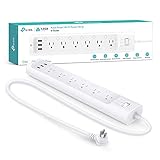
Overview: The Kasa HS300 is a feature-rich smart power strip offering six individually controllable outlets and three USB ports. Designed for tech-savvy homeowners and small business operators, it integrates seamlessly with major voice assistants while providing robust surge protection and energy monitoring capabilities.
What Makes It Stand Out: The HS300’s standout feature is its per-outlet energy monitoring, a rarity in this price range. This allows users to track power consumption of individual devices, helping identify energy hogs and reduce electricity bills. The six independently controlled smart outlets provide exceptional flexibility for complex setups, while ETL-certified surge protection safeguards expensive electronics during storms.
Value for Money: At $39.98, this represents excellent value despite being pricier than basic models. The energy monitoring alone justifies the premium, essentially paying for itself through identified savings. Compared to buying separate smart plugs and a traditional surge protector, you’re saving at least $30-40 while gaining centralized control.
Strengths and Weaknesses: Strengths include individual energy monitoring, six controllable outlets, reliable app control, and broad voice assistant compatibility including Cortana. Weaknesses: the USB ports aren’t smart-controlled, it’s limited to 2.4GHz WiFi, and the unit is bulky for some spaces. The three USB ports share power, which may slow charging when all are used.
Bottom Line: The Kasa HS300 is the best choice for users wanting detailed energy insights and maximum outlet control. Its monitoring capabilities and robust feature set make it worth every penny for energy-conscious smart home enthusiasts.
2. Kasa Smart Plug Power Strip KP303, Surge Protector with 3 Individually Controlled Smart Outlets and 2 USB Ports, Works with Alexa & Google Home, No Hub Required , White
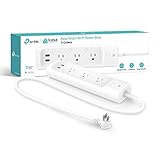
Overview: The Kasa KP303 is a compact smart power strip offering three individually controlled outlets and two always-on USB ports. Perfect for smaller spaces like apartments, dorm rooms, or office desks, it delivers core smart functionality without overwhelming complexity or cost.
What Makes It Stand Out: Its compact design and focused feature set make it ideal for targeted automation. Unlike competitors that spread resources thin across many outlets, the KP303 perfects the essentials: reliable scheduling, voice control, and surge protection. The always-on USB ports are intelligently designed for devices that need constant power, while the three smart outlets handle automation needs.
Value for Money: At $23.38, this is exceptional value—one of the most affordable entry points into quality smart home automation. You’re getting TP-Link’s reliable Kasa ecosystem, ETL-certified surge protection, and three smart outlets for less than the cost of two individual Kasa smart plugs. It’s perfect for budget-conscious buyers who don’t need six outlets.
Strengths and Weaknesses: Strengths include unbeatable price, trusted Kasa app reliability, compact footprint, and simple setup. The ETL-certified surge protection provides peace of mind. Weaknesses: only three smart outlets, no energy monitoring, USB ports aren’t controllable, and it lacks the advanced features of pricier models. The 2.4GHz WiFi limitation may concern some users.
Bottom Line: The Kasa KP303 is the smart choice for beginners or those needing targeted automation. It delivers reliable performance at an unbeatable price, making it the best budget smart power strip available.
3. GHome Smart Power Strip Surge Protector 10A, Smart Plug That Works with Alexa & Google Home, 6 in 1 WiFi Outlets with APP Control, White Extension Cord 2.4G WiFi Only, ETL FCC Listed, No Hub Needed
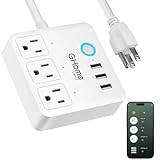
Overview: The GHome Smart Power Strip offers three smart outlets and three USB 3.0 ports with full app and voice control. Positioned as a mid-range option, it balances affordability with functionality, supporting both individual and group control for flexible home automation.
What Makes It Stand Out: This strip’s USB 3.0 ports deliver faster charging than standard USB, and its comprehensive timer functions include countdown, cycle, and random modes—excellent for security and routine automation. The ability to simulate occupancy through random scheduling sets it apart from basic models, while individual and group control provides unmatched flexibility for daily use.
Value for Money: At $26.99, it undercuts many competitors while offering USB 3.0 ports and advanced scheduling features. You’re getting smart control and surge protection for about the same price as a quality non-smart surge protector with USB ports. The value proposition is strong for users prioritizing USB charging speed and automation versatility.
Strengths and Weaknesses: Strengths include USB 3.0 ports, advanced timer functions, individual/group control, ETL/FCC certification, and wide voltage support. The app offers excellent customization. Weaknesses: only three smart outlets (others offer six at similar prices), 2.4GHz WiFi only, no energy monitoring, and the brand lacks Kasa’s ecosystem maturity. The USB ports aren’t individually controllable.
Bottom Line: The GHome strip excels for users needing fast USB charging and sophisticated scheduling. It’s a feature-rich alternative to budget brands, though outlet count limitations may not suit everyone.
4. Geeni Smart Plug Power Strip, 6 Outlets and 2 USB Ports, 6 ft. Cord, Surge Protector with Voice Control, WiFi Control, Compatible with Alexa & Google Home, No Hub Required, Black

Overview: The Geeni Smart Power Strip features six individually controlled outlets plus USB-A and USB-C ports, making it a versatile hub for modern device ecosystems. With a generous six-foot cord and 1200-joule surge protection, it’s designed for flexible placement and robust device safety.
What Makes It Stand Out: The inclusion of both USB-A and USB-C ports future-proofs this strip for evolving device standards. Its six-foot cord provides placement flexibility that many competitors lack, while 1200-joule surge protection offers premium safeguarding. The Geeni app’s custom scheduling for daily routines adds practical value for busy households.
Value for Money: At $37.99, it competes directly with the Kasa HS300 while offering USB-C connectivity and a longer cord. The price is justified by the modern port selection and extended reach, though it lacks energy monitoring. For users with newer USB-C devices, this eliminates the need for separate adapters, creating additional value.
Strengths and Weaknesses: Strengths include six smart outlets, USB-C port, long six-foot cord, strong surge protection, and no hub requirement. The app provides reliable remote control. Weaknesses: no energy monitoring, USB ports aren’t smart-controlled, 2.4GHz WiFi only, and the Geeni ecosystem is less established than Kasa. Some users report occasional app connectivity issues.
Bottom Line: The Geeni strip is ideal for users needing USB-C charging and flexible placement. It matches premium competitors on outlet count while adding modern connectivity, making it a forward-thinking choice.
5. BN LINK Smart Plug Power Strip,Surge Protector with 6 Individually Controlled Smart Outlets, 4 USBs (incl. 20W USB-C), Compatible with Alexa and Google Home

Overview: The BN LINK Smart Power Strip delivers six individually controlled outlets and an impressive five USB ports, including a 20W USB-C fast charging port. This surge protector combines comprehensive device support with robust home automation features for power users with many gadgets.
What Makes It Stand Out: The five USB ports with 20W USB-C fast charging is unmatched in this category, eliminating wall adapters for most users. Its individual outlet control combined with grouping capabilities provides both granular and macro management. The 1200-joule surge protection and ETL certification ensure top-tier safety, while indicator lights provide at-a-glance status monitoring.
Value for Money: At $39.99, this is competitively priced given the USB port abundance and fast charging capability. Buying six smart plugs plus a USB charging station would cost significantly more. The 20W USB-C port alone adds $15-20 value compared to standard USB ports, making this an excellent package deal for device-heavy households.
Strengths and Weaknesses: Strengths include six smart outlets, five USB ports with 20W USB-C, strong surge protection, individual/group control, and 24/7 support. The app offers comprehensive scheduling. Weaknesses: 2.4GHz WiFi only, no energy monitoring, bulky design may not fit all spaces, and the BN-LINK brand lacks the recognition of TP-Link or Geeni. USB ports aren’t individually controllable.
Bottom Line: The BN LINK strip is the ultimate choice for users with numerous USB devices. Its port abundance and fast charging make it unbeatable for gadget-heavy homes, despite minor connectivity limitations.
6. GHome Smart Plug Outlet Extender, Smart Power Strip Surge Protector with 3 Individually Controlled WiFi Outlets and 3 USB Ports, Smart Plugs That Works with Alexa Google Home, 15A/1800W, Black

Overview: This GHome Smart Plug Outlet Extender transforms any wall outlet into a versatile 9-in-1 smart power hub. With three individually controlled WiFi outlets, three smart USB ports, and three always-on standard outlets, it offers comprehensive device management for modern smart homes. The sleek black design integrates surge protection and voice control compatibility with Alexa and Google Home, making it an all-in-one solution for controlling lamps, coffee makers, and charging devices while keeping essential equipment like routers powered continuously.
What Makes It Stand Out: The combination of individually controlled smart outlets alongside dedicated always-on outlets sets this apart from standard power strips. This thoughtful design prevents accidentally shutting down critical devices like security systems or network equipment. The wall-mountable form factor saves valuable counter space, while the 15A/1800W rating handles high-power appliances confidently. Voice control responsiveness is excellent, and the app allows sophisticated scheduling and group control scenarios that basic smart plugs cannot match.
Value for Money: At $26.99, this device delivers exceptional value by essentially combining three smart plugs, three smart USB ports, and a surge protector into one unit. Purchasing these components separately would cost significantly more. The always-on outlets add further value by eliminating the need for a separate power strip for critical devices. Compared to single-outlet smart plugs that cost $10-15 each, this 9-in-1 solution provides triple the functionality at a fraction of the cumulative cost.
Strengths and Weaknesses: Strengths include versatile 9-in-1 design, individual outlet control, dedicated always-on outlets, robust safety certifications, and wall-mountable space-saving design. The 2.4GHz WiFi limitation is standard for this price range but worth noting. Setup is straightforward, and the PC+ABS construction ensures durability. No major weaknesses at this price point, though USB ports aren’t individually controlled. The lack of energy monitoring is a minor omission some competitors offer.
Bottom Line: This GHome smart power strip is an outstanding value for anyone building a smart home. Its unique combination of controlled and always-on outlets, coupled with reliable performance and comprehensive safety features, makes it a top choice for home offices, entertainment centers, and kitchen counters. Highly recommended for both beginners and experienced smart home users.
7. GHome Smart Plug Power Strip Works with Alexa & Google Home - 3 Individually Controlled Smart Outlets Switches 3 USB Ports, 4FT Extension Cord, WiFi Power Strip, Multi-Plug Extender for Home Offices

Overview: This GHome Smart Plug Power Strip offers a portable smart home solution with a 4-foot extension cord, making it ideal for home offices and travel. Featuring three individually controlled smart outlets and three USB charging ports, this 6-in-1 device provides flexible control without being tethered directly to a wall socket. Compatible with Alexa and Google Home, it enables voice commands and remote app control for lamps, coffee makers, and other appliances. The compact design and travel-friendly features make it versatile for various settings.
What Makes It Stand Out: The integrated 4-foot extension cord distinguishes this model from wall-mounted alternatives, providing placement flexibility that desk workers and travelers will appreciate. The compact form factor balances portability with functionality, while the 3.1A total USB output efficiently charges multiple devices simultaneously. Timer scheduling helps reduce electricity bills by automating power-hungry devices, and the shockproof safety features provide peace of mind. The hands-free voice control is particularly valuable for users with mobility challenges.
Value for Money: Priced at $26.99, this power strip competes well with other entry-level smart strips. The extension cord adds utility that wall-mounted models lack, justifying the cost for users needing distance from outlets. While it offers fewer total outlets than the 9-in-1 models, the portability factor creates different value. Compared to buying separate smart plugs and a traditional power strip, this integrated solution saves money and reduces clutter. The travel-friendly design extends its value proposition beyond stationary home use.
Strengths and Weaknesses: Strengths include the 4FT extension cord, portable design, individual outlet control, USB charging capability, and comprehensive safety protections. The 6-in-1 configuration is streamlined for most users’ needs. Weaknesses include the lack of always-on outlets found in other GHome models, and the 2.4GHz WiFi-only limitation. Some users might prefer more total outlets, and the plastic construction, while durable, isn’t as premium as metal alternatives. No energy monitoring feature is included.
Bottom Line: This GHome smart power strip is perfect for users prioritizing flexibility and portability. The extension cord makes it ideal for desks, nightstands, and travel, while maintaining robust smart features and safety protections. For home office workers and frequent travelers wanting smart control without permanent installation, this is an excellent choice that delivers solid performance at a competitive price.
8. GHome Smart Plug Outlet Extender, Surge Protector with 3 Individually Controlled Smart Power Strips and 3 USB Ports, Works with Alexa & Google Home, 15A/1800W, White

Overview: This white version of the GHome Smart Plug Outlet Extender delivers the same 9-in-1 functionality as its black counterpart, converting a single outlet into three smart outlets, three smart USB ports, and three always-on standard outlets. The clean white finish blends seamlessly with lighter wall plates and modern décor. With full Alexa and Google Home integration, surge protection, and app-based scheduling, this device manages diverse electronics while ensuring critical equipment stays powered. The 15A/1800W rating handles demanding appliances safely.
What Makes It Stand Out: The color option is the primary differentiator, but the core 9-in-1 design remains uniquely practical. Having three always-on outlets alongside three smart outlets prevents accidental shutdowns of essential devices like routers or security cameras—a feature rarely found in competitors. The wall-mountable design saves space in kitchens, offices, and entertainment centers. Voice control responsiveness is excellent, and the scheduling capabilities support complex automation routines. The white finish is particularly suitable for residential settings where aesthetics matter.
Value for Money: At $26.99, this offers identical value to the black version, representing significant savings versus purchasing components separately. The always-on outlets add hidden value by eliminating the need for additional power strips for critical devices. Three smart outlets would cost $30-45 individually, making this 9-in-1 package a bargain. The surge protection and USB charging further enhance the value proposition. For white-themed rooms, the aesthetic match alone justifies choosing this over the black model.
Strengths and Weaknesses: Strengths include the versatile 9-in-1 layout, dedicated always-on outlets, individual smart control, robust safety certifications, and space-saving design. The white color option provides aesthetic flexibility. Weaknesses mirror the black version: 2.4GHz WiFi only, no individual USB control, and lack of energy monitoring. The app interface, while functional, isn’t as polished as premium brands. Some users may find nine outlets excessive for their needs, though the always-on feature mitigates this concern.
Bottom Line: Choose this white GHome smart extender if you want the same excellent 9-in-1 functionality with a brighter aesthetic. It’s ideal for light-colored rooms and provides outstanding value, comprehensive safety, and thoughtful design. The always-on outlets make it superior to standard smart strips, and the price point is unbeatable for the features offered. A smart investment for any smart home setup.
9. Feit Electric Smart Power Strip, 4 Outlets + 4 USB Ports, Voice Control with Alexa & Google Assistant, App Control & Scheduling from Anywhere, 15 Amp, Indoor 4-Outlet Powerstrip, POWERSTRIP/WiFi

Overview: The Feit Electric Smart Power Strip brings reputable brand reliability to the smart power strip category with four individually controlled outlets and four USB ports. The 5-foot cord provides flexibility for indoor applications, while the night light adds convenient illumination. Compatible with Alexa, Google Assistant, and even Siri shortcuts, this ETL-rated strip offers broader voice ecosystem support than many competitors. The 15-amp capacity and surge protection safeguard electronics, making it suitable for entertainment centers, home offices, and small appliances.
What Makes It Stand Out: Feit Electric’s established reputation in lighting and electrical products lends credibility to this power strip. The inclusion of a night light is a unique convenience feature not found in most competitors. Supporting Siri shortcuts alongside Alexa and Google Assistant provides rare cross-platform compatibility. The 5-foot cord is longer than average, and the ETL rating ensures rigorous safety standards. Four USB ports with 4.8A total output efficiently charge multiple devices, while individual outlet control maximizes flexibility for automation scenarios.
Value for Money: At $37.16, this commands a premium over GHome alternatives but justifies it with brand reputation, Siri support, and the night light feature. The build quality feels more robust, and the longer cord adds practical value. While you could buy two cheaper strips for the same price, the integrated design and trusted brand name provide peace of mind. For Apple ecosystem users, Siri support alone may warrant the extra cost. The surge protection and scheduling features help offset the price difference through energy savings.
Strengths and Weaknesses: Strengths include Feit’s brand reputation, Siri shortcut support, integrated night light, 5-foot cord, ETL certification, and four individually controlled outlets. The 4.8A USB output is generous. Weaknesses include the higher price point, lack of always-on outlets, and 2.4GHz WiFi limitation. The app experience, while functional, receives mixed reviews compared to more established smart home platforms. Some users report occasional connectivity issues, though firmware updates have improved reliability. No energy monitoring is included.
Bottom Line: The Feit Electric Smart Power Strip is worth the premium for users invested in multiple voice ecosystems, especially Apple users wanting Siri integration. The night light and longer cord add practical value, while the brand’s reputation ensures reliability. If budget allows and you need cross-platform compatibility, this is an excellent choice. For cost-conscious buyers, alternatives offer similar core features for less.
10. GHome Smart Plug Outlet Extender, USB Wall Charger with 3 Individual Smart Outlets and 3 Smart USB Ports, Works with Alexa Google Home, Surge Protector Plug Extender for APP Control,15A/1800W

Overview: This GHome Smart Plug Outlet Extender offers a sophisticated 9-in-1 design with three individually controlled smart outlets, three group-controlled smart USB ports, and three always-on standard outlets. The versatile configuration supports high-wattage devices up to 3450W/15A, making it suitable for power-hungry appliances like air conditioners and refrigerators. With Alexa and Google Home integration, app-based scheduling, and comprehensive surge protection, this device provides complete control over diverse electronics while ensuring critical systems remain continuously powered.
What Makes It Stand Out: The ability to handle high-wattage appliances up to 3450W distinguishes this from many smart strips limited to 1800W. The flexible control scheme—individual outlet control, group USB control, and always-on outlets—offers unmatched customization. The wide operating temperature range (-20° to 40°) ensures reliability in varied environments. FCC and ETL certifications provide dual safety assurance. The timer functions include advanced options like random mode for security lighting, adding sophistication beyond basic scheduling.
Value for Money: At $26.99, this represents exceptional value, particularly given the high-wattage capacity typically found in more expensive units. The 9-in-1 design eliminates the need for multiple devices, saving both money and outlet space. Three smart plugs alone would cost more than this entire unit. The energy-saving scheduling features can reduce electricity bills, further offsetting the cost. For users with high-power appliances, the 3450W rating provides future-proofing that cheaper alternatives cannot match.
Strengths and Weaknesses: Strengths include high-wattage capacity (3450W), versatile control options, always-on outlets, dual safety certifications, wide temperature range, and advanced scheduling features. The build quality is solid with V0 fire retardant shell. Weaknesses include 2.4GHz WiFi only, no individual USB port control, and lack of energy monitoring. The app interface could be more intuitive, though it’s functional. Some users may find the 9-outlet layout complex initially, but the control flexibility quickly proves beneficial.
Bottom Line: This GHome smart extender is a powerhouse for users needing high-wattage support and maximum control flexibility. The 3450W rating and sophisticated scheduling make it ideal for demanding applications, while the always-on outlets ensure critical devices stay powered. At this price, it’s an unbeatable value for advanced smart home setups. Highly recommended for users with diverse power needs and high-wattage appliances.
Why Smart Power Strips Are the Unsung Heroes of Alexa Ecosystems
Smart power strips function as the nervous system of your smart home, distributing not just electricity but also digital control to devices that were never designed to be “smart.” While smart plugs handle single devices, power strips consolidate control, reduce Wi-Fi network clutter, and eliminate the wall wart chaos that comes with multiple individual adapters. For Alexa users, this means fewer devices to name, group, and manage within the app—streamlining voice commands and reducing the cognitive load of remembering which plug controls what.
The real magic lies in their ability to bridge the gap between legacy electronics and modern automation. That vintage lamp you inherited, the coffee maker that brews the perfect cup, or the office equipment you can’t replace—all become voice-responsive without modification. This preservation of beloved appliances while adding futuristic functionality makes smart power strips uniquely valuable compared to replacing everything with native smart devices.
How Voice Control Transforms Basic Power Strips Into Intelligent Hubs
Voice control through Alexa fundamentally changes your relationship with power distribution. Traditional power strips are passive infrastructure; you manually flip switches and hope you remember to turn things off. With Alexa integration, each outlet becomes an addressable endpoint in your smart home network, capable of receiving commands, executing schedules, and reporting status back to you.
The transformation extends beyond simple on/off functionality. Advanced models support dimming for compatible devices, power cycling for unresponsive electronics, and conditional logic based on other smart home triggers. You can create a “goodnight” routine that cuts power to non-essential devices while maintaining power to security equipment, or a “movie time” scene that dims lights, powers on your projector, and switches your receiver to the correct input—all initiated by a single phrase.
Critical Features to Evaluate Before Making a Purchase
Individual Outlet Control: The Non-Negotiable Feature
The most crucial capability separating premium strips from basic models is independent outlet control. Some budget options only allow you to toggle the entire strip on or off with a voice command—defeating the purpose of consolidation. True smart power strips provide separate control for each AC outlet, typically through individual relays that can be addressed independently. This means you can turn off outlet three while keeping outlets one, two, and four active, giving you surgical precision over your power distribution.
When evaluating products, verify that Alexa recognizes each outlet as a distinct device within the smart home dashboard. The naming convention should be customizable, allowing you to assign logical names like “Desk Lamp,” “Monitor,” and “Phone Charger” rather than being stuck with generic “Outlet 1” labels that make voice commands clumsy and unnatural.
Energy Monitoring: From Simple Tracking to Actionable Insights
Energy monitoring transforms your power strip from a simple switch into a data collection tool. High-quality strips measure wattage, amperage, voltage, and kilowatt-hour consumption for each outlet individually, feeding this data to the Alexa app in real-time. This granularity lets you identify vampire power drains, calculate exact operating costs per device, and make informed decisions about when to replace inefficient appliances.
Look for strips that offer historical data visualization, not just current draw snapshots. The best implementations allow you to set energy budgets, receive alerts when devices exceed expected consumption, and generate monthly reports that help you track conservation efforts. Some even integrate with Alexa’s Hunches feature, where the assistant might suggest, “I noticed your TV is using power late at night. Should I create a schedule to turn it off after 11 PM?”
USB Power Delivery: Understanding Fast Charging Standards
Modern smart power strips increasingly include USB ports, but the charging capabilities vary dramatically. Basic USB-A ports might deliver 5W—sufficient for overnight charging but painfully slow for modern smartphones and tablets. Premium models feature USB-C with Power Delivery (PD) and Quick Charge (QC) protocols, automatically negotiating the optimal charging speed for each connected device.
Understanding these standards matters because a 65W USB-C PD port can charge a laptop directly, eliminating the need for its bulky power brick and freeing up AC outlets. Some advanced strips even offer programmable USB ports that can be voice-controlled independently of the AC outlets, letting you cut power to a charger once your device reaches full battery to prevent trickle charging and extend battery lifespan.
Decoding the Tech Specs: A Buyer’s Deep Dive
Wi-Fi Connectivity: 2.4GHz vs. 5GHz Considerations
Nearly all smart power strips operate exclusively on 2.4GHz Wi-Fi networks, and this isn’t a limitation—it’s a feature. The 2.4GHz band offers superior range and wall penetration compared to 5GHz, ensuring reliable connectivity even when the strip is tucked behind furniture or located in a basement. However, this creates a potential setup hurdle if your router uses a single SSID that automatically steers devices to 5GHz.
During installation, you may need to temporarily disable band steering or create a dedicated 2.4GHz network. Some manufacturers have adapted by implementing Bluetooth-assisted setup, where you configure the device through a temporary Bluetooth connection before it joins your Wi-Fi network. Check the specifications for setup requirements and ensure your network infrastructure supports the strip’s connectivity method.
Surge Protection Ratings: Joules, Clamping Voltage, and UL Certification
Surge protection remains a primary function, even in smart models. The joule rating indicates how much energy the strip can absorb before failing—higher is better, with 2000+ joules recommended for home theater equipment and computers. However, joules only tell part of the story. Clamping voltage, typically 330V or 400V, determines when the protection activates; lower clamping voltage means better protection but potentially shorter component lifespan.
UL certification, specifically UL 1449, is non-negotiable. This standard ensures the surge protection components have been independently tested and will safely fail without creating fire hazards. Some smart strips include status indicators that report surge protection health to the Alexa app, alerting you when the protective components have degraded and need replacement—a critical feature since most surge protectors silently lose effectiveness over time.
Processor and Memory: Why Internal Hardware Matters
The internal chipset determines responsiveness, automation capabilities, and future-proofing. Strips with more powerful processors handle complex routines faster and support edge computing features that work even during internet outages. Memory capacity affects how many automation rules and historical data points can be stored locally before syncing to the cloud.
While manufacturers rarely advertise these specifications, you can infer capability from feature sets. Strips that support local execution of Alexa routines, maintain operation schedules during Wi-Fi outages, and offer rapid voice command response likely contain superior hardware. Reading technical teardown reviews or developer documentation can reveal the chipset model and memory configuration, helping you identify models built on robust platforms rather than minimalist, cost-cutting designs.
Alexa Integration Levels: From Basic to Advanced
Alexa compatibility exists on a spectrum. Basic integration allows simple on/off voice commands and app control. Intermediate levels add energy monitoring data to the Alexa dashboard and support grouping with other smart devices. Advanced integration enables proactive Alexa Hunches, where the assistant learns your patterns and suggests automation, and local hub operation that reduces cloud dependency.
The deepest integration leverages Alexa’s state reporting API, allowing the power strip to inform Alexa when a device is physically turned on or off at the strip itself. This two-way communication ensures the Alexa app accurately reflects reality, preventing the common issue where the app shows a device as “on” when someone manually switched it off. Look for strips that explicitly mention “state reporting” or “two-way sync” in their Alexa skill description.
Setup and Configuration: Avoiding Common Pitfalls
Pre-Installation Network Requirements
Before unboxing, verify your network meets the strip’s requirements. Most need WPA2 security (some support WPA3), a 2.4GHz broadcast, and DHCP enabled for automatic IP assignment. Enterprise networks with captive portals or MAC address filtering will require IT intervention or a dedicated IoT VLAN. The strip’s firmware update mechanism also matters—some update automatically while others require manual initiation through the manufacturer’s app before Alexa integration.
Consider network segmentation for security. Creating a separate IoT network isolates your smart power strips from computers and NAS devices, limiting potential attack vectors. If your router supports it, assign the strip to a guest network with client isolation disabled, or use VLAN tagging to create a secure smart home subnet.
Step-by-Step Alexa Skill Activation
The setup dance typically involves three stages: physical installation, manufacturer app configuration, and Alexa skill linking. First, position the strip and connect devices. Second, use the manufacturer’s app to connect the strip to Wi-Fi and verify firmware is current. Third, enable the Alexa skill and discover devices.
The critical step is naming conventions. During discovery, Alexa may auto-generate cumbersome names like “Smart Power Strip 1 Outlet 3.” Immediately rename outlets to intuitive, distinct names that are easy to pronounce and unlikely to be confused with other devices. Avoid similar-sounding names like “Living Room Lamp” and “Living Room Light” which Alexa might mix up. Test each voice command three times during setup to catch recognition issues early.
Advanced Automation: Routines, Schedules, and Conditional Logic
Beyond basic voice commands, smart power strips shine when integrated into Alexa Routines. You can create conditional logic that considers time of day, occupancy status, or other device states. For example: “When motion is detected in the garage after sunset, turn on outlet two (workbench light) for 15 minutes.” Or: “When the smart lock is engaged (away mode), cut power to all non-essential outlets except the security camera outlet.”
Advanced users leverage IFTTT or Alexa’s own routine builder to create multi-step automations. A “work from home” routine might power on your monitor, desk lamp, and USB charger while simultaneously setting Alexa to Do Not Disturb mode and adjusting the thermostat. The key is identifying which devices truly need to turn on/off together versus those requiring independent control, then designing your outlet assignments accordingly.
Energy Management Strategies for the Conscious Consumer
Effective energy management starts with baseline measurement. Use your smart strip’s monitoring to record each device’s idle power consumption over a week. You’ll likely discover that modern electronics draw surprising amounts in standby—gaming consoles, cable boxes, and computer monitors can consume 15-30W each while “off.” With this data, create aggressive schedules that cut power completely during sleep hours.
Calculate ROI by comparing the strip’s cost against projected savings. A typical entertainment center might waste $50-75 annually in vampire power. A $40 smart strip pays for itself in under a year while adding convenience. Some utilities offer time-of-use rates; program high-consumption devices like dehumidifiers or pool pumps to run during off-peak hours when electricity costs less, using Alexa routines triggered by time rather than voice.
Physical Design Elements That Impact Usability
Form Factor: Wall-Mount vs. Desk Configuration
Wall-mountable strips with keyhole slots or screw mounts keep floors clear and prevent accidental unplugging—ideal for home theaters, workshops, and behind-TV installations. Desktop models with flat, stable bases suit office environments where you need easy access to toggle outlets manually. Some hybrid designs include mounting hardware and rubber feet, adapting to either scenario.
Consider the strip’s orientation relative to your furniture. Vertical tower designs save horizontal space but may block adjacent outlets on the wall. Horizontal strips with right-angle plugs minimize wall protrusion, allowing furniture to sit flush. Measure your intended location and account for the strip’s dimensions plus the space needed for connected power adapters.
Outlet Spacing and Adapter-Friendly Designs
The bane of traditional power strips is outlet blocking—large wall warts covering adjacent sockets. Premium smart strips solve this with rotated outlets, increased spacing, or a mix of standard and widely-spaced sockets. Count your devices with oversized plugs and ensure the strip’s layout accommodates them. Some designs alternate outlet directions, allowing four large adapters to fit where a standard strip might only hold two.
USB port placement matters too. Side-mounted ports prevent cable clutter on top of your desk, while top-mounted ports are easier to access for frequent plugging and unplugging. Consider whether you need USB-C ports that can charge laptops—some strips position these on the end for better cable management with longer USB-C cords.
Cord Length and Gauge Considerations
The power cord’s length and wire gauge (AWG rating) affect both convenience and safety. A 6-foot cord offers flexibility for positioning, while a 10-foot cord reaches distant wall outlets without daisy-chaining (a practice that defeats surge protection). The gauge matters for high-load applications: 14 AWG handles 15A safely, while 16 AWG may warm under sustained heavy loads from multiple devices.
Flat, flexible cords are easier to route under carpets or along baseboards without creating tripping hazards. Some premium models include cord management clips or Velcro straps for clean installation. If the strip will be visible, consider cord color—white blends with light walls, while black disappears against dark furniture.
Security Implications of Networked Power Devices
Every device connected to your network expands the attack surface, and smart power strips are no exception. The primary risks include unauthorized access to power control, potential use in DDoS botnets, and data interception of energy usage patterns that could reveal when you’re home. Mitigation starts with selecting strips from manufacturers with strong security track records and regular firmware updates.
Enable all available security features: WPA3 encryption on your router, unique passwords for the manufacturer’s app, and two-factor authentication if offered. Disable remote access features you don’t need—some strips allow control only on the local network, reducing exposure. Regularly audit connected devices through your router’s admin panel and watch for unfamiliar MAC addresses. Consider strips that support local-only control via Alexa’s local voice control feature, which processes commands on-device without cloud transmission.
Troubleshooting Guide: When Alexa Doesn’t Respond
Voice command failures typically stem from four issues: network connectivity, naming conflicts, skill authentication, or Alexa service outages. When a command fails, first check the Alexa app’s device status—if the outlet shows as unresponsive, the strip lost Wi-Fi connection. Power cycle the strip and check your router’s connected devices list.
Naming conflicts cause intermittent failures. If Alexa responds with “I found multiple devices with that name,” you’ve created ambiguity. Use distinct, non-rhyming names and avoid possessives or prepositions that Alexa might misinterpret. “Bedroom lamp” works better than “John’s bedroom light.” If the skill shows as unlinked, re-authenticate through the Alexa app, as manufacturer cloud tokens expire periodically. Finally, check Amazon’s service status page—Alexa’s cloud infrastructure occasionally experiences regional outages that affect third-party device control.
Price Tiers and Value Propositions
Smart power strips cluster in three price tiers. Budget models ($25-40) offer basic individual outlet control and simple scheduling but lack energy monitoring or advanced surge protection. Mid-range options ($40-70) add per-outlet energy tracking, higher joule ratings, and better Alexa integration with state reporting. Premium strips ($70-120) include USB-C PD ports, advanced automation engines, enterprise-grade surge protection, and robust security features.
Value assessment depends on your use case. For a simple desk setup where you just want to voice-control a lamp and charger, a budget strip suffices. For a home theater with thousands of dollars in equipment, the premium strip’s superior surge protection and energy monitoring justify the cost. Calculate the replacement value of devices you’re protecting—a $100 strip protecting $3,000 in electronics represents 3% insurance, while also delivering convenience and energy savings.
Future-Proofing: Matter, Thread, and Next-Gen Protocols
The smart home industry is transitioning to Matter, a universal connectivity standard promising seamless interoperability between ecosystems. While most current smart power strips use Wi-Fi, next-generation models will incorporate Thread—a low-power mesh networking protocol that enables faster, more reliable local control without cloud dependency.
When shopping, look for manufacturers committed to Matter compatibility through firmware updates. Some Wi-Fi strips can gain Matter support via over-the-air updates, future-proofing your investment. Thread-enabled strips will require a Thread border router (found in latest Echo devices) but offer superior responsiveness and offline operation. Avoid proprietary protocols that lock you into a single ecosystem; Zigbee-based strips, while reliable, may become obsolete as Matter adoption accelerates.
Real-World Applications: Creative Use Cases
Beyond the obvious entertainment center control, smart power strips enable creative automation scenarios. Gardeners use them to control grow lights, humidifiers, and fans on precise schedules tied to sunrise/sunset. Homebrewers automate fermentation temperature control by powering heating belts and cooling fans based on temperature sensor inputs. Parents create “homework time” routines that cut power to gaming consoles while keeping study lamps and laptops active.
Holiday lighting becomes effortless—program elaborate displays to sync with music or activate at dusk without manual timers. In home offices, use presence detection to power down equipment when you leave for lunch, then restore everything with a “I’m back” command. The key is thinking beyond simple on/off to contextual automation that adapts to your life’s rhythms.
Maintenance and Longevity: Protecting Your Investment
Smart power strips require periodic maintenance to ensure continued performance. Every six months, inspect for physical damage, test the surge protection status indicator, and verify firmware is current through the manufacturer’s app. Dust accumulation can cause overheating—use compressed air to clean vents and outlets. If the strip includes replaceable surge protection modules, mark your calendar to swap them every 3-5 years or after a major surge event.
For long-term reliability, avoid operating near maximum load capacity continuously. If your strip is rated for 15A, keep sustained loads under 12A to prevent component stress. Use the energy monitoring feature to track actual consumption; you might be surprised how quickly computers, monitors, and peripherals add up. Consider strips with overload protection that automatically cut power before damage occurs, and test this feature annually by intentionally exceeding the limit with a controlled load.
Frequently Asked Questions
1. Can I control each outlet individually with Alexa, or does it only turn the whole strip on and off?
Premium smart power strips provide individual outlet control, allowing you to name and voice-command each socket separately. Budget models may only control the entire strip as a single device. Always verify “independent outlet control” in the specifications before purchasing if you need granular command capability.
2. Do smart power strips work during internet outages?
It depends on the model. Strips with local processing and onboard memory can execute pre-programmed schedules and respond to Alexa commands processed on-device (with compatible Echo speakers) during internet outages. Cloud-dependent models become unresponsive until connectivity restores. Check for “local control” or “offline operation” features if this is a priority.
3. How much standby power do smart power strips themselves consume?
Most quality smart power strips consume 1-3 watts in standby—less than $5 annually in electricity costs. This minimal overhead is far outweighed by the vampire power savings from controlled devices. Energy monitoring features in the Alexa app can actually track the strip’s own consumption alongside connected devices.
4. Can I use smart power strips with high-draw appliances like space heaters or air conditioners?
Only if the strip is explicitly rated for the appliance’s amperage. Most residential strips max out at 15A total draw. A 1500W space heater pulls 12.5A, leaving minimal headroom for other devices. For high-draw appliances, use a smart strip solely for that device or choose industrial-rated models with 20A capacity and appropriate plug types.
5. Will connecting too many smart power strips overload my Wi-Fi network?
Each strip counts as one device, regardless of how many items are plugged into it. This consolidation is actually a Wi-Fi network advantage compared to using individual smart plugs for each device. However, if you deploy dozens of smart home devices, consider upgrading to a mesh Wi-Fi system or creating a dedicated 2.4GHz IoT network to prevent congestion.
6. How do I prevent someone from accidentally turning off critical devices like my router or security camera?
Use physical outlet locks if available, or more reliably, assign critical devices to non-smart surge protectors. Alternatively, create Alexa routines that prevent certain outlets from responding to generic “turn everything off” commands. Some advanced strips allow you to password-protect individual outlets in the app, adding a layer of security against accidental or unauthorized control.
7. What’s the difference between a smart power strip and a smart plug with multiple outlets?
Smart plugs with multiple outlets typically lack surge protection, independent outlet control, and energy monitoring. They’re essentially a power splitter with one smart relay. True smart power strips include UL-rated surge protection, individual outlet control, and often energy monitoring per socket—functioning as both a protective device and a control hub.
8. Can I integrate smart power strips with Alexa Routines that involve other smart home devices?
Absolutely. This is where smart power strips demonstrate their full potential. You can create routines like “Alexa, goodnight” that locks smart doors, turns off lights, and cuts power to non-essential outlets simultaneously. Use the Alexa app’s routine builder to add power strip outlets as actions within any multi-device automation.
9. Do USB ports on smart power strips support data transfer or just charging?
Smart power strip USB ports are power-only; they do not support data transfer. The “smart” aspect refers to power delivery control and monitoring, not data connectivity. You cannot use them to sync devices or connect peripherals to a computer. For data and power, you’ll still need a separate USB hub.
10. How long do smart power strips typically last compared to traditional surge protectors?
The smart components (Wi-Fi module, relays) typically last 5-7 years with normal use, while surge protection components degrade based on surge events rather than time. A quality traditional surge protector might last 10+ years if never hit by major surges. The trade-off is that smart strips provide ongoing value through energy savings and convenience that can offset earlier replacement costs. Look for models with replaceable surge modules to extend lifespan.