If you’re under 5'4", you’ve probably felt like Goldilocks trying to find a chair that’s “just right”—except most office chairs feel like they were designed for a giant. Your feet dangle above the floor, the lumbar support hits your shoulder blades, and the seat depth cuts off circulation behind your knees. It’s not just uncomfortable; it’s a daily ergonomic nightmare that can lead to chronic pain, poor posture, and decreased productivity.
The truth is, the vast majority of ergonomic chairs are engineered for the average male frame (5'9" to 6'2"), leaving petite users to make do with ill-fitting seating that sabotages their health. But here’s the good news: the market for petite ergonomic chairs has expanded dramatically, and understanding what features truly matter can transform your workspace from a daily source of discomfort into a supportive command center. This comprehensive guide will walk you through everything you need to know to find your perfect fit—no compromises necessary.
Top 10 Petite Ergonomic Chairs for Short Users
Detailed Product Reviews
1. CabLady S2 Petite Ergonomic Office Chair for Women, Small Frame Desk Chair with Adjustable Lumbar, Headrest & Footrest, Space-Saving Flip-Up Armrests
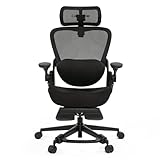
Overview: The CabLady S2 addresses a critical gap in the ergonomic chair market: premium support specifically engineered for petite frames. Designed for users from 4'9" to 5'11", this chair eliminates the common struggle of oversized seats and unreachable adjustments found in standard office chairs. With a 3.15-inch thick foam seat and integrated lumbar cushion, it promises comfort during extended work sessions.
What Makes It Stand Out: True 4D adjustability sets the S2 apart—headrest, armrests, footrest, and leg support all move to fit your body precisely. The one-touch recline button offers effortless positioning, while flip-up armrests allow the chair to tuck completely under desks, saving valuable space. The narrower armrest spacing accommodates smaller torsos comfortably, a detail most manufacturers miss.
Value for Money: At $409.99, the S2 sits in the premium category, but delivers features typically found in chairs costing $600+. For petite professionals spending 8+ hours at a desk, the investment prevents costly posture-related health issues. Comparable ergonomic chairs rarely offer this level of size-specific engineering.
Strengths and Weaknesses: Strengths include perfect proportions for petite users, extensive adjustability, sturdy 330-pound capacity, and space-saving design. The illustrated instructions simplify assembly. Weaknesses include the hefty 62-pound package requiring careful unpacking, and the white nylon base may clash with some office aesthetics. The price point, while justified, exceeds budget-conscious buyers.
Bottom Line: For petite individuals seeking a chair that fits properly and supports all-day productivity, the CabLady S2 is an exceptional investment that prioritizes both comfort and spatial efficiency.
2. CabLady S2 Petite Ergonomic Office Chair for Women, Small Frame Desk Chair with Adjustable Lumbar, Headrest & Footrest, Space-Saving Flip-Up Armrests

Overview: This specialized office chair from CabLady targets the often-overlooked petite user market, offering a comprehensive ergonomic solution for smaller frames. Accommodating heights from 4'9" to 5'11", the S2 features a compact seat depth and lower height range that ensures feet rest flat on the floor—a fundamental ergonomic principle standard chairs often fail to provide for petite users.
What Makes It Stand Out: The chair’s 4D customization system is remarkable: every contact point adjusts including a footrest rarely seen in office seating. The innovative one-touch side recline button provides instant angle changes without fumbling with levers. Flip-up armrests that rotate 90° offer unprecedented space flexibility, allowing the entire chair to disappear under a desk when not in use.
Value for Money: Priced at $409.99, the S2 represents mid-to-high tier investment that pays dividends in posture support and comfort. While cheaper than Herman Miller’s size-specific options, it delivers comparable adjustment capability. For remote workers with compact home offices, the space-saving features add tangible value beyond typical seating.
Strengths and Weaknesses: The tailored dimensions, robust 330-pound weight capacity, and extensive adjustment range are major strengths. Assembly is straightforward with clear visuals. However, the 62-pound shipping weight demands careful handling, and the premium price may deter casual users. The white base shows scuffs more visibly than darker alternatives.
Bottom Line: The CabLady S2 excels as a purpose-built solution for petite professionals who refuse to compromise on ergonomic features, making it a worthwhile long-term investment for dedicated home offices.
3. CabLady S1 Petite Ergonomic Office Chair Design with Detachable Pillow Lumbar Cushion, Coat Hanger, 2D Headrest & PU Armrests, Cloud Seat & Footrest Cute Desk Chair for Women Girls

Overview: The CabLady S1 offers a more accessible entry point into properly-sized ergonomic seating for petite users. At $329.99, this model retains core size-specific engineering while streamlining features. The innovative hybrid mesh and detachable butterfly pillow back provides customizable support, while the built-in coat hanger demonstrates thoughtful attention to real office needs.
What Makes It Stand Out: The dual-back design cleverly solves the “suspended back” problem petite users face with standard mesh chairs. The integrated coat hook on the 2D headrest is a genuinely useful feature for maintaining professional attire. Three-position recline lock and “Cloud Seat” cushioning deliver comfort flexibility without overwhelming users with adjustments.
Value for Money: This model strikes an impressive balance, costing $80 less than the S2 while maintaining essential ergonomic benefits. The 46-pound package is significantly lighter, reducing shipping and setup hassles. Though it lacks 4D adjustability, the 2D armrests and headrest still offer meaningful customization for most petite users.
Strengths and Weaknesses: Strengths include the clever hybrid back design, practical coat hanger, lighter weight, and attractive price point. The three-angle recline lock provides adequate positioning options. Weaknesses include less sophisticated PU armrests (versus padded), no one-touch recline, and limited footrest details compared to the S2. Maximum adjustment range is reduced.
Bottom Line: The S1 serves as an excellent compromise for budget-aware petite users who want proper ergonomics without premium pricing, offering smart features that prioritize daily comfort.
4. CabLady S2 Petite Ergonomic Office Chair for Women, Small Frame Desk Chair with Adjustable Lumbar, Headrest & Footrest, Space-Saving Flip-Up Armrests

Overview: The CabLady S2 redefines expectations for size-specific ergonomic seating, delivering premium adjustability in a frame designed for users 4'9" to 5'11". Every dimension—from seat depth to armrest spacing—accommodates smaller bodies that standard chairs leave swimming in excess space. The substantial 3.15-inch foam base prevents pressure points during marathon work sessions.
What Makes It Stand Out: Comprehensive 4D adjustability across headrest, armrests, footrest, and lumbar support creates a truly personalized fit. The one-touch recline mechanism stands out for its smooth operation, while 90° flip-up arms transform the chair’s footprint, enabling seamless desk integration. The white nylon base provides anti-tip stability uncommon in compact chairs.
Value for Money: At $412.00, this represents a marginal increase over similar listings but remains competitive within the premium petite chair category. The extensive feature set justifies the cost for serious users, offering adjustments typically reserved for high-end ergonomic models. The 330-pound capacity indicates robust construction that extends lifespan beyond budget alternatives.
Strengths and Weaknesses: Key strengths include meticulous sizing, exceptional adjustability, space efficiency, and clear assembly instructions. The sturdy base enhances safety. Drawbacks include the premium price tier, heavy 62-pound packaging, and white base’s maintenance requirements. Some users may find the extensive options initially overwhelming.
Bottom Line: For petite users prioritizing perfect fit and comprehensive support, the CabLady S2’s slight price premium delivers measurable improvements in comfort and workspace flexibility.
5. Alera Etros Series Petite Mid-Back Multifunction Mesh Chair, Black

Overview: The Alera Etros Series provides a budget-conscious entry into petite-friendly ergonomic seating at $201.02. This mid-back mesh chair focuses on fundamental adjustability without premium frills, making it accessible for occasional home users or those new to ergonomic seating. The three-lever mechanism offers basic customization of back angle, seat slide, and forward tilt.
What Makes It Stand Out: The remarkably low price point is the primary differentiator, costing half of competitors. The screwless assembly system simplifies setup significantly—a rare convenience in office furniture. While designed for petite users, its adjustable range accommodates various body types, offering flexibility for shared workspaces.
Value for Money: Exceptional value for money defines this chair. At roughly 50% the cost of size-specific alternatives, it delivers essential ergonomic features: breathable mesh, seat depth adjustment, and back angle control. For users with moderate daily use (4-6 hours), it provides adequate support without over-investing.
Strengths and Weaknesses: Strengths include affordability, easy assembly, breathable mesh back, and multifunction mechanism. The black finish resists wear. Weaknesses include lack of headrest, no footrest, basic armrests (if any), and less plush cushioning. Long-term durability questions arise at this price point, and it lacks the refined sizing of premium petite chairs.
Bottom Line: The Alera Etros is ideal for budget buyers, students, or part-time remote workers needing basic petite-friendly ergonomics without financial commitment.
6. Mochi Chair Petite Ergonomic Chair — Comfortable Ergonomic Chair Designed Specifically for Women and Children, Height-Adjustable Chair is Suitable for Home, Office, and School environments (Cream)
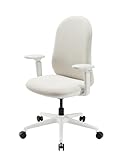
Overview: The Mochi Chair fills a critical void in ergonomic seating: proper support for petite individuals and children. Priced at $269, this cream-colored chair delivers tailored comfort for smaller frames while maintaining a professional aesthetic suitable for home offices, traditional workplaces, or school environments. Its compact footprint makes it ideal for tight spaces like bedroom workstations or makeup vanities without sacrificing essential ergonomic functionality.
What Makes It Stand Out: The 4-dimensional armrests provide exceptional versatility rarely found in this price tier, adapting to any arm position naturally. The 125-degree recline with two lock positions transitions seamlessly between focused work and relaxed lounging. Most impressive is the 4-inch vertical lumbar adjustment, allowing precise lower back positioning. The 24-inch armrest clearance solves a common frustration for compact workspace users, fitting comfortably under low desks where standard chairs cannot.
Value for Money: At $269, the Mochi Chair occupies the mid-range ergonomic segment. While pricier than basic task chairs, it costs significantly less than premium brands like Herman Miller or Steelcase. For petite users who’ve struggled with ill-fitting standard chairs causing discomfort and poor posture, the specialized design justifies the investment. The space-saving benefits and targeted ergonomics deliver tangible value that generic chairs cannot match for this demographic.
Strengths and Weaknesses: Strengths: Tailored specifically for petite bodies; space-efficient compact design; comprehensive adjustability (lumbar, recline, 4D armrests); low desk clearance compatibility; quality recline mechanism with two locks. Weaknesses: Cream upholstery requires more maintenance; price exceeds budget options; no specified weight capacity; unsuitable for users over average height; limited color options restrict aesthetic flexibility.
Bottom Line: The Mochi Chair excels as a specialized solution for petite individuals seeking proper ergonomic support. Its thoughtful features make it worth the premium over generic alternatives, particularly for those frustrated by one-size-fits-all seating. Ideal for compact home offices and dedicated workspaces.
7. EMIAH Ergonomic Office Chair with Foot Rest Criss Cross Chair with Wheels Reclining Executive Office Chair Mid Back PU Leather Swivel Computer Chairs Lumbar Support for Home Office (Beige)

Overview: The EMIAH chair merges office ergonomics with lounge versatility at an accessible $149.99 price point. This beige PU leather mid-back chair features an integrated footrest, making it suitable for work, gaming, reading, or cross-legged seating. It targets budget-conscious users seeking multi-functionality without the premium price tag of specialized gaming or executive chairs.
What Makes It Stand Out: The 90-155 degree recline with retractable footrest transforms this from task chair to relaxation spot instantly. The saddle-shaped backrest with extra-soft lumbar pillow provides distinctive support contouring. Its ability to accommodate cross-legged sitting addresses a specific user preference rarely considered by mainstream office chairs. The 300-pound capacity and BIFMA certification demonstrate robust construction exceeding typical budget expectations.
Value for Money: At $149.99, this chair significantly undercuts gaming chairs and ergonomic office chairs with comparable recline functionality. Features like the footrest and wide tilt range typically command $250+ from competitors. The SGS-certified level 3 gas cylinder and metal base deliver safety certifications budget options often omit. A 30-day return policy plus one-year warranty provides purchase confidence uncommon at this price point.
Strengths and Weaknesses: Strengths: Exceptional price-to-features ratio; versatile footrest and wide recline; cross-legged seating capability; strong 300 lbs weight capacity; certified safety components; solid warranty and return policy. Weaknesses: PU leather may cause heat buildup during extended sessions; mid-back design lacks full spinal support; unknown long-term brand reliability; beige color may limit decor matching.
Bottom Line: The EMIAH chair offers outstanding versatility for budget-minded buyers. While not matching premium ergonomic chairs, its footrest and recline functionality make it ideal for home offices doubling as relaxation spaces. Perfect for users wanting gaming chair features at an office chair price.
8. SIDIZ T25 Petite Ergonomic Office Chair : Home Office Desk Chair for Petite Women (4’ 9" or Over), Adjustable Seat Height, Weight-Activated Auto Fit Tilt, Gaming Chair (White Mesh, Bright Blue Seat)

Overview: The SIDIZ T25 represents the pinnacle of petite-focused ergonomic design at $419. Engineered specifically for individuals 4'9" and taller, this award-winning chair eliminates compromises petite users face with standard seating. Its white mesh and bright blue aesthetic combines modern style with serious ergonomic credentials, making it suitable for home offices, corporate environments, and gaming setups.
What Makes It Stand Out: The patented weight-activated auto-fit tilt mechanism is revolutionary—automatically calibrating to your body weight without manual tension adjustments. This smart technology, backed by five international design awards, ensures optimal support throughout the day. The chair’s minimalist profile belies sophisticated engineering that makes zero compromises for its target demographic, offering seamless movement and all-day comfort.
Value for Money: At $419, the T25 commands a premium but delivers commensurate value. It competes with entry-level Herman Miller and Steelcase chairs while offering specialized petite sizing they lack. ANSI/BIFMA compliance and Greenguard certification justify the cost for health-conscious buyers. For petite professionals spending 8+ hours seated, the auto-fit technology and tailored ergonomics represent a worthwhile long-term investment in comfort and productivity.
Strengths and Weaknesses: Strengths: Revolutionary auto-fit tilt mechanism; award-winning design (5 international awards); premium build quality; ANSI/BIFMA and Greenguard certified; perfectly scaled for petite frames; supports up to 275 lbs; 30-day returns. Weaknesses: High price barrier for casual users; limited to petite users only; minimalist aesthetic may not suit all decor; no mention of armrest adjustability; premium cost may be overkill for part-time use.
Bottom Line: The T25 is the best-in-class option for petite users who refuse to compromise. Its intelligent auto-fit mechanism and award-winning design justify the premium for serious ergonomic support. Ideal for dedicated home offices or professional workspaces where proper fit is non-negotiable.
9. SIDIZ T25 Petite Ergonomic Office Chair : Home Office Desk Chair for Petite Women (4’ 9" or Over), Adjustable Seat Height, Weight-Activated Auto Fit Tilt, Gaming Chair (White Plastic, Ash Green Seat)

Overview: This SIDIZ T25 variant delivers the same acclaimed ergonomic technology as its mesh counterpart, featuring white plastic construction with an ash green seat. At $419, it maintains the brand’s commitment to petite users 4'9" and taller, offering award-winning design through a different material aesthetic while preserving the revolutionary auto-fit tilt mechanism that defines this premium chair.
What Makes It Stand Out: Identical to the T25 mesh version, the patented weight-activated auto-fit tilt automatically calibrates to your body weight, eliminating manual tension adjustments entirely. The plastic backrest offers easier cleaning and potentially greater durability than mesh, while the ash green provides a softer, more muted aesthetic alternative. It retains all five international design awards and comprehensive safety certifications.
Value for Money: The $419 price matches the mesh variant, making material choice purely preferential. Plastic construction may offer better longevity in humid environments and simpler maintenance, potentially increasing value for users prioritizing durability over breathability. The same ANSI/BIFMA and Greenguard certifications apply, ensuring no quality compromises despite the material change.
Strengths and Weaknesses: Strengths: Auto-fit tilt technology; easier-to-clean plastic back; distinctive ash green color; premium build quality; comprehensive certifications; ideal petite proportions; 30-day return policy. Weaknesses: Plastic reduces breathability compared to mesh; identical high price point; limited to petite users; minimal aesthetic customization; may feel less premium than mesh variant.
Bottom Line: Choose this variant based on material preference. The plastic back suits users wanting low-maintenance durability, while delivering the same exceptional ergonomic technology that makes the T25 the premier petite office chair. Ideal for environments where easy cleaning is prioritized over maximum ventilation.
10. Sweetcrispy Small Office Desk Chair, Ergonomic Low-Back Mesh Rolling Work Swivel Chairs with Wheels, Armless Comfortable Seat Lumbar Support for Home, Bedroom, Study, Student, Adults,Classic Black

Overview: The Sweetcrispy chair redefines budget seating at just $31.98. This armless, low-back mesh chair targets small spaces, students, and children with its Y-shaped backrest and space-saving design. While lacking advanced features, it provides essential ergonomic considerations and BIFMA-certified safety at a fraction of typical office chair costs, making it accessible for virtually any budget.
What Makes It Stand Out: The sub-$32 price point is astonishing for a BIFMA-certified chair with 360° swivel and height adjustment (15.94"-20.67"). The Y-shaped backrest provides basic lumbar support while the armless design offers unrestricted movement. Remarkably, it includes a removable seat cushion for easy cleaning and claims 10-15 minute assembly with only five parts, making it exceptionally user-friendly.
Value for Money: This chair demolishes price barriers. Comparable basic task chairs typically cost $80-150. While it won’t rival $300+ ergonomic chairs, it delivers certified safety and fundamental adjustability for less than a restaurant meal. For tight budgets, temporary setups, or growing children who quickly outgrow furniture, the value is simply unmatched in the current market.
Strengths and Weaknesses: Strengths: Unbeatable price; BIFMA certified; space-saving armless design; easy 4-step assembly; adjustable height suits kids to adults; removable cushion; 360° swivel; silent PU casters. Weaknesses: No armrests; basic lumbar support only; low-back design lacks full spinal support; not suitable for heavy daily use (8+ hours); limited durability expectations; no warranty details mentioned.
Bottom Line: Perfect for students, temporary workspaces, or anyone prioritizing extreme affordability over advanced ergonomics. Don’t expect premium comfort, but it’s a remarkably safe and functional choice for the price. Ideal for bedrooms, dorm rooms, or as a spare chair when budget constraints are paramount.
Understanding the Unique Ergonomic Needs of Petite Users
Why Standard Office Chairs Fail Short People
Standard office chairs operate on a one-size-fits-most philosophy that fundamentally disregards the biomechanics of smaller frames. The seat height typically starts at 17 inches, forcing shorter users to either perch on the edge of their seat or rely on a footrest that wasn’t part of the original design. This compromises the foundational principle of ergonomic seating: maintaining a 90-degree angle at your hips, knees, and ankles.
The problem extends beyond height. Seat depths often range from 19-21 inches, which creates pressure points behind the knees and prevents you from utilizing the backrest properly. Lumbar support systems are positioned for taller torsos, hitting mid-back rather than the natural curve of your spine. Even armrests become problematic—fixed-width designs force your shoulders into an unnaturally wide position, leading to trapezius strain and rotator cuff issues over time.
The Health Risks of Ill-Fitting Seating
When your chair doesn’t fit, your body compensates in ways that create cascading health problems. Dangling feet lead to increased pressure on the back of your thighs, restricting blood flow and causing that pins-and-needles sensation. More seriously, it forces your pelvis to tilt backward, flattening your lumbar curve and placing excessive stress on your lower vertebrae.
Over time, these compensatory mechanisms become chronic postural patterns. You might develop forward head posture as you strain to reach the desk, thoracic outlet syndrome from elevated shoulders, or sciatica from improper weight distribution. The cumulative effect isn’t just physical discomfort—studies show that poor ergonomics can reduce cognitive performance by up to 15% due to the constant micro-adjustments and discomfort distracting your brain from complex tasks.
Key Measurements That Matter for Petite Users
Seat Height: The Foundation of Proper Positioning
For users under 5'4", the golden range for seat height is 14.5 to 17.5 inches from floor to seat pan. This range allows your feet to rest flat on the floor while maintaining that crucial 90-degree knee angle. When measuring, consider the thickness of your usual footwear—those 3-inch heels will change your requirements dramatically.
Look for chairs with pneumatic cylinders specifically designed for shorter ranges. Standard cylinders often have a minimum height of 17 inches, which is too tall for many petite users. Some manufacturers offer “petite” or “low” cylinders that start at 14 inches, giving you the flexibility to achieve proper positioning without additional accessories.
Seat Depth: Preventing Pressure Behind the Knees
The ideal seat depth for petite users ranges from 15 to 17 inches. To test fit, sit back against the chair and check that you can fit 2-3 fingers between the back of your knee and the seat edge. Any less space means the seat is too deep, forcing you to slouch or perch forward.
Chairs with seat depth adjustment sliders are worth their weight in gold for petite users. This feature allows you to move the seat pan forward or backward independently of the backrest, creating a custom fit that accommodates both your thigh length and torso height. Without this adjustment, you’re stuck with the manufacturer’s predetermined proportions.
Backrest Height and Lumbar Placement
The lumbar support should align with the natural curve of your lower back, typically 6-9 inches above the seat pan for most petite users. Standard chairs position this support 8-12 inches up, which often places it in your mid-back rather than lumbar region.
Look for backrests that measure 20-24 inches in total height, with adjustable lumbar mechanisms that can move vertically at least 3 inches. This adjustability ensures the support hits your L4-L5 vertebrae rather than your thoracic spine. Some advanced chairs offer lumbar depth adjustment too, allowing you to fine-tune the pressure.
Armrest Width and Height Adjustments
Armrest height should adjust from 6 to 9 inches above the compressed seat height. For a 5'2" user, this typically means armrests that can lower to 7 inches from the seat. Width is equally crucial—distance between armrests should narrow to at least 16 inches to prevent shoulder abduction.
4D armrests (adjustable for height, width, depth, and angle) provide the ultimate customization. They allow you to position support exactly where your elbows naturally fall, keeping your shoulders relaxed and your upper arms close to your body. This prevents the “chicken wing” posture that leads to shoulder impingement.
Essential Adjustment Features for Petite-Friendly Chairs
Pneumatic Height Adjustment with Lower Minimums
Not all pneumatic cylinders are created equal. Look for Class 4 gas lifts with a stroke length of at least 4 inches, but pay attention to the minimum height rather than the maximum. The cylinder should compress to at least 14 inches from the ground.
Some manufacturers offer dual-stage cylinders that provide an exceptionally low starting height while maintaining tall maximums, making the chair versatile for shared workspaces. Test the adjustment mechanism—it should move smoothly without jerking, which indicates quality construction and safer operation.
Seat Depth Slider Mechanisms
A true seat depth slider moves the entire seat pan, not just the front edge. This mechanism typically offers 2-3 inches of adjustment and should lock securely in place. When testing, ensure the slider doesn’t create a gap between the seat and backrest, which can pinch fabric and create pressure points.
The best implementations maintain the chair’s structural integrity at any position, with reinforced rails that prevent wobbling. Look for chairs where the slider operates with a lever under the seat, allowing easy adjustment while seated.
Adjustable Lumbar Support Systems
Passive lumbar (fixed foam contours) rarely works for petite users. Instead, seek active systems with vertical adjustment ranges of at least 4 inches. Some premium chairs offer inflatable lumbar bladders that let you customize both height and firmness.
The mechanism should move smoothly and lock into place without slipping during use. Test by adjusting to your desired position, then leaning back firmly to ensure it maintains placement. Quality systems use metal gears rather than plastic, providing durability for daily adjustments.
4D Armrests vs. Fixed Options
While 4D armrests represent the gold standard, understand what each dimension offers. Height adjustment (vertical) should range at least 4 inches. Width adjustment (horizontal sliding) should narrow to 16 inches between armrests. Depth adjustment (forward/back) helps support different tasks. Pivot/angle adjustment accommodates various arm positions during typing versus phone use.
Fixed armrests should be avoided entirely, and even 2D or 3D options often fall short for petite frames. The investment in 4D armrests pays dividends in reduced shoulder and neck strain.
The Science of Proper Sitting Posture for Shorter Frames
Achieving the 90-90-90 Rule
The ergonomic principle of 90-degree angles at ankles, knees, and hips remains the gold standard, but achieving it requires different strategies for petite users. Start with seat height: adjust until your thighs are parallel to the floor and your feet rest flat. If you can’t achieve this, the chair is too tall even with a footrest.
Next, check hip angle. Your torso and thighs should form approximately 90 degrees, though slight recline (100-110 degrees) is acceptable for tasks like reading. The key is maintaining lumbar contact with the backrest while keeping feet grounded.
Knee angle is often overlooked. Your knees should align directly over your ankles, not be forced forward by a too-deep seat. This alignment ensures proper weight distribution and reduces patellar pressure.
Foot Positioning and the Role of Footrests
While the goal is a chair that fits without accessories, a footrest can bridge gaps when perfect chair height isn’t achievable. The ideal footrest adjusts from 2 to 5 inches in height and offers angle adjustment between 15-30 degrees.
Place the footrest so your feet sit flat, with ankles at a natural angle. Avoid dangling your heels off the edge, which creates pressure points. Some footrests feature massage textures—use these sparingly as they can become distracting during focused work.
Consider a footrest with adjustable height throughout the day. Alternating between slightly different positions promotes micro-movement and circulation, combating the static nature of desk work.
Material Considerations for Comfort and Durability
Mesh vs. Upholstered Seats for Petite Users
Mesh seats offer breathability and conform to body shape, but quality varies dramatically. For petite users, avoid mesh that’s too taut—it won’t compress enough to provide proper support and can create pressure points on your sitting bones. Look for mesh with some give and a weight-responsive tension system.
Upholstered seats provide more consistent support but can retain heat. For petite frames, foam density is critical—too firm and you’ll never compress it properly; too soft and you’ll bottom out. The sweet spot is medium-density foam (1.8-2.2 pounds per cubic foot) with a thickness of 2.5-3 inches.
Foam Density and Seat Pan Design
The seat pan should feature a waterfall edge (a gentle downward curve at the front) to reduce pressure on the backs of your thighs. For petite users, this curve should start earlier—around 15 inches from the backrest—rather than the standard 17-18 inches.
Contoured seat pans can be problematic if the contours don’t match your anatomy. Test by sitting for at least 15 minutes; if you feel pressure points or numbness, the contouring is likely misaligned with your sit bones. Some chairs offer interchangeable seat pans, a worthwhile feature for hard-to-fit users.
Special Features Worth the Investment
Tilt Tension Control for Lighter Body Weights
Standard tilt tension mechanisms are calibrated for users weighing 150-250 pounds. If you weigh under 130 pounds, you may struggle to engage the tilt function or find it too resistant. Look for chairs with adjustable tension that can be fine-tuned for lighter body weights.
The mechanism should allow you to recline with minimal effort while providing progressive resistance that feels supportive, not restrictive. Test by leaning back slowly—you should feel smooth, consistent resistance without sudden drops or catches.
Synchronized Tilting Mechanisms
Synchronized tilt maintains the 90-degree hip angle as you recline by moving the seat and backrest in a fixed ratio (typically 1:2). For petite users, this prevents the seat edge from lifting and cutting into your thighs during recline.
Ensure the mechanism includes a tilt lock with multiple positions. Being able to lock at slight recline angles (100-105 degrees) provides variety throughout the day without compromising your ability to reach your desk.
Headrest Positioning for Shorter Users
Headrests are often an afterthought for petite users, but when positioned correctly, they can reduce neck strain by 30%. The headrest should adjust vertically to support the base of your skull, typically 20-24 inches above the compressed seat height for someone 5'2".
Look for headrests with depth adjustment that bring the cushion forward to meet your head, rather than forcing you to lean back. The angle should cradle your head without pushing it forward, maintaining a neutral neck position.
Common Mistakes Petite Users Make When Chair Shopping
Prioritizing Aesthetics Over Function
That sleek, minimalist chair might look stunning on Instagram, but if it lacks seat depth adjustment and offers limited height range, it’s an ergonomic disaster for petite frames. Visual appeal often correlates with reduced adjustability, as mechanisms are hidden for cleaner lines.
Don’t compromise on core adjustments for style. A truly ergonomic chair will have visible levers and dials—these are signs of functionality, not flaws. Remember, you’ll spend 8+ hours a day in this chair; how it supports your body matters more than how it photographs.
Overlooking Weight Capacity Specifications
Weight capacity isn’t just about safety—it’s about performance. Chairs designed for higher weight capacities (250+ pounds) use firmer foam and stronger springs that petite users may never compress properly. This results in a chair that feels hard and unyielding.
Conversely, don’t assume a lower weight capacity means a better fit. Some chairs with 150-pound capacities still have tall minimum seat heights. Focus on chairs with capacities between 150-200 pounds, which typically balance proper support with appropriate cushioning for lighter users.
DIY Modifications and Accessories
When to Consider a Footrest
If your ideal chair has every feature except the perfect minimum height, a footrest becomes a strategic addition rather than a compromise. Choose adjustable models with non-slip surfaces and enough width (at least 15 inches) for both feet to rest comfortably.
For a more integrated solution, consider a footrest that attaches to the chair base. These maintain consistent positioning as you move and eliminate the gap that can occur with standalone footrests when you recline.
Cushions and Lumbar Rolls
While not ideal long-term solutions, a well-placed lumbar roll can bridge gaps when testing chairs. Look for rolls measuring 4 inches in diameter and 12 inches long, positioned at your belt line. For seat depth issues, a firm wedge cushion that slopes downward can effectively reduce seat depth by 2-3 inches.
Avoid soft, squishy cushions that compress completely—they’ll throw off your alignment and create new pressure points. Memory foam with a density of at least 3 pounds per cubic foot provides support without bottoming out.
Budget Considerations: What to Expect at Different Price Points
Entry-Level Options ($150-$350)
At this price point, focus on chairs with pneumatic height adjustment and basic seat depth sliders. You’ll typically find fixed lumbar support and 2D armrests (height and width only). While limited, a well-chosen entry-level chair with the right minimum height can still outperform a premium chair with poor fit.
Expect polyurethane or basic mesh upholstery and simpler tilt mechanisms. The key is prioritizing fit over features—better to have a basic chair that fits perfectly than a feature-rich chair that doesn’t.
Mid-Range Investments ($350-$700)
This sweet spot offers the best value for petite users. You’ll find 4D armrests, adjustable lumbar support, and synchronized tilt mechanisms. Build quality improves significantly, with metal bases and better casters.
Look for chairs specifically marketed as “petite” or “small frame” in this range. Manufacturers begin offering specialized sizing without the premium pricing of fully custom chairs.
Premium Ergonomic Solutions ($700+)
Premium chairs offer extensive customization, including interchangeable seat pans, advanced lumbar systems, and weight-calibrated tilt mechanisms. Some brands provide sizing consultations and trial periods.
At this level, you’re paying for durability (10+ year warranties), refined adjustment mechanisms, and materials that maintain their properties over time. For petite users who’ve struggled to find fit, the investment often pays for itself in reduced pain and healthcare costs.
Where to Shop for Petite Ergonomic Chairs
Online vs. In-Store Testing Strategies
Online shopping offers access to specialized petite chairs unavailable locally, but requires careful research. Look for retailers with detailed dimensional specifications and 30-day return policies. Read reviews specifically from users under 5'4"—their experiences will be more relevant than general feedback.
In-store testing remains invaluable. Bring a tape measure and know your key measurements beforehand. Sit in each chair for at least 10 minutes, adjusting every mechanism. Don’t be shy about bringing your laptop to test desk height compatibility.
Some specialty ergonomic retailers offer fitting services where consultants adjust chairs to your body and observe your posture. These services, often free with purchase, can be worth seeking out.
Warranty and Return Policies: What Petite Users Should Know
Standard warranties cover manufacturing defects but rarely address fit issues. Look for brands offering comfort guarantees or extended trial periods (60-90 days). This is crucial for petite users, as problems may not emerge until weeks of daily use.
Understand what’s covered: pneumatic cylinders typically have lifetime warranties, while upholstery may be limited to 1-2 years. For chairs with specialized petite cylinders, ensure replacement parts are readily available—nothing’s worse than a perfect chair you can’t repair.
Check return policies for restocking fees, which can run 15-20% on ergonomic chairs. Some retailers waive these fees if the chair is genuinely unsuitable, but you may need to provide documentation of your measurements showing the chair doesn’t meet specs.
Frequently Asked Questions
1. Can I just use a footrest instead of buying a petite chair?
A footrest is a temporary fix, not a solution. While it addresses foot positioning, it doesn’t fix misaligned lumbar support, excessive seat depth, or armrest width issues. Think of it as a bridge while you search for a properly fitting chair, not a permanent alternative.
2. What’s the minimum seat height I should look for if I’m 5'0"?
For someone 5'0" wearing flat shoes, aim for a minimum seat height of 14 inches. This allows your feet to rest flat while maintaining proper knee angle. If you regularly wear heels, you can go slightly taller, but never above 15 inches minimum.
3. Are gaming chairs suitable for petite users?
Most gaming chairs are designed for larger frames and prioritize style over ergonomic adjustability. However, a few brands now offer “small” sizing with proper seat depth and height ranges. Always check specifications rather than assuming gaming chairs will fit.
4. How do I know if the lumbar support is hitting the right spot?
Sit with your back fully against the chair and locate your iliac crest (top of your hip bones). The lumbar support should center about 2 inches above this point. When properly positioned, you should feel gentle pressure in your lower back curve, not pushing or discomfort.
5. Is it worth paying extra for a seat depth slider?
Yes. Seat depth adjustment is non-negotiable for petite users. Without it, you’re forced to compromise on either back support or leg circulation. It’s one of the most impactful features for achieving proper fit and preventing long-term discomfort.
6. Can I remove the armrests if they’re too wide?
While removing armrests solves width issues, it eliminates crucial upper body support. This forces your neck and shoulder muscles to work continuously, leading to fatigue. Better to find a chair with narrow-width adjustment or 4D armrests that can be positioned correctly.
7. How long should I test a chair before deciding if it fits?
Test for at least 30 minutes in-store, simulating your actual work tasks. For online purchases, use the full trial period. Many issues—pressure points, fatigue, circulation problems—emerge only after several hours of continuous use. Don’t rush the decision.
8. Will a chair with a 250-pound weight capacity be too firm for me?
Not necessarily, but it’s likely. Higher weight capacity chairs use denser foam and stronger springs designed to support heavier loads. A 120-pound user may find the chair feels hard and doesn’t conform to their body. Look for chairs with capacities closer to your actual weight.
9. What’s the ideal backrest angle for petite users?
For computer work, lock the backrest at 95-100 degrees. This slight recline reduces spinal loading while keeping you close enough to your desk. For reading or phone calls, 100-110 degrees is comfortable. Avoid upright 90-degree positions for extended periods—they increase disc pressure.
10. How often should I adjust my chair settings?
Reassess your settings weekly, especially if you share the chair or change footwear. Small drifts in adjustment can accumulate into poor posture. Mark your ideal positions with tape or take photos of the settings once you find your perfect fit—this makes resetting quick and accurate.