We’ve all felt that gut-wrenching moment—the external hard drive slips from your grip, tumbling toward concrete with what feels like slow-motion inevitability. In that split second, years of work, precious memories, or critical backups hang in the balance. While standard drives often become expensive paperweights after such encounters, truly rugged external hard drives are engineered to laugh off 6-foot drops onto hard surfaces. But here’s the thing: not every drive marketed as “tough” can actually survive real-world punishment. The difference between marketing hype and genuine durability lies in engineering details most consumers never see.
Understanding what makes a rugged drive genuinely resilient requires looking beyond flashy orange bumpers and tough-sounding product names. The world of impact-resistant storage is governed by military standards, intricate suspension systems, and material science that would impress aerospace engineers. Whether you’re a photographer scaling cliffs for the perfect shot, a construction manager navigating active job sites, or simply someone who’s tired of replacing drives, knowing how to evaluate true ruggedness will save you money, data, and countless headaches.
Top 10 Rugged External Hard Drives
Detailed Product Reviews
1. LaCie LAC9000298 La Cie Rugged Mini USB 3.0 / USB 2.0 External Hard Drive (9000298)
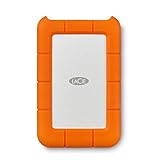
Overview: The LaCie Rugged Mini serves as an entry point into durable external storage, offering fundamental protection for budget-conscious users. This compact drive shields data from four-foot drops, dust, and water splashes, making it suitable for students and mobile workers who prioritize data safety over blazing speeds. Its USB 3.0 interface delivers adequate performance for document backups and light media storage without unnecessary frills.
What Makes It Stand Out: Its sub-$100 price point with genuine rugged credentials is compelling—few competitors offer certified drop protection this cheaply. The built-in password protection adds a security layer uncommon in budget drives. However, the advertised Adobe Creative Cloud bundle is a significant drawback: the promotion expired in January 2020, making this outdated marketing misleading for current purchasers who might expect included software value.
Value for Money: At $89.99, you’re essentially getting durability as a free upgrade over standard external drives. The cost per terabyte is competitive for a ruggedized device, though speeds won’t impress video editors. This is a value play for protection, not performance, targeting users who need reliability above all else.
Strengths and Weaknesses: Strengths include proven shock absorption, compact portability, and affordable ruggedization. Weaknesses are the expired promotional offer, requirement for Mac reformatting, and mechanical HDD speed limitations. The outdated marketing materials damage credibility and suggest old inventory.
Bottom Line: A dependable basic rugged drive for non-demanding users. Good for simple backups, but verify current software bundles and consider SSD alternatives if speed matters. The expired Adobe offer is a red flag for product freshness that buyers should note.
2. LaCie Rugged 5TB Portable External HDD - USB 3.0/2.0 Compatible, Shock/Dust/Rain Resistant for Mac & PC, Orange, Grey
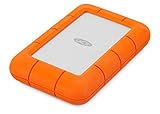
Overview: The LaCie Rugged 5TB expands the series’ appeal by offering substantial storage capacity for creative professionals and data hoarders who need both space and durability. This drive maintains the line’s signature orange rubber bumper and core protection features while addressing the modern need for higher capacity mobile storage. It’s designed for videographers and photographers managing extensive libraries in challenging environments.
What Makes It Stand Out: Five terabytes in a ruggedized package under $160 is compelling for users handling large files. The inclusion of a USB-C cable is forward-thinking, though the drive itself uses a traditional USB 3.0 interface. Its drop, shock, dust, and water resistance matches smaller capacity models, providing consistent protection across the lineup without compromising on storage space.
Value for Money: At approximately $32 per terabyte, this represents solid value for a name-brand rugged drive. The capacity-to-price ratio beats SSD alternatives by a significant margin, making it practical for archival purposes. While you sacrifice SSD speeds, the cost savings are substantial for bulk storage needs where capacity trumps velocity.
Strengths and Weaknesses: Strengths include massive capacity, proven durability, and brand trust. Weaknesses are the mechanical HDD’s speed limitations, need for Mac reformatting, and lack of hardware encryption beyond basic password protection. The USB 3.0 interface feels dated despite the USB-C cable inclusion.
Bottom Line: Ideal for users prioritizing capacity and durability over speed. Perfect for backups and offline storage, but creative professionals requiring fast workflows should consider SSD options. A reliable workhorse for data archiving in harsh conditions.
3. SanDisk Professional 5TB G-Drive ArmorATD - Rugged, Durable Portable External Hard Drive HDD, USB-C, USB 3.2 Gen 1 - SDPH81G-005T-GBA1D
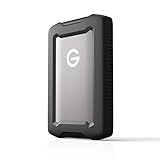
Overview: The SanDisk Professional 5TB G-Drive ArmorATD targets discerning users seeking premium build quality alongside traditional HDD capacity. This drive distinguishes itself through its anodized aluminum enclosure combined with a protective bumper, creating a more refined aesthetic while maintaining professional-grade durability standards. It’s built for Mac users who want seamless compatibility without sacrificing toughness.
What Makes It Stand Out: The aluminum construction provides superior heat dissipation and a substantive feel that plastic enclosures lack. Its USB-C connectivity and native macOS compatibility streamline setup for Apple users, eliminating reformatting hassles. The 130MB/s transfer rates are respectable for a mechanical drive, and the easy-grip bumper design demonstrates thoughtful ergonomics for field use.
Value for Money: At $199.99, you’re paying a premium for materials and design over basic rugged drives. The price approaches entry-level SSD territory, making it harder to justify for performance-focused buyers. However, for Mac users wanting plug-and-play convenience with premium aesthetics, the markup may be worthwhile despite the HDD performance ceiling.
Strengths and Weaknesses: Strengths include premium build quality, Mac-ready formatting, effective thermal management, and professional appearance. Weaknesses are the high cost per terabyte, HDD performance limitations, and limited advantage over cheaper rugged drives in real-world durability tests. The value proposition is narrowly targeted.
Bottom Line: A niche product for Mac users who value design and seamless compatibility. Most buyers will find better value in less expensive rugged HDDs or similarly-priced SSDs with superior performance. Choose for aesthetics and Mac integration, not value.
4. SanDisk Professional 2TB G-Drive ArmorATD - Rugged, Durable Portable External Hard Drive HDD, USB-C, USB 3.2 Gen 1 - SDPH81G-002T-GBA1D
Overview: The 2TB variant of SanDisk’s G-Drive ArmorATD delivers the same premium construction and feature set as its larger sibling in a more compact and affordable package. This model caters to users who appreciate the aluminum-bumper design but don’t require massive capacity, offering a middle ground between entry-level rugged drives and high-performance SSDs for everyday professional use.
What Makes It Stand Out: The anodized aluminum enclosure and easy-grip bumper combination remains unique in this price class, providing both tactile quality and practical protection. USB-C connectivity ensures broad modern device compatibility, while the drive’s Mac-ready formatting saves setup time. The 130MB/s performance is consistent across capacities, suitable for photo libraries and document archives.
Value for Money: At $119.99, the cost per terabyte is significantly higher than the 5TB model, reducing its overall value proposition. While cheaper than the larger version, it faces stiff competition from both budget rugged drives and faster SSDs at similar price points. You’re primarily paying for premium build rather than capacity or speed advantages.
Strengths and Weaknesses: Strengths include excellent build quality, native Mac compatibility, and portable size. Weaknesses are poor price-to-capacity ratio, mechanical drive limitations, and a value proposition that only makes sense for specific aesthetic preferences rather than pure performance needs.
Bottom Line: Only recommended if you specifically want the premium design in a 2TB capacity. Most users should opt for the 5TB version for better value or consider an SSD for superior performance at this price point. The smallest audience appeal in the ArmorATD lineup.
5. SanDisk 2TB Extreme Portable SSD - Up to 1050MB/s, USB-C, USB 3.2 Gen 2, IP65 Water and Dust Resistance, Updated Firmware - External Solid State Drive - SDSSDE61-2T00-G25

Overview: The SanDisk Extreme Portable SSD redefines mobile storage by combining NVMe performance with serious durability credentials. This 2TB drive delivers speeds that leave mechanical rugged drives obsolete while offering superior protection against drops, water, and dust. It’s engineered for content creators who demand both blazing performance and reliability in the field, handling 4K video editing directly from the drive.
What Makes It Stand Out: With 1050MB/s read and 1000MB/s write speeds, this SSD eliminates workflow bottlenecks. The upgraded IP65 rating and 3-meter drop protection exceed most competitors, while the integrated carabiner loop adds practical portability. Hardware-based 256-bit AES encryption provides enterprise-level security without performance penalties, a critical feature for professionals handling sensitive data.
Value for Money: At $199.73, the premium over HDD alternatives is justified by transformative performance gains. The cost per gigabyte is competitive for an NVMe SSD with these durability specs, matching many non-rugged SSDs while adding meaningful protection. For time-sensitive workflows, the speed investment pays dividends immediately.
Strengths and Weaknesses: Strengths include exceptional performance, best-in-class durability, hardware encryption, and thoughtful design details. Weaknesses are limited capacity options compared to HDDs and higher cost per terabyte. The drive may run warm during sustained transfers but maintains performance.
Bottom Line: The top choice for professionals needing fast, durable mobile storage. Worth every penny for video editors, photographers, and power users who demand SSD speeds in harsh environments. Makes rugged HDDs feel like yesterday’s technology.
6. Seagate Rugged STFR5000800 5 TB External Hard Drive, Portable
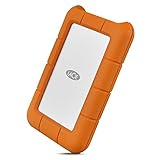
Overview: The Seagate Rugged STFR5000800 delivers 5TB of portable storage built for harsh conditions. This external hard drive targets mobile professionals and adventurers who need reliable data access in challenging environments. With its distinctive orange bumper design, it promises protection against drops, crushing, and rain while maintaining compatibility with both modern USB-C and legacy USB 3.0 systems.
What Makes It Stand Out: The drive’s true differentiator is its military-grade durability without sacrificing capacity. The reversible USB-C cable with included USB 3.0 adapter ensures seamless connectivity across device generations. Transfer speeds up to 130MB/s provide respectable performance for a traditional HDD, while the complimentary one-month Adobe Creative Cloud subscription adds value for content creators who need immediate access to professional editing tools.
Value for Money: At $164.95, you’re paying approximately $33 per terabyte for ruggedized protection—roughly a 30% premium over standard portable drives. This premium is justified if you work in the field, but overkill for desk-bound users. The Adobe trial sweetens the deal, though its value depends on whether you’ll actually activate and use it.
Strengths and Weaknesses: Strengths include excellent shock and weather resistance, versatile connectivity options, and substantial storage capacity. Weaknesses are typical HDD limitations: mechanical vulnerability despite rugged casing, modest 130MB/s speeds compared to SSDs, and the vague “capacity may vary” disclaimer that suggests actual usable space could be less than advertised.
Bottom Line: Ideal for photographers, researchers, or contractors working in unpredictable conditions. Skip if you prioritize speed over toughness—Samsung’s T7 Shield offers better performance for similar use cases, albeit at higher cost and lower capacity.
7. Seagate Expansion 20TB External Hard Drive HDD - USB 3.0, with Rescue Data Recovery Services (STKP20000400)

Overview: The Seagate Expansion 20TB is a desktop behemoth designed for serious data hoarders and backup enthusiasts. This external HDD prioritizes maximum capacity over portability, serving as a stationary vault for massive media libraries, system backups, and archival storage. Its plug-and-play simplicity makes it accessible to users who need vast storage without technical complexity.
What Makes It Stand Out: Twenty terabytes in a single enclosure is the headline feature—enough for over 300 hours of 4K footage or millions of high-resolution photos. The inclusion of Rescue Data Recovery Services provides professional data retrieval if the drive fails, a rare value-add that can save thousands in recovery costs. Automatic OS recognition streamlines setup, though Mac users must reformat for Time Machine.
Value for Money: At $279.99, the cost per terabyte is an impressive $14—among the lowest in external storage. This makes it exponentially cheaper than cloud storage for long-term data retention. The bundled recovery service, typically costing $20-30 separately, further enhances value.
Strengths and Weaknesses: Strengths include massive capacity, simple operation, and peace-of-mind data recovery. Weaknesses are its desktop-bound nature requiring external power, slower HDD speeds for active editing, and the reformatting hurdle for Mac users seeking Time Machine compatibility. It’s also not ruggedized for transport.
Bottom Line: Perfect for home servers, media centers, and archival purposes where capacity trumps speed. Not suitable for mobile professionals or those needing fast random access. For pure storage density, it’s unmatched at this price point.
8. LaCie USB 3.2 1TB Rugged Mini Hard Drive
Overview: The LaCie Rugged Mini 1TB packs serious protection into a pocket-sized footprint. This shock-resistant hard drive is engineered for mobile users who prioritize data safety over capacity. Its compact design and durable rubber sleeve make it an easy travel companion for students and professionals alike, fitting comfortably in laptop bags without adding bulk.
What Makes It Stand Out: The drive’s four-foot drop rating and dust/water resistance provide peace of mind for clumsy users and outdoor workers. Built-in password protection adds a crucial security layer often missing in consumer drives. The USB 3.2 interface delivers speeds up to 4x faster than USB 2.0, though actual HDD performance caps out around 130MB/s.
Value for Money: At $69.99, it’s one of the most affordable rugged drives available, costing roughly $70 per terabyte. This positions it as an entry-level durability option rather than a capacity bargain. The included Adobe Creative Cloud trial is severely diminished by its January 2020 expiration date—effectively worthless for current buyers.
Strengths and Weaknesses: Strengths include genuine portability, robust physical protection, and hardware encryption. Weaknesses are the outdated software promotion, mandatory Mac reformatting, limited 1TB capacity, and lack of USB-C connectivity. The one-year warranty feels short for a “rugged” product.
Bottom Line: A solid budget pick for students or mobile workers needing basic rugged storage. However, the expired Adobe offer and aging connectivity make newer alternatives more compelling. Consider Seagate’s Rugged series for better value at higher capacities.
9. Seagate Portable 2TB External Hard Drive HDD — USB 3.0 for PC, Mac, PlayStation, & Xbox -1-Year Rescue Service (STGX2000400)

Overview: The Seagate Portable 2TB is a no-frills external hard drive built for universal compatibility. This drive aims to be the Swiss Army knife of storage, working seamlessly across PCs, Macs, PlayStation, and Xbox consoles. Its straightforward drag-and-drop functionality eliminates learning curves, making it ideal for casual users and gamers needing to expand storage without technical headaches.
What Makes It Stand Out: Cross-platform versatility is the key selling point—few drives advertise console compatibility so prominently. The included one-year Rescue Service provides data recovery protection typically reserved for premium products. Automatic computer recognition and plug-and-play operation mean you’re transferring files within seconds of unboxing.
Value for Money: At $79.99, you’re paying about $40 per terabyte—a fair price for a brand-name portable drive with recovery services. Standard non-rugged drives without recovery plans often cost $5-10 less, making this a sensible middle-ground option.
Strengths and Weaknesses: Strengths include broad device support, included recovery service, and dead-simple operation. Weaknesses are the non-rugged plastic construction, short 18-inch cable that limits placement flexibility, and mechanical HDD limitations. There’s no hardware encryption or password protection for security-conscious users.
Bottom Line: An excellent choice for gamers and multi-device households seeking hassle-free storage expansion. The rescue service adds meaningful value, though creative professionals should opt for SSDs or rugged models. For basic backup and game library storage, it’s a reliable, cost-effective solution.
10. Samsung T7 Shield 4TB Portable SSD - 1050MB/s, Rugged, Water & Dust Resistant, for Content Creators - Black
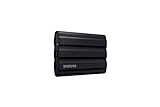
Overview: The Samsung T7 Shield 4TB redefines portable storage with SSD speeds and tank-like durability. This palm-sized powerhouse delivers NVMe performance in a package that withstands water, dust, and drops, making it the professional’s choice for demanding field work. With read speeds up to 1,050MB/s, it transforms file transfers from a waiting game into an afterthought.
What Makes It Stand Out: The IP65 rating is exceptional for a consumer SSD, offering genuine protection against rain and dust that most “rugged” drives only pretend to provide. PCIe NVMe technology ensures you’re getting true SSD performance, not SATA-limited speeds. Compatibility spans PCs, Macs, Android devices, and gaming consoles, making it a universal high-speed solution.
Value for Money: At $387.06, the cost is steep—nearly $97 per terabyte, quadruple that of HDD alternatives. However, for content creators transferring 4K/8K footage or running applications directly from the drive, the time savings justify the premium. It’s an investment in workflow efficiency, not just storage.
Strengths and Weaknesses: Strengths include blistering speeds, superior IP65-rated durability, compact size, and silent, power-efficient operation. Weaknesses are the high price point and lower capacity-per-dollar compared to HDDs. The rubberized exterior, while protective, attracts dust and lint.
Bottom Line: The ultimate portable drive for videographers, photographers, and power users who refuse to compromise on speed or durability. If your workflow demands rapid file access in harsh conditions, this is worth every penny. Casual users should stick with cheaper HDD options.
What Makes an External Hard Drive Truly “Rugged”?
The term “rugged” gets thrown around liberally in tech marketing, but genuine ruggedization is a comprehensive engineering philosophy, not just a rubber coating. A truly rugged external hard drive survives 6-foot drops because every component—from the internal drive mechanism to the port connectors—has been designed with failure points in mind. Manufacturers who take this seriously conduct thousands of drop tests during development, not just to check a box, but to understand exactly how impact forces travel through their devices.
The Science Behind 6-Foot Drop Survival
When a drive falls from six feet, it hits the ground at roughly 13 miles per hour, generating impact forces that can exceed 300 Gs depending on the surface. The magic of survival lies in deceleration management. Premium rugged drives use multi-layered systems: the outer shell absorbs initial impact, internal suspension systems extend the deceleration time (reducing peak force), and the drive itself is often encased in shock-dampening material. Think of it like a car’s crumple zone combined with airbags—the goal isn’t to prevent movement, but to control it.
Military Standards vs Manufacturer Claims
MIL-STD-810 is the benchmark for military equipment durability, but here’s where it gets tricky. The standard includes over two dozen test methods covering everything from fungus resistance to explosive atmosphere exposure. When a manufacturer claims “MIL-STD-810G tested,” they’re not always telling you which tests were performed—or whether they passed. Some only test for low-pressure altitude effects while ignoring drop tests entirely. The most rigorous drives undergo Method 516.6 (shock testing) with specific parameters: multiple drops onto two-inch plywood over steel plate, from heights that typically exceed consumer claims.
Decoding Ruggedness Certifications
Navigating the alphabet soup of certifications feels like learning a secret language, but these ratings are your best defense against buying a fragile drive in a tough-looking costume. Each certification addresses specific failure modes, and understanding them helps you match a drive to your actual usage scenarios.
MIL-STD-810G and MIL-STD-810H Explained
The “G” and “H” suffixes matter more than you’d think. MIL-STD-810G has been the workhorse standard since 2008, while 810H (released in 2019) includes updated testing protocols that better reflect modern deployment conditions. For drop testing specifically, 810H requires more rigorous documentation of test conditions and prohibits manufacturers from cherry-picking results. When evaluating drives, look for specific language like “tested to MIL-STD-810H Method 516.6, Procedure IV” rather than vague “military-grade” claims. The procedure number indicates the exact test performed—Procedure IV is the transit drop test most relevant to portable drives.
Understanding IP Ratings for Data Protection
IP (Ingress Protection) ratings consist of two digits: the first for solid particle protection, the second for liquid ingress. A drive rated IP68 offers complete dust protection and can withstand continuous immersion beyond one meter, while IP54 only protects against limited dust and water spray. For 6-foot drop survival, pay special attention to the first digit. Dust and debris that infiltrate a cracked seam after impact can cause gradual failure even if the initial drop didn’t kill the drive. IP6X ratings ensure the casing remains hermetically sealed even after structural stress.
The Truth About “Shockproof” Marketing
“Shockproof” has no standardized definition in consumer electronics. Technically, nothing is shockproof—everything has failure limits. Reputable manufacturers use terms like “shock-resistant” and provide specific G-force ratings. A drive that survives 1000 Gs of shock for 0.5 milliseconds might handle a 6-foot drop onto carpet but fail on concrete. The surface matters enormously; concrete generates much higher peak forces than wood or dirt. Always look for drives tested on multiple surface types, not just optimized conditions.
SSD vs HDD: Which Withstands Impact Better?
This isn’t even a fair fight anymore, but understanding why SSDs dominate rugged applications reveals important engineering principles. The fundamental difference lies in moving parts—or the lack thereof.
Mechanical Failure Points in Traditional Hard Drives
Traditional hard disk drives contain spinning platters rotating at 5400-7200 RPM with read/write heads floating nanometers above the surface on a cushion of air. A 6-foot drop can cause the heads to crash into platters (head strike), creating catastrophic physical damage. Even if the drive is powered down and heads are parked, the spindle motor and bearing assemblies can fracture. Some rugged HDDs use accelerometers that detect free-fall and park heads in milliseconds, but this is a mitigation strategy, not a solution. The laws of physics still apply to moving mass.
How Solid State Drives Handle Physical Trauma
SSDs have no moving parts, making them inherently more shock-resistant. The primary vulnerability becomes solder joint fractures and component detachment from the circuit board under extreme G-forces. Premium rugged SSDs address this by potting critical components (encasing them in shock-absorbing resin) and using BGA (Ball Grid Array) packaging that distributes mechanical stress more effectively than traditional pin connectors. The NAND flash memory chips themselves are remarkably resilient; it’s the connections that fail first. This is why internal reinforcement matters more than external armor for SSDs.
Critical Features That Actually Matter
Forget the color of the bumper—real ruggedness hides in design details that rarely make it into marketing photos. These engineering choices separate drives that survive one drop from those that survive hundreds.
Suspension Systems and Internal Dampening
The best rugged drives use floating mount designs where the internal drive assembly isn’t rigidly fixed to the casing. Instead, it sits on shock mounts—typically silicone or thermoplastic elastomer—that absorb impact energy. Some designs use multi-axis suspension allowing the drive to move independently in all directions. This matters because a direct impact transfers energy linearly, but real-world drops involve rotation and angular momentum. Look for drives that mention “3-axis shock protection” or “floating drive design” in technical specifications.
Reinforced Casing Materials: What Works Best
Aluminum alloys offer excellent strength-to-weight ratios but transmit vibration. Polycarbonate composites absorb more impact but can crack in extreme cold. The sweet spot often involves hybrid construction: an aluminum inner frame for rigidity with a rubberized outer shell for impact absorption. Some premium designs use magnesium alloys—lighter than aluminum and better at damping vibrations. Avoid drives with purely plastic casings claiming ruggedness; they might survive one drop but will develop microfractures that compromise future protection.
Cable and Port Reinforcement
The weakest link in any rugged drive isn’t the drive itself—it’s the connection point. A 6-foot drop with a cable attached creates lever forces that can rip ports directly off circuit boards. Quality rugged drives feature recessed ports with reinforced anchor points that transfer stress to the chassis, not the PCB. Some designs use captive cables or locking connectors that can’t exert torque on internal components. The port cover also matters; it should seal completely and stay attached to the drive body (not a flimsy rubber flap that tears off).
Capacity and Performance Trade-offs
Ruggedization adds bulk and cost, which creates interesting dilemmas when balancing storage needs with portability. The laws of physics don’t negotiate, but smart engineering can minimize compromises.
Does Ruggedization Affect Speed?
Surprisingly, yes—and not always negatively. The same shock-absorbing materials that protect against impacts can also dampen electromagnetic interference, potentially improving signal integrity. However, thermal management becomes challenging. Rugged casings trap heat, and many drives throttle performance to prevent overheating during sustained transfers. Look for drives with thermal pads that conduct heat to the casing (which then acts as a heat sink) or designs with internal airflow channels. Some high-end models even use phase-change materials that absorb thermal spikes.
Balancing Storage Size With Portability
There’s a direct correlation between capacity and fragility in HDDs—larger capacity drives pack data more densely, making head strikes more devastating. For SSDs, higher capacities mean more NAND chips, creating more potential failure points. The most reliable 6-foot-drop survivors often top out at 2TB for HDDs and 4TB for SSDs in the most compact form factors. Beyond these thresholds, manufacturers must make compromises in suspension travel or casing thickness to maintain reasonable size. For field use, multiple smaller drives often beat one massive drive for both reliability and data security.
Connectivity in Tough Environments
The port you choose affects more than transfer speeds—it influences physical durability and compatibility with your workflow. In harsh conditions, connection failures render even the toughest drive useless.
USB-C vs Thunderbolt for Field Work
USB-C connectors offer a robust 24-pin design that’s less prone to bending than older USB-A ports, but the protocol matters. USB 3.2 Gen 2 provides 10Gbps—plenty for most SSDs—while Thunderbolt 3/4 offers 40Gbps but generates more heat and cost. For drop protection, the connector’s physical spec is more important than speed. USB-C’s symmetrical design reduces insertion force, meaning less stress on internal solder points during connection. Thunderbolt drives often include active cables with chips that add another failure point. For pure ruggedness, passive USB-C connections win.
Why Detachable Cables Can Be a Weak Link
Every connection in a system is a potential failure point. Detachable cables offer flexibility but introduce wear at both the drive port and cable end. In drop scenarios, a detachable cable can whip around and strike the drive body, or worse, yank the drive if snagged. Some rugged designs use captive cables with strain relief that can’t be lost or create separate impact events. If you must use detachable cables, invest in ones with metal connector housings and braided shields that distribute stress. Better yet, choose drives with dual-port options so one damaged port doesn’t brick your device.
Power and Durability
How a drive receives power influences its internal layout and vulnerability to impact damage. The power system is literally the lifeblood of the device, and its design reveals much about overall engineering quality.
Bus-Powered vs External Power Adapters
Bus-powered drives that draw juice from your laptop eliminate a bulky power brick but face a critical design constraint: power consumption limits. This forces manufacturers to use more efficient (and sometimes less performant) controllers. More importantly for drop survival, bus-powered drives have simpler internal power regulation circuits with fewer large capacitors that can detach under shock. External power adapters allow for more robust internal components but add another failure point and cable. For maximum impact resistance, bus-powered SSDs with internal power conditioning are the gold standard.
Battery Life Impact on Mobile Setups
Here’s a hidden downside: rugged drives often draw more power than standard drives due to internal sensors, encryption chips, and less efficient thermal management. This can drain your laptop battery 15-25% faster. Some drives include power-saving modes that spin down (for HDDs) or enter low-power states, but these can cause annoying lag when waking up. For field photographers running on battery banks, this trade-off matters. Look for drives that specify active and idle power draw in their specs—reputable rugged manufacturers publish this data.
Beyond the Drop: Other Environmental Threats
A drive that survives a 6-foot drop onto concrete but fails in light rain isn’t truly rugged—it’s just impact-resistant. Real field work subjects storage to a cocktail of environmental hazards that work synergistically to cause failure.
Water Resistance Depth and Duration
IP67 ratings mean submersion up to one meter for 30 minutes, while IP68 requires manufacturer-specified conditions (often deeper and longer). But here’s the nuance: these tests use static pressure. A drive falling into water from six feet experiences dynamic pressure spikes that can exceed static ratings. Premium rugged drives test for “water entry during impact” scenarios. Also, consider that water resistance often depends on port covers—if you’re using the drive, that cover is open. Some designs include internal water channels that route liquid away from critical components even when ports are exposed.
Dust, Sand, and Extreme Temperature Protection
Desert sand is more destructive than you might think—individual grains are harder than plastic and can abrade seals over time, creating leak paths. True rugged drives use silicone gaskets compressed to specific pressures and labyrinth seals that don’t rely on a single point of contact. Temperature swings cause materials to expand and contract at different rates, stressing seals. Look for drives tested across the full military-spec range: -40°C to 85°C operating temperature. Some drives include heaters for cold-start scenarios in arctic conditions, while others use high-temperature NAND rated for industrial applications.
Crush Resistance and Pressure Testing
Drop survival doesn’t guarantee crush resistance. A drive might survive impact but fail when a 200-pound pelican case lands on it. MIL-STD-810 includes crush tests where drives experience static loads up to 1,000 pounds. This requires internal reinforcement ribs and load-distributing chassis designs. Some ultra-rugged drives can even withstand vehicle run-over scenarios. The spec sheet might not advertise this, but it’s worth asking manufacturers about compressive strength ratings if you work in environments with heavy equipment.
Real-World vs Lab Testing
Laboratory conditions create reproducible results but rarely replicate the chaotic reality of actual field use. Understanding this gap helps you set realistic expectations and adopt better handling practices.
Why Your Results May Vary
Lab drop tests use controlled surfaces, specific drop orientations, and drives that are powered off. Your real-world drop might hit a rock at a weird angle while the drive is writing data, generating complex forces that no single test can predict. Vibration from nearby equipment, temperature extremes affecting material properties, and previous micro-damage from earlier impacts all compound. A drive rated for 26 drops from 6 feet might fail on your 27th drop—but that 27th drop might be onto rebar instead of plywood. This is why safety margins matter; choose drives tested to heights and forces well beyond your expected use case.
Simulating Professional Use Cases
Smart professionals test their own gear before trusting it with critical data. This means performing your own drop tests onto surfaces you actually encounter—concrete, gravel, metal truck beds. Do this with the drive powered on and transferring data, as this is when it’s most vulnerable. Some videographers even suspend drives from tripods to simulate worst-case scenarios. Document the results, but remember that each test degrades the drive slightly. This is why having a test unit separate from your production drives is wise. Also consider “cascade failure” testing: drop the drive, then submerge it, then freeze it. Real disasters rarely happen one stress at a time.
Warranty and Data Recovery Services
A rugged drive’s warranty reveals the manufacturer’s confidence in their product—and what happens when that confidence proves misplaced matters more than the marketing claims.
What “Rugged” Warranties Actually Cover
Most warranties cover manufacturing defects but explicitly exclude physical damage, creating a catch-22 for rugged drives. Premium manufacturers offer “no matter what” warranties that cover accidental damage including drops, water immersion, and crush damage. Read the fine print: some require registration within 30 days, others exclude “extreme sports usage” (whatever that means). The best warranties include advance replacement— they’ll ship you a new drive before you return the failed one, critical for professionals who can’t wait weeks for an RMA process.
The Hidden Value of Rescue Services
Data recovery from a physically damaged rugged drive can cost $1,500-$3,000. Some manufacturers include one free rescue attempt with purchase—a service worth more than the drive itself. These services use clean rooms and specialized equipment to extract data even from catastrophically failed drives. However, they often have fine print: no guarantee of success, and you might wait weeks. For mission-critical work, consider drives that include this service and maintain a secondary backup strategy. The rescue service is your last resort, not your primary safety net.
Price vs Protection: Finding Your Sweet Spot
The rugged storage market spans from $50 “rubber-coated” drives to $800 professional units. Understanding where your money goes helps avoid both false economy and overkill.
Premium Features Worth Paying For
Internal encryption engines, hardware-based password protection, and self-monitoring sensors that log impact events justify higher prices for professionals. These features protect data beyond physical threats. Potted electronics (encased in epoxy) add manufacturing cost but dramatically improve survival rates. Replaceable bumper systems let you refresh protection after hard knocks without buying a whole new drive. For drives that will travel constantly, these features pay for themselves in longevity.
When Budget Rugged Drives Fail
Sub-$100 rugged drives typically achieve price points by skipping internal suspension and relying solely on thick rubber shells. They might survive a few drops but transmit enough shock to cause gradual solder joint fatigue. The NAND in cheap SSDs might be commercial-grade rather than industrial, failing sooner under temperature cycling. Budget drives also use standard ports without reinforcement, making them vulnerable to leverage damage. If your data is worth less than $100, these drives are fine. If it’s worth your job, they’re false economy.
Professional Use Cases
Different fields subject drives to unique stress profiles. Matching drive design to your profession’s specific hazards ensures you’re not paying for protection you don’t need—or missing protection you do.
For Photographers and Videographers
Media professionals need drives that survive not just drops but also rapid temperature changes (cold camera bag to warm car), vibration from drones or vehicles, and constant connection/disconnection. They benefit from drives with built-in card readers (fewer devices to drop) and write-protect switches to prevent accidental file deletion. Capacity needs are high, but reliability trumps size—a failed 5TB shoot is worse than a successful 1TB offload. Many pros use a “shoot, copy, verify, separate” workflow with two smaller drives rather than one large one.
Construction and Field Research Applications
These environments feature heavy equipment, extreme temperatures, and abrasive dust. Drives need IP68 ratings, crush resistance to at least 500 pounds, and operating temperature ranges spanning below freezing to desert heat. USB-C locking connectors prevent vibration from disconnecting cables. Some engineers mount drives directly to equipment, requiring vibration-dampening mounts that isolate the drive from constant shaking. Data logging applications benefit from drives with power-loss protection capacitors that finish writing in-progress data when power cuts unexpectedly.
Military and First Responder Requirements
These users face the harshest conditions: explosive shockwaves, chemical contamination, and the need for absolute data security. Drives must meet FIPS 140-2 encryption standards and have instant secure-erase capabilities. Many require electromagnetic shielding to prevent data corruption from radios and electronic warfare equipment. The drives are often painted non-reflective colors and must operate silently (no beeping). Battery life is critical—some units include manual power switches to completely disconnect when not in use, preventing phantom drain.
Maintenance and Longevity
Even the toughest equipment needs care. Proper maintenance extends life and reveals problems before they cause data loss. Think of it like inspecting climbing gear—your life (or livelihood) depends on it.
Cleaning and Inspection Routines
After field use, clean port covers and seals with isopropyl alcohol to remove abrasive dust. Inspect rubber bumpers for tears that compromise shock absorption. Check the casing for cracks, especially around screw holes and port openings. Some drives include diagnostic software that logs impact events—review these monthly. If you see multiple high-G events, consider retiring the drive even if it still works. Microfractures in solder joints accumulate. For drives used in corrosive environments (saltwater, industrial chemicals), wipe down with fresh water and dry thoroughly to prevent seal degradation.
Firmware Updates for Rugged Drives
Manufacturers occasionally release firmware that improves shock detection algorithms or thermal management. Unlike consumer drives, rugged drive updates often include critical fixes for edge-case failure modes discovered in field deployments. Always update using the manufacturer’s utility, never through generic OS tools. Some updates recalibrate accelerometers or improve power-loss protection behavior. Before updating, back up data and ensure the drive is on a stable surface—ironic as it sounds, don’t perform firmware updates on a drive that’s showing signs of physical stress.
When to Retire a Rugged Drive
Set a retirement schedule based on usage, not just age. A drive dropped 20 times in a year has accumulated more stress than one dropped twice in three years. Many professionals retire field drives after 18-24 months of heavy use, repurposing them to non-critical tasks like media playback. If diagnostic tools show increasing bad sectors (for HDDs) or write errors (for SSDs), retire immediately. A drive that makes unusual sounds after a drop, even if it passes tests, is telling you something. Trust your instincts—data recovery costs far exceed replacement costs.
Common Myths Debunked
Misinformation spreads quickly in niche markets, and rugged storage is no exception. Let’s dismantle the most persistent myths that lead to poor purchasing decisions.
“Rugged” vs “Ruggedized”
“Ruggedized” implies a standard drive retrofitted with protection, while “rugged” suggests ground-up design for durability. In reality, most products fall somewhere between. True rugged drives are designed as integrated systems where protection is part of the architecture, not an afterthought. You can spot the difference by weight: a rugged 1TB SSD should feel substantially heavier than a consumer version due to internal reinforcement. If it feels hollow, it’s probably ruggedized, not rugged.
The False Security of Rubber Bumpers
Thick rubber bumpers look protective but can be deceptive. If the internal drive isn’t suspended, the bumper just makes the bounce higher, potentially causing a secondary impact. Worse, some cheap bumpers use low-density foam that compresses permanently after one hard hit, leaving the drive unprotected thereafter. Effective bumpers use high-rebound elastomers that return to shape and are replaceable. The best designs integrate bumpers into the chassis structure, not just glued-on accessories. Don’t trust a bumper you can peel off with your fingernail.
Frequently Asked Questions
How many times can a rugged drive survive a 6-foot drop before I should replace it?
Most quality drives are tested for 20-50 drops without failure, but this assumes ideal conditions. In reality, micro-damage accumulates with each impact. For critical data, retire any drive after 10-15 documented drops, even if it still functions. Use the manufacturer’s diagnostic tools to check for error rate increases, which indicate invisible damage.
Will a rugged drive survive a drop while it’s powered on and transferring data?
This is the ultimate test, and results vary dramatically. Drives with active accelerometers that park heads (for HDDs) or instantly cut power to NAND (for SSDs) have much better survival rates. However, any drop during a write operation risks file corruption. The best rugged drives include power-loss protection that completes in-progress writes using onboard capacitors. Always verify data integrity after any drop during transfer.
Do I need an SSD or HDD for better drop protection?
SSDs are inherently superior for impact resistance due to lack of moving parts. The gap is so significant that for any application involving regular movement or vibration, SSDs are the only responsible choice. HDDs belong in stationary backup scenarios. Modern rugged SSDs have closed the price gap enough that the slight premium is justified by reliability alone.
Can extreme cold or heat affect drop performance?
Absolutely. Materials become brittle in cold and overly flexible in heat, changing how they absorb impact. A drive tested at room temperature might shatter at -20°C. Quality rugged drives specify operating temperature ranges and are tested across them. If you work in extreme environments, verify the drive was tested at your expected temperatures, not just rated for them.
Are IP ratings permanent, or do they degrade over time?
IP ratings degrade as seals wear, especially with frequent port cover cycling. Silicone gaskets compress permanently over time, and plastic casings develop micro-cracks. Annual testing with a pressure decay tester (or professional recertification) is wise for drives used in critical applications. Replace port cover gaskets every 12-18 months if the manufacturer offers them.
What’s more important: drop rating or crush rating?
It depends on your use case. Photographers dropping drives from tripods should prioritize drop ratings. Construction workers whose gear gets buried under equipment need crush resistance. For most users, drop rating matters more because it’s a more common failure mode. However, the best drives excel at both—weakness in one area often indicates overall mediocre engineering.
Do rugged drives need special cables?
Yes, and this is often overlooked. Standard USB cables have minimal strain relief and can transmit leverage forces directly to the port. Use cables specifically rated for high-flex life and with metal connector housings. Some rugged drives perform differently with aftermarket cables due to power delivery requirements. Stick with manufacturer-recommended cables, and consider right-angle connectors to reduce leverage in tight spaces.
Can I make a regular drive rugged with a third-party case?
Aftermarket cases provide basic protection but can’t match integrated design. They add bulk without addressing internal shock transmission, and most don’t seal ports properly. Think of it like putting a sedan body on a truck frame—it looks tough but lacks integrated engineering. For casual protection, cases help. For professional reliance, buy purpose-built.
Why do some rugged drives cost three times more than others with similar specs?
The price difference reflects testing rigor, component quality, and warranty services. Expensive drives use industrial-grade NAND rated for more write cycles, potting compounds that cost $50 per drive to apply, and undergo 100% factory testing versus batch sampling. You’re also paying for advance replacement warranties and data recovery services. For non-critical data, mid-range options suffice. For irreplaceable work, the premium is insurance.
How do I know if a rugged drive has been damaged from a drop if it still works?
Run the manufacturer’s diagnostic suite, checking for reallocated sectors (HDDs) or increased error rates (SSDs). Listen for new sounds: clicking, beeping, or vibration changes indicate mechanical issues. Monitor transfer speeds; significant slowdowns suggest the drive is retrying failed operations. Most importantly, check the SMART data. Any increase in “Hardware ECC Recovered” or “Reported Uncorrectable Errors” means invisible damage is accumulating. When in doubt, clone the drive to a new unit and retire the suspect one.