The modern workplace is finally waking up to a fundamental truth: our bodies weren’t designed to sit still for eight hours straight. But standing all day isn’t the perfect solution either. Enter the standing desk stool—a revolutionary middle ground that’s transforming how we think about workplace ergonomics. These dynamic seating solutions don’t just support your weight; they actively encourage micro-movements, subtle shifts, and core engagement that keep your blood flowing and your muscles activated throughout the day.
Unlike traditional office chairs that promote static posture, active stools turn your workday into a low-impact wellness session. They create what ergonomists call “supported standing” or “active perching”—a position that reduces spinal compression while maintaining the energy and alertness benefits of being on your feet. Whether you’re a remote worker battling afternoon slumps or a creative professional seeking sustained focus, understanding how to choose and use these movement-promoting seats can be the difference between ending your day energized or exhausted.
Top 10 Standing-Desk Stool Seats
Detailed Product Reviews
1. Storex Active Tilt Stool – Ergonomic Seating for Flexible Office Space and Standing Desks, Adjustable 12-24 Inch Height, Gray (00322U01C)

Overview: The Storex Active Tilt Stool delivers entry-level active seating with remarkable versatility. Its 12 to 24-inch height range accommodates table-height tasks, counter work, and lower standing desk configurations, while integrated carrying handles make it exceptionally portable for dynamic workspaces or children’s use. The angled base encourages micro-movements that engage core muscles and promote better posture throughout the day, making it suitable for both adults and younger users.
What Makes It Stand Out: This stool distinguishes itself with user-friendly features rarely found at this price point. The integrated handles allow effortless relocation between rooms or desks, ideal for collaborative environments. The extra-thick cushion provides surprising comfort for extended sessions, while 2-inch increment adjustments offer reliable positioning. Its ability to serve both professional and educational settings expands its utility beyond typical office furniture, creating a truly flexible seating solution.
Value for Money: At $63.41, this represents one of the most affordable active seating solutions available. While premium competitors offer smoother adjustments and greater tilt ranges, the Storex delivers core active sitting benefits at less than half their cost. It’s comparable to basic task chairs but provides superior posture benefits, making it an economical choice for home offices, classrooms, or businesses outfitting multiple workstations without sacrificing fundamental ergonomics.
Strengths and Weaknesses: Strengths include exceptional portability, versatile low starting height, comfortable cushioning, and outstanding affordability. The angled base provides genuine active sitting benefits for users of all sizes. Weaknesses involve coarse 2-inch height increments that limit fine-tuning, a maximum 24-inch height that may prove insufficient for taller standing desks, and materials that prioritize cost savings over long-term durability. The tilt mechanism lacks the sophistication of pricier alternatives.
Bottom Line: The Storex Active Tilt Stool excels as a budget-friendly introduction to active seating, particularly for shorter workstations or users sharing space with children. While it lacks the refinement of premium models, its core functionality and unbeatable price make it a smart choice for cost-conscious buyers seeking posture benefits without significant investment.
2. SONGMICS Ergonomic Wobble Stool, Height Adjustable Standing Desk Stool 23.6-33.3 Inches, Swivel Balance Chair with Non-Slip Base, Standing Chair, for Active Sitting, Office, Home, Ink Black UOSC02BK

Overview: The SONGMICS Wobble Stool positions itself as a premium active sitting solution for modern workspaces. With a height range of 23.6 to 33.3 inches, it comfortably serves standard and tall standing desks. The 8-degree tilt mechanism encourages constant micro-movements that activate core muscles and reduce static posture fatigue. Its sleek, contemporary aesthetic integrates seamlessly into professional or home environments, complementing modern décor while delivering tangible ergonomic benefits.
What Makes It Stand Out: This stool’s standout features include effortless button-operated height adjustment, breathable polyester fabric that maintains comfort during extended use, and a robust 264-pound weight capacity. The non-slip rubber base provides stability without sacrificing mobility. Tool-free assembly means users can begin enjoying posture benefits within minutes of unboxing. The combination of functional ergonomics and attractive design sets it apart from utilitarian competitors, creating a polished user experience.
Value for Money: Priced at $123.22, this stool sits in the mid-premium segment. The investment is justified by superior build quality, refined adjustment mechanisms, and durable materials that outlast budget alternatives. While more expensive than basic models, it costs significantly less than high-end ergonomic chairs while delivering comparable posture benefits. For daily standing desk users, the price premium translates to tangible comfort and health dividends that accumulate over years of use.
Strengths and Weaknesses: Strengths include smooth height adjustment, excellent stability, comfortable breathable padding, high weight capacity, and rapid assembly. The modern design enhances workspace aesthetics while the grippy base prevents unwanted movement. Weaknesses center on the price point that may deter casual users, a tilt range some may find too subtle for aggressive active sitting, and fabric that could show wear over time. At maximum extension, taller users might experience slight wobble despite the non-slip base.
Bottom Line: The SONGMICS Wobble Stool is an excellent investment for serious standing desk users seeking a refined, durable active sitting solution. Its combination of ergonomic function, quality construction, and aesthetic appeal justifies the premium price for those who spend significant time at adjustable workstations and value both form and function.
3. IWMH Standing Desk Stool, Height Adjustable Standing Desk Chair, Ergonomic Sit Stand Stool with Footrest, 360° Swivel Leaning Stools for Office Home (Black)

Overview: The IWMH Standing Desk Stool advances active sitting by incorporating lumbar support and a footrest into its design. With a height range of 25.59 to 33.46 inches, it targets users seeking additional ergonomic features beyond basic wobble functionality. The 360-degree swivel capability combined with leaning mechanics creates a hybrid experience between sitting and standing, while the footrest liberates legs from constant load-bearing for more comfortable extended use.
What Makes It Stand Out: The integrated lumbar support cradles the lower back, addressing a primary complaint with backless stools and effectively preventing slouching. The footrest frees feet and legs from traditional seating constraints, enabling more comfortable standing work transitions. High-density foam maintains its shape and provides firm yet comfortable support. The wide circular base enhances stability during dynamic movements, making it suitable for applications from offices to kitchen islands and reception areas.
Value for Money: At $95.99, this stool offers compelling value by combining features typically found in more expensive ergonomic chairs. The lumbar support and footrest add significant comfort value without pushing into premium price territory. It competes favorably against stools lacking these features, essentially providing chair-like support with active sitting benefits. For users needing back support during transitional sitting, this represents smart economics and long-term health investment.
Strengths and Weaknesses: Strengths include superior ergonomic support from the lumbar cushion, versatile footrest, stable wide base, quality foam padding, and 360-degree mobility. The height range accommodates most standing desks and the sturdy construction ensures durability. Weaknesses involve the backrest potentially restricting natural movement that defines pure active sitting, a bulkier profile that reduces portability, and assembly requiring more time than tool-free alternatives. The design may feel less intuitive for active sitting purists.
Bottom Line: The IWMH stool is ideal for users wanting ergonomic support during active sitting sessions. The lumbar support and footrest make it perfect for those transitioning from traditional chairs or with existing back concerns. While it sacrifices some movement freedom, the comfort gains make it a worthwhile compromise for extended use in diverse settings.
4. SONGMICS Ergonomic Wobble Stool, Height Adjustable Standing Desk Stool 23.3-33.1 Inches, Swivel Balance Chair with Non-Slip Base, Saddle Seat, for Active Sitting, Office, Home, Ink Black UOSC008B01

Overview: The SONGMICS Saddle Seat Wobble Stool refines active sitting with a distinctive ergonomic shape designed to promote optimal pelvic alignment. With a 23.3 to 33.1-inch height range and 10-degree tilt mechanism, it targets users prioritizing posture correction. The saddle seat design distributes weight evenly across the hips and spine, reducing pressure points common with traditional flat seats while encouraging a perched posture that naturally maintains the spine’s S-curve.
What Makes It Stand Out: The saddle seat configuration is the defining feature, encouraging a perched posture that naturally maintains spinal alignment. The increased 10-degree tilt provides more pronounced active sitting compared to the brand’s 8-degree model. Like its sibling, it offers tool-free assembly, 264-pound capacity, and a secure non-slip base. The sleek ink black finish maintains professional aesthetics while delivering enhanced ergonomic benefits that appeal to posture-conscious users.
Value for Money: At $103.98, this stool offers a middle-ground price between basic and premium models. The saddle seat design justifies the modest premium over conventional wobble stools by delivering targeted posture benefits that can reduce chronic discomfort. Users gain specialized ergonomic features without reaching the $150+ price point of professional-grade alternatives, making it accessible for serious home office users who prioritize spinal health.
Strengths and Weaknesses: Strengths include the superior saddle seat ergonomics, generous tilt range, robust construction, high weight capacity, and effortless assembly. The design promotes excellent posture and core engagement while the stable base prevents tipping. Weaknesses center on the saddle shape requiring an adjustment period and potentially not suiting all body types or preferences. Some users may find the perch position fatiguing initially. The price, while reasonable, exceeds budget-conscious thresholds.
Bottom Line: This SONGMICS saddle stool excels for posture-focused users willing to adapt to its unique seat geometry. The enhanced tilt and ergonomic design provide measurable benefits for standing desk workers. It’s an excellent compromise between price and specialized function, ideal for those prioritizing spinal health over conventional seating familiarity.
5. IWMH Standing Desk Stool, Ergonomic Adjustable High Wobble Stool, Round Seat 360° Swivel Standing Desk Office Chair Without Backrest for Bedroom, Kitchen, Living Room (Black)

Overview: The IWMH Wobble Stool offers minimalist active seating at an accessible price point. Designed without a backrest for unrestricted movement, it features a round padded seat and 360-degree swivel capability. While height specifications aren’t detailed in the features, its design targets standard to moderately tall workstations in home environments. The stool emphasizes simplicity and versatility across multiple rooms, from bedrooms to kitchens.
What Makes It Stand Out: This stool’s primary distinction is its bare-bones approach to active sitting, eliminating complexity to deliver core functionality at the lowest cost. The high-density sponge cushion maintains comfort without deformation, while the large stable base ensures security on various surfaces including carpets. Its multi-room versatility makes it suitable for diverse applications beyond office use, including makeup rooms and warehouse studios. The straightforward 15-minute assembly requires minimal effort.
Value for Money: At $59.99, this is the most economical active sitting solution available. It democratizes access to wobble stool benefits for users unwilling or unable to invest in premium models. While lacking advanced features, it provides fundamental active sitting mechanics that surpass conventional static seating. For casual users, home offices, or those experimenting with active sitting, the price-to-function ratio is exceptional and removes financial barriers to ergonomic improvement.
Strengths and Weaknesses: Strengths include unbeatable affordability, simple installation, versatile home use, stable base design, and effective basic wobble function. The minimalist design appeals to users wanting movement without complexity. Weaknesses involve unspecified height range creating uncertainty for tall desk users, absence of premium materials or adjustments, potential durability concerns with heavy daily use, and lack of specialized ergonomic features like lumbar support or saddle seats that define pricier alternatives.
Bottom Line: The IWMH Wobble Stool is perfect for budget-conscious buyers seeking to explore active sitting without financial commitment. Its simplicity and low price make it ideal for home environments and occasional use. While not suited for demanding professional settings, it delivers essential benefits that justify the minimal investment for casual users testing the active sitting concept.
6. Armless Drafting Chair Tall Office Chair Adjustable Height High Back Ergonomic Desk Chair Drafting Stool Rolling Bar Stools Chairs with Footrest and Wheels

###6. Armless Drafting Chair Tall Office Chair Adjustable Height High Back Ergonomic Desk Chair Drafting Stool Rolling Bar Stools Chairs with Footrest and Wheels Overview: This armless drafting chair serves professionals who alternate between sitting and standing throughout their workday. Its adjustable height range accommodates both standard desks and bar-level surfaces, making it ideal for standing desk setups. The ergonomic mesh backrest contours to the spine while the integrated foot ring provides crucial leg support during extended sessions.
What Makes It Stand Out: BIFMA-certified gas lift ensures commercial-grade safety and durability exceeding residential standards. The armless design allows users to tuck completely under desks, maximizing floor space in compact offices or studios. The adjustable foot ring reduces leg pressure more effectively than fixed options, and the breathable mesh promotes essential airflow during long hours of use.
Value for Money: At $139.99, this occupies the mid-range sweet spot between flimsy $80-100 budget stools and $200+ premium drafting chairs. The FSC-certified wood seat board and commercial-grade mesh justify the cost for daily professional use, offering longevity and reliability that cheaper alternatives cannot match, ultimately saving replacement costs.
Strengths and Weaknesses: Strengths include excellent height versatility, space-saving profile, genuine ergonomic back support, stable footrest, and smooth-rolling wheels. The 360-degree swivel adds functional flexibility. Weaknesses: lack of armrests may cause shoulder fatigue during marathon sessions, and assembly requires 20-30 minutes. The firm seat cushion has a break-in period that some users may find initially uncomfortable.
Bottom Line: Ideal for architects, designers, or standing desk users needing occasional seated support without sacrificing valuable floor space. Quality construction and thoughtful ergonomics make this a smart specialized investment for dedicated professionals.
7. Storex Active Tilt Stool – Ergonomic Seating for Flexible Office Space and Standing Desks, Adjustable 12-24 Inch Height, Gray (00322A01C)
Overview: The Storex Active Tilt Stool delivers minimalist ergonomic seating for dynamic workspaces. With adjustable height from 12-24 inches in 2-inch increments, it serves children and adults seeking active sitting solutions for standing desks or collaborative areas where traditional chairs prove limiting.
What Makes It Stand Out: This stool promotes continuous micro-movements that engage core muscles and improve posture naturally throughout the day. The tamper-proof adjustment mechanism ensures durability in high-traffic environments like classrooms or shared offices. Integrated carry handles demonstrate thoughtful mobility design, allowing effortless transport between workstations or rooms.
Value for Money: At $60.48, this represents one of the most affordable active seating options available. While lacking the sophistication of premium wobble stools ($120+), it delivers fundamental dynamic sitting benefits at half the price, making it accessible for budget-conscious buyers or bulk institutional purchases without sacrificing core functionality.
Strengths and Weaknesses: Strengths include unbeatable price point, lightweight portability, thick cushioned comfort, and sturdy tamper-proof construction suitable for teen and adult users. The 12-24 inch range accommodates various desk heights. Weaknesses: limited height range for tall standing desks, no swivel function, and the 2-inch increment adjustments lack fine-tuning precision. The base design prioritizes tilt movement over absolute stability.
Bottom Line: Perfect for classrooms, libraries, or home offices needing affordable active seating. While basic, it successfully encourages movement and improves focus, making it an excellent entry-level option for dynamic sitting experimentation without financial risk.
8. SONGMICS Ergonomic Wobble Stool, Height Adjustable Standing Desk Stool 23.6-33.3 Inches, Swivel Balance Chair with Non-Slip Base, Standing Chair, for Active Sitting, Office, Home, Ink Black UOSC12BK
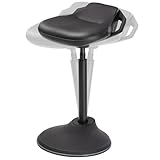
Overview: The SONGMICS Wobble Stool brings dynamic sitting to modern workspaces with its 23.6-33.3 inch height range and 8-degree tilt mechanism. Designed for standing desk users, this balance stool encourages active sitting through subtle movement while maintaining professional aesthetics suitable for home or office environments.
What Makes It Stand Out: The tool-less assembly snaps together in minutes without frustration, while the heavy-duty 264-pound capacity accommodates diverse users comfortably. The non-slip rubber base grips floors securely without marking surfaces, a critical feature for renters. Premium PU leather covering offers easy cleaning and durability, and the 360-degree swivel adds functional flexibility missing from some competitors.
Value for Money: At $123.23, it competes directly with mid-range wobble stools. The combination of sturdy construction, generous weight capacity, and quality materials matches competitors priced $130-150. The effortless assembly and floor-safe base provide additional value over cheaper alternatives that require tools and may scratch floors, saving time and potential damage costs.
Strengths and Weaknesses: Strengths include impressive height range for tall standing desks, robust weight capacity, stable non-slip base, comfortable thick foam padding, and sleek aesthetic. The 8-degree tilt provides noticeable active sitting benefits. Weaknesses: PU leather may not breathe as well as mesh in warm environments, and the fixed tilt angle lacks adjustability. Some users may find the active balance challenging initially.
Bottom Line: An excellent choice for standing desk users seeking proven active sitting benefits. The quality construction, floor protection, and straightforward assembly make it a reliable mid-range investment for ergonomic workspace improvement.
9. IWMH Standing Desk Stool, Standing Office Stool, Ergonomic Wobble Stools,Adjusting Height and swivels 360° Working seat for Bedroom, Kitchen, Living Room (Black 1)

Overview: The IWMH Standing Desk Stool offers an affordable entry into active sitting with its saddle-style seat and 360-degree swivel function. This wobble stool targets users seeking ergonomic relief from prolonged standing while maintaining mobility and adaptability across bedroom, kitchen, or living room environments.
What Makes It Stand Out: The saddle seat design contours to hip curves, promoting proper spinal alignment and reducing leg pressure more effectively than traditional flat seats. Adjustable height via drawstring mechanism and nylon base with rubber grip particles provides surprising stability for the price point. The tool-free installation simplifies setup dramatically for immediate use.
Value for Money: At $89.99, this stool undercuts most wobble stools by $30-50 while delivering core active sitting benefits. While materials and finish may not match premium $120+ options, the functional design and stability features offer remarkable value for budget-conscious buyers testing the active sitting concept before committing to expensive alternatives.
Strengths and Weaknesses: Strengths include ergonomic saddle shape, 360-degree swivel, strong grip base for stability, simple assembly, and responsive customer service promise. The price point is highly competitive. Weaknesses: less refined aesthetics than pricier alternatives, potential durability concerns with long-term heavy use, and limited height range specification. The drawstring adjustment may be less precise than lever systems.
Bottom Line: A solid budget-friendly wobble stool that doesn’t sacrifice core functionality. Ideal for home users wanting to experiment with active sitting or needing flexible seating for kitchen islands and craft rooms without breaking the bank.
10. Wobble Stool Standing Desk, Flexible Seating Adjustable Office Ergonomic Seating, Wobble Stools for Alternative Classroom Seating, Active ADHD Chair, Wiggle Chairs

Overview: This Wobble Stool targets standing desk users and active sitting enthusiasts with its 23-33 inch height range and counter-balanced design. Marketed as an ADHD-friendly seating solution, it combines dynamic movement with reassuring stability for office, classroom, or home environments where engagement matters.
What Makes It Stand Out: The counter-balanced base naturally returns upright, reducing the learning curve associated with traditional wobble stools that require constant core engagement. Three inches of premium foam cushioning and edgeless fabric cover deliver exceptional comfort rarely found in active seating. The non-skid, scratch-resistant base protects floors while providing secure grip on various surfaces. Tool-less assembly completes in four simple steps without frustration.
Value for Money: At $114.62, it positions between budget ($90) and premium ($130+) wobble stools. The enhanced cushioning, counter-balanced stability, and floor protection features justify the modest price premium over basic models. For users prioritizing comfort and ease-of-use, the investment delivers tangible ergonomic returns comparable to more expensive alternatives.
Strengths and Weaknesses: Strengths include superior cushioning thickness, intuitive counter-balanced design, excellent floor protection, 360-degree swivel, and straightforward assembly. The fabric cover breathes better than PU leather alternatives. Weaknesses: height range slightly narrower than some competitors, and the active movement may still challenge users with severe balance issues. Aesthetic design is functional rather than sleek.
Bottom Line: An excellent middle-ground option for those seeking active sitting benefits without sacrificing comfort or stability. Particularly well-suited for adults with ADHD, classroom settings, or anyone wanting a more engaging sitting experience at their standing desk.
Understanding Active Sitting: The Science Behind Movement at Your Desk
Why Static Posture is Your Body’s Worst Enemy
When you lock into a single position—whether sitting or standing—your muscles enter a state of sustained contraction that restricts blood flow and compresses spinal discs. Research from occupational health journals shows that static postures reduce nutrient delivery to vertebral discs by up to 40%, accelerating degeneration and creating that familiar afternoon back stiffness. Your body’s metabolic rate also drops significantly, with some studies showing calorie burn decreasing to just one per minute during static sitting.
How Dynamic Stools Engage Your Core and Improve Circulation
Active stools operate on the principle of “controlled instability.” By introducing a slight wobble, pivot, or tilt mechanism, these seats force your stabilizing muscles—particularly your transverse abdominis and multifidus—to fire continuously. This isn’t about getting a six-pack at your desk; it’s about creating enough muscle activity to pump blood through your core and lower back, delivering oxygen and removing metabolic waste. The result? A 15-20% increase in caloric expenditure compared to traditional sitting, without the fatigue of standing all day.
Key Benefits of Using a Standing Desk Stool
Reduced Back Pain and Spinal Health
The magic of active stools lies in their ability to reduce intervertebral disc pressure by up to 35% compared to standard chairs. When you perch on a dynamic seat, your pelvis tilts forward slightly, maintaining your lumbar curve naturally rather than forcing it with rigid backrests. This position distributes your weight through your sit bones and feet, decompressing your spine while keeping it in a neutral alignment. Many physical therapists now recommend these stools for clients with chronic lower back issues because they strengthen the very muscles that support spinal health.
Boosted Energy Levels and Productivity
That 3 PM energy crash isn’t just about lunch—it’s about oxygen deprivation. Active sitting combats this by keeping your postural muscles engaged, which drives circulation and prevents the sluggishness that comes with static postures. Users report a noticeable improvement in alertness within the first week of switching. The subtle movements also provide sensory input that keeps your nervous system engaged, similar to how fidgeting helps maintain focus during long meetings.
Enhanced Core Strength and Balance
You won’t develop athlete-level core strength from a stool alone, but you will notice improved functional stability within 4-6 weeks. The constant micro-adjustments required to maintain balance on a dynamic seat strengthen your deep stabilizing muscles—the ones that support your spine during everyday activities like lifting groceries or playing with your kids. This improved proprioception (your body’s awareness of its position in space) reduces injury risk both at work and during recreational activities.
Essential Features to Look for in a Quality Active Stool
Height Adjustability and Range
A premium active stool should offer a seat height range between 23 and 35 inches, accommodating both standard desk heights (28-30 inches) and standing desk configurations (38-48 inches). Look for pneumatic adjustment mechanisms that allow smooth transitions without forcing you to dismount. The sweet spot for perching is typically 8-10 inches above your standing elbow height, creating a 135-degree hip angle that minimizes joint stress.
Seat Design and Contouring
The seat pan should feature a waterfall edge that reduces pressure on the backs of your thighs, preventing circulation cutoff. Contoured designs with a slight central depression help distribute weight evenly across your ischial tuberosities (sit bones). Avoid overly cushioned seats—they may feel comfortable initially but reduce proprioceptive feedback and encourage static sitting. High-density foam or molded polyurethane with a slight give provides the ideal balance of comfort and feedback.
Base Stability and Safety Mechanisms
While the seat itself should be dynamic, the base must remain firmly planted. Look for weighted bases that prevent tipping, even when you lean aggressively. Anti-slip rings or rubberized coatings protect your flooring and maintain grip on hard surfaces. Some models feature self-returning mechanisms that gently guide the stool upright when not in use, preventing trip hazards in busy workspaces.
Material Quality and Durability
The cylinder (the pneumatic column) experiences the most stress and should be Class 4 gas-lift certified for longevity. Seat materials range from breathable mesh to antimicrobial vinyl—consider your climate and cleaning preferences. For home offices with pets or children, scratch-resistant bases and stain-repellent fabrics are worth prioritizing. Commercial-grade models often feature reinforced components that withstand 8-10 hours of daily use for 5+ years.
Types of Standing Desk Stools That Promote Movement
Wobble Stools and Their Unique Motion
Wobble stools feature a domed or curved base that allows 360-degree rocking in all directions. The range of motion typically spans 10-15 degrees in any direction, creating a gentle instability that engages your entire core cylinder. These are excellent for users who want maximum freedom of movement and don’t mind a learning curve. The constant ankle and hip adjustments required make them particularly effective for improving lower body circulation.
Saddle Stools for Open Hip Angle
Inspired by equestrian seating, saddle stools split the seat into two padded sections that position your hips in external rotation. This design naturally tilts your pelvis forward and maintains lumbar lordosis without conscious effort. The stance width is adjustable on most models, accommodating different body types. While they offer less wobble than other types, the open hip angle alone provides significant spinal benefits and is often recommended for users with sciatica.
Balance Ball Stools: Stability Meets Comfort
These hybrid designs mount a half-dome stability ball on a fixed base, combining the activation benefits of ball sitting with the safety and height adjustability of a stool. The ball compresses slightly under your weight, creating a responsive surface that adapts to your movements. Look for models with anti-burst technology and a secure ball-to-base connection. They’re particularly forgiving for beginners but may lack the durability of solid-seat designs.
Pivoting Perch Stools for Micro-Movements
Pivot stools feature a fixed base with a seat that rotates and tilts independently, typically offering 15-20 degrees of movement in any direction. The base stays stable while your upper body finds its natural alignment. This design is ideal for tasks requiring precision, like graphic design or data entry, where excessive whole-body movement could be distracting. The micro-movements are subtle enough that colleagues won’t notice, but your core will feel the difference.
Ergonomic Considerations for Your Workspace Setup
Proper Height Alignment with Your Standing Desk
Your stool’s height should position your elbows at a 90-110 degree angle when typing, with your wrists neutral and forearms parallel to the floor. When perched, your feet should rest flat on the floor or a footrest, with weight distributed approximately 60% on your feet and 40% on the seat. This ratio allows easy transitions between sitting and standing while maintaining stability. If your desk isn’t height-adjustable, consider a keyboard tray to achieve proper alignment.
Foot Positioning and Weight Distribution
Avoid the common mistake of locking your knees or leaning all your weight onto the stool. Instead, maintain a “ready stance” with feet hip-width apart, one foot slightly forward. This athletic position allows quick weight shifts and reduces joint strain. Some users benefit from an anti-fatigue mat positioned under their feet, providing cushioning and encouraging subtle calf and ankle movements even when stationary.
Monitor and Keyboard Placement While Perching
Your monitor should remain at arm’s length, with the top third of the screen at or slightly below eye level—this doesn’t change from standard ergonomic guidelines. However, because active stools encourage more upper body movement, consider monitor arms that allow easy repositioning throughout the day. Your keyboard and mouse should be close enough that your upper arms hang naturally at your sides, preventing shoulder elevation and neck tension.
How to Choose the Right Stool for Your Body Type
Weight Capacity and Build Considerations
Most quality stools support 250-300 pounds, but heavy-duty models accommodate up to 350-400 pounds. Check the weight rating carefully, as exceeding it compromises the pneumatic cylinder and voids warranties. Taller individuals (over 6'2") should verify the maximum seat height meets their needs, while petite users should ensure the minimum height allows their feet to reach the floor comfortably.
Seat Width and Depth for Different Frames
Seat dimensions significantly impact comfort and biomechanics. Standard seats measure 13-15 inches in diameter, but broader options exist for wider frames. Saddle stools often come in narrow and wide configurations—the right choice depends on your pelvic width and hip flexibility. If possible, test a model in person; you should be able to sit with your hips fully supported without pressure on the backs of your knees.
Transitioning to Active Sitting: A Gradual Approach
Starting with Short Intervals
Your core muscles need time to adapt. Begin with 20-30 minute sessions on your active stool, alternating with your regular chair or standing. Increase duration by 10-15 minutes weekly over a month. Early signs of overuse include lower back fatigue and hip soreness—these are normal but indicate you need more recovery time. Think of it like starting a new exercise routine; progressive overload prevents injury.
Building Core Endurance Over Time
Track your progress by noting how long you can maintain good posture without conscious effort. Most users achieve all-day comfort within 6-8 weeks. Supplement your stool use with targeted core exercises like dead bugs and bird-dogs to accelerate adaptation. Pay attention to your body’s signals: sharp pain means stop, while mild muscle fatigue means you’re building strength.
Common Mistakes to Avoid with Standing Desk Stools
Overusing Your Stool Without Breaks
Even the best active stool shouldn’t be used for 8 hours straight. The goal is variety, not replacement. Rotate between sitting, standing, and perching every 30-45 minutes. Over-reliance on your stool can lead to muscle fatigue that actually worsens posture as your core tires. Set reminders to change positions, and don’t ignore the urge to stand up and walk around—active sitting complements movement, it doesn’t replace it.
Ignoring Proper Posture Fundamentals
A dynamic seat won’t fix bad habits. Avoid slumping forward or arching your back excessively. Your ears should align over your shoulders, and your ribcage should stack over your pelvis. Some users find it helpful to perform a quick posture check each time they mount their stool: engage your deep core by gently drawing your navel toward your spine, then relax 20%. This subtle engagement maintains stability without creating tension.
Maintaining Your Active Stool for Longevity
Cleaning and Care Tips
Vacuum fabric seats weekly to prevent dust buildup that can degrade fibers. For leather or vinyl, wipe down with a damp cloth and mild soap monthly; avoid harsh chemicals that dry out materials. Periodically check all bolts and adjustment levers—vibration from movement can cause gradual loosening. Lubricate the pneumatic cylinder annually with a silicone-based spray to maintain smooth height adjustments.
When to Replace Your Stool
The average lifespan of a quality active stool is 5-7 years with daily use. Replace yours if the pneumatic lift begins sinking under weight, the base wobbles independently of the seat mechanism, or the seat padding has compressed to the point where you feel the frame. Cracks in the base or cylinder are immediate red flags—don’t risk a sudden failure that could cause injury.
Integrating Movement into Your Daily Workflow
Micro-Movements and Stretching Exercises
Maximize your stool’s benefits by incorporating intentional movements: try gentle figure-8 motions with your hips during phone calls, or practice ankle circles while reading emails. Every hour, perform a “pelvic reset” by standing, reaching overhead, and doing 5-10 bodyweight squats. These movements prevent the stiffness that can accumulate even with active sitting.
Creating a Sit-Stand-Perch Rhythm
Develop a personal movement schedule: perhaps 30 minutes sitting for focused writing, 45 minutes perching for email triage, and 30 minutes standing for calls. Use a timer app or smartwatch to enforce transitions until they become habit. The key is finding a rhythm that matches your tasks and energy levels—creative work might benefit from more movement, while analytical tasks might require more stability.
Cost vs. Value: Investing in Your Health
Budget-Friendly vs. Premium Options
Entry-level active stools ($80-$150) typically offer basic wobble or pivot functions with limited adjustability. Mid-range models ($150-$300) provide better ergonomics, durability, and warranty coverage. Premium options ($300-$600) feature advanced materials, superior build quality, and often include trial periods. Consider your usage: 2-3 hours daily justifies a mid-range investment, while 6+ hours demands premium quality for longevity.
Warranty and Return Policies Matter
A solid warranty indicates manufacturer confidence. Look for at least 3 years on the pneumatic cylinder and 1 year on the seat mechanism. Some companies offer 30-day satisfaction guarantees, which are invaluable since active stools require personal testing. Read the fine print: some warranties exclude “commercial use” or require registration within 30 days. Keep your receipt and document any issues with photos for smoother claims.
Environmental and Sustainability Factors
Eco-Friendly Materials to Consider
Look for stools with Greenguard Gold certification, which ensures low chemical emissions for indoor air quality. Seats made from recycled ocean plastics or sustainably harvested wood bases appeal to environmentally conscious buyers. Some manufacturers offer take-back programs for recycling old stools. While these options may cost 10-20% more, they align with corporate sustainability goals and personal values.
The Psychology of Active Sitting: Staying Mentally Engaged
The subtle physical engagement required by active stools creates a feedback loop that enhances mental alertness. Occupational psychologists note that the proprioceptive demands of balancing keep the brain’s reticular activating system slightly engaged, preventing the attention drift associated with static postures. Users often report feeling more “present” during meetings and maintaining better focus during repetitive tasks. This mind-body connection turns your seating choice into a productivity tool, not just a comfort device.
Industry Standards and Certifications
What BIFMA and Other Ratings Mean
The Business and Institutional Furniture Manufacturers Association (BIFMA) sets durability and safety standards for commercial seating. A BIFMA-certified stool has undergone rigorous testing for stability, weight capacity, and component longevity. For active stools, also look for ISO 9241-5 certification, which specifically addresses ergonomic requirements for office work. These certifications aren’t just marketing—they ensure your stool won’t fail under normal use conditions.
Frequently Asked Questions
How long should I use a standing desk stool each day when first starting out?
Begin with 20-30 minute sessions and gradually increase by 10-15 minutes weekly. Most people comfortably use their stools for 2-4 hours daily within the first month. Listen to your body—mild muscle fatigue is normal, but sharp pain means you need to reduce duration and build strength more gradually.
Can active stools really replace my ergonomic office chair completely?
No, and they shouldn’t. The goal is movement variety, not replacement. A healthy workday includes time sitting, standing, and perching. Active stools are one tool in your ergonomic toolkit. Keep your traditional chair for tasks requiring deep focus or when your core muscles need recovery time.
Are standing desk stools suitable for people with existing back problems?
Often yes, but consult your healthcare provider first. Many physical therapists recommend active stools for clients with chronic lower back pain because they strengthen supporting muscles. However, those with acute injuries, severe disc problems, or recent surgery may need to wait until they’ve completed rehabilitation. Start slowly and stop if pain increases.
What’s the ideal height ratio between my stool and standing desk?
Your stool should position your elbows at a 90-110 degree angle when typing, typically 8-10 inches below your standing elbow height. This creates a 135-degree hip angle that minimizes joint compression. If your desk isn’t adjustable, use a keyboard tray to achieve proper alignment rather than compromising on stool height.
How do I know if I’m using my active stool correctly?
You should feel subtle engagement in your core and lower back without tension. Your feet should carry about 60% of your weight, with the stool supporting 40%. If you feel unstable, lower the height slightly. If you feel no muscle engagement, increase the height or choose a more dynamic model. Your spine should feel long, not compressed.
Will I get too distracted by the constant movement?
Most users adapt within 3-5 days. The movements are subtle and become unconscious, similar to how you don’t think about balancing when walking. If you find it distracting, choose a pivot stool with less motion than a wobble stool. The cognitive benefits of improved circulation typically outweigh any initial adjustment period.
How much should I expect to spend on a quality active stool?
Plan to invest $150-$300 for a durable, ergonomic model suitable for daily use. Budget options under $100 exist but often lack proper adjustability and longevity. Premium models ($300-$600) offer superior materials and warranties. Consider cost-per-use: a $300 stool used 5 hours daily for 5 years costs about $0.03 per hour.
Can children or teenagers use standing desk stools safely?
Yes, with proper height adjustment and supervision. Many stools adjust low enough for adolescents and can help combat the postural issues from excessive phone and computer use. Ensure the child’s feet can rest flat on the floor and start with very short sessions (10-15 minutes). The movement can actually help kids with attention challenges stay focused on homework.
How do I clean and maintain my active stool?
Vacuum fabric seats weekly and wipe down vinyl or leather monthly with mild soap and water. Check bolts and adjustment mechanisms quarterly for tightness. Lubricate the pneumatic cylinder annually with silicone spray. Avoid harsh chemicals that degrade materials. With proper care, a quality stool should last 5-7 years.
What’s the difference between a wobble stool and a balance ball stool?
Wobble stools have a solid seat on a curved base, offering controlled 360-degree rocking. Balance ball stools use a compressible dome that responds more dramatically to weight shifts. Wobble stools provide more predictable movement and typically last longer, while ball stools offer greater proprioceptive feedback but may feel less stable for some users. Choose based on your comfort with instability and desired durability.