As we navigate the evolving workplace landscape of 2026, the demand for reliable, cost-effective printing solutions has never been more critical. While digital transformation continues to reshape how we share information, high-volume printing remains the backbone of countless industries—from legal firms processing case files to logistics companies generating shipping labels. The challenge? Finding a laser printer that can handle thousands of pages monthly without draining your budget through hidden costs.
Today’s budget laser printers have shed their reputation as bare-bones workhorses. Thanks to advances in toner efficiency, processor technology, and cloud integration, the under-$300 category now offers features that were exclusive to enterprise machines just five years ago. But with these improvements come new complexities. This guide cuts through the marketing jargon to help you identify what truly matters when selecting a high-volume laser printer that won’t break the bank—or your spirit.
Top 10 Budget Laser Printers for High-Volume Printing
Detailed Product Reviews
1. Brother DCP-L2640DW Wireless Compact Monochrome Multi-Function Laser Printer with Copy and Scan, Duplex, Mobile, Black & White | Includes Refresh Subscription Trial(1), Works with Alexa

Overview: The Brother DCP-L2640DW consolidates printing, scanning, and copying into one compact monochrome powerhouse built for small business productivity. Delivering 36 pages per minute with automatic duplexing and a 50-sheet auto document feeder, it streamlines high-volume document workflows without consuming valuable office space.
What Makes It Stand Out: Dual-band wireless (2.4GHz/5GHz) and Ethernet connectivity provide exceptional network flexibility, while the Brother Mobile Connect App enables remote operation and supply management. The Refresh EZ Print Subscription trial delivers up to 50% savings on genuine TN830/TN830XL toner, transforming cost management. The 50-page ADF significantly outperforms competitors in this price range for multi-page scanning tasks.
Value for Money: At $209.98, this 3-in-1 offers remarkable value compared to purchasing separate devices. The subscription service trial alone can offset the initial investment within months. While monochrome limits versatility, the cost-per-page becomes highly competitive with genuine toner savings, making it ideal for text-heavy environments.
Strengths and Weaknesses: Strengths: Fast 36 ppm output; efficient 50-page ADF; robust connectivity suite including dual-band wireless and Ethernet; mobile app integration; cost-saving Refresh subscription model; compact footprint; automatic duplex printing.
Weaknesses: No color or fax capability; starter toner has limited yield; color scanning slows to 7.9 ipm; 250-sheet tray may require frequent refilling in high-volume environments.
Bottom Line: For small businesses prioritizing black-and-white documentation, the DCP-L2640DW combines speed, connectivity, and intelligent cost management. Its combination of features makes it a smart investment for offices with moderate print volumes.
2. Brother HL-L2460DW Wireless Compact Monochrome Laser Printer with Duplex, Mobile Printing, Black & White Output | Includes Refresh Subscription Trial(1), Works with Alexa

Overview: The Brother HL-L2460DW strips away scanning and copying to deliver pure monochrome printing excellence for home offices and small teams. With 36 pages per minute output, automatic duplexing, and flexible connectivity, it focuses resources on what matters most: reliable, high-quality document production at an accessible price point.
What Makes It Stand Out: This printer’s 250-sheet capacity tray minimizes interruptions in busy workflows, while dual-band wireless and Ethernet ensure stable connectivity across diverse network environments. The Brother Mobile Connect App provides sophisticated remote management typically found in higher-end models. The Refresh subscription trial offers genuine toner savings without the complexity of multi-function features you might not need.
Value for Money: At $177.42, this represents one of the best values in monochrome laser printing. You’re getting flagship print speeds and connectivity without paying for scanning hardware. For users who primarily print and rarely scan, the savings are substantial. The subscription service further reduces operating costs below budget competitors.
Strengths and Weaknesses: Strengths: Excellent 36 ppm speed; large 250-sheet tray; versatile connectivity options; mobile app control; cost-effective Refresh program; compact design; simple operation.
Weaknesses: Print-only functionality limits versatility; no ADF for occasional scanning needs; monochrome output only; manual feed slot requires attention for specialty media.
Bottom Line: If your workflow is predominantly printing, the HL-L2460DW offers premium performance without multi-function premiums. It’s an efficient, cost-effective solution that delivers professional results while keeping acquisition and operating costs refreshingly low.
3. Canon imageCLASS MF465dw II - Wireless Duplex Laser Printer with Print, Copy, Scan, Fax, Expandable Paper Capacity and 3 Year Limited Warranty, 42 PPM
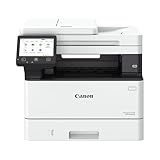
Overview: The Canon imageCLASS MF465dw II positions itself as a premium monochrome all-in-one for demanding office environments. With an impressive 42 pages per minute print speed, 5-inch color touchscreen, and comprehensive 4-in-1 functionality, it handles print, copy, scan, and fax tasks with professional-grade efficiency and an industry-leading 3-year warranty.
What Makes It Stand Out: The blazing 42 ppm output and sub-5-second first-print time dramatically reduce wait times. The intuitive 5-inch color touchscreen with Application Library streamlines workflows by customizing frequently used functions. Canon’s 3-year limited warranty provides exceptional peace of mind, far exceeding the standard 1-year coverage. Expandable paper capacity grows with your business needs.
Value for Money: At $324.00, this printer commands a premium but justifies it through superior speed, build quality, and warranty protection. The 42 ppm engine saves time in high-volume environments, while the extended warranty eliminates repair concerns. For offices processing hundreds of pages daily, the productivity gains offset the higher initial cost compared to 36 ppm alternatives.
Strengths and Weaknesses: Strengths: Class-leading 42 ppm speed; comprehensive 4-in-1 functionality; large 5-inch color touchscreen; exceptional 3-year warranty; quick first-print time; expandable paper capacity.
Weaknesses: Highest price among monochrome options; no color output; scan speed specifications not prominently stated; larger footprint than compact models; no subscription savings program mentioned.
Bottom Line: For high-volume monochrome offices prioritizing speed and reliability, the MF465dw II is worth the investment. The 3-year warranty and superior performance create long-term value that budget models can’t match. Choose this for demanding workflows where downtime isn’t an option.
4. HP Color LaserJet Pro MFP 3301sdw Wireless All-in-One Color Laser Printer, Office Printer, Scanner, Copier, ADF, Duplex, Best-for-Office (499Q3F)
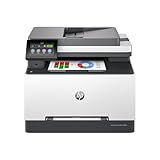
Overview: The HP Color LaserJet Pro MFP 3301sdw brings professional color printing, scanning, and copying to small teams seeking brand reliability. With print speeds of 26 ppm in both black and color, automatic duplexing, and a 250-sheet tray, it produces vibrant business documents using HP’s next-generation TerraJet toner technology.
What Makes It Stand Out: HP’s TerraJet toner delivers noticeably more vivid colors than standard laser output, making marketing materials and reports pop. As America’s most trusted printer brand, HP offers award-winning reliability and seamless integration with business ecosystems. The auto document feeder and duplex capabilities create a complete document solution without premium pricing.
Value for Money: At $419.00, this color MFP undercuts many competitors while delivering HP’s reputation for dependability. The 218A/X toner cartridge system offers standard and high-yield options for cost control. For teams needing professional color documents without enterprise-level investment, this printer balances capability and affordability effectively.
Strengths and Weaknesses: Strengths: Professional color output with TerraJet toner; trusted HP reliability; complete all-in-one functionality; automatic duplex and ADF; flexible toner options; 250-sheet capacity.
Weaknesses: Slower 26 ppm speed than monochrome rivals; color laser toner costs remain high; no fax capability; no extended warranty mentioned; subscription program not highlighted.
Bottom Line: Small teams requiring quality color documents will appreciate this printer’s blend of HP reliability, vibrant output, and reasonable price. While not the fastest, its professional results and comprehensive features make it a solid office workhorse for mixed document needs.
5. Brother HL-L3280CDW Wireless Compact Digital Color Printer with Laser Quality Output, Duplex, Mobile Printing & Ethernet | Includes 2 Month Refresh Subscription Trial¹,Works with Alexa

Overview: The Brother HL-L3280CDW delivers laser-quality color printing in a compact footprint designed for small and home offices. Producing up to 27 pages per minute with automatic duplexing, this printer focuses on vibrant output while maintaining Brother’s reputation for efficiency and connectivity.
What Makes It Stand Out: The integrated 2.7-inch touchscreen enables direct printing from popular cloud apps like Google Drive and Dropbox without computer intervention—a feature rarely found in this price class. The 2-month Refresh subscription trial helps manage color toner costs, which typically concern budget-conscious color laser buyers. Dual-band wireless and Ethernet provide flexible networking.
Value for Money: At $344.98, this printer makes color laser quality accessible without multi-function premiums. While 27 ppm is moderate, the cloud integration and subscription savings offset speed limitations for typical small office volumes. For users needing color output without scanning features, it undercuts many all-in-one color lasers significantly.
Strengths and Weaknesses: Strengths: Affordable color laser output; cloud app integration via touchscreen; duplex printing; subscription trial for cost management; compact design; versatile connectivity options.
Weaknesses: Print-only functionality; slower than monochrome alternatives; color toner costs still exceed black-only printing; no ADF or scanning capabilities; touchscreen smaller than premium models.
Bottom Line: For small offices needing color printing without scanning complexity, the HL-L3280CDW offers excellent value. Its cloud integration and subscription service make color laser technology practical and affordable. Choose this for vibrant documents where multi-function features aren’t required.
6. Brother HL-L2480DW Wireless Compact Monochrome Multi-Function Laser Printer with Copy and Scan, Duplex, Mobile, Black & White | Includes Refresh Subscription Trial(1), Works with Alexa

Overview: The Brother HL-L2480DW is a compact monochrome 3-in-1 laser printer engineered for small offices and work-from-home setups. Combining printing, scanning, and copying in a single footprint, it delivers black-and-white output at speeds up to 36 pages per minute with automatic duplex printing. The 250-sheet paper tray handles high-volume jobs, while a manual feed slot accommodates envelopes and specialty media. Connectivity options include dual-band wireless, Ethernet, and USB, making it versatile for various network configurations.
What Makes It Stand Out: This printer distinguishes itself with a 2.7-inch color touchscreen that enables direct printing from and scanning to cloud services like Google Drive, Dropbox, and Evernote. The Brother Mobile Connect app provides remote management capabilities, allowing users to print, scan, and monitor toner levels from virtually anywhere. Alexa integration adds voice control convenience, while the included Refresh subscription trial offers automatic toner replenishment, potentially reducing downtime and simplifying supply management for busy professionals.
Value for Money: At $239.99, the HL-L2480DW sits in the mid-range for monochrome multi-function lasers. The price is justified by its robust feature set: duplex printing, touchscreen interface, cloud connectivity, and mobile management capabilities that competitors often reserve for higher-end models. The Refresh subscription can lower per-page costs over time, though the initial toner cartridge is typically a lower-yield starter. For small teams prioritizing efficiency and connectivity, this represents strong value compared to basic single-function alternatives.
Strengths and Weaknesses: Strengths include fast 36ppm output, versatile connectivity options, intuitive touchscreen navigation, comprehensive mobile app integration, and automatic duplexing. The compact design suits space-constrained environments. Weaknesses are the lack of an automatic document feeder for multi-page scanning, monochrome-only output limiting color document handling, and the Refresh subscription model may not appeal to users preferring traditional supply purchasing. Initial toner yield is modest.
Bottom Line: The Brother HL-L2480DW is an excellent choice for small offices and remote workers needing reliable, fast monochrome printing with modern connectivity. Its cloud integration and mobile management capabilities make it particularly valuable for digitally-connected workflows, though the absence of an ADF may limit scanning efficiency for some users.
7. HP Laserjet M110w Wireless Black & White Printer, Print, Fast speeds, Easy Setup, Mobile Printing, Best-for-Small Teams
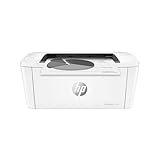
Overview: The HP LaserJet M110w is a streamlined monochrome laser printer designed for small teams of 1-3 people who prioritize simplicity and space-saving design. Billed as the world’s smallest laser printer in its class, it produces professional-quality black-and-white documents at speeds up to 21 pages per minute. The wireless connectivity supports printing from any mobile device, PC, or tablet via AirPrint, Android, Chromebook, and other platforms, while the self-reset feature helps maintain stable network connections.
What Makes It Stand Out: Its primary differentiator is the ultra-compact footprint that fits virtually anywhere, making it ideal for cramped home offices or small workspaces. HP’s reputation as America’s most trusted printer brand provides reliability assurance. The self-reset wireless capability automatically resolves connectivity issues, reducing IT intervention. Setup is remarkably straightforward, and the printer integrates seamlessly with diverse operating systems and mobile platforms, eliminating compatibility headaches for mixed-device environments.
Value for Money: Priced at $169.00, this is an entry-level laser printer that sacrifices multi-functionality for affordability and simplicity. While it lacks scanning, copying, and duplex printing, the cost is justified for users who only need basic monochrome output. HP toner cartridges are widely available, though per-page costs are higher than enterprise models. For small teams with minimal printing needs and no requirement for color or scanning, it undercuts multi-function alternatives by $70-100, representing solid value for single-purpose use.
Strengths and Weaknesses: Strengths include exceptional compactness, reliable wireless performance with self-reset, brand reliability, broad device compatibility, and fast setup. The 21ppm speed is adequate for light-duty use. Weaknesses are the single-function limitation (print-only), absence of automatic duplexing, basic paper handling capacity, and lack of an LCD screen for status monitoring. Toner costs per page are moderate but not class-leading.
Bottom Line: The HP LaserJet M110w is perfect for users seeking a no-fuss, space-saving monochrome printer for basic document printing. Its compact design and reliable connectivity make it ideal for small teams with straightforward needs, though those requiring scanning or duplexing should look elsewhere.
8. Brother HL-L6210DWT Business Monochrome Laser Printer with Dual Paper Trays, Wireless Networking, and Duplex Printing, White

Overview: The Brother HL-L6210DWT is a robust business monochrome laser printer engineered for high-volume office environments. It features dual 520-sheet paper trays plus a 100-sheet multipurpose tray, delivering a total capacity of 1,140 sheets expandable to 1,660 sheets with optional accessories. With print speeds reaching 50 pages per minute and automatic duplexing, this printer handles demanding workflows efficiently. Connectivity includes Gigabit Ethernet and dual-band wireless networking for seamless integration into corporate networks.
What Makes It Stand Out: The massive paper capacity dramatically reduces refill frequency in busy offices, while the ultra high-yield Brother Genuine TN920UXXL toner cartridge delivers an impressive 18,000 pages, minimizing supply interruptions and lowering per-page costs. Triple Layer Security features protect sensitive documents and network infrastructure. The 50ppm output speed places it among the fastest in its class, and flexible mobile printing support enables productivity from various devices.
Value for Money: At $429.99, this printer commands a premium price justified by enterprise-grade features. The ultra high-yield toner achieves exceptionally low per-page costs, offering significant savings for high-volume users despite the higher initial investment. While the included 3,000-page starter toner is modest, the long-term economics favor offices printing thousands of pages monthly. Compared to consumer models, the durability, capacity, and security features provide clear ROI for businesses with heavy monochrome printing requirements.
Strengths and Weaknesses: Strengths include exceptional paper capacity, blazing 50ppm speed, advanced security protocols, low long-term operating costs with ultra-high-yield toner, and professional-grade connectivity. The printer is built for durability and continuous operation. Weaknesses are the substantial upfront cost, large physical footprint requiring dedicated space, monochrome-only output, and the initial toner yield is significantly lower than replacement options. It’s overkill for low-volume users.
Bottom Line: The Brother HL-L6210DWT is an outstanding investment for busy offices with substantial monochrome printing demands. Its high capacity, speed, and security features deliver professional performance that justifies the premium price for organizations prioritizing efficiency and low intervention.
9. HP Laserjet Pro MFP 4101fdw Wireless Black & White All-in-One Laser Printer, Scanner, Copier, Fax, Best-for-Office (2Z619F)

Overview: The HP LaserJet Pro MFP 4101fdw is a comprehensive monochrome all-in-one solution designed for offices with up to 10 users. This robust machine combines printing, scanning, copying, and faxing capabilities with automatic two-sided printing and an auto document feeder for efficient multi-page processing. Delivering speeds up to 42 pages per minute, it handles demanding office workflows with ease. Connectivity encompasses wireless, Ethernet, and Bluetooth, supporting diverse device ecosystems and mobile printing requirements.
What Makes It Stand Out: The printer’s blazing 42ppm speed positions it among the fastest monochrome MFPs for small-to-medium offices. HP Wolf Pro Security provides enterprise-grade protection with customizable settings to safeguard sensitive data and prevent unauthorized access. The intelligent Wi-Fi feature automatically optimizes network connections, ensuring consistent availability. Auto duplex printing and the ADF streamline document processing, while comprehensive mobile support enables printing from virtually any device.
Value for Money: While pricing isn’t specified, the feature set suggests premium positioning justified by professional capabilities. The combination of high-speed output, advanced security, and full MFP functionality delivers strong value for security-conscious organizations. For offices handling sensitive documents, Wolf Pro Security alone justifies investment over consumer-grade alternatives. The 42ppm speed and 10-user capacity indicate it’s built for productivity, offering better total cost of ownership than slower, less capable models for growing teams.
Strengths and Weaknesses: Strengths include exceptional 42ppm print speed, robust HP Wolf Pro Security suite, intelligent Wi-Fi connectivity, full all-in-one functionality with fax, automatic duplexing, and ADF for efficient scanning. HP brand reliability and broad compatibility are additional assets. Weaknesses are monochrome-only output, unspecified price likely represents significant investment, and HP toner cartridges typically command premium pricing. The advanced features may be underutilized in very small offices.
Bottom Line: The HP LaserJet Pro MFP 4101fdw is ideal for security-focused offices requiring fast, reliable monochrome all-in-one performance. Its advanced security and connectivity features make it a smart choice for organizations handling confidential information.
10. HP Laserjet Pro MFP 3101fdw Wireless Black & White All-in-One Laser Printer, Scanner, Copier, Fax, Best-for-Office (3G628F)
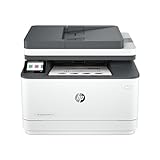
Overview: The HP LaserJet Pro MFP 3101fdw is a versatile monochrome all-in-one printer tailored for small teams of up to 7 people. It integrates printing, scanning, copying, and faxing with automatic two-sided printing and an auto document feeder for streamlined workflows. Capable of producing up to 35 pages per minute, it balances speed with efficiency for active office environments. Wireless, Ethernet, and Bluetooth connectivity ensure flexible printing from mobile devices, PCs, and tablets across various platforms.
What Makes It Stand Out: This model brings enterprise-grade HP Wolf Pro Security to smaller offices, offering customizable protection settings typically found in higher-end devices. The intelligent Wi-Fi automatically seeks optimal network connections, minimizing downtime. While slightly slower than its 4101fdw sibling, the 3101fdw delivers comprehensive all-in-one functionality with automatic duplexing and ADF at a presumably more accessible price point, making advanced security and connectivity attainable for smaller teams.
Value for Money: Though pricing is not provided, the 3101fdw likely positions itself as a cost-conscious alternative to faster enterprise MFPs. The inclusion of HP Wolf Pro Security on a device suited for smaller teams represents excellent value, as data protection is often compromised on lower-end models. The 35ppm speed and 7-user capacity offer sufficient performance for growing businesses without paying for excessive capability. For small offices prioritizing security and functionality over raw speed, this printer delivers professional features with appropriate scalability.
Strengths and Weaknesses: Strengths include robust security features, reliable intelligent Wi-Fi, full MFP capabilities with fax, automatic duplexing, and ADF for productivity. The 35ppm output is respectable for small-team environments. HP’s broad compatibility and brand reliability are proven assets. Weaknesses are monochrome-only operation, unspecified price may still be premium, capacity limited to 7 users, and print speed lags behind the 4101fdw. Toner costs remain a consideration for budget-conscious buyers.
Bottom Line: The HP LaserJet Pro MFP 3101fdw is an excellent fit for smaller offices seeking comprehensive all-in-one functionality with strong security features. It offers a balanced combination of performance, protection, and productivity for teams that don’t require maximum speed but refuse to compromise on data security.
Understanding High-Volume Printing Needs in 2026
Before diving into specifications, it’s crucial to align your purchase with actual workflow demands. High-volume printing means different things to different organizations, and misunderstanding your needs is the fastest path to buyer’s remorse.
Defining “Budget” in the Modern Laser Printer Market
The term “budget” in 2026’s printer landscape typically refers to devices priced between $150 and $350, though the real value extends far beyond the initial purchase price. What sets modern budget models apart is their aggressive cost-per-page economics, often achieved through high-yield toner cartridges that can produce 3,000-6,000 pages before replacement. However, the true budget champion isn’t always the cheapest upfront unit—it’s the printer that delivers the lowest total cost of ownership (TCO) over a 24-month period of 5,000+ monthly pages.
What High-Volume Really Means for Your Business
High-volume printing starts at roughly 3,000 pages per month and scales upward to 10,000+ pages for demanding environments. But page count alone doesn’t tell the full story. You must consider burst periods—those end-of-month rushes where you might need 500 pages in an hour—and typical job complexity. A printer rated for 8,000 pages monthly might struggle if those pages are dense reports with heavy graphics rather than standard text documents. Track your actual usage patterns for two weeks, noting not just volume but job size, frequency, and content type.
Key Performance Metrics That Matter
Manufacturer spec sheets are filled with impressive numbers that rarely reflect real-world performance. Understanding which metrics genuinely impact productivity will save you from costly mistakes.
Pages Per Minute (PPM) vs. Real-World Throughput
While PPM ratings provide a baseline, first-page-out time and job recovery speed often matter more in practice. A printer rated at 40 PPM that takes 20 seconds to warm up and process a job may feel slower than a 30 PPM model that prints the first page in 6.5 seconds. For high-volume environments, look for warm-up times under 10 seconds from sleep mode and processing speeds that can handle multi-page PDFs without choking. The ISO/IEC 24734 standard provides more realistic measurements, but even these don’t account for network latency in cloud-connected workflows.
Duty Cycle Deep Dive: Why Manufacturer Ratings Can Mislead
The monthly duty cycle represents the maximum pages a printer can theoretically handle, not what it should handle regularly. A common rule of thumb: multiply your average monthly volume by 1.5, then ensure that number falls between 10-20% of the printer’s maximum duty cycle. For example, if you print 5,000 pages monthly, target printers rated for 50,000-75,000 pages maximum. Running consistently at 30%+ of the duty cycle accelerates wear and voids many warranties. More importantly, examine the recommended monthly page volume—that figure represents the sweet spot for longevity and reliability.
The Total Cost of Ownership Equation
Sticker price is a distraction. The real financial story unfolds across toner replacements, drum units, energy consumption, and maintenance over the printer’s lifespan.
Toner Economics: Cost Per Page Analysis
Calculate cost per page (CPP) using high-yield cartridge prices divided by their rated page yield. For monochrome printing in 2026, aim for CPP under $0.015. Color printing should stay below $0.08 per page for budget models. Be wary of “starter” cartridges included with new printers—they often yield just 30-40% of standard replacements, effectively increasing your first-year costs by $50-100. Some manufacturers now offer subscription toner services that lock in CPP rates for three years, which can hedge against price increases but may require minimum volume commitments.
Drum Unit Longevity and Replacement Costs
Many budget printers separate the toner cartridge from the imaging drum, which typically lasts 12,000-20,000 pages. A $80 drum replacement amortized over 15,000 pages adds $0.005 to every page you print—nearly a 50% increase in operating costs for efficient monochrome models. All-in-one cartridges avoid this surprise but often cost more upfront. In 2026, we’re seeing a trend toward drum units that last the printer’s lifetime in some premium-budget hybrids, but these typically cost $50-100 more initially. Always factor drum replacement into your three-year TCO calculation.
Essential Features for 2026 Workflows
Modern printing isn’t just about putting toner on paper. Integration with digital workflows determines whether a printer enhances or hinders productivity.
Automatic Document Feeder (ADF) Capabilities
For scanning or copying multi-page documents, ADF capacity and speed are non-negotiable. Budget models in 2026 typically offer 35-50 sheet ADFs, but the critical differentiator is single-pass duplex scanning. Traditional ADFs scan one side, flip the page, then scan the other—a process that doubles scan time and increases jam risk. Single-pass technology scans both sides simultaneously, cutting processing time by 40% and dramatically improving reliability. If you handle double-sided documents weekly, this feature alone justifies a $50-75 price premium.
Duplexing Technology: Single-Pass vs. Traditional
Automatic duplex printing is standard on most 2026 budget lasers, but implementation varies. Traditional duplexers print one side, pull the paper back in, then print the reverse. This adds 3-5 seconds per page and increases mechanical complexity. Single-pass duplex engines print both sides in one continuous motion, delivering true two-sided output at near-single-sided speeds. For high-volume environments printing 2,000+ double-sided pages monthly, single-pass technology reduces mechanical wear and saves hours of cumulative printing time annually.
Paper Handling and Expansion Options
Base configurations typically include a 250-sheet main tray and a 50-sheet multipurpose feeder. However, true high-volume work requires expandability. Check whether the printer supports additional trays—many budget models accept one or two 250-sheet expansions for under $100 each. This isn’t just about capacity; it’s about media flexibility. Loading letterhead in one tray, plain paper in another, and labels in a third eliminates manual tray-switching that kills productivity. Also examine bypass tray capacity and whether it supports cardstock and envelopes without curl.
Connectivity and Integration Standards
Your printer must seamlessly integrate with hybrid cloud environments and mobile-first workflows that dominate 2026’s business landscape.
Cloud-First Printing in 2026
Native support for Google Cloud Print 2.0, Microsoft Universal Print, and Apple AirPrint 4.0 is now table stakes. More important is the printer’s ability to maintain persistent cloud connections without constant re-authentication. Look for devices with embedded IoT certificates and automatic firmware updates that patch security vulnerabilities. Some budget models now offer direct-to-cloud scanning, uploading documents to Dropbox, OneDrive, or Google Drive without requiring a PC intermediary. This feature eliminates the “scan-to-email-to-save” workflow that wastes time and creates version control nightmares.
Mobile Printing Protocols You Actually Need
Beyond basic AirPrint and Mopria, evaluate NFC tap-to-print capabilities and QR code pairing. NFC allows authenticated users to release jobs by tapping their phone, preventing sensitive documents from piling up in output trays. QR code pairing simplifies guest printing—visitors scan a code, upload a document, and print without joining your network. For Android-heavy environments, Samsung’s Cloud Print integration remains relevant, while Windows-centric offices should prioritize IPP Everywhere support for driverless installation.
Security Features for Networked Environments
Even budget printers in 2026 must include IPsec encryption, 802.1X authentication, and secure boot capabilities. Check for automatic security patch policies—reputable manufacturers commit to five years of security updates. Administrative password complexity requirements and failed login lockouts prevent unauthorized access. For regulated industries, look for secure erase functionality that cryptographically shreds temporary files stored on the printer’s hard drive or NAND memory after job completion.
Print Quality vs. Speed Trade-offs
High-volume printing doesn’t mean sacrificing professional appearance. Understanding the balance between resolution, toner technology, and processing power helps you avoid both blurry text and unnecessary slowdowns.
Resolution Realities for Business Documents
While 600 x 600 dpi remains the baseline for crisp text, 2026’s budget lasers increasingly offer 1200 x 1200 dpi through multi-pass printing or enhanced resolution modes. For standard office documents, 600 dpi is sufficient and faster. However, if you print fine-detail schematics, financial statements with small fonts, or client-facing proposals, the clarity improvement at 1200 dpi is noticeable. The key is automatic resolution switching—printers that detect image-heavy content and adjust accordingly without manual intervention.
Toner Formulation Advances
Chemical toner technology, once reserved for enterprise machines, now appears in budget models. These spherical particles melt at lower temperatures, reducing energy consumption and producing more consistent coverage. Some manufacturers use “low-melt” toners that cut fuser energy use by 15-20%, directly impacting your electricity bill in high-volume scenarios. Additionally, magnetic single-component toner designs simplify cartridge construction, reducing points of failure and lowering manufacturing costs passed on to consumers.
Monochrome vs. Color: Making the Right Choice
The monochrome vs. color decision significantly impacts both acquisition and operating costs. Making the wrong choice can cost thousands annually.
When Color is Worth the Premium
Color laser printers command a $100-150 premium over monochrome counterparts, but the real cost is in consumables. Color CPP typically runs 4-6x higher than monochrome. However, if even 10% of your high-volume printing requires color—think logos on invoices, highlight charts in reports, or client presentations—the professional impact justifies the expense. Calculate your color page percentage honestly. Many organizations underestimate this, leading to expensive workarounds like outsourcing color jobs that cost more than printing in-house.
Spot Color and Hybrid Approaches
Some 2026 budget models offer “spot color” modes that print black plus one accent color (typically blue or red) at near-monochrome costs. This hybrid approach works brilliantly for businesses that need minimal color—like highlighting overdue balances on statements—without paying full color prices. Alternatively, consider a two-printer strategy: a high-speed monochrome workhorse for 90% of volume paired with a compact color inkjet for occasional needs. This often delivers lower TCO than a single color laser for volumes exceeding 7,000 pages monthly.
Memory and Processing Power Considerations
A printer’s internal specs directly impact its ability to handle complex jobs without choking, especially in high-volume environments.
Why Onboard RAM Matters for Complex Jobs
Budget printers typically ship with 128-256MB of RAM, but high-volume printing of PDFs with embedded graphics can quickly exhaust this. When memory fills, the printer pauses mid-job to process, creating unpredictable delays. For workflows involving 50+ page documents with mixed content, target 512MB minimum. Some models allow user-upgradeable RAM—a $30 memory module can double performance and extend the printer’s useful life by 2-3 years. Check whether the printer supports memory expansion before purchasing; this flexibility is worth a slight premium.
Mobile Processors in Budget Models
The shift to ARM-based mobile processors in 2026’s budget lasers mirrors smartphone evolution. These chips offer better power efficiency and adequate performance for most tasks but can struggle with PostScript-heavy designs or complex vector graphics. If you print from Adobe Creative Suite or CAD applications, verify that the printer’s processor can handle PostScript 3 emulation without significant speed penalties. Some manufacturers now offer “performance mode” firmware that trades energy efficiency for processing power on demand—a useful compromise for mixed workloads.
Energy Efficiency and Environmental Impact
With electricity costs rising and sustainability mandates tightening, a printer’s power profile directly affects both operating expenses and corporate compliance.
Sleep Mode Power Consumption Standards
2026’s Energy Star 4.0 specification requires sleep mode consumption under 0.7 watts, but many budget models now achieve 0.3-0.4 watts through improved power management ICs. However, the wake-up energy surge can negate these savings if the printer sleeps too aggressively. Look for adaptive sleep timers that learn usage patterns—keeping the printer ready during typical print windows while sleeping deeply during off-hours. For 24/7 operations, calculate whether disabling sleep mode entirely (typically 300-400 watts active) costs more than the productivity loss from 20-second wake-up delays.
Toner Recycling and Sustainability Programs
Closed-loop toner recycling programs now cover shipping costs and offer credit toward new cartridges—typically $2-5 per returned unit. Over a printer’s lifetime, this can offset 10-15% of consumable costs. More importantly, some manufacturers design cartridges with 30-40% recycled content without performance penalties. Check whether the printer uses toner bottles (less plastic waste) versus all-in-one cartridges. While bottles require more user handling, they reduce landfill impact by 60% and often cost 10-15% less.
Maintenance and Reliability Factors
High-volume printing amplifies every maintenance requirement. A five-minute monthly procedure becomes a significant burden when performed across 20 printers.
Preventive Maintenance Intervals
Budget lasers typically require fuser replacement every 50,000-75,000 pages and transfer roller changes every 30,000 pages. These kits cost $80-150 and require technical skill to install. Some 2026 models feature user-replaceable fusers that slide out like toner cartridges, eliminating service calls. Check the maintenance kit’s rated yield and price before buying—manufacturers with high printer prices often subsidize through cheaper maintenance parts. Also examine whether the printer displays predictive maintenance alerts based on actual sensor data rather than simple page counters.
Warranty and Support Expectations
Standard warranties remain one year, but extended warranties covering 3 years/100,000 pages are often available for $50-80. For high-volume use, this is cheap insurance. More valuable is the manufacturer’s guaranteed response time for support calls—some offer 24-hour advanced replacement, while others require troubleshooting over several days. Read the fine print on consumable coverage; some warranties become void if you use third-party toner, even once. In 2026, leading manufacturers provide online chat support with technicians who can remotely diagnose issues via the printer’s cloud connection, often resolving problems without a service visit.
Common Pitfalls When Shopping on a Budget
The budget segment is engineered to appear competitive while hiding profit centers. Recognizing these traps protects your investment.
The “Cheap Printer, Expensive Toner” Trap
Manufacturers sometimes sell printers at or below cost, recouping losses through proprietary toner pricing. Before purchasing, verify that high-yield cartridges are readily available and competitively priced. Check third-party toner compatibility—some printers use RFID chips that block non-OEM cartridges, locking you into expensive supplies. Online forums and retailer reviews often reveal whether a printer’s “budget” status is genuine or a bait-and-switch. A good rule: if high-yield toner costs more than 60% of the printer’s price, keep shopping.
Overlooking Firmware Update Policies
Printers are network endpoints that require security patches, yet some budget manufacturers abandon firmware support after 18-24 months. Before buying, check the manufacturer’s track record—do they provide security updates for 5+ year-old models? In 2026, printers without automatic update capabilities are a liability. Also verify that firmware updates don’t artificially disable third-party toner compatibility, a controversial practice some manufacturers employ. The best budget brands commit to transparent update policies that enhance security without restricting consumer choice.
Future-Proofing Your 2026 Purchase
Technology evolves rapidly. A printer that meets today’s needs but can’t adapt to tomorrow’s workflows becomes an expensive paperweight.
Emerging Print Languages and Compatibility
PDF 2.0 support is becoming essential as organizations migrate from legacy PDF 1.7. Ensure the printer’s interpreter can handle PDF 2.0’s advanced compression and transparency features without rendering errors. Similarly, support for modern font formats like OpenType Variable Fonts prevents substitution issues in marketing materials. Some budget models now include firmware-upgradable interpreters, allowing the manufacturer to add support for new file formats via updates rather than requiring hardware replacement.
IoT and Predictive Maintenance Features
Entry-level printers increasingly include basic IoT sensors that monitor temperature, humidity, and component wear. These feed into manufacturer cloud platforms that predict failures 2-4 weeks in advance, shipping replacement parts before breakdowns occur. While this sounds like enterprise fluff, it prevents the cascading delays when a critical printer fails during a deadline. Evaluate whether the printer’s IoT features require paid subscriptions—some manufacturers charge $3-5 monthly for predictive analytics, which may not justify the cost for a single unit but becomes valuable when managing a fleet.
Frequently Asked Questions
How many pages per month qualifies as “high-volume” for a budget laser printer?
High-volume starts around 3,000 pages monthly, but the sweet spot for budget lasers is 3,000-8,000 pages. Beyond that, step-up models with sturdier construction and lower CPP become more economical. Track your usage for a month—many organizations overestimate their volume and pay for capacity they don’t need.
Should I buy a color laser printer if I only need color occasionally?
If less than 5% of your printing requires color, consider a monochrome laser plus occasional outsourced printing or a separate color inkjet. The TCO of a color laser only makes sense when you’re printing 200+ color pages monthly. For spot color needs like logos, look into single-accent-color laser models that print black plus one color at near-monochrome costs.
What’s more important: PPM speed or first-page-out time?
For typical office workflows with frequent small jobs (1-5 pages), first-page-out time under 7 seconds matters more than maximum PPM. However, if you regularly print 50+ page documents, sustained PPM becomes critical. Ideally, find a printer with sub-7-second first-page-out and at least 30 PPM sustained speed for the best mixed-workflow performance.
How do I calculate the real cost per page for a laser printer?
Divide the high-yield toner cartridge price by its rated yield, then add $0.005-0.008 for drum amortization if it’s a separate unit. Don’t forget electricity—add roughly $0.001 per page for energy costs. Multiply this total CPP by your monthly volume, then compare across models. A $0.02 CPP difference equals $200 annually at 10,000 pages monthly.
Are third-party toner cartridges safe to use in budget laser printers?
Quality varies dramatically. Reputable third-party toners can save 30-50% without issues, but some manufacturers use firmware to block them or void warranties. Check user forums for your specific printer model before purchasing. For high-volume use, consider the manufacturer’s own high-yield cartridges first—CPP is often competitive, and you retain full warranty protection.
What security features are essential for a networked budget printer in 2026?
Minimum requirements: IPsec encryption, 802.1X authentication, secure boot, and automatic firmware updates. Administrative passwords should support complexity requirements and failed-login lockouts. If handling sensitive data, ensure the printer includes secure erase functionality for temporary job storage. Avoid printers that haven’t received a security firmware update in the past six months.
How long should a budget laser printer last with high-volume use?
Expect 3-5 years or 150,000-200,000 pages with proper maintenance. The fuser is typically the first major component to fail, usually around 50,000-75,000 pages. Models with user-replaceable fusers extend practical lifespan significantly. Environmental factors matter—printers in hot, humid, or dusty conditions may fail at half these intervals.
Is wireless printing reliable for high-volume environments?
For consistent high-volume printing, ethernet remains superior to Wi-Fi. If you must use wireless, ensure the printer supports Wi-Fi 6E for better congestion handling in busy offices. Position the printer within 30 feet of the access point with minimal obstructions. For mission-critical printing, use Wi-Fi only as a backup to a wired connection—many modern printers support simultaneous connections.
What maintenance should I expect to perform myself?
Monthly: Clean the exterior, remove paper dust from trays, and check for toner spills. Every 10,000 pages: Vacuum the interior with an ESD-safe vacuum and clean the transfer roller with a lint-free cloth. Every 30,000 pages: Replace the transfer roller (tool-free in most 2026 models). Every 50,000-75,000 pages: Replace the fuser—this varies from a simple drawer-style replacement to a complex disassembly requiring a service call.
Can a budget laser printer handle cardstock and labels reliably?
Most budget models support up to 90 lb. cardstock through the multipurpose tray, but not in high volumes. For frequent heavy media printing (more than 100 sheets monthly), verify the printer has a straight paper path option and a fuser that can handle the extra thickness without jamming. Labels require careful attention—only use laser-compatible labels, and never print more than 20-25 label sheets consecutively without a cooldown period to prevent adhesive ooze that permanently damages fusers.