The modern home office has evolved far beyond a simple desk and laptop setup. As we move deeper into 2026, the promise of a truly paperless workspace is no longer a distant dream but an achievable reality—if you have the right document scanning ecosystem. The landscape has shifted dramatically from the clunky, single-purpose scanners of yesterday to intelligent, AI-powered document capture systems that seamlessly integrate with every facet of your digital life.
But here’s the challenge: with so many scanning technologies vying for your attention, how do you separate genuine innovation from marketing fluff? The answer lies not in chasing the latest gadget, but in understanding the fundamental capabilities that will serve your specific workflow for years to come. Whether you’re digitizing decades of family records, managing a freelance consulting practice, or simply trying to tame the monthly avalanche of bills and receipts, the right scanning strategy can transform your productivity and reclaim precious square footage in your home.
Top 10 Document Scanning Tools for Paperless Home Office
Detailed Product Reviews
1. Epson Workforce ES-400 II Color Duplex Desktop Document Scanner for PC and Mac, with Auto Document Feeder (ADF) and Image Adjustment Tools, ES-400 II
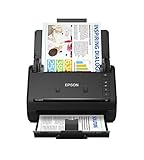
Overview: The Epson Workforce ES-400 II is a versatile document scanner engineered for productivity-focused home offices and small businesses. Its 50-sheet Auto Document Feeder and duplex scanning capabilities transform paper stacks into digital files rapidly. With cross-platform support for both PC and Mac, it eliminates compatibility concerns while delivering professional-grade results in a compact desktop footprint that fits modern workspaces.
What Makes It Stand Out: Epson’s ScanSmart Software distinguishes this scanner with an intuitive interface that previews scans, automatically names files, and enables one-click uploads to Dropbox, Evernote, Google Drive, and OneDrive. The included TWAIN driver ensures seamless integration with professional document management systems—a feature rarely found in this price range. Built-in OCR creates searchable PDFs and converts documents directly to editable Word or Excel files without requiring additional software purchases, streamlining workflows significantly.
Value for Money: At $299.99, the ES-400 II delivers enterprise features at a mid-range price. Comparable scanners with similar ADF capacity and software integration typically retail for $400 or more. Daily users will recoup their investment through time saved in automated workflows, reliable performance, and elimination of third-party OCR subscriptions that can cost $100+ annually.
Strengths and Weaknesses: Strengths: Fast 50-sheet ADF; excellent ScanSmart software; cross-platform compatibility; direct cloud integration; robust OCR capabilities; TWAIN driver support; reliable duplex scanning; automatic file naming.
Weaknesses: Premium pricing for occasional users; software learning curve for non-technical individuals; larger footprint than portable alternatives; no wireless connectivity; USB connection only.
Bottom Line: The Epson Workforce ES-400 II is ideal for remote workers and small offices requiring efficient, reliable scanning with minimal workflow friction. Its superior software ecosystem and robust feature set justify the investment for document-heavy environments, making it a smart long-term choice for productivity.
2. Plustek PS186 Desktop Document Scanner, with 50-Pages Auto Document Feeder (ADF). for Windows 7/8 / 10/11 (Intel/AMD only)

Overview: The Plustek PS186 is a Windows-focused document scanner designed for users demanding customizable scanning workflows. Its 50-page ADF and advanced image processing capabilities serve businesses that handle diverse document types daily. Targeting cost-conscious offices, it prioritizes automation and efficiency while maintaining compatibility with Windows 7 through 11 on Intel and AMD systems, making it a practical choice for established PC environments.
What Makes It Stand Out: The innovative “Single Touch” feature enables programming up to 255 customizable scan profiles, eliminating repetitive configuration for different document types. Barcode recognition automatically categorizes complex multi-page documents, while Plustek’s image processing technology handles rotation, cropping, deskewing, and blank page removal automatically. Direct FTP and NAS support facilitates server-based archiving without requiring a dedicated PC for file management, a boon for networked offices.
Value for Money: At $199.00, the PS186 undercuts competitors by $100 or more while delivering professional features like barcode sorting and network storage integration. The Windows-only limitation is the primary trade-off for this aggressive pricing, making it exceptional value for Microsoft-centric environments but unsuitable for Mac users or mixed-platform offices.
Strengths and Weaknesses: Strengths: Extensive customization with 255 profiles; intelligent barcode sorting; automatic image enhancement; direct FTP/NAS support; competitive pricing; reliable 50-page ADF; one-touch operation.
Weaknesses: Windows-only compatibility; no Mac support; software less polished than premium brands; driver downloads required from manufacturer website; limited third-party software integration; no cloud service integration.
Bottom Line: For Windows-based offices seeking workflow automation on a budget, the PS186 delivers remarkable capabilities. Its barcode sorting and extensive customization make it perfect for high-volume document processing, though cross-platform environments should consider more flexible alternatives.
3. Fujitsu PA03656-B005 Image Scanner ScanSnap iX500 (Renewed)

Overview: This certified refurbished Fujitsu ScanSnap iX500 provides premium scanning at a reduced price. The refurbishment process includes functionality testing, cleaning, inspection, and repackaging with a 90-day warranty. It delivers the same one-button scanning simplicity and productivity features as new units, making it accessible to budget-conscious buyers seeking reliable document digitization from a trusted brand.
What Makes It Stand Out: The iX500’s signature one-touch operation initiates complete scanning workflows with a single button press, from scanning to file organization. Fujitsu’s renowned paper handling technology minimizes jams and misfeeds, while the intelligent software suite automatically organizes, names, and routes documents to predetermined destinations. This renewed unit maintains the original’s reputation for reliability and ease of use that ScanSnap is known for.
Value for Money: At $215.00, this certified refurbished model offers substantial savings versus the original $495 retail price. The rigorous refurbishment and included warranty reduce risks typically associated with renewed electronics. For users prioritizing simplicity and reliability over cutting-edge features, this represents excellent value and access to premium hardware otherwise out of reach.
Strengths and Weaknesses: Strengths: Proven Fujitsu reliability; one-touch simplicity; intelligent paper handling; significant cost savings; certified refurbishment ensures quality; compact desktop design; fast scanning speeds; easy setup.
Weaknesses: Only 90-day warranty; may have minor cosmetic imperfections; no TWAIN driver limits third-party integration; software updates less frequent; USB connectivity only; no ADF capacity specified.
Bottom Line: The renewed ScanSnap iX500 suits users wanting premium performance without premium pricing. Its simplicity and reliability make it ideal for home offices processing moderate volumes. Businesses requiring TWAIN support or longer warranties should consider new alternatives, but value seekers will appreciate this offering.
4. Kodak i2800 Document Scanner – High-Speed Duplex Sheet-Fed Scanner with 600 dpi, USB 2.0, for Office and Home Use – Compatible with Windows.

Overview: The Kodak i2800 is a high-performance document scanner built for demanding enterprise environments. Its robust construction and high-speed duplex capabilities target medium to large businesses requiring reliable, high-volume digitization at 600 dpi optical resolution. This workhorse scanner prioritizes throughput and durability over portability and simplicity, designed for serious document management needs.
What Makes It Stand Out: Kodak’s scanner excels at information extraction at the point of entry, enabling immediate data capture from documents for workflow integration. Sophisticated image processing and paper handling technology reduce manual intervention and errors, while USB 2.0 connectivity ensures broad compatibility with Windows-based enterprise systems and legacy software applications that many corporations still depend on.
Value for Money: At $1,085.00, this enterprise-grade scanner represents a significant investment justified by durability and throughput. While excessive for home offices, organizations processing thousands of pages daily will find the cost reasonable. Comparable enterprise scanners often exceed $1,500, making the i2800 relatively competitive for its class and build quality.
Strengths and Weaknesses: Strengths: Enterprise-grade durability; high-speed duplex scanning; superior 600 dpi image quality; excellent paper handling; reliable for high-volume use; immediate information extraction capabilities; robust construction.
Weaknesses: Very high price for small offices; USB 2.0 interface feels dated; Windows-only compatibility; steep learning curve; overkill for occasional scanning; large footprint; loud operation.
Bottom Line: The i2800 is a true workhorse for businesses with serious scanning volumes. Its enterprise features and reliability justify the premium for large organizations, but small offices and home users should seek more affordable, user-friendly alternatives that better match their needs and budget constraints.
5. The Neat Company NeatConnect Scanner and Digital Filing System, Home Office Edition, 2005434

Overview: The NeatConnect is a specialized scanner designed for receipt, business card, and document management in home offices. It combines scanning hardware with a proprietary digital filing system, targeting users who need to organize financial documents and streamline expense reporting. Its unique focus on financial paperwork differentiates it from general-purpose scanners on the market.
What Makes It Stand Out: NeatConnect integrates directly with tax software including TurboTax and H&R Block, plus Excel and Outlook for seamless workflow. Mobile access allows users to view and add files from anywhere, while intelligent parsing automatically extracts key data from receipts and business cards. This creates a seamless ecosystem for financial document management unmatched by conventional scanners that focus on general document imaging.
Value for Money: At $449.99, NeatConnect commands a premium for its specialized software ecosystem. Users who regularly create expense reports or manage tax documentation will justify the cost through time savings and organization benefits. However, those requiring general document scanning may find better value in traditional scanners with more flexible output options and lower total cost of ownership.
Strengths and Weaknesses: Strengths: Excellent receipt and business card handling; direct tax software integration; mobile access; automated data extraction; streamlined expense reporting; all-in-one hardware and software solution; cloud storage included.
Weaknesses: Proprietary system limits flexibility; subscription may be required for full features; not ideal for general document scanning; higher price than comparable hardware-only solutions; limited third-party cloud service integration; Windows-focused.
Bottom Line: The NeatConnect is unbeatable for home office financial organization. Its tax-focused features and mobile access make it essential for self-employed professionals and small business owners. However, general users requiring versatile document scanning should consider more flexible alternatives that don’t lock them into a proprietary ecosystem.
6. QOMO ScannerCam 20F1 Portable 8.0 MP USB Document Camera with Built-in Mic and LED Light for MAC, PC, Chromebook. Designed for Online Learning, Web Meeting and Document Scanning

Overview: The QOMO ScannerCam 20F1 is a versatile document camera engineered for modern hybrid environments. This 8.0 MP USB-powered device delivers 4K resolution imaging in a sub-4-pound package, making it equally suitable for classroom instruction and remote business presentations. Its plug-and-play architecture ensures seamless operation across Mac, PC, and Chromebook platforms without driver installations, while the integrated microphone and adjustable LED lighting create a self-contained presentation solution for educators, trainers, and professionals.
What Makes It Stand Out: The ScannerCam 20F1’s 25x digital zoom capability distinguishes it from competitors, enabling extreme close-ups of documents, mechanical components, or detailed demonstrations with surprising clarity. The multifunctional microphone transcends basic audio capture, offering enhanced features tailored for interactive learning and dynamic web conferences. Complementing this is a professional-grade LED system with multiple brightness settings that automatically compensates for challenging lighting conditions—a critical advantage for consistent image quality during extended sessions.
Value for Money: At $119.99, this model occupies a strategic mid-market position. It significantly undercuts premium alternatives like the Elmo MX-P2 ($200+) while delivering superior zoom and resolution compared to budget options such as the IPEVO VZ-R. The inclusion of advanced microphone functionality and professional lighting justifies the investment for regular users, offering enterprise-level features without the enterprise-level price tag.
Strengths and Weaknesses: Strengths include true cross-platform compatibility, powerful digital zoom, integrated audio enhancements, adjustable LED illumination, and straightforward plug-and-play operation. Weaknesses involve inherent digital zoom limitations with quality degradation at maximum magnification, potential interpolation from the 8MP sensor to achieve 4K output, and a weight that approaches the upper limit for true portability.
Bottom Line: The QOMO ScannerCam 20F1 is an excellent choice for educators and professionals seeking a reliable, feature-rich document camera without breaking the budget. While power users might prefer optical zoom, the overall performance, build quality, and thoughtful feature integration make it a highly recommended solution for daily hybrid presentation needs.
Understanding the Evolution of Document Scanning Technology (2026 Perspective)
The document scanning tools of 2026 bear little resemblance to their predecessors. We’ve moved beyond mere image capture into an era where scanning is the first step in an automated knowledge management pipeline. Today’s devices don’t just create digital copies—they understand, categorize, and route information with minimal human intervention.
The Shift from Hardware-Centric to AI-Powered Solutions
In previous generations, scanner quality was judged primarily on hardware specifications: dots per inch (DPI), pages per minute (PPM), and sensor quality. While these metrics still matter, the real differentiator in 2026 is the embedded artificial intelligence. Modern scanning solutions feature on-device machine learning models that can distinguish between a tax document and a takeout menu before the image even hits your storage drive. This shift means you’re not just buying a piece of hardware—you’re investing in a cognitive assistant that learns your filing habits and anticipates your organizational needs.
Cloud-Native vs. Local Storage: What Matters Most in 2026
The debate between cloud and local storage has matured into a more nuanced conversation about hybrid architectures. Cloud-native scanning solutions offer instant accessibility across devices and automatic backup, but they raise legitimate questions about data sovereignty and long-term access. Conversely, local-first systems provide complete control but can create silos that limit collaboration. The sweet spot for most home offices in 2026 is a system that offers encrypted local storage with selective, policy-based cloud synchronization—giving you the benefits of both worlds without compromising on security or convenience.
Key Features That Define Next-Generation Scanning Tools
When evaluating scanning tools for your paperless home office, certain features have become non-negotiable in 2026. These capabilities separate professional-grade solutions from consumer toys that will frustrate you within months.
Optical Character Recognition (OCR) 2.0: Beyond Basic Text Recognition
Traditional OCR converted images into searchable text with frustrating accuracy rates, especially with unusual fonts or degraded documents. OCR 2.0 leverages transformer-based language models similar to those powering modern AI assistants. This means your scanner doesn’t just recognize characters—it understands context. It can differentiate between “Dr.” as a title versus “DR” as an abbreviation for dining room in real estate documents. Look for systems that support multilingual OCR without switching modes and can preserve document structure, including columns, tables, and footnotes, in the output file.
AI-Powered Document Classification and Tagging
The real time-saver in modern scanning tools is automated categorization. Advanced systems now use few-shot learning to understand your unique document types after seeing just a handful of examples. Imagine scanning a stack of mixed documents—receipts, insurance forms, business cards, handwritten notes—and having the system automatically sort them into appropriate folders, extract key dates and amounts, and tag them with relevant metadata. This capability transforms scanning from a manual organization task into a “scan-and-forget” workflow where you can retrieve any document through natural language search later.
Mobile-First Scanning: When Your Phone Becomes Your Primary Scanner
Smartphone cameras in 2026 feature computational photography capabilities that rival dedicated scanners for most document types. The key is the software stack that corrects perspective distortion, removes shadows, and enhances text clarity in real-time. Modern scanning apps use your phone’s LiDAR sensor for perfect edge detection and can batch-process hundreds of documents during your commute. For many home office professionals, a premium scanning app subscription paired with a good smartphone has replaced the need for a dedicated hardware scanner entirely.
Types of Document Scanners for Home Office Use
Understanding the scanner categories helps you match form factor to your actual usage patterns rather than buying based on spec sheets alone.
Flatbed Scanners: Still Relevant in the Digital Age?
Flatbed scanners have been written off as obsolete, but they serve critical niches in 2026. Bound materials, fragile documents, and thick items like passports or identification cards still require a flatbed’s gentle touch. Modern flatbeds have evolved to include overhead scanning modes where a camera arm captures documents without contact, making them ideal for digitizing old photo albums or rare books. If your paperless journey includes archival materials or creative work, a compact flatbed with USB-C power delivery and wireless connectivity remains a wise investment.
Sheet-Fed and ADF Scanners: Speed vs. Versatility
Automatic Document Feeders (ADF) have become the workhorse of the paperless home office, but not all ADFs are created equal. The key differentiator in 2026 is intelligent feed mechanisms that can detect double-feeds, separate sticky notes from main documents, and pause for confirmation when encountering irregular sizes. Look for models with ultrasonic sensors and dynamic pressure adjustment—these features prevent the heartbreak of torn documents and misfeeds. For most professionals processing 20-100 pages daily, a robust sheet-fed scanner with a 50-page ADF capacity hits the optimal balance of speed and desk footprint.
Portable Scanners: For the Hybrid Work Lifestyle
The portable scanner market has fragmented into two distinct categories in 2026: ultra-compact battery-powered models that fit in a backpack, and “briefcase scanners” that offer near-desktop performance in a collapsible form factor. The former is perfect for digitizing receipts and contracts on location, while the latter can handle full-size document processing during business travel. Key considerations include battery life (aim for 8+ hours of active scanning), offline storage capacity, and whether the device can operate independently of a host computer.
Multi-Function Printers (MFPs) with Scanning Capabilities
The MFP has experienced a renaissance as home offices consolidate equipment. Modern MFPs in 2026 feature scan-to-cloud functionality that bypasses your computer entirely, large touchscreen interfaces for document preview and editing, and integration with voice assistants for hands-free operation. The critical evaluation point is whether the scanning function is a full-featured component or an afterthought—check if the MFP supports the same OCR and classification features as standalone scanners in the same price range.
Software Ecosystem: The Real Power Behind Your Scanner
Hardware without sophisticated software is just a paperweight with a camera. The scanning software landscape in 2026 is where the real magic happens.
Document Management Systems (DMS) Integration
Your scanner should not create another digital silo. Modern solutions offer native integration with popular DMS platforms, but the depth of integration matters. Look for bidirectional sync capabilities that reflect organizational changes made in your DMS back to the scanner’s classification rules. API access for custom workflows is becoming standard, allowing you to trigger actions in project management tools, accounting software, or CRM systems based on scanned document content.
Cloud Storage Compatibility: From Google Drive to Private Clouds
Beyond simple upload functionality, advanced scanning tools in 2026 implement intelligent sync policies. These include automatic conversion to space-saving formats for archival storage, versioning control that prevents cloud storage bloat, and selective encryption that keeps sensitive documents encrypted even within your cloud provider’s infrastructure. For privacy-conscious users, support for self-hosted cloud solutions like Nextcloud or ownCloud with end-to-end encryption is a must-have feature.
Mobile App Ecosystem and Cross-Platform Syncing
The quality of a scanner’s mobile app often determines long-term satisfaction. Evaluate apps based on their offline capabilities, batch processing speed, and how well they sync scanning profiles and preferences across devices. In 2026, leading apps support continuous scanning sessions where you can start on your phone, continue on your tablet, and finish organizing on your desktop without losing context or metadata.
Security Considerations for the Modern Home Office
Scanning converts physical documents—which require physical access to steal—into digital files that can be exfiltrated in seconds. Security can no longer be an afterthought.
End-to-End Encryption and Zero-Knowledge Architecture
For cloud-enabled scanners, zero-knowledge architecture ensures that even the service provider cannot access your documents. This is non-negotiable for financial, legal, or medical records. Look for scanners that encrypt data on-device before transmission using keys you control, preferably stored in a hardware security module (HSM) or secure enclave. In 2026, quantum-resistant encryption algorithms are beginning to appear in premium models, future-proofing your sensitive documents against emerging threats.
GDPR, CCPA, and Emerging 2026 Privacy Regulations
Privacy regulations continue to evolve, and your scanning workflow must keep pace. Modern tools include data residency controls that let you specify where processed documents can be stored, automatic PII (Personally Identifiable Information) detection with redaction suggestions, and audit logs that track every document access. With new regulations emerging in 2026 around AI decision-making transparency, scanners that use AI classification must provide explainable logs of why documents were categorized in specific ways.
Secure Cloud vs. Local Network Storage
The 2026 home office often runs a hybrid network with IoT devices, family members’ equipment, and work hardware sharing the same router. This creates security vulnerabilities. Scanners with dedicated network security features—such as VLAN support, certificate-based authentication, and the ability to operate on an isolated network segment—provide peace of mind. For ultimate security, some professionals maintain a separate scanning workstation air-gapped from the internet, transferring files via encrypted USB drives.
Performance Metrics That Actually Matter
Manufacturers love to tout impressive-sounding numbers, but real-world performance depends on understanding what these metrics actually mean for your workflow.
PPM vs. IPM: Understanding Real-World Scanning Speeds
Pages Per Minute (PPM) measures single-sided simplex scanning, while Images Per Minute (IPM) measures double-sided duplex scanning. In 2026, most documents are double-sided, making IPM the more relevant metric. However, neither accounts for warm-up time, document prep, or software processing overhead. A scanner rated at 40 IPM might only process 25 pages per minute in practice. Look for independent benchmarks that measure “click-to-cloud” time—the total duration from pressing scan to having a searchable PDF available in your destination folder.
DPI and Image Quality: Finding the Sweet Spot for Different Document Types
The 1200 DPI scanner specification is largely marketing theater for document scanning. For standard text documents, 300 DPI provides perfect OCR accuracy while keeping file sizes manageable. Legal documents with fine print benefit from 400-600 DPI, while photographs and archival materials may warrant 1200 DPI. More important than maximum DPI is the scanner’s bit depth—48-bit color capture preserves subtle details in faded documents and allows for better enhancement during post-processing. In 2026, computational upscaling using AI can effectively double perceived resolution without the storage penalty of native high-DPI scans.
Daily Duty Cycles: Why Overworking Your Scanner Costs More
That budget scanner might handle your occasional scanning needs, but running it at its maximum daily duty cycle will lead to premature failure and costly repairs. In 2026, manufacturers provide more honest “recommended daily volume” figures alongside maximum duty cycles. For home office use, select a scanner whose recommended volume is 20-30% higher than your peak scanning days. This buffer accounts for multi-page documents, re-scans due to errors, and the occasional project that balloons beyond expectations.
The Role of AI and Machine Learning in Document Processing
Artificial intelligence has graduated from a buzzword to a fundamental component of document scanning, but not all AI implementations are equally useful.
Automated Expense Tracking and Receipt Management
Modern scanning systems can extract line-item details from receipts, categorize expenses by project or tax category, and integrate directly with accounting software. The most advanced systems in 2026 use computer vision to detect altered or fraudulent receipts, cross-reference merchant information with public databases, and automatically flag duplicates. For freelancers and small business owners, this capability can save hours of manual data entry during tax season while reducing errors.
Smart Contract Analysis and Legal Document Processing
For home office professionals dealing with contracts, AI-powered scanning tools now offer clause extraction, party identification, and obligation tracking. These systems can highlight unusual terms, compare new contracts against your standard templates, and create summary reports of key dates and deliverables. While not a substitute for legal review, this capability helps you manage contractual relationships more proactively.
Handwriting Recognition: Closing the Gap Between Digital and Analog
Handwriting recognition (HWR) has made quantum leaps thanks to transformer models trained on diverse writing styles. In 2026, leading scanning solutions can decipher cursive writing, handle multiple languages in a single document, and even recognize mathematical notation. The breakthrough has been in contextual understanding—modern HWR doesn’t just recognize individual letters but understands that a string of numbers following a dollar sign likely represents a monetary amount.
Connectivity and Integration in 2026
The way your scanner connects to your digital ecosystem dramatically impacts its utility and security.
Wi-Fi 6E and the Death of USB-Cables
Wi-Fi 6E’s 6 GHz band has revolutionized wireless scanning, offering speeds that match or exceed USB connections while eliminating cable clutter. Modern scanners can stream uncompressed scans directly to multiple devices simultaneously, enabling collaborative review in real-time. However, wireless scanning introduces latency and potential interference. For mission-critical scanning, hybrid models maintain both wireless convenience and wired reliability, automatically falling back to USB-C or Thunderbolt 4 connections if Wi-Fi quality degrades.
IoT Integration: Scanners as Smart Home Devices
Your scanner can now participate in broader smart home automations. Imagine scanning a utility bill and having your home automation system automatically update budget tracking dashboards, or scanning a product manual and having it instantly available on your kitchen display. In 2026, scanners with Matter protocol support integrate seamlessly with other smart devices, while IFTTT-style workflow engines let non-technical users create sophisticated document processing pipelines.
API Access: For the Tech-Savvy Home Office Professional
For those comfortable with light scripting, API access transforms your scanner from a passive device into an active workflow participant. Modern APIs support webhooks for real-time notifications, GraphQL for efficient data queries, and sandboxed execution environments for custom processing scripts. This enables scenarios like automatically generating expense reports from scanned receipts, creating CRM entries from business cards, or triggering invoice payments upon scanning bills.
Cost Analysis: Total Cost of Ownership (TCO)
The sticker price tells only a fraction of the story. A comprehensive TCO analysis reveals the true financial impact of your scanning investment over its lifetime.
Upfront Costs vs. Subscription Models
The market has shifted toward hybrid pricing: affordable hardware subsidized by optional software subscriptions. While this lowers initial investment, subscription costs can exceed hardware price within 18-24 months. Evaluate whether subscription features justify ongoing costs—many users find that one-time software purchases or open-source alternatives meet their needs. In 2026, some manufacturers offer “lifetime” software bundles that lock in current feature sets without future updates, providing a middle ground for budget-conscious buyers.
Consumables and Maintenance: The Hidden Expenses
Document scanners have consumables: feed rollers, separation pads, and cleaning supplies. High-volume scanners may require roller replacement every 50,000 pages, costing $50-100 each time. Cheaper scanners often have non-replaceable rollers, effectively making them disposable. Factor in cleaning sheets ($15 for 25), calibration targets, and potential software upgrade fees. A $300 scanner requiring $100 annual maintenance over five years has a TCO of $800, while a $600 scanner with $20 annual maintenance costs only $700 over the same period.
Energy Efficiency and Long-Term Operating Costs
With energy costs rising, a scanner’s power consumption matters. Modern Energy Star certified scanners consume 5-10 watts in operation and under 1 watt in sleep mode, while older or budget models may draw 30+ watts continuously. Over a year of typical home office use, the difference can be $20-40 in electricity costs. More importantly, efficient scanners generate less heat, reducing cooling costs in warm climates and extending component lifespan.
Environmental Impact and Sustainability
Going paperless is environmentally responsible, but your scanning hardware has its own ecological footprint.
Energy Star Ratings and Eco-Friendly Materials
Beyond energy consumption, examine the scanner’s construction. Manufacturers in 2026 increasingly use recycled plastics, biodegradable packaging, and modular designs that facilitate repair over replacement. Look for devices with easily accessible repair manuals and readily available spare parts. Some brands offer take-back programs that responsibly recycle end-of-life scanners, often providing credit toward new purchases.
Digital Sustainability: Reducing Your Carbon Footprint
Every scanned document stored in the cloud consumes energy in data centers. Efficient scanning practices—such as using appropriate resolution, compressing files intelligently, and deleting unnecessary scans—reduce your digital carbon footprint. Some advanced scanning software in 2026 includes sustainability dashboards that estimate the energy cost of your stored documents and suggest optimization strategies, like converting old high-resolution scans to more efficient formats.
Setting Up Your Paperless Workflow
The best scanning tool is useless without a sustainable workflow. Building good habits ensures your paperless system remains organized and functional long-term.
The 30-Day Paperless Challenge: Getting Started
Transitioning to paperless is overwhelming if attempted all at once. The 30-day challenge approach works: Week 1, scan all incoming mail daily; Week 2, tackle one filing drawer; Week 3, digitize receipts and financial documents; Week 4, handle photos and memorabilia. This gradual approach builds muscle memory and prevents burnout. By the end of the month, scanning becomes as automatic as checking email.
Folder Structures and Naming Conventions That Scale
A flat folder structure with intelligent search beats deep hierarchies that become unwieldy. Use a consistent naming convention like YYYY-MM-DD_DocumentType_Description_Source.pdf (e.g., 2026-01-15_Receipt_AmazonOfficeSupplies_Visa1234.pdf). This chronological sorting makes archiving simple and search effective. Avoid overly specific folders; instead, rely on tags and metadata for categorization, which modern DMS and operating systems handle more flexibly than rigid folder trees.
Backup Strategies: The 3-2-1 Rule for Digital Documents
The 3-2-1 rule remains gospel in 2026: 3 copies of every important document, on 2 different media types, with 1 copy offsite. For home offices, this typically means: original scans on your computer, backup on a network-attached storage (NAS) device, and encrypted cloud storage for offsite protection. Automate this process—manual backups are forgotten backups. Consider immutable storage for critical documents like tax returns and legal contracts, which prevents modification or deletion for a set period, protecting against ransomware and accidental changes.
Troubleshooting Common Issues
Even the best scanning setups encounter problems. Knowing how to address them quickly minimizes disruption to your paperless workflow.
Paper Jams and Misfeeds: Prevention and Solutions
Most paper jams stem from improper document preparation. Fan paper stacks before loading, remove staples and paper clips, and ensure documents are clean and dry. In 2026, scanners with ultrasonic double-feed detection can pause before damage occurs, allowing you to separate stuck pages. Regular cleaning with isopropyl alcohol wipes on feed rollers prevents dust buildup that causes slippage. If jams persist, check roller wear indicators in your scanner’s diagnostic software—many modern devices can predict failures before they happen.
Software Glitches and Driver Issues in 2026
Driver conflicts have decreased thanks to universal standards like TWAIN Direct and SANE, but software bugs persist. When your scanning software crashes or produces corrupted files, first check for firmware updates—these often include stability fixes. If problems continue, try scanning to a different format (e.g., TIFF instead of PDF) to isolate whether the issue is with the OCR engine or image capture. Virtualization is an emerging solution: running your scanning software in a containerized environment prevents conflicts with other applications and makes rollback to previous versions trivial.
When to Upgrade vs. Repair Your Scanning Setup
The repair-or-replace decision hinges on three factors: parts availability, software support, and feature gaps. If replacement parts are discontinued or the manufacturer no longer provides security updates for the device’s firmware, replacement is prudent. Similarly, if your workflow has evolved to require AI classification or cloud integration that your current scanner lacks, upgrading makes more economic sense than forcing an outdated tool to fit new requirements. A good rule of thumb: if repair costs exceed 50% of a new device’s price, and the new device offers meaningful workflow improvements, upgrade.
Future-Proofing Your Document Scanning Investment
Technology evolves rapidly, but a few key considerations can ensure your scanning setup remains relevant and supported for years.
Modular Hardware and Firmware Update Policies
Choose scanners with modular designs that allow component upgrades. Some manufacturers offer firmware update guarantees for 5-7 years, ensuring compatibility with new operating systems and security standards. Investigate the manufacturer’s track record—do they actively support legacy devices, or do they abandon them after two years? Open-source firmware communities have emerged for popular scanner models, providing extended support even after official updates cease, but this requires technical comfort.
Open Standards vs. Proprietary Formats
Proprietary file formats and closed ecosystems lock you into a single vendor’s roadmap. Prioritize scanners that output standard formats (PDF/A for archival, TIFF for lossless storage) and support open protocols for metadata exchange. This flexibility ensures your document archive remains accessible regardless of future software changes. In 2026, the Document Management Interoperability Services (DMIS) standard has gained traction, enabling seamless migration between different DMS platforms without losing organizational structure.
Scalability: From Side Hustle to Full Business
Your scanning needs may grow as your home office evolves. A scalable system handles increased volume without requiring complete replacement. This might mean a scanner with a modular ADF that can be upgraded from 50 to 100 pages, or software licensing that scales from individual to team use. Consider whether the system supports multiple user profiles—essential if your home office shares equipment with family members—and whether it can integrate with business-grade tools as your operation expands.
Frequently Asked Questions
How much should I realistically budget for a quality home office scanning setup in 2026?
For a comprehensive solution including hardware and first-year software costs, budget $400-$800 for most home office professionals. This range covers a capable sheet-fed scanner with AI-powered software, suitable for processing 50-100 pages daily. Power users dealing with archival materials or high volumes should plan for $1,200-$1,800, which includes a flatbed-sheet-fed combo with advanced security features. Remember to factor in $50-150 annually for consumables and potential software subscriptions.
Is a dedicated scanner still necessary, or can I rely entirely on my smartphone?
For 80% of home office scanning tasks, a modern smartphone with a premium scanning app suffices. The breaking point is volume: if you regularly process batches of 20+ documents, a dedicated scanner’s speed, ADF, and consistent image quality justify the investment. Additionally, fragile documents, bound materials, and items requiring high-fidelity color reproduction still benefit from dedicated hardware. Many professionals use both—smartphone for on-the-go capture, dedicated scanner for batch processing.
What resolution should I scan different document types at for optimal results?
Use 300 DPI for standard text documents and receipts—this provides perfect OCR accuracy with minimal file size. Legal documents with small print or documents you’ll need to zoom into benefit from 400-600 DPI. Photographs and archival materials warrant 600-1200 DPI, but consider whether you need to preserve them as TIFF files or if high-quality JPEG2000 compression suffices. For documents you plan to shred after scanning, 400 DPI provides a safety margin for future needs without excessive storage bloat.
How do I ensure my scanned documents are legally compliant and admissible in court?
In most jurisdictions, scanned documents are legally admissible if you can demonstrate the scanning process produces accurate, unaltered copies. Use PDF/A format for archival, which embeds metadata about the scanning process and prevents future editing. Maintain a documented chain of custody, including date stamps and checksums. Some jurisdictions require WORM (Write Once Read Many) storage for certain document types. Consult local regulations, but generally, a well-documented scanning workflow using reputable hardware and software meets legal standards.
What’s the difference between TWAIN, WIA, and SANE drivers, and does it matter in 2026?
TWAIN remains the professional standard, offering fine-grained control over scanner settings and broad software compatibility. WIA is Windows-specific and simpler but less flexible. SANE is the open-source standard for Linux and macOS. In 2026, TWAIN Direct has emerged as a universal, driverless standard that works across platforms via network protocols—this is ideal for modern setups. Most scanners support multiple standards, but TWAIN Direct compatibility indicates a forward-thinking manufacturer committed to interoperability.
How can I prevent my scanned documents from becoming a disorganized digital mess?
Implement a “process immediately” rule: scan, OCR, rename, and file documents within 24 hours. Use automated naming conventions and rely on search rather than complex folder structures. Schedule a 15-minute weekly review to tag documents and delete unnecessary scans. Most importantly, integrate scanning into existing workflows rather than treating it as a separate task—link your scanner directly to your accounting software, CRM, or project management tools so documents flow automatically to where they’re needed.
Are cloud-connected scanners safe for sensitive financial and medical documents?
They can be, if you choose wisely. Look for zero-knowledge encryption where you hold the keys, not the manufacturer. Ensure the scanner encrypts data on-device before transmission using AES-256 or better. For maximum security, use scanners that support local network operation without cloud dependency, enabling you to process sensitive documents completely offline. Some professionals maintain a separate, air-gapped scanning workstation for highly sensitive materials while using cloud-enabled scanners for routine documents.
What file format should I use for long-term document archiving?
PDF/A is the gold standard for document archiving, designed for long-term preservation with embedded fonts and self-contained rendering information. For documents requiring future editing, consider PDF/A with an optional OCR text layer. For photographs and graphics where fidelity is paramount, TIFF with lossless compression preserves maximum detail. Avoid proprietary formats and encrypted PDFs unless absolutely necessary, as these may become inaccessible as software evolves. Store a README file in each archive explaining your format choices for future reference.
How do I handle mixed document types in a single scanning session?
Modern scanners with AI classification excel at this. Enable “mixed document” mode, which automatically detects page size, color mode, and content type. The scanner will create separate files or a single PDF with bookmarks dividing document types. For best results, remove staples and ensure documents are oriented consistently. Some advanced scanners can even detect and rotate upside-down pages automatically. If your scanner lacks AI features, pre-sort documents into stacks of similar types and scan them as separate batches to avoid manual separation later.
What maintenance routine will keep my scanner running reliably for years?
Clean the ADF feed rollers and glass platen weekly with isopropyl alcohol wipes. Run the manufacturer’s calibration utility monthly using the included target sheet. Replace feed rollers annually or when the diagnostic software indicates wear. Keep the scanner covered when not in use to prevent dust accumulation. Update firmware promptly for security patches. For high-volume users, a professional cleaning service every 18-24 months can extend lifespan significantly. Most importantly, never exceed the recommended daily duty cycle—overworking the mechanism is the fastest path to premature failure.