Imagine coming home after a storm to find your home office in shambles—not from wind or rain, but because a single power surge fried your computer, router, and smart TV. This isn’t just an inconvenience; it’s a costly, avoidable disaster that strikes thousands of households every year. Many assume their standard power strip offers protection, but without dedicated surge suppression, those devices are dangerously exposed. In our hyper-connected world, where a single damaged router can disrupt work, entertainment, and security systems, understanding true surge protection isn’t optional—it’s essential for preserving both your electronics and your peace of mind.
The reality is stark: everyday electrical disturbances—from minor grid fluctuations to distant lightning strikes—can deliver thousands of volts in milliseconds, overwhelming unprotected circuits. While whole-house suppressors handle major surges at the panel, point-of-use protectors act as your last line of defense for sensitive electronics. Yet, not all units labeled “surge protector” deliver equal safety. Confusing marketing terms, misleading joules ratings, and uncertified knockoffs flood the market, leaving consumers vulnerable. This guide cuts through the noise, focusing on the technical and practical factors that actually determine whether a device will shield your investments when it matters most. Let’s explore what truly separates reliable protection from risky compromises.
Top 10 Surge Protector Power Strips
Detailed Product Reviews
1. Power Strip, ALESTOR Surge Protector with 12 Outlets and 4 USB Ports, 6 Feet Extension Cord (1875W/15A), 2700 Joules, ETL Listed, Black

Overview:
The ALESTOR Surge Protector delivers a robust solution for high-demand setups with 12 widely spaced AC outlets (including two extra-wide 2-inch slots), 4 USB ports (1 USB-C), and a 6-foot 1875W cord. Certified ETL and featuring 2700-joule surge protection, it targets home offices or entertainment centers needing extensive connectivity and reliable safety against power spikes.
What Makes It Stand Out:
Its triple-layer surge protection (TVS, MOV, GDT) responds faster than single-component alternatives, while the 2-inch outlet spacing accommodates bulky adapters without blocking adjacent ports. The USB-C port supports 3A charging, and the 120V–240V compatibility ensures global usability. ETL certification and fire-resistant PC housing (1382°F rating) further elevate safety.
Value for Money:
Priced mid-range, it outperforms budget strips with superior joule rating (2700J vs. typical 1000J) and 12 outlets. Though slightly costlier than minimal models, the 24-month warranty, 30-day returns, and comprehensive protection justify the investment for users prioritizing durability and device safety.
Strengths and Weaknesses:
Strengths: Exceptional surge protection; ample spaced outlets; versatile voltage range; ETL-certified safety; strong warranty.
Weaknesses: USB total output (17W) lags behind premium competitors; cord length (6ft) may be excessive for compact spaces.
Bottom Line:
Ideal for tech-heavy environments needing maximum outlets and top-tier surge defense. A reliable, safety-focused choice that balances performance and value for home or office use.
2. Anker Power Strip with 2100J Surge Protector, Outlet Extender, 5ft Extension Cord with Multiple Outlets, 12 AC, 2 USB A,1 USB C Port for 20W, Home Office, Dorm Room Essentials, TUV Listed

Overview:
Anker’s 351 Power Strip combines 12 AC outlets, 3 USB ports (including a 20W USB-C), and 2100-joule surge protection in a 5-foot cord. TUV-listed with an 8-point safety system, it’s engineered for home offices or dorms requiring fast charging and rigorous device protection.
What Makes It Stand Out:
The 20W USB-C port charges iPhones 0–50% in 26 minutes, while the optimized outlet layout prevents plug interference. Anker’s proprietary safety suite—covering overload, temperature, and fire risks—plus a $200,000 connected equipment warranty, sets a premium benchmark for reliability and user confidence.
Value for Money:
At a slightly higher price point, it justifies cost through Anker’s trusted fast-charging tech, comprehensive safety, and exceptional warranty coverage. Outperforms similarly priced models with superior build quality and brand support, though budget buyers may find it steep.
Strengths and Weaknesses:
Strengths: Industry-leading USB-C charging; robust 8-point safety; $200k equipment warranty; compact 5ft cord ideal for desks.
Weaknesses: Only 2 USB-A ports; 2100J rating trails ALESTOR’s 2700J; no voltage range flexibility beyond 120V.
Bottom Line:
A top pick for iPhone users and safety-conscious buyers seeking fast charging and unmatched warranty support. Worth the premium for home offices demanding Anker’s reliability.
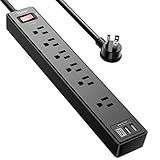
3. 6Ft Power Strip Surge Protector - Yintar Extension Cord with 6 AC Outlets and 3 USB Ports for for Home, Office, Dorm Essentials, 1680 Joules, ETL Listed, (Black)
Overview:
Yintar’s budget-friendly strip offers 6 AC outlets (one widely spaced), 3 USB ports (1 USB-C), and 1680-joule protection via a 6-foot cord. ETL-listed with reusable cable ties and wall-mount options, it targets students or minimalists needing basic surge defense and tidy cable management.
What Makes It Stand Out:
The triple-layer surge circuit (TVS/MOV/GDT) responds in <1ns—faster than single-MOV competitors—while the flat plug and cable ties enhance space efficiency. Smart USB charging (3A USB-C) and 120V–240V compatibility add versatility for travel or small workspaces.
Value for Money:
An affordable entry point with solid protection (1680J) and practical extras like mounting holes. Though less powerful than premium models, its 30-day return policy and 12-month warranty offer peace of mind for cost-conscious buyers.
Strengths and Weaknesses:
Strengths: Responsive surge tech; space-saving flat plug; cable management ties; global voltage support.
Weaknesses: Lower outlet count (6); modest 1680J rating; USB total output (15W) limits fast-charging potential.
Bottom Line:
A no-frills, reliable option for dorms or secondary spaces where space efficiency and basic surge protection matter most. Excellent value under $20.
4. 6 Ft Surge Protector Power Strip - 8 Widely Outlets with 4 USB Ports, 3 Side Outlet Extender with 6 Feet Extension Cord, Flat Plug, Wall Mount, Desk USB Charging Station, ETL,White

Overview:
This white 3-side power strip features 8 widely spaced outlets, 4 USB ports, and 600-joule surge protection via a 6-foot flat cord. Designed for clutter-free setups, it includes wall-mount holes and ETL certification, targeting home or office users needing compact, multi-angle connectivity.
What Makes It Stand Out:
The unique 3-side layout prevents plug obstruction, while 1.8-inch outlet spacing (vs. standard 1.5-inch) accommodates large adapters. Flat plug design and 100V–240V compatibility enhance flexibility, though its 600J rating is modest for serious surge risks.
Value for Money:
Competitively priced for its space-saving design and 12-device capacity. However, the low 600J protection and basic safety features make it less compelling than higher-joule alternatives at similar prices, especially for sensitive electronics.
Strengths and Weaknesses:
Strengths: Space-efficient 3-side design; generous outlet spacing; flat plug for tight spaces; mountable.
Weaknesses: Weak surge rating (600J); limited USB power (15W total); no USB-C port; minimal warranty (12 months).
Bottom Line:
Best for aesthetics and plug accessibility in low-risk environments. Avoid for expensive electronics due to inadequate surge protection.
5. Surge Protector Power Strip - HANYCONY 8 Outlets 4 USB (2 USB C) Charging Ports, Multi Plug Outlet Extender, 5Ft Braided Extension Cord, Flat Plug Wall Mount Desk Charging Station for Home Office ETL

Overview:
HANYCONY’s 5-foot braided-cord strip packs 8 outlets (2.2-inch spacing), 4 USB ports (including dual USB-C), and 1080-joule protection. ETL/RoHS-certified with wall-mount options, it caters to users needing high USB adaptability and robust construction for home or office desks.
What Makes It Stand Out:
Dual USB-C ports (5V/3A each) and smart charging deliver 30% faster speeds than rivals, while the thick braided cord and 1382°F flame-resistant housing signal durability. The 2.2-inch outlet spacing is industry-leading for bulky adapters, and the illuminated surge-protection indicator adds convenience.
Value for Money:
Priced mid-tier, it excels with dual USB-C and premium build quality. Though joules (1080J) trail Product 1, the braided cord, superior spacing, and strong safety features offer compelling value for tech-savvy users prioritizing USB versatility.
Strengths and Weaknesses:
Strengths: Dual USB-C ports; exceptional 2.2-inch spacing; braided cord durability; 1382°F fire resistance.
Weaknesses: Moderate 1080J rating; USB total output (15.5W) still lags behind Anker; no extended warranty.
Bottom Line:
A standout for USB-C device owners needing maximum adapter space and build quality. Ideal for modern desks, though surge protection isn’t best-in-class.
6. Surge Protector Power Strip - Nuetsa Flat Plug Extension Cord with 8 Outlets and 4 USB Ports, 6 Feet Power Cord (1625W/13A), 2700 Joules, ETL Listed, Black
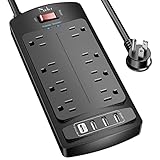
Overview: The Nuetsa Surge Protector Power Strip delivers robust protection and versatile connectivity with 8 AC outlets, 4 USB ports (including one USB-C), and a 6-foot heavy-duty cord. ETL-listed and rated for 2700 joules, it targets home and office users needing reliable surge defense for multiple devices.
What Makes It Stand Out: Its triple-layer surge protection (TVS, MOV, GDT) surpasses basic MOV-only competitors, reacting faster to spikes. The USB-C port (3A max) enables faster charging for compatible devices, while the wide-voltage design (120V–240V) ensures global usability. The 1382°F flame-retardant casing adds exceptional safety.
Value for Money: Priced mid-range, it justifies cost through superior 2700-joule protection and USB-C support—features often reserved for premium models. The 12-month warranty and 30-day returns reduce purchase risk, outperforming budget strips with weaker joule ratings.
Strengths and Weaknesses: Strengths: Triple-layer surge circuit, USB-C fast charging, ETL safety certification, space-efficient flat plug. Weaknesses: USB-C lacks support for higher-voltage devices (9–22V), and the 13A limit may restrict high-wattage appliances.
Bottom Line: Ideal for tech-heavy setups needing fast USB-C charging and top-tier surge defense. Its safety features and robust build make it a worthwhile investment over basic models, despite minor USB-C limitations.
7. Surge Protector Power Strip - 10 FT Extension Cord, Power Strip with 12 Widely AC Outlet 3 USB, Flat Plug, Wall Mount Overload Protection, 1050J, Desk Charging Station for Home Office, ETL Listed

Overview: This 10-foot extension cord power strip features 12 widely spaced AC outlets, 3 USB ports, and wall-mount capability, designed for cluttered desks or tight spaces. With 1050 joules of surge protection and ETL listing, it prioritizes flexibility and safety for home or dorm use.
What Makes It Stand Out: The 10-foot cord and 45° flat plug offer unmatched reach and space-saving in cramped areas. Unique three-sided outlet layout prevents blocking, while wall-mount screws (included) enable versatile installation. Overload protection covers five critical failure points (voltage, current, heat, etc.).
Value for Money: Excellent for its length and outlet count at a budget-friendly price. Though joules (1050J) are lower than premium options, the 12 outlets and USB ports provide practical value for device-dense environments like offices or dorms.
Strengths and Weaknesses: Strengths: 10-foot cord, unobstructed outlet spacing, wall-mount design, multi-layer safety protections. Weaknesses: Modest 1050-joule rating suits basic electronics but not high-value gear; USB ports lack fast-charging specs (max 2.4A shared).
Bottom Line: A smart pick for extending reach in tight spaces with strong safety features. Best for everyday devices where extreme surge protection isn’t critical—avoid for expensive home theater systems.
8. Belkin 12-Outlet Surge Protector Power Strip w/ 12 AC Outlets & 8ft Flat Plug, UL-listed Heavy-Duty Extension Cord for Home, Office, Travel, Computer, Laptop, Charger - 3,940 Joules of Protection

Overview: Belkin’s premium surge protector packs 12 widely spaced AC outlets, an 8-foot flat plug cord, and industry-leading 3,940 joules of protection. UL-certified and featuring a status indicator light, it’s engineered for safeguarding high-value electronics in home offices or workstations.
What Makes It Stand Out: The exceptional 3,940-joule rating dwarfs most competitors, offering superior defense against severe surges. UL certification and the $20,000 connected equipment guarantee (implied by UL standards) provide unmatched peace of mind. The angled plug fits snugly behind furniture.
Value for Money: Higher-priced but justifiable for protecting expensive setups (e.g., gaming rigs, home theaters). The long warranty and UL backing ensure reliability, making it cost-effective versus replacing damaged devices. Budget strips can’t match its protection tier.
Strengths and Weaknesses: Strengths: Highest joule rating here (3,940J), UL safety certification, non-crowded outlets, status indicator light. Weaknesses: No USB ports limit modern device charging; 8-foot cord is shorter than some rivals.
Bottom Line: The top choice for safeguarding critical electronics where failure isn’t an option. Skip if you need USB charging, but essential for premium PC or AV systems.
9. Anker Power Strip with 2000J Surge Protector, Flat Plug Extension Cord with Multiple Outlets, 8 AC, 2 USB A & 1 USB C Port for 20W, 5ft Outlet Extender, Dorm Room Essentials, Home Office, TUV Listed

Overview: Anker’s compact power strip merges 8 AC outlets, 3 USB ports (including 20W USB-C), and 2000-joule surge protection in a space-saving design. TÜV-listed with a 5-foot cord, it’s tailored for minimalist setups in dorms or home offices.
What Makes It Stand Out: The 20W USB-C port enables rapid phone/tablet charging, while the three-sided outlet layout maximizes space efficiency. The $20,000 connected equipment guarantee and 18-month warranty exceed industry norms, underscoring Anker’s reliability focus.
Value for Money: Priced competitively, it balances robust protection (2000J), fast USB-C, and elite warranty coverage. Outperforms similarly priced strips lacking USB-C or strong guarantees—ideal for students or remote workers.
Strengths and Weaknesses: Strengths: 20W USB-C fast charging, premium warranty/guarantee, compact three-sided design, TÜV safety cert. Weaknesses: Lower joule rating (2000J) than Belkin; USB-A ports lack standout speed (2.4A).
Bottom Line: Perfect for modern device ecosystems needing fast USB-C charging and trustworthy surge defense. A standout for dorms or desks where space and speed matter most.
10. 2 Pack Surge Protector Power Strip with 6 Outlets 4 USB Ports 5-Foot Long Heavy-Duty Braided Extension Cords Flat Plug 900 Joules 15A Circuit Breaker Wall Mount for Home Office ETL Listed

Overview: This value-focused 2-pack offers dual surge protectors with 6 AC outlets, 4 USB ports, and 5-foot braided cords. At 900 joules each and ETL-listed, it targets budget-conscious users needing basic protection for everyday electronics.
What Makes It Stand Out: The included 2-pack doubles utility for under $25, while braided cords enhance durability over standard vinyl. Keyhole mounts enable wall installation, and the 15A circuit breaker provides reliable overload prevention for low-to-mid wattage devices.
Value for Money: Exceptional for the price—two units with USB ports and ETL safety at minimal cost. Though joules (900J) are low, it’s sufficient for lamps, chargers, or small appliances, making it ideal for secondary spaces like kitchens or bedrooms.
Strengths and Weaknesses: Strengths: Cost-effective 2-pack, braided cord durability, wall-mount option, ETL certification. Weaknesses: Weak surge protection (900J) risks high-value gear; USB ports share 3.1A (no fast-charging specs).
Bottom Line: A practical buy for non-critical devices where affordability and clutter reduction matter. Avoid for computers or TVs, but perfect for entry-level needs like dorms or workshops.
Understanding Surge Protection Essentials
Why Surge Protection Matters Beyond Basic Power Strips
Basic power strips simply multiply outlets—they offer zero defense against voltage spikes. True surge protectors contain specialized components like metal oxide varistors (MOVs) that divert excess energy to the ground wire, sacrificing themselves to save your devices. Without this, even small surges from refrigerator compressors or HVAC systems can degrade electronics over time, leading to premature failure. Recognizing this distinction is the first step toward meaningful electrical safety.
The Hidden Dangers of Unprotected Electronics
Modern devices with microprocessors—laptops, gaming consoles, and smart home hubs—are exceptionally vulnerable to voltage irregularities. A surge as minor as 50 volts above standard (120V in North America) can corrupt data or damage internal circuitry. Worse, repeated micro-surges often cause “electronic rust,” slowly deteriorating components until devices fail unexpectedly. This insidious damage frequently voids warranties, leaving owners to cover replacement costs.
How Surges Actually Occur in Residential Settings
Most damaging surges originate internally from within your home—not from lightning. Everyday events like air conditioners cycling on/off or faulty wiring generate transient spikes. External sources include utility grid switching, downed power lines, or nearby lightning strikes (even miles away). Understanding these common triggers helps prioritize protection for high-risk areas like home offices, entertainment centers, and appliance-heavy kitchens.
Critical Technical Specifications Decoded
Voltage Protection Rating (Clamping Voltage) Explained
This spec, measured in volts (V), indicates when the protector starts diverting excess energy. Lower is better—ideally under 400V for sensitive electronics. A unit rated at 500V allows significantly more voltage to reach your devices before activating compared to one at 330V. Always prioritize clamping voltage over joules rating; it’s a more direct indicator of actual protection levels for delicate components.
Energy Dissipation Capacity (Joules Rating) Realities
Joules measure total energy a protector can absorb over its lifetime. While higher numbers (e.g., 2000+ joules) suggest longer lifespan, they don’t guarantee better single-surge protection. A 1000-joule unit with superior clamping voltage may outperform a 3000-joule model with poor response characteristics. Treat joules as an indicator of endurance, not immediate effectiveness—especially critical for areas prone to frequent small surges.
Why Response Time Under 1 Nanosecond is Non-Negotiable
Surges travel at nearly the speed of light. If a protector takes longer than 1 nanosecond (ns) to react, damaging voltage reaches your devices before suppression kicks in. Reputable units achieve 0.25–0.5 ns response times. Verify this spec explicitly—many budget models omit it, signaling inadequate engineering for modern electronics.
Indicator Systems: Your Wear-and-Tear Warning
Quality protectors include LED lights showing active protection status. When MOVs degrade after absorbing surges, the light turns off (or changes color), signaling replacement is needed. Units without indicators leave you guessing—protection could be失效 while the strip still powers devices. Never rely on a protector without clear end-of-life signaling.
Practical Selection and Usage Factors
Outlet Configuration and Spacing Challenges
Bulky AC adapters can block adjacent outlets, rendering them useless. Look for models with widely spaced or rotated outlets, or those incorporating side-mounted ports. For home theaters, prioritize units with spaced outlets specifically designed for large power bricks. Avoid cramming multiple high-wattage devices (like space heaters) into a single strip—this risks overheating regardless of surge specs.
Cord Length and Gauge Considerations
Longer cords increase resistance and voltage drop, especially with thin 16-gauge wiring. For distances over 6 feet, choose 14-gauge or thicker cords to maintain stable power delivery. Never coil excess cord length during use—it creates heat buildup. Measure your setup beforehand to select the optimal length without compromises.
USB Charging Ports: Integrated Protection Required
Units with USB ports must include dedicated surge suppression for those outputs. Cheap models often omit this, leaving phones and tablets exposed. Verify that USB specs mention “surge-protected” or “filtered” charging—ideally with separate clamping voltage ratings. Also, check amperage (e.g., 2.4A per port) to ensure fast, safe charging.
Warranty and Connected Equipment Coverage Details
Reputable brands offer warranties covering connected devices if the protector fails (e.g., up to $50,000 coverage). Read terms carefully: coverage often excludes data loss, requires registration, and mandates using the protector correctly (e.g., not daisy-chaining). This isn’t just a perk—it’s proof the manufacturer stands behind their engineering.
Safety Certifications: Non-Negotiable Marks to Verify
Only consider units bearing independent safety certifications like UL 1449 (latest 4th edition), ETL, or CSA. These verify rigorous testing for fire risk, electrical safety, and actual surge performance. Avoid uncertified products—even if labeled “surge protector”—as they may lack functional MOVs entirely. The certification mark should be physically molded into the device.
Physical Design and Mounting Flexibility
Consider where the unit will live. Wall-mount slots enable secure placement behind entertainment centers. Low-profile designs fit under desks. For tight spaces, look for right-angled plugs or retractable cords. Avoid units with flimsy housings—they’re less likely to contain fires if internal components fail during a massive surge.
Advanced Protection Strategies
Whole-House vs. Point-of-Use Protection Synergy
For comprehensive defense, pair a service-panel surge suppressor (installed by an electrician) with point-of-use protectors. The whole-house unit handles large external surges (e.g., lightning), reducing the burden on your power strips. This layered approach is ideal for homes in lightning-prone areas or with older wiring—it’s not an either/or solution but a critical partnership.
Lifespan Expectancy and Replacement Timing
Surge protectors degrade with each surge event. Even without visible damage, MOVs wear out after absorbing energy equivalent to their joules rating. Replace units every 2–3 years, or immediately after a major surge (like a nearby lightning strike). If the protection indicator light fails, discard the unit—continued use offers false security.
Strategic Placement for Maximum Effectiveness
Prioritize protectors for high-value or surge-sensitive devices: computers, medical equipment, and network gear. Avoid plugging high-draw appliances (refrigerators, space heaters) into any power strip—use dedicated wall outlets instead. For home offices, protect both power and data lines (Ethernet/coaxial), as surges can enter through these paths too.
Maintenance Practices for Long-Term Reliability
Dust buildup can insulate components, causing overheating. Unplug and gently vacuum vents every 6 months. Check cords for fraying or kinks. After severe storms, test functionality using the unit’s built-in indicator. Never cover protectors with rugs or furniture—adequate airflow prevents thermal stress on internal parts.
Specialized Protection for Unique Environments
Garages, workshops, and outdoor setups require weather-resistant (IP-rated) protectors. For RVs or marine use, select units rated for fluctuating voltages and humidity. Home server rooms need protectors with ultra-low clamping voltages (<330V) and filtered power to prevent data corruption. Match the protector’s specs to your environment’s specific risks.
Frequently Asked Questions
What’s the difference between a power strip and a surge protector?
A power strip only adds outlets with no voltage protection. A true surge protector contains internal components that divert excess energy from surges, safeguarding connected devices. Always check for a joules rating and safety certifications to confirm it’s a genuine protector.
How often should I replace my surge protector?
Replace every 2–3 years, or immediately after a significant power event (like a nearby lightning strike). Even without visible damage, the internal components degrade with each surge absorbed. If the protection indicator light goes out, discard it immediately.
Can I plug a surge protector into another surge protector?
No—daisy-chaining creates fire hazards and may void warranties. It can also cause improper grounding, reducing surge protection effectiveness. Plug high-wattage devices directly into wall outlets instead.
Do surge protectors work for lightning strikes?
They mitigate indirect lightning surges (e.g., strikes on nearby power lines), but no point-of-use protector can handle a direct strike. For lightning-prone areas, combine point-of-use protectors with a whole-house suppressor installed at your electrical panel.
What does “clamping voltage” mean in simple terms?
It’s the voltage level at which the protector starts diverting excess energy. Lower clamping voltage (e.g., 330V vs. 500V) means protection activates sooner, exposing your devices to less harmful voltage during a surge.
Are power strips with USB ports automatically surge-protected?
Not necessarily. Verify that USB ports specifically mention surge protection in the specs. Many budget models only protect standard outlets, leaving USB-connected devices vulnerable to voltage spikes.
Why do some surge protectors have indicator lights?
The light shows active protection status. If it turns off (or changes color), the internal components are depleted and the unit no longer provides surge defense—replace it immediately, even if it still powers devices.
Can I use a surge protector with a space heater or refrigerator?
No. High-wattage appliances should plug directly into wall outlets. Using them with any power strip or protector risks overheating and fire, regardless of surge protection capabilities.
What’s the minimum joules rating I should look for?
For basic electronics (lamps, chargers), 600–1000 joules suffices. For computers, entertainment systems, or home offices, choose 2000+ joules. Higher ratings indicate greater total energy absorption capacity over the unit’s lifespan.
How do I know if my surge protector is working after a storm?
Check the protection indicator light—if it’s off or altered, the unit is compromised. Some models include test buttons; press it to verify functionality. When in doubt, replace it—undetected failure leaves devices unprotected.