Imagine sitting down to present a critical client proposal, only to fumble with a tangle of adapters while your high-resolution presentation stubbornly refuses to display on the conference room screen. Or picture your meticulously arranged dual-monitor workstation suddenly going dark because your flimsy USB hub couldn’t handle the simultaneous data load from your external SSD and video conference. For professionals whose time is billed by the hour and whose reputations hinge on seamless execution, these aren’t just annoyances—they’re career-threatening vulnerabilities. The modern workspace demands more than just connectivity; it demands intelligent connectivity that anticipates your workflow, eliminates friction, and becomes an invisible extension of your productivity. This is where a truly capable docking solution transforms from a simple accessory into an indispensable professional tool.
Gone are the days when a basic USB hub sufficed. Today’s demanding workflows—rendering 8K video, managing complex spreadsheets across multiple high-resolution displays, transferring massive datasets, or running resource-intensive virtual machines—require a central nervous system for your setup. Thunderbolt technology, with its unparalleled combination of blistering speed, versatile connectivity, and robust power delivery, has emerged as the gold standard for professionals who refuse to compromise. But navigating the landscape of Thunderbolt docks isn’t as simple as plugging in; a mismatched dock can cripple your efficiency just as effectively as a missing adapter. Choosing the right dock means understanding the intricate dance between your specific hardware, software ecosystem, and daily operational demands. It’s about investing in reliability that works silently in the background, so you can focus entirely on the work that matters.
Top 10 Thunderbolt Docks
Detailed Product Reviews
1. Plugable Thunderbolt 4 Dock with 100W Charging, Thunderbolt Certified, Laptop Docking Station Dual Monitor Single 8K or Dual 4K HDMI for Windows and Mac, 4X USB, Gigabit Ethernet (TBT4-UD5)

Overview:
This Thunderbolt 4 dock delivers robust connectivity for professionals seeking a reliable single-cable solution. Certified by Intel Evo and lauded by Wirecutter as the 2025 “Best Thunderbolt Dock,” it targets users needing dual 4K displays or single 8K support alongside comprehensive port expansion.
What Makes It Stand Out:
Its 13 high-performance ports—including dual HDMI 2.0, 40Gbps Thunderbolt 4, and 100W Power Delivery—stand out. The Intel certification ensures seamless compatibility with Thunderbolt 4/5 and USB4 systems, while macOS dual-display support on M3 Pro/Max chips (and clamshell mode for base M3) addresses key Apple user pain points.
Value for Money:
Priced competitively for its tier, it offers exceptional value versus premium alternatives. The 100W charging, 40Gbps throughput, and dual 4K capability justify its cost for Windows/Mac hybrid workflows, though base M1/M2 Mac users face single-display limitations.
Strengths and Weaknesses:
Strengths: Intel-certified reliability; versatile 13-port layout; strong macOS compatibility beyond base models; future-proof 8K support. Weaknesses: Limited dual-display support on entry-level MacBooks; Thunderbolt 3/USB-C systems restricted to one external display; no Ethernet speed beyond 1Gbps.
Bottom Line:
An elite Thunderbolt 4 dock for professionals prioritizing certified performance and multi-monitor flexibility. Ideal for Thunderbolt 4/5 Windows users and higher-tier MacBooks, though budget-conscious base-model MacBook owners should verify display needs.
2. Anker Prime TB5 Docking Station, 14-in-1 Thunderbolt 5 Dock with 120Gbps Max Transfer, Thunderbolt Dock with 140W Max Charging, Cooling System, Up to 8K, Dual Display for TBT 5/4 Laptops

Overview:
Anker’s Thunderbolt 5 debut pushes boundaries with 120Gbps speeds and a 14-in-1 port array. Designed for power users handling massive files or high-resolution workflows, it integrates an active cooling system to sustain peak performance during intensive tasks.
What Makes It Stand Out:
The groundbreaking Thunderbolt 5 bandwidth (120Gbps) enables 25-second transfers of 150GB files. Dual 8K@60Hz support for Windows TBT5 systems, 140W charging, and the included cooling fan prevent thermal throttling—setting it apart from competitors still using passive cooling.
Value for Money:
Premium-priced but justified for creative pros needing TBT5’s speed leap. The 140W charging, dual TBT5 downstream ports, and 2.5G Ethernet offer long-term value, though those without TBT5 laptops gain minimal advantage over TBT4 docks.
Strengths and Weaknesses:
Strengths: Unmatched 120Gbps throughput; dual 8K support (TBT5 Windows); advanced cooling; 140W PD 3.1 charging; 2.5G Ethernet. Weaknesses: Overkill for non-TBT5 devices; macOS limited to single display on base chips; incompatible with USB-A hubs; steep cost for casual users.
Bottom Line:
A future-proof powerhouse for Thunderbolt 5 Windows users handling 8K video or massive datasets. Avoid if your laptop lacks TBT5—its full potential remains unrealized otherwise.
3. Dell Thunderbolt Dock- WD19TBS 130w Power Delivery

Overview:
Dell’s enterprise-focused WD19TBS prioritizes manageability and broad compatibility across commercial laptops. It’s engineered for IT departments needing secure, centralized control in multi-device workplaces rather than consumer-grade flair.
What Makes It Stand Out:
Seamless integration with Dell Command Suite and SCCM enables firmware updates without reboots—a rarity. Support for triple displays (5K + dual 4K), MAC address pass-through, and VESA mounting cater specifically to corporate IT infrastructure demands.
Value for Money:
Excellent for businesses invested in Dell ecosystems. The 130W charging, triple-display capability, and enterprise management tools offset its cost, though standalone users may find consumer docks more cost-effective for basic needs.
Strengths and Weaknesses:
Strengths: Top-tier IT manageability; robust 3-display support; broad cross-brand compatibility; secure port-disablement; clean cable management. Weaknesses: Dated Thunderbolt 3 speeds (40Gbps); no native USB4; limited macOS optimization; lacks modern features like 8K output.
Bottom Line:
The go-to dock for corporate environments prioritizing security, manageability, and multi-display support. Overkill for home users but invaluable for IT teams managing diverse Dell/HP/Lenovo fleets.
4. UGREEN Thunderbolt 4 Dock 8-in-1 40Gbps TB4 Hub 3 x TB 4 Dual 4K@60Hz or Single 8K Display, 85W Charging, Gigabit Ethernet, 3 x USB A 3.2. Revodok Max 208 for Mac M1/M2/M3/M4 Pro/Max

Overview:
UGreen’s Revodok Max 208 stands out with triple Thunderbolt 4 ports—a rarity—targeting Mac users needing extensive daisy-chaining. It balances high-speed expansion with Mac-specific optimizations, though its 85W charging has caveats.
What Makes It Stand Out:
Three downstream TB4 ports (40Gbps each) enable unprecedented peripheral chaining for storage or displays. Tailored macOS support for M1–M4 Pro/Max chips (dual 4K) and included 140W GaN charger differentiate it from generic docks.
Value for Money:
Strong value for Mac-centric workflows. The triple TB4 ports justify its price for video editors or developers, but the 85W charging (requiring the included brick) lags behind competitors offering 100W+ without add-ons.
Strengths and Weaknesses:
Strengths: Unique triple TB4 connectivity; optimized Mac dual-display support; compact design; includes GaN charger. Weaknesses: 85W charging insufficient for high-wattage laptops; basic M-series Macs limited to single display; no HDMI 2.1 for 8K@60Hz.
Bottom Line:
A niche gem for Mac Pro/Max users needing multiple TB4 peripherals. Avoid if you require >85W charging or own a base-model MacBook—the triple TB4 ports won’t compensate for single-display limits.
5. Amazon Basics Thunderbolt 4 Pro Docking Station, Dual 4K Monitor Support, 8K Display, 2xTBT4, 1xHDMI2.1, 3xUSB A 3.1, RJ45 Ethernet, Black, 7.86 x 2.95 x 1.23 inches

Overview:
Amazon Basics enters the premium dock arena with a compact Thunderbolt 4 solution focused on essentials: dual 4K output, travel-friendly size, and budget accessibility—though with notable compromises for power users.
What Makes It Stand Out:
Its ultra-portable design (fits in laptop bags) and 2.5G Ethernet at this price point are rare. The HDMI 2.1 port supporting 8K30Hz adds versatility for media-centric setups without premium cost.
Value for Money:
Exceptional for casual users or travelers needing core functionality. At half the cost of flagship docks, it delivers solid dual 4K support and 96W charging—though thermal throttling (50°C under load) hints at cut corners.
Strengths and Weaknesses:
Strengths: Highly portable; 2.5G Ethernet; affordable; clean dual 4K output; includes Thunderbolt cable. Weaknesses: Bandwidth sharing degrades performance under load; 96W limit risks disconnects on power-hungry laptops; no advanced cooling; basic build quality.
Bottom Line:
A smart buy for students or remote workers prioritizing portability and value over peak performance. Steer clear if you run demanding multi-peripheral setups—the thermal limits will frustrate power users.
6. UGREEN Thunderbolt 4 Dock 13-in-1 40Gbps Docking Station with Dual 4K@60Hz Single 8K Display, 90W Charging for Laptop, 2.5GbE, SD/TF 4.0. Revodok Max 213 for MacBook Surface Pro and More

Overview: The UGREEN Revodok Max 213 is a versatile 13-port Thunderbolt 4 docking station targeting professionals needing extensive connectivity. It supports high-resolution displays, fast data transfer, and robust laptop charging, compatible with Thunderbolt 4/3 and USB4 devices like MacBooks and Windows PCs.
What Makes It Stand Out: Its standout feature is the rare 2.5GbE Ethernet port, ideal for high-speed networking, alongside dual SD/TF 4.0 card readers and flexible display options (dual 4K@60Hz or single 8K@30Hz on Windows). The included 180W GaN adapter enables efficient 90W pass-through charging without a bulky brick.
Value for Money: Priced competitively against premium docks, it justifies cost with unmatched port density (including dual Thunderbolt 4 ports) and future-proof 2.5GbE. While cheaper alternatives exist, few offer this blend of speed, display flexibility, and card-reading convenience for creative workflows.
Strengths and Weaknesses: Strengths: Comprehensive 13-port layout; 2.5GbE for fast networking; reliable 90W charging; excellent Mac/Windows compatibility. Weaknesses: Base M1/M2/M3 Macs limited to single 4K display; requires constant power connection to function; no HDMI port.
Bottom Line: An exceptional all-in-one dock for creatives and power users prioritizing speed and connectivity. Recommended for those needing 2.5GbE and dual card readers, despite minor Mac limitations.
7. OWC 14-Port Thunderbolt Dock, 85W charging, (2) Thunderbolt 40 Gb/s (USB-C), (5) USB 3.2 Type-A, USB 3.2 (10Gb/s) Type-C, Mini DisplayPort, GbE, Audio, Single 5K or Dual 4K Displays, cable, For Mac/PC

Overview: OWC’s 14-Port Thunderbolt Dock delivers enterprise-grade reliability with broad compatibility for Mac and PC users. It focuses on essential connectivity, supporting dual 4K displays and 85W charging, and includes a Thunderbolt cable for seamless setup.
What Makes It Stand Out: The dual SD/microSD UHS-II card readers offer impressive 312MB/s transfer speeds, ideal for photographers. Mini DisplayPort adds display flexibility, while Thunderbolt-certified performance ensures stable 40Gbps data and dual 4K@60Hz output. The included 2-year warranty underscores OWC’s confidence.
Value for Money: Justifies its premium price with Thunderbolt certification, robust build quality, and specialized ports like Mini DisplayPort. Though pricier than basic USB-C docks, its reliability and card-reading speed provide tangible value for creative professionals.
Strengths and Weaknesses: Strengths: Thunderbolt-certified stability; fast dual card readers; Mini DisplayPort versatility; included cable/warranty. Weaknesses: Limited to 1GbE Ethernet; only 85W charging (may not suffice for high-power laptops); USB-A ports capped at 5Gb/s.
Bottom Line: A dependable, no-nonsense dock for Mac/PC users valuing certified performance and card-reading speed. Best for creatives needing Mini DisplayPort, but skip if 2.5GbE or >85W charging is essential.
8. OWC Thunderbolt Go Dock, 11 Ports, Built in Power Supply, 90W Charging, TB4 (USB-C), USB, HDMI, 2.5GbE, SD, Also Compatible with USB-C Devices, Supports Thunderbolt Share

Overview: The OWC Thunderbolt Go Dock merges portability with power via a built-in power supply, eliminating external bricks. It supports up to dual 4K/5K displays, 90W charging, and unique Intel Thunderbolt Share technology for secure device pairing.
What Makes It Stand Out: The integrated power supply streamlines setups, while Thunderbolt Share enables seamless peripheral switching between devices. HDMI and 2.5GbE ports add modern connectivity, and flexible display support (including 8K@60Hz) caters to diverse workflows.
Value for Money: Priced mid-to-high, it excels for mobile professionals needing clutter-free setups. The built-in power and Thunderbolt Share justify cost for frequent travelers, though bus-powered docks may suit budget-conscious users.
Strengths and Weaknesses: Strengths: Brick-free design; Thunderbolt Share innovation; HDMI + 2.5GbE; strong 90W charging. Weaknesses: SD card reader lacks microSD slot; USB-A ports limited to 10Gb/s; dual-display support restricted on base M1/M2/M3 Macs.
Bottom Line: Ideal for on-the-go users prioritizing simplicity and Thunderbolt Share. Choose this for travel-friendly setups, but verify Mac display limitations first.
9. Plugable Thunderbolt 4 Dock for M4/M5 MacBook Air & Pro: 100W Charging Driverless Laptop Docking Station with 4K HDMI Dual Monitor or Single 6K, 6X USB, SD, Ethernet, Thunderbolt Certified (TBT-UDM)
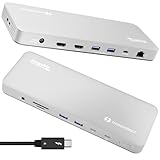
Overview: Plugable’s TBT-UDM is a Mac-optimized Thunderbolt 4 dock emphasizing plug-and-play simplicity. It features dual 4K HDMI outputs, 100W charging, and driverless operation, targeting MacBook users seeking clutter-free dual-monitor setups.
What Makes It Stand Out: True dual 4K HDMI support on all M4/M5 and Pro/Max M-series Macs (without clamshell mode) is rare. The 100W charging, SD/microSD reader, and aluminum build cater specifically to Apple workflows, while lifetime North American support adds peace of mind.
Value for Money: Competitive for Mac-centric users, as few docks offer true dual HDMI without software. The 100W charging and Mac-specific optimizations justify cost over generic docks, especially for video editors and designers.
Strengths and Weaknesses: Strengths: Driverless dual 4K HDMI; 100W charging; Mac-optimized compatibility; lifetime support. Weaknesses: Limited Thunderbolt ports (only 1 downstream); no DisplayPort; base M1/M2 Macs restricted to single display.
Bottom Line: The top pick for MacBook users needing effortless dual HDMI monitors. Highly recommended for M4/M5 or Pro/Max Mac owners, but less versatile for multi-OS setups.
10. CalDigit TS4, 18-in-1 Thunderbolt 4 Docking Station, 98W Charging, 3* TBT4 (40Gb/s), 3* USB-C + 5* USB-A (10Gb/s), 2.5GbE LAN, 18K@30Hz or 26K@60Hz Displays, Mac/Windows/Chrome, 0.8m Certified Cable

Overview: CalDigit’s TS4 is a powerhouse docking station with 18 ports, targeting users demanding extreme connectivity. It supports dual 6K displays on compatible Macs, 98W charging, and universal OS compatibility, including Chromebooks and iPads.
What Makes It Stand Out: Unmatched port count (including 3x Thunderbolt 4 and 8x USB ports), dual 6K@60Hz display support for M1 Pro/Max/Ultra Macs, and 2.5GbE Ethernet set it apart. The aluminum chassis and 0.8m certified cable enhance durability and convenience.
Value for Money: Premium-priced but justifiable for power users needing maximum ports and dual 6K. Cheaper docks lack its scalability, making it cost-effective for studios or IT deployments requiring future-proofing.
Strengths and Weaknesses: Strengths: 18-port versatility; dual 6K@60Hz on Pro Macs; 98W charging; universal OS/device support. Weaknesses: M1/M2/M3 non-Pro Macs limited to single display; complex setup for non-tech users; bulky form factor.
Bottom Line: The ultimate dock for professionals needing maximum expandability. Ideal for Mac Studio or high-end Windows setups, but overkill for basic use. Highly recommended for demanding workflows.
Understanding Thunderbolt Technology for Professional Use
Decoding Thunderbolt Generations: 3, 4, and Beyond
Understanding the differences between Thunderbolt 3 and Thunderbolt 4 is crucial. While both use the same USB-C connector and offer 40Gbps peak speeds, Thunderbolt 4 mandates stricter performance requirements. This includes support for two 4K displays (or one 8K display), PCIe data transfer speeds of at least 32Gbps, and mandatory wake-from-sleep support. Newer docks adhering to the latest specifications often provide enhanced video routing capabilities and improved compatibility with a wider range of laptops, especially important for enterprise environments where consistency is key. Don’t assume backward compatibility solves everything; subtle differences in implementation can cause unexpected issues.
The Critical Role of Power Delivery (PD) Capacity
Power delivery isn’t just about charging your laptop; it’s about sustaining your entire workstation. Docks offering 60W, 85W, or even 100W+ PD are essential for powering modern high-performance laptops, especially during intensive tasks. Crucially, consider the total power budget. If your dock only supplies 85W total and your laptop requires 80W to charge under load, you’ll have minimal power left for connected peripherals like external drives or high-brightness monitors. Professionals running demanding setups need docks with robust total power budgets (often 100W+) to ensure every component receives adequate power without throttling performance.
Why Bandwidth Allocation Matters More Than Peak Speed
That headline 40Gbps figure represents the total bidirectional bandwidth shared among all connected devices and displays. Video output consumes significant bandwidth—far more than simple data transfer. Driving two high-resolution monitors at 60Hz can easily use 30-35Gbps, leaving only a fraction for data transfers to external storage or network connections. Professionals working with large files must carefully calculate their maximum simultaneous bandwidth needs. A dock promising “40Gbps” might feel sluggish if its internal controller inefficiently allocates bandwidth between video streams and data ports during peak usage.
Essential Features for Demanding Professional Workflows
Video Output Capabilities: Beyond Simple Resolution
Resolution is just the starting point. Professionals need docks that reliably support high refresh rates (120Hz, 144Hz) for smoother motion in design or video work, and high dynamic range (HDR) for accurate color grading. Equally important is the number of independent displays supported simultaneously—does the dock handle your dual 5K setup, or only one high-res monitor plus a secondary? Verify support for specific display interfaces (DisplayPort 1.4a/2.0, HDMI 2.0/2.1) and adaptive sync technologies (FreeSync, G-Sync) if critical for your visual workflow, as not all docks implement these features consistently.
Data Transfer Ports: Matching Your Peripheral Ecosystem
The mix of ports dictates your peripheral compatibility. While Thunderbolt itself is versatile, dedicated high-speed USB ports (USB 3.2 Gen 2x2 offering 20Gbps) are often essential for connecting legacy devices like card readers or specific external drives that don’t leverage Thunderbolt speeds. Consider the number and placement of standard USB-A ports for mice, keyboards, or dongles. Professionals managing complex setups often require multiple Ethernet ports for network segmentation, or specialized ports like SD card readers for photographers and videographers. Ensure the dock provides the right types and sufficient quantity of ports for your daily toolkit.
Network Connectivity: Wired Reliability for Critical Tasks
Built-in Gigabit Ethernet is practically non-negotiable for professionals handling large file transfers, video conferencing, or accessing networked storage. Wireless networks introduce latency and instability that can derail critical deadlines. For future-proofing or extremely high-bandwidth network needs (like accessing 10GbE NAS devices), docks featuring 2.5GbE or even 10GbE ports are worth investigating, though ensure your network infrastructure supports these speeds. Don’t overlook the physical placement of the Ethernet port—rear-mounted ports can be awkward on cluttered desks.
Navigating Compatibility and Reliability Concerns
Operating System and Hardware Ecosystem Compatibility
Thunderbolt docks aren’t universally plug-and-play. Deep integration with your specific operating system (macOS, Windows, Linux distributions) is vital. Some docks require specific firmware updates or drivers to function correctly with certain laptop brands or OS versions, particularly for advanced features like multi-monitor arrangements or audio passthrough. Enterprise IT departments often have strict compatibility matrices; verify the dock works seamlessly within your organization’s standardized hardware and software stack before deployment to avoid costly support headaches.
The Hidden Impact of Dock Firmware and Driver Support
Firmware is the dock’s operating system, and its quality directly impacts stability and feature set. Docks with regular, easy-to-apply firmware updates from the manufacturer are significantly more reliable long-term. Poorly written or outdated firmware can cause intermittent disconnections, display flickering, or unexpected sleep/wake failures—disasters during presentations or deadlines. Prioritize manufacturers known for responsive driver and firmware support, especially those providing clear update pathways and compatibility notes for professional environments.
Build Quality and Thermal Management: Built to Endure
Professionals need docks that withstand daily use. Look for robust metal housings that dissipate heat effectively—plastic enclosures can warp or become uncomfortably hot under sustained load, potentially throttling performance. Check port durability; ports should feel solid, not loose or wobbly, especially the critical Thunderbolt connector that gets plugged/unplugged frequently. Consider the form factor: vertical stands save desk space but might be less stable; low-profile designs fit under monitors but can overheat if ventilation is poor. A dock that feels flimsy won’t inspire confidence during crucial moments.
Optimizing Your Dock for Peak Professional Performance
Strategic Cable Management and Desk Ergonomics
A dock solves connectivity but can create cable chaos. Prioritize docks with thoughtful port layouts that facilitate clean cable routing—side ports for frequently swapped devices, rear ports for permanent connections. Consider docks with integrated cable channels or mounting points for adhesive cable management clips. An ergonomic setup minimizes strain; position the dock so your laptop sits at eye level (using a stand) with peripherals neatly connected below or behind, reducing desk clutter and creating a focused, professional workspace conducive to deep work.
Leveraging Daisy-Chaining for Advanced Setups
Thunderbolt’s daisy-chaining capability allows connecting multiple Thunderbolt devices (like high-end external SSDs or additional docks) through a single port on your laptop. However, this requires careful planning. Bandwidth is shared across the chain, and not all devices support daisy-chaining reliably. A primary dock should ideally be the first device connected directly to the laptop to ensure maximum bandwidth and stability for critical peripherals like displays. Use daisy-chaining for secondary storage or expansion, but always verify compatibility and test performance under real-world load before relying on it for time-sensitive work.
Future-Proofing Your Investment
Technology evolves rapidly. Consider docks offering features that anticipate future needs: support for upcoming display standards (like higher resolutions or refresh rates), sufficient spare bandwidth headroom for new peripherals, or even emerging technologies like USB4 integration (which often incorporates Thunderbolt 3 compatibility). While you shouldn’t pay for unused features, a dock built on a robust, forward-looking platform will likely remain viable longer than the absolute cheapest option that meets only today’s bare minimum requirements.
Implementation and Troubleshooting Best Practices
Setting Up Your Dock for Flawless Operation
Start with the dock disconnected from everything. Install the latest drivers and firmware from the manufacturer’s website before connecting it to your laptop. Power the dock first using its dedicated power adapter, then connect the Thunderbolt cable to your laptop. Finally, connect peripherals one by one, testing each for functionality. This sequential approach helps isolate potential conflicts. For dual-monitor setups, configure display arrangements within your OS after all displays are detected to avoid incorrect positioning or resolution mismatches.
Diagnosing Common Connectivity and Performance Issues
When problems arise (flickering displays, slow transfers, device dropouts), systematic troubleshooting is key. First, check all physical connections and power sources. Try a different Thunderbolt cable—cheap cables often fail under high bandwidth. Restart both the dock (unplug its power for 30 seconds) and your laptop. Update dock firmware and OS drivers immediately. Test peripherals on different dock ports. If issues persist, simplify your setup: disconnect all non-essential devices and displays to identify the culprit. Persistent problems often point to insufficient power budget, bandwidth saturation, or deeper compatibility conflicts requiring manufacturer support.
Maintaining Peak Performance Over Time
Regular maintenance prevents degradation. Periodically check for and install new firmware updates. Physically clean dust from ports and vents using compressed air to prevent overheating. Avoid placing the dock in enclosed spaces or under direct sunlight. Occasionally disconnect and reconnect the primary Thunderbolt cable to ensure a solid connection. Monitor system reports (like macOS’s System Report > Thunderbolt or Windows’ Device Manager) for any warnings or unexpected disconnections, which can signal impending issues before they cause major disruptions.
Frequently Asked Questions
Can I use a Thunderbolt dock with a laptop that only has USB-C ports but not Thunderbolt?
Yes, but functionality will be severely limited. You’ll typically only get basic USB data transfer and video output (if the laptop supports DisplayPort Alt Mode), losing the high-speed data, daisy-chaining, and high-power delivery capabilities that define Thunderbolt. Check your laptop’s specific USB-C port capabilities.
How do I know if my laptop supports Thunderbolt?
Look for the Thunderbolt symbol (a lightning bolt next to the USB-C port) physically on your laptop chassis. Consult your laptop’s official specifications sheet or user manual; terms like “Thunderbolt 3” or “Thunderbolt 4” will be explicitly stated. Generic USB-C ports lack this symbol and capability.
Why does my external monitor connected via the dock flicker or disconnect randomly?
This is often caused by insufficient bandwidth allocation, incompatible display settings (refresh rate/resolution exceeding dock capability), a faulty cable, or outdated firmware/drivers. Ensure you’re using a certified Thunderbolt or high-quality DisplayPort/HDMI cable, reduce the monitor’s resolution/refresh rate temporarily to test, and update dock firmware and graphics drivers.
Can I charge my laptop and run multiple high-resolution displays simultaneously without performance loss?
Yes, but it depends entirely on the dock’s total power budget and bandwidth allocation. You need a dock with sufficient PD wattage (e.g., 100W+) and Thunderbolt bandwidth (40Gbps) specifically designed to handle the combined load. Cheaper docks often throttle display performance or charging speed when multiple devices are active.
Is daisy-chaining multiple Thunderbolt docks reliable for adding more ports?
Generally not recommended for primary displays or critical peripherals. Daisy-chaining docks adds complexity, potential bandwidth bottlenecks, and compatibility issues. It’s more reliable for adding secondary storage or non-critical devices. For extensive port needs, choose a single dock with the required ports instead.
Do Thunderbolt docks work with both Mac and Windows laptops?
Most modern Thunderbolt docks offer cross-platform compatibility, but feature support can differ. macOS and Windows may handle display arrangements, audio, or network settings differently. Always verify specific OS compatibility details and any known quirks from the manufacturer before purchasing, especially for enterprise deployments.
Why is my external SSD connected to the dock slower than expected?
Possible reasons include: using a non-Thunderbolt SSD (maxing out at USB speeds), the SSD connected through a standard USB port on the dock instead of the Thunderbolt port, bandwidth saturation from other active devices (like displays), or the SSD itself being slower than advertised. Check connection points and disable other high-bandwidth devices during transfers.
Can a Thunderbolt dock support an external GPU (eGPU) for my laptop?
Yes, Thunderbolt is the primary interface for eGPUs. However, performance will be slightly lower than a direct internal GPU connection due to the bandwidth overhead. Ensure both your dock and laptop explicitly support eGPU functionality (some docks block PCIe lanes needed for eGPUs), and check compatibility with your specific GPU model.
How important is the Thunderbolt cable included with the dock?
Extremely important. Thunderbolt requires certified, high-quality cables capable of handling 40Gbps. Cheap or damaged cables cause intermittent failures, reduced speeds, or complete disconnections. Always use the cable provided with the dock or purchase certified Thunderbolt cables from reputable brands; avoid generic USB-C cables.
What should I do if my dock stops working after a laptop OS update?
First, check the dock manufacturer’s website for updated drivers or firmware specifically addressing compatibility with the new OS version. Install any available updates. If unavailable, temporarily roll back the OS update if possible. Contact the manufacturer’s support with details of your OS version and dock model, as OS updates can sometimes break peripheral compatibility until drivers are updated.