Gaming marathons shouldn’t feel like a physical endurance test. While the pursuit of victory often dominates our focus, the toll on our hands, wrists, and forearms can silently undermine performance and enjoyment over time. Repetitive strain injuries aren’t just for office workers; the rapid, precise movements required in fast-paced shooters, intense MOBAs, or lengthy RPG sessions put gamers at significant risk. Enter the vertical mouse – a design long championed in ergonomic circles – now catching the eye of performance-focused players seeking sustainable ways to game longer and feel better. It’s not about sacrificing speed for comfort; it’s about discovering if a more natural hand position could actually enhance your control and resilience during those crucial late-night raids or competitive matches.
Forget the outdated notion that ergonomic mice are slow or clunky relics. Modern vertical designs have evolved dramatically, blending thoughtful biomechanics with the responsiveness gamers demand. The core idea is simple yet profound: rotating your hand into a more neutral “handshake” position reduces strain on tendons and nerves compared to the twisted grip of a traditional mouse. For gamers logging hundreds of hours annually, this shift isn’t just a luxury—it’s a strategic investment in longevity. Could this seemingly small adjustment be the key to unlocking smoother aim, faster reaction times during fatigue, and the ability to play without that nagging wrist ache? Let’s explore what truly matters when bridging the gap between ergonomic science and high-stakes gaming.
Top 10 Vertical Mice for Gamers
Detailed Product Reviews
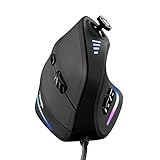
1. TRELC Gaming Mouse with 5 D Rocker, Ergonomic Mouse with 10000 DPI/11 Programmable Buttons, Vertical Gaming Mice Wired for PC/Laptop/E-Sports/Gamer (Black)
Overview:
This wired vertical gaming mouse prioritizes ergonomic design to combat wrist strain and carpal tunnel syndrome, featuring a natural handshake grip. Targeted at gamers seeking comfort during long sessions, it integrates gaming-specific enhancements like high DPI and programmable controls without wireless complexity.
What Makes It Stand Out:
Its 5-directional thumb rocker replaces five traditional keys, enabling intuitive “front, rear, left, right, down” inputs for FPS/MOBA games. The 10,000 DPI range (adjustable in 5 stages) via the PMW3325 sensor ensures precise tracking, while 11 programmable buttons and onboard memory let users save custom macros. RGB lighting with five effects adds aesthetic flair without compromising the ergonomic focus.
Value for Money:
Priced competitively for a wired gaming mouse, it offers exceptional value for ergonomics-focused gamers. The inclusion of high-end specs like the PMW3325 chip and extensive customization undercuts premium wireless models, making it ideal for budget-conscious users prioritizing wrist health over mobility.
Strengths and Weaknesses:
Strengths: Excellent wrist strain reduction; responsive 5D rocker; reliable wired connection; customizable macros with onboard storage; vibrant RGB.
Weaknesses: Wired design limits desk flexibility; max 10,000 DPI lags behind newer models; no Bluetooth/wireless option; basic software interface.
Bottom Line:
A top-tier wired choice for gamers with wrist pain, balancing ergonomic relief and solid gaming performance at an accessible price—skip if wireless freedom is essential.
2. Attoe Gaming Mouse with 5 D Rocker, Wireless Vertical Mouse with [24000 DPI] [12 Programmable Buttons], Computer Mouse for Gamer/PC/E-Sports/Laptop (Black)
![Attoe Gaming Mouse with 5 D Rocker, Wireless Vertical Mouse with [24000 DPI] [12 Programmable Buttons], Computer Mouse for Gamer/PC/E-Sports/Laptop (Black)](https://m.media-amazon.com/images/I/41XVdqDE3aL._SL160_.jpg)
Overview:
This premium wireless vertical mouse merges ergonomic wrist relief with tri-mode connectivity (Bluetooth 5.0, 2.4GHz, USB-C wired). Designed for right-handed users, it targets gamers and professionals needing pain reduction during extended use, featuring industry-leading specs like 24,000 DPI and 12 programmable buttons.
What Makes It Stand Out:
The standout tri-mode connectivity enables seamless switching between devices up to 33 feet away, while the 24,000 DPI sensor (via PMW3325) offers elite precision. Twelve programmable buttons and a 5D rocker provide unmatched control customization, and dual-color indicators simplify multi-device management—rare in ergonomic mice.
Value for Money:
Justifies its higher price with versatile connectivity and top-tier performance. Compared to single-mode competitors, the ability to pair with laptops, tablets, and PCs via Bluetooth/wireless adds significant utility, making it cost-effective for multi-device users despite the premium tag.
Strengths and Weaknesses:
Strengths: Tri-mode flexibility; class-leading 24,000 DPI; 12 programmable buttons; effective wrist strain reduction; reliable 33-foot range.
Weaknesses: Rechargeable battery requires occasional downtime; RGB lighting lacks customization depth; slightly bulky for small hands.
Bottom Line:
The best wireless ergonomic mouse for multi-device gamers seeking elite precision and wrist comfort—worth the investment for versatile, high-performance use.
3. TRELC Wireless Gaming Mouse with 5 D Rocker, 24000 DPI/11 Programmable Buttons, Ergonomic Mouse for 2 Devices Connection (BT+2.4GHz), Vertical Rechargeable Mice for PC/Laptop/E-Sports/Gamer (Black)

Overview:
This rechargeable vertical mouse emphasizes multi-device productivity with dual Bluetooth/2.4GHz connectivity, supporting two devices simultaneously. It retains core gaming features like 24,000 DPI and a 5D rocker while prioritizing ergonomic wrist support for gamers and office users.
What Makes It Stand Out:
Dual-device switching is its crown jewel—effortlessly toggle between a PC and laptop without re-pairing. The 24,000 DPI PMW3325 sensor matches high-end competitors, and the 5D thumb rocker delivers game-centric control. Onboard memory for macros ensures settings transfer seamlessly across systems.
Value for Money:
Offers strong value for hybrid work-play users needing device flexibility. At a mid-range price, it undercuts single-device wireless mice with similar specs, though the 11-button count (vs. Attoe’s 12) slightly reduces customization. Ideal for those prioritizing connectivity over max button count.
Strengths and Weaknesses:
Strengths: Seamless dual-device pairing; high 24,000 DPI range; ergonomic pain relief; 5D rocker for gaming; rechargeable battery.
Weaknesses: Only 11 programmable buttons (one fewer than rivals); no wired mode for battery emergencies; basic RGB effects.
Bottom Line:
A compelling dual-device solution for ergonomic comfort and gaming performance—choose this over single-device models if juggling work and play setups.
4. RAGNOK ErgoStrike7: Next-Gen FPS Gaming Mouse with Recoil (Black) - FPS Gun Grip Mouse, Ergonomic Vertical Design, Wireless/Wired USB for PC Gamers

Overview:
This innovative vertical mouse reimagines FPS gameplay with a gun-grip design and simulated recoil feedback. Targeting competitive shooters, it combines ergonomic wrist support with tactile immersion, operating wirelessly or via USB for versatile use.
What Makes It Stand Out:
The built-in linear motor delivering realistic recoil is revolutionary, enhancing immersion in shooters. Trigger-like left-click and dedicated burst-fire/zoom buttons mimic actual firearms, while 26,000 DPI tracking ensures pixel-perfect accuracy. Customizable recoil strength via software adds unique personalization.
Value for Money:
Priced premium, it justifies cost for serious FPS enthusiasts seeking tactile innovation. While standard gaming mice lack recoil simulation, the immersive edge it provides—coupled with elite 26k DPI precision—makes it a niche but worthwhile splurge for hardcore players.
Strengths and Weaknesses:
Strengths: Unmatched recoil immersion; ergonomic gun-grip comfort; 26,000 DPI accuracy; intuitive trigger controls; app-specific profiles.
Weaknesses: Recoil feature polarizing (may distract some); limited non-FPS utility; premium pricing; battery life drains faster with recoil enabled.
Bottom Line:
A groundbreaking pick for FPS devotees craving physical feedback—avoid if you prefer traditional mice or play non-shooter genres.
5. J-Tech Digital Wired Ergonomic Vertical USB Mouse with Adjustable Sensitivity (600/1000/1600 DPI), Scroll Endurance, Removable Palm Rest & Thumb Buttons [V628]
![J-Tech Digital Wired Ergonomic Vertical USB Mouse with Adjustable Sensitivity (600/1000/1600 DPI), Scroll Endurance, Removable Palm Rest & Thumb Buttons [V628]](https://m.media-amazon.com/images/I/41Rr0XulZRL._SL160_.jpg)
Overview:
This basic wired vertical mouse focuses purely on ergonomic office use, with no gaming enhancements. It targets users seeking wrist pain relief through a natural handshake grip, featuring adjustable DPI and a removable palm rest for extended typing/computer work.
What Makes It Stand Out:
The removable palm rest caters to varying hand sizes, while durable scroll mechanics promise longevity. Thumb buttons simplify navigation, and the ultra-simple plug-and-play USB design ensures universal compatibility without software—ideal for non-tech-savvy users.
Value for Money:
An excellent budget option for ergonomic office needs under $25. It lacks gaming specs but delivers core comfort at half the price of entry-level gaming mice, making it perfect for casual users prioritizing wrist health over performance.
Strengths and Weaknesses:
Strengths: Affordable pain relief; no software/drivers needed; removable palm rest; durable scroll wheel; plug-and-play simplicity.
Weaknesses: Very low max DPI (1,600) unsuitable for gaming; no programmability; wired-only; no RGB or advanced features.
Bottom Line:
The go-to ergonomic mouse for office use on a budget—skip entirely if gaming or high-DPI precision is required.
6. TKMARS Wireless Ergonomic Vertical Gaming Mouse with Joystick, Bluetooth & 2.4G, 12 Programmable Buttons, Adjustable 24000 DPI, Rechargeable RGB Computer Mouse for PC, MacBook & Laptops

Overview: The TKMARS Vertical Gaming Mouse merges ergonomic design with high-performance gaming features. It targets gamers and productivity users seeking reduced wrist strain without sacrificing control, offering wireless versatility and extensive customization.
What Makes It Stand Out: Its standout features include a unique 5-way joystick for precise in-game navigation, dual Bluetooth 5.0/2.4G connectivity for seamless multi-device switching, and an exceptional 24,000 DPI sensor. The 12 programmable buttons, rechargeable battery, and vibrant RGB lighting cater specifically to gamers demanding precision and personalization.
Value for Money: Priced mid-to-high range, it justifies cost through pro-grade specs (24k DPI, programmability) rarely seen in ergonomic mice. While cheaper vertical mice exist, they lack gaming-tier responsiveness and flexibility, making this a strong investment for serious users.
Strengths and Weaknesses: Strengths: Exceptional DPI range, versatile connectivity, comfortable vertical grip, long battery life, and robust build. Weaknesses: Steep learning curve for joystick, RGB may drain battery faster, and the high DPI is overkill for non-gaming tasks.
Bottom Line: An outstanding choice for gamers needing ergonomic relief without compromising performance. Its feature-rich design offers exceptional versatility, though casual users may find it overly complex and expensive.
7. Nulea M504 Wired Vertical Mouse, USB Ergonomic Optical Mouse with 4 Adjustable DPI, 11 RGB Backlight Modes, Compatible for Laptop, PC, Desktop, Mac, Grey

Overview: The Nulea M504 is an affordable, plug-and-play wired vertical mouse focused on ergonomic comfort for office and light-use scenarios. Its straightforward design prioritizes accessibility and visual flair with RGB lighting.
What Makes It Stand Out: It distinguishes itself with 11 RGB backlight modes for aesthetic customization and a true plug-and-play experience—no drivers or batteries needed. The 57-degree vertical angle effectively reduces wrist strain, while the 4-step DPI adjustment (up to 3200) suits varied tasks like browsing or graphic work.
Value for Money: Exceptional value under $30. It delivers core ergonomic benefits and RGB customization at a fraction of wireless competitors’ prices. The wired design ensures reliability, though it lacks advanced features like programmability or multi-device support.
Strengths and Weaknesses: Strengths: Budget-friendly, effortless setup, comfortable grip for prolonged use, quiet operation, and vibrant RGB. Weaknesses: Non-programmable buttons, Mac incompatibility for forward/back buttons, and limited DPI range for precision tasks.
Bottom Line: A superb entry-level ergonomic mouse for budget-conscious users seeking comfort and style. Ideal for office work or casual use, but gamers or Mac power users should look elsewhere.
8. Anker 2.4G Wireless Vertical Ergonomic Optical Mouse for Work, Multi-Device Connectivity, 800/1200 /1600 DPI, 5 Buttons for Laptop, Desktop, PC - Black
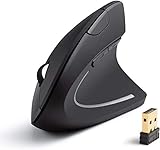
Overview: Anker’s ergo mouse is a refined, productivity-focused wireless tool designed for professionals. It emphasizes comfort, simplicity, and energy efficiency, avoiding gaming frills to master everyday office tasks.
What Makes It Stand Out: Its scientifically validated “handshake” grip minimizes strain, while automatic 8-minute power-saving mode extends battery life significantly. The inclusion of dedicated forward/back buttons and reliable 2.4G connectivity (no Bluetooth) ensures seamless web navigation and stability.
Value for Money: Priced moderately, it excels in reliability and ergonomic engineering. Though DPI maxes at 1600 (lower than rivals), it’s sufficient for office work. The 18-month warranty and Anker’s reputation justify the cost versus generic brands.
Strengths and Weaknesses: Strengths: Ultra-comfortable grip, excellent battery conservation, intuitive buttons, and Anker’s trusted build quality. Weaknesses: Batteries not included, limited DPI options, no RGB or advanced customization, and single-device pairing.
Bottom Line: A top pick for professionals prioritizing comfort and longevity over bells and whistles. Perfect for desk-bound workers, though limited specs may disappoint power users.
9. ProtoArc Ergonomic Mouse, EM11 NL Bluetooth Rechargeable Wireless Vertical Mouse, 3 Multi-Device Connectivity for Computer/PC/Laptop, 2.4GHz USB-A Optical Mice for Windows, Mac OS, Black

Overview: The ProtoArc EM11 NL is a multi-device wireless ergonomic mouse tailored for users juggling Windows, Mac, and Android systems. Its compact size and tri-device pairing suit mobile professionals needing seamless transitions.
What Makes It Stand Out: Tri-device connectivity (via Bluetooth/2.4G) is its crown jewel, allowing instant switching between three gadgets. The rechargeable battery (500mAh) and focus on small-to-medium hands (under 7.5 inches) address niche comfort needs often overlooked.
Value for Money: Reasonably priced for its multi-device prowess. While not the cheapest, the flexibility to replace multiple mice justifies cost for hybrid workers. The lack of high DPI (unspecified but modest) keeps it office-focused.
Strengths and Weaknesses: Strengths: Effortless multi-device management, portable size, USB-C charging, and ergonomic comfort for smaller hands. Weaknesses: Hand-size limitation, no DPI indicator, basic tracking for creative work, and USB-C cable for charging only (no data).
Bottom Line: An ideal companion for multi-device users with smaller hands seeking clutter-free workflow. Avoid if you have larger hands or need high-precision tracking.
10. HXMJ- Ergonomic Vertical Mouse Wired,USB Corded Optical Mice,Silent Click,Right Handed-Black

Overview: The HXMJ wired vertical mouse delivers quiet, comfortable computing for shared or noise-sensitive environments. Its no-nonsense design focuses on ergonomics and silent operation, targeting home offices and libraries.
What Makes It Stand Out: Ultra-quiet “silent click” technology is its defining trait, eliminating distracting button noise. The fixed 1600 DPI offers reliable tracking, while the compact wired design ensures zero latency and plug-and-play simplicity.
Value for Money: Highly cost-effective under $25. It solves a specific problem (noise) better than pricier wireless options, making it invaluable for parents, students, or open-plan offices. Durability is a bonus given its simple construction.
Strengths and Weaknesses: Strengths: Exceptionally quiet, lightweight comfort, no battery concerns, and affordable. Weaknesses: Wired only (limits mobility), non-adjustable DPI, no RGB or extra buttons, and right-handed only.
Bottom Line: The go-to choice for silent, ergonomic computing in shared spaces. A no-frills workhorse ideal for focused work, though gamers or left-handed users should skip it.
Understanding Vertical Mouse Mechanics for Gaming
The Science Behind the Neutral Grip
The fundamental principle of a vertical mouse lies in aligning the forearm and hand in a more anatomically neutral position. Traditional mice force the wrist into ulnar deviation (bending inward) and forearm pronation (palm-down rotation), straining muscles and compressing nerves like the ulnar nerve. A vertical orientation minimizes this pronation, keeping the hand in a handshake-like posture. This reduces tension in the forearm flexors and extensors, potentially decreasing fatigue during extended play sessions and lowering the risk of repetitive strain injuries over time. The science suggests less muscular effort is required to maintain this position, which could translate to more consistent control when your session pushes past the two-hour mark.
Debunking the Speed Myth
A persistent misconception is that vertical mice inherently sacrifice speed or precision. While there’s an undeniable adjustment period as your brain and muscles adapt to the new movement plane, modern high-performance vertical designs prioritize low latency and smooth tracking. The key factor isn’t the vertical angle itself, but the quality of the sensor, the surface it tracks on, and the user’s adaptation. Many experienced users report achieving comparable, and sometimes even improved, control after the initial learning curve, as reduced fatigue allows for steadier hand movements during critical moments. Speed is more a function of sensor technology and user comfort than the mouse’s orientation alone.
How Movement Translation Differs
Moving a vertical mouse requires a different primary muscle group emphasis compared to a traditional mouse. Instead of relying heavily on forearm pronation/supination (rotating the palm up/down), movement shifts towards using the larger shoulder and upper arm muscles for broader motions, with the wrist acting more as a stabilizer. This can feel awkward initially, especially for micro-adjustments common in sniper scopes or precise targeting. However, this shift distributes the workload away from the smaller, more easily fatigued muscles of the wrist and hand, potentially leading to greater endurance. Understanding this biomechanical shift is crucial for setting realistic expectations during the adaptation phase.
Critical Gaming Performance Factors to Evaluate
Sensor Precision and Polling Rate Requirements
Gaming demands absolute reliability from the tracking sensor. Look for mice featuring high-DPI optical or laser sensors (typically 16,000 DPI or higher) with exceptional surface compatibility and minimal acceleration or smoothing. A high polling rate (1000Hz or 2000Hz+) is non-negotiable for competitive play, ensuring minimal input lag between physical movement and on-screen cursor response. Don’t assume a vertical mouse inherently has inferior sensors; many modern models incorporate the same high-end gaming-grade sensors found in top-tier horizontal mice. Verify specifications for lift-off distance (how high you can lift the mouse before tracking stops) and adjustability, as these impact consistency during quick flicks.
Button Layout and Programmability for Game Genres
The placement and number of programmable side buttons are paramount. Gamers need intuitive access without awkward finger contortions. Consider how the thumb rest area is designed – does it offer enough space for multiple, easily distinguishable buttons? For MOBA/MMO players, having sufficient, well-placed thumb buttons for spell rotations or item use is critical. FPS players might prioritize fewer buttons but require flawless primary click performance. Evaluate the switch quality (actuation force, travel distance, click sound) for the main left/right buttons, as these endure the most wear. Ensure software allows deep customization of macros, DPI stages, and button mapping tailored to your specific game genres.
Weight, Balance, and Grip Style Compatibility
Weight significantly impacts control and fatigue. Some gamers prefer a heavier mouse for stability during precise aiming, while others favor ultra-light designs for rapid flicks. Vertical mice come in various weights; determine if you need adjustable weights or a fixed, optimized balance point. Crucially, assess how the weight distribution feels in the vertical grip. Does it feel nose-heavy, tail-heavy, or balanced under your palm? Your natural grip style (palm, claw, fingertip) must align with the mouse’s contours. A vertical mouse designed for palm grip might feel unwieldy if you primarily use a fingertip claw grip. Physical comfort in the intended grip position is foundational for performance.
Ergonomic Benefits Beyond Just Comfort
Reducing Ulnar Deviation and Pronation Stress
The most significant ergonomic advantage is the dramatic reduction in forearm pronation and wrist ulnar deviation. Holding a traditional mouse twists the forearm bones (radius and ulna), compressing tendons and nerves running through the wrist. The vertical handshake position aligns the bones more naturally, significantly decreasing this internal rotation stress. This directly targets common gamer ailments like tendonitis (tennis/golfer’s elbow) and carpal tunnel syndrome by alleviating pressure on the median nerve. Less strain during each session means faster recovery and a lower cumulative injury risk over your gaming career.
Alleviating Forearm Muscle Fatigue
Maintaining the pronated grip of a standard mouse requires constant, subtle contraction of forearm muscles to stabilize the wrist and hand. Over hours, this low-level tension leads to deep muscle fatigue, often manifesting as a dull ache or tightness. The neutral position of a vertical mouse allows these muscles to relax significantly, as the hand and arm rest in a more gravity-supported alignment. This reduction in sustained muscular effort is where many gamers notice the most immediate benefit – the ability to game intensely for longer periods before feeling that familiar forearm burn that degrades fine motor control.
Long-Term Joint Health Preservation
Repetitive stress injuries develop silently over months or years. The cumulative effect of unnatural wrist and forearm positioning during countless gaming hours accelerates wear and tear on joints, tendons, and ligaments. By adopting a more neutral posture from the start, vertical mice help distribute forces more evenly across the upper limb. This proactive approach isn’t just about feeling better today; it’s a strategic move to preserve joint health and maintain your ability to game competitively and enjoyably for decades to come. Think of it as preventative maintenance for your most valuable gaming asset – your body.
Navigating the Adaptation Period Successfully
Typical Adjustment Timeline and Expectations
Expect a learning curve. For most gamers, the initial 1-2 weeks involve conscious effort, potential frustration with accuracy, and muscle soreness in different areas (as new muscles engage). Significant adaptation usually occurs within 3-4 weeks of consistent daily use. Don’t switch back at the first sign of difficulty; push through the discomfort phase. Performance might dip temporarily, but patience is rewarded. Track your progress – you’ll likely notice smoother movement and less fatigue creeping in gradually. Remember, your brain is rewiring motor pathways; this takes time but becomes second nature.
Practical Drills to Accelerate Proficiency
Don’t just jump into ranked matches. Start with low-stakes activities: browse the web, edit documents, or play slower-paced single-player games. Focus on smooth arm movements rather than wrist flicks. Practice specific drills: trace circles or figure-eights slowly on your desk, aiming for consistency. Gradually incorporate into your main games during casual modes or training ranges. Dedicate 15-20 minutes daily to pure movement practice. Use lower DPI settings initially to encourage broader arm movements, which are often more natural in the vertical orientation. Consistent, deliberate practice is key to neuroplasticity.
When Discomfort Might Signal a Poor Fit
Some initial adjustment soreness is normal, but sharp pain, numbness, or tingling is a red flag. This could indicate the specific mouse model’s angle, size, or button placement isn’t suited to your hand anatomy. Pay attention to pressure points on your palm or thumb. If discomfort persists beyond the typical adaptation window (4-6 weeks) despite correct usage, the ergonomics might be fundamentally mismatched for your physiology. Don’t endure pain – explore different vertical designs (some have steeper angles than others) or consider if a different ergonomic solution (like a tented keyboard paired with a standard mouse) might be better. Comfort should be sustainable, not a constant struggle.
Making the Right Choice for Your Setup
Assessing Hand Size and Mouse Dimensions
Vertical mice aren’t one-size-fits-all. Measure your hand length (from wrist crease to tip of middle finger) and width (across widest part of palm). Compare these to manufacturer specifications for palm length, width, and height. A mouse too small forces finger strain; one too large prevents a natural grip and proper reach to buttons. Pay close attention to the depth of the thumb rest and the curvature of the main body. If possible, consult detailed size charts or user reviews mentioning hand size compatibility. Your hand should rest fully supported without cramping or overextension.
Wired vs. Wireless: Latency and Reliability Concerns
While wireless technology has improved dramatically, competitive gamers often prioritize wired connections for absolute zero-latency assurance and no battery anxiety during critical sessions. However, modern high-end wireless gaming mice using 2.4GHz dongles (not Bluetooth) offer latency indistinguishable from wired for most users, with excellent battery life. If choosing wireless, prioritize models with fast charging and robust dongle connectivity. Ensure the mouse has a physical power switch. For casual or non-competitive gaming, wireless freedom can significantly enhance desk aesthetics and reduce cable drag, a genuine ergonomic plus.
Software Ecosystem and Customization Depth
Don’t overlook the companion software. Robust, stable software is essential for maximizing a gaming mouse’s potential. Evaluate the interface – is it intuitive or cluttered? Check if it allows granular control over DPI stages (steps, ranges, sensitivity acceleration curves), polling rate adjustment, extensive button remapping (including modifier keys), macro creation with adjustable timing, and profile switching. Reliable on-board memory to save settings is crucial if using the mouse across multiple systems. Poor software can severely undermine even the best hardware, turning customization into frustration.
Frequently Asked Questions
Frequently Asked Questions
Can vertical mice really keep up with competitive gaming demands?
Yes, modern high-performance vertical mice feature gaming-grade sensors with ultra-low latency, high polling rates, and customizable DPI settings that meet or exceed competitive requirements. The limiting factor is typically the user’s adaptation period, not the hardware’s inherent capability.
How long does it usually take to get used to a vertical mouse for gaming?
Most gamers experience a noticeable improvement within 1-2 weeks of consistent daily use, with full adaptation typically taking 3-4 weeks. Initial discomfort or reduced accuracy is normal but usually subsides as your muscles and neural pathways adjust to the new movement pattern.
Will using a vertical mouse improve my aim instantly?
Not instantly. There’s an adaptation period where your aim might temporarily feel less precise. However, once adapted, many users report more consistent aim over long sessions due to reduced fatigue, potentially leading to better sustained performance, though raw twitch speed might take dedicated practice to match previous levels.
Are vertical mice suitable for all game genres like FPS, MOBA, and MMO?
They can be suitable across genres, but button layout is critical. MOBA/MMO players need ample, well-placed thumb buttons, while FPS players prioritize flawless primary click performance and sensor accuracy. Evaluate the specific button configuration against your primary game’s demands.
Do vertical mice cause shoulder or arm strain instead of wrist strain?
Initially, you might feel unfamiliar muscle engagement in the shoulder or upper arm as you adapt to using larger muscle groups for movement. This is usually temporary. Proper technique emphasizes using the whole arm smoothly, which, once mastered, should reduce overall strain compared to the concentrated wrist/forearm effort of a traditional mouse.
Can I use a vertical mouse if I have a pre-existing wrist injury?
Often, yes, and it’s frequently recommended by ergonomics specialists for conditions like carpal tunnel or tendonitis. However, consult a physician or physical therapist first. The neutral position reduces stress on vulnerable areas, but individual conditions vary, and professional guidance is essential.
Is there a specific hand size that works best with vertical mice?
Vertical mice come in various sizes. Smaller hands might prefer compact models with a less steep angle, while larger hands often benefit from fuller-sized mice offering more palm support. Hand size (length and width) is a crucial factor – measure your hand and compare specs carefully before purchasing.
How do I clean and maintain a vertical mouse effectively?
Turn it off and unplug it. Use compressed air to blow debris from crevices and around buttons. Wipe the surface with a microfiber cloth slightly dampened with isopropyl alcohol (70%+). Avoid excessive moisture. Clean the sensor lens gently with a dry cotton swab. Check for firmware updates via the manufacturer’s software periodically.
Will a vertical mouse work well on a glass desk?
Most optical sensors struggle on clear glass. Look for a mouse specifically advertised with “glass tracking” capability, which usually employs a laser sensor or advanced optical tech. Standard optical sensors on vertical mice will typically not track reliably on untreated glass surfaces; a mousepad remains essential for consistent performance.
Can I switch between a vertical mouse and a traditional mouse?
Yes, but frequent switching can hinder the adaptation process to the vertical mouse and potentially cause confusion or inconsistent muscle memory. For optimal ergonomic benefits and performance gains, dedicated use of the vertical mouse is recommended once you’ve committed to the switch.