Staring at the screen for hours, fingers dancing across keys to craft the perfect script, edit a video timeline, or respond to a flood of comments—it’s the daily reality for today’s content creators. But what if the very tool enabling your creativity is secretly sabotaging your productivity and well-being? A subpar keyboard can lead to frustrating lag during live streams, uncomfortable wrist strain after marathon writing sessions, or the constant anxiety of batteries dying mid-project. For creators whose output hinges on seamless workflow and physical endurance, the keyboard isn’t just an accessory; it’s the critical interface between your brilliant ideas and the digital world. Choosing the wrong one means battling distractions instead of focusing on what truly matters: creating exceptional content.
The good news? Wireless technology has evolved far beyond the unreliable, high-latency peripherals of the past. Modern wireless keyboards offer studio-grade responsiveness, marathon battery life, and thoughtful ergonomic designs tailored to the unique demands of content production. Whether you’re scripting a podcast, editing code, or managing social media blasts, the right wireless keyboard becomes an invisible extension of your workflow—silent, dependable, and perfectly tuned to your pace. This guide cuts through the marketing noise to focus on the tangible features that genuinely impact your daily grind, helping you invest in a tool that supports your hustle without compromise. Let’s explore what truly matters when your keyboard is your most-used creative instrument.
Top 10 Wireless Keyboards for Content Creators
Detailed Product Reviews
1. Wireless Keyboard and Mouse Combo - Backlit Typewriter Keyboard with Magnetic Wrist Rest & Phone Holder, Light Up Round Keycaps, 2.4GHz Cordless Set for Mac, Windows, PC, Laptop, SABLUTE

Overview:
This SABLUTE combo merges vintage aesthetics with modern functionality, featuring a retro-inspired typewriter-style keyboard with round keycaps, a matching RGB mouse, and thoughtful workspace enhancements. Designed for Mac and Windows users seeking style without sacrificing practicality, it targets home offices and creatives wanting a personalized setup.
What Makes It Stand Out:
The unique blend of 7-color keyboard backlighting, a detachable magnetic wrist rest with soft padding, and an integrated phone holder sets it apart. The spill-resistant build and clear light-up keys enhance usability in low light, while the retro design adds character absent in generic peripherals. The magnetic wrist rest’s ease of removal and cleaning is a standout ergonomic touch.
Value for Money:
Priced competitively for its niche appeal, it offers more stylistic and functional extras (like the phone holder) than basic wireless combos. While not the cheapest option, the added convenience features justify the cost for users prioritizing workspace organization and visual flair over pure utility.
Strengths and Weaknesses:
Strengths: Stylish retro design; versatile backlighting; practical phone holder; comfortable magnetic wrist rest; plug-and-play simplicity.
Weaknesses: Typewriter keys may feel less responsive for fast typists; RGB mouse lighting is less customizable than gaming peripherals; wrist rest lacks firm support for heavy users.
Bottom Line:
Ideal for style-conscious professionals or gift-seekers wanting a functional yet distinctive desk setup, this combo excels in aesthetics and convenience but may not suit those needing ultra-precise typing or minimalism.
2. Logitech K270 Wireless Keyboard for Windows, 2.4 GHz Wireless, Full-Size, Number Pad, 8 Multimedia Keys, 2-Year Battery Life, Compatible with PC, Laptop, Black

Overview:
Logitech’s K270 is a no-nonsense, full-size wireless keyboard engineered for reliability in everyday computing. With a traditional layout, spill-proof design, and exceptional battery life, it caters to office workers, students, and anyone needing a dependable, fuss-free typing solution for Windows systems.
What Makes It Stand Out:
Its standout feature is the industry-leading 24-month battery life, eliminating frequent replacements. The spill-resistant construction, deep-profile keys for tactile feedback, and dedicated multimedia keys enhance durability and efficiency. The plug-and-play USB receiver ensures universal compatibility with minimal setup.
Value for Money:
As a budget-friendly workhorse, it delivers unmatched longevity and resilience at its price point. While lacking backlighting or modern flair, its 2-year battery and spill-proofing offer tangible savings over cheaper alternatives that degrade faster or require frequent charging.
Strengths and Weaknesses:
Strengths: Exceptional 2-year battery life; spill-resistant durability; comfortable deep-profile keys; reliable 33ft wireless range; quiet operation.
Weaknesses: No backlighting (limits low-light use); purely functional design lacks aesthetic appeal; multimedia keys are basic; not Mac-optimized.
Bottom Line:
A top recommendation for users prioritizing reliability, battery life, and traditional typing comfort over aesthetics or advanced features—perfect for offices, classrooms, or secondary home workstations.
3. Arteck 2.4G Wireless Keyboard Stainless Steel Ultra Slim Full Size Keyboard with Numeric Keypad for Computer/Desktop/PC/Laptop/Surface/Smart TV and Windows 10/8/ 7 Built in Rechargeable Battery
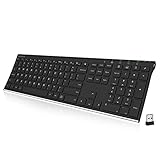
Overview:
Arteck’s stainless steel keyboard combines minimalist elegance with full functionality, featuring an ultra-slim profile, rechargeable battery, and robust metal build. It targets users seeking a premium, space-saving yet complete typing experience for desks, laptops, or even smart TVs across Windows ecosystems.
What Makes It Stand Out:
The stainless steel chassis provides surprising heft and durability in an ultra-thin (0.6-inch) frame, while the 6-month rechargeable battery life outperforms most competitors. Its full-size layout—including arrow keys and a numeric pad—defies expectations for slim designs, and USB-C charging future-proofs connectivity.
Value for Money:
It justifies its mid-range price with premium materials and exceptional battery longevity. Though pricier than basic plastic keyboards, the metal build and lack of disposable batteries offer long-term savings and a luxurious feel rarely found in this category.
Strengths and Weaknesses:
Strengths: Sturdy stainless steel construction; impressive 6-month battery life; ultra-slim yet full-size layout; USB-C charging; quiet, comfortable typing.
Weaknesses: No backlighting; limited to Windows (no Mac media key optimization); minimal key travel may disappoint tactile typists; no included wrist rest.
Bottom Line:
An excellent choice for professionals wanting a sleek, durable, and low-maintenance keyboard with full functionality—best for bright environments where backlighting isn’t essential.
4. Vumilstek Backlit Wireless Keyboard and Mouse, 2.4GHz Light Up Typewriter Rechargeable Cordless Quiet Keyboard with USB Receiver for PC/Laptop(Dark Green)
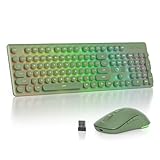
Overview:
Vumilstek’s dark green combo merges retro typewriter aesthetics with modern rechargeable tech, featuring a quiet, spill-resistant keyboard and silent mouse. Aimed at users wanting ambiance and practicality, it delivers vibrant lighting, long battery life, and a distinctive color option for home offices or creative spaces.
What Makes It Stand Out:
The unique dark green finish and 7 single-color + RGB rainbow backlighting create standout visual appeal. A massive 1500mAh keyboard battery (750hrs runtime) and quiet, spill-proof keys with raised typewriter styling prioritize both comfort and longevity. The silent mouse complements the noise-free typing experience.
Value for Money:
Competitively priced for its rechargeable battery capacity and aesthetic uniqueness, it outperforms similarly priced combos in runtime and style. The inclusion of USB-C charging and robust spill resistance adds tangible value for daily drivers seeking reliability and personality.
Strengths and Weaknesses:
Strengths: Exceptional 750hr keyboard battery life; truly quiet operation; vibrant customizable backlighting; spill-resistant build; distinctive dark green color.
Weaknesses: Typewriter keys may feel shallow for some; RGB modes lack granular control; wrist rest not included; dark color shows fingerprints easily.
Bottom Line:
Highly recommended for users wanting a stylish, whisper-quiet, and long-lasting wireless combo with standout visual flair—ideal for shared workspaces or gamers needing subtlety.
5. Large Print Backlit Wireless Keyboard – Silent Keyboards with Wrist Rest, 7-Color Light up, Quiet Low Profile Keys, 2.4G Wireless Rechargeable Full Size Keypad for Computer Laptop Windows, Black
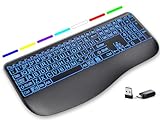
Overview:
This specialized keyboard focuses on accessibility, featuring oversized high-contrast keys, 7-color backlighting, and a stain-resistant wrist rest. Designed for seniors, visually impaired users, or anyone needing clearer key identification, it prioritizes readability and comfort over gaming or speed.
What Makes It Stand Out:
The large-print keys (with smart backlight memory) and 95% noise reduction via scissor-switch keys are its core innovations. The adjustable stand and included wrist rest enhance ergonomics, while the 3-month standby battery and Type-C charging cater to low-maintenance convenience—unique in the accessibility niche.
Value for Money:
Positioned as a premium accessibility tool, it’s worth the investment for its target audience. The wrist rest, long battery life, and reliability surpass cheaper large-print alternatives, though general users might find it over-specified without the included mouse.
Strengths and Weaknesses:
Strengths: Exceptionally clear large-print keys; near-silent typing; ergonomic wrist rest and stand; 7-color backlight with memory; 3-month standby battery.
Weaknesses: No mouse included; low-profile keys lack tactile feedback for some; limited appeal beyond accessibility needs; Windows-only optimization.
Bottom Line:
A must-consider for users requiring high-visibility keys and quiet operation—unbeatable for accessibility, though less versatile for mainstream or Mac users.
6. seenda Wireless Bluetooth Keyboard and Mouse Combo, COE202 Round Cute Keycaps, 3 Multi-Device Connection, Full Size Wireless Keyboard Compatible for PC/Laptop/Mac/MacBook/iPad/Tablet, Black

Overview:
This sleek black combo targets productivity-focused users needing seamless device switching. Featuring round keycaps and a minimalist design, it supports Windows, macOS, iOS, and Android via Bluetooth or 2.4G receiver, catering to hybrid workers and students managing multiple screens.
What Makes It Stand Out:
Its triple-device pairing (via Bluetooth/2.4G) is exceptional for multitaskers, eliminating constant re-pairing. The ergonomic fixed tilt reduces wrist strain during extended use, while ultra-quiet keystrokes and 2400 DPI mouse precision make it ideal for libraries or shared offices. The 300-day battery life (AAA/AA) ensures reliability for travelers.
Value for Money:
Priced mid-range, it outperforms basic combos with multi-device flexibility and silent operation. Though batteries aren’t included, the longevity offsets replacement costs. It’s more versatile than single-device alternatives but lacks premium build quality of high-end brands like Logitech.
Strengths and Weaknesses:
Strengths: Effortless multi-device switching; exceptional battery life; comfortable, quiet typing; broad OS compatibility. Weaknesses: No Bluetooth adapter included (limits older PCs); fixed tilt isn’t adjustable; basic plastic build feels less durable than metal alternatives.
Bottom Line:
A smart buy for students or remote workers juggling devices daily. Its quiet operation, battery life, and seamless switching justify the price, though those needing adjustable ergonomics should consider alternatives. Highly recommended for productivity in shared spaces.
7. Wireless Keyboard and Mouse Combo, Cute Retro Typewriter Keyboard with Round Keycaps, Magnetic Wrist Rest, Full-Size Aesthetic Design, 2.4GHz Wireless for Mac, Windows PC, SABLUTE CK23, Pink Gradient
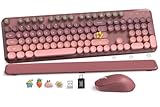
Overview:
The SABLUTE CK23 combines vintage charm with modern functionality. Its gradient pink “latte” finish and typewriter-inspired round keycaps target style-conscious users, while spill-resistant coating and magnetic wrist rest add practicality for creatives or busy professionals.
What Makes It Stand Out:
The magnetic wrist rest and dual-angle adjustment (6°/8.8°) offer personalized ergonomics rare in budget combos. Spill resistance and removable keycaps simplify maintenance—perfect for accident-prone users. The retro aesthetic doubles as mood-enhancing desk décor without sacrificing 2.4GHz reliability.
Value for Money:
Affordable for its niche appeal, justifying cost through aesthetics and thoughtful extras like the free-replacement USB receiver. It’s pricier than utilitarian models but delivers unique value for those prioritizing style and comfort over raw performance.
Strengths and Weaknesses:
Strengths: Eye-catching retro design; practical spill resistance; customizable ergonomics (wrist rest + tilt); easy keycap removal. Weaknesses: Limited to 2.4GHz (no Bluetooth); pink gradient may not suit all setups; mouse lacks DPI adjustment.
Bottom Line:
Ideal for students or content creators wanting a cheerful, functional workspace. While connectivity is less versatile than Bluetooth models, its comfort features and durability make it a standout for style-focused buyers. Recommended for aesthetics-driven setups.
8. seenda Wireless Bluetooth Keyboard and Mouse Combo, COE202 Round Cute Keycaps, 3 Multi-Device Connection, Full Size Wireless Keyboard Compatible for PC/Laptop/Mac/MacBook/iPad/Tablet, Pink
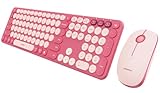
Overview:
Identical to Product 6 but in pink, this combo merges functionality with playful style. It retains all core features—multi-device switching, quiet keys, and long battery life—while appealing to users seeking a vibrant, personality-driven workspace compatible across Windows, Mac, iOS, and Android.
What Makes It Stand Out:
The pink color variant offers distinct visual appeal without compromising performance. Like its black counterpart, it excels in multi-device versatility (3 devices via Bluetooth/2.4G) and silent operation, making it perfect for collaborative environments. Round keycaps provide tactile feedback while reducing noise.
Value for Money:
Priced comparably to neutral-colored alternatives, the pink model adds aesthetic value at no extra cost. It’s a budget-friendly upgrade from basic combos, though premium brands offer better build quality. Ideal for students or remote workers wanting style without sacrificing productivity.
Strengths and Weaknesses:
Strengths: Same robust multi-device support as Product 6; vibrant color option; ergonomic comfort; 300-day battery life. Weaknesses: No Bluetooth adapter included; fixed tilt limits customization; plastic construction feels less premium.
Bottom Line:
A functional and fun choice for style-oriented multitaskers. While identical in specs to Product 6, the pink finish makes it ideal for those prioritizing desk aesthetics. Best for casual users needing reliable, quiet performance across devices—highly recommended for dorms or home offices.
9. Logitech K780 Multi-Device Wireless Keyboard for Computer, Phone and Tablet – Flow Cross-Computer Control Compatible - Speckles, White
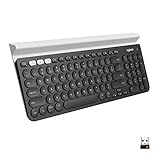
Overview:
Logitech’s K780 is a premium multi-device keyboard designed for cross-platform professionals. Its standout feature is integrated smartphone/tablet stands and “Flow” compatibility (with Logitech software), enabling seamless typing across three devices via Bluetooth or USB.
What Makes It Stand Out:
The built-in cradle for phones/tablets is revolutionary for reference-based workflows, while Flow technology allows cursor/text transfer between computers—unmatched by competitors. Quiet keys, a full number pad, and cross-OS support (Windows, Mac, ChromeOS, iOS, Android) cater to power users.
Value for Money:
Higher-priced than most combos, but justified by Logitech’s reliability, Flow integration, and ergonomic design. Cheaper alternatives lack its cross-device fluidity, making it a worthwhile investment for multi-OS professionals despite no included mouse.
Strengths and Weaknesses:
Strengths: Best-in-class multi-device switching; integrated device stand; Flow compatibility; comfortable full-size layout. Weaknesses: Sold as keyboard-only (mouse not included); bulky design; Flow requires paid Logi Options+ subscription.
Bottom Line:
Essential for professionals constantly switching between devices. Its innovative stand and Flow capabilities redefine productivity, though the price and keyboard-only package may deter casual users. Top recommendation for serious multi-device workflows.
Understanding Your Content Creation Workflow
Identifying Your Primary Content Tasks
Your specific creative activities dictate your keyboard needs. Podcasters prioritizing scriptwriting need exceptional tactile feedback for long typing sessions, while video editors might value programmable shortcut keys for timeline navigation. Social media managers juggling multiple platforms benefit from seamless multi-device switching, whereas developers require precise key actuation for coding marathons. Honestly assess whether your work involves heavy writing, frequent app switching, media control, or a mix—this clarity prevents overspending on irrelevant features and ensures your keyboard actively enhances, not hinders, your core process.
Evaluating Your Workspace Environment
Content creation happens everywhere: cramped coffee shops, dedicated home studios, or bustling co-working spaces. Consider ambient noise levels—mechanical switches might disrupt podcast recordings but thrive in isolated offices. Assess your desk space; compact layouts save room for drawing tablets or secondary monitors, while full-sized keyboards with numeric pads aid spreadsheet-heavy tasks. Also, factor in lighting conditions; backlit keys are essential for dimly lit filming setups or late-night editing sessions but add cost and complexity if unused.
Assessing Mobility Requirements
The line between studio and on-the-go work is blurred for modern creators. If you frequently record location-based content, attend collaborations, or work from varied spots, ultra-portability becomes non-negotiable. Prioritize lightweight designs under 1.5 pounds and slim profiles that slip easily into laptop sleeves. Conversely, if your keyboard stays anchored to a desk, you can leverage heavier, more stable builds with premium materials like aluminum bases for a luxurious, vibration-dampened typing experience ideal for intense focus sessions.
Connectivity: Beyond Just Going Wireless
Bluetooth Versatility vs. Dedicated Dongles
Bluetooth offers universal compatibility with laptops, tablets, and even smartphones, enabling effortless switching between your primary editing rig and a note-taking device. However, dedicated RF dongles (like 2.4GHz USB-C receivers) often provide lower latency and stronger signal stability—critical for real-time captioning or streaming where milliseconds matter. Consider whether seamless multi-device pairing (Bluetooth’s strength) or absolute reliability during high-stakes tasks (dongle advantage) aligns better with your non-negotiables.
Multi-Device Pairing Capabilities
Juggling a MacBook for editing, an iPad for sketching, and an Android phone for client comms? Advanced keyboards support pairing with 3+ devices simultaneously, letting you toggle between them with a single button press. This eliminates the friction of constant re-pairing, saving precious seconds that add up during a busy workday. Ensure the pairing process is intuitive—some require holding obscure key combinations, while others offer near-instantaneous visual prompts via OLED screens or indicator lights.
Signal Stability and Range Performance
Don’t assume all wireless signals perform equally. Quality RF dongles often maintain rock-solid connections up to 30 feet, even through minor obstructions, perfect for controlling presentations from across a room. Bluetooth range varies significantly by version (5.0+ is ideal) and can suffer interference near Wi-Fi routers or crowded USB hubs. Test real-world stability if possible—look for reviews mentioning “zero dropouts during video calls” or “consistent performance near metal desks,” as signal hiccups during live interactions are disastrous.
The Critical Typing Experience
Switch Types: Tactile, Linear, or Scissor Mechanisms
The physical feel of keypresses directly impacts endurance and accuracy. Tactile switches (like mechanical or enhanced dome) provide audible/tactile feedback at the actuation point, reducing typos during fast writing—ideal for scriptwriters. Linear switches offer smooth, quiet keystrokes preferred for audio-sensitive environments like podcast booths. Scissor-switch mechanisms (common in ultra-thins) strike a balance: quieter than mechanical, more stable than basic membranes, and excellent for rapid, fatigue-free typing during long editing sessions.
Keycap Material and Durability
Glossy plastic keycaps become slippery and shiny within months, while textured ABS wears down lettering. Premium PBT plastic keycaps resist shine, offer better grip, and maintain legends for years—essential when you’re referencing specialized shortcuts daily. Doubleshot or laser-etched legends prevent fading, crucial for creators relying on secondary function keys for media control or macros. Avoid cheap, thin keycaps that flex unnaturally; they diminish precision during intensive work.
Actuation Force and Travel Distance
How hard you need to press keys (actuation force) and how far they move (travel distance) affect speed and fatigue. Lower actuation force (45g or less) enables rapid typing with minimal finger effort, beneficial for social media managers. Deeper travel (1.5mm+) provides more control for deliberate tasks like coding. Shorter travel (1.0-1.4mm) offers faster key resets for high-WPM scenarios but can feel shallow. Match this to your natural typing style—test if possible, as preferences are deeply personal.
Ergonomic Design for Long-Hour Comfort
Layout Variations: Full-Size, TKL, or Compact
Full-size keyboards (with numeric pad) suit data-heavy creators like analysts but consume valuable desk real estate. Tenkeyless (TKL) models remove the numpad, bringing the mouse closer to reduce shoulder strain—a smart choice for video editors constantly switching between keyboard and mouse. Compact 60-75% layouts maximize portability but sacrifice function rows and navigation keys; only choose these if you deeply know your shortcuts or use macros to compensate. Prioritize layout based on your most frequent physical movements.
Built-in Wrist Rests vs. External Solutions
Integrated palm rests offer immediate comfort but are often non-adjustable and made of hard plastic that can cause pressure points. Detachable or magnetic rests provide flexibility—you can remove them for travel or adjust positioning. Many ergonomic enthusiasts prefer separate gel or memory foam wrist pads, allowing customization of height and angle. Crucially, ensure the keyboard’s natural slope (or lack thereof) aligns with a neutral wrist position; adjustable feet are non-negotiable for fine-tuning this alignment.
Vertical Angles and Tenting Options
Some ergonomic keyboards feature split designs or tenting (a V-shape) to align keys with your natural forearm rotation, reducing ulnar deviation (wrist bending inward). While extreme splits suit those with chronic strain, subtle tenting (5-15 degrees) benefits many creators during extended sessions. Consider whether fixed or adjustable tenting meets your needs—adjustability is ideal but adds complexity. Remember: comfort is highly individual; what prevents pain for one creator may cause discomfort for another.
Power Management Essentials
Battery Life Realities vs. Marketing Claims
Manufacturers often quote “up to 3 years” under ideal conditions (e.g., no backlighting, minimal use). Realistically, expect 3-6 months with moderate backlighting for most quality models. Creators using backlights nightly or macro-heavy setups should target 6+ month minimums to avoid weekly charging anxiety. Prioritize keyboards with clear battery indicators (percentage displays beat vague LED bars) and check independent reviews for verified longevity data—your workflow shouldn’t halt because your keyboard died during a deadline crunch.
Recharging Methods: USB-C Dominance
Gone are the days of proprietary cables or AA batteries. USB-C charging is the standard for modern keyboards, offering universal compatibility with laptop chargers and power banks—a lifesaver when traveling. Confirm whether charging works while using the keyboard (pass-through charging); some cheaper models disable input during recharging, which is unacceptable during time-sensitive tasks. Wireless charging compatibility is a rare bonus but shouldn’t be a primary decision factor yet.
Power-Saving Technologies
Smart keyboards employ aggressive sleep modes after 5-10 minutes of inactivity to conserve juice. However, overly sensitive sleep timers cause frustrating wake-up delays. Look for models allowing adjustment of sleep duration or featuring instant wake-on-keypress. Some use dual-mode connectivity (e.g., Bluetooth + RF), letting you disable one protocol to extend battery life further. These subtle optimizations matter immensely when you’re hopping between tools and need immediate responsiveness.
Value-Added Features for Creators
Programmable Keys and Macro Support
Custom macros transform complex sequences (like inserting copyright notices, switching video resolutions, or launching editing software) into single keystrokes. Dedicated macro keys or layers accessible via a modifier key save countless repetitive actions. Ensure the programming software is intuitive—cloud-based or on-device configuration beats clunky desktop apps. For creators, this isn’t a luxury; it’s a force multiplier for efficiency, especially when managing multi-step publishing workflows.
Integrated Media Controls
Physical dials, dedicated mute buttons, or easily accessible volume sliders are invaluable during recordings, streams, or video calls. Soft-touch media keys prevent accidental skips mid-podcast. Backlit media controls help in dark studios. Avoid keyboards burying these functions under Fn-layer combinations—they should be instantly reachable without breaking your workflow flow, especially when your eyes are on a timeline or script.
Backlighting Customization
Per-key RGB lighting isn’t just for gamers; creators use it to highlight critical shortcut zones (e.g., blue for editing keys, red for recording controls). Uniform white backlighting with adjustable brightness is sufficient for most, preventing eye strain in low light. Crucially, ensure backlighting doesn’t drain the battery excessively—look for auto-off timers or motion-activated wake. Avoid overly flashy effects that distract during focused work; functionality trumps spectacle.
Making the Investment Decision
Total Cost of Ownership Perspective
A $100 keyboard lasting five years costs less per month than a $40 model replaced annually. Factor in durability (PBT keycaps, metal plates), repairability (replaceable feet, switch compatibility), and warranty length (2+ years is ideal). Cheap keyboards often develop key chatter or unstable connections within months—downtime costs far more than the initial savings. For creators, reliability is revenue protection.
Future-Proofing Your Purchase
Prioritize USB-C ports and Bluetooth 5.0+ for compatibility with emerging devices over the next 3-5 years. Consider expandability: some keyboards support daisy-chaining peripherals via integrated USB hubs. Avoid niche wireless protocols (beyond standard Bluetooth/RF) that could become obsolete. Also, assess community support—if a keyboard has active user forums sharing custom keymaps, it likely has longevity beyond the manufacturer’s support cycle.
Trial Periods and Return Policies
Since typing feel is subjective, leverage retailers offering 30+ day return windows. Test the keyboard under real workload conditions: write a script, edit a short video, and check social DMs. Pay attention to subtle issues like key wobble, inconsistent actuation, or wake-from-sleep delays that reviews might miss. A generous return policy reduces risk, letting you confidently choose based on actual experience, not just specs.
Frequently Asked Questions
Can wireless keyboards cause lag during live streaming or recording?
High-quality wireless keyboards using modern RF dongles or Bluetooth 5.0+ offer latency comparable to wired models (1-5ms), imperceptible during typing or standard streaming. Lag typically stems from outdated Bluetooth versions, weak batteries, or signal interference—choose reputable models designed for professional use to avoid this issue.
How often do I need to charge a wireless keyboard?
With moderate backlighting usage, expect 3-6 months between charges on quality models. Heavy backlight use or frequent macro execution may reduce this to 1-2 months. Always check verified user reviews for real-world battery performance, as manufacturer claims are often optimistic.
Are mechanical switches too loud for podcasting?
Traditional mechanical switches can be audible, but many creator-focused wireless models offer silent mechanical variants or low-profile scissor switches with dampeners. For quiet environments, prioritize keyboards explicitly marketed as “silent” or “low-noise,” often featuring rubber dampeners and reduced key travel.
Do I need a numeric keypad for content creation?
Only if you frequently input numbers (e.g., spreadsheet management, budgeting). Most creators benefit more from a tenkeyless (TKL) layout, which centers the keyboard for better mouse ergonomics during video editing or design work. Compact layouts maximize desk space for tablets or notebooks.
Can one keyboard work seamlessly with both Mac and Windows?
Yes, most modern wireless keyboards include OS-specific shortcut keys and allow instant switching via a physical toggle. Ensure the model explicitly lists macOS compatibility, as some Windows-centric keyboards have mismatched modifier keys (Command vs. Control).
How do I prevent wrist pain during long typing sessions?
Prioritize ergonomic layouts (TKL or split designs), use an adjustable external wrist rest, maintain a neutral wrist angle (keyboard slope adjusted via feet), and take micro-breaks. Keyboards with a natural typing curve or slight tenting significantly reduce strain over time.
Are backlit keys worth the extra cost?
Absolutely for creators working in variable lighting—backlighting prevents eye strain and ensures key visibility during dark studio sessions or travel. Look for adjustable brightness levels; uniform white backlighting is often sufficient and less battery-intensive than RGB.
What’s the ideal weight for a portable creator keyboard?
Aim for 1.2-1.8 pounds for optimal portability without sacrificing stability. Ultra-light keyboards (<1lb) may feel flimsy during intense typing, while heavier models (>2lbs) become burdensome in a travel bag. Aluminum-bodied keyboards offer the best weight-to-sturdiness ratio.
Can I use wireless keyboards with tablets like the iPad Pro?
Yes, Bluetooth keyboards pair instantly with iPads and Android tablets. For professional video editing or writing apps, ensure the keyboard has a proper layout (including Escape key and arrow clusters) that integrates smoothly with tablet OS shortcuts.
How do I extend my keyboard’s battery life significantly?
Disable backlighting when unnecessary, increase sleep timer duration in settings, use wired mode if charging while working, and disconnect unused paired devices. Some models allow disabling Bluetooth when using the RF dongle—this simple switch can double battery longevity.