We’ve all been there: you’re in the middle of something important, maybe cooking dinner or working on a critical project, when suddenly—click—the lights go out in part of your home. You head to the breaker box, flip the switch back, and breathe a sigh of relief… only for it to happen again an hour later. Frequent circuit breaker trips aren’t just annoying; they’re a flashing red warning sign that your electrical system is under stress. Blaming your power strip is a common reflex, but the truth is far more nuanced—and understanding it is the first step toward a real solution that keeps your home safe and your devices powered reliably.
The frustration is completely understandable. You plug in your essentials—a lamp, your TV, a gaming console, maybe a space heater during a cold snap—and suddenly the circuit gives up. It’s tempting to think a “better” power strip is the magic fix. However, the reality is that no power strip, regardless of price or features, can prevent a circuit from tripping if you’re fundamentally exceeding what your home’s wiring can safely handle. Power strips are delivery tools, not power generators. This guide cuts through the marketing hype to focus on what actually causes frequent trips, how specific power strip features can help you manage your load more safely, and, crucially, when you absolutely need to call in a professional electrician instead of just swapping out cords. It’s about working with your home’s electrical system, not against it.
Top 10 Heavy Duty Power Strips
Detailed Product Reviews
1. CCCEI Heavy Duty Surge Protector Power Strip 20 Amp Individual Switches. 6FT 12 Gauge Extension Cord with Multiple Outlets. Kitchen, Garage, Shop, Industrial Wall Mount Electric Extender, Yellow.

Overview:
This industrial-grade power strip delivers robust 20-amp performance with four outlets, designed for high-demand environments like workshops and garages. Its 12-gauge 6-foot cord and wall-mount capability support heavy machinery and continuous operation.
What Makes It Stand Out:
Individual switches per outlet and independent 20-amp circuit breakers allow precise device control without disrupting the entire strip. The 4,800-joule surge protection exceeds typical consumer models, while the fireproof metal housing and ETL certification ensure safety during high-power use. The wide-spaced sockets accommodate bulky plugs effortlessly.
Value for Money:
Priced competitively for industrial applications, it justifies cost through durability and 20-amp capacity—rare in mainstream strips. The 12-gauge cord reduces overheating risks compared to thinner 14/16-gauge alternatives, offering long-term savings by preventing equipment damage.
Strengths and Weaknesses:
Strengths: Exceptional surge protection (4,800J); individual outlet control; rugged metal build; wall-mount versatility.
Weaknesses: Limited to four outlets; 1,875W max load restricts simultaneous high-wattage devices; outdoor use requires additional protection.
Bottom Line:
Ideal for workshops needing reliable high-amp power management; a top-tier investment for industrial safety and convenience despite modest outlet count.
2. Heavy Duty Power Strip with USB, Workshop 8 Outlet Surge Protector 2700 Joules, Industrial Metal 15Amp Power Strip, 6FT Extension Cord and Wide Spaced. Yellow
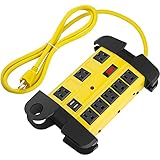
Overview:
This versatile 15-amp metal power strip features eight outlets and dual USB ports, targeting modern workshops where charging gadgets alongside tools is essential. Its 6-foot cord and wall-mount design suit garages, offices, and labs.
What Makes It Stand Out:
The inclusion of USB ports (5V/2.1A) eliminates the need for separate adapters, while three wide-spaced outlets handle oversized plugs. The 2,700-joule surge protection, fireproof coating, and cord-wrap velcro system enhance practicality and safety in cluttered spaces.
Value for Money:
Offers excellent utility for its price with eight outlets and USB support—features often sold separately. Though joules are lower than premium models, it outperforms basic plastic strips in durability and surge defense, making it cost-effective for mixed-use environments.
Strengths and Weaknesses:
Strengths: USB integration; eight outlets with wide spacing; ETL safety certification; compact cord management.
Weaknesses: 15-amp limit (vs. 20-amp competitors); 2,700J surge rating falls short for sensitive equipment; aluminum housing may dent under impact.
Bottom Line:
A smart choice for tech-heavy workshops needing USB charging and solid surge protection, though high-power users should consider higher-amp alternatives.
3. CCCEI Heavy Duty Power Strip Surge Protector with 15A, 6 Plug Industrial Shop Workshop Garden Metal Multiple Outlets, 6FT Extension Cord 1200 Joules ETL Listed, Yellow
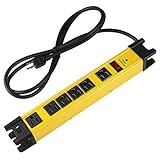
Overview:
A budget-friendly industrial strip with six outlets (four compact, two wide-spaced) and 1,200-joule surge protection. Built for garages and gardens, its 6-foot cord and ETL listing prioritize safety for everyday tool use.
What Makes It Stand Out:
The dual outlet spacing accommodates large adapters, while the cord-wrap holder and dual-mount keyholes simplify storage. Its bright yellow aluminum housing offers ruggedness at an entry-level price, and the 1-year warranty adds peace of mind.
Value for Money:
Exceptionally affordable for metal-bodied strips, it’s ideal for casual DIYers. Though surge protection is modest (1,200J), it matches cheaper plastic strips in price while delivering superior durability and ETL validation.
Strengths and Weaknesses:
Strengths: Cost-effective; versatile mounting; compact outlet design; reliable for light-duty use.
Weaknesses: Low surge rating (1,200J); no individual switches; 15-amp limit restricts heavy tools; minimal overload indicators.
Bottom Line:
Perfect for home workshops on a budget, but professionals needing robust surge defense should upgrade to higher-joule models.
4. CCCEI Heavy Duty Power Strip Surge Protector 20 AMP, 8 Outlets 12 Gauge Industrial Shop Garage Metal Multiple Outlets, 6 FT Extension Cord 5-15P Adapter High Amp 6-20R T-Slot 20a for Appliance

Overview:
Engineered for extreme demands, this 20-amp strip boasts eight outlets and a 12-gauge cord, supporting appliances like welders or compressors in industrial settings. Its T-slot outlets (6-20R) handle specialized high-amp devices.
What Makes It Stand Out:
The rare 20-amp capacity with 4,800-joule surge protection and a resettable circuit breaker sets it apart. Eight outlets include T-slot compatibility, while the 12-gauge cord prevents voltage drop during prolonged heavy loads—uncommon in 15-amp strips.
Value for Money:
Justifies its premium price with industrial-grade resilience. The 12-gauge cord and 20-amp safety features reduce fire risks compared to 14-gauge alternatives, offering long-term reliability for critical equipment.
Strengths and Weaknesses:
Strengths: High 20-amp capacity; 4,800J surge rating; versatile T-slot outlets; robust metal construction.
Weaknesses: No USB ports; 1,875W limit still applies; outdoor use requires shielding; heavier than standard strips.
Bottom Line:
The definitive choice for industrial workshops needing maximum power and safety—worth the investment for professional-grade reliability.
5. CRST 10-Outlets Heavy Duty Power Strip Metal Surge Protector with 15 Amps, 15-Foot Power Cord 2800 Joules for Garden, Kitchen, Office, School, ETL Listed(3165047) (10-Outlet, Yellow)

Overview:
This 15-amp strip excels with ten outlets and a generous 15-foot cord, ideal for sprawling workspaces like construction sites or large offices. Its extruded aluminum housing withstands harsh conditions while providing 2,800-joule surge protection.
What Makes It Stand Out:
The 15-foot cord is a major differentiator, enabling flexible placement far from outlets. Ten sockets (with hanging holes for storage) and a cord-wrap system solve clutter issues, while ETL listing ensures safety in demanding environments.
Value for Money:
Offers unmatched cord length and outlet density at a mid-range price. Though limited to 15 amps, it outperforms shorter-cord competitors for distributed setups, making it economical for covering large areas without extensions.
Strengths and Weaknesses:
Strengths: 15-foot cord; ten spacious outlets; durable aluminum build; excellent cable management.
Weaknesses: 15-amp cap restricts heavy machinery; 2,800J surge rating is average; no individual switches or USB ports.
Bottom Line:
A must-have for expansive spaces needing extended reach and multiple connections, though high-power users should verify amp compatibility.
6. Power Strip, ALESTOR Surge Protector with 12 Outlets and 4 USB Ports, 6 Feet Extension Cord (1875W/15A), 2700 Joules, ETL Listed, Black

Overview: The ALESTOR Surge Protector power strip tackles clutter with 12 widely spaced AC outlets, 4 USB ports (including USB-C), and a 6-foot cord. Engineered for safety, it delivers 2700 joules of surge protection and handles 1875W loads, making it suitable for home offices or entertainment centers. ETL certification ensures compliance with rigorous safety standards.
What Makes It Stand Out: Its triple-layer surge protection (TVS, MOV, GDT) reacts faster than single-component rivals, while the 2-inch spaced outlets accommodate bulky adapters effortlessly. The smart USB ports auto-detect devices for optimal charging (3A via USB-C), and the 120V–240V voltage range adds global versatility. The flame-retardant PC shell withstands 1382°F, enhancing durability.
Value for Money: Priced competitively, the 2700-joule rating exceeds most mid-range strips (typically 1000–2000J), offering superior longevity for sensitive electronics. The inclusion of USB-C and wide outlet spacing justifies a slight premium over basic models, especially for users with multiple modern devices.
Strengths and Weaknesses: Strengths: Exceptional surge protection depth, versatile voltage compatibility, cool-running design, and robust build. Weaknesses: USB-C output (3A) lags behind premium chargers (e.g., 5A+), and the black PC housing may attract fingerprints versus metal alternatives.
Bottom Line: Ideal for tech-heavy setups needing reliable surge defense and flexible charging. Its advanced circuitry and thoughtful spacing make it a top-tier choice for home or office, warranting a strong recommendation despite minor USB limitations.
7. 8 Outlet Long Power Strip, 2100J Surge Protector Heavy Duty 6FT Cord Wide Spaced and Wall Mount Metal Powerstrip for Home Office Garage Workshop

Overview: This metal-housed power strip combines 8 widely spaced outlets, 2100-joule surge protection, and a 6-foot cord in a wall-mountable design. Built for durability with an aluminum shell and 14AWG copper wiring, it targets workshops, garages, and offices requiring stable power for tools or electronics. Auto-shutdown safeguards against electrical faults.
What Makes It Stand Out: The 1.69-inch outlet spacing easily fits large adapters, while the 45° flat plug avoids blocking adjacent wall sockets. Four mounting holes enable versatile installation (vertical/horizontal), and the heavy-duty PVC cord resists wear. The auto-shutdown fuse responds to overloads, short circuits, and overheating for enhanced safety.
Value for Money: Affordable for its metal construction and 2100-joule rating, it outperforms plastic competitors in workshop durability. The included mounting hardware and flat plug add practical value, though the outlet count is lower than some rivals. Best for space-constrained or tool-centric environments.
Strengths and Weaknesses: Strengths: Rugged aluminum build, excellent spacing, versatile mounting, and comprehensive auto-shutdown. Weaknesses: Only 8 outlets (less ideal for dense setups), no USB ports, and the surge rating (2100J) trails high-end models like the ALESTOR.
Bottom Line: A dependable, workshop-ready solution for those prioritizing durability and safety over port count. Highly recommended for garages or desks where metal construction and mounting flexibility matter most.
8. CRST 6 Outlet Heavy Duty Power Strip with Switch, 15A/1875W Metal Mountable Power Strip Surge Protector 2100Joules, Wide Spaced Power Bar for Garage Worshop Home School, 6 FT Cord

Overview: CRST’s compact metal power strip delivers 6 wide-spaced outlets, 2100-joule surge protection, and a 6-foot cord in a 1.5mm aluminum housing. Rated for 15A/1875W, it includes a circuit breaker and SGS certification, targeting garages, workshops, or school labs needing rugged, portable power.
What Makes It Stand Out: The 1.7-inch outlet spacing accommodates oversized plugs, while the 45° flat plug saves space on wall outlets. Its ultra-durable aluminum alloy frame resists impacts and heat, and the $3 million liability insurance underscores exceptional safety confidence—a rare perk in this category.
Value for Money: The premium metal build and insurance coverage justify its cost for high-risk environments like workshops. Though it has fewer outlets (6), the 18-month warranty and robust 14AWG wiring offer long-term reliability exceeding cheaper plastic strips.
Strengths and Weaknesses: Strengths: Unmatched durability, excellent spacing, flat plug convenience, and standout insurance. Weaknesses: Low outlet count limits multi-device use, no USB ports, and the surge rating (2100J) is standard, not exceptional.
Bottom Line: Best for workshop or garage use where durability trumps port density. Its rugged design and liability coverage make it a secure investment for heavy-duty applications—highly recommended for tool users.
9. HHSOET Metal 8 Outlet Mountable Power Strip, Wall Mount Outlet Heavy Duty, Wide Spaced Commercial Shop Power Strip with Switch, 15A 125V 1875W, 6 FT SJT 14AWG Power Cord.(Black)
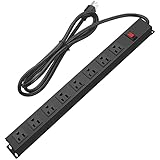
Overview: HHSOET’s metal power strip features 8 outlets, a 6-foot cord, and wall-mount capability in a sleek black aluminum housing. With 1200-joule surge protection and 15A/1875W capacity, it’s designed for commercial spaces, workshops, or home offices needing reliable, space-saving power distribution.
What Makes It Stand Out: The compact 0.55-inch outlet spacing (marketed as “wide spaced”) maximizes port density in tight spaces, and pre-drilled mounting holes with included screws simplify installation. The sturdy 14AWG cord and SGS certification ensure safety, while the metal shell dissipates heat efficiently during prolonged use.
Value for Money: Budget-friendly for its metal construction and commercial-grade wiring, though the 1200-joule surge rating is modest. Ideal for cost-conscious buyers needing durability over elite surge defense—great for workshops where aesthetics matter less than function.
Strengths and Weaknesses: Strengths: Space-efficient design, sturdy metal build, easy mounting, and reliable cord quality. Weaknesses: Surge protection (1200J) is below average, tight outlet spacing may still clash with bulky plugs, and lacks USB ports.
Bottom Line: A solid, no-frills option for workshops or commercial desks where port density and metal durability are priorities. Recommended for basic setups, but skip if superior surge protection is critical.
10. 18 Outlets Surge Protector Power Strip - 6 Feet Flat Plug Heavy Duty Extension Cord with 18 Widely Outlets and 4 USB Ports, 2100 Joules, Black, ETL Listed

Overview: This high-capacity power strip boasts 18 AC outlets, 4 USB ports, and 2100-joule surge protection via a 6-foot flat-plug cord. Engineered for gamers or home offices with numerous devices, it includes cable ties for cord management and ETL certification for safety compliance up to 1875W.
What Makes It Stand Out: The sheer port count (18+4) is unmatched, with widely spaced outlets to prevent plug interference. The triple-layer surge circuit (TVS/MOV/GDT) reacts faster than single-component strips, and the right-angled flat plug + reusable cable ties enhance cable organization—a boon for cluttered desks.
Value for Money: Exceptional for multi-device users, offering the highest outlet density in this lineup at a mid-range price. The 2100-joule rating is competitive, though not class-leading, making it a smart buy for gamers or home offices needing maximum connectivity.
Strengths and Weaknesses: Strengths: Unrivaled port count, effective cable management, reliable triple-layer surge protection, and flat plug convenience. Weaknesses: USB ports lack fast-charging specs (max 3A), and the plastic housing feels less premium than metal alternatives.
Bottom Line: The ultimate solution for crowded workspaces demanding maximum outlets. Highly recommended for gamers or professionals with extensive gear, despite modest USB capabilities and plastic construction.
Understanding Why Circuits Trip (It’s Not the Power Strip’s Fault)
The Physics Behind the Click: Overload vs. Short Circuit
Circuit breakers trip for two primary reasons: overload or short circuit. An overload occurs when the total current draw from devices on a single circuit exceeds its safe capacity (usually 15 or 20 amps in modern homes). This isn’t a sudden failure; it’s a slow cook that heats up wires. A short circuit is a sudden, dangerous fault where live wires touch, causing a massive, instantaneous current surge. While power strips can contribute to overloads if misused, they rarely cause short circuits within the home wiring itself. The breaker trips to prevent overheating wires, which is the leading cause of residential electrical fires.
Your Home’s Hidden Capacity: It’s All About the Circuit
Most people don’t realize that outlets in a single room (or even multiple rooms) are often fed by just one circuit breaker. That single 15-amp circuit might power your entire home office, kitchen counter, or living room entertainment center. When you plug multiple high-wattage devices (like space heaters, hair dryers, microwaves, or powerful gaming PCs) into outlets on the same circuit—even if you’re using multiple power strips—you’re stacking their demands onto that one limited pathway. The breaker trips because the circuit is overwhelmed, not because the individual power strip failed.
Beyond the Obvious: Subtle Signs of an Overstressed System
Frequent tripping is the loudest symptom, but it’s not the only one. Pay attention to other warning signs: outlets or power strip casings feeling warm to the touch, lights dimming noticeably when a large appliance kicks on, a faint buzzing sound from outlets or the breaker panel, or a persistent “burnt” odor near electrical components. These indicate serious stress on your wiring or connections, demanding immediate attention beyond just swapping a power strip. Ignoring these is playing with fire, literally.
Choosing Power Strips That Help You Manage Load Safely
Amperage Rating: The Non-Negotiable Baseline
Every power strip has a maximum amperage rating (e.g., 15A). This must match or be less than the rating of the circuit it’s plugged into (usually 15A or 20A). Plugging a 20A strip into a 15A circuit doesn’t magically give you more power; it removes a critical safety layer. The strip itself should have a clear, permanent label stating its max amperage. Never exceed this rating with the combined load of your devices. This is the single most crucial spec for preventing strip-related issues.
Built-In Circuit Breakers: Your Strip’s Personal Safety Net
A quality power strip includes its own resettable circuit breaker, separate from your home’s main breaker. This acts as a first line of defense. If the combined load of devices plugged directly into that strip exceeds the strip’s capacity (e.g., 15A), its breaker trips first. This prevents overloading the strip’s internal wiring and gives you a localized reset point without trekking to the main panel. Look for strips where the breaker is easily accessible and clearly labeled.
Surge Protection: Not for Tripping, But Essential for Safety
While surge protection won’t stop an overload trip, it’s vital for protecting your sensitive electronics from voltage spikes caused by lightning or grid issues. Crucially, a strip without surge protection offers zero defense against these events. Look for a Joule rating (higher is generally better for more protection, e.g., 1000+ Joules) and check if it has an indicator light showing the protection is still active. Surge protectors degrade over time and after absorbing major surges.
Outlet Spacing and Orientation: Avoiding the “Brick Wall” Effect
Clunky power adapters (like laptop bricks or phone chargers) can block adjacent outlets on poorly designed strips, forcing you to use more strips to get enough usable ports. This multiplies the risk of overloading the circuit. Look for strips with widely spaced outlets, rotated outlets (some facing up, some down), or staggered layouts specifically designed to accommodate large adapters without blocking neighbors. More usable outlets per strip mean fewer strips needed per circuit.
Cord Length and Gauge: Minimizing Resistance and Clutter
A longer cord isn’t inherently better; it can increase resistance and voltage drop, especially with thinner wires (lower gauge number = thicker wire = better). For typical home use, a 6-foot cord with a 16 or 14 AWG wire is sufficient. Avoid extremely long, thin cords (like 18 AWG) for high-draw devices. Shorter, thicker cords reduce energy loss and heat buildup within the cord itself. Also, consider cord management features to prevent tripping hazards and tangled messes that make load assessment harder.
Physical Build Quality: Safety Beyond the Specs
Feel the weight – a heavier strip often indicates more substantial internal components and metal contacts. Check for a sturdy, non-flammable casing (look for UL or ETL certification marks – non-negotiable). Wobbly outlets or flimsy switches are red flags. The plug should fit snugly into your wall outlet without excessive force. Quality internal wiring and robust contacts minimize resistance and heat generation, crucial factors in preventing fire hazards, especially under sustained load.
Strategic Usage: How You Plug In Matters More Than the Strip
The Power Audit: Know What You’re Plugging In
Before adding anything new, calculate the total wattage (or amps) of all devices plugged into outlets on the same circuit. Device wattage is usually on a label or in the manual (Watts = Volts x Amps; standard US voltage is 120V). Add them up! A space heater (1500W = ~12.5A) alone can nearly max out a 15A circuit, leaving little room for anything else. High-wattage items like heaters, hair dryers, microwaves, and refrigerators should ideally be on dedicated circuits, not shared via power strips.
High-Wattage Device Zoning: The Golden Rule
Never plug high-wattage appliances (anything over 800-1000 watts, like space heaters, air conditioners, microwaves, toasters, hair dryers) into a standard power strip. These belong directly into a wall outlet, preferably on a circuit designed for them. Plugging them into a strip, even a “heavy-duty” one, creates a massive point of failure and extreme fire risk if the strip or its cord isn’t rated for that continuous load. Treat power strips strictly for low-to-moderate draw electronics (lamps, TVs, chargers, computers).
Daisy Chaining: The Dangerous Domino Effect
This is perhaps the most common and dangerous mistake: plugging one power strip into another (or into an extension cord, then into a strip). Each connection adds resistance, increases heat buildup, and multiplies the chance of overloading both the strips and the underlying circuit. It bypasses the safety features of individual strips. Never daisy chain power strips or extension cords. One strip per wall outlet is the absolute maximum, and even that requires careful load management.
Placement Matters: Ventilation is Key
Power strips generate some heat, especially under load. Never bury them under rugs, shove them deep inside cabinets, or cover them with papers or clothing. Ensure they have ample airflow around the casing and cord. Placing them on a hard, non-flammable surface (like a desk or floor away from foot traffic) is safest. Heat buildup is a major contributor to insulation breakdown and fire risk in overloaded or poorly ventilated strips.
The Indicator Light Check: Don’t Ignore the Signals
If your surge-protected strip has an indicator light showing protection is active, pay attention if it goes out. This means the internal surge components are depleted and the strip no longer offers any protection against voltage spikes – it’s just a basic power tap. Replace it immediately. Similarly, if the strip’s own circuit breaker trips frequently under normal loads, it’s a sign the strip may be failing or, more likely, you’re consistently overloading it.
When a Power Strip Isn’t the Solution (Calling the Professionals)
Recognizing the Limits of Power Management
If you’ve carefully audited your loads, stopped daisy chaining, unplugged high-wattage devices from strips, and you’re still experiencing frequent breaker trips on a specific circuit, the problem lies within your home’s electrical infrastructure. A power strip cannot fix insufficient circuit capacity, outdated wiring, loose connections in outlets or the panel, or a failing breaker itself. Trying to “band-aid” this with more strips is dangerous.
Signs You Absolutely Need an Electrician
Persistent tripping after load reduction, warm/hot outlets or switch plates, burning smells from outlets or the panel, discolored (brown/black) outlets, flickering lights unrelated to a single appliance, or using fuses instead of circuit breakers are all urgent red flags. These indicate potential fire hazards like arcing faults, degraded wiring, or overloaded connections that require professional diagnosis and repair. Do not delay.
Understanding Circuit Upgrades: More Than Just a Fix
A qualified electrician can assess if your home needs additional circuits installed, particularly in high-demand areas like kitchens, home offices, or workshops. They can replace outdated breakers, repair faulty wiring, or even recommend a panel upgrade if your entire system is undersized for modern electrical demands. This is the real solution for chronic overloading, not a more expensive power strip. It’s an investment in safety and functionality.
Building a Sustainable Power Strategy for Modern Homes
Future-Proofing Your Outlets: Planning for Growth
As you add smart home devices, more entertainment systems, or home office equipment, your power needs grow. When renovating or building, consider requesting extra circuits in key areas. Think about dedicated circuits for home offices or entertainment centers from the start. Discussing your current and anticipated load with an electrician during planning prevents future overload headaches and safety risks.
The Role of Smart Plugs and Monitors (Use with Caution)
Smart plugs can offer remote on/off and some energy monitoring. However, their current monitoring is often inaccurate for precise load calculation, and they still have the same fundamental amperage limits as any power strip. They shouldn’t be used to justify plugging high-wattage devices into strips. Their main value here is convenience and basic usage awareness, not solving overload problems. Never rely solely on a smart plug’s app reading for critical load management.
Educating Everyone in the Household
Frequent tripping is often a household-wide issue caused by multiple people adding devices without awareness. Have a conversation! Explain the risks of daisy chaining, the dangers of plugging heaters into strips, and the importance of knowing which outlets share a circuit. A simple printed load chart near the breaker panel can be surprisingly effective. Shared understanding is key to maintaining a safe electrical environment.
Frequently Asked Questions
How can I tell if my circuit is overloaded?
Signs include frequent breaker trips on the same circuit, outlets or power strips feeling warm, lights dimming when an appliance turns on, or a buzzing sound from outlets. The most reliable method is calculating the total wattage of all devices running simultaneously on that circuit (Watts = Volts x Amps) and ensuring it stays below 80% of the circuit’s capacity (e.g., max 1440W for a 15A/120V circuit).
Can a better power strip stop my breaker from tripping?
No. Power strips cannot increase the capacity of your home’s circuit. If the total load on the circuit exceeds its limit (usually 15A or 20A), the main breaker will trip regardless of the strip used. A good strip helps manage load on that strip and adds localized protection, but it doesn’t change the circuit’s fundamental limit.
Why does my breaker trip only when I use the space heater, even with a “heavy-duty” strip?
Space heaters draw very high current (often 12.5+ amps). Plugging one into any power strip is unsafe and violates electrical codes. The strip, even if rated for 15A, is not designed for the continuous, high heat generated by a space heater and creates a fire hazard. Space heaters must plug directly into a wall outlet, ideally on a dedicated circuit.
Is daisy chaining two high-quality power strips safe if I don’t overload them?
No. Daisy chaining is inherently unsafe regardless of strip quality. It increases resistance, creates more points of failure, risks overheating at connection points, and bypasses the individual safety mechanisms of each strip. It significantly raises fire risk and is strongly discouraged by electrical safety organizations and codes.
How do I know if my power strip has adequate surge protection?
Look for a clearly labeled Joule rating (aim for 1000+ Joules for basic electronics protection) and a status indicator light that shows the protection is active. Ensure it has a UL 1449 certification mark, which is the safety standard for surge protectors in the US. If the indicator light is out, the surge protection is depleted and the strip needs replacing.
Can a power strip cause a fire even if the breaker doesn’t trip?
Yes. Faulty strips, damaged cords, daisy chaining, or overloading a strip beyond its own rating (even if under the circuit’s limit) can cause overheating and fire at the strip itself before the main breaker trips. This is why built-in strip breakers, proper load management, and avoiding physical damage are critical.
What’s the difference between a power strip and an extension cord?
A power strip provides multiple outlets from a single plug, often with a circuit breaker and surge protection. An extension cord is designed to extend the reach of a single plug over a distance. Never use an extension cord as a permanent power strip replacement. They lack overload protection and are not intended for multiple high-wattage devices plugged in simultaneously.
How often should I replace my power strips?
Replace them immediately if: the cord is frayed/damaged, outlets are loose, the casing is cracked/melted, the built-in breaker trips constantly under normal load, or the surge protection indicator light is off (if applicable). As a general rule, consider replacing surge-protected strips every 2-5 years, as the protective components degrade over time, even without visible surges.
Why does my breaker trip randomly, even with nothing new plugged in?
This often indicates a developing problem within the wiring or the breaker itself, such as a loose connection (causing arcing and heat), a failing breaker that’s become too sensitive, or degraded insulation. This is a serious fire hazard and requires immediate inspection by a licensed electrician.
Can LED lights cause circuit breakers to trip?
Standard LED bulbs themselves draw very little power (typically 5-15W each) and are highly unlikely to cause an overload trip on their own. However, the transformers/drivers for some LED systems (especially older or low-quality ones) can sometimes cause minor inrush current or harmonic issues, though this rarely trips modern breakers. If LEDs seem to cause trips, investigate other high-draw devices on the same circuit or potential wiring issues.