That relentless click-click-click echoing through your workspace isn’t just annoying—it’s a subtle thief stealing your focus and draining your energy. For knowledge workers, creatives, and even gamers, the constant auditory assault of a standard mouse can transform a productive session into a nerve-wracking ordeal. Clicking fatigue is real, manifesting as tension headaches, irritability, and a surprising dip in concentration, all triggered by sounds barely registering above a whisper. Whether you’re in a quiet home office, a bustling co-working space, or sharing a desk with a light sleeper, the quest for a truly peaceful clicking experience has moved beyond luxury to necessity.
The good news? Technology has caught up with our need for tranquility. Modern “silent” mice aren’t just marketing gimmicks; they represent significant engineering advancements designed to eliminate that jarring tactile feedback without sacrificing performance. Forget the mushy, unresponsive clicks of early attempts. Today’s solutions leverage precise mechanical redesigns, innovative materials, and optical sensing to deliver satisfying, near-silent operation that actually enhances your workflow. Understanding how these mice achieve silence—and what features truly matter for your specific needs—is the key to ending clicking fatigue for good. Let’s dive into what makes a mouse genuinely quiet and how to choose the right one for your environment.
Top 10 Silent Mice
Detailed Product Reviews
1. Logitech M330 Silent Wireless Mouse, 2.4GHz with USB Receiver, Optical Tracking, Quiet & Lightweight, Long Battery Life, for PC, Mac, Laptop, Chromebook - Black

Overview:
The Logitech M330 Silent Wireless Mouse delivers a near-silent computing experience without sacrificing performance. Tailored for right-handed users in offices or shared spaces, it prioritizes discretion and reliability through its USB-receiver connectivity and ergonomic design.
What Makes It Stand Out:
Its standout feature is Logitech’s SilentTouch Technology, reducing click noise by over 90% while maintaining tactile feedback. The contoured grip ensures comfort during extended use, and the 18-month battery life (with included AA) minimizes interruptions. The 33-ft wireless range and universal OS compatibility (Windows, macOS, ChromeOS, Linux) add versatility.
Value for Money:
Priced mid-range, it outperforms budget noisy mice and rivals premium silent models. The included USB receiver and battery enhance value, especially for users managing multiple devices or seeking long-term reliability without frequent replacements.
Strengths and Weaknesses:
Strengths: Exceptionally quiet operation; ergonomic right-handed design; 18-month battery; broad OS support; precise optical tracking.
Weaknesses: USB receiver occupies a port; right-handed only; no Bluetooth option limits modern device pairing.
Bottom Line:
Ideal for right-handed professionals needing a durable, silent mouse for shared workspaces. Its reliability and comfort justify the price, though left-handed users or Bluetooth-dependent setups should consider alternatives.
2. Logitech M240 Silent Bluetooth Mouse, Wireless, Compact, Portable, Smooth Tracking, 18-Month Battery, for Windows, macOS, ChromeOS, Compatible with PC, Mac, Laptop, Tablets - Graphite

Overview:
The Logitech M240 Silent Bluetooth Mouse is a compact, ambidextrous solution designed for travelers and minimalist setups. It leverages Bluetooth connectivity to eliminate dongle clutter while maintaining near-silent operation across diverse devices.
What Makes It Stand Out:
Bluetooth pairing replaces the USB receiver, enabling instant connection to tablets, laptops, and PCs without port usage. Its ambidextrous design suits all users, and the slim, pocket-friendly form factor enhances portability. The 90% noise reduction and 18-month battery life remain consistent highlights.
Value for Money:
Slightly pricier than USB models, it’s justified for frequent travelers or multi-device users who prioritize portability and dongle-free convenience. The long battery life and universal OS compatibility ensure cost efficiency over time.
Strengths and Weaknesses:
Strengths: True Bluetooth connectivity; ambidextrous and ultra-portable; 90% quieter clicks; 18-month battery; works up to 33 ft away.
Weaknesses: Less ergonomic for prolonged use; Bluetooth pairing can occasionally lag; no included battery.
Bottom Line:
A top pick for mobile professionals seeking a discreet, travel-ready mouse. Its Bluetooth convenience and silent operation outweigh minor ergonomic trade-offs, though desktop users may prefer USB models.
3. Logitech M330 Silent Wireless Mouse, 2.4GHz with USB Receiver, Optical Tracking, Quiet & Lightweight, Long Battery Life, for PC, Mac, Laptop, Chromebook - Grey

Overview:
This grey variant of the M330 Silent Mouse offers identical performance to its black counterpart, targeting users who prefer neutral aesthetics in professional environments. It retains all core features of Logitech’s popular silent wireless model.
What Makes It Stand Out:
The subtle grey finish provides a modern, understated look while delivering the same 90% noise reduction, ergonomic right-handed grip, and 18-month battery life. The plug-and-play USB receiver ensures seamless setup across Windows, macOS, ChromeOS, and Linux systems.
Value for Money:
Priced identically to the black version, it offers no functional upgrade but appeals to style-conscious buyers. For the cost, it remains a strong investment due to durability, quiet operation, and minimal battery replacement needs.
Strengths and Weaknesses:
Strengths: Near-silent clicks; comfortable for right-handed users; 18-month battery (AA included); wide OS compatibility; precise tracking.
Weaknesses: Right-handed design excludes lefties; USB receiver required; identical functionality to cheaper black model.
Bottom Line:
A reliable, quiet mouse for right-handed users wanting a sleek grey aesthetic. Choose this only for color preference; otherwise, the black version offers identical value.
4. Logitech M240 Silent Bluetooth Mouse, Wireless, Compact, Portable, Smooth Tracking, 18-Month Battery, for Windows, macOS, ChromeOS, Compatible with PC, Mac, Laptop, Tablets - Off White

Overview:
The off-white Logitech M240 Silent Bluetooth Mouse combines minimalist aesthetics with practical silent functionality. This compact model targets users seeking a neutral, versatile accessory for hybrid workspaces.
What Makes It Stand Out:
Its off-white hue blends seamlessly into light-themed setups, while Bluetooth connectivity ensures clutter-free pairing with laptops, tablets, and desktops. The ambidextrous shape and 90% quieter clicks maintain focus in shared environments, complemented by an 18-month battery life.
Value for Money:
Priced similarly to other M240 colors, the off-white variant justifies its cost for users prioritizing cohesive workspace design. The Bluetooth convenience and portability offer better long-term value than noisy, short-lived budget mice.
Strengths and Weaknesses:
Strengths: Stylish off-white finish; dongle-free Bluetooth; ambidextrous and ultra-portable; 18-month battery; quiet operation.
Weaknesses: Basic ergonomics for extended use; Bluetooth may disconnect intermittently; no battery included.
Bottom Line:
Perfect for style-focused professionals needing a portable, silent mouse. The neutral color elevates aesthetics without compromising functionality, though heavy desktop users might prefer USB models.
5. Logitech M240 Silent Bluetooth Mouse, Wireless, Compact, Portable, Smooth Tracking, 18-Month Battery, for Windows, macOS, ChromeOS, Compatible with PC, Mac, Laptop, Tablets - Rose

Overview:
Logitech’s rose-colored M240 Silent Bluetooth Mouse merges playful aesthetics with practical silent technology. This compact model caters to users wanting personality in their gear without sacrificing performance.
What Makes It Stand Out:
The distinctive rose hue adds a vibrant touch to minimalist setups, while retaining core features: Bluetooth connectivity, 90% noise reduction, and ambidextrous portability. The 18-month battery life and 33-ft range ensure reliability across devices.
Value for Money:
Slightly premium for the color variant, it’s worthwhile for those valuing expressive accessories. The Bluetooth freedom and silent operation provide tangible benefits over standard mice, justifying the cost for personal or creative workspaces.
Strengths and Weaknesses:
Strengths: Unique rose color; Bluetooth convenience; ultra-portable; 90% quieter clicks; cross-platform compatibility.
Weaknesses: Limited ergonomic support; Bluetooth pairing inconsistencies; battery not included.
Bottom Line:
An excellent choice for creative professionals or students seeking a stylish, silent companion. The rose finish personalizes functionality, though prioritize USB models for intensive daily use.
6. Logitech Signature M650 L Full Size Wireless Mouse - for Large Sized Hands, 2-Year Battery, Silent Clicks, Customizable Side Buttons, Bluetooth, for PC/Mac/Multi-Device/Chromebook - Black

Overview:
The Logitech Signature M650 L is a premium wireless mouse engineered specifically for users with larger hands, emphasizing comfort during extended use. It features silent clicking, multi-device connectivity, and a versatile SmartWheel for precise or rapid scrolling, targeting professionals seeking a distraction-free workspace.
What Makes It Stand Out:
Its standout features include the SmartWheel (switching seamlessly between line-by-line and hyper-fast scrolling), industry-leading SilentTouch technology reducing click noise by 90%, and customizable side buttons via Logi Options+ software. The ergonomic large-hand design with soft grips and rubberized texture ensures exceptional comfort, while dual connectivity (Bluetooth or Logi Bolt USB) and a remarkable 2-year battery life add versatility.
Value for Money:
Priced mid-to-high range, it delivers exceptional value. The durability, silent operation, and tailored ergonomics justify the cost for frequent users, outperforming cheaper alternatives that compromise on build quality, noise reduction, or hand-specific design. The 2-year battery also minimizes long-term replacement costs.
Strengths and Weaknesses:
Strengths: Superior ergonomics for large hands; near-silent operation; highly customizable buttons; reliable multi-device pairing; exceptional battery life.
Weaknesses: Premium price may deter casual users; SmartWheel requires slight adjustment period; software customization limited to Windows/macOS.
Bottom Line:
An outstanding investment for professionals with larger hands prioritizing comfort, silence, and precision. Its thoughtful design and robust features make it a top-tier choice despite the higher cost, ideal for office or home use demanding reliability.
7. VssoPlor Wireless Mouse, 2.4G Slim Portable Computer Laptop Mouse with Nano Receiver Quiet Silent Optical Mice for Notebook, PC, Laptop, Computer-Black and Gold

Overview:
The VssoPlor Wireless Mouse is a budget-friendly, ultra-slim optical mouse designed for portability and quiet operation. Targeting students and travelers, it emphasizes silent clicks, broad compatibility, and a compact form factor for on-the-go use with laptops or desktops.
What Makes It Stand Out:
Its key differentiators are the whisper-quiet clicking mechanism, intelligent 5-minute auto-sleep mode for battery conservation, and reliable 2.4GHz wireless connectivity with a 10-meter range. The frosted surface enhances grip, while the stowable nano receiver and lightweight build (under 3oz) maximize portability without sacrificing stability.
Value for Money:
Offered at an entry-level price, it provides excellent value for basic needs. While lacking advanced features like Bluetooth or customization, it reliably delivers silent operation, stable connectivity, and broad OS compatibility (Windows, macOS 10.4+), outperforming similarly priced competitors in ergonomics and responsiveness.
Strengths and Weaknesses:
Strengths: Very affordable; genuinely quiet operation; energy-efficient sleep mode; plug-and-play simplicity; highly portable with stowable receiver.
Weaknesses: Limited to 2.4GHz (no Bluetooth); minimal ergonomic contouring; basic functionality without programmable buttons; shorter battery life than premium models.
Bottom Line:
A practical, no-frills mouse perfect for budget-conscious users needing portability and silence. Ideal for travel or secondary devices, though power users may desire more customization or connectivity options.
8. TECKNET Wireless Mouse (BT5.0/3.0 & 2.4G) Rechargeable 4800 DPI Silent USB A & Bluetooth Mouse 6 Buttons, Wide Compatibility - Grey

Overview:
The TECKNET Wireless Mouse is a versatile rechargeable option supporting dual connectivity (Bluetooth 5.0/3.0 and 2.4G USB) and adjustable DPI. Tailored for multi-device users with small-to-medium hands, it prioritizes silent operation, long battery life, and seamless switching between computers or laptops.
What Makes It Stand Out:
Dual connectivity with instant device-switching via a physical button and six adjustable DPI levels (up to 4800) are its core innovations. The rechargeable battery (3 months per charge) eliminates disposable batteries, while wide OS compatibility (including Chrome/Linux) and quiet clicks cater to diverse environments from offices to libraries.
Value for Money:
Priced competitively, it offers exceptional value through its rechargeable design, dual-mode flexibility, and high DPI range. It undercuts premium brands like Logitech while matching key features, though macOS users lose side-button functionality—a fair trade-off for the price.
Strengths and Weaknesses:
Strengths: Rechargeable battery with long lifespan; effortless dual-device switching; high 4800 DPI precision; truly silent clicks; broad OS support.
Weaknesses: Side buttons incompatible with macOS; best for smaller hands; battery warning instability; no dedicated software for advanced customization.
Bottom Line:
A highly capable, eco-friendly mouse ideal for multi-device users with smaller hands. Its rechargeability and dual connectivity justify the price, making it a smart pick for tech-savvy professionals despite minor macOS limitations.
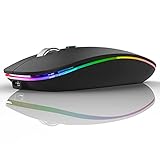
9. Uiosmuph LED Wireless Mouse, G12 Slim Rechargeable Silent Mouse, 2.4G Portable USB Optical Computer Mice with USB Receiver and Type C Adapter (Matte Black)
Overview:
The Uiosmuph LED Wireless Mouse is a slim, rechargeable optical mouse featuring colorful LED lighting and USB-C adaptability. Designed for portability and aesthetic appeal, it targets students or casual users wanting style alongside basic silent functionality for laptops or desktops.
What Makes It Stand Out:
Its vibrant, randomly cycling LED lights and included USB-C adapter (for modern laptops) are unique selling points. The ultra-slim profile (0.79 inches thick), rechargeable battery (no replacements needed), and 8-minute auto-sleep mode prioritize travel-friendliness and energy savings over advanced features.
Value for Money:
At an affordable price, it delivers novelty and convenience but not premium performance. The LED feature is gimmicky for professionals but fun for casual/home use. While the USB-C adapter adds practicality, the lack of DPI adjustment or multi-device support limits utility compared to similarly priced models.
Strengths and Weaknesses:
Strengths: Eye-catching LED lighting; includes USB-C adapter; highly portable and lightweight; rechargeable; genuinely silent clicks.
Weaknesses: LEDs can be distracting; no DPI customization; basic functionality only; short sleep mode may cause connectivity hiccups; build quality feels less durable.
Bottom Line:
A stylish, portable mouse best suited for casual use or travel where aesthetics matter. Avoid for productivity-focused tasks, but a fun, affordable pick for light-duty needs with modern USB-C devices.
10. Logitech Signature M550 Wireless Mouse - for Small to Medium Sized Hands, 2-Year Battery, Silent Clicks, Bluetooth, Multi-Device Compatibility - Black

Overview:
The Logitech Signature M550 is a compact wireless mouse optimized for small-to-medium hands, offering silent operation, multi-device support, and Logitech’s hallmark comfort. It’s designed for professionals seeking a reliable, quiet mouse for daily office or remote work without hand fatigue.
What Makes It Stand Out:
Like its larger counterpart (M650 L), it features the SmartWheel for adaptive scrolling and 90% quieter SilentTouch clicks. Its contoured ergonomic shape with rubberized grips ensures comfort for smaller hands, while dual connectivity (Bluetooth/Logi Bolt) and a 2-year battery life enhance versatility for hybrid work setups.
Value for Money:
Priced similarly to the M650 L, it offers excellent value for its target audience. The premium build, silent tech, and exceptional battery life justify the cost over budget mice, especially for users needing hand-specific ergonomics. It outperforms cheaper models in durability and noise reduction.
Strengths and Weaknesses:
Strengths: Perfect ergonomics for small/medium hands; near-silent operation; SmartWheel versatility; 2-year battery; seamless multi-device switching.
Weaknesses: Higher price than basic mice; no customizable side buttons; slightly shorter range than some competitors; limited color options.
Bottom Line:
The definitive choice for users with smaller hands prioritizing comfort and quiet productivity. Its refined design and reliability make it worth the investment for daily professional use, though those needing button customization should consider the M650 L.
Understanding Clicking Fatigue and Why Silence Matters
The Hidden Impact of Mouse Noise on Productivity
That seemingly innocuous mouse click generates a sharp acoustic spike, often exceeding 70 decibels—comparable to a vacuum cleaner in close proximity. Repeated exposure triggers a low-grade stress response in the brain, subtly elevating cortisol levels and fragmenting concentration. Studies show even subconscious awareness of repetitive clicking can reduce deep work capacity by up to 20%, as the brain constantly reallocates resources to process the disturbance. For individuals in open-plan offices or shared living spaces, this noise pollution becomes a persistent cognitive tax.
Defining “Silent”: Beyond Just Click Volume
True silent operation encompasses more than just the primary click sound. It involves minimizing the entire acoustic profile: the subtle thock of the button depression, the faint tick of internal mechanisms resetting, and even the scraping whisper of movement across surfaces. Crucially, silence isn’t about eliminating tactile feedback entirely—losing that confirmation can cause more strain as users press harder. The ideal balance provides clear, dampened physical response with minimal airborne noise, often achieved through multi-stage internal dampening systems rather than simple button softening.
Core Technologies Powering Silent Operation
Optical Switches vs. Mechanical Microswitches
The fundamental shift from traditional mechanical microswitches to optical switches is the cornerstone of modern silent mice. Mechanical switches rely on physical metal contacts snapping together, creating that characteristic sharp click. Optical switches use infrared light beams; pressing the button interrupts the beam, registering the click electronically without physical collision. This eliminates the loudest component of the sound profile—no metal-on-metal impact—resulting in a significantly quieter, smoother activation. Optical switches also tend to have longer lifespans due to reduced mechanical wear.
Advanced Dampening Materials and Structures
Even with optical switches, secondary noises from button travel and internal components can persist. High-end silent mice incorporate layered dampening solutions: elastomer pads beneath the click mechanism absorb residual vibrations, while strategically placed foam or rubber gaskets within the chassis prevent internal parts from rattling. Some designs feature floating button assemblies suspended on silicone dampeners, isolating the click mechanism from the main shell to prevent sound transmission through the desk surface.
Precision Engineering of Button Travel
Silence isn’t just about the switch; it’s about the entire button pathway. Engineers meticulously design the curvature, resistance curve, and travel distance of the button cap. A shorter, more linear travel path with consistent resistance reduces the “slap” sound when the button resets. Optimized pivot points ensure the button depresses evenly, preventing uneven pressure that causes scraping noises. This precision engineering ensures the click feels deliberate and responsive, not spongy or vague, maintaining user confidence without the noise penalty.
Key Features to Evaluate Beyond Noise Reduction
Tactile Feedback Quality and Consistency
A silent mouse that feels insubstantial or inconsistent will cause more fatigue than a noisy one. Pay close attention to the tactile “bump” when the click registers. It should be distinct enough to confirm activation without requiring excessive force, yet smooth enough to avoid vibration. Test for consistency across the entire button surface—poorly designed silent mice often have dead zones on the edges where the click feels mushy or unresponsive. The ideal feedback is crisp, predictable, and uniform, providing confidence with minimal auditory output.
Sensor Performance and Surface Compatibility
Don’t sacrifice tracking accuracy for silence. Ensure the mouse features a high-precision optical or laser sensor with adjustable DPI (dots per inch) settings. A good silent mouse should glide effortlessly across varied surfaces—glass, wood, fabric pads—without jitter, acceleration, or pointer dropouts. Look for sensors with high IPS (inches per second) tracking to handle swift movements common in design or gaming. Lag or inconsistent tracking forces micro-adjustments, creating its own form of physical strain that negates the benefits of quiet clicks.
Ergonomic Design for Sustained Comfort
Silence addresses auditory fatigue, but poor ergonomics cause physical strain that compounds clicking fatigue. Consider your grip style (palm, claw, fingertip) and hand size. A contoured shape that supports your natural hand position reduces tension in the wrist, forearm, and shoulder. Weight distribution matters too; overly heavy mice cause drag fatigue, while ultra-light models might feel unstable. Materials like textured rubber side grips prevent slippage, reducing the need to grip tightly—a common reaction to slippery mice that exacerbates hand fatigue over time.
Matching the Mouse to Your Specific Environment
Open Office and Shared Workspace Solutions
In collaborative environments, minimizing sound transmission through the desk is as critical as airborne noise. Prioritize mice with substantial internal damping and non-slip rubber bases to prevent vibrations from resonating on hard surfaces. Models with slightly higher button activation force can paradoxically be quieter here, as they reduce accidental clicks from desk bumps that generate distracting taps. Wireless models with stable, low-latency connections (like modern 2.4GHz dongles) avoid the subtle coil whine sometimes associated with Bluetooth, adding to the overall quiet experience.
Home Office and Co-Working Space Considerations
For personal workspaces, focus shifts to personal preference and secondary noise sources. If you share space with others (or pets!), a mouse that eliminates all clicking noise becomes paramount. Look for models specifically engineered for ultra-quiet reset mechanisms, as the button snapping back up can be surprisingly audible in very quiet rooms. Consider if you need multi-device switching for seamless transitions between work and personal devices without audible connection prompts. Battery life also matters more here; frequent low-battery alerts can disrupt focus.
Creative Studios and Recording Environments
Professionals in audio production, voice-over, or video editing face the strictest silence requirements. Standard mice can ruin takes with audible clicks picked up by sensitive microphones. In these scenarios, seek mice with near-inaudible operation (verified by independent decibel tests if available), often featuring triple-layer dampening and specialized low-resonance plastics. Wired connectivity might be preferable to eliminate any potential for wireless interference noise, though high-end wireless options with dedicated silent dongles are increasingly viable. Every component, down to the scroll wheel, must be engineered for absolute quiet.
The Role of Maintenance in Sustaining Silence
Preventing Dust and Debris Buildup
Dust, hair, and pocket lint infiltrating the button mechanism are silent killers of quiet operation. These particles interfere with smooth button travel, causing gritty, inconsistent, and often louder clicks over time. Regular maintenance is non-negotiable: gently invert the mouse and tap it to dislodge debris, use compressed air (held upright!) around button crevices monthly, and avoid eating directly over your workspace. Mice with sealed button mechanisms or minimal gaps offer inherent resistance to this common cause of noise escalation.
Cleaning Techniques for Optimal Performance
When clicks start to feel stiff or noisy, a deeper clean is needed. Power off and unplug the mouse. Dampen a cotton swab (not dripping) with >90% isopropyl alcohol—water risks damage. Carefully swab along the edges of the buttons where debris accumulates, letting the alcohol dissolve grime. Never force liquid under the buttons. For stubborn grime, use a soft-bristled brush (like a clean toothbrush) with alcohol. Allow at least 30 minutes of complete drying time before use. This routine preserves the precise tolerances needed for silent operation.
Wireless Versus Wired: The Silence Factor
Evaluating Wireless Transmission Noise
Modern wireless mice are remarkably quiet operationally, but potential noise sources exist beyond the click. Low-quality Bluetooth implementations or weak 2.4GHz signals can cause subtle coil whine in the mouse or dongle—a high-pitched buzz barely audible but mentally grating over hours. Premium wireless models use shielded components and stable protocols (like Logi Bolt or advanced 2.4GHz) specifically to eliminate this. Always check reviews for mentions of “coil whine” or “buzz” if absolute silence is critical; wired remains the zero-risk choice for the most noise-sensitive users.
Battery Management and Audible Alerts
Wireless convenience comes with the risk of disruptive low-battery warnings. Some mice emit beeps or require audible software prompts when charging is low—counterproductive for a silent workflow. Prioritize models with visual-only indicators (like LED status lights on the mouse or dongle) or exceptionally long battery life (6+ months) that minimizes the frequency of charging interruptions. Consider rechargeable models with silent charging docks to avoid the plink of disposable battery changes disrupting your focus.
Debunking Common Silent Mouse Myths
Myth: Silent Mice Are Always Mushy and Unresponsive
Early silent designs often sacrificed tactility for quietness, leading to this persistent misconception. Modern engineering, particularly with optical switches and precision dampening, delivers crisp, responsive clicks that feel deliberate and satisfying—just without the sharp report. The best models provide a tactile confirmation that’s unmistakable yet acoustically minimal, often feeling more precise because users aren’t subconsciously tensing against loud noises.
Myth: They’re Only for Office Use
While invaluable in quiet offices, silent mice excel in diverse scenarios: gamers seeking distraction-free focus during competitive matches, travelers using laptops in cramped airplane seats, parents working while babies sleep nearby, or even musicians recording close-miked vocals. The reduced physical strain from consistent, low-force clicking also benefits users prone to repetitive strain injuries (RSI), making them a health-conscious choice far beyond traditional office settings.
Long-Term Durability and Value Considerations
Assessing Switch Lifespan Expectations
Silent switches, especially optical ones, often boast significantly higher click lifespans (10-20 million clicks+) compared to standard mechanical switches (5-10 million). This isn’t just marketing; the absence of physical contact points reduces wear. However, the quality of the surrounding dampening materials matters—cheap foam can compress over time, leading to inconsistent clicks. Look for mentions of “long-life dampeners” or “premium elastomers” in descriptions, indicating materials engineered to maintain performance over years, not just months.
Build Quality and Component Resilience
The chassis material and internal construction directly impact longevity. A flimsy plastic shell can flex under pressure, altering button alignment and increasing noise over time. Opt for mice with reinforced internal frames (sometimes metal) and high-quality plastics that resist warping. Check for smooth, consistent button movement during testing—if it feels gritty or uneven new, it won’t improve. Investing in robust build quality ensures the silent operation you love on day one remains reliable for thousands of hours of use.
Making Your Final Selection with Confidence
Prioritizing Your Personal Pain Points
Your ideal silent mouse depends entirely on your biggest frustration. Is it disturbing others? Prioritize maximum noise reduction and desk vibration damping. Struggling with hand fatigue? Focus on ergonomics and light, consistent activation force. Working in a recording booth? Demand near-inaudible reset mechanisms and wired stability. List your top 2-3 non-negotiables before comparing options. This clarity cuts through marketing fluff and directs you to the features that will genuinely solve your clicking fatigue.
Importance of Hands-On Testing
Whenever possible, test before you buy. Visit a store to feel the button resistance, check for consistent feedback across the button, and assess the ergonomics. Pay attention to the sound of the reset—not just the click—as it snaps back up; this is often the overlooked noise culprit in quiet rooms. Notice if the scroll wheel is smooth and quiet. If in-person testing isn’t feasible, seek out detailed video reviews with close-up audio of clicks and resets, as spec sheets rarely convey the true acoustic experience.
Frequently Asked Questions
Does “silent” mean completely noiseless?
No mouse is 100% silent. “Silent” refers to a drastic reduction in the sharp, high-frequency click sound—typically lowering volume by 90% or more compared to standard mice. You’ll still hear a very soft thud or tap, but it’s significantly less disruptive and rarely carries beyond immediate desk proximity.
Will a silent mouse feel less responsive?
Not necessarily. Modern silent mice, especially those using optical switches, are engineered to provide clear tactile feedback without the loud noise. Many users report better perceived responsiveness because the dampened action feels smoother and more controlled, reducing the subconscious tensing caused by loud clicks.
Do silent mice have a shorter lifespan?
Actually, the opposite is often true. Optical silent switches eliminate physical contact points, a major wear factor in mechanical switches, frequently leading to higher rated lifespans (e.g., 20 million clicks vs. 5-10 million). Durability depends more on overall build quality and materials than the silent feature itself.
Can I use a silent mouse for gaming?
Absolutely. Many gaming-focused silent mice exist, featuring high-polling rates, low latency, and precise sensors. The reduced noise can actually enhance focus during competitive play. Ensure the model meets your specific gaming needs (DPI range, weight, programmable buttons) alongside silence.
Why does my silent mouse seem louder over time?
Dust and debris accumulating under the buttons are the usual culprits. This interferes with smooth travel, causing grittier, louder clicks. Regular cleaning with compressed air and occasional isopropyl alcohol swabs (as described in maintenance sections) usually restores quiet operation.
Do wireless silent mice have more lag?
Not with modern technology. High-quality wireless silent mice using dedicated 2.4GHz dongles (not basic Bluetooth) offer near-instantaneous response times indistinguishable from wired mice for most tasks, including many gaming scenarios. Lag is rarely a concern with reputable brands.
Is a heavier or lighter mouse better for silence?
Weight itself doesn’t directly affect click noise, but it influences how you use the mouse. A very light mouse might encourage fingertip grip and harder clicking, potentially increasing noise. A well-balanced medium-weight mouse often promotes relaxed palm grip and lighter clicks, complementing the silent mechanism. Ergonomics matter more than raw weight.
Will a silent mouse stop vibrations through my desk?
It significantly reduces it, but doesn’t eliminate it entirely. Look for models with substantial rubberized bases and internal damping specifically designed to absorb vibrations. Pairing such a mouse with a cloth desk pad provides the best mitigation against sound transmission through solid surfaces.
Are silent mice more expensive?
They often carry a slight premium over basic mechanical mice due to the specialized switch technology and dampening engineering. However, prices span a wide range, and excellent silent options exist at various price points. The cost should be weighed against the productivity and well-being benefits of reduced fatigue.
Can I make my current mouse quieter?
Temporary fixes like adding tape under buttons usually degrade performance and aren’t effective long-term. True silence requires internal engineering. The most reliable solution is upgrading to a mouse designed from the ground up for quiet operation, as retrofitting isn’t feasible without compromising function.