Tangled cables snaking across your floor aren’t just an eyesore—they’re a safety hazard and a productivity killer, especially when you’re working with a sit-stand desk that moves up and down dozens of times daily. As height-adjustable workstations become the centerpiece of modern ergonomic offices, cable spine towers have emerged as the unsung heroes preventing cord chaos. These vertical management systems elegantly solve a problem most people don’t think about until their monitor suddenly goes dark mid-transition or they trip over a loose power cable.
Unlike traditional cable trays that work for fixed desks, spine towers are specifically engineered to flex, extend, and compress with your desk’s movement while keeping every connection intact and organized. Whether you’re retrofitting your current setup or planning a complete office overhaul, understanding the nuances of these specialized tools will save you frustration, money, and potentially expensive equipment damage.
Top 10 Cable Spine Towers for Sit-Stand Desks
Detailed Product Reviews
1. Ultimate Setup Under Desk Cable Management Vertebrae - Perfect for Sit Stand Desk - White, 133 cm

Overview: This premium white cable management vertebrae delivers a sophisticated solution for height-adjustable desk users seeking pristine aesthetics. At 133cm fully extended, it accommodates most sit-stand desk configurations while maintaining cable organization through complete vertical travel. The system promises silent, flexible movement that adapts seamlessly as your desk rises and lowers.
What Makes It Stand Out: The magnetic attachment system sets this apart from basic cable trays, creating a truly tool-free experience that stays secure during height adjustments. Installation takes under five minutes, making it ideal for non-technical users. The included accessory kit provides everything needed out of the box, while the pure white finish offers a clean, professional appearance that complements modern office decor. The 30-day money-back guarantee demonstrates manufacturer confidence.
Value for Money: At $44.91, this sits at the premium end of the market. However, the magnetic stability, aesthetic appeal, and comprehensive accessory package justify the cost compared to $20-30 alternatives that require drilling or lack secure fixation. For professionals prioritizing workspace appearance and hassle-free setup, the price premium translates to tangible quality-of-life benefits.
Strengths and Weaknesses: Pros include ultra-fast installation, strong magnetic hold, silent operation during desk movement, clean aesthetics, and risk-free trial period. The white finish may show dust and scuffs over time, and the price point could deter budget-conscious buyers. Limited color options restrict design flexibility.
Bottom Line: Ideal for professionals and remote workers who value aesthetics and convenience. The magnetic system eliminates common frustrations with cable sag and entanglement on standing desks, making it worth the investment for a permanently tidy workspace.
2. Under Desk Cable Management Vertebrae Fit for Sit Stand Desk Management, Magnetic Fixation Adjustable Length Cable Management Spinal, Flexible Chain Raceway Black

Overview: This black vertebrae-style cable manager targets sit-stand desk users with its 51-21 inch height compatibility range. Designed for universal application across metal, wood grain, and stone table legs, it uses magnetic modules to create a flexible spine that moves silently with your desk’s height adjustments while preventing cable wear and entanglement.
What Makes It Stand Out: Four rubber-coated magnetic modules protect desk surfaces while providing secure fixation, addressing a common flaw in bare-metal magnet systems. The modular design supports 3-10 sections of free splicing, accommodating 0.5-3 meters of cables. This adaptability makes it suitable for both minimal laptop setups and complex multi-monitor workstations without excess material waste.
Value for Money: Priced at $27.99, this delivers solid mid-range value. It undercuts premium competitors by 30-40% while retaining essential magnetic functionality. The tool-free installation design saves additional costs on equipment or professional help, making it more economical than basic non-magnetic options that require drilling and hardware.
Strengths and Weaknesses: Pros include wide height compatibility, surface-protecting rubber-coated magnets, customizable length, and quick installation. The black finish suits most office environments. Cons include only four magnetic contact points (potentially less stable than six-plus systems) and limited aesthetic options. The basic bracket still requires four screws, creating minor installation friction.
Bottom Line: A versatile, cost-effective solution for most standing desk owners. The rubber-coated magnets and flexible sizing make it particularly appealing for renters and those with non-standard desk materials who need reliable cable management without permanent modifications.
3. ARES WING Under Desk Cable Management Spine, Clamp On Vertebrae Cable Management for Standing Desk, Length Adjustable Cord Organizer with 20 Modular Vertebrae for Office and Gaming Desks, Red
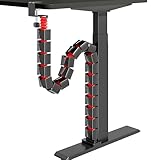
Overview: This vibrant red cable spine brings gaming-inspired aesthetics to cable management with its 20-detachable-segment design. Built specifically for standing desks, it extends up to 53 inches and features a clamp-on mounting system that eliminates drilling. The aggressive styling matches high-performance gaming rigs while providing practical cable routing from desktop to floor.
What Makes It Stand Out: The dual-channel design separates power and data cables, reducing electromagnetic interference and tangling—a feature rarely seen at this price point. The clamp-on installation fits desks 0.4-2 inches thick, making it perfect for renters or temporary setups. Its 20 modular vertebrae offer more customization than standard 10-15 segment competitors, adapting to various desk heights and cable volumes.
Value for Money: At $24.69, this represents exceptional value. It combines premium features like dual channels and extensive modularity with damage-free installation at a price competitive with basic single-channel models. Gamers and remote workers avoid potential desk damage costs while gaining superior organization.
Strengths and Weaknesses: Pros include renter-friendly clamp mount, dual cable pathways, gaming aesthetic, extensive modularity, and clear instructions with video support. The bold red color may clash with subdued office decor. Clamp mechanisms can loosen on desks with beveled edges, and the system lacks magnetic stabilization for ultra-smooth height transitions.
Bottom Line: Perfect for gamers and apartment dwellers wanting high-performance organization without permanent desk modification. The dual-channel design and clamp mounting solve real problems at an unbeatable price, though traditional office workers may prefer more neutral aesthetics.
4. Vwindesk Vertebrae Cable Management Spine Kit | Height Adjustable Desk Quad Entry Wire Organizer, Black

Overview: The most budget-conscious option in this roundup, Vwindesk’s black vertebrae kit provides fundamental cable management for height-adjustable desks. Measuring 50 inches with 30 modular segments, it features a weighted metal base and quad-entry design that organizes cables across four separate channels from floor to desktop.
What Makes It Stand Out: The quad-channel system offers superior cable segregation compared to dual-channel models, accommodating power, USB, video, and peripheral cables separately. Thirty modular segments provide maximum length customization—add or remove vertebrae to match exact desk height without wasting material. The weighted base provides stability without requiring desk-leg attachment, offering universal compatibility.
Value for Money: At $16.79, this is the clear value champion. It costs 60% less than magnetic alternatives while delivering more modular segments and channel options. For users comfortable with DIY solutions, it provides professional-grade organization at a fraction of the cost, though it lacks convenience features of pricier competitors.
Strengths and Weaknesses: Pros include unbeatable price, four cable channels, generous 30-module count, weighted base stability, and universal compatibility. Cons include no magnetic or clamp fixation (may shift during desk movement), basic aesthetics, and requirement for manual cable threading through each segment. Installation demands more patience than tool-free alternatives.
Bottom Line: An excellent entry-level choice for static desks or users willing to manually adjust cables during height changes. The quad-channel design and modular flexibility make it surprisingly capable for budget shoppers, though standing desk purists should invest in magnetic options for seamless operation.
5. ARES WING Under Desk Cable Management Spine, Magnetic Vertebrae Cable Management for Standing Desk, Length Adjustable Cord Organizer with 20 Modular Vertebrae for Office and Gaming Desks, Blue

Overview: This blue magnetic vertebrae from ARES WING merges gaming aesthetics with tool-free magnetic installation. Extending to 50.6 inches via 20 detachable segments, it targets gamers and professionals using standing desks with metal frames. The system promises one-second magnetic mounting and dual-channel cable separation for organized, interference-free routing.
What Makes It Stand Out: The ≥1200Hz magnetic grip specification indicates serious holding power, ensuring the spine stays attached during rapid desk height changes. Unlike clamp systems, it requires no desk thickness compatibility—if you have a flat metal surface, it works. The gaming-inspired blue finish and dual-channel design address both aesthetic and functional demands that single-channel models miss.
Value for Money: At $27.54, it bridges the gap between budget clamp models and premium magnetic systems. You gain magnetic convenience and gaming aesthetics for only $3 more than the clamp version, making it a smart upgrade for users with compatible desks. The 20-module count matches competitors costing $10-15 more.
Strengths and Weaknesses: Pros include instant magnetic installation, strong hold rating, dual cable channels, gaming aesthetic, and comprehensive support including video tutorials. The magnetic requirement limits compatibility to steel desk frames—aluminum, wood, or composite legs won’t work. Color options remain limited, and the system lacks rubber coating that protects desk finishes.
Bottom Line: A top pick for gamers with steel-framed standing desks who want magnetic convenience without premium pricing. The dual-channel design and instant installation deliver real value, but verify your desk material before purchasing. For compatible setups, it outperforms clamp alternatives at a minimal cost increase.
6. PEGZONE Under Desk Cable Management Spine – Flexible Cable Snake Organizer for Standing Desk, No Drill Clamp-on Vertebrae Wire Management for 0.4"-2" Table, Black
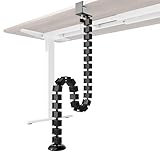
Overview: The PEGZONE Cable Management Spine offers a budget-friendly solution for organizing under-desk cables, particularly for standing desk users. Its 51-inch modular vertebrae design flexes with desk movement while maintaining a clean aesthetic. The tool-free clamp system accommodates desks 0.4 to 2 inches thick, making it accessible for most setups without permanent modifications.
What Makes It Stand Out: This spine distinguishes itself with true plug-and-play installation—no drills, no screws, no damage. The matte black finish blends seamlessly with modern office furniture, while the robust vertebrae segments extend or shorten to match your exact cable routing needs. Its explicit design for standing desks means the structure won’t buckle or tangle during height adjustments, protecting your cables throughout the full range of motion.
Value for Money: At $20.89, this is the most economical vertebrae-style organizer in its class. Competing solutions typically start at $25-30, making this an excellent entry point. The 24/7 customer support adds intangible value, ensuring you’re not left stranded with installation questions. While materials may not match premium brands, the functionality-per-dollar ratio is exceptional for home offices and budget-conscious professionals.
Strengths and Weaknesses: Strengths: Tool-free clamp installation; adjustable length; standing desk optimized; responsive customer service; attractive matte black finish. Weaknesses: Clamp may loosen on thicker desks over time; limited color options; plastic construction less durable than metal alternatives; no weighted base for extra stability.
Bottom Line: For under $21, the PEGZONE spine delivers reliable cable management with minimal fuss. It’s ideal for renters, temporary setups, or anyone prioritizing convenience and value over premium materials. A solid choice for most standing desk users.
7. DeskLogics Vertebrae Cable Management for Standing Desk, Adjustable Length Cable Snake, Flexible Cable Spine Cable Raceway Cable Management for Home Office Sit Stand Desk Workstation Cord Protection
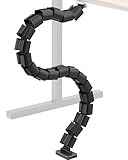
Overview: DeskLogics positions itself as a premium cable management solution with professional-grade construction. The 51-inch ABS and steel vertebrae system features dual entry points and a substantial weighted base designed specifically for dynamic sit-stand workstations. Its snap-together design prioritizes stability and long-term durability.
What Makes It Stand Out: The innovative block system with two large cable entry points simplifies installation from any angle—a significant improvement over single-entry designs. The robust 3.9" x 2.5" steel base plate and 235g weighted floor anchor provide exceptional stability that prevents tipping during rapid desk movements. Material selection (ABS, steel, TPR) ensures this spine withstands daily adjustments without degradation.
Value for Money: At $29.99, this mid-range option justifies its price through superior materials and engineering. The weighted base alone adds $5-10 of value compared to basic clamp-only models. For professionals investing $500+ in a standing desk, spending 6% more for reliable cable protection is logical. It outperforms cheaper alternatives in stability and lifespan, making it cost-effective over time.
Strengths and Weaknesses: Strengths: Dual cable entry points; weighted steel base; premium material construction; snap-together stability; floor-level anchoring. Weaknesses: Requires desk thickness over 0.7"; no tool-free option; higher price point; limited aesthetic choices; installation more complex than clamp systems.
Bottom Line: The DeskLogics spine suits professionals seeking durable, stable cable management. Its weighted base and dual-entry design make it worth the premium for heavy-use standing desks where reliability is paramount.
8. PEGZONE Under Desk Cable Management Spine – Flexible Cable Snake Organizer for Standing Desk, No Drill Clamp-on Vertebrae Wire Management for 0.4"-2" Table, White

Overview: Functionally identical to its black counterpart, the white PEGZONE spine offers the same 51-inch modular vertebrae design and tool-free clamp installation, but in a crisp white finish. It accommodates desks 0.4 to 2 inches thick and flexes smoothly with standing desk movements, providing identical cable organization capabilities with alternative aesthetics.
What Makes It Stand Out: The white colorway addresses a critical gap in cable management—matching light-colored or white desk setups where black accessories would create visual dissonance. Beyond color, it retains the same excellent tool-free installation and adjustable segmentation that made the original popular. The clean, medical-white finish particularly suits modern minimalist offices and healthcare environments.
Value for Money: Priced at $29.99, this commands a $9 premium over the black version—a steep increase for a color change. However, for design-conscious users with white or light wood desks, this aesthetic cohesion can justify the cost. Few competitors offer white vertebrae-style organizers, giving PEGZONE pricing power. If color matching matters to your workspace vision, the premium is worthwhile; otherwise, the black version offers better value.
Strengths and Weaknesses: Strengths: White finish matches light desks; tool-free installation; adjustable length; standing desk compatibility; same 24/7 support. Weaknesses: 43% price premium over black version; same durability concerns; limited to clamp mounting; may discolor over time; no weighted base option.
Bottom Line: Choose the white PEGZONE spine if aesthetics are paramount and your desk is light-colored. For function-first buyers, the identical black version at $20.89 is the smarter purchase. It’s a style upgrade, not a performance one.
9. DeskLogics Magnetic Cable Management for Standing Desk, Adjustable Length Cable Snake, Flexible Cable Spine Cable Raceway Cable Management for Home Office Sit Stand Desk Workstation Cord Protection
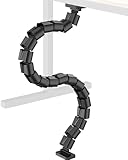
Overview: DeskLogics innovates with magnetic mounting technology, eliminating clamps and screws entirely for metal desk leg installations. This 51-inch vertebrae system features dual cable entry points, a weighted steel base, and powerful magnets that secure directly to steel desk frames. Designed for ultimate convenience, it targets users with metal-legged standing desks seeking clean, damage-free organization.
What Makes It Stand Out: The magnetic attachment system is a game-changer for compatible desks—installation takes seconds and leaves zero marks. Combined with the proven dual-entry block design and 235g weighted base from the standard model, it offers unprecedented flexibility. The system can be repositioned instantly without tools, adapting to changing cable configurations or desk layouts on the fly.
Value for Money: At $39.99, this commands a $10 premium over DeskLogics’ clamp version. For owners of metal-framed desks, this is excellent value—avoiding drilling or clamp damage while gaining repositioning freedom. However, it’s useless for wood or non-magnetic desks, limiting its audience. If you have a compatible desk, the time saved and flexibility gained justify the cost; otherwise, it’s an expensive misfit.
Strengths and Weaknesses: Strengths: Instant magnetic installation; repositionable; dual entry points; weighted base; no surface damage; premium materials. Weaknesses: Only works with metal desks; highest price point; magnet strength may vary; limited compatibility; requires steel frame proximity.
Bottom Line: The magnetic DeskLogics spine is perfect for metal desk owners who prioritize convenience and flexibility. For everyone else, stick with the standard clamp version. It’s a specialized tool that excels in its niche but isn’t universally applicable.
10. ARES WING Under Desk Cable Management Spine, Screw On Vertebrae Cable Management for Standing Desk, Length Adjustable Cord Organizer with 20 Modular Vertebrae for Office and Gaming Desks, Blue

Overview: ARES WING targets the gaming community with a bold blue vertebrae spine featuring 20 detachable segments reaching 50.6 inches. Unlike clamp or magnetic systems, this uses secure screw-on mounting for maximum stability. Its standout feature is dual independent cable channels, allowing separation of power and data lines to prevent interference—critical for high-performance gaming setups.
What Makes It Stand Out: The dual-channel design is uniquely practical, letting users isolate power cords from sensitive data cables, reducing electromagnetic interference. The aggressive blue aesthetic matches gaming rigs while maintaining professional functionality. Screw-on installation, while permanent, provides unmatched stability for heavy cable loads and frequent desk adjustments. Twenty modular segments offer exceptional length customization.
Value for Money: At $27.54, this sits in the mid-range sweet spot—cheaper than premium magnetic options but more expensive than basic clamps. The dual-channel feature alone adds significant value for gamers and professionals with complex setups. Screw-mounting hardware included at no extra cost improves value. For users wanting both style and sophisticated cable separation without hitting $40 price points, this delivers strong ROI.
Strengths and Weaknesses: Strengths: Dual cable channels; gaming aesthetic; screw-on stability; 20 modular segments; separates power/data; includes clear instructions. Weaknesses: Requires drilling/screws; permanent installation; limited to desks ≥0.7" thick; blue color may not suit all offices; no weighted base.
Bottom Line: ARES WING is ideal for gamers and tech enthusiasts needing advanced cable separation and rock-solid stability. The screw-mount commitment pays off in performance. If you can handle permanent installation, this offers premium features at a moderate price.
What Exactly Are Cable Spine Towers?
Cable spine towers are vertical cable management systems designed specifically for height-adjustable desks. Picture a flexible, articulated column that attaches to your desk surface and floor (or ceiling), creating a dedicated pathway for cables to travel safely as your workstation rises and lowers. These towers consist of interlocking segments—typically plastic or metal—that form a chain-like structure capable of bending and straightening without kinking or crushing the wires inside.
The genius lies in their segmented design. Each link rotates independently, allowing the spine to follow your desk’s arc of movement while maintaining a consistent internal diameter for cable routing. Think of it as a protective exoskeleton that moves with your desk, preventing the constant flexing and stress that would otherwise destroy cables within months.
Why Sit-Stand Desks Demand Specialized Cable Management
Standard cable management solutions were never designed for motion. Fixed cable trays, J-channels, and adhesive clips work perfectly for stationary desks but become liabilities when movement enters the equation. Every time you adjust your sit-stand desk, cables experience tension, compression, and bending forces that quickly degrade insulation, fracture internal conductors, and loosen connections.
Height-adjustable desks typically travel 25-30 inches vertically, translating to nearly 8 feet of cable movement if you consider the full sweep from lowest to highest position. Without a dedicated management system, cables drag across surfaces, catch on edges, and experience repeated stress at connection points. This movement creates three critical problems: mechanical fatigue that shortens cable lifespan, connection instability causing intermittent device failures, and safety hazards from cables pulling on equipment or creating trip risks.
The Hidden Costs of Poor Cable Management
The true expense of inadequate cable organization extends far beyond aesthetics. A single damaged monitor cable might cost $30 to replace, but what about the productivity lost when your display flickers during a client presentation? Or the laptop that gets yanked off your desk because a cable snagged during descent?
Insurance claims data shows that cable-related trip and fall incidents are among the most common office accidents, with average injury costs exceeding $10,000 per incident. Equipment damage from sudden cable tension can destroy expensive peripherals or even the ports they’re connected to—replacing a laptop’s HDMI or USB-C port often requires a complete motherboard replacement costing hundreds of dollars.
There’s also the ergonomic cost: poorly managed cables restrict your desk’s range of motion, forcing you to stop the ascent or descent prematurely to avoid pulling something loose. This defeats the purpose of investing in a height-adjustable workstation in the first place.
Key Components and Anatomy of a Quality Cable Spine
Understanding the anatomy of a cable spine tower helps you identify quality construction and avoid flimsy alternatives that fail within months. The main components include:
Segmented Links or Vertebrae
These interlocking pieces form the spine’s body. Quality models use reinforced plastic or aluminum with smooth interior channels that prevent cable abrasion. Look for links with snap-together connections that won’t separate under tension but can be easily disassembled for cable changes.
Mounting Hardware
Top mounts typically clamp or screw into your desk’s surface, while bottom mounts may attach to the floor, wall, or desk base. Premium systems offer adjustable mounting brackets that accommodate various desk thicknesses and floor types without drilling.
Cable Entry and Exit Points
Well-designed spines feature wide, smooth openings at both ends with rubber grommets or brushes that prevent dust entry while allowing multiple cables to pass through without binding.
Internal Dividers
Advanced models include removable dividers or separate channels that segregate power cables from data lines, reducing electromagnetic interference and preventing power adapters from overheating.
Material Matters: Choosing the Right Build Quality
The material composition directly impacts durability, flexibility, and noise levels during operation. Budget-friendly options typically use ABS plastic, which offers decent flexibility but can become brittle after prolonged UV exposure and may yellow over time. Mid-range spines often incorporate polycarbonate blends that resist impact and maintain clarity longer.
For heavy-duty applications, aluminum or steel segments provide superior strength and a premium aesthetic, though they add weight and cost. These metal systems often feature powder-coated finishes that resist scratching and blend better with modern office furniture. The trade-off is reduced flexibility—metal spines require more space to articulate and may produce slight metallic sounds during movement.
Consider your environment: plastic works well in climate-controlled offices, while metal excels in industrial settings or areas with temperature fluctuations. Hybrid designs combine plastic links with metal mounting brackets, offering a balanced compromise.
Weight Capacity: The Overlooked Specification
Most buyers focus on cable capacity but completely ignore weight ratings—a critical mistake. A spine tower must support not just the cables themselves, but also any attached power strips, adapters, or junction boxes you might mount along its length. Exceeding weight capacity causes the spine to sag, links to separate, or mounting brackets to fail.
Quality manufacturers specify two weight ratings: static load (the weight it holds when stationary) and dynamic load (the weight it can safely support during movement). Dynamic capacity is typically 30-40% lower than static rating. A typical setup with two monitors, a laptop, and peripherals can easily exceed 15 pounds of cable and adapter weight.
Check the mounting hardware’s weight rating separately. Clamp-style mounts often have lower capacity than through-bolt installations, especially on laminate desktops that can compress under load. For setups with heavy power bricks or multiple adapters, consider models with reinforced mounting plates that distribute weight across a larger surface area.
Flexibility and Articulation: Following Your Desk’s Movement
The spine’s articulation range determines how smoothly it moves with your desk and how much clearance space you’ll need behind your workstation. Quality spines offer 180-degree rotation at each link, allowing them to form smooth curves rather than sharp angles that kink cables.
Test the bend radius specification—the minimum curve diameter the spine can achieve without stressing internal cables. A smaller bend radius (around 4-6 inches) indicates better flexibility and requires less rear clearance. This becomes crucial if your desk sits against a wall or in a corner.
Some premium models feature ball-and-socket joints instead of simple hinges, providing multi-directional movement that accommodates desks with slight lateral wobble or uneven floor surfaces. Consider your desk’s lifting mechanism: electric desks with single motors often have slight side-to-side movement that demands more flexible cable management than dual-motor systems.
Installation Methods: Desk-Mount vs. Floor-Mount Solutions
Your installation choice dramatically impacts stability, cable length requirements, and floor protection. Desk-mount spines attach to the desktop and rest on the floor, creating a freestanding column. This method works well for carpeted areas and avoids permanent floor modifications, but requires precise cable length calculation and can mark hardwood floors.
Floor-mount systems bolt directly to the floor or a weighted base plate, providing maximum stability and allowing the spine to support heavier cable loads. This approach is ideal for concrete floors in commercial spaces but may be impractical for renters or those with delicate flooring.
Wall-mount hybrid solutions offer a middle ground, anchoring to both the desk and nearby wall. This reduces floor contact and provides excellent stability, though it limits desk placement flexibility. Some innovative designs use magnetic floor plates that hold the spine base without drilling, perfect for temporary setups or glass-walled offices where drilling is prohibited.
Height Adjustability and Extension Range
Not all spines accommodate all desk ranges. Measure your desk’s full travel distance—from its lowest sitting position to maximum standing height—and add at least 6 inches of buffer. This prevents the spine from fully compressing or over-extending, which can cause links to bind or separate.
Most spines specify a “working range” rather than absolute length. A model rated for 25-45 inches might compress to 25 inches at desk-lowest position and extend to 45 inches at full height. If your desk travels 30 inches vertically, this spine would work, but you’d have only 5 inches of compression buffer, which may be insufficient if cables inside prevent full compression.
Look for models with adjustable stops that prevent over-extension. Some feature internal bungee cords or springs that assist with smooth extension and prevent sudden drops when lowering your desk. This is particularly important for heavier cable loads that can cause the spine to collapse too quickly.
Aesthetic Integration: Beyond Pure Functionality
Modern offices demand solutions that complement minimalist aesthetics. Cable spines now come in various colors and finishes beyond basic black—white, silver, and even wood-grain patterns help them blend with desk legs and surrounding furniture.
Consider the spine’s profile: slim designs (under 2 inches diameter) disappear visually but offer less capacity. Chunky industrial models (3+ inches) make a statement but may clash with sleek desk designs. Some manufacturers offer paintable surfaces or removable sleeves that match your desk’s exact color.
Transparency is another aesthetic choice. Clear or smoked polycarbonate spines let you see cable routing, which simplifies troubleshooting but may look cluttered. Opaque designs hide everything for a cleaner appearance. Choose based on whether you value easy maintenance or visual minimalism.
Capacity Planning: How Many Cables Can You Actually Fit?
Manufacturers’ cable count specifications are often optimistic, assuming thin, flexible cables packed perfectly. Real-world capacity depends on cable diameter, stiffness, and connector size. A spine rated for “12 cables” might handle twelve ethernet cables but only six thick power cords with molded plugs.
Create a cable inventory before purchasing: list every device, its cable thickness, and connector type. Bundle them loosely with a zip tie and measure the circumference to estimate required internal diameter. Add 30% extra space for future additions and to prevent overheating.
Power cables generate heat, especially when bundled tightly. Overloading a spine can create a fire hazard and cause voltage drop over longer runs. Quality spines include ventilation slots between links, but these only help if air can circulate. For setups with multiple power bricks, consider a spine with separate power and data channels or plan to mount power strips externally.
Accessibility and Maintenance Considerations
Your cable needs will evolve—new monitors, docking stations, or peripherals get added regularly. A spine that’s difficult to open becomes a permanent barrier to upgrades. Look for tool-less access designs where links snap apart with simple pressure points or twist-lock mechanisms.
Consider how you’ll route cables with connectors too large to thread through the spine. Some designs feature split links that open completely, allowing you to lay cables in place rather than threading them. Others have removable side panels at strategic points for mid-spine cable exits.
Dust and debris accumulation inside the spine can affect cable performance over time. Models with smooth interior surfaces and minimal crevices are easier to clean. Some include built-in cable management fingers or clips that keep individual cables separated, preventing tangles when you need to pull a single wire for replacement.
Compatibility Check: Will It Work With Your Setup?
Before purchasing, verify several compatibility factors beyond just desk height range. Check your desk’s frame design—some spines interfere with crossbars or motor housings on certain desk models. Measure the distance from the desk edge to any obstructions to ensure the mounting bracket fits.
Consider your floor type and clearance. Thick carpet padding can compress under the spine’s weight, effectively reducing its working height. Hard floors may require felt pads or rubber feet to prevent scratching. If your desk has a modesty panel or cable tray underneath, ensure the spine’s top mount can clear these obstacles.
Power accessibility matters too. The spine should position cable exit points near your power source without creating new trip hazards. For desks centered in a room, a spine with a floor plate that routes cables horizontally along the floor may work better than one that drops straight down.
Budget Tiers: What to Expect at Different Price Points
Entry-level cable spines ($20-$40) typically use basic ABS plastic with simple clamp mounts. They handle light loads (5-10 pounds) and shorter desk ranges (up to 24 inches of travel). Expect manual assembly, limited color options, and potential noise during operation. These work for single-monitor setups with minimal peripherals.
Mid-range options ($50-$90) offer polycarbonate construction, better articulation, and weight capacities of 15-20 pounds. They include more sophisticated mounting hardware, rubber grommets, and often feature tool-less access. These suit dual-monitor setups and home offices where aesthetics matter.
Premium models ($100-$200+) use aluminum or steel construction, support 25+ pounds, and include advanced features like integrated power distribution, cable strain relief systems, and acoustic dampening. They offer extensive customization, longer warranties, and are designed for commercial environments or high-end home offices with complex setups.
Common Installation Mistakes and How to Avoid Them
The most frequent error is incorrect cable length calculation. Cables inside the spine need slack to move freely but not so much that they bunch up and prevent smooth compression. Measure cable length with your desk at mid-position, adding 12-15% extra length to accommodate the spine’s curve.
Another mistake is mounting the spine too close to the desk edge, causing it to interfere with chairs or your legs. Position it at least 6 inches from where you sit, typically aligning with the desk’s rear leg or motor housing.
Over-tightening mounting screws on laminate desktops can crack the surface or compress the particle board, leading to a loose fit over time. Use washers to distribute pressure and follow torque specifications if provided. For glass desktops, never drill—use only clamp-mount solutions designed specifically for tempered glass.
Future-Proofing Your Cable Management Investment
Technology evolves rapidly. Today’s perfect cable spine might become obsolete when you upgrade to a larger desk or add equipment requiring thicker cables. Choose a spine with expandable capacity—some models allow you to add extra links later or replace individual segments if damaged.
Consider the rise of USB-C and power-over-ethernet, which reduce cable counts but increase power delivery requirements. A spine that handles high-current power cables safely will serve you longer than one optimized only for thin data lines.
Modular mounting systems that work across different desk brands provide flexibility if you relocate or upgrade your workstation. Some manufacturers offer adapter kits for various desk profiles, ensuring your investment isn’t tied to a single piece of furniture.
Frequently Asked Questions
1. Can I install a cable spine tower on a glass-top sit-stand desk?
Yes, but only use clamp-mount models specifically rated for glass. Avoid any solution requiring drilling, as tempered glass shatters when compromised. Look for wide, padded clamps that distribute pressure evenly and never exceed the manufacturer’s weight limit for glass applications.
2. Will a cable spine work with a treadmill desk or cycling desk?
Standard spines may not accommodate the additional lateral movement and vibration. Look for models with enhanced flexibility and vibration-dampening features. Wall-mount configurations often work better for active workstations, as they eliminate floor contact that can cause wobbling.
3. How do I prevent my cable spine from making noise when the desk moves?
Lubricate the link joints with silicone spray during installation. Ensure cables aren’t rubbing against the interior walls by using cable clips to keep them centered. Metal spines may develop squeaks over time—a thin application of white lithium grease on contact points eliminates this.
4. What’s the maximum desk thickness for clamp-style mounts?
Most clamps accommodate 0.5 to 2.5 inches, but always verify with your specific desk. For thicker solid wood or butcher block tops, you may need extended clamp screws or a through-bolt installation. Some manufacturers offer deep-clamp accessories for unusual thicknesses.
5. Can I run extension cords or power strips inside the spine?
Only if the spine is rated for the additional electrical load and heat generation. Most are designed for individual cables, not bulky power strips. A better solution is to run cables to a power strip mounted on the desk, then run a single heavy-gauge cord through the spine to the wall outlet.
6. How often should I inspect or maintain my cable spine?
Perform a visual inspection every six months, checking for cracked links, loose mounting hardware, and cable wear inside. Test the full desk range while watching for binding or unusual noises. In high-use commercial environments, quarterly inspections are recommended.
7. Do cable spines comply with office fire codes and insurance requirements?
Most commercial-grade spines meet UL94 fire resistance standards, but residential models may not. For business installations, verify NFPA 70 (National Electrical Code) compliance and check with your insurance provider. Some policies require specific cable management standards for standing desks.
8. Can I paint or customize the appearance of my cable spine?
ABS and polycarbonate spines can be painted with plastic-bonding spray paint after proper surface preparation. Disassemble the links, clean thoroughly with alcohol, and apply light coats. Metal spines can be powder-coated if disassembled, though this voids most warranties.
9. What if my desk has a curved or irregular edge?
Specialty mounting brackets are available for curved, beveled, or live-edge desktops. Some manufacturers offer articulating mounts that conform to non-standard edges. For severe curves, consider a floor-mount spine positioned slightly away from the desk edge.
10. Are there wireless alternatives that eliminate the need for cable spines?
While wireless charging and Bluetooth reduce some cables, power delivery still requires cords for monitors, docking stations, and most computers. Wireless video standards exist but often introduce latency unacceptable for design or gaming work. For the foreseeable future, cable management remains essential for reliable, high-performance setups.