Transforming your office into a paperless environment isn’t just about clearing cluttered desks or embracing digital minimalism—it’s about fundamentally revolutionizing how you access, store, and protect your most important information. But here’s the catch: your entire paperless ecosystem will only be as strong as the scanner you choose to build it on. While letter-sized documents represent the vast majority of business paperwork, selecting the right scanner involves far more than just ensuring it can handle 8.5" x 11" paper.
The market is flooded with options promising lightning-fast speeds, crystal-clear resolution, and seamless cloud integration. Yet many buyers discover too late that they’ve invested in a device that can’t handle their daily volume, lacks critical software features, or becomes a bottleneck rather than a productivity booster. This comprehensive guide cuts through the marketing noise to help you understand exactly what features matter most for your specific paperless storage needs.
Top 10 Letter-Sized Document Scanners for Paperless Storage
Detailed Product Reviews
1. Epson Workforce ES-400 II Color Duplex Desktop Document Scanner for PC and Mac, with Auto Document Feeder (ADF) and Image Adjustment Tools, ES-400 II
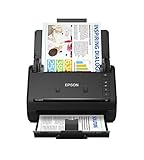
Overview: The Epson Workforce ES-400 II is a robust desktop document scanner engineered for home offices and small businesses processing moderate document volumes. Its 50-sheet Auto Document Feeder (ADF) and high-speed duplex capability efficiently transform paper stacks into digital files. Designed for seamless integration with both PC and Mac environments, this scanner balances professional features with user-friendly operation, making it ideal for remote workers and small teams seeking reliable document digitization without enterprise-level complexity.
What Makes It Stand Out: The Epson ScanSmart Software distinguishes this scanner with intuitive preview, email, and cloud upload functionality that automates tedious workflow steps. Automatic file naming and built-in image adjustment tools save significant time, while the included TWAIN driver ensures compatibility with virtually any document management system—a critical feature for business integration. The OCR capability creates searchable PDFs and converts scans to editable Word or Excel files without requiring additional software purchases, delivering exceptional value in the box.
Value for Money: At $299.99, the ES-400 II occupies the sweet spot for serious home office users. It delivers professional-grade features typically found in $400+ enterprise units, including reliable ADF performance and comprehensive software. Compared to entry-level models lacking duplex scanning or automated workflows, the time saved justifies the premium. However, it remains significantly more affordable than heavy-duty departmental scanners, making it a smart investment for users scanning 50-200 pages daily.
Strengths and Weaknesses: Strengths include fast duplex scanning, excellent software ecosystem, reliable 50-sheet ADF, and broad cloud service integration. The TWAIN driver support is a major advantage for business workflows. Weaknesses include its desktop footprint requiring dedicated space, and initial software setup can be time-consuming for non-technical users. The lack of wireless connectivity may disappoint those wanting cable-free operation. Paper path limitations can occasionally struggle with very thick or damaged documents.
Bottom Line: The Epson ES-400 II is an excellent investment for small offices and remote workers with regular scanning needs. Its combination of speed, intelligent software, and reliability makes it a workhorse that justifies its price through tangible productivity gains. If you process documents daily and require seamless workflow integration, this scanner delivers exceptional performance and value.
2. Epson WorkForce ES-50 Portable Sheet-Fed Document Scanner for PC and Mac

Overview: The Epson WorkForce ES-50 redefines mobile scanning as the fastest and lightest single-sheet portable scanner in its class. Weighing mere ounces and powered entirely by USB, this device serves professionals who need occasional document digitization without carrying bulky equipment. It handles everything from standard letter pages to lengthy documents up to 8.5 x 72 inches, plus ID cards and receipts, making it surprisingly versatile for a pocket-sized device.
What Makes It Stand Out: Its remarkable 5.5-second per page scan speed sets it apart from competitors that often feel sluggish. The versatility in paper handling is exceptional—accommodating unusually long documents, thick ID cards, and delicate receipts without jamming. The inclusion of Epson ScanSmart Software and a TWAIN driver brings desktop-level functionality to a truly portable form factor, enabling direct scanning to cloud services without intermediate steps or additional costs.
Value for Money: Priced at $129.00, the ES-50 offers compelling value for mobile professionals. While dedicated desktop scanners provide more features for similar money, nothing matches this combination of portability and speed. It eliminates inconsistent smartphone scanning apps and the need for flatbed scanners on the road. For insurance agents, realtors, and consultants who scan 5-20 pages during client visits, it’s a cost-effective solution that pays for itself through professionalism and time saved.
Strengths and Weaknesses: Strengths include extreme portability, USB-powered convenience, impressively fast scanning, and excellent software support. It handles diverse media types admirably and sets up in minutes. The primary weakness is the single-sheet manual feed, making bulk scanning impractical. It requires a direct computer connection, lacking wireless capability or internal memory for standalone operation. Scanning double-sided documents requires manual page flipping, which slows workflows.
Bottom Line: The ES-50 is the ultimate mobile scanning companion for professionals prioritizing portability without sacrificing quality. If your scanning needs are sporadic and location-based, this scanner delivers desktop-quality results from a device that fits in a laptop bag. For bulk processing, look elsewhere, but for on-the-go digitization of individual documents, it’s unmatched in its class.
3. Brother DS-640 Compact Mobile Document Scanner, (Model: DS640) 1.5"x2"x11.9"

Overview: The Brother DS-640 is a sleek, ultra-compact mobile scanner designed for professionals needing reliable document capture on the road. Measuring under 11.8 inches and weighing just 1.5 pounds, this device delivers impressive 16 ppm scan speeds while drawing power through a single micro USB 3.0 cable. It’s built for the modern mobile workforce that demands productivity without baggage, scanning color and monochrome documents at 300dpi from virtually any location.
What Makes It Stand Out: The DS-640’s primary differentiator is its exceptional speed-to-size ratio, outpacing most competitors in the portable category. The flexible “Scan-to” destination options—including direct OCR, email, and cloud services—provide workflow versatility rarely seen in mobile scanners. Brother’s software suite enables conversion to editable Microsoft Word files, effectively turning the scanner into a mobile document processing station without requiring additional software purchases or subscriptions.
Value for Money: While no price is listed, the DS-640 typically retails around $120-140, positioning it as a strong value proposition. It bridges the gap between basic portable scanners and expensive wireless models, offering professional-grade speed and software features at a mid-range price. The included document management and OCR software eliminates subscription costs that competitors sometimes require, enhancing long-term value for budget-conscious mobile professionals.
Strengths and Weaknesses: Strengths include rapid scanning for a portable unit, true plug-and-play USB power, minimal footprint, and comprehensive bundled software. The 16 ppm speed is genuinely useful for small batches. Weaknesses include mandatory software downloads from Brother’s website (no included media), lack of wireless connectivity, and absence of an ADF which limits multi-page efficiency. The micro USB 3.0 connection may require adapters for newer USB-C laptops, adding minor inconvenience.
Bottom Line: The Brother DS-640 excels for mobile professionals who need more speed than smartphone apps provide but don’t require desktop scanner bulk. It’s ideal for scanning contracts, receipts, and multi-page reports during client visits. If you can live with manual feeding and wired operation, this scanner offers professional capabilities in an incredibly portable package that won’t weigh you down.
4. Epson Workforce ES-580W Wireless Color Duplex Desktop Document Scanner for PC and Mac with 100-sheet Auto Feeder (ADF), Intuitive 4.3’ Touchscreen

Overview: The Epson Workforce ES-580W represents the pinnacle of desktop scanning convenience, combining wireless freedom with heavy-duty performance. Its spacious 100-sheet ADF and rapid 35 ppm duplex capability make it ideal for busy offices processing substantial document volumes. The integrated 4.3-inch touchscreen transforms the scanner into a standalone document management hub that doesn’t require a connected computer for basic operations, revolutionizing office workflow efficiency.
What Makes It Stand Out: This scanner’s wireless connectivity and intuitive touchscreen interface eliminate the traditional tether to a host computer, allowing direct scanning to smartphones, tablets, USB drives, or cloud services. The Single-Step Technology captures both sides simultaneously at full speed, while extensive paper handling reliably manages mixed document types in a single batch. The ability to operate independently—saving directly to USB or email without a PC—sets it apart from conventional desktop scanners that demand constant computer supervision.
Value for Money: At $359.09, the ES-580W commands a premium reflecting its advanced features. For offices valuing wireless flexibility and touchscreen convenience, the investment pays dividends in workflow efficiency and reduced cable clutter. It essentially combines a high-speed scanner with a built-in document distribution system, justifying the cost over cheaper wired models. For users scanning 200+ pages daily, the time saved and operational freedom easily offset the higher initial price within months.
Strengths and Weaknesses: Strengths include exceptional speed, large ADF capacity, versatile wireless operation, responsive touchscreen, and comprehensive cloud integration. The standalone functionality is a game-changer for shared office environments. Weaknesses are the higher price point, larger desktop footprint requiring substantial space, and potential network security considerations for wireless scanning in sensitive environments. Initial Wi-Fi setup may challenge less tech-savvy users, and the touchscreen interface occasionally requires firm presses.
Bottom Line: The ES-580W is the ultimate choice for offices prioritizing convenience and speed. Its wireless capabilities and intuitive interface reduce friction in document workflows, making it worth every penny for high-volume users. If you scan daily and need the freedom to send documents anywhere without being chained to a desk, this scanner delivers unmatched flexibility and performance that transforms how your office handles paper.
5. Canon imageFORMULA R10 - Portable Document Scanner, USB Powered, Duplex Scanning, Document Feeder, Easy Setup, Convenient, Perfect for Mobile Users
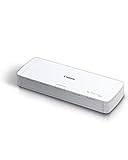
Overview: The Canon imageFORMULA R10 strikes an impressive balance between portability and functionality, offering a 20-sheet automatic document feeder in a compact, USB-powered package. Designed for mobile professionals and small office users, this scanner delivers duplex scanning at up to 12 pages per minute without requiring external power or complex installation. Its ability to handle diverse media—from receipts to legal documents and embossed plastic cards—makes it surprisingly versatile for its diminutive size.
What Makes It Stand Out: The R10’s integrated ADF distinguishes it from most portable scanners that require tedious manual sheet feeding, enabling efficient batch scanning of multi-page documents during client visits or at remote offices. Canon’s reputation for straightforward setup holds true—drivers install quickly, and the scanner works reliably across Windows and Mac platforms. The ability to scan embossed plastic cards alongside standard paper is a practical feature for professionals in finance, healthcare, or hospitality who need to capture ID cards and insurance cards in the field.
Value for Money: Priced at $162.00, the R10 occupies a middle ground between basic portable scanners and full desktop units. The inclusion of an ADF justifies the premium over single-sheet models like the Epson ES-50, while remaining significantly more affordable than wireless desktop scanners. For mobile users who regularly scan multi-page documents, the time saved through automated feeding quickly offsets the higher initial cost compared to manual-feed alternatives.
Strengths and Weaknesses: Strengths include the rare ADF in a portable form factor, true duplex scanning, broad media handling, and Canon’s reliable plug-and-play experience. The USB power eliminates battery concerns and chargers. Weaknesses include slower speed compared to desktop models, limited 20-sheet capacity, and lack of wireless connectivity. It’s slightly heavier than single-sheet portables at approximately 2.1 pounds, though still highly transportable. The absence of an LCD screen means all settings must be controlled through the computer.
Bottom Line: The Canon R10 is the ideal compromise for mobile professionals who need more than occasional single-page scanning but can’t justify a full desktop unit. Its ADF capability transforms productivity for field-based workers, insurance agents, and consultants. If you regularly scan contracts, reports, or multi-page forms away from the office, this scanner’s blend of portability and batch processing is hard to beat, making it a smart investment for mobile productivity.
6. ScanSnap iX2500 Wireless or USB High-Speed Cloud Enabled Document, Photo & Receipt Scanner with Large 5" Touchscreen and 100 Page Auto Document Feeder for Mac or PC, Black

Overview: The ScanSnap iX2500 represents Fujitsu’s flagship document management solution, succeeding the popular iX1600 with substantial upgrades. This high-speed scanner targets busy professionals and small offices that process substantial document volumes daily, combining robust hardware with intelligent software automation.
What Makes It Stand Out: The expansive 5-inch touchscreen interface eliminates computer dependency for routine scans, while Wi-Fi 6 connectivity ensures blistering wireless performance. The 100-sheet automatic document feeder paired with 45 pages-per-minute duplex scanning handles substantial workloads effortlessly. Intelligent paper protection features—including a precision brake roller system, multi-feed detection, and skew correction—prevent costly jams and document damage. The scanner automatically optimizes images, names files intelligently, and routes them to cloud services, mobile devices, or computers via customizable profiles.
Value for Money: At $399.99, the iX2500 commands a premium price that justifies itself for high-volume users. Comparable enterprise scanners often cost significantly more while lacking the touchscreen convenience and wireless flexibility. For businesses scanning hundreds of pages weekly, the time savings and reliability features deliver substantial ROI.
Strengths and Weaknesses: Strengths include exceptional scanning speed, rock-solid wireless connectivity, intuitive touchscreen operation, and superior paper handling technology. The comprehensive software ecosystem streamlines document organization. Weaknesses center on the substantial footprint for home users and price point that may exceed casual user needs. The learning curve for advanced profile customization could intimidate technophobes.
Bottom Line: The ScanSnap iX2500 is an outstanding investment for demanding professionals and growing businesses. Its combination of speed, reliability, and smart features makes it the best-in-class choice for serious document digitization.
7. Brother DS-740D Duplex Compact Mobile Document Scanner

Overview: The Brother DS-740D redefines mobile scanning with its ultra-compact duplex capabilities. Measuring under 12 inches and powered entirely via micro USB 3.0, this portable scanner serves business travelers, remote workers, and anyone needing document digitization without desk-bound limitations.
What Makes It Stand Out: True single-pass duplex scanning at 16 ppm eliminates manual page flipping while maintaining full color speed. The Desk Saving Design conserves nearly a foot of workspace compared to traditional scanners. Cross-platform compatibility shines through Brother’s iPrint&Scan app, supporting Windows, Mac, and Linux with TWAIN/WIA/ICA/SANE drivers. The USB-powered operation means scanning anywhere your laptop goes—no power outlets required.
Value for Money: While price is unlisted, Brother’s portable scanners typically occupy the budget-friendly segment of the mobile market. The DS-740D delivers professional duplex scanning at a fraction of desktop scanner costs, making it accessible for occasional users and mobile professionals alike.
Strengths and Weaknesses: Strengths include exceptional portability, true duplex scanning, broad OS support, and image optimization features like bleed-through prevention and text enhancement. The USB-powered design enables true mobility. Weaknesses include the lack of an automatic document feeder, slower speeds unsuitable for high-volume tasks, and micro USB connector (rather than newer USB-C). Daily duty cycle limitations restrict heavy office use.
Bottom Line: The Brother DS-740D excels as a travel companion for professionals needing reliable duplex scanning on the road. It’s a specialized tool that prioritizes portability over volume, perfect for its intended mobile niche.
8. ScanSnap iX2500 Wireless or USB High-Speed Cloud Enabled Document, Photo & Receipt Scanner with Large 5" Touchscreen and 100 Page Auto Document Feeder for Mac or PC, White

Overview: The ScanSnap iX2500 White edition delivers identical performance to its black counterpart, offering Fujitsu’s premier scanning technology in an alternative colorway. This flagship model replaces the iX1600 with comprehensive upgrades for demanding document management environments.
What Makes It Stand Out: Beyond the pristine white finish that complements modern office aesthetics, the iX2500 features a commanding 5-inch touchscreen for profile-based scanning. Wi-Fi 6 connectivity provides secure, high-speed wireless transfers, while the 100-sheet ADF processes documents at 45 ppm duplex. The intelligent paper handling system uses brake rollers, multi-feed sensors, and skew detection to protect valuable documents. Customizable profiles enable one-touch scanning to cloud services, mobile devices, or computers.
Value for Money: At $399.99, this premium scanner justifies its cost through productivity gains and reliability features. The color choice carries no price premium, making it purely an aesthetic decision. For high-volume users, the time saved and paper jam prevention provide rapid return on investment compared to cheaper, less reliable alternatives.
Strengths and Weaknesses: Strengths mirror the black model: exceptional speed, robust wireless performance, intuitive operation, and advanced paper protection. The white finish may better suit certain decors but could show dust more readily. The same weaknesses apply—substantial size for home offices and premium pricing that exceeds casual user requirements. The comprehensive feature set may overwhelm simple scanning needs.
Bottom Line: Choose the white iX2500 if you prioritize both performance and office aesthetics. It delivers identical best-in-class scanning capabilities as the black version, making color preference the only deciding factor.
9. Plustek Document Carrier Sheets Pack (10 pcs) A4 / Letter Size - Protects Fragile Paper and A3 Size Document by Folding - Support Epson, Brother, Fujitsu and Canon Document Scanner

Overview: The Plustek Document Carrier Sheets provide essential protection for delicate materials during scanning. This pack of ten A4/Letter sized sleeves enables safe digitization of fragile documents, newspaper clippings, photographs, and folded oversized materials through standard document scanners.
What Makes It Stand Out: These versatile carrier sheets unlock scanning capabilities beyond standard paper. They safely transport documents under 127g/m² weight, protecting aging photographs and fragile newsprint from scanner roller damage. The clever design allows A3/B4 documents to be folded and scanned in sections, expanding your scanner’s effective capacity. Universal compatibility with Fujitsu, Epson, Canon, and Brother scanners eliminates brand loyalty concerns.
Value for Money: At $39.99 for ten sheets, the pricing reflects specialty accessory status. For archival projects or preserving historical documents, this cost is negligible compared to the value of irreplaceable originals. Reusable construction extends their lifespan, though careful handling is required to maintain clarity.
Strengths and Weaknesses: Strengths include broad compatibility, effective protection for delicate media, and ability to scan oversized documents by folding. They enable scanning of otherwise unscannable fragile materials. Weaknesses involve the learning curve for proper placement, potential for static buildup attracting dust, and reduced scan clarity compared to direct scanning. The pack size may prove insufficient for large archival projects, requiring additional purchases.
Bottom Line: These carrier sheets are indispensable for anyone scanning fragile or oversized documents. While not for everyday use, they solve specific problems that standard scanning cannot address, making them a wise investment for archival and preservation needs.
10. ScanSnap iX1300 Compact Wireless or USB Double-Sided Color Document, Photo & Receipt Scanner with Auto Document Feeder and Manual Feeder for Mac or PC, Black

Overview: The ScanSnap iX1300 balances compact design with capable performance for space-constrained environments. This smaller sibling to the iX2500 targets home offices and small businesses needing reliable wireless scanning without the footprint of professional-grade equipment.
What Makes It Stand Out: The innovative space-saving design minimizes desk real estate while maintaining full functionality. It scans at 30 ppm duplex through both auto document feeder and manual slot for thick items like plastic cards. The exclusive Quick Menu enables drag-and-drop scanning to favorite applications. Wi-Fi and USB connectivity provide flexible placement options, while ScanSnap Home software consolidates document, receipt, photo, and business card management into one interface.
Value for Money: At $279.99, the iX1300 occupies a sweet spot between basic flatbeds and premium professional scanners. It delivers wireless convenience and duplex speed at a price accessible to serious home users. The space-saving design adds value for apartment dwellers and cluttered desks.
Strengths and Weaknesses: Strengths include compact footprint, versatile media handling, straightforward wireless setup, and intelligent image optimization features like automatic de-skew and blank page removal. The dual feeding methods accommodate various document types. Weaknesses include slower speed than the iX2500 and presumably smaller ADF capacity (not specified). The reduced throughput may bottleneck high-volume users, and the plastic construction feels less robust than enterprise alternatives.
Bottom Line: The ScanSnap iX1300 excels for home offices prioritizing space efficiency and wireless convenience. It delivers professional-quality scanning without the professional-grade bulk, making it ideal for moderate-volume users seeking a clutter-free workspace.
Understanding Letter-Sized Document Scanning: The Foundation of Digital Transformation
Letter-sized scanning forms the backbone of most digital transformation initiatives because it handles the standard documents that flow through every organization—contracts, invoices, correspondence, reports, and records. When evaluating scanners, you’re not just buying a piece of hardware; you’re investing in the gateway that converts physical information into searchable, archivable digital assets.
The scanning process itself involves multiple stages: physical paper handling, image capture, data processing, and digital output. Each stage introduces variables that affect your final result. A truly effective scanner for paperless storage must excel at all four stages consistently, day after day. Understanding this workflow helps you identify which specifications genuinely impact your productivity versus which are simply impressive numbers on a spec sheet.
Key Scanner Technologies: CIS vs CCD Explained
At the heart of every scanner lies its image sensor technology, and this choice fundamentally affects everything from scan quality to device longevity. Contact Image Sensors (CIS) have become increasingly common in modern document scanners due to their compact design and energy efficiency. These sensors sit extremely close to the document surface, requiring minimal warm-up time and consuming less power.
Charge-Coupled Device (CCD) sensors, while bulkier and more power-hungry, offer superior depth of field and color accuracy. This matters significantly when scanning bound materials, slightly wrinkled documents, or items with dimensional elements like embossed seals. For pure paperless document storage, CIS technology typically provides perfectly adequate quality while offering faster operation and lower operating costs. However, organizations archiving historical documents or handling mixed media may find CCD’s versatility worth the trade-offs.
Speed vs. Quality: Finding Your Scanning Sweet Spot
Manufacturers love to advertise pages-per-minute (PPM) ratings, but these numbers rarely tell the complete story. A scanner rated at 60 PPM might achieve that speed only at 200 DPI in black-and-white mode, while your actual needs require 300 DPI color scans with OCR processing. Real-world throughput depends on resolution settings, duplex requirements, network speed, and your computer’s processing power.
The key is understanding your daily scanning volume and time constraints. A small office processing 50 pages daily can afford to prioritize quality over raw speed, while a busy accounting firm digitizing hundreds of invoices weekly needs sustained throughput. Consider your peak scanning periods—does everyone dump their weekly filing on Friday afternoons? Factor in warm-up time, file saving overhead, and the inevitable paper jams when calculating true productivity.
Resolution Demystified: How Many DPI Do You Really Need?
Dots per inch (DPI) represents perhaps the most misunderstood specification in scanning. While it’s tempting to assume higher is always better, scanning everything at 600 DPI creates massive file sizes that devour storage space and slow down document retrieval without providing visible benefits for standard text documents.
For paperless storage of typical business documents—letters, contracts, printed reports—300 DPI delivers the optimal balance of readability and file size. This resolution provides sufficient detail for accurate OCR recognition while keeping PDFs manageable. Reserve 600 DPI for documents with fine print, engineering drawings, or materials containing detailed graphics. For archival purposes involving historical documents or those with handwritten annotations, 400-600 DPI ensures you capture every detail before the physical original degrades further.
Automatic Document Feeder (ADF) Capacity: Batch Scanning Efficiency
Nothing kills scanning productivity faster than constantly hovering over your device, feeding small stacks of pages. ADF capacity directly impacts your ability to batch-process documents efficiently. A 50-sheet ADF might suffice for occasional scanning, but regularly exceeding its capacity leads to premature roller wear and increased misfeed rates.
Consider your typical document batches. Do you scan client files containing 30-40 pages each? Do you process weekly expense reports in stacks of 25? Choose an ADF capacity that comfortably handles 80% of your typical batches without constant supervision. Also examine the ADF’s paper path design—straight paths handle mixed document types better, while U-shaped paths save desk space but may struggle with rigid or delicate papers.
Duplex Scanning: The Non-Negotiable Feature for Paperless Workflows
Single-sided scanning in a paperless office is like buying a car with one wheel—technically functional but impractical. Duplex scanning, which captures both sides of a page simultaneously, isn’t just a convenience feature; it’s essential for maintaining document fidelity and workflow efficiency.
True duplex scanners use dual sensor arrays to capture both sides in a single pass, effectively doubling your scanning speed compared to single-pass devices that flip pages mechanically. This matters enormously for documents like contracts with terms on the back, two-sided invoices, or any standard business correspondence. When evaluating duplex capabilities, verify that the scanner maintains its rated speed in duplex mode—some devices significantly slow down when processing double-sided pages.
Connectivity Options: USB, Wi-Fi, Network, and Cloud Integration
Your scanner’s connection method determines how seamlessly it integrates into your paperless ecosystem. USB 3.0 offers the fastest direct connection, ideal for high-volume scanning where large files transfer quickly to a dedicated computer. However, USB tethering limits flexibility and creates single points of failure.
Network-connected scanners with Ethernet ports enable multiple users to share a single device, centralizing scanning operations and reducing hardware costs. Wi-Fi connectivity provides placement flexibility but introduces potential security vulnerabilities and speed limitations. Modern scanners increasingly offer direct-to-cloud scanning, uploading documents straight to Dropbox, Google Drive, or proprietary document management systems. Evaluate your IT infrastructure and security policies—some organizations prohibit cloud connectivity for sensitive documents, while others embrace it for accessibility.
Software Ecosystem: OCR, Document Management, and Beyond
Hardware specifications mean little without robust software to transform raw scans into searchable, organized digital assets. Optical Character Recognition (OCR) accuracy varies dramatically between manufacturers, affecting your ability to search document contents and automate data extraction. Look for OCR engines that preserve document formatting, recognize multiple languages, and handle poor-quality originals gracefully.
Beyond OCR, examine the bundled software’s capabilities. Does it include automated file naming based on content? Can it create searchable PDF/A files for long-term archival? Does it integrate with your existing document management system? Some scanners include basic versions that require expensive upgrades for full functionality. Factor software licensing costs into your total investment, and verify compatibility with your operating systems and workflow requirements.
File Format Flexibility: From PDF/A to Searchable Documents
Your scanner’s output formats directly impact long-term document accessibility and compliance. While standard PDFs work for general storage, PDF/A (Archival) format ensures documents remain readable decades later by embedding all fonts and eliminating external dependencies. This matters critically for legal, medical, and financial records with retention requirements spanning years or decades.
Consider whether you need editable formats like Word or Excel export for document repurposing. Some advanced scanners can automatically detect document types and apply appropriate formats—spreadsheets as Excel files, forms as searchable PDFs with fillable fields. Evaluate compression algorithms too; modern scanners use intelligent compression that maintains readability while dramatically reducing storage requirements, especially important when building cloud-based paperless systems.
Duty Cycle and Build Quality: Matching Scanner to Workload
Duty cycle—the manufacturer’s recommended maximum daily pages—separates consumer-grade scanners from business workhorses. Exceeding this rating regularly accelerates wear, voids warranties, and leads to frequent breakdowns. A scanner rated for 1,000 pages daily that’s processing 3,000 pages will likely fail within months.
Build quality manifests in component materials, roller durability, and serviceability. Metal chassis withstand heavy use better than plastic. Consumable parts like rollers and separation pads should be easily replaceable without technician visits. Check the recommended service interval and parts cost—these hidden expenses significantly impact total ownership costs. For mission-critical scanning operations, consider devices with field-replaceable parts and next-business-day warranty service.
Mobile Scanning Integration: Extending Your Paperless Ecosystem
Modern paperless workflows extend beyond the traditional office. Mobile scanning apps that pair with desktop scanners create a seamless capture ecosystem, allowing you to scan receipts on the road, capture whiteboard notes in meetings, or digitize field documentation. The best integrations automatically sync mobile captures with your main document repository, applying consistent naming conventions and OCR processing.
Evaluate whether the scanner manufacturer offers robust mobile apps with features like automatic edge detection, perspective correction, and batch processing. Some enterprise solutions include remote management capabilities, allowing IT departments to monitor scanner status, update firmware, and troubleshoot issues across multiple locations. This integration proves invaluable for organizations with distributed teams or hybrid work models.
Security Features: Protecting Sensitive Documents in Digital Form
Scanning inherently creates digital copies of potentially sensitive information, making security features critical for compliance with regulations like HIPAA, GDPR, or SOX. Look for scanners with built-in encryption for data in transit, secure boot processes that prevent firmware tampering, and the ability to automatically wipe internal memory after each scan job.
Network scanners should support enterprise authentication protocols like LDAP or Active Directory integration, ensuring only authorized users can access scanning functions. Some devices offer pull-scanning, where documents remain in a secure queue until the authenticated user releases them at their workstation. For highly sensitive environments, consider scanners without internal storage that process data directly to encrypted destinations, eliminating the risk of document remnants on the device.
Cost Considerations: TCO Beyond the Initial Purchase Price
The sticker price reveals only a fraction of your scanner’s true cost. Total Cost of Ownership (TCO) includes consumables, energy consumption, software licensing, and productivity impact from downtime. High-volume scanners often cost more upfront but deliver lower per-page costs through durable components and efficient operation.
Calculate cost per page based on consumable life and replacement part prices. A $300 scanner requiring $80 roller replacements every 50,000 pages may cost more long-term than a $800 scanner with 200,000-page service intervals. Factor in employee time—if a faster scanner saves 30 minutes daily, that’s over 120 hours annually, translating to thousands in labor savings. Energy-efficient models with automatic sleep modes reduce operating costs, especially important for devices that remain powered on continuously.
Environmental Factors: Energy Consumption and Sustainability
Sustainability considerations extend beyond paper reduction to the scanner’s own environmental impact. Energy Star certification indicates efficient operation, but examine actual power consumption during active scanning versus standby modes. Some scanners consume nearly as much power idling as scanning, driving up electricity costs unnecessarily.
Consider the manufacturer’s environmental policies regarding packaging, recyclable components, and take-back programs for end-of-life devices. Scanners with automatic duplexing inherently promote paper conservation, while those with robust digital workflows reduce printing needs altogether. For organizations with corporate sustainability mandates, these factors may influence purchasing decisions as much as technical specifications.
Maintenance and Longevity: Keeping Your Scanner Running Optimally
Even the best scanner requires regular maintenance to maintain performance and longevity. Daily cleaning routines prevent dust buildup on sensors and rollers, reducing misfeeds and image quality issues. Most manufacturers recommend cleaning scanners every 1,000-2,000 pages, but dusty environments may require more frequent attention.
Learn the cleaning procedures before purchasing—some designs make accessing critical components difficult, while others feature tool-free access panels. Stock essential cleaning supplies like specially-formulated wipes and replacement rollers. Establish a maintenance schedule and train multiple staff members on basic troubleshooting to avoid single points of failure. Keep firmware updated to ensure compatibility with evolving operating systems and security protocols.
Common Pitfalls: Mistakes to Avoid When Choosing Your Scanner
Many organizations select scanners based on impressive specifications that don’t align with actual needs. Overbuying speed for low-volume scanning wastes money, while underbuying durability for high-volume use leads to premature failure. Another frequent mistake is ignoring software compatibility—discovering post-purchase that the scanner doesn’t integrate with your document management system creates costly workarounds.
Don’t overlook paper handling versatility. A scanner excelling at pristine office paper may jam constantly on slightly wrinkled invoices or thermal receipts. Test with your actual document types whenever possible. Finally, beware of proprietary consumables and software lock-in. Scanners requiring expensive brand-specific parts or charging subscription fees for basic OCR functionality inflate long-term costs dramatically.
Future-Proofing Your Investment: Emerging Technologies and Trends
The scanning landscape evolves rapidly, and today’s cutting-edge features become tomorrow’s baseline expectations. Artificial intelligence is beginning to transform scanning workflows, with smart document classification automatically routing invoices to accounting, contracts to legal, and correspondence to general archives without manual sorting.
Cloud-native scanners that bypass local computers entirely represent another significant trend, uploading directly to secure repositories with embedded metadata. Consider scanners with expandable capabilities—firmware-upgradable processors, modular software platforms, and open APIs that allow integration with future systems. While you can’t predict every technological shift, choosing vendors with strong R&D track records and clear upgrade paths protects your investment from rapid obsolescence.
Frequently Asked Questions
What’s the difference between a document scanner and a regular flatbed scanner?
Document scanners feature automatic document feeders designed for batch processing multi-page files quickly, while flatbed scanners require manually placing each page on a glass platen. For paperless storage of letter-sized documents, a dedicated document scanner typically offers 10-20x faster throughput, duplex scanning, and specialized software for creating searchable PDFs and managing document workflows.
How much should I realistically budget for a quality letter-sized document scanner?
For reliable business-grade scanning, expect to invest $400-$800 for entry-level models handling moderate volumes, $800-$1,500 for mid-range units with robust duty cycles and advanced software, and $1,500-$3,000+ for high-volume workhorses built for daily heavy use. Remember to factor in software licensing, consumables, and potential IT integration costs when budgeting.
Is wireless scanning secure enough for sensitive business documents?
Wireless scanning can be secure when properly configured, but it introduces additional vulnerabilities compared to wired connections. Enable WPA3 encryption, use scanners that support enterprise authentication, and ensure firmware stays updated. For highly sensitive documents, consider wired network scanning or devices that encrypt data at the hardware level before wireless transmission.
Can I use a document scanner for photographs and other delicate materials?
While document scanners excel at paper, most can handle photographs with careful settings adjustment (lower DPI, disabled color correction). However, the automatic feeder may damage delicate originals. For valuable photos or fragile documents, use a flatbed scanner or look for document scanners with a manual bypass slot that supports single-sheet feeding at reduced speeds.
How do I handle mixed paper sizes in a paperless workflow?
Choose a scanner with automatic page-size detection and a straight paper path that accommodates varying dimensions. Advanced models can simultaneously scan letter, legal, and smaller receipts in the same batch, automatically cropping and saving each document at its native size. For organizations frequently scanning non-standard sizes, verify the minimum and maximum paper dimensions the ADF supports.
What’s the best file format for long-term digital archival?
PDF/A (ISO 19005) is the gold standard for long-term archival as it embeds all fonts, color profiles, and metadata while prohibiting external dependencies that could render the file unreadable in the future. For documents requiring future editing, consider PDF/A for archival copies plus a separate editable format like DOCX for working versions.
How important is OCR accuracy for paperless storage?
OCR accuracy determines whether you can reliably search document contents and automate data extraction. While 95% accuracy might sound acceptable, it means 1 in 20 characters is incorrect, making full-text search unreliable. Look for scanners with OCR engines achieving 98%+ accuracy on typical business documents, and verify they handle your specific document types (poor copies, unusual fonts, multi-language text) effectively.
Can I scan directly to cloud storage services like Google Drive or Dropbox?
Many modern scanners offer native cloud integration, allowing one-touch scanning directly to popular services. However, evaluate whether the integration includes OCR processing before upload, maintains folder structures, and applies consistent naming conventions. For business use, ensure the cloud destination complies with your data governance policies and retention requirements.
What regular maintenance does a document scanner require?
Daily cleaning of the ADF feed path with recommended wipes, weekly cleaning of the imaging sensors, and monthly replacement of consumable rollers based on your volume. Establish a cleaning log and train staff to recognize early warning signs like increasing misfeeds or streaks on scanned images. Most manufacturers provide automated cleaning reminder utilities that track page counts and prompt maintenance.
How long should a quality document scanner last in a paperless office environment?
With proper maintenance, business-grade scanners typically last 5-7 years in normal office environments. High-volume models designed for heavy duty cycles may last longer, while entry-level units pushed beyond their ratings might fail within 2-3 years. The software ecosystem often becomes obsolete before the hardware fails, so choose scanners with regular firmware updates and compatible document management platforms to maximize useful lifespan.