If you’ve ever transcribed a two-hour deposition or a marathon medical dictation session using only keyboard shortcuts, you know the unique agony of finger fatigue. Your hands cramp, your wrists ache, and your productivity plummets as you constantly move between typing and audio control. This is where the unsung hero of the transcription world enters: the USB foot pedal. More than just a convenience, a quality foot pedal transforms your workflow from a juggling act into a seamless, efficient process that protects your most valuable assets—your hands.
But here’s the thing: walk into any transcription forum and you’ll find professionals who’ve used the same $150 pedal for a decade sitting alongside newcomers who’ve burned through three $30 models in a year. The difference isn’t luck; it’s understanding what separates professional-grade equipment from consumer-grade disappointments. This guide dives deep into the mechanics, ergonomics, and technical considerations that define the best USB foot pedals for transcriptionists, helping you make an informed investment that pays dividends in comfort, speed, and career longevity.
Top 10 USB Foot Pedals for Transcriptionists
Detailed Product Reviews
1. Executive Communication Systems Infinity 3 USB Foot Pedal Control with Computer Plug In, one unit
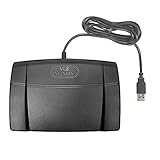
Overview: The Infinity 3 USB Foot Pedal from Executive Communication Systems delivers professional-grade transcription control for users demanding reliability and ergonomic comfort. Designed for medical, legal, and business transcription workflows, this three-pedal unit connects via standard USB and provides hands-free audio navigation. Its sturdy construction targets daily heavy use, while the thoughtful layout prioritizes natural foot movement to reduce fatigue during extended sessions. The plug-and-play design ensures quick setup with compatible transcription software.
What Makes It Stand Out: The ultra-heavy-duty micro switches differentiate this pedal from consumer-grade alternatives, promising countless hours of trouble-free performance. The ergonomically engineered wide, central, sloping Play pedal is particularly noteworthy—its large surface area and angled design facilitate seamless transitions between Play, Fast Forward, and Rewind functions without requiring awkward foot repositioning. This mechanical precision addresses the primary pain point of transcription professionals: maintaining workflow momentum while minimizing physical strain.
Value for Money: At $66.95, the Infinity 3 positions itself in the competitive mid-range tier. While cheaper generic pedals exist, the robust switch mechanism and ergonomic architecture justify the premium over budget options that typically fail within months. It lacks the warranty coverage of some rivals, but the build quality suggests fewer replacement cycles, ultimately reducing long-term costs for serious users.
Strengths and Weaknesses: Strengths: Exceptionally durable micro switches; superior ergonomic pedal contouring; large surface area prevents missed commands; straightforward USB connectivity; proven Infinity series reliability.
Weaknesses: No explicit warranty mentioned; limited software compatibility details; lacks advanced features like programmable buttons; packaging includes minimal documentation.
Bottom Line: The Infinity 3 USB Foot Pedal excels for transcriptionists prioritizing mechanical durability and ergonomic design over fancy features. If your workflow demands consistent daily performance and you value proven hardware longevity, this pedal delivers solid professional value despite its modest price point.
2. ECS-IN-USB-1 Foot Pedal Transcription Foot Control, Infinity, Ergonomic - Effortless Transcribing & Dictation, Transcribe & Dictate with Ease

Overview: The ECS-IN-USB-1 represents Infinity’s dedicated solution for high-volume transcription and dictation professionals. Engineered specifically for hands-free audio control, this pedal allows users to maintain typing flow while managing playback without interruption. Its broad software compatibility makes it a versatile choice across medical, legal, insurance, and public safety sectors. The unit prioritizes user endurance through its contoured design, addressing the occupational hazard of repetitive strain injuries common in transcription work.
What Makes It Stand Out: This pedal’s universal software compatibility is its killer feature—working seamlessly with most major dictation platforms eliminates the trial-and-error frustration common with proprietary devices. The one-year Mail-In Parts/Labor Warranty provides professional peace of mind rarely included in this price range. Additionally, the fatigue-reducing ergonomic engineering demonstrates genuine understanding of transcriptionist needs, with natural foot positioning that reduces strain during marathon sessions.
Value for Money: Priced at $69.95, the ECS-IN-USB-1 commands a slight premium over basic models but includes warranty protection that justifies the extra cost. For professional transcribers whose income depends on uninterrupted workflow, the reliability assurance and software versatility offset the marginally higher investment. Budget-conscious hobbyists may find cheaper alternatives, but professionals will recognize the value in risk mitigation.
Strengths and Weaknesses: Strengths: Extensive software compatibility; ergonomic contouring reduces fatigue; 1-year warranty coverage; professional-grade responsiveness; suitable for multiple industry applications.
Weaknesses: Software not included; price slightly above entry-level pedals; mail-in warranty requires downtime; no mention of durability ratings; basic three-button functionality only.
Bottom Line: The ECS-IN-USB-1 is an excellent investment for professional transcribers needing guaranteed software compatibility and warranty protection. While hobbyists might hesitate at the price, serious users in medical or legal fields will appreciate the reliability and ergonomic benefits that protect their productivity and health.
3. VEC in-USB-2 Infinity Digital Foot Control with USB Computer Plug

Overview: VEC’s in-USB-2 Infinity Digital Foot Control merges traditional transcription pedal functionality with modern digital enhancements. This three-button USB device targets heavy-duty users with its impressive 2,000,000 depression rating, ensuring years of reliable service. The ergonomic sloping Play pedal accommodates natural foot positioning, while the mechanical stop feature prevents accidental command triggers—a common frustration with lesser pedals. Its universal USB connectivity works across PCs, laptops, and portable workstations, making it adaptable to various professional environments.
What Makes It Stand Out: The 2,000,000 depression lifespan specification provides concrete durability assurance unmatched by most competitors. The accidental trigger prevention mechanism demonstrates thoughtful engineering, physically blocking unintended center-pedal activation when using side keys. Most uniquely, the rechargeable battery offering 1,000 hours of operation liberates users from cord constraints, ideal for mobile professionals or cluttered desk setups. This combination of mechanical precision and cordless convenience creates a distinctive value proposition.
Value for Money: At $68.00, the in-USB-2 delivers premium features at a mid-range price point. The quantified durability rating alone justifies the cost over unbranded alternatives, while the battery feature adds unexpected flexibility. For users requiring portability or experiencing USB port shortages, the rechargeable power source eliminates additional investment in powered hubs. The price reflects professional-grade engineering without reaching premium-tier cost.
Strengths and Weaknesses: Strengths: Industry-leading 2,000,000 depression rating; accidental trigger prevention; rechargeable 1,000-hour battery; broad software compatibility; ergonomic sloping pedal design.
Weaknesses: Battery may require eventual replacement; slightly heavier than wired-only models; charging adds maintenance step; no warranty period specified; premium features unnecessary for casual users.
Bottom Line: The VEC in-USB-2 suits heavy-duty transcriptionists and mobile professionals who need proven durability and cordless convenience. If you transcribe daily for hours or work across multiple locations, the robust construction and rechargeable battery justify the investment. Casual users may not leverage all features but will still benefit from its reliability.
4. AltoEdge USB Transcription Foot Pedal

Overview: The AltoEdge USB Transcription Foot Pedal positions itself as a premium solution for transcribers seeking universal compatibility and ergonomic design. This three-button controller distinguishes itself through exclusive support for the free version of Express Scribe, making it invaluable for budget-conscious professionals. Supporting both PC and Mac platforms, it addresses the cross-platform needs of modern transcription workflows. The high-quality ergonomic construction targets users requiring comfort during prolonged sessions, while maintaining efficient audio navigation capabilities.
What Makes It Stand Out: Exclusive compatibility with Express Scribe’s free version is the defining feature—no other pedal offers this functionality, effectively saving users $40-70 in software costs. Mac and PC dual-platform support broadens its appeal in mixed-OS environments. The emphasis on “high quality ergonomic device” suggests superior build standards compared to generic alternatives, though specific durability metrics are absent. This software integration advantage creates a unique market position that transcends hardware specifications alone.
Value for Money: At $94.95, this is the premium-priced option, but the math works for Express Scribe free users. When factoring the $70+ savings on software, the net cost becomes highly competitive. For Mac users, the limited pedal options make this particularly valuable. However, those already owning transcription software or using alternative platforms may struggle to justify the 40% price premium over similar hardware without exclusive software benefits.
Strengths and Weaknesses: Strengths: Exclusive free Express Scribe compatibility; Mac and PC support; high-quality ergonomic design; three-button efficiency; broad software utility beyond Express Scribe.
Weaknesses: Highest price in category; no explicit durability ratings; limited feature details; warranty information absent; value proposition diminishes without Express Scribe need.
Bottom Line: The AltoEdge pedal is essential for Mac users or those committed to Express Scribe’s free version. The software savings justify the premium hardware cost. If you don’t need these specific compatibility advantages, more affordable options offer similar build quality. Evaluate your software ecosystem before investing—this pedal’s value is entirely contextual.
5. Infinity USB Digital Foot Control with Computer Plug (in-USB3)

Overview: The Infinity in-USB3 Foot Pedal offers a streamlined transcription control solution focusing on stability and low-profile design. As part of the established Infinity product line, it provides reliable three-button USB connectivity for dictation and transcription workflows. The low-profile architecture reduces desk space requirements while the enhanced non-slip surface ensures consistent foot positioning during intensive use. This pedal targets users seeking simple, dependable performance without complex features or premium pricing.
What Makes It Stand Out: The low-profile design distinguishes it from bulkier transcription pedals, making it ideal for cramped workspaces or users preferring minimal equipment elevation. The “greater non-slip surface area” directly addresses a common complaint of pedals sliding on smooth floors or mats during aggressive use. While lacking the advanced durability specifications of siblings, its simplified construction may appeal to users overwhelmed by feature-heavy alternatives. The Infinity brand name provides baseline quality assurance.
Value for Money: Priced at $66.95, the in-USB3 matches the Infinity 3’s cost while offering fewer documented features. The value proposition hinges on the low-profile form factor and non-slip enhancements. For users with specific ergonomic needs or space constraints, this specialization justifies the price. However, competitors offer more detailed durability ratings and warranty coverage at similar price points, making this a situational purchase rather than a universal recommendation.
Strengths and Weaknesses: Strengths: Low-profile space-saving design; expanded non-slip surface; Infinity brand reliability; simple plug-and-play operation; comfortable for users preferring minimal pedal height.
Weaknesses: No durability specifications; warranty details absent; limited feature description; lacks ergonomic contouring details; no software compatibility list; minimal differentiation from basic models.
Bottom Line: The in-USB3 serves users specifically needing a low-profile, stable foot pedal for tight workspaces. Its simplified design trades advanced features for straightforward reliability. If desk height or pedal slippage are primary concerns, this warrants consideration. For most transcriptionists, alternatives with better-documented durability and warranty offer stronger overall value at this price point.
6. [Upgraded] iKKEGOL USB Foot Pedal Switch Video Game PC Hands Free Footswitch One Key Control Program Computer Mouse Keyboard HID with 2M Cable
![[Upgraded] iKKEGOL USB Foot Pedal Switch Video Game PC Hands Free Footswitch One Key Control Program Computer Mouse Keyboard HID with 2M Cable](https://m.media-amazon.com/images/I/41YLIfFMV-L._SL160_.jpg)
Overview: The iKKEGOL 2020 Upgraded USB Foot Pedal offers a budget-friendly entry into hands-free computing control. This single-pedal HID device functions as a programmable keyboard or mouse input, activated by foot pressure. Designed for versatility, it serves gamers, transcriptionists, streamers, and professionals needing to execute commands without manual input. The 2-meter cable provides flexible positioning, while its durable construction supports over 100kg of weight.
What Makes It Stand Out: This pedal distinguishes itself through its robust mechanical switch design and exceptional build quality at a low price point. The four TPU rubber feet ensure rock-solid stability on hard floors, preventing unwanted movement during intense gaming sessions or prolonged transcription work. The free programming software enables customization for virtually any keyboard shortcut, mouse click, or macro, making it adaptable to countless applications from Discord push-to-talk to medical image scanning.
Value for Money: At $16.99, this foot pedal delivers remarkable value. Competing single-pedal devices typically range from $20-30, making this an affordable entry point for users testing hands-free workflows. The heavy-duty construction rivals more expensive models, and the included software eliminates hidden costs. While professional transcriptionists might eventually upgrade to multi-pedal systems, this offers an excellent cost-benefit ratio for casual users and productivity enthusiasts.
Strengths and Weaknesses: Strengths include its affordable price, durable build quality, generous 2-meter cable, stable rubberized base, and versatile programming options. The mechanical switch provides satisfying tactile feedback. Weaknesses involve the audible click of mechanical switches, which may disturb quiet environments. The single-pedal design limits complex multi-command workflows, and programming requires Windows or Mac, though the programmed device works across platforms.
Bottom Line: This iKKEGOL pedal is an outstanding choice for beginners seeking affordable hands-free control. It excels in gaming, streaming, and light transcription tasks, offering professional-grade durability without the premium price tag. Perfect for testing foot-controlled workflows before investing in more elaborate systems.
7. iKKEGOL Upgraded 2023 Digital Optical USB Foot Pedal, USB Single Foot Switch Game Control, One Key Programmable Footswitch Mouse Keyboard for Video Game Push to Talk, Transcription HID (Single Pedal)

Overview: The iKKEGOL 2023 Digital Optical Foot Pedal represents the next evolution in budget foot switches, replacing mechanical contacts with silent photoelectric sensors. This single-pedal HID device maintains the versatility of its predecessor while eliminating audible clicks, making it ideal for noise-sensitive environments. The 1.9-meter cable and compact design suit various setups, from gaming stations to medical offices requiring discreet operation.
What Makes It Stand Out: The photoelectric switch technology is the star feature, providing completely silent activation that’s perfect for shared workspaces, late-night streaming, or professional transcription. The ability to connect multiple pedals simultaneously allows users to expand their foot-controlled command set gradually. The responsive optical sensor delivers consistent performance without physical wear, potentially extending the device’s lifespan beyond mechanical alternatives.
Value for Money: Priced at $15.99, this is the most affordable option in the lineup while incorporating advanced optical technology. The silent operation alone justifies the cost for users in quiet environments. Compared to mechanical counterparts at similar price points, the reduced noise and improved durability offer superior long-term value. The free programming software and multi-pedal support provide scalability without additional investment.
Strengths and Weaknesses: Strengths include silent optical switching, rock-bottom pricing, stable rubber feet, multi-pedal connectivity, and broad system compatibility after programming. The lightweight yet sturdy construction ensures portability. Weaknesses include the single-pedal limitation for complex workflows and the requirement to program on Windows/Mac before Linux use. Some users may prefer the tactile feedback of mechanical switches.
Bottom Line: This 2023 optical pedal is the top budget pick for silent operation. Streamers, transcriptionists, and gamers in shared spaces will appreciate its whisper-quiet performance. While functionally similar to mechanical versions, the noise reduction and durability make it a smart investment for noise-conscious users.
8. Express Scribe Pro Transcription Software with USB Foot Pedal (Digital Download,License and Download Information Will be Inside The Box

Overview: This professional transcription bundle combines Express Scribe Pro software with the industry-standard Infinity IN-USB-3 foot pedal and a dedicated transcription headset. Designed for serious transcriptionists, the package delivers a complete, ready-to-work solution straight out of the box. The digital software license and heavy-duty hardware create a seamless workflow for medical, legal, and professional audio transcription.
What Makes It Stand Out: The inclusion of Express Scribe Pro software sets this apart from hardware-only offerings, providing advanced playback control, file management, and format support essential for professional work. The Infinity IN-USB-3 pedal is a proven workhorse in transcription industries, known for its precision and durability. The bundled headset ensures audio clarity for accurate transcription, eliminating compatibility guesswork.
Value for Money: At $118.99, the bundle offers justified savings compared to purchasing components separately. Express Scribe Pro typically retails for $40-50, the Infinity pedal for $60-70, and a quality headset for $20-30. For professional transcriptionists, the time saved through seamless integration and proven reliability quickly offsets the premium price. However, hobbyists may find the cost prohibitive for occasional use.
Strengths and Weaknesses: Strengths include the all-in-one professional solution, industry-standard hardware, feature-rich software, and immediate productivity gains. The heavy-duty pedal withstands daily professional use. Weaknesses include the high price point for casual users, digital-only software delivery that may inconvenience some, and limited versatility beyond transcription tasks. The bundle lacks a USB hub for expansion.
Bottom Line: This is the ideal starter kit for aspiring or professional transcriptionists. The proven hardware and software combination eliminates setup friction and delivers professional-grade reliability. While overkill for occasional users, it represents excellent value for anyone earning income through transcription work.
9. iKKEGOL Upgraded USB Triple Foot Pedal Mechanical Switch Control 3 Three Key Footswitch Program Customized Computer Keyboard Mouse Programmable Game Transcription Music Page Turner Action HID

Overview: The iKKEGOL Triple Foot Pedal elevates foot-controlled input with three independent mechanical switches in a single sturdy unit. This advanced HID device enables complex multi-command workflows without hand movement, revolutionizing productivity for transcriptionists, gamers, musicians, and programmers. Each pedal supports unique keyboard shortcuts, mouse functions, or macros, effectively adding a foot-operated control panel to any workstation.
What Makes It Stand Out: The three-pedal configuration dramatically expands functionality while maintaining a compact footprint. The mechanical switches provide satisfying tactile feedback and rapid response for precise control. The ElfKey configuration software offers deep customization, including macro recording and multi-key combinations. Supporting over 100kg weight, the robust construction ensures stability during aggressive use in gaming or fast-paced transcription.
Value for Money: At $39.99, this triple pedal costs roughly double single-pedal alternatives but delivers triple the functionality. For power users, the efficiency gains from three programmable commands justify the price premium. Compared to assembling three separate pedals, this integrated unit saves desk space and reduces cable clutter. Professional users will recoup the investment through improved workflow speed.
Strengths and Weaknesses: Strengths include three independent programmable pedals, durable mechanical construction, stable base, powerful ElfKey software, and versatility across applications. The integrated design saves space. Weaknesses include the audible mechanical clicks, larger footprint than single pedals, and steeper learning curve for optimal configuration. Programming requires Windows/Mac before Linux use.
Bottom Line: This triple pedal is perfect for advanced users needing multiple foot commands. It excels in professional transcription, gaming macros, music page turning, and coding workflows. The enhanced functionality and solid build make it a worthwhile upgrade from single-pedal systems for serious productivity enthusiasts.
10. Infinity in-USB-3 Transcription Foot Pedal with WordSlinger Overhead, Around The Ear USB Transcribing Headset, 4 Port USB Hub and Hook, Sturdy Build for Transcription, Dictation, Audio Playback

Overview: This premium transcription hardware bundle focuses on professional-grade peripherals without software. The package features the renowned Infinity IN-USB-3 foot pedal, a WordSlinger overhead headset, and a practical 4-port USB hub with mounting hook. Designed for experienced transcriptionists who already own software, it delivers ergonomic comfort and reliable performance for extended dictation and audio playback sessions.
What Makes It Stand Out: The inclusion of a 4-port USB hub with mounting hook demonstrates thoughtful professional design, solving workspace cable management and expansion needs. The WordSlinger headset’s around-ear design provides superior comfort for all-day wear compared to standard headsets. The Infinity pedal’s high-quality micro switches ensure responsive, accurate control that professionals demand for precise audio scrubbing and playback.
Value for Money: At $109.90, this hardware-focused bundle offers excellent value for transcriptionists seeking equipment upgrades. The Infinity pedal alone justifies much of the cost, with the quality headset and USB hub adding significant value. Users already invested in transcription software avoid redundant purchases. The durable construction ensures years of professional use, making it a sound long-term investment.
Strengths and Weaknesses: Strengths include professional-grade Infinity pedal, comfortable WordSlinger headset, useful USB hub expansion, ergonomic design for extended sessions, and reliable micro switch performance. The hardware is universally compatible with all major transcription software. Weaknesses include the lack of included software, high price for beginners, and single-pedal limitation compared to multi-pedal systems.
Bottom Line: This bundle suits established transcriptionists ready to upgrade their hardware. The premium pedal, comfortable headset, and convenient USB hub create an efficient, ergonomic workspace. While not for software-seeking beginners, it delivers professional durability and comfort that serious users will appreciate daily.
Why Every Transcriptionist Needs a USB Foot Pedal
The mathematics are brutally simple. A typical transcriptionist presses play, pause, rewind, and fast-forward hundreds—if not thousands—of times per hour. Each keystroke is a micro-interruption that breaks your typing rhythm and forces your hands away from the home row. Over an eight-hour shift, this adds up to thousands of unnecessary hand movements that contribute to repetitive strain injuries and carpal tunnel syndrome. A foot pedal eliminates these interruptions entirely, keeping your fingers on the keys and your focus on the audio.
Beyond ergonomics, foot pedals deliver a psychological advantage. When your audio control becomes as natural as pressing a car’s accelerator, you enter a flow state where your hands, ears, and brain synchronize. You’re no longer consciously thinking about playback control; it becomes muscle memory. This subconscious operation can boost transcription speed by 15-30% while reducing error rates, since your cognitive load is dedicated entirely to comprehension and accuracy rather than mechanical operations.
Decoding the Three Main Pedal Configurations
Single-Pedal Units
Single-pedal designs are the minimalist’s choice, typically offering just play/pause functionality. These compact devices appeal to beginners and those with limited under-desk real estate. While seemingly limited, a single pedal can be surprisingly effective when paired with intelligent software that handles automatic rewind on pause. The primary advantage lies in simplicity—there’s no learning curve, and the small footprint works in cramped home office setups. However, the lack of dedicated rewind and fast-forward controls means you’ll still rely on keyboard shortcuts for navigation, partially defeating the ergonomic purpose.
Dual-Pedal Systems
Dual-pedal configurations represent the sweet spot for many general transcriptionists. The most common arrangement pairs play/pause on the left pedal with a momentary rewind on the right. This setup covers approximately 80% of your control needs while maintaining a compact profile. The two-pedal design forces you to develop efficient workflows—you learn to pause at natural breakpoints and use short rewinds for clarification rather than constantly scrubbing through audio. For medical and legal transcriptionists working with clear recordings, this configuration often provides the best balance of functionality and simplicity.
Triple-Pedal Professional Arrangements
The three-pedal layout is the industry standard for high-volume professionals, typically mapping to rewind, play/pause, and fast-forward from left to right. This arrangement mimics traditional tape transcription machines, leveraging decades of muscle memory from veteran transcriptionists. The key advantage is granular control—you can micro-adjust playback position without touching the keyboard, essential for deciphering muffled medical terminology or overlapping dialogue in court recordings. The downside? The wider footprint requires more desk space, and the learning curve is steeper as you train your left and right feet to work independently.
Critical Features That Define Professional Quality
Switch Type and Actuation Force
The heart of any foot pedal lies in its switch mechanism. Professional pedals use mechanical switches rated for millions of actuations, typically in the 5-10 million press range. These switches require deliberate force—usually between 600-900 grams of pressure—to activate, preventing accidental triggers during restless foot movements. Cheaper pedals often use membrane or rubber dome switches that feel mushy and fail after 50,000-100,000 presses. The actuation force is crucial; too light and you’ll trigger playback accidentally, too heavy and your foot fatigues. Premium pedals offer progressive resistance that mimics a piano pedal, providing tactile feedback throughout the press.
Platform Size and Foot Coverage
Your foot pedal’s platform dimensions directly impact comfort during marathon sessions. Professional-grade pedals offer platforms 4-6 inches wide and 6-8 inches long, accommodating work shoes and allowing natural foot repositioning without missing the target. The surface texture matters equally—etched aluminum or high-grip rubber prevents slippage without catching on shoe treads. Budget pedals often shrink the platform to cut costs, forcing you to maintain precise foot placement that creates tension in your ankle and calf muscles. Look for beveled edges that prevent your foot from catching on sharp corners during lateral movements.
Anti-Slip Stability Features
A pedal that slides across your floor mid-session is worse than useless—it’s dangerous. Quality pedals weigh between 1.5-3 pounds and feature non-marking rubber feet with suction-like grip. Some professional models include optional mounting holes for permanent desk installation, while others use weighted steel plates internally. The base design should distribute pressure evenly so the unit doesn’t rock or tilt when you press the edge of a pedal. Test this by imagining pressing the far left pedal while your foot rests naturally on the right—if the unit would tip, it’s poorly designed.
Software Compatibility: Your First Checkpoint
Native Integration vs. Generic HID Support
Before falling in love with any pedal, verify its relationship with your transcription software. Native integration means the software recognizes the pedal specifically and allows in-app customization of functions. This is gold standard for Express Scribe, FTW Transcriber, and similar platforms. Generic HID (Human Interface Device) support means the pedal acts like a keyboard, sending keystroke combinations. While universally compatible, this approach can suffer from lag and lacks the nuanced control of native drivers. Some professional pedals offer both modes, toggling via a physical switch on the device—this flexibility future-proofs your investment.
Cloud-Based Transcription Platforms
The rise of browser-based transcription tools like Otter.ai, Rev, and Trint has complicated compatibility. These platforms typically don’t support native foot pedal integration, requiring workarounds like Pedable or foot pedal translation software. When evaluating pedals for cloud work, prioritize models with robust HID emulation and customizable debounce timing. Debounce timing—the delay between pedal press and action—becomes critical when the signal must travel through multiple software layers. Some advanced pedals allow you to adjust this in firmware, preventing double-triggers in browser environments.
Ergonomics and Injury Prevention
Pedal Angle and Height Considerations
The angle of pedal depression affects ankle strain significantly. Flat pedals (parallel to the floor) require more dorsiflexion, straining the anterior tibialis muscle over time. Professional pedals often feature a 5-10 degree forward tilt, aligning the pedal plane with your foot’s natural resting angle. Height matters too—pedals taller than 1.5 inches force excessive plantarflexion. The best designs keep the resting pedal height under 1 inch, with a total travel distance of 0.5-0.75 inches. This minimal movement reduces fatigue while providing clear tactile differentiation between pressed and unpressed states.
Foot Positioning and Ankle Strain
Your foot’s position relative to your body impacts not just your ankle but your entire kinetic chain. The pedal should sit directly under your knee when seated, preventing hip rotation and lower back strain. Avoid placing the pedal so far forward that you must point your toes—this engages calf muscles unnecessarily. Some transcriptionists benefit from a “floating foot” technique, keeping the heel on the floor and pivoting at the ankle. Others prefer the “full foot” method with the pedal under the arch. Your pedal’s platform length should accommodate your preferred style without forcing compromise.
Cable Management and Desk Setup
The cable exit point on your pedal influences desk ergonomics. Side-exiting cables work best when the pedal sits to your right, while rear-exit designs suit center placement. Cable length is non-negotiable—you need at least 6 feet to route safely around desk legs without creating a tripping hazard. Some professional pedals feature detachable cables with standard USB-B or USB-C connectors, allowing you to swap lengths or replace damaged cables without buying a new pedal. Consider cable thickness too; thin cables transmit more vibration and are prone to internal breaks from foot traffic.
Build Quality Materials and Construction
Professional pedals use either reinforced ABS plastic with internal metal bracing or full metal construction. Die-cast aluminum bodies weigh more and dissipate heat better, but quality plastic pedals with steel plates offer similar stability at lower cost. The difference lies in the details: metal pedals withstand being dropped and tolerate cleaning solutions better—crucial in medical environments. Plastic pedals can develop stress cracks around screw holes after years of flexing. Check the warranty as a quality indicator; manufacturers offering 2-3 year warranties trust their construction, while 90-day warranties scream “disposable.”
Internal components matter as much as external. Gold-plated USB connectors resist corrosion from sweat and humidity. Strain relief where the cable enters the chassis should be molded rubber, not just a plastic cuff. The circuit board should be potted or coated to prevent damage from static electricity or spills. Some premium pedals even include replaceable switch modules, allowing you to service the unit rather than replace it entirely.
Tactile Feedback and Auditory Cues
The best transcription pedals communicate through your foot. A subtle “bump” at the actuation point—similar to a mechanical keyboard’s tactile switch—confirms the press without requiring visual confirmation. This is achieved through switch design and spring tensioning. Some pedals offer adjustable feedback via interchangeable springs or tension screws, letting you fine-tune the feel. Avoid pedals with audible clicks; while satisfying, these sounds bleed into sensitive microphones during quiet passages and become maddening over time.
Progressive resistance—the feeling that the pedal gets slightly harder to press as you travel—provides nuanced control over playback speed in some software. This feature, borrowed from professional audio editing consoles, allows you to rock the pedal for variable-speed scrubbing, invaluable for deciphering heavily accented speech or poor-quality recordings. Not all software supports this, but having hardware capability future-proofs your setup.
Connectivity Options: Wired vs. Wireless
Wired pedals dominate professional transcription for good reason: they’re lag-free, never need charging, and can’t interfere with other devices. USB 2.0 is sufficient; USB 3.0 offers no practical advantage for the tiny data packets foot pedals transmit. Cable quality varies enormously; braided cables resist tangling but can be stiffer, while rubber cables are more flexible but wear faster. Look for cables with ferrite beads near the connector—these suppress electromagnetic interference from your computer that can cause phantom presses.
Wireless foot pedals using Bluetooth or proprietary 2.4GHz dongles have improved but still present challenges. Latency of 20-50ms may not sound like much, but it disrupts the tight feedback loop between ear and foot. Battery life becomes a concern; most wireless pedals last 40-60 hours of active use, meaning weekly charging. They also risk disconnection during critical moments. However, for transcriptionists who work from multiple locations or have minimalist desk setups, wireless options offer freedom from cable clutter. If you go wireless, prioritize models with pass-through charging that let you use the pedal while plugged in.
Customization and Programmability
Basic pedals map to fixed functions, but professional units offer layers of customization. Onboard memory stores profiles that switch automatically based on the active application—your pedal behaves differently in Express Scribe versus Microsoft Word. Advanced models support macros: a double-tap of the play/pause pedal could insert a timestamp, while a long-press activates a noise reduction filter. Some pedals include companion software for programming, though the best integrate directly with transcription platforms.
Consider pedals that support multiple key codes per press. For instance, a single pedal press could send Ctrl+Shift+Space (play/pause) followed by F7 (timestamp) with a 100ms delay between. This level of automation transforms your foot from a simple controller into a workflow automation tool. The programming interface should be intuitive; if it requires manually editing XML files, it’s not practical for most users.
Price Tiers and What They Mean for Quality
Budget pedals ($20-$40) use membrane switches, lightweight plastic construction, and generic HID support. They function adequately for occasional use but expect 6-18 months of lifespan with daily professional use. Mid-range pedals ($60-$100) introduce mechanical switches, metal reinforcements, and native software integration. This is the minimum investment for full-time transcriptionists. Professional pedals ($120-$200) offer premium switches, all-metal construction, replaceable parts, and advanced features like progressive resistance and onboard memory.
The $200+ category includes specialized medical and legal transcription pedals with certifications for sterile environments or court system compatibility. These often feature redundant switches and extended warranties. While overkill for most, the cost amortizes to pennies per hour over a decade of use. Consider your hourly rate: if a $150 pedal saves you 30 minutes daily, it pays for itself in weeks.
New Buyer Pitfalls to Avoid
The most common mistake is buying based on price alone. A $30 pedal that fails during a rush deadline costs far more in lost income than a $150 reliable unit. Another trap is ignoring software compatibility until after purchase; always download the manual and check compatibility lists before ordering. Many transcriptionists buy pedals with insufficient cable length, then create tripping hazards with extension cords that degrade signal quality.
Don’t overlook the learning curve. Switching from a single-pedal to triple-pedal system requires 2-3 weeks of retraining your muscle memory. Buying during your busiest season guarantees frustration. Also beware of pedals marketed as “transcription compatible” that are really just repurposed guitar effects pedals—these lack the nuanced control and durability needed for transcription work.
Installation and Configuration Best Practices
First, install your transcription software before connecting the pedal. This ensures drivers load correctly and the software can detect the device during initial setup. Place the pedal on a hard, flat surface—not carpet—which can cause rocking and inconsistent presses. Use the full cable length to position the pedal ergonomically; don’t coil excess cable near the pedal, as this creates a trip hazard and can induce electrical interference.
Configure your software’s buffer settings before customizing pedal functions. A 500ms buffer prevents audio stuttering when pressing play, while a 1500ms rewind on pause gives you context without excessive repetition. Test your setup with a short, difficult audio file. Press each pedal 50 times rapidly to check for missed triggers or double-presses. If you experience lag, try different USB ports; front-panel ports often share bandwidth with other devices, while rear ports connect directly to the motherboard.
Maintenance and Troubleshooting Tips for Longevity
Clean your pedal monthly with compressed air to remove dust and debris from the crevices. For medical transcriptionists, wipe surfaces with isopropyl alcohol wipes, avoiding oversaturation near switch seams. Never use harsh cleaners like bleach, which can degrade plastic and rubber. If pedals start feeling “mushy,” the internal springs may need tension adjustment—consult your manual, as opening the unit often voids warranties.
For phantom presses (unintended triggers), check for electromagnetic interference from nearby phones or speakers. Move the pedal’s USB cable away from power cords. If a pedal stops responding, test it on another computer to isolate hardware vs. software issues. Most manufacturers offer firmware updates that resolve compatibility bugs; check their website quarterly. Keep original packaging and receipts—many warranties require them, and a well-packed pedal ships safely if you need factory service.
Advanced Features for Power Users
Some professional pedals include expression pedal inputs, allowing you to connect a secondary volume control or speed adjuster. This is invaluable for transcribing multi-speaker recordings where you constantly adjust levels. Others feature MIDI compatibility, letting you integrate with digital audio workstations for transcription work that bleeds into audio editing. Look for pedals with “foot presence” detection that wakes from sleep when your foot approaches, eliminating the first-press lag common in power-saving modes.
High-end models offer “pressure sensitivity” where the pedal’s travel distance controls playback speed. Press lightly for slow motion, fully for normal speed. This requires software support but provides unparalleled control for difficult passages. Some pedals even include haptic feedback—tiny vibrations that confirm actions without sound—useful in shared office spaces where auditory cues disturb colleagues.
Industry-Specific Requirements
Medical transcriptionists must prioritize pedals with sealed designs that resist fluids and can be sterilized. Look for IP54 or higher ratings. Legal transcriptionists need pedals with whisper-quiet operation and robust timestamp functionality—some court systems require specific timestamp formats triggered by pedal presses. Academic and qualitative research transcriptionists benefit from pedals with advanced speed control for varying audio quality, as interviews often contain background noise and varying speaker volumes.
General business transcriptionists should focus on versatility and software compatibility across multiple platforms, as clients may use different systems. Closed captioning specialists need pedals that integrate with video playback software, often requiring custom key mapping for frame-accurate timing. Podcast and media transcriptionists benefit from pedals with excellent fast-forward precision to skip through music and advertisements efficiently.
Emerging Trends and Future-Proofing
The transcription industry is gradually shifting toward AI-assisted platforms, but foot pedals remain relevant. Newer pedals include API access for integration with custom workflows, allowing them to control both local software and cloud platforms simultaneously. Some manufacturers are experimenting with foot pedal “hubs” that connect multiple pedals for specialized functions—one for audio control, another for text macros, a third for AI suggestion acceptance.
USB-C connectivity is becoming standard, though most pedals still include USB-A adapters. Forward-thinking manufacturers are building pedals with firmware that can be updated for new transcription software protocols. When purchasing, check if the company has a history of supporting legacy products with updates; this indicates they’ll support your pedal when new Windows or macOS versions release. Consider pedals with open-source firmware communities, where user-developed features extend functionality beyond the manufacturer’s vision.
Frequently Asked Questions
Do I really need a foot pedal for transcription work?
While you can transcribe using keyboard shortcuts, a foot pedal reduces hand strain by up to 70% and increases speed by 15-30%. For anyone transcribing more than one hour daily, it’s not a luxury but a necessary ergonomic tool that prevents repetitive strain injuries and extends your career longevity.
What’s the difference between cheap and expensive transcription pedals?
The difference lies in switch lifespan (50,000 vs. 10 million presses), build materials (plastic vs. metal chassis), software integration (generic HID vs. native drivers), and tactile feedback quality. Expensive pedals last years and maintain consistent performance, while cheap models degrade quickly, causing missed triggers and inconsistent actuation.
Will any USB foot pedal work with my transcription software?
Not necessarily. While most pedals use generic keyboard emulation, native integration provides lower latency and more customization options. Always check your software’s compatibility list before purchasing. Popular platforms like Express Scribe, FTW Transcriber, and InqScribe maintain updated lists of tested pedals.
How long do transcription foot pedals typically last?
A professional-grade pedal lasts 5-10 years with daily use, while budget models typically fail within 6-18 months. The rated switch lifespan (usually measured in millions of actuations) is the best predictor. A pedal rated for 10 million presses will outlast one rated for 100,000 presses by two orders of magnitude.
Can I use a gaming pedal or DIY solution for transcription?
Gaming pedals lack the nuanced control and durability needed for transcription. They’re designed for rapid, forceful presses, not the subtle, repetitive actions transcription requires. DIY solutions using Arduino or Raspberry Pi can work but require technical expertise, lack professional support, and often suffer from latency issues that disrupt workflow rhythm.
Are wireless foot pedals reliable for professional use?
Modern Bluetooth pedals have improved, but most professionals still prefer wired connections for zero latency and guaranteed connectivity. Wireless pedals introduce potential disconnection issues, require battery management, and typically add 20-50ms of lag. If you choose wireless, select models with 2.4GHz dongles over Bluetooth for more stable connections.
How do I know if a pedal will be comfortable before buying?
Check platform dimensions (aim for 5+ inches wide) and look for user reviews mentioning long-session comfort. Some manufacturers offer 30-day trial periods. If possible, test a colleague’s pedal for an hour. Pay attention to pedal height—anything over 1.5 inches tall forces awkward ankle angles. Weight also matters; heavier pedals (2+ pounds) stay put better, reducing the micro-adjustments that cause fatigue.
What should I do if my pedal stops working mid-project?
First, switch to keyboard shortcuts to maintain productivity. Then, test the pedal on another computer to isolate hardware failure from software issues. Check for loose cables and try different USB ports. Keep a backup cheap pedal for emergencies—it’s a $30 insurance policy against missing deadlines. Most professional transcriptionists working on critical deadlines maintain two pedals: a primary and a backup.
Can I use one pedal for multiple computers?
Yes, but with caveats. Most pedals store settings locally, so they’ll work on any computer without reconfiguration. However, software-specific customizations may need to be set up per machine. KVM switches with USB support can share a pedal between computers, but may introduce slight latency. Some transcriptionists use USB hubs with individual on/off switches to manually route the pedal to different systems.
Is a three-pedal system worth it for beginners?
While triple-pedal systems offer maximum control, they present a steeper learning curve. Most beginners benefit from starting with a quality dual-pedal system, mastering the workflow, then upgrading if needed. However, if you know you’ll eventually need three pedals (for legal or medical work), starting with a triple-pedal system avoids retraining muscle memory later. The key is choosing a quality pedal regardless of configuration—poor-quality three-pedal units are worse than excellent two-pedal models.