Your grandmother’s wedding portrait, that faded Polaroid from your first beach vacation, the creased black-and-white of your great-grandparents’ homestead—these aren’t just pictures; they’re time machines. In 2026, the technology to preserve these irreplaceable memories has evolved beyond simple digitization into something approaching digital alchemy. But with AI-powered restoration, cloud-native workflows, and a dizzying array of scanning options now standard, choosing the right tool for your precious photo archive has become more complex than ever.
Whether you’re facing down a mildewed shoebox of 1970s snapshots or a meticulously curated leather-bound album from the 1940s, the scanner you select will determine whether your digital heirs inherit vibrant, detailed heirlooms or blurry, color-shifted disappointments. This guide cuts through the marketing noise to focus on what actually matters when preserving analog memories in our increasingly digital world.
Top 10 Photo Scanners for Digitizing Old Albums
Detailed Product Reviews
1. Plustek Photo Scanner ePhoto Z300, Scans 4x6 inch Photos in 2 Seconds, Auto crop and deskew with CCD Sensor, Supports Mac and PC
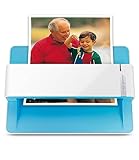
Overview: The Plustek ePhoto Z300 is a purpose-built photo and document scanner designed for home users tackling large digitization projects. This compact unit handles everything from 3x5 photos to A4 documents, making it a versatile addition to any home office. With its CCD sensor and optical resolution up to 600 dpi, it delivers decent quality for sharing and preservation without overwhelming users with professional-grade complexity.
What Makes It Stand Out: The Z300’s primary advantage is its remarkable speed—scanning a 4x6 photo in just two seconds at 300 dpi. The automatic crop and deskew functions eliminate tedious manual adjustments, while the continuous feed design makes it far more efficient than traditional flatbed scanners. The included image enhancement software is particularly valuable for restoring faded memories with one-click corrections, breathing new life into decades-old prints.
Value for Money: At $219.99, the Z300 sits in the sweet spot for serious amateurs. It’s significantly faster than flatbed alternatives costing half as much, yet remains accessible compared to professional units. For anyone converting 1,000+ photos, the time savings alone justify the investment. The ability to scan documents adds workplace utility that pure photo scanners lack.
Strengths and Weaknesses: Pros: Exceptional scanning speed; intelligent auto-correction features; cross-platform compatibility; simple operation; efficient feed mechanism. Cons: Single-sheet feeding requires manual insertion; maximum 600 dpi may disappoint archiving purists; no batch scanning capability; plastic construction feels lightweight.
Bottom Line: The Plustek ePhoto Z300 is an excellent choice for families seeking to digitize photo collections quickly without a steep learning curve. While it won’t satisfy professional archivists demanding higher resolution, its speed and convenience make it ideal for preserving memories for social sharing and digital albums.
2. Epson FastFoto FF-680W Wireless High-Speed Photo and Document Scanning System, Black

Overview: The Epson FastFoto FF-680W represents the pinnacle of consumer photo scanning technology, engineered for those with massive archives to preserve. This wireless workhorse can process thousands of photos rapidly while capturing both images and handwritten notes on backs in a single pass. It’s designed to handle everything from Polaroids to panoramas up to 8x10 inches.
What Makes It Stand Out: The FF-680W’s claim as the world’s fastest personal photo scanner is no exaggeration—batch-scanning up to 36 photos at an astonishing one photo per second. The integrated FastFoto app enables voice annotations and slideshow creation directly from your smartphone, adding contextual storytelling to your digital archive. Epson’s Perfect Picture Imaging System automatically enhances, restores color, and corrects red-eye without manual intervention.
Value for Money: At $529.99, this is a premium investment that delivers proportional returns for large-scale projects. For families with thousands of photos, the time saved versus manual scanning justifies the cost. The dual-sided scanning capability and wireless connectivity eliminate common workflow bottlenecks, making it competitive with professional services that charge per photo.
Strengths and Weaknesses: Pros: Unmatched scanning speed; true batch processing; wireless convenience; auto-enhancement technology; scans photo backs simultaneously; excellent software ecosystem. Cons: High price point may exceed casual user budgets; larger footprint requires dedicated space; overkill for small collections; ongoing software subscription model for some features.
Bottom Line: If you’re facing a mountain of family photos and value your time, the Epson FastFoto FF-680W is worth every penny. It’s a professional-grade solution disguised as a consumer product, perfect for serious archivists who want museum-quality results without outsourcing. For smaller projects, consider more affordable alternatives.
3. ClearClick QuickConvert 2.0 Photo, Slide, and Negative Scanner - Scan 4x6 Photos & 35mm, 110, 126 Film - No Computer Required - 22 MegaPixels
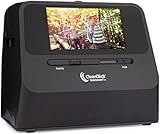
Overview: The ClearClick QuickConvert 2.0 is a standalone digitization powerhouse for users with diverse media collections. This battery-powered unit eliminates computer dependency, letting you scan photos, 35mm slides, and various film formats (110, 126) anywhere. With a 5-inch LCD screen for instant preview, it’s designed for convenient, on-the-spot archiving without technical hassles.
What Makes It Stand Out: True portability sets this scanner apart—the built-in rechargeable battery and lack of computer requirements make it uniquely flexible. The 22-megapixel interpolated resolution captures sufficient detail for most preservation needs, while the 2-3 second scan speed keeps projects moving. Its ability to scan photos without removing them from albums is a thoughtful touch that protects fragile memories from handling damage.
Value for Money: Priced at $229.95, the QuickConvert offers solid versatility for mixed-media households. While true 22MP would be preferable to interpolated resolution, the convenience factor and included 2-year warranty from a US-based small business add significant value. It’s ideal for those who want to digitize occasionally without maintaining a dedicated scanning workstation.
Strengths and Weaknesses: Pros: Completely standalone operation; portable battery power; large preview screen; multiple film format support; scans in albums; no software complications. Cons: Manual single-feed operation slows bulk projects; interpolated resolution exaggerates true quality; cannot handle 5x7 photos; requires SD card management.
Bottom Line: The ClearClick QuickConvert 2.0 excels as a flexible, user-friendly solution for casual archivists with varied media types. While not suited for high-volume professional work, its portability and simplicity make it perfect for preserving family memories at your own pace, especially in spaces where a computer setup isn’t practical.
4. Digital Film & Photo Scanner – Converts 35mm/135 Slides, Negatives,NameCard & 3.5x5/4x6/5x7 Photos to 22MP JPEG – Slide & Negative Converter with 2.4" LCD & 4GB SD Card

Overview: This budget-friendly all-in-one scanner targets value-conscious consumers wanting to digitize multiple formats without complexity. It handles 35mm slides and negatives, name cards, and photo prints up to 5x7 inches, delivering 22MP JPEG files. The compact design includes a 2.4-inch LCD screen for basic previewing and comes with everything needed to start immediately.
What Makes It Stand Out: The comprehensive package is this scanner’s main draw—it includes holders for every supported format, a 4GB SD card, and OCR software, eliminating hidden costs. The one-touch scanning operation removes technical barriers for seniors and beginners. Its ability to scan business cards alongside family photos makes it surprisingly useful for home office organization.
Value for Money: At just $95.99, this is one of the most affordable multi-format scanners available. The included accessories alone would cost $30-40 separately, making the actual scanner price incredibly low. While build quality reflects the budget price, it delivers acceptable results for social media sharing and basic archiving where perfection isn’t required.
Strengths and Weaknesses: Pros: Extremely affordable; complete accessory package included; simple one-touch operation; supports 5x7 photos; no computer needed for basic scanning. Cons: Small 2.4-inch screen is less practical; unknown brand reliability; basic image quality; plastic construction feels flimsy; interpolated 22MP resolution.
Bottom Line: This scanner serves as an excellent entry point for testing the waters of photo digitization. It’s perfect for casual users with modest collections who prioritize affordability over speed and premium features. While serious archivists should invest more, it’s a low-risk way to preserve memories that would otherwise remain locked in shoeboxes.
5. KEDOK Photo,NameCard,Slide & Negative Scanner with Large 5" LCD Screen,Film and Slide Digitizer-Convert 35mm,110 Film/Photo(3R,4R,5R)/NameCard to 22MP Digital JPEG-8GB SD Card Included

Overview: The KEDOK scanner combines versatility with user-friendly design, featuring an impressive 5-inch LCD screen that doubles as a digital picture frame. This 4-in-1 device handles 35mm and 110 film formats, multiple photo sizes (3R, 4R, 5R), and business cards without requiring a computer. With 22MP resolution and an included 8GB SD card, it’s ready for extensive archiving projects straight out of the box.
What Makes It Stand Out: The generous 5-inch display is the largest in its class, making image previewing and menu navigation genuinely comfortable. The inclusion of an 8GB SD card and internal 128MB memory provides ample storage flexibility. Supporting the less-common 110 film format broadens its appeal for families with older snapshots. The three-year warranty and 24-hour technical support demonstrate confidence in product longevity.
Value for Money: At $129.99, KEDOK positions itself as a mid-range option with premium features. The large screen, extensive accessory bundle, and exceptional warranty coverage exceed what’s typically offered at this price point. For users needing 110 film support, it’s one of the few affordable options available, making it a specialized value leader.
Strengths and Weaknesses: Pros: Large, clear LCD screen; comprehensive format support including 110 film; generous 8GB SD card; three-year warranty; internal memory backup; easy single-touch editing. Cons: Lesser-known brand may have quality control inconsistencies; interpolated resolution; manual feeding only; interface less polished than major brands.
Bottom Line: The KEDOK scanner is a feature-packed middle-ground solution that prioritizes user experience through its large display and extensive warranty. It’s ideal for families with diverse film formats who want more than a basic converter without paying premium prices. The three-year warranty provides peace of mind that compensates for the unknown brand pedigree.
6. Epson - Perfection V39 II - Color Photo and Document Flatbed Scanner - 4800 dpi Optical Resolution - High-Rise, Removable Lid - Scan to Cloud - USB Power - Image Scanning - Black

Overview: The Epson Perfection V39 II is a versatile flatbed scanner that delivers exceptional photo scanning capabilities alongside everyday document processing. With 4800 dpi optical resolution, this compact USB-powered device produces stunningly detailed enlargements while handling books, artwork, and standard documents. The removable high-rise lid accommodates bulky items, making it ideal for creative projects and archival work.
What Makes It Stand Out: The V39 II excels with its Easy Photo Fix technology, which restores faded colors in a single click—transforming old, deteriorated prints into vibrant digital memories. The one-touch scanning buttons streamline operation, while Epson ScanSmart software enables cloud uploads and seamless stitching of oversized images. Its USB-powered design eliminates cable clutter and enhances portability.
Value for Money: At $129.99, this scanner hits the sweet spot for quality-conscious consumers. It significantly outperforms budget models in resolution and photo-specific features while costing far less than professional flatbeds. The included software suite adds substantial value, making it a complete package for home archivists.
Strengths and Weaknesses: Strengths include superior image clarity, effortless photo restoration, compact design, and versatile media handling. However, the lack of an automatic document feeder makes batch scanning labor-intensive. The high resolution, while excellent for photos, is unnecessary for pure document scanning needs.
Bottom Line: The Epson Perfection V39 II is perfect for photography enthusiasts and families digitizing precious memories. Its thoughtful balance of quality, features, and price makes it an outstanding home scanner, though high-volume users should consider ADF-equipped alternatives.
7. ScanSnap iX2500 Photo Edition Wireless or USB High-Speed Cloud Enabled Photo, Document & Receipt Scanner with Large 5" Touchscreen for Mac or PC, Black

Overview: The ScanSnap iX2500 Photo Edition is a premium wireless scanner engineered for high-volume digitization. Capable of processing up to 100 photos per minute through its 100-sheet automatic document feeder, this powerhouse device transforms daunting archiving projects into manageable tasks. The integrated 5-inch touchscreen provides intuitive control over customizable profiles for photos, documents, and receipts.
What Makes It Stand Out: This scanner’s remarkable throughput and intelligent automation set it apart. Three included photo carrier sheets protect delicate prints during high-speed feeding, while Wi-Fi 6 connectivity ensures stable wireless operation. The Quick Menu enables drag-and-drop functionality to favorite applications, and direct-to-cloud scanning eliminates computer dependency for basic tasks.
Value for Money: At $474.99, the iX2500 commands a premium price justified by professional-grade speed and sophistication. For users with thousands of items to archive, the time savings are substantial compared to slower alternatives. It consolidates multiple devices into one efficient solution.
Strengths and Weaknesses: Major strengths include exceptional scanning speed, robust wireless connectivity, intelligent file organization, and versatile media handling. However, the high cost makes it impractical for casual users. The automatic feeder may not suit extremely fragile or irregularly sized items requiring flatbed scanning.
Bottom Line: The ScanSnap iX2500 is ideal for serious archivists, genealogists, or small businesses with massive digitization needs. Its unmatched speed and automation justify the investment for heavy users, though occasional scanners will find it excessive.
8. Canon imageFORMULA RS40 - Photo and Document Scanner, Auto Document Feeder, Windows and Mac, Scans Old and New Photos in Varying Sizes, USB Interface

Overview: The Canon imageFORMULA RS40 offers a compelling hybrid solution that merges automatic feeding with versatile media handling. This robust scanner processes both sides of photos and documents simultaneously at up to 40 items per minute, accommodating everything from Polaroids to driver’s licenses through its intelligent automatic document feeder. The bundled software suite provides comprehensive photo enhancement and document management tools.
What Makes It Stand Out: The RS40’s exceptional flexibility with media sizes distinguishes it from competitors. Its duplex scanning capability dramatically reduces processing time, while TWAIN driver support ensures compatibility with virtually any imaging application. The scanner handles varying thicknesses and dimensions that challenge conventional ADF devices.
Value for Money: Priced at $390.00, the RS40 occupies a mid-premium position that delivers professional features without flagship cost. It offers superior value to basic flatbeds for mixed-media collections while remaining more affordable than the fastest high-end models. The included software eliminates additional expenses.
Strengths and Weaknesses: Strengths include versatile sizing, efficient duplex scanning, cross-platform compatibility, and comprehensive software. The ADF significantly accelerates batch processing. However, the lack of wireless connectivity limits placement options. Scanning speed, while respectable, trails premium competitors, and resolution may not satisfy professional photographers.
Bottom Line: The Canon imageFORMULA RS40 excels for users digitizing diverse photo and document collections. Its versatility and efficiency make it ideal for family archivists and home offices prioritizing flexibility over absolute speed or maximum resolution.
9. Sharper Image Rapid Photo Album Scanner by Sharper Image

Overview: The Sharper Image Rapid Photo Album Scanner solves a unique problem: digitizing photos without removing them from albums. This handheld device features a built-in CMOS sensor and LED array that captures images directly through protective sleeves, preserving original organization while creating digital copies. The integrated 5-inch color screen enables real-time preview and immediate quality assessment.
What Makes It Stand Out: Its primary distinction is in-situ scanning, eliminating tedious removal and reinsertion of hundreds of photos. The portable design allows scanning anywhere, and multi-format capability extends to slides and 35mm negatives. This specialized approach saves countless hours for those with intact album collections.
Value for Money: At $199.00, this niche product offers reasonable value for album-heavy collections where original order matters. It costs less than high-speed ADF scanners while addressing a problem they cannot solve. However, for loose photos, traditional flatbeds deliver superior quality for similar investment.
Strengths and Weaknesses: The greatest strength is specialized album-scanning capability, saving enormous manual effort. The built-in screen adds convenience. However, image quality cannot match dedicated flatbed scanners, and the manual process proves slow for large collections. Limited brand support raises concerns about long-term software compatibility.
Bottom Line: This scanner serves a narrow but valuable niche for individuals with extensive photo albums prioritizing convenience over maximum quality. It’s a practical tool for casual digitization, though serious archivists should consider it complementary to a primary scanner.
10. Photo and Slide Scanner with 2.4” LCD Screen, Convert Negatives & Slides 35mm/135 Film, Photo(3R,4R,5R), Business Card to 22MP JPEG Digital Photos, 4GB SD Card Included

Overview: This budget photo and slide scanner delivers standalone digitization without requiring computer connectivity. The device converts 35mm negatives, slides, and prints up to 5x7 inches into 22MP JPEG files, storing them to internal memory or the included 4GB SD card. The 2.4-inch LCD screen provides immediate preview and basic editing capabilities.
What Makes It Stand Out: The scanner’s plug-and-play operation appeals to non-technical users, eliminating complex installations and driver issues. Scanning completes in one to two seconds, and standalone functionality means no computer is required during digitization. USB transfer mode ensures compatibility with both Mac and PC for final file transfer.
Value for Money: At $95.99, this is among the most affordable multi-format scanners available. The included SD card and OCR software (Windows-only) represent exceptional value for budget-conscious consumers wanting to preserve memories without significant investment.
Strengths and Weaknesses: Strengths include affordability, simplicity, fast scanning, and included storage media. The interface requires no technical expertise. However, 22MP resolution, while adequate for digital sharing, falls short for large enlargements. Build quality is basic, the LCD screen is small for detailed editing, and Mac users lose OCR functionality.
Bottom Line: This scanner is an excellent entry-level option for seniors, families, or casual users seeking simple digitization without complexity or expense. It delivers acceptable quality for sharing and basic archiving, though photography enthusiasts will quickly outgrow its capabilities.
Why Digitizing Your Old Albums in 2026 Makes Perfect Sense
The clock is ticking louder than ever. Photochemical dyes in color prints continue their inevitable fade, while acidic paper backing and PVC album pages actively destroy the images they’re meant to protect. But 2026 brings two critical shifts: AI restoration algorithms have matured from gimmicky to genuinely transformative, and storage costs have plummeted to the point where archiving thousands of uncompressed scans is financially trivial. More importantly, the latest generation of scanners treats photos as fragile cultural artifacts rather than simple documents, with hardware and software designed specifically for the nuances of emulsion, paper grain, and aging patina.
Understanding Different Scanner Types for Photo Preservation
Not all scanners speak the language of photography. The mechanism that excels at crisp text documents can be downright brutal on delicate, curved album pages. Understanding the fundamental differences is your first step toward making an informed decision.
Flatbed Scanners: The Gold Standard for Delicate Memories
Flatbed scanners remain the undisputed champion for album digitization in 2026, and for good reason. Their stationary scanning mechanism means your photos never bend, pull, or risk feeding misalignment. Modern flatbeds designed specifically for photo work feature elevated lid hinges to accommodate thick album pages without crushing them, while anti-reflective glass plates eliminate Newton’s rings—those rainbow interference patterns that plagued older models. The key advantage? You can scan directly from albums without removing photos, preserving original context and avoiding adhesive damage.
Sheet-Fed Scanners: Speed vs. Care Considerations
Sheet-fed scanners promise lightning-fast batch processing, but that speed comes at a cost. The motorized rollers that pull photos through the scanning path can damage fragile edges and cause irreversible scratches on aged emulsions. In 2026, some premium sheet-fed models have introduced “photo-safe” modes with reduced roller pressure and curved paper paths, but they’re still best suited for modern, robust prints—not your great-aunt’s hand-tinted portraits from 1932. If you must go sheet-fed, look for models with manual feed options and the ability to disable all automatic image enhancement, which often does more harm than good on vintage photos.
Portable and 3D Scanners: Emerging Technologies
The 2026 market has seen an influx of portable “wand” scanners and 3D capture devices that promise to digitize photos without removing them from albums. While the technology is impressive in theory, most current implementations struggle with consistent lighting, depth of field, and geometric distortion. True 3D scanners can capture texture and surface detail—fantastic for embossed photos or those with handwritten annotations on the back—but their resolution rarely matches dedicated flatbeds. These are niche tools best used as supplements, not primary digitization workhorses.
Key Technical Specifications That Actually Matter
Manufacturers love to trumpet impressive-sounding numbers that mean little in practice. For photo preservation, four specs genuinely impact your results: optical resolution (not interpolated), color depth (measured in bits per channel), dynamic range (the Dmax value), and scan speed at native resolution. Everything else—Wi-Fi speed, touchscreen size, voice activation—is just window dressing if the core imaging capabilities aren’t up to snuff.
Resolution Demystified: DPI, PPI, and When Enough is Enough
You’ve seen scanners boasting 6400, 9600, even 12800 DPI. Here’s the truth: scanning a standard 4x6 photo beyond 600 DPI optical resolution rarely captures additional meaningful detail. Film negatives and slides benefit from 2400-3200 DPI, but prints top out much lower due to their analog printing process. The secret is understanding optical versus interpolated resolution. Optical resolution reflects what the sensor actually sees; interpolated resolution is software guesswork that creates larger files without more detail. For album photos, target 600 DPI optical as your baseline, with 1200 DPI reserved for small prints you might want to enlarge later.
Color Depth and Bit Depth: Capturing Every Hue Accurately
Color depth determines how many colors your scanner can distinguish. Consumer scanners typically offer 24-bit color (8 bits per RGB channel), but photo-grade scanners provide 48-bit color (16 bits per channel). That extra data is crucial for post-processing—pulling detail from faded areas, correcting color casts, and adjusting exposure without banding. In 2026, even mid-range scanners offer 48-bit capture, but check the fine print: some only process internally at 48-bit while saving at 24-bit. For archival work, insist on scanners that save 48-bit TIFF files, preserving every nuance for future restoration efforts.
Dynamic Range: The Secret to Preserving Detail in Shadows and Highlights
Dynamic range, expressed as Dmax (maximum density), measures a scanner’s ability to capture detail across the tonal spectrum—from the deepest shadows to the brightest highlights. A Dmax of 3.2 is adequate for recent prints, but faded or dark vintage photos demand 3.8 or higher. The difference is stark: a low Dmax scanner will render shadow details as pure black and highlight textures as blown-out white, while a high Dmax unit will preserve the subtle textures in your grandfather’s tweed jacket and the delicate lace on a wedding veil. This spec is often buried in technical manuals, but it’s arguably the most critical factor for quality.
Speed vs. Quality: Finding Your Digitization Sweet Spot
Scanning a thousand photos at 1200 DPI with 48-bit color and multi-pass exposure can take five minutes per image. At that rate, your project will stretch into months. The 2026 solution is hybrid workflows: perform initial archival scans at moderate settings (600 DPI, 24-bit), then revisit only the most important images at maximum quality. Some advanced scanners now feature “smart rescan” technology that analyzes your first-pass scans and automatically identifies images worthy of high-resolution treatment—saving countless hours while ensuring your best memories get the attention they deserve.
Software Ecosystem: More Than Just a Scan Button
Hardware is only half the equation. The bundled software determines whether your scanning experience is joyful or maddening. Modern photo scanning suites in 2026 have evolved far beyond simple drivers, incorporating AI-powered tools that can be either transformative or destructive depending on your needs.
Automatic Photo Correction: Blessing or Curse?
AI-driven color restoration, dust removal, and sharpening algorithms have become remarkably sophisticated, but they operate on assumptions about what a “good” photo looks like. These tools can work wonders on faded 1980s snapshots, but they’ll strip away the sepia charm of a 19th-century cabinet card or the intentional vignetting of a 1970s artistic print. The golden rule: always scan with ALL automatic corrections disabled first, saving a “digital negative.” You can always apply corrections later, but you can never recover what the algorithm destroyed.
Batch Scanning and Automation Features
Scanning album pages one photo at a time is soul-crushing. Look for software that supports multi-crop scanning—placing several photos on the flatbed and automatically detecting, straightening, and saving them as individual files. Advanced packages now include “album mode” that recognizes overlapping photos, curved pages, and even handwritten captions, saving each element separately while preserving spatial relationships. This feature alone can reduce your scanning time by 70% while maintaining organization.
File Format Options: TIFF, JPEG, PNG, and Beyond
For archival purposes, uncompressed TIFF remains the gold standard, but file sizes are enormous. JPEG XL, now widely supported in 2026, offers lossless compression at half the size of TIFF, making it viable for large archives. Some scanners now output directly to DNG (Digital Negative) format, treating scans as raw image data with maximum post-processing flexibility. Whatever format you choose, ensure your scanner software supports embedding metadata directly into files—dates, locations, names, and stories that transform anonymous images into searchable family history.
Physical Design Considerations for Album-Style Scanning
Scanning loose photos is straightforward; scanning intact album pages is where design details matter enormously. Look for lids that open a full 180 degrees and feature removable hinges for scanning thick, bound volumes. The scanning bed should extend to the absolute edge of the device, allowing you to capture photos that extend into the gutter of spiral-bound albums. Some 2026 models include specialized cradles that support the weight of heavy albums, preventing page curvature that causes focus issues. Don’t underestimate the importance of a long power cord and USB cable—album scanning often requires working at dining tables or other temporary spaces far from outlets.
Connectivity Options in the Modern Era
USB-C has finally become universal, but not all USB-C ports are created equal. Ensure your scanner supports USB 3.2 or higher for fast data transfer of large files. Wi-Fi scanning sounds convenient until you’re moving gigabytes of uncompressed images; it’s fine for quick previews but unbearably slow for archival work. Ethernet connectivity, once rare on consumer scanners, has appeared on some 2026 pro-sumer models, offering the reliability and speed wired connections demand. Cloud integration is now standard, but be wary of services that compress your uploads or claim copyright on your family photos.
Dust and Scratch Removal Technologies Explained
Two competing technologies dominate: Digital ICE (Image Correction and Enhancement) and software-based infrared cleaning. Digital ICE works by scanning with infrared light, which detects physical defects without affecting the visible image. It’s brilliant but struggles with silver-based black-and-white prints and some Kodachrome slides. Software solutions analyze the image data itself, using AI to guess what belongs and what doesn’t. The 2026 innovation is hybrid systems that use both methods, applying Digital ICE where it works and AI inpainting where it doesn’t. For album scanning, where dust is often embedded in the page itself, these technologies are essential—but again, always save an uncorrected version first.
Long-Term Digital Archiving Strategy
Your scanner choice should align with your archival strategy. Are you building a cloud-accessible family history site? Prioritize scanners with robust metadata tools and JPEG XL output. Creating a museum-quality archive? Insist on 48-bit TIFF and DNG support. The 2026 best practice is the “3-2-1-1 rule”: three copies of each file, on two different media types, with one copy offsite, and one copy in a format that will remain readable in 50 years. This means pairing your scanner purchase with a plan for external SSDs, cloud storage, and perhaps M-DISC optical media for true cold storage.
Budget Planning: Total Cost of Ownership
A $200 scanner might seem like a bargain until you factor in the hours spent manually cropping scans, fighting with driver issues, and rescanning images that weren’t captured at adequate quality. Conversely, a $2000 professional unit includes software that automates tedious tasks and hardware that preserves photos you’d otherwise damage. Calculate your total cost: (scanner price) + (your time × hourly value) + (cloud storage fees) + (potential photo replacement cost if damaged). For most families, the sweet spot lies between $400-$800, where you get photo-grade optics without professional-lab pricing. Remember to budget for archival-quality gloves, microfiber cloths, and a gentle air blower—essential accessories that protect photos during handling.
Common Mistakes That Ruin Precious Photos
Even the best scanner can’t save you from poor preparation. Never spray cleaning solution directly on photos or scanning beds—moisture wicks into edges and causes staining. Don’t press down on scanner lids; the weight can crack fragile emulsions. Avoid scanning in direct sunlight, which heats the glass and causes photos to stick. Perhaps most critically, resist the urge to “improve” photos by removing them from albums; old adhesives often take the image layer with them. Scan in situ whenever possible, using the scanner’s depth of field to compensate for slight page curvature.
Frequently Asked Questions
How long does it realistically take to scan 1000 album photos?
With a modern flatbed featuring multi-crop software, expect 3-5 minutes per album page containing 3-6 photos, including preview and saving time. That’s roughly 30-40 hours of active scanning time, best spread across several weekends. Add another 20-30% for quality checks and occasional rescanning.
Can I scan Polaroids and other instant photos safely?
Yes, but with critical caveats. Instant photos have delicate chemical pods and unstable dyes. Use the lowest possible lid pressure, scan at 300 DPI (their resolution doesn’t support higher), and avoid any heat-based dust removal. Never scan the glossy side while still tacky—let them breathe for 24 hours first.
What’s the best way to handle photos that are stuck to album pages?
Don’t force them. Scan the entire page first at high resolution, then attempt gentle removal only if the photo is actively deteriorating due to acidic backing. Use dental floss in a sawing motion, or a micro-spatula with a thin, flexible blade. Work in a humidified environment (around 50% RH) to reduce brittleness.
Should I scan the backs of photos with handwriting?
Absolutely. Annotations provide crucial context: dates, names, locations, and relationships. Use your scanner’s “dual-side” mode if available, or flip photos manually. Consider scanning backs at lower resolution (300 DPI) to save time and storage space.
Is it better to remove photos from albums before scanning?
Almost never. Albums themselves are historical artifacts, and removal often causes damage. Modern scanners with elevated lids and depth-of-field capabilities can scan through page curvature. Only remove photos if the album is actively destroying them through acid migration or moisture.
How do I deal with extremely faded or discolored photos?
Scan at maximum color depth (48-bit) and dynamic range, saving as TIFF. Then use specialized restoration software like those incorporating 2026’s AI color science models. These can reconstruct faded dyes by analyzing chemical degradation patterns, often recovering detail invisible to the naked eye.
What’s the ideal file naming convention for scanned photos?
Use a system that’s descriptive yet sortable: YYYY-MM-DD_Location_Event_SequenceNumber.tif. For unknown dates, estimate decades: ca1940s_SmithFamilyReunion_001.tif. Include variant codes: _front, _back, _detail. Consistency now prevents chaos later.
Can I scan 3D objects like lockets or brooches alongside photos?
Specialized 3D scanners can, but standard flatbeds will struggle with depth of field and shadows. If you must, use a scanner with a “thick object” mode that raises the focal plane and use a black velvet background to minimize reflections. Consider photographing 3D items separately and linking them digitally.
How do I verify scan quality without viewing every file at 100% zoom?
Use batch analysis tools that check for focus, exposure, and color casts automatically. Look for software that flags images with motion blur (from page movement), dust hotspots, or clipping. Spot-check 10% of scans at full resolution, focusing on eyes and text where defects are most obvious.
Will my scans still be accessible in 50 years?
Only if you plan ahead. Store files in open formats (TIFF, DNG, JPEG XL) rather than proprietary raw formats. Embed metadata using IPTC standards. Migrate your entire archive to new storage media every 5-7 years, and open a few random files annually to verify integrity. The 2026 scanner you buy is just the first step in a lifelong preservation commitment.