The year is 2026, and architectural workflows have never been more digitally integrated. From AI-assisted BIM modeling to real-time cloud collaboration, you’d think the paper blueprint had gone the way of the drafting board. Yet walk into any thriving architecture firm—from boutique studios to multinational AEC giants—and you’ll find wide-format printers humming away, churning out crisp construction documents, presentation renderings, and full-color site plans. The truth is, even in our hyper-digital age, there’s no substitute for the tactile clarity of a finely printed drawing set on a job site or the impact of a high-resolution presentation board in a client meeting.
Choosing the right wide-format printer, however, has become exponentially more complex. The market has evolved far beyond simple inkjet plotters, now offering sophisticated multifunction systems with cloud connectivity, advanced color management, and AI-driven optimization. For architects, the stakes are high: the wrong choice means blown budgets, missed deadlines, and output that doesn’t meet the exacting standards of building departments or clients. This comprehensive guide cuts through the marketing noise to equip you with the decision-making framework you need—without pushing specific models or brand hype.
Top 10 Wide-Format Printers for Architects
Detailed Product Reviews
1. HP DesignJet T210 Large 24-inch Color Plotter Printer for Easy Wide CAD & Poster Prints (8AG32D)

Overview: The HP DesignJet T210 is an entry-level 24-inch plotter designed for small businesses and freelancers needing professional-quality technical drawings and posters without enterprise-level investment. This compact large-format printer delivers precise line quality and crisp text for CAD applications, maps, and sewing patterns while maintaining a small footprint suitable for home offices.
What Makes It Stand Out: Its standout feature is remarkable cost efficiency, using 95% less ink for routine maintenance compared to competitors. The included HP Click software simplifies workflow with drag-and-drop printing, auto-nesting, and PDF error checking. The automatic horizontal cutter and dual media handling (sheet and roll) enable unattended printing of multi-size projects, switching sources automatically without manual intervention.
Value for Money: At $719, this represents exceptional value for occasional to moderate users. While competitors at this price point often skimp on software or automation, HP includes professional-grade workflow tools. The low maintenance ink usage translates to measurable long-term savings, making it cheaper to own than many sub-$500 alternatives over two years, despite higher upfront cost.
Strengths and Weaknesses: Strengths include low operating costs, excellent software bundle, and compact design. Weaknesses are the lack of included automatic sheet feeder (it’s optional), no mention of wireless connectivity in the specifications, and absence of a stand or media bin. It’s best for users who primarily use roll media and don’t need frequent sheet printing.
Bottom Line: Perfect for budget-conscious professionals prioritizing print quality and low running costs over advanced connectivity features.
2. HP DesignJet T630 Large Format 24-inch Plotter Printer, with Auto Sheet Feeder, Media Bin & Stand (5HB09D) - New Model
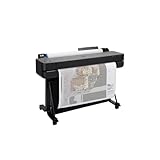
Overview: The HP DesignJet T630 is a professional-grade 24-inch plotter targeting architects, engineers, and construction professionals. This new model builds on the T210 foundation with enhanced connectivity and productivity features, making it ideal for busy offices requiring reliable wide-format output for technical drawings, renders, and posters with minimal user intervention.
What Makes It Stand Out: Comprehensive connectivity options set it apart: Gigabit Ethernet, USB 2.0, and Wi-Fi enable seamless integration into any network workflow. The included automatic sheet feeder, media bin, and stand transform it into a complete printing station. Like its sibling, it uses 95% less maintenance ink and features HP Click software for effortless drag-and-drop printing with intelligent file nesting and error checking.
Value for Money: Priced at $1,439, it commands a premium over the T210 but justifies it with $500+ worth of included accessories and wireless capability. For AEC professionals, the productivity gains from network connectivity and unattended operation deliver rapid ROI. The media bin alone prevents costly print damage and rework, while the stand improves office ergonomics.
Strengths and Weaknesses: Strengths include robust connectivity, complete accessory package, and professional software integration. The main weakness is price—budget users may find the T210 sufficient. Some may prefer a touchscreen interface, which isn’t mentioned in the specifications. The included stand adds value but requires more floor space.
Bottom Line: An excellent mid-range choice for professionals needing network-ready, turnkey large-format printing with minimal setup hassle.
3. HP DesignJet T650 Large Format 36-inch Plotter Printer, Includes 2-Year Onsite Warranty Support (5HB10T) - New Model

Overview: The HP DesignJet T650 36-inch plotter is a high-end wide-format solution for demanding AEC professionals and businesses requiring maximum print width. This new model handles technical drawings, posters, and maps up to 36 inches wide while including a comprehensive 2-year onsite warranty for complete peace of mind and predictable operating costs.
What Makes It Stand Out: The 2-year extended warranty with next-business-day service is a game-changer, eliminating costly downtime and repair uncertainties. Its ability to automatically switch between sheet and roll media without manual intervention streamlines mixed-size projects. The 95% reduction in maintenance ink usage remains a standout cost-saving feature, while the media bin and automatic cutter support continuous, unattended operation.
Value for Money: At $2,350, it’s a significant investment, but the warranty alone (valued at $400-600) and 36-inch capability justify the premium over 24-inch models. For firms regularly printing large-format site plans or presentation graphics, the expanded width and included service plan deliver substantial value, reducing both outsourcing costs and potential repair expenses while ensuring maximum productivity.
Strengths and Weaknesses: Strengths include expansive 36-inch width, comprehensive warranty, and automated media handling. Weaknesses are the high initial cost and substantial footprint requiring dedicated space. The price may be overkill for occasional users or those who rarely need 36-inch output, making it best for high-volume professionals.
Bottom Line: A premium investment for serious professionals requiring maximum format flexibility and guaranteed uptime.
4. Canon imagePROGRAF TC-21 24" - Large Format Printer, Poster & Plotter Printer, Automatic Roll & Cut Sheet Paper Feeder, Includes 280 ml of Ink, White

Overview: The Canon imagePROGRAF TC-21 is a 24-inch large-format printer positioned as a compelling alternative to HP’s DesignJet line. Designed for posters, technical drawings, and general wide-format needs, it combines Canon’s renowned print quality with user-friendly features for small to medium offices seeking versatility and environmental responsibility.
What Makes It Stand Out: Canon ships this printer with a full 280ml ink set—the most in its class—providing exceptional out-of-box value. The intuitive tiltable touchscreen control panel simplifies operation, while animated installation guides reduce setup time significantly. Its ENERGY STAR and EPEAT Gold ratings appeal to environmentally conscious buyers. The automatic roll and cut sheet feeder handles diverse media types without manual intervention.
Value for Money: At $784, it competes directly with the HP T210 while offering more included ink and a touchscreen interface. The generous ink supply could save $150-200 in initial purchases. However, long-term operating costs aren’t as clearly defined as HP’s “95% less maintenance” claim. For users prioritizing upfront value and green credentials, it’s highly competitive, though HP’s ecosystem may offer better CAD integration.
Strengths and Weaknesses: Strengths include abundant included ink, touchscreen controls, strong environmental ratings, and wireless connectivity. Weaknesses include potentially higher long-term maintenance costs and less specialized CAD software integration compared to HP’s Click ecosystem. Canon’s service network may also be less extensive for plotters.
Bottom Line: An excellent Canon alternative for eco-minded buyers wanting premium features and generous ink supplies at an entry-level price point.
5. HP DesignJet T650 Large Format 24-inch Plotter Printer, Includes 2-Year Onsite Warranty Support (5HB08T) - New Model
Overview: The HP DesignJet T650 24-inch plotter merges professional-grade performance with comprehensive warranty protection. This new model targets architects, engineers, and construction professionals who demand reliability and precision for technical drawings, renders, and posters but don’t require 36-inch width, offering a balance of capability and service.
What Makes It Stand Out: The included 2-year onsite warranty with next-business-day service distinguishes it from competitors, ensuring maximum uptime and predictable support costs. It automatically switches between sheet and roll media, includes a media bin, and uses 95% less ink for maintenance than rival plotters. The HP Click software streamlines workflows with drag-and-drop simplicity and intelligent nesting for PDFs, TIFFs, and CAD files.
Value for Money: At $1,700, it sits between the T630 and T650 36-inch models. The warranty (worth $400-600) effectively reduces the printer cost to around $1,100, making it a smart buy over the T630 for those valuing peace of mind. The automated media handling and low maintenance costs deliver strong long-term value for busy offices that can’t afford downtime or unexpected repair bills.
Strengths and Weaknesses: Strengths include the comprehensive warranty, automated media switching, low operating costs, and professional software bundle. Weaknesses are the premium price over similar-spec models without warranty and the lack of a mentioned touchscreen interface. Some may find the 24-inch width limiting compared to the 36-inch variant.
Bottom Line: A wise choice for professionals prioritizing reliability and service coverage over maximum print width.
6. HP DesignJet T630 Large Format 36-inch Color Plotter Printer with Auto Sheet Feeder, Media Bin & Stand (5HB11D) – New Model

Overview: The HP DesignJet T630 is a professional-grade 36-inch large-format printer engineered for architects, engineers, and construction professionals demanding precision. This new model handles technical line-drawings, renders, posters, and maps with exceptional accuracy. It accommodates both 36-inch roll media and cut sheets up to 13x19 inches through its automatic sheet feeder, offering versatility for varied project requirements.
What Makes It Stand Out: The integrated HP Click Software sets this printer apart, enabling drag-and-drop printing with PDF error checking and auto-nesting to minimize waste. The automatic sheet/roll switch and media bin streamline workflows, while Gigabit Ethernet, USB 2.0, and Wi-Fi connectivity ensure flexible integration into any office environment. The inclusion of a stand and media bin creates a complete, ready-to-use workstation.
Value for Money: At $2,025, the T630 sits in the mid-range for professional large-format printers. The value proposition strengthens considerably when factoring in the sophisticated HP Click Software—typically a premium add-on—and the versatile media handling that eliminates manual intervention. For AEC firms producing daily technical drawings, the time savings justify the investment over consumer-grade alternatives.
Strengths and Weaknesses: Strengths include exceptional line quality, intelligent software automation, robust connectivity options, and dual media handling. Weaknesses comprise the older USB 2.0 standard (rather than 3.0), substantial footprint requiring dedicated space, and operational costs that may challenge smaller practices. The initial investment is significant for occasional users.
Bottom Line: The HP DesignJet T630 delivers professional-grade performance for technical documentation. It’s an excellent investment for design firms and construction teams requiring reliable, precise large-format output with minimal workflow friction.
7. Epson Workforce Pro WF-7820 Wireless All-in-One Wide-Format Printer with Auto 2-Sided Print 13" x 19", Copy, Scan & Fax, 50-Page ADF, 250-sheet Paper Capacity, Works with Alexa, Large Black

Overview: The Epson WorkForce Pro WF-7820 is a comprehensive all-in-one solution for wide-format printing up to 13x19 inches. This versatile machine combines print, copy, scan, and fax capabilities in a single footprint, making it ideal for small to medium offices with diverse document needs. PrecisionCore Heat-Free Technology ensures rapid, smudge-resistant output using quick-drying DURABrite Ultra ink.
What Makes It Stand Out: This printer’s standout feature is its true all-in-one functionality combined with wide-format capability—a rare combination at this price point. The 50-page automatic document feeder and automatic two-sided printing/scanning dramatically boost productivity. Integration with Alexa and comprehensive Epson Connect mobile solutions enables modern, flexible workflows from virtually any device.
Value for Money: At $199.99, the WF-7820 represents exceptional value. Competing wide-format all-in-one devices typically cost significantly more, while standard all-in-one printers lack the 13x19 capability. The inclusion of advanced features like the ADF, auto-duplexing, and extensive wireless connectivity makes this a cost-effective hub for document management.
Strengths and Weaknesses: Strengths include versatile functionality, fast output, excellent wireless integration, and affordable initial price. Weaknesses involve potentially high ink replacement costs typical of inkjet printers, a 250-sheet capacity that may require frequent refilling in busy environments, and maximum 13x19 size that doesn’t meet true large-format technical drawing needs.
Bottom Line: The Epson WF-7820 is an outstanding value for offices needing wide-format capabilities combined with full multifunction features. It’s perfect for marketing materials, presentations, and general office documentation.
8. Canon imagePROGRAF TM-340 36" - Large Format 5 Color Poster & Plotter Printer with Media Detection, Color Calibration, Printer Stand/Catch Basket, 300 ml of Ink, and 2-Year Warranty
Overview: The Canon imagePROGRAF TM-340 is a 36-inch large-format printer delivering five-color poster and plotter capabilities for professional environments. This turnkey solution includes everything needed for immediate deployment: 300ml of ink, printhead, a 36-inch roll of CES Imaging bond paper, stand, and catch basket. The 5-color system produces vibrant posters and precise technical drawings with consistent color accuracy.
What Makes It Stand Out: The complete turnkey package distinguishes this printer—unboxing to first print requires no additional purchases. Canon’s media detection and color calibration technologies ensure consistent results across different media types. The 4.3-inch adjustable touchscreen interface provides intuitive operation, while the included two-year warranty offers peace of mind uncommon in this category.
Value for Money: Priced at $2,495, the TM-340 appears premium but delivers genuine value when accounting for included consumables and accessories. The ink, printhead, paper roll, and stand would cost $400-600 separately, while the extended warranty adds significant value. For businesses wanting a hassle-free startup without hidden costs, this all-inclusive pricing is advantageous.
Strengths and Weaknesses: Strengths encompass the comprehensive package, color calibration system, robust warranty, and professional media handling. The primary weakness is the modest print speed of 2.7 pages per minute, which may bottleneck high-volume environments. Additionally, the five-color system, while excellent for posters, may not match the line precision of dedicated technical plotters for engineering work.
Bottom Line: The Canon TM-340 is ideal for businesses seeking a ready-to-operate large-format solution for posters and graphics. The turnkey approach and warranty make it a smart, worry-free investment for print shops and marketing departments.
9. Canon imagePROGRAF TC-21M – Multifunction Printer| 24" Large Format Poster & Plotter Printer - Automatic Roll & Cut Sheet Paper Feeder, USB, Wi-Fi, LAN,White

Overview: The Canon imagePROGRAF TC-21M is a 24-inch multifunction large-format printer that combines printing, copying, and scanning capabilities in a compact white chassis. This versatile device enables direct enlargements from letter-sized originals through its integrated flatbed scanner, while USB flash drive printing and cloud connectivity provide flexible workflow options for modern offices.
What Makes It Stand Out: The TC-21M’s multifunction capability in a 24-inch format is unique at this price point, particularly the direct enlarge copy feature that eliminates computer intermediary steps. The 100-sheet automatic letter-size feeder (or 50 sheets of 11x17) and automatic roll/cut sheet handling provide exceptional versatility. Cloud printing and scanning integration enables direct collaboration without local network dependencies.
Value for Money: At $1,099, this printer offers compelling value for offices needing both large-format output and scanning capabilities. Dedicated large-format scanners alone can cost $500-800, making the integrated approach economically attractive. The combination of roll and sheet feeding, plus multifunction features, positions this as a cost-effective space-saving solution.
Strengths and Weaknesses: Strengths include versatile multifunction capability, convenient USB flash drive printing, robust cloud integration, and dual paper handling systems. Weaknesses comprise the 24-inch width limitation versus 36-inch alternatives, the small 2.7-inch touchscreen that may challenge complex operations, and potentially slower performance compared to single-function plotters.
Bottom Line: The Canon TC-21M excels for offices requiring both large-format printing and scanning without investing in separate devices. It’s perfect for architectural firms needing quick enlargements and cloud-enabled collaboration.
10. Epson Workforce Pro WF-7310 Wireless Wide-Format Printer with Print up to 13" x 19", Auto 2-Sided Printing up to 11" x 17", 500-sheet Capacity, 2.4" Color Display, Smart Panel App, Medium,Black

Overview: The Epson WorkForce Pro WF-7310 is a wide-format printer built for high-volume productivity, delivering prints up to 13x19 inches with exceptional speed and quality. Engineered with PrecisionCore Heat-Free Technology, this printer produces 25 black/12 color ISO pages per minute while maintaining print-shop quality standards. The substantial 500-sheet capacity and durable construction support heavy workloads in demanding environments.
What Makes It Stand Out: The WF-7310’s remarkable 500-sheet dual-tray capacity eliminates frequent reloading, a significant productivity advantage over competitors. Print speeds rival office laser printers while delivering wide-format capability and vibrant DURABrite Ultra pigment inks. The 2.4-inch color display and Smart Panel app provide modern, intuitive control, while auto two-sided printing up to 11x17 inches reduces paper costs and environmental impact.
Value for Money: At $179.99, this printer offers outstanding performance-per-dollar for wide-format applications. The high-capacity paper handling and fast print speeds typically command $300+ in this category. While requiring genuine Epson cartridges, the efficiency and durability justify the operational costs for businesses prioritizing productivity over absolute lowest cost-per-page.
Strengths and Weaknesses: Strengths include exceptional print speed, large paper capacity, robust build quality, and professional output. Notable weaknesses are the lack of scanning functionality, mandatory use of genuine cartridges (limiting third-party options), and absence of true large-format roll handling for technical drawings beyond 13x19 inches.
Bottom Line: The Epson WF-7310 is a powerhouse for offices needing fast, high-quality wide-format printing without scanning requirements. It’s an excellent choice for marketing departments and businesses producing high-volume presentation materials.
Why Wide-Format Printing Remains Critical for Architecture in 2026
Despite the proliferation of tablets and digital markup tools, physical prints serve irreplaceable functions in modern architectural practice. Construction sites still demand weather-resistant drawing sets that can withstand dust, coffee spills, and harsh sunlight. Many building departments require stamped, printed plans for permit submissions—digital files alone won’t suffice. Moreover, client psychology hasn’t changed: handing someone a beautifully rendered, large-scale print creates a memorable touchpoint that a PDF on a screen simply cannot replicate.
The evolution of printing technology has actually amplified its importance. Modern wide-format printers now produce gallery-quality renderings, enabling firms to create marketing materials in-house. The ability to print on diverse media—from vellum to canvas to adhesive vinyl—opens new revenue streams for design services. In 2026, your printer isn’t just an output device; it’s a strategic asset that impacts your firm’s efficiency, professionalism, and bottom line.
Understanding Wide-Format Printer Technologies
Before diving into specifications, you need to grasp the fundamental technologies powering today’s devices. The architecture-focused market has consolidated around two primary approaches, each with distinct advantages.
Inkjet vs. LED: The Core Technology Decision
Inkjet technology has matured dramatically, with thermal and piezoelectric printheads delivering microscopic droplet placement accuracy crucial for fine line work. Modern aqueous, solvent, and UV-curable inkjet systems offer exceptional color depth and media versatility. For architects prioritizing presentation-quality renderings and vibrant color plans, advanced inkjet remains the gold standard.
LED technology, often categorized as “toner-based,” uses light-emitting diodes to create electrostatic images on a drum. These systems excel at lightning-fast monochrome line drawings and offer lower per-page costs for high-volume black-and-white printing. While traditionally limited in color fidelity, 2026 LED systems have closed the gap considerably, making them viable for firms that print predominantly technical drawings with occasional color accents.
Plotters vs. Multifunction Devices
The term “plotter” historically referred to pen-based vector drawing machines, but modern usage describes single-function wide-format printers. These dedicated devices maximize print quality and speed while minimizing complexity. They’re ideal for firms with straightforward workflows or those that already have separate scanning and copying solutions.
Multifunction wide-format systems integrate printing, scanning, copying, and sometimes folding into a single footprint. For firms digitizing legacy drawings or requiring mark-up reproduction capabilities, these all-in-one solutions eliminate workflow bottlenecks. The trade-off is typically higher upfront cost and increased maintenance complexity, but the space savings and workflow integration often justify the investment.
Key Specifications Architects Must Evaluate
Technical specifications tell the real story behind marketing claims. For architectural applications, certain metrics matter far more than others. Understanding these numbers prevents costly mismatches between your firm’s needs and your hardware’s capabilities.
Print Speed and Throughput
Manufacturers advertise print speeds in square feet per hour, but these figures rarely reflect real-world architectural workflows. The critical distinction lies between “draft mode” speeds and “production quality” output. A machine rated at 200 SF/hour in draft mode might crawl to 15 SF/hour at 2400 dpi resolution. For construction document sets, focus on “D-size prints per minute” in presentation quality mode.
Equally important is first-page-out time—the lag between sending a print job and the first sheet emerging. During deadline crunches, waiting 90 seconds for the first print can feel like an eternity. Look for systems with built-in processing power and ample memory to handle complex vector files without choking.
Resolution and Line Accuracy
Resolution, measured in dots per inch (dpi), tells only part of the story for architectural work. Line accuracy—often specified as +/- 0.1% or better—is paramount for dimensionally precise drawings. A printer might boast 2400 dpi, but if lines waver or band, your drawings won’t meet professional standards.
Pay attention to minimum line width specifications, typically measured in millimeters. Quality systems produce consistent 0.02mm lines, essential for detailed architectural details. For presentation renderings, variable droplet technology and grayscale capabilities produce smoother gradients and more photorealistic output.
Maximum Media Size
While 24-inch (A1) and 36-inch (A0) printers dominate the architectural market, consider your actual needs. Do you regularly print full-size site plans or presentation boards? A 44-inch model offers future-proofing for oversized projects. Conversely, boutique firms working on residential renovations might find 24-inch adequate, saving substantial cost and floor space.
Don’t overlook minimum media size—some devices struggle with smaller sheets like 11x17, forcing you to maintain a separate office printer for half-size sets. The ability to handle cut sheets and rolls simultaneously adds workflow flexibility.
Media Handling Capabilities
Your printer’s media versatility directly impacts your firm’s service offerings. The ability to print on diverse substrates transforms your device from a simple plotter into a creative production tool.
Roll vs. Sheet Feed
Roll-fed systems dominate architectural printing for good reason: continuous printing of multiple pages without manual reloading. Look for dual-roll configurations that let you keep two media types loaded—perhaps bond paper on one roll and coated presentation paper on the other. Auto-switching between rolls based on job requirements eliminates manual intervention.
Sheet-fed capabilities, while less common, prove invaluable for printing on rigid media like foam board or for producing single presentation sheets without wasting roll paper. Some advanced systems offer hybrid feeding, providing maximum flexibility.
Media Weight and Thickness Support
Media weight, measured in grams per square meter (gsm), indicates what substrates your printer can handle. Standard bond paper is 20 lb (75 gsm), but presentation-quality coated papers run 120-200 gsm. For canvas or scrim banner printing, you’ll need support for 300+ gsm.
Thickness matters for specialty applications. If you plan to print on watercolor paper for conceptual renderings or on translucent film for light tables, verify the printer’s maximum thickness specification, typically measured in mils or millimeters.
Ink Systems and Color Management
Ink represents your primary ongoing expense and determines output longevity. Architectural prints face unique durability challenges—from UV exposure on construction sites to handling during plan reviews.
Pigment vs. Dye-Based Inks
Pigment inks suspend color particles in a carrier fluid, producing prints that resist fading for 200+ years under proper conditions. For final presentation drawings, permit sets, and any prints requiring archival stability, pigment-based systems are non-negotiable. Modern pigment inks have overcome earlier limitations in color vibrancy.
Dye-based inks dissolve color completely in solution, producing more saturated colors but offering minimal fade resistance—often showing degradation within months of sun exposure. Some systems use hybrid approaches: pigment for blacks and dye for colors, balancing cost and durability.
Color Gamut and Architectural Rendering
The color gamut—the range of reproducible colors—directly impacts rendering quality. Look for systems with expanded color sets beyond CMYK, such as light cyan, light magenta, and gray inks. These additional cartridges produce smoother gradients in sky renderings and more nuanced material representations.
Color management tools are equally critical. Printers with built-in spectrophotometers automatically calibrate color accuracy, ensuring your prints match your monitor. For firms producing branded presentation materials, this consistency is worth the premium.
Connectivity and Workflow Integration
In 2026, a printer’s network capabilities can make or break your workflow efficiency. Isolated devices that require USB drives or manual file transfers create bottlenecks that modern cloud-based workflows cannot tolerate.
Cloud and Mobile Printing
Native integration with cloud storage platforms enables direct printing from BIM 360, Procore, or your firm’s proprietary project management system. Look for printers supporting WebDAV, FTP, and RESTful APIs for custom workflow automation. Mobile printing via iOS and Android apps allows principals to approve and release prints from job sites.
Security considerations are paramount when enabling cloud printing. Ensure the device supports secure release printing, requiring user authentication at the printer before output. This prevents sensitive construction documents from sitting unattended in output trays.
BIM Software Compatibility
Direct printing plugins for Revit, ArchiCAD, and Vectorworks streamline the process from digital model to physical output. These tools preserve line weights, hatch patterns, and view templates without requiring PDF intermediaries. Some advanced systems even read BIM metadata, automatically printing different views to different media types based on project phase.
Total Cost of Ownership Considerations
Sticker price tells only a fraction of the story. The true cost of a wide-format printer emerges over its operational lifetime, where ink, media, and maintenance can dwarf the initial investment.
Ink Consumption Metrics
Manufacturers rarely advertise realistic ink costs. Request cost-per-square-foot figures for both monochrome line drawings and full-color renderings based on 15% coverage. High-coverage presentation prints can consume 5-10 times more ink than construction documents.
Consider ink cartridge configuration. Systems with separate cartridges for each color minimize waste—when cyan runs out, you replace only cyan. Some devices force you to replace entire ink packs when one color depletes, artificially inflating costs.
Maintenance and Service Contracts
Printheads require periodic replacement, typically every 1-2 years with heavy use. Factor these costs into your budget, as they can run $500-$2000 depending on the system. Service contracts that include preventive maintenance and emergency repairs often prove cost-effective, especially for deadline-driven practices.
Warranty terms vary significantly. Look for on-site service guarantees with next-business-day response. Depot warranties that require shipping the printer for repairs are unacceptable for production-critical devices.
Print Volume and Duty Cycle Matching
Oversizing your printer wastes capital, while undersizing leads to premature wear and frustrating downtime. Manufacturers specify monthly duty cycles—the maximum recommended prints per month—but these numbers represent survival limits, not optimal operation.
For sustainable performance, target a printer whose recommended monthly volume aligns with your typical needs. A firm printing 500 D-size sheets monthly should avoid a device rated for 50 prints per month, even if the duty cycle is 1000. Conversely, that same firm doesn’t need an industrial press rated for 10,000 prints monthly.
Analyze your print patterns. Do you produce steady daily output or experience monthly spikes during permit submissions? Devices with fast warm-up times and robust processors handle sporadic high-volume bursts better than underpowered systems.
Space and Environmental Requirements
That sleek wide-format printer won’t serve you well if it doesn’t fit through your office door or requires industrial electrical service. Physical planning is often overlooked until delivery day.
Measure your available space with service clearance in mind. Technicians need access to sides and rear for maintenance. Consider ceiling height—some devices exceed 5 feet tall with stands. Ventilation matters too; solvent and UV printers emit odors requiring dedicated exhaust.
Electrical requirements vary dramatically. Standard 120V circuits suffice for most aqueous inkjet systems, while LED and UV printers may need 240V service. Verify amperage needs—some devices require dedicated 20-amp circuits to prevent tripping breakers during high-power operations like self-cleaning cycles.
Security Features for AEC Firms
Construction documents contain sensitive information: proprietary designs, client data, and security details. In 2026, printers are network-connected computers vulnerable to the same cyber threats as any other device.
Look for hard drive encryption and secure erase capabilities. Many printers store recent jobs on internal drives; without encryption, a stolen printer becomes a data breach. User authentication via PIN codes, RFID badges, or biometric scanning ensures only authorized personnel release prints.
Network security features like IPSec, 802.1X authentication, and certificate-based communication prevent man-in-the-middle attacks. For government projects, verify compliance with FIPS 140-2 encryption standards.
Sustainability and Eco-Friendly Printing
Environmental responsibility isn’t just marketing—it’s increasingly a client requirement and a factor in LEED project submissions. Modern printers offer several green features that reduce both environmental impact and operating costs.
Energy Star certification is table stakes in 2026. More significant are features like automatic sleep modes that reduce power consumption to under 5 watts, and schedulable shutdowns for weekends. Some systems generate usage reports tracking paper and ink consumption per project, helping firms meet sustainability reporting requirements.
Ink and cartridge recycling programs vary by manufacturer. Closed-loop recycling, where returned cartridges are remanufactured into new ones, offers genuine environmental benefit versus downcycling into other products. Water-based aqueous inks present fewer disposal challenges than solvent systems, which may require hazardous waste handling.
Emerging Technologies in 2026
The wide-format printer market continues innovating, with several technologies transitioning from novelty to necessity. Forward-thinking firms should evaluate these capabilities when future-proofing their investment.
AI-Enhanced Printing
Machine learning algorithms now analyze your typical output patterns, automatically optimizing print settings for different project types. These systems predict maintenance needs before failures occur, scheduling cleanings during low-usage periods. Some can even detect common printing errors—like missing layers or incorrect line weights—and flag them before wasting media.
3D Layer Visualization
Experimental systems can print raised-line drawings using specialized inks that cure with texture, enabling blind architects to read drawings through touch. While niche, this technology points toward printers that can annotate drawings with tactile markup indicators or create hybrid 2D/3D construction documents.
Leasing vs. Purchasing: Financial Strategies
The capital outlay for a professional wide-format printer ranges from $3,000 to $30,000+, making the lease-vs-buy decision significant. Leasing offers predictable monthly expenses, often bundling maintenance and supplies. This approach preserves capital for core business investments and provides upgrade paths as technology evolves.
Purchasing makes sense for established firms with stable print volumes and available capital. Ownership eliminates interest costs and long-term lease obligations. Some manufacturers offer trade-in credits toward new purchases, partially mitigating obsolescence risk.
Consider Section 179 tax deductions for purchased equipment versus operating lease deductibility. Consult your accountant, as 2026 tax laws may have shifted these calculations. Hybrid approaches like fair market value leases offer lower payments with purchase options at term end.
Vendor Support and Training Programs
Even the best printer becomes a liability without proper support. Evaluate vendors based on their AEC industry expertise, not just hardware specs. Do they understand the difference between an SD set and a PR package? Can they advise on media selection for specific presentation effects?
Training programs significantly impact adoption success. Comprehensive onboarding should cover not just basic operation but also advanced color management, custom media profiling, and integration with your specific BIM software. Some vendors embed training hours into service contracts, ensuring your team stays current with firmware updates and new features.
Local presence matters. A dealer with technicians in your metro area provides faster response times than national vendors routing support through call centers. Request references from other architectural firms to gauge real-world support quality.
Making the Final Decision: A Framework
With all these factors in mind, create a weighted scoring matrix tailored to your firm’s priorities. Rate each potential system on a 1-10 scale across categories: print quality, speed, media versatility, TCO, workflow integration, and support. Weight each category based on your firm’s specific needs—a presentation-focused studio might weight color quality at 30%, while a production firm might prioritize speed and durability at 40%.
Conduct controlled tests with your actual files, not vendor-supplied samples. Print a complex Revit sheet set with varied view scales, a full-color rendering with subtle gradients, and a dense detail sheet with fine lines. Time each job, measure ink consumption, and subject the prints to real-world conditions: fold them, mark them up with highlighters, expose them to sunlight.
Finally, negotiate terms that protect your investment. Request 30-day performance guarantees, discounted first-year service contracts, and guaranteed trade-in values. The right printer should feel like a team member, not a constant source of frustration.
Frequently Asked Questions
What size wide-format printer do most architecture firms need?
Most firms find 36-inch width optimal, accommodating full-size architectural sheets (24x36) with room for borderless printing and oversize site plans. Small residential practices may manage with 24-inch, while firms regularly printing full-size civil engineering plans should consider 44-inch models.
How much should I budget annually for ink and media?
Plan for ink costs of $0.50-$2.00 per square foot depending on coverage, plus media at $0.10-$0.50 per square foot. A firm printing 500 D-size sheets monthly should budget $6,000-$15,000 annually. High-coverage presentation renderings can triple these figures.
Can I print on watercolor paper or canvas for presentation models?
Yes, but verify your printer’s media thickness capacity (typically up to 0.8mm for fine art papers) and use pigment ink systems for archival quality. Specialized fine art printers handle heavier watercolor papers better than general-purpose architectural plotters.
What’s the realistic lifespan of a wide-format printer in daily architectural use?
With proper maintenance, expect 5-7 years of reliable service. Heavy-use firms may see component degradation sooner, particularly printheads and feed mechanisms. Service contracts extending to 5 years often provide the best value proposition.
Do I need a dedicated IT person to manage a network-connected printer?
Not necessarily. Modern devices offer web-based management interfaces and remote monitoring. However, designate a “printer champion” on your team to handle basic troubleshooting, media loading, and coordinate with vendor support for complex issues.
How do I ensure color consistency between my monitor and prints?
Invest in a monitor calibration device and use the printer’s built-in color profiling tools. Print standard test images and adjust profiles iteratively. Many vendors offer profiling services for your specific media and lighting conditions—this one-time service is worth the cost.
Are refurbished or certified pre-owned printers viable for startups?
For firms with tight budgets, manufacturer-certified refurbished units offer 30-40% savings with warranty coverage. Avoid third-party refurbished devices lacking factory support. Inspect printheads and feed mechanisms thoroughly, as these wear items may need immediate replacement.
What’s the difference between optical resolution and interpolated resolution?
Optical resolution reflects the printer’s true hardware capability—typically 600-2400 dpi. Interpolated resolution uses software algorithms to simulate higher dpi, offering minimal real-world benefit for line drawings. For architectural work, prioritize optical resolution and line accuracy over inflated interpolated specs.
Can I upgrade a printer’s capabilities after purchase?
Some manufacturers offer firmware upgrades adding features, and certain models accept additional ink cartridges or scanners post-purchase. However, core specifications like maximum resolution and media width are fixed. Plan for your three-year needs, not just today’s requirements.
How do I calculate the true cost per print for client billbacks?
Track total monthly costs: lease payment, service contract, ink, media, and estimated electricity. Divide by total square footage printed. Add a 15-20% markup to cover administrative overhead and equipment replacement reserves. Many firms bill at $3-$5 per D-size sheet for full-cost recovery.