Living in a rental shouldn’t mean sacrificing your ergonomic health or productivity. Yet every renter knows the drill—literally, the lack thereof. That security deposit hangs over every improvement decision, turning simple upgrades into high-stakes gambles. Enter the clamp-on desk riser: your landlord-approved ticket to a standing desk setup that transforms your workspace without transforming your lease agreement. These ingenious devices have evolved from flimsy afterthoughts to sophisticated workspace solutions, offering the height adjustability you crave without a single screw hole in sight.
As we look toward 2026, the market for clamp-on desk risers has exploded with innovations that address the unique challenges renters face. Whether you’re dealing with a flimsy apartment-grade desk, strict property management rules, or the constant knowledge that you’ll be moving again in a year, understanding what separates a security-deposit-safe investment from a costly mistake is crucial. This guide dives deep into the engineering, ergonomics, and real-world considerations that will help you choose the perfect clamp-on solution—one that moves with you and protects both your back and your bank account.
Top 10 Clamp-On Desk Risers for Renters
Detailed Product Reviews
1. VIVO Black Clamp-on Large 40 inch Ergonomic Desk Shelf, Dual Computer Monitor and Laptop Riser Stand - Desk Organizer for 2 Screens STAND-SHELF40B

Overview: The VIVO STAND-SHELF40B is a 40-inch clamp-on desk shelf designed for dual monitor setups, measuring 39.4" x 10.2" with 5.1" of under-shelf clearance. Supporting 44 lbs via sturdy C-clamps for desks up to 1.2" thick, it creates ergonomic viewing angles while adding substantial storage space. The sleek black finish complements any workspace aesthetic.
What Makes It Stand Out: Its expansive surface area comfortably accommodates two monitors or a monitor-laptop combination, a rarity in clamp-on designs. The robust C-clamp system ensures secure attachment without desk damage, while the 44 lbs capacity handles most dual-screen configurations. The integrated organization space beneath eliminates desktop clutter, and the two-piece construction allows flexible positioning.
Value for Money: At $69.99, this shelf positions itself between basic risers and premium monitor arms. The generous dimensions and weight capacity justify the cost for dual-monitor users. While pricier than single-platform risers, it replaces the need for separate storage solutions, delivering solid mid-range value.
Strengths and Weaknesses: Strengths include exceptional width, high weight capacity, sturdy construction, and aesthetic versatility. The clamp installation preserves desk integrity. Weaknesses include the restrictive 1.2" desk thickness limit, fixed non-adjustable height, and potential assembly complexity. The two-piece design requires careful alignment.
Bottom Line: Perfect for professionals seeking dual-monitor elevation with bonus storage. The VIVO 40" shelf combines robust performance with organizational utility, making it a worthwhile investment for standard desk setups needing expanded workspace.
2. VIVO Clamp-On Universal Height Adjustable Ergonomic Computer Monitor and Laptop Riser, Tabletop Desk Stand, C-Clamp Design, Black, STAND-V000SCB

Overview: The VIVO STAND-V000SCB is a height-adjustable clamp-on riser crafted from aluminum and steel, supporting 33 lbs for desks 0.4"-2" thick. Measuring compactly, it elevates monitors or laptops between 4.8"-6.5" for ergonomic customization. The minimalist design includes anti-slip silicone padding on both surfaces for device and desk protection.
What Makes It Stand Out: Height adjustability at this price point is exceptional, allowing precise ergonomic tuning rarely seen in sub-$40 risers. The premium aluminum construction provides superior stability versus plastic alternatives. The remarkably wide clamp range fits virtually any desk, while the anti-slip padding demonstrates thoughtful engineering. Its small footprint maximizes remaining desk space.
Value for Money: At $39.99, this riser delivers premium features at a budget price. Adjustable height typically costs $20+ more, while aluminum builds command premium pricing. For single-monitor users prioritizing ergonomics over surface area, it represents outstanding value that outperforms cheaper fixed-height options.
Strengths and Weaknesses: Strengths include superior height adjustment, premium materials, wide desk compatibility, and excellent stability. The anti-slip padding is a practical touch. Weaknesses include limited surface area unsuitable for dual monitors, modest 33 lbs capacity restricting heavier displays, and utilitarian aesthetics. The single-platform design offers minimal under-shelf storage.
Bottom Line: Ideal for individuals needing ergonomic flexibility for single screens. The VIVO adjustable riser combines premium build quality with exceptional value, making it the smart choice for comfort-focused users who want desk preservation without breaking the bank.
3. suptek Clamp-on 32 Inch Dual Monitor Desk Mount Riser Shelf Computer Stands for 2 Monitor,Laptop,Printer, Notebook,32.2” x 7.8” x 5.7”

Overview: The suptek 32-inch clamp-on shelf provides an affordable dual-monitor solution, measuring 32.2" x 7.8" with 5.7" height clearance. Supporting 22 lbs via two-piece brackets, it creates ergonomic viewing angles and under-desk storage. The C-clamp system fits most standard desks, offering a budget-friendly workspace transformation.
What Makes It Stand Out: The two-piece bracket design allows customized spacing between monitors, adapting to various screen sizes. At 32.2 inches, it balances dual-monitor accommodation with desk space conservation. The straightforward C-clamp installation enables tool-free removal, perfect for renters or evolving setups. Its minimalist approach focuses on essential functionality.
Value for Money: Priced at $52.99, this shelf undercuts many dual-monitor alternatives. However, the 22 lbs capacity significantly limits versatility compared to 44-lb competitors. For users with lightweight monitors, it offers reasonable savings. Heavier setups will require pricier options, making its value conditional on equipment weight.
Strengths and Weaknesses: Strengths include affordable pricing, decent dual-monitor width, easy installation, and functional under-shelf storage. The two-piece design adapts to various configurations. Weaknesses are the low weight capacity, less robust construction than metal alternatives, and generic brand reputation. The narrow 7.8" depth may feel cramped for larger monitor bases.
Bottom Line: Suitable for budget-conscious users with lightweight dual monitors. The suptek shelf delivers basic functionality at an attractive price, but its limited capacity and build quality make it best for light-duty applications rather than heavy professional equipment.
4. StarTech.com Monitor Riser Stand - Clamp-on Monitor Shelf for Desk - Extra Wide 25.6" (65 cm) for up to 34" Monitors - Black (MNRISERCLMP)

Overview: The StarTech.com MNRISERCLMP is a professional-grade 25.6-inch clamp-on riser designed for IT environments. Elevating screens 5.1 inches, it supports 44 lbs for monitors up to 34 inches. The sturdy clamp attaches to desks up to 1.3" thick. Backed by a 5-year warranty and lifetime technical support, it prioritizes reliability for business use.
What Makes It Stand Out: The industry-leading 5-year warranty and 24/5 multi-lingual technical support reflect true professional-grade commitment. This level of service is unprecedented in consumer monitor risers. The 44 lbs capacity on a compact frame demonstrates superior engineering. The IT-focused design emphasizes durability over aesthetics, making it ideal for enterprise deployments where reliability is paramount.
Value for Money: At $34.49, this riser is exceptionally priced for professional equipment. The warranty alone justifies the cost over generic alternatives. While narrower than dual-monitor shelves, its capacity and support infrastructure deliver disproportionate value for business users. Professionals prioritizing reliability will find this a bargain.
Strengths and Weaknesses: Strengths include outstanding warranty coverage, high weight capacity, trusted brand reputation, and sturdy construction. The clamp accommodates most desks. Weaknesses include fixed height, limited width unsuitable for true dual-monitor setups, and utilitarian design that may lack home-office appeal. The 25.6" width best serves single large monitors.
Bottom Line: The definitive choice for professionals and businesses needing reliable, warrantied performance. The StarTech.com riser excels in single-monitor applications where durability and support matter more than surface area, making it a smart long-term investment.
5. ARES WING Clamp-On Desk Extender & Monitor Shelf – 15" Space Booster, Freestanding or Clamp Mount, Holds 44 lbs, No Drill Desktop Organizer for Office/Gaming, Black

Overview: The ARES WING 15-inch shelf offers unique three-way versatility: C-clamp side extension, clamp-on riser, or freestanding monitor stand. Supporting 44 lbs at 6.4" height, it features particle board construction with steel feet. This multifunctional unit targets users needing specific space solutions rather than full desk coverage.
What Makes It Stand Out: No other riser offers this mounting trifecta. Side-mounting capability solves unique spatial challenges in gaming corners or studio setups. The 6.4" height exceeds most competitors for superior ergonomics. Users can reposition it as needs change, adapting from side extension to monitor stand. This flexibility is unmatched in the category.
Value for Money: At $36.09, the versatility justifies the price for niche applications. Purchasing separate extension and riser units would cost significantly more. However, the 15" surface limits broad utility, and particle board feels less premium than metal. Maximum value for users with specific spatial constraints rather than general needs.
Strengths and Weaknesses: Strengths include unmatched mounting flexibility, high weight capacity, generous height, and easy installation. The waterproof surface simplifies cleaning. Weaknesses include small surface area preventing dual-monitor use, particle board durability concerns, and less refined aesthetics. The 9.8" depth restricts larger equipment.
Bottom Line: Excellent for specialized applications requiring side extension or flexible positioning. The ARES WING shelf excels where standard risers fail, making it ideal for gamers and creatives with unique layouts, though its small size limits mainstream dual-monitor appeal.
6. ART-GIFTREE Desk Extender, 15-inch Clamp-On Desk Shelf, Height-Adjustable Desktop Shelf Organizer for Monitors Office and Gaming Accessories, Arm Support Table Extension, 44lbs Heavy Duty, Darkbrown
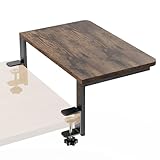
Overview: The ART-GIFTREE 15-inch Desk Extender offers a compact solution for expanding limited workspace while improving ergonomics. This dark brown metal shelf clamps securely to desks 0.4-2.16 inches thick, providing a 15" x 9.5" platform that supports up to 44 pounds. It serves dual purposes as both a monitor riser and lateral workspace extension, making it ideal for small home offices and gaming setups where every inch matters.
What Makes It Stand Out: Four distinct clamping configurations set this apart from standard monitor stands. Users can mount it on top, side, bottom, or parallel to the desk edge, creating customized layouts for unique spaces. The 6.5-inch elevation positions screens at optimal eye level, while the flush design provides comfortable arm support during extended work or gaming sessions.
Value for Money: At $35.99, this extender delivers exceptional versatility typically found in more expensive models. The drill-free installation preserves desk integrity, and the heavy-duty metal construction ensures longevity. Compared to basic fixed stands, the multi-position clamping system effectively provides several products in one.
Strengths and Weaknesses: Pros include versatile mounting options, ergonomic height adjustment, tool-free installation, sturdy 44lbs capacity, and space-saving design. Cons are the relatively small 15-inch surface limiting multi-monitor setups, minimal clearance beneath for storage, and the dark brown finish may clash with modern black-centric gaming aesthetics.
Bottom Line: Perfect for users seeking flexible, compact workspace expansion without permanent modifications. The ART-GIFTREE 15-inch model excels in small offices and gaming stations where adaptability trumps raw size.
7. Extra-Large 45-Inch Wood Clamp On Desk Monitor Shelf with Spacious Storage Space - Fits 60-inch or Dual 32-inch Screens, C-Clamp Design with Rubber Pad, Max Load 44lbs

Overview: This 45-inch wood monitor shelf transforms any desk into a command center for serious multitaskers. Designed to accommodate a single 60-inch ultrawide or dual 32-inch monitors, it provides massive workspace expansion. The 4.3-inch clearance underneath offers substantial storage for keyboards, notebooks, and office essentials, making it perfect for conquering cluttered workstations.
What Makes It Stand Out: The sheer scale distinguishes this from competitors. Few clamp-on solutions offer such expansive real estate without requiring wall mounting or desk replacement. The high-quality cold-rolled steel C-clamp with protective rubber pads ensures rock-solid stability while safeguarding desk surfaces, even under full 44-pound loads.
Value for Money: At $69.99, the price reflects its professional-grade capacity. For users investing in premium multi-monitor setups, this costs significantly less than a larger desk while delivering comparable functionality. The durable materials and robust construction justify the premium over smaller alternatives.
Strengths and Weaknesses: Pros include exceptional length for ultrawide/dual monitor setups, generous under-shelf storage, sturdy steel clamp construction, and protective rubber padding. Cons are limited desk thickness compatibility (max 1.4 inches), substantial footprint requiring a large primary desk, and higher price point that may exceed casual users’ needs.
Bottom Line: An outstanding investment for power users, content creators, and traders requiring extensive horizontal space. If your workflow demands multiple screens and you have the desk real estate, this 45-inch shelf delivers unmatched clamp-on capacity.
8. ART-GIFTREE Desk Extender, 15-inch Clamp-On Desk Shelf, Height-Adjustable Desktop Shelf Organizer for Monitors Office and Gaming Accessories, Arm Support Table Extension, 44lbs Heavy Duty, Black

Overview: The black variant of ART-GIFTREE’s 15-inch Desk Extender delivers identical functionality to its brown counterpart with a sleek, modern aesthetic. This compact clamp-on shelf measures 15" x 9.5" and supports 44 pounds, making it perfect for elevating a single monitor or creating lateral workspace. The neutral black finish integrates seamlessly into contemporary gaming setups and professional offices alike.
What Makes It Stand Out: Beyond the four versatile clamping configurations, the black colorway offers superior aesthetic flexibility for modern workspaces. The same 6.5-inch ergonomic height reduces neck strain, while the flush design provides crucial arm support during marathon gaming or work sessions. The rust-resistant coating ensures the finish remains pristine over time.
Value for Money: Priced at $35.99, this represents identical value to the brown version—effectively a color option without premium pricing. The drill-free installation and heavy-duty metal construction provide long-term durability, while the multi-position clamping delivers versatility that single-purpose stands cannot match at this price point.
Strengths and Weaknesses: Pros include versatile mounting options, ergonomic benefits, tool-free installation, sturdy construction, and a neutral black finish that complements most setups. Cons remain the limited 15-inch surface area, minimal under-shelf storage clearance, and the compact size may not suit users with large monitors or multiple displays.
Bottom Line: Ideal for users prioritizing flexibility and modern aesthetics in compact spaces. The black ART-GIFTREE 15-inch model excels as an unobtrusive, adaptable solution for small office and gaming environments where installation versatility matters most.
9. ARES WING 22 inches Desk Extender Shelf, 22"x 9.8" Versatile Clamp on Desk Shelf, Heavy Duty Desktop Organizer for Gaming and Office Accessories, Black

Overview: The ARES WING 22-inch Desk Extender strikes an optimal balance between size and versatility for mid-sized workstations. Measuring 22" x 9.8", it provides more real estate than compact 15-inch models while remaining manageable for standard desks. The 44-pound capacity accommodates monitors, laptops, or gaming consoles, and the 6.4-inch elevation promotes healthier posture during extended use.
What Makes It Stand Out: Three installation methods—top clamp, side clamp, and free-standing—offer unprecedented flexibility. This adaptability makes it perfect for renters or anyone avoiding permanent modifications. The free-standing option alone distinguishes it from clamp-only competitors, allowing repositioning without tools whenever workspace needs evolve.
Value for Money: At $43.69, this mid-range price point reflects its hybrid functionality. You’re essentially getting two products: a clamp-on extender and a freestanding riser. The particle board surface with solid steel frame delivers adequate durability without the premium cost of all-metal construction.
Strengths and Weaknesses: Pros include triple installation flexibility, generous 22-inch surface, sturdy 44lbs capacity, and compatibility with desks up to 2 inches thick. Cons involve particle board feeling less premium than solid metal, installation restrictions on sloped surfaces or desks with drawers, and the brand lacks the recognition of established competitors.
Bottom Line: A smart choice for users wanting maximum installation flexibility without commitment. The ARES WING 22-inch model excels in rental spaces, shared workstations, or evolving setups where the freedom to switch between clamped and freestanding modes proves invaluable.
10. VIVO Clamp-on 22 inch Desk Extension Shelf for Gaming PC, Ergonomic Computer Monitor and Laptop Riser, Printer Stand, Versatile with Freestanding Feet Included, Desktop Organizer, DESK-SHELF22B

Overview: VIVO’s 22-inch Desk Extension Shelf delivers professional-grade versatility for dynamic workspaces. The 21.7" x 9.8" platform supports 44 pounds and accommodates desks up to 2.8 inches thick—surpassing most competitors’ clamp ranges. Designed with sit-to-stand desks in mind, it maintains consistent access whether seated or standing, making it ideal for modern ergonomic workstations.
What Makes It Stand Out: The forward-positioning clamp mode transforms the shelf into a traditional monitor riser, creating dual-level organization. Combined with included freestanding feet, this hybrid functionality adapts to virtually any desk configuration. The exceptional 2.8-inch clamp compatibility opens doors for users with unusually thick tabletops often excluded by other products.
Value for Money: At $49.99, the slight premium over generic brands buys proven engineering and superior compatibility. The inclusion of freestanding feet adds value, while the sit-stand desk optimization addresses a growing market segment that cheaper alternatives ignore. It’s an investment in adaptable workspace infrastructure.
Strengths and Weaknesses: Pros include industry-leading clamp thickness range (2.8"), freestanding feet included, forward-position riser mode, sit-stand desk compatibility, and robust 44lbs capacity. Cons are the highest price among 22-inch options and VIVO’s brand recognition, while solid, trails behind market leaders.
Bottom Line: The ultimate solution for users with thick desks or height-adjustable workstations. VIVO’s 22-inch shelf excels when maximum compatibility and sit-stand functionality are priorities, justifying its modest premium through unmatched versatility and forward-thinking design.
Why Clamp-On Desk Risers Are the Renter’s Secret Weapon
The beauty of clamp-on desk risers lies in their fundamental design philosophy: temporary transformation with permanent benefits. Unlike traditional standing desk converters that sit heavily on your desktop or full desk replacements that require assembly, clamp-on solutions create an entirely new work surface that suspends from your existing desk’s edge. This means zero surface contact damage, zero permanent modifications, and 100% portability when your lease ends.
For renters, this translates to unprecedented freedom. You’re not just buying a piece of furniture; you’re investing in a mobile ergonomic solution that adapts to whatever weird desk situation your next apartment presents. The clamp mechanism distributes weight vertically through leverage rather than pressure, making it uniquely suited for rental-grade desks that might not support heavy static loads. Plus, most quality models install in under 15 minutes and uninstall even faster—perfect for those surprise inspections or when you need to “temporarily remove” your setup for maintenance requests.
Understanding Desk Riser Types: Clamp-On vs. Other Solutions
Before diving into specifics, let’s clarify the landscape. The term “desk riser” gets thrown around loosely, but not all solutions serve renters equally. Traditional “desk converters” are essentially boxes that sit on your desktop—they’re stable but eat up surface area and can damage finishes over time. Full “standing desk frames” require you to replace your entire desk, which is rarely practical when you’re not investing in permanent fixtures.
Clamp-on desk risers occupy a unique niche. They suspend a new work surface above your existing desk using a cantilevered design secured by—you guessed it—a clamp. This creates a floating effect that preserves your original desktop while adding a secondary tier. The key advantage? The clamp point typically bears the load, not your desk’s surface. This matters enormously when you’re dealing with particleboard apartment furniture that dents if you look at it wrong. Understanding this distinction helps you filter out solutions that might look similar but fail the renter-specific durability test.
Key Features That Separate Premium from Basic Models
The clamp-on market runs the gamut from $50 budget options to $500+ professional-grade systems. The differences aren’t just cosmetic—they’re structural, ergonomic, and ultimately determine whether your purchase becomes a beloved tool or a garage sale casualty. Premium models invest heavily in clamp engineering, using machined components rather than stamped metal. They feature gas spring assist mechanisms that make height adjustments effortless, while budget versions rely on manual locking pins that require you to clear your entire workstation to change positions.
Weight distribution engineering is another telltale sign. Quality risers position the clamp to align with your desk’s strongest structural points, often incorporating rubberized jaw pads that conform to edge variations without crushing. Cheaper models use rigid plastic pads that create pressure points, potentially cracking veneer or leaving permanent indentations. The adjustment range also separates the wheat from the chaff—premium units offer 15+ inches of vertical travel with infinite stops, while basic models might give you three predetermined heights that never quite match your elbow angle.
Weight Capacity: The Silent Deal-Breaker
Here’s where many renters get burned: weight capacity ratings are often theoretical maximums, not practical working loads. A riser rated for 35 lbs might technically hold that weight, but at full extension with monitors positioned forward, the leverage effect multiplies the actual force on the clamp exponentially. For dual-monitor setups with a laptop, you’re looking at 25-30 lbs of equipment before adding keyboards, coffee cups, or that stack of notebooks you swear you’ll organize.
The rule of thumb? Choose a riser rated for at least 1.5 times your actual load. If your gear weighs 20 lbs, don’t settle for less than a 30 lb rating. More importantly, investigate how that capacity changes at different heights. Some models lose stability as they extend, becoming wobbly at standing height—a problem you won’t discover until you’re already invested. Look for dynamic weight ratings that account for real-world use rather than static load tests that only measure dead weight at the lowest position.
Clamp Mechanism Types: C-Clamp vs. G-Clamp vs. Twist-Knob
The clamp is the heart of your riser, and not all clamps respect your security deposit equally. C-clamps are the most common, featuring a screw-driven jaw that tightens against the desk edge. Quality C-clamps distribute pressure across a wide contact area and include depth adjustments to accommodate various edge thicknesses. The best versions use Acme-threaded screws that won’t slip under vibration and include torque-limiting features to prevent overtightening.
G-clamps (or F-clamps) offer a more robust solution for thicker desks, wrapping around the entire edge with dual contact points. They excel on solid wood or reinforced edges but can be overkill for flimsy particleboard, potentially crushing the core material. Twist-knob mechanisms, while tool-free and convenient, generally provide less clamping force and are best suited for lighter loads and temporary setups. For renters, a hybrid approach often works best: a C-clamp with a hand-tightenable lever that can be further secured with a wrench if needed.
Surface Compatibility: What Your Desk Needs to Survive
Your desk’s edge is about to become the most important real estate in your workspace, and not all edges are created equal. The ideal clamping surface is a solid, flat vertical edge at least 1.5 inches deep and free of decorative molding or beveling. Apartment desks often feature rolled edges, T-mold trim, or fake drawer fronts that complicate clamping. These require specialized jaw pads or adapter plates that conform to irregular shapes.
Measure your desk’s edge thickness at multiple points—many modern desks taper, being thicker at the corner than along the sides. The clamp’s maximum opening must exceed your thickest point, but here’s the renter’s pro tip: a clamp that opens too wide can be just as problematic as one that doesn’t open enough. Large gaps between the clamp jaw and desk edge create leverage points that can torque and damage the surface. Look for models with adjustable throat depths or included shim kits that let you customize the fit without resorting to DIY cardboard solutions that scream “temporary fix.”
Height Adjustment Range: Finding Your Ergonomic Sweet Spot
The standing desk revolution taught us that height matters, but the numbers on the box don’t tell the full story. Most clamp-on risers advertise a range like “6 to 17 inches,” but this measurement is typically from your desktop to the riser’s surface. Your elbows don’t care about that—they care about the distance from the floor to your keyboard, which depends on your desk’s original height. A 17-inch maximum might give you a 48-inch typing height if your desk is 31 inches tall, but if you’re 6'4", you need closer to 50 inches.
Calculate your needs before shopping. Measure from the floor to your bent elbow while standing in comfortable shoes. Subtract your desk height—this is your required lift. Add 2 inches for safety margin. Now you have your true minimum requirement. The best 2026 models offer ranges from 5.5 to 20+ inches, but more importantly, they include memory presets that remember your exact sitting and standing positions. This feature, once a luxury, is becoming standard as manufacturers recognize that precise, repeatable ergonomics drive user satisfaction.
Material Science: What Your Riser Is Really Made Of
The materials used in your clamp-on riser determine not just its lifespan but its behavior under load. In 2026, we’re seeing fascinating material innovations driven by sustainability concerns and performance demands. Understanding these materials helps you predict how your riser will perform in year three of your rental journey, not just on day one.
Steel Frames: The Industrial Workhorse
Cold-rolled steel remains the gold standard for load-bearing structures in premium risers. It offers exceptional stiffness-to-weight ratios and, when properly powder-coated, resists corrosion and scratching. The key specification to watch is gauge thickness—14-gauge steel (approximately 0.075 inches) provides the rigidity needed for dual-monitor setups without the flex that causes monitor shake when you type. Some manufacturers are moving to 12-gauge for the clamp mechanism itself, recognizing that this high-stress component can’t afford to deform.
The downside? Weight. A full steel riser can weigh 35-45 lbs, making it a two-person job to install and a back-straining endeavor to move. For renters, this creates a trade-off between stability and portability. The 2026 trend is hybrid construction: steel for the clamp and primary supports, lighter materials for the work surface. This gives you the best of both worlds—rock-solid mounting with manageable total weight.
Aluminum Alloys: Lightweight Versatility
6061-T6 aluminum alloy has revolutionized the mid-range clamp-on market, offering 70% of steel’s strength at 30% of the weight. The T6 tempering process significantly increases yield strength, meaning aluminum risers can handle substantial loads without permanent bending. They’re particularly advantageous for renters who know they’ll be disassembling and moving the unit multiple times.
However, aluminum’s modulus of elasticity is roughly one-third that of steel, meaning it flexes more under the same load. Quality manufacturers compensate with strategic ribbing and box-section designs that increase stiffness without adding much weight. The surface finish matters too—anodized coatings are far more durable than powder-coat on aluminum, resisting the chipping that can occur when clamp jaws bite into the frame. If you choose aluminum, inspect the clamp contact points for reinforced steel inserts that prevent the jaws from crushing the softer aluminum over time.
Engineered Wood: Budget-Friendly Compromise
High-density fiberboard (HDF) and laminated engineered wood dominate budget clamp-on risers, and they’re not inherently bad choices. Modern HDF with melamine lamination can be surprisingly durable, resisting scratches and moisture better than natural wood. The critical factor is thickness and reinforcement. A 1-inch thick HDF panel with steel reinforcement bars underneath can support substantial loads, while a 0.5-inch panel without support will sag noticeably within months.
The renter’s concern with engineered wood is edge durability. Clamp pressure concentrates at the edge, and HDF can crush or delaminate if the clamp jaws aren’t perfectly aligned. Premium budget models (yes, that’s a thing) include solid wood edge banding or aluminum extrusion frames that distribute clamp force across the entire perimeter. This small detail can mean the difference between a riser that lasts through three apartment moves and one that fails at the first tightening.
Ergonomic Considerations Beyond Just Height
Standing is not the same as ergonomics. A poorly designed riser can create new problems while solving old ones, turning your back pain into neck pain, wrist strain, or eye fatigue. The 2026 generation of clamp-on risers addresses these concerns with anthropometric data that previous generations ignored.
Monitor Positioning and Neck Strain Prevention
The top of your monitor should be at or slightly below eye level, with the screen 20-28 inches from your eyes. Many clamp-on risers position monitors too high, forcing you to tilt your head back and compressing your cervical spine. Look for models with VESA mount compatibility that let you fine-tune monitor height independently of the keyboard surface. The best designs include a separate monitor arm that clamps to the riser itself, creating a two-stage adjustment system.
Screen tilt is equally crucial. A monitor angled back 10-20 degrees helps maintain natural neck posture, but this requires a stable mounting point that won’t drift over time. Check for tilt mechanisms with locking detents or friction adjustments that maintain their setting. Some innovative 2026 models include integrated cable management that routes through the monitor arm, keeping cords from pulling on the screen and changing your carefully adjusted angle.
Keyboard Tray Depth and Wrist Health
Your keyboard should sit at a height where your forearms are parallel to the floor with elbows at 90-110 degrees. But height without proper depth creates a reaching problem that strains shoulders and compresses the median nerve (hello, carpal tunnel). The distance from the edge of the riser to the keyboard’s home row should be adjustable between 4 and 8 inches to accommodate different torso lengths.
Keyboard tilt, or negative inclination, is another overlooked feature. A slight downward tilt (5-15 degrees) keeps wrists in a neutral position, but most flat riser surfaces force you to use keyboard feet that create positive tilt—the exact opposite of ergonomic. Premium models include adjustable keyboard trays with built-in negative tilt mechanisms. For renters using laptops, look for risers with dedicated laptop cutouts that position the built-in keyboard at the correct angle when an external monitor is used.
Footprint Optimization for Small Spaces
Apartment desks are notoriously small, often 48 inches wide if you’re lucky. A clamp-on riser that extends 24 inches deep can consume half your surface area, leaving nowhere for documents, notebooks, or that plant you’re trying to keep alive. The 2026 trend toward “minimal footprint, maximum function” has produced designs with tapered profiles that reduce rear depth to 12 inches while maintaining full keyboard space.
Consider the “swing-away” feature found in premium models. The entire keyboard platform can pivot sideways when not in use, reducing the occupied depth to under 6 inches. This is invaluable in studio apartments where your desk might also serve as a dining table. Also, evaluate the clamp’s lateral position—models that clamp at the corner rather than the front edge preserve more usable surface area and provide better stability on desks that are reinforced at corners.
Installation Mastery: A Renter’s Step-by-Step Guide
Installing a clamp-on riser is deceptively simple until you’re staring at a wobbly mess that threatens your monitors and your sanity. The difference between a rock-solid installation and a disaster lies in preparation and technique, not brute force.
Pre-Installation Desk Assessment Checklist
Before you unbox anything, conduct a thorough desk audit. Measure edge thickness at the intended clamp location, but also check for internal reinforcement by gently tapping along the edge with a knuckle. A hollow sound indicates particleboard core; a solid thump suggests wood or MDF. Inspect the underside for existing brackets, cable management trays, or support beams that might interfere with the clamp. Use a flashlight to check for pre-existing damage or weak spots, especially on older desks.
Clean the clamping area with isopropyl alcohol to remove oils and waxes that could cause slippage. If your desk has a laminate finish, test an inconspicuous spot with the alcohol first—some cheap laminates react poorly. Mark the exact clamp position with painter’s tape, measuring from both sides to ensure perfect centering. This prevents the “eyeball and regret” scenario where you install slightly off-center and the whole riser lists to one side.
Common Installation Pitfalls and How to Avoid Them
The number one mistake renters make is overtightening the clamp in an attempt to eliminate all wobble. This crushes the desk edge and creates a stress point that fails catastrophically. Instead, tighten to the manufacturer’s torque specification (usually hand-tight plus a quarter-turn with a wrench), then test stability by gently rocking the riser. Minor wobble at the top is normal and will disappear once you add weight; wobble at the base indicates insufficient clamping force.
Another frequent error is ignoring level adjustment. Most quality risers include leveling feet or adjustable clamp angles to compensate for desks that aren’t perfectly horizontal. Failing to level the riser transfers torque to the clamp, slowly loosening it over weeks of use. Use a smartphone level app on the riser’s surface after installation, adjusting until it’s within 1 degree of perfect. This small step prevents the gradual migration that leaves you retightening monthly.
Protecting Your Security Deposit: Damage Prevention Strategies
Your landlord’s walkthrough checklist is longer than your grocery list, and they’re trained to spot furniture-related damage. Clamp-on risers can cause several types of damage that are easily preventable with foresight.
First, invest in adhesive-backed felt pads—not the cheap foam ones, but dense wool felt at least 1/8 inch thick. Place these on all contact points between the clamp and desk, including the top jaw, bottom jaw, and any stabilizing brackets. The felt distributes pressure and prevents the micro-scratches that catch light and scream “modification” to a discerning property manager.
Second, create a “clamp journal.” Take date-stamped photos of the desk edge before installation, during installation (showing proper padding), and after removal when you move out. This documentation has saved countless renters from false damage claims. Some savvy renters even create a removable protective sleeve from leather or heavy canvas that wraps the desk edge entirely, clamping over it. When removed, it leaves zero evidence the riser was ever there.
The Hidden Costs: What Budget Models Don’t Tell You
That $79 clamp-on riser seems like a steal until you factor in the true cost of ownership. Budget models often lack cable management, leading you to purchase aftermarket solutions that cost $30-50 and never integrate cleanly. They use cheaper gas springs that lose pressure after 6-12 months, requiring replacement at $40-60 plus shipping. The lack of included tools means buying metric hex keys or torque wrenches that fit the proprietary fasteners.
More significantly, budget risers can damage your equipment. Insufficient stability causes monitor shake that slowly loosens VESA mount screws, eventually leading to a catastrophic drop. The flex in the keyboard platform can cause repetitive strain injuries that cost far more in chiropractor visits than the price difference between budget and mid-tier models. When you amortize a $300 quality riser over three years and two apartment moves, it costs $8.33 per month. The $79 model that fails in 18 months and damages your $800 monitor costs significantly more in the long run.
Making Your Riser Work with Your Existing Setup
Your clamp-on riser doesn’t exist in isolation—it’s joining an ecosystem of monitors, laptops, keyboards, and personal items. Compatibility determines whether your setup feels cohesive or like a Frankenstein’s monster of office equipment.
Monitor arms are the most common integration point. If you’re using a clamp-on monitor arm, you’ll need to verify that the riser’s edge profile doesn’t interfere with the arm’s clamp. Some risers include a dedicated monitor arm mounting point—a reinforced area designed for this exact purpose. For dual-monitor setups, consider whether the riser’s width accommodates two arms side-by-side without overlapping. The 2026 standard is a 31.5-inch wide top surface, which comfortably fits two 27-inch monitors on a shared bar mount.
Laptop integration requires different thinking. If you use your laptop as a secondary screen, look for risers with dedicated laptop shelves that position the screen at the correct height relative to your primary monitor. These shelves should be ventilated—passive cooling through perforated metal or active cooling via USB-powered fans. Overheated laptops throttle performance and shorten component lifespan, a hidden cost of poor integration design.
When to Upgrade: Signs You’ve Outgrown Your Basic Riser
Your first clamp-on riser was a revelation, but six months in, you’re noticing limitations. Perhaps the keyboard tray flexes when you type aggressively, or the height adjustment requires both hands and a degree in mechanical engineering. These aren’t just annoyances—they’re signals that your needs have evolved beyond entry-level specifications.
Monitor wobble that increases over time is the clearest upgrade indicator. This suggests the clamp mechanism is deforming or the frame is developing fatigue cracks at stress points. Check the clamp screws monthly; if they require retightening, the threads are stripping or the desk edge is compressing. Neither scenario ends well.
Another sign is ergonomic drift—you’re constantly making small adjustments but never finding comfort. This often means the riser’s adjustment increments are too coarse. Premium models offer infinite adjustment with gas spring counterbalance, letting you find the exact height that eliminates shoulder tension. If you catch yourself avoiding standing because adjusting the riser is a hassle, it’s time to upgrade. Your health is worth the incremental cost.
Future-Proofing Your Purchase: 2026 Trends to Watch
The clamp-on riser market is evolving rapidly, driven by remote work permanence and renter demographics. Smart integration is the headline trend—risers with built-in USB-C hubs that deliver 100W power delivery, eliminating cable clutter and keeping laptops charged at standing height. Some models now include occupancy sensors that remind you to change positions and track your standing time through companion apps.
Sustainability is another emerging focus. Modular designs let you replace individual components (gas springs, keyboard trays, clamp mechanisms) rather than discarding the entire unit. Look for manufacturers offering 10-year spare parts availability and take-back programs for end-of-life recycling. This matters for renters who move frequently and subject equipment to more wear than stationary setups.
Finally, aesthetic customization is becoming standard. Interchangeable faceplates, cable sleeves in multiple colors, and even wood veneer options help your riser match your apartment’s vibe rather than screaming “office equipment.” This matters when your desk is in your living room, visible during video calls and to guests. A riser that looks like intentional furniture rather than a temporary hack integrates better into your life and your lease.
Frequently Asked Questions
Will a clamp-on desk riser damage my rental desk?
Quality clamp-on risers are specifically designed for damage-free installation when used correctly. The key is using protective padding on all contact points and avoiding overtightening. Look for models with torque-limiting screws or hand-tighten-only designs. Always place dense felt pads between the clamp and desk surface, and never exceed the manufacturer’s recommended clamping force. Document the desk’s condition with photos before installation to protect yourself from false damage claims.
How much weight can these risers realistically support?
While manufacturers list weight capacities between 20-50 lbs, real-world performance depends on your desk’s strength and the clamp’s distribution. For renters with typical particleboard desks, plan for 60-70% of the rated capacity as a safe working load. A 35 lb rating means about 24 lbs of gear in practice. Always position heavier items (monitors) directly over the clamp point, not at the far edge where leverage multiplies the effective weight. If you need dual monitors plus a laptop, aim for a 40+ lb rated model.
Can I use a clamp-on riser on a glass desk?
Absolutely not—this is a non-negotiable safety issue. Glass desks, even tempered ones, cannot withstand the concentrated pressure of a clamp mechanism. The force will eventually cause micro-fractures leading to catastrophic failure. If you have a glass desk, your only renter-safe options are freestanding converters that distribute weight across the entire surface or full desk replacements. Some manufacturers offer suction-cup based “clamp” systems for glass, but these are unreliable and not worth the risk to your equipment or safety.
What’s the difference between a desk riser and a standing desk converter?
The terms are often used interchangeably, but the distinction matters for renters. A “desk riser” typically refers to a clamp-on, cantilevered unit that creates a new surface above your desk. A “standing desk converter” is a broader category that includes any device raising your workspace, including platform-style units that sit on your desktop. Clamp-on risers are specifically advantageous for renters because they minimize surface contact and eliminate the need for a deep, stable desktop to support a heavy converter box.
Are clamp-on risers stable enough for dual monitor arms?
Yes, but only premium models with reinforced upper surfaces and robust clamp mechanisms. The stability issue isn’t the weight—it’s the torque created when you adjust monitor positions. Look for risers with a steel subframe under the monitor platform and a clamp rated for at least 40 lbs. The monitor arms themselves should clamp to a dedicated mounting point, not just the edge of the riser. Avoid budget risers for dual-arm setups; the wobble will drive you insane and potentially damage your monitors over time.
How do I know if my desk edge is compatible with a clamp?
Measure the edge thickness with calipers or a ruler at the exact clamping location, checking for variability. The edge must be flat and vertical for at least 2 inches vertically. Avoid clamping onto rolled edges, decorative molding, or T-mold trim. Test the edge’s strength by pressing firmly with your thumb—if it gives or feels hollow, you need a model with a very wide clamp jaw to distribute pressure. When in doubt, choose a G-clamp style that wraps around the entire edge rather than biting into it.
Can I easily move my riser to a new apartment?
One of the biggest advantages of clamp-on risers is portability. Most quality models can be removed in under 10 minutes and packed flat. Keep the original packaging for moves, or invest in a padded carrying bag. Before moving, photograph your ergonomic settings (height markers, tilt angles) so you can replicate them quickly in your new space. The clamp mechanism itself is reusable indefinitely, though you should inspect the jaw pads for wear and replace them if they show compression marks. Pro tip: measure your new desk’s edge thickness before moving day to avoid surprises.
Will my landlord be able to tell I used a clamp-on riser after I move out?
If installed properly with adequate padding, there should be zero evidence. The key is using high-quality felt pads that prevent any metal-to-desk contact, and avoiding overtightening that could compress the desk material. After removal, wipe down the clamped area with furniture polish to redistribute any compressed finish. For paranoid-level protection, some renters apply a removable clear protective film to the desk edge before installation. When done correctly, even the most meticulous landlord won’t detect it.
What’s the typical lifespan of a quality clamp-on desk riser?
With daily use, a premium clamp-on riser should last 7-10 years. The gas spring mechanism is usually the first component to wear, showing signs after 5-7 years of constant adjustments. Steel frames last indefinitely unless subjected to impact damage. For renters who move frequently, lifespan depends on careful disassembly and proper packing. The clamp threads and adjustment mechanisms should be cleaned and lightly lubricated annually. Many manufacturers now offer rebuild kits for the gas springs and clamp pads, extending usable life significantly.
Are there any desks that absolutely won’t work with clamp-on risers?
Yes, several desk types are incompatible: glass tops (as mentioned), desks with less than 1 inch of solid edge material, desks with decorative aprons or skirting that prevent clamp access, and extremely lightweight folding tables that can’t provide stable anchoring. Also problematic are desks with metal frames that wrap the edge—these often have hollow sections that collapse under clamp pressure. When shopping for a new desk (if you have that luxury), prioritize solid wood or MDF edges at least 1.5 inches thick with clear underside access for the clamp.