As remote work continues to reshape our living spaces and urban apartments shrink to accommodate growing populations, the furniture industry has responded with increasingly sophisticated solutions. The flip-down wall desk has evolved from a simple folding table into a marvel of engineering that combines workspace functionality with clever concealment. For 2026, these wall-mounted workstations aren’t just about saving floor space—they’re about creating seamless, clutter-free environments where productivity and peace of mind coexist.
Whether you’re transforming a cramped studio corner into a productive home office or seeking to eliminate visual clutter in your minimalist living room, understanding the nuances of modern wall desk design will save you from costly mistakes. This comprehensive guide dives deep into the features, materials, and considerations that separate exceptional flip-down desks from mediocre imitations, ensuring your investment delivers both form and function for years to come.
Top 10 Flip-Down Wall Desks with Hidden Storage
Detailed Product Reviews
1. HOMCOM Foldable Convertible Writing Table, Wall Mounted Space-Saving Computer Desk with Chalkboard and Storage Shelves for Small Spaces, Home Office, Bedroom, Dorm, Apartment, White

Overview: This premium wall-mounted desk from HOMCOM transforms from a compact cabinet to a full workspace, perfect for small apartments and home offices. When closed, it protrudes just 7.7 inches from the wall, making it an excellent space-saving solution. The unit features a chalkboard front, multiple storage compartments, and supports up to 110 pounds.
What Makes It Stand Out: The exceptional 110-pound weight capacity sets this desk apart, accommodating dual monitors, printers, or sewing machines without wobbling. The interactive chalkboard front doubles as a message center and clutter concealer. With six upper compartments and three adjustable lower shelves, it offers tailored vertical storage that maximizes organization in minimal space.
Value for Money: At $169.99, this desk sits at the higher end of the market but justifies its price through superior stability and storage capacity. The P2-grade MDF construction and anti-tipping design ensure durability. Compared to cheaper alternatives, the weight capacity and comprehensive storage system make it a worthwhile investment for heavy-duty use.
Strengths and Weaknesses: Strengths include outstanding 110-pound capacity, extensive adjustable storage, chalkboard functionality, and robust anti-tipping design. The 0.6-inch thick panels provide excellent stability. Weaknesses include higher price point, complex assembly requiring precise wall mounting, and limited depth when open (20 inches). The white finish may show wear over time.
Bottom Line: An excellent choice for users needing robust support and maximum storage in a space-saving design. Ideal for serious home office setups or craft workstations.
2. IFANNY Folding Wall Desk, Wood Wall Mounted Desk with Storage Drawer and Shelves, Fold Down Wall Mount Laptop Desk, Corner Floating Desk for Small Spaces (White)

Overview: The IFANNY Folding Wall Desk offers an affordable entry into wall-mounted workspace solutions. This white wood desk features a pneumatic rod system for smooth operation, six storage compartments, a wide drawer, and magnetic door catches. Designed for small spaces, it provides a functional workspace that folds away cleanly.
What Makes It Stand Out: The pneumatic rod mechanism ensures quiet, controlled folding and unfolding—a safety feature rarely found at this price point. The magnetic door catch prevents accidental dropping, while the versatile design allows custom mounting height. The combination of compartments plus a drawer offers flexible organization options for stationery, books, and personal items.
Value for Money: At $74.99, this desk delivers exceptional value. It includes premium features like pneumatic rods and magnetic catches typically reserved for pricier models. While weight capacity isn’t specified, it’s suitable for laptops and light office work. For budget-conscious buyers or renters, it provides functionality without compromising on safety features.
Strengths and Weaknesses: Strengths include affordable pricing, smooth pneumatic operation, magnetic safety catch, versatile storage options, and easy assembly. The humanized design prioritizes user safety. Weaknesses include unspecified weight capacity, potentially less durable materials than premium options, and limited depth. May not support heavy equipment like dual monitors.
Bottom Line: A fantastic budget-friendly option that doesn’t skimp on safety. Perfect for students, renters, or light laptop use in small spaces.
3. Folding Desk with Storage,Foldable Convertible Writing table with Blackboard and Shelves,Wall Mount Fold Out Table Cabinet , Space-Saving Murphy Desk for Multi-Function Home Office Workstation (Grey)
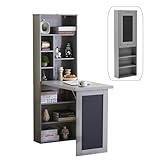
Overview: This grey foldable convertible desk functions as both a workspace and storage cabinet, ideal for home offices with limited square footage. When folded, it serves as a decorative shelf; when opened, it provides a practical desk surface. Features include a writing blackboard, adjustable bottom shelf, and anti-toppling design. The neutral grey finish suits modern interiors.
What Makes It Stand Out: The versatile grey finish offers a modern alternative to standard white desks. The writing blackboard provides a functional surface for notes and reminders. With three-level adjustable shelving, it accommodates items of various heights. The particleboard and metal hardware construction balances durability with affordability while maintaining a clean aesthetic.
Value for Money: Priced at $169.96, this desk competes directly with the HOMCOM model. It offers similar storage capacity and functionality but lacks the specified weight capacity. The grey color option may appeal to those seeking alternatives to white. For the price, you get solid construction and multi-room versatility that justifies the investment.
Strengths and Weaknesses: Strengths include space-saving design, chalkboard feature, adjustable shelving, anti-toppling safety, and neutral grey finish. The multi-functional design works in any room. Weaknesses include unspecified weight limit, potentially less robust materials, and unclear brand reputation. Particleboard may not match MDF durability for heavy use.
Bottom Line: A solid mid-range option for those wanting chalkboard functionality and grey aesthetics. Best for moderate use rather than heavy equipment.
4. ARTETHYS Wall Mounted Desk with LED Light Farmhouse Multifunctional Fold Down Laptop Computer Table Writing Workstation with Storage Compartments Space Saving for Home Office, Gray

Overview: The ARTETHYS desk combines farmhouse aesthetics with modern functionality, featuring integrated LED lighting, a tack board, and a two-layer design. When folded, it measures just 6.3 inches deep, making it ideal for tiny spaces. The upper layer includes an anti-falling metal baffle for safety.
What Makes It Stand Out: The integrated LED lighting adds ambient illumination for late-night work sessions—a unique feature in this category. The tack board behind the upper door provides convenient note-pinning space. The anti-falling metal baffle prevents items from dropping when opening, addressing a common frustration with folding desks. Its farmhouse style stands out from generic designs.
Value for Money: At $99.99, this desk offers distinctive features at a mid-range price. The LED lighting and tack board add value beyond basic models. However, the 30-pound weight capacity limits its use to lightweight laptops and accessories. For decorative functionality and occasional use, it delivers good value, but heavy users should look elsewhere.
Strengths and Weaknesses: Strengths include LED lighting, tack board organization, farmhouse style, compact dimensions, and safety baffle. The design is visually appealing and functional. Weaknesses include low 30-pound weight capacity, limited depth when open (16.9 inches), and smaller overall size. Not suitable for dual monitors or heavy equipment.
Bottom Line: Perfect for style-conscious users needing a lightweight, occasional workspace with unique lighting and organizational features. Not for heavy-duty use.
5. Zethvax Fold Out Desk with Storage and Built-in Outlet, Mid Century Foldable Desk for Small Spaces, Hidden Folding Table for Home Office or Bedroom (White)

Overview: The Zethvax desk merges mid-century modern design with practical technology integration. This white foldable desk features a built-in power station with 2 AC outlets, 1 USB port, and 1 Type-C port, plus side shelving and two lower storage tiers. It folds into a compact nightstand or cabinet.
What Makes It Stand Out: The built-in power strip with multiple charging options is a game-changer for cord management. No more dangling cables or reaching for wall outlets. The mid-century aesthetic offers stylish appeal, while reinforced stabilizing feet protect floors and enhance stability. It transforms between desk and nightstand seamlessly.
Value for Money: At $169.99, this desk matches the HOMCOM price while offering unique electrical integration. The power station alone adds significant value for device-heavy users. While weight capacity isn’t specified, the construction appears sturdy. For tech-savvy users, the convenience of built-in charging justifies the premium over basic models.
Strengths and Weaknesses: Strengths include built-in power station, mid-century design, versatile functionality, floor-protecting stabilizing feet, and ample storage. The charging capabilities are outstanding. Weaknesses include unspecified weight capacity, potential cable management challenges, and premium pricing. Assembly may be more complex due to electrical components.
Bottom Line: An excellent choice for tech users who prioritize charging convenience and style. The integrated power strip makes it worth the investment for modern home offices.
6. Utopia Alley Collapsible Fold Down Desk Table | Chalkboard Wall with Storage Cabinet & Bottom Shelves, Multipurpose Foldable Desk for Home, Office, Crafting, and More (White)

Overview: The Utopia Alley Collapsible Fold Down Desk Table is a premium wall-mounted workstation that combines a functional desk with integrated storage and a unique chalkboard surface. Designed for versatility, this white-finished unit transforms from a compact cabinet to a spacious work surface, making it ideal for multi-purpose rooms, small apartments, or home offices where space is at a premium. The laminated MDF construction promises durability while maintaining a clean, modern aesthetic that complements various interiors.
What Makes It Stand Out: This desk distinguishes itself with its chalkboard wall panel—a creative feature for notes, reminders, or doodling. The comprehensive storage system includes a cabinet with doors and bottom shelves, offering more organizational options than typical fold-down desks. Its ability to serve as a kitchen workspace, crafting station, or even a bar table demonstrates exceptional versatility. The pre-drilled holes and labeled parts simplify assembly significantly, reducing setup frustration.
Value for Money: At $247.60, this sits in the premium tier of fold-down furniture. However, the combination of chalkboard functionality, superior storage capacity, and robust construction justifies the investment compared to basic models. You’re paying for multi-room versatility and a furniture piece that replaces several standalone items, ultimately saving money and space in compact living situations.
Strengths and Weaknesses: Strengths include durable laminated MDF construction, innovative chalkboard surface, generous storage options, space-saving design, and straightforward installation. Weaknesses are the higher price point, larger footprint that may overwhelm tiny spaces, and the chalkboard feature that might not appeal to all users. The white finish requires regular cleaning to maintain its appearance and shows scuffs more easily than darker colors.
Bottom Line: Perfect for creative professionals and space-conscious homeowners seeking a multifunctional workstation. The Utopia Alley desk delivers excellent utility despite its premium price, making it a worthwhile investment for those who’ll utilize its unique features and comprehensive storage system.
7. Folding Table Wall Mounted Small Round Tray, Fold Down Wall Desk - Flip-Out Design Nightstand, Extendable Space Saving Dining Table Floating Side Table Extender Shelf(Original Wood (Brown)

Overview: The Folding Table Wall Mounted Small Round Tray is an ultra-compact, budget-friendly solution for those needing occasional surface space. This brown wood-finished unit folds down to just 3.5 inches thick, making it virtually disappear when not in use. At its modest price point, it provides basic functionality for small apartments, dorm rooms, or as a supplementary surface in any room where permanent furniture isn’t practical or desirable.
What Makes It Stand Out: Safety takes center stage with smooth, rounded edges and a 0.4-inch protective lip to prevent items from sliding off. The thickened wood construction and quality hardware ensure surprising sturdiness for its size and price. Its simplicity is its genius—functioning as a nightstand, bookshelf, cup holder, or dressing table extension without complicated mechanisms or bulky frames that clutter small spaces.
Value for Money: At $51.99, this represents exceptional value for minimalists and space-savers. While it lacks advanced features, it delivers exactly what it promises: a safe, stable, space-efficient surface. Comparable basic wall-mounted tables often cost more, making this an economical choice for temporary or light-duty use where budget constraints are paramount.
Strengths and Weaknesses: Strengths include unbeatable affordability, superior safety features, ultra-thin profile when folded, straightforward installation, and versatility across multiple rooms. Weaknesses include limited surface area unsuitable for laptops or extensive work, absence of integrated storage, basic aesthetic that may not suit all décor, and modest weight capacity. The round design, while safe, reduces usable workspace compared to rectangular alternatives.
Bottom Line: An excellent choice for those prioritizing economy and space savings over functionality. Ideal as a secondary surface in tight quarters, though insufficient as a primary workstation for most users. It excels at being exactly what it claims: a simple, safe, space-saving tray table.
8. YUSING Wall Mounted Table, Multifunctional Fold Down Wall Mounted Laptop Computer Desk with Storage Compartments for Home, Office, White

Overview: The YUSING Wall Mounted Table is a sleek, minimalist fold-down desk designed specifically for laptop users in compact spaces. This white MDF unit measures 23 inches wide by 20 inches high, providing just enough surface for a computer and essentials while maintaining a tiny footprint. Its clean lines and modern aesthetic integrate seamlessly into contemporary bedrooms, offices, or living rooms where floor space is limited and clutter must be minimized.
What Makes It Stand Out: The angled paper organizer is a thoughtful touch, keeping documents visible and accessible without consuming additional space. The multifunctional design transforms from a closed cabinet to a functional desk, hiding clutter when not in use. Its 30-pound weight capacity, when properly mounted to wall studs, offers confidence for laptop and accessory use without the wobbliness common in budget wall desks.
Value for Money: Priced at $68.99, this hits the sweet spot between budget and premium options. You get quality MDF construction, integrated storage compartments, and a modern design without breaking the bank. It competes favorably with similar desks that often lack the angled organizer or cost significantly more, making it a smart mid-range investment.
Strengths and Weaknesses: Strengths include sturdy MDF build, space-saving wall-mounted design, useful angled storage compartment, modern appearance, and reasonable price. Weaknesses are the shallow 6-inch depth that limits workspace, modest weight capacity unsuitable for heavy monitors, limited overall storage compared to larger units, and requirement for precise stud mounting. The compact size may feel cramped for extended work sessions or larger users.
Bottom Line: A smart solution for light laptop users in tight spaces. The YUSING desk offers excellent value and functionality for its size, though power users will need something more substantial. It’s ideal for students or remote workers in studio apartments.
9. TuckTect Floating Desk with Storage Shelves, 81’’ Wall Mounted Desk Laptop Writing Study Table, Folding Drop Leaf Table, Multifunctional Computer Workstation for Narrow Small Space

Overview: The TuckTect Floating Desk is a premium 81-inch wall-mounted workstation that redefines flexible home office design. This plywood-constructed unit features a unique system of moveable storage cubes that can be arranged on either side or throughout your home, offering unprecedented customization. The fold-down design provides a generous work surface while maintaining a slim profile, making it ideal for narrow spaces that require maximum functionality without permanent floor furniture.
What Makes It Stand Out: The free-matching cube system is genuinely innovative, allowing users to create a personalized storage configuration that evolves with their needs. The all-in-1 design philosophy enables use as a bookcase, TV stand, crafting bench, or kitchen shelving—truly limitless applications. Premium plywood construction surpasses typical MDF durability, while the included accessories (screwdriver, drill bit, gloves) demonstrate thoughtful customer service rarely seen in flat-pack furniture.
Value for Money: At $223.99, this competes directly with high-end wall desks while offering superior customization. The 1-year warranty and comprehensive hardware kit add significant value. When you consider it replaces multiple furniture pieces, the investment becomes more justifiable for dedicated home office setups where adaptability is key.
Strengths and Weaknesses: Strengths include exceptional customization options, high-quality plywood construction, generous 81-inch width, versatile cube storage system, and excellent warranty support. Weaknesses include complex assembly requiring time and patience, higher price point, need for extremely sturdy wall support, and larger footprint that may dominate small rooms. The extensive options could overwhelm decision-fatigued buyers.
Bottom Line: Outstanding for serious home office users who value customization and quality. The TuckTect desk is a worthwhile investment for those ready to commit to a permanent, personalized workspace solution that grows with changing needs.
10. Tangkula Folding Wall Table - Floating Desk with Storage Drawer & Shelves (White)

Overview: The Tangkula Folding Wall Table balances functionality and affordability in a stylish white package. This floating desk features an upgraded hydraulic rod mechanism that ensures smooth, safe opening and closing, addressing a common pain point of cheaper fold-down furniture. With a drawer and six shelves, it provides substantial storage for a unit of its size, serving as a vanity, laptop station, or writing desk in bedrooms, study areas, or children’s rooms where versatility is essential.
What Makes It Stand Out: The hydraulic rod system delivers premium smoothness and safety typically found in more expensive models. User-friendly details like magnetic door catches, convenient opening knobs, and drawer stoppers show thoughtful engineering. The combination of drawer and six shelves offers superior organization options compared to similarly priced competitors that often skimp on storage or use flimsy struts.
Value for Money: At $84.99, this represents excellent mid-range value. The hydraulic mechanism alone justifies the price premium over basic models, while the comprehensive storage system and safety features make it a smart purchase. It bridges the gap between flimsy budget options and expensive premium desks, delivering professional-grade functionality at an accessible price.
Strengths and Weaknesses: Strengths include smooth hydraulic operation, generous storage (drawer + 6 shelves), safety features (magnetic catch, drawer stoppers), easy wall mounting, and versatile applications. Weaknesses include white finish that shows scuffs and requires maintenance, limited drawer depth for larger items, mandatory wall mounting that restricts placement, and weight capacity limitations typical of wall-mounted units. The MDF construction, while adequate, isn’t as robust as solid wood alternatives.
Bottom Line: Highly recommended for families and multi-purpose rooms. The Tangkula desk delivers premium features at a reasonable price, making it one of the best value propositions in the fold-down desk market for those seeking safety and storage.
Why Wall-Mounted Desks Are Redefining Modern Home Offices
The shift toward hybrid work models has fundamentally changed what we demand from our home office furniture. Unlike traditional desks that command permanent floor real estate, wall-mounted solutions offer a transformative approach: they disappear when not in use. This architectural flexibility allows a single room to serve multiple purposes—your bedroom becomes a boardroom by day, your hallway transforms into a homework station, and your living room reclaims its social function after hours. The psychological benefit is equally significant; physically closing your workspace signals to your brain that the workday has ended, a boundary that’s increasingly difficult to establish when your office is always in view.
The Evolution of Hidden Storage in Wall Desks
Gone are the days when “hidden storage” meant a shallow compartment barely deep enough for a notepad. Today’s engineering has produced multi-tiered storage systems that maximize every cubic inch behind the desk surface. Innovative hinge mechanisms allow the interior to remain accessible even when the desk is closed, while magnetic panels and push-to-open latches eliminate the need for visible hardware. The most advanced models feature configurable dividers, charging stations, and even climate-controlled compartments for sensitive electronics. Understanding this evolution helps you recognize which storage solutions are genuinely functional versus those that merely create the illusion of organization.
Key Space-Saving Benefits for Urban Living
In metropolitan apartments where square footage commands premium prices, a wall desk’s value extends beyond its physical footprint. The vertical installation principle frees up approximately 15-20 square feet of floor space compared to conventional desks. But the real magic lies in the visual breathing room it creates. By elevating your workspace, you maintain clear sightlines across your room, making even the smallest studio feel more expansive. Additionally, these desks eliminate the need for separate storage furniture, consolidating two functions into one zero-footprint solution. For renters, the ability to uninstall without damaging floors or leaving heavy furniture behind provides unmatched flexibility when lease renewal season arrives.
Understanding Different Mounting Systems
The mounting system determines not just stability but also your wall’s integrity and future modification possibilities. French cleat systems distribute weight across wall studs, supporting heavier loads while allowing easy removal and repositioning. Direct stud mounting offers maximum security for daily use but commits you to a permanent location. Toggle bolt installations work for plaster or drywall without stud access but significantly reduce weight capacity. The most sophisticated 2026 models incorporate hybrid systems that combine a primary stud mount with secondary support brackets, creating redundancy that prevents catastrophic failure. Before purchasing, always verify your wall type and locate studs using a high-quality stud finder—never rely on guesswork when your expensive equipment will hang from the result.
Material Matters: Choosing the Right Construction
Material selection impacts everything from durability to aesthetics to environmental footprint. Engineered wood with high-pressure laminate offers excellent moisture resistance and scratch protection at a moderate price point, making it ideal for high-humidity apartments or households with children. Solid hardwood provides timeless beauty and can be refinished, but its weight demands robust mounting and may limit your wall options. Metal frames with wood veneer combine lightweight strength with warm aesthetics, though the veneer quality varies dramatically between manufacturers. For eco-conscious buyers, bamboo plywood has emerged as a sustainable alternative that rivals hardwood’s durability while regenerating in just 3-5 years. Pay close attention to edge banding quality—poorly applied edges peel within months, exposing the core material to moisture damage.
Weight Capacity and Load Distribution Fundamentals
A desk’s rated weight capacity tells only half the story. The critical factor is dynamic load distribution: how weight is spread across the surface when you lean on it or type vigorously. Quality designs incorporate reinforced mounting plates that transfer force directly to wall studs, preventing stress on hinge mechanisms. Look for models that specify both static capacity (stationary weight) and dynamic capacity (active use), with the latter typically being 30-40% lower. Consider your typical setup: a monitor arm creates concentrated point loads, while a laptop distributes weight more evenly. For dual-monitor configurations, prioritize desks with reinforced back panels and cross-bracing. Remember, the published capacity assumes proper installation into structural studs—mounting only to drywall reduces effective capacity by up to 80%.
Ergonomic Considerations for Daily Use
An improperly positioned wall desk can wreak havoc on your posture, regardless of how cleverly it folds away. The ideal installation height places your keyboard tray at elbow level when seated, typically 28-30 inches from the floor for average adults. However, many wall desks compromise ergonomics for storage depth, resulting in keyboard surfaces that are too high or too deep. Seek models with adjustable height brackets or integrated keyboard trays that slide out to achieve proper wrist alignment. The depth of the work surface matters equally—24 inches accommodates most laptops comfortably, but 30 inches is necessary for external monitors positioned at arm’s length. Some premium designs feature a slight 5-degree tilt toward the user, reducing neck strain during prolonged use.
Hidden Storage Configurations: What to Look For
Not all hidden storage serves the same purpose, and understanding configuration options prevents buyer’s remorse. Vertical compartmentalization works best for documents and slim electronics, while horizontal cubbies accommodate routers and external drives. The most versatile designs feature removable panels that let you customize interior layout as your needs evolve. Consider accessibility: can you reach frequently used items without fully opening the desk? Magnetic tool strips and pegboard backers transform dead space into functional organization. For tech-heavy setups, look for ventilated compartments with cable pass-throughs that prevent equipment overheating. Depth is crucial—interiors shallower than 4 inches limit utility, while depths exceeding 8 inches may cause the desk to protrude uncomfortably when closed.
Cable Management Solutions for Clean Aesthetics
The sleek silhouette of a closed wall desk is immediately ruined by dangling cables. Advanced models integrate cable channels that route power cords through the hinge mechanism itself, keeping wires completely hidden in both open and closed positions. Look for desks with built-in surge protectors and USB charging ports positioned inside the storage compartment—this lets you charge devices out of sight while keeping outlets accessible. Some designs feature magnetic cable anchors that secure cords along the desk’s interior, preventing them from snagging when closing. For retrofitting existing desks, adhesive cable raceways with low-profile hinges can achieve similar results, though they rarely match the seamless integration of factory-designed systems.
Installation Requirements and DIY Feasibility
While many wall desks market themselves as “easy install,” the reality depends on your skill level and tools. Professional installation typically requires a drill with masonry bits (for brick walls) or wood bits (for studs), a level accurate to 0.5 degrees, and a torque wrench to ensure bolts are properly tensioned. The process involves locating multiple studs, pre-drilling pilot holes, and often a second person to hold the desk during mounting. DIY-friendly models feature paper templates that tape to the wall, marking exact drill points and eliminating measurement errors. If you’re renting, consider temporary mounting systems that use high-strength adhesive strips rated for the desk’s weight—these can support up to 50 pounds on properly prepared surfaces and remove without damage. Always verify the included hardware matches your wall type; many manufacturers ship generic bolts that require upgrading for specific applications.
Safety Features and Child-Friendliness
In households with children or pets, safety transcends aesthetics. Soft-close hinges prevent the desk from slamming shut, protecting fingers and reducing noise. The most robust designs include anti-tipping straps that anchor the desk to the wall even when open, preventing forward collapse if climbed upon. Magnetic locks with child-resistant mechanisms keep curious hands out of stored electronics or office supplies. Weight sensors represent the latest innovation—if the desk detects more than 10 pounds of downward pressure while closing, it automatically stops and reverses. For added peace of mind, look for certifications like ANSI/BIFMA standards, which verify the desk has undergone rigorous stability and load testing. Always install wall desks at heights inaccessible to toddlers, and never use them as changing tables or for supporting infants.
Style Integration: Matching Your Home Decor
A wall desk should complement, not compromise, your interior design. Scandinavian-inspired designs feature light oak veneers and minimalist hardware, blending seamlessly with modern and hygge aesthetics. Industrial models combine black steel frames with reclaimed wood, perfect for loft-style apartments. For traditional homes, desks with raised panel fronts and antique brass hardware mimic built-in cabinetry. The 2026 trend toward “invisible furniture” favors desks that match wall color exactly, creating a camouflaged effect when closed. Consider the desk’s visual weight—a dark, heavy design on a light wall becomes a focal point, while a matching tone recedes. Some manufacturers offer customizable panels you can paint or wallpaper to achieve perfect integration, though this typically voids finish warranties.
Maintenance and Longevity Tips
Proper maintenance extends a wall desk’s lifespan from a few years to several decades. Hinge mechanisms require annual lubrication with silicone-based grease—avoid WD-40, which attracts dust and creates gummy residue. For laminate surfaces, use pH-neutral cleaners; acidic or alkaline products degrade the protective layer over time. Solid wood desks need seasonal humidity monitoring; indoor relative humidity below 30% causes cracking, while above 60% promotes warping. Tighten mounting bolts every six months, as seasonal wall settling can loosen connections. If the desk develops sag when open, check for wall stud movement—a sign of improper initial installation that requires immediate attention. For desks with integrated electronics, vacuum dust from ventilation grilles monthly to prevent component overheating.
Budget Considerations and Value Proposition
Price ranges for quality flip-down wall desks span from $200 to over $2,000, but cost doesn’t always correlate with value. Entry-level models ($200-$400) typically use particleboard cores with basic hinges, suitable for light laptop use but unlikely to withstand daily heavy use. Mid-range options ($500-$900) offer plywood construction, soft-close mechanisms, and thoughtful cable management—the sweet spot for most remote workers. Premium desks ($1,000+) feature solid hardwood, custom finishes, and advanced safety systems, justifying the investment if the desk serves as your primary workspace for years. Factor in hidden costs: professional installation ($150-$300), upgraded mounting hardware ($50-$100), and potential wall repairs if you relocate. The true value lies in longevity—a $800 desk that lasts 10 years costs less annually than a $300 desk requiring replacement after two years.
Frequently Asked Questions
What wall types can support a flip-down desk?
Drywall with wooden studs provides the most secure mounting. Concrete and brick walls require masonry anchors and carbide drill bits. Plaster walls demand special toggle bolts and careful drilling to prevent cracking. Metal studs, common in commercial buildings, need self-tapping screws and typically support 30% less weight than wood studs. Always use a stud finder to confirm structural support before installation.
How much weight can I safely place on my wall desk?
Most quality desks support 50-100 pounds of static load when properly installed into studs. However, dynamic loads from typing or leaning reduce safe capacity by 30-40%. Distribute weight evenly, avoiding concentration in the center. For monitor arms, verify the desk has reinforced mounting points, as the torque from an extended arm multiplies effective weight.
Can I install a wall desk by myself?
While possible for smaller models under 30 pounds, solo installation risks improper leveling and potential injury. The desk must be held flush against the wall while marking and drilling—nearly impossible without a second pair of hands. If you must work alone, build a temporary support ledge at the correct height using 2x4 lumber to hold the desk during installation.
Will a wall desk damage my rental walls?
Proper installation into studs creates small holes (typically 1/4-inch diameter) that are easily patched when you move. Avoid adhesive-only mounts for heavy desks, as removal can peel paint and drywall paper. Some landlords approve wall desks if you agree to leave them installed for the next tenant—this can actually increase the unit’s appeal.
How do I prevent cables from getting pinched when closing the desk?
Route cables through dedicated channels that maintain slack loops inside the storage compartment. Use cable clips with rotating heads that pivot as the desk closes. Some premium desks feature spring-loaded cable arms that automatically retract excess length. Never run power cords through hinge mechanisms unless the desk specifically includes insulated channels for this purpose.
Are wall desks suitable for dual monitor setups?
Yes, but select models with at least 30-inch depth and reinforced back panels. Mount monitors on a dual-arm stand positioned at the back edge to distribute weight toward the wall. Verify the combined weight of monitors, arms, and base doesn’t exceed 60% of the desk’s rated capacity. Consider ultrawide curved monitors as a space-efficient alternative to dual displays.
What’s the difference between soft-close and self-closing hinges?
Soft-close hinges use hydraulic dampers to slow the final 20 degrees of closure, preventing slamming. Self-closing hinges use springs to pull the desk shut automatically but offer no speed control. Soft-close mechanisms cost more but protect both the desk and your walls from impact damage. They also reduce noise—crucial in shared living spaces.
How do I childproof a wall desk in a family home?
Install magnetic locks on storage compartments and use anti-tip straps even if the desk seems stable. Position the desk at least 48 inches from the floor to prevent climbing access. Choose models with finger-safe hinges that leave no gap when closing. Store heavy items in lower compartments to lower the center of gravity, and never leave hot beverages or sharp objects on the surface.
Can wall desks accommodate standing work positions?
Standard wall desks are designed for seated use. However, some 2026 models feature adjustable height mechanisms that raise the work surface to 42-48 inches for standing. These require reinforced mounting and typically cost 40-60% more. Alternatively, install a separate wall desk at standing height and use a stool for seated tasks—this provides ergonomic flexibility without complex mechanisms.
How long should a quality wall desk last?
With proper installation and maintenance, a mid-range to premium wall desk should last 10-15 years. Hinge mechanisms typically fail first, but quality brands offer replacement parts. Laminate surfaces may show wear after 5-7 years of heavy use, while solid wood can be refinished indefinitely. The limiting factor is often changing technology—ensure cable management and storage compartments can adapt to future device sizes and connection types.