The modern call center is a sonic battleground. Between overlapping conversations, keyboard clatter, and ambient office hum, your agents’ ability to hear and be heard isn’t just a comfort issue—it’s a direct line to customer satisfaction scores, average handle time, and ultimately, your bottom line. As we move into 2026, the convergence of USB-C standardization and advanced noise-cancelling technologies has created a perfect storm of value in the sub-$100 category, but only if you know exactly what to look for.
Gone are the days when budget-friendly meant bargain-bin performance. Today’s noise-cancelling USB-C headsets leverage sophisticated digital signal processing, AI-powered microphone arrays, and ergonomic designs that would have cost triple just three years ago. This guide cuts through the marketing jargon to arm call center decision-makers with the technical knowledge needed to make informed purchasing decisions that balance cost, performance, and agent well-being.
Top 10 Noise-Cancelling USB-C Headsets for Call Centers
Detailed Product Reviews
1. Yealink UH44 Teams Certified USB Wired Headset with 2 Noise Cancelling Mics,Stereo Sound for PC,Laptop,Teams,Zoom,Call Center,Home Office,Inline Controls,Comfort Ear Cushions,USB-C/A,Busylight
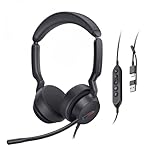
Overview: The Yealink UH44 is a Microsoft Teams-certified USB wired headset engineered for professional communication in hybrid work environments. Weighing just 5.7 ounces, this dual-ear headset combines intelligent noise cancellation with ergonomic design for all-day productivity. The certification ensures seamless integration with Teams and Zoom, making it a plug-and-play solution for busy professionals.
What Makes It Stand Out: The dual-microphone array sets this apart from budget competitors, intelligently filtering keyboard clicks and ambient noise far better than single-mic alternatives. The integrated busy indicator automatically illuminates red during calls, signaling colleagues not to interrupt—a feature rarely seen at this price point. The 280-degree rotating boom allows ambidextrous wear, while automatic EQ switching optimizes audio between calls and music without manual adjustment.
Value for Money: At $59.99, the UH44 occupies a sweet spot between basic headsets and premium enterprise solutions. You’re getting Teams certification, dual-mic technology, and a busy light that competitors often charge $80+ for. The inclusion of both USB-C and USB-A adapters adds future-proofing value for evolving workstation setups.
Strengths and Weaknesses: Strengths include superior noise cancellation, certified Teams/Zoom plug-and-play compatibility, exceptional comfort for 12-hour wear, and the professional busy indicator. The rotatable ear cups accommodate 99% of head shapes. Weaknesses are the 35mm drivers (smaller than some 40mm rivals) and limited color options. The inline controls, while functional, feel slightly plasticky compared to premium models.
Bottom Line: Ideal for call center agents, remote managers, and professionals who frequent Teams meetings. The dual-mic system and busy light justify the modest premium over entry-level models, making it a smart investment for serious communicators who need reliable, professional-grade audio.
2. AOC USB Headset with Microphone for PC, Over-Ear Wired Headphones with Mic, Noise-Cancelling Boom, 40mm Audio Drivers, USB-A/C Compatibility for Office, Call Centers & Online Meetings (Black)

Overview: AOC’s USB headset delivers professional-grade audio performance with 40mm drivers and a precision noise-cancelling microphone. This over-ear wired solution targets office workers and call center professionals seeking reliable connectivity without battery concerns. The plug-and-play design works across PC, Mac, and mobile devices, making it a versatile daily driver for communication-heavy roles.
What Makes It Stand Out: The 40mm drivers outperform most competitors in this class, delivering richer bass and clearer highs for both calls and multimedia. Protein-memory foam cushions provide luxury comfort typically reserved for pricier models. The 90-degree rotating boom offers quick mute functionality, while dual USB-A/C compatibility ensures seamless connection across modern and legacy devices without adapters.
Value for Money: At $36.99, this headset punches above its weight. You’re getting audio quality comparable to $50+ headsets, plus premium comfort materials. The stable wired connection eliminates Bluetooth dropouts, saving frustration during critical calls. It’s a cost-effective upgrade from basic earbuds for professionals needing consistent performance.
Strengths and Weaknesses: Strengths include excellent audio fidelity, all-day comfort, plug-and-play reliability, and versatile compatibility. The inline controls on the earcup are intuitive and keep controls within easy reach. Weaknesses include the single microphone (less effective than dual-mic systems), absence of a busy indicator, and a slightly heavier 6.17-ounce frame. The cable isn’t detachable, limiting portability.
Bottom Line: AOC’s offering is a workhorse for professionals prioritizing audio quality and comfort over flashy features. It’s a reliable, no-fuss choice for daily video conferences and call center duties where consistent performance matters most and budget consciousness is key.
3. NUBWO HW02 USB Wired Office Headset with Mic, USB C/3.5mm Jack, Noise Cancelling, in-Line Control, Comfortable Call Center Computer Headset for PC, Laptop, Mac
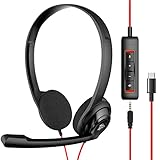
Overview: The NUBWO HW02 is an ultra-lightweight USB wired headset designed for budget-conscious professionals who refuse to compromise on core functionality. At just 60 grams, it’s one of the lightest office headsets available, offering flexible connectivity through USB-C or 3.5mm jack for maximum device compatibility across work and personal gear.
What Makes It Stand Out: The dual-connection versatility is remarkable at this price point, seamlessly switching between PC/Mac via USB and mobile devices via 3.5mm without additional adapters. The integrated Digital Signal Processing (DSP) sound card enhances audio clarity beyond typical budget headsets. Weighing merely 2.1 ounces, it disappears on your head during marathon calls, reducing neck strain significantly compared to heavier models.
Value for Money: At $19.99, this is exceptional value. You’re getting multi-device compatibility and DSP-enhanced audio that competitors often price at $30+. For remote workers needing a backup or students on tight budgets, it’s nearly unbeatable. The inclusion of inline controls at this price is impressive and rare.
Strengths and Weaknesses: Strengths include incredible lightness, versatile connectivity, intuitive inline controls with status lights, and wide platform compatibility with Teams and Zoom. The adjustable boom mic delivers clear speech for most environments. Weaknesses include basic build quality, smaller ear pads that may not suit all ears, lack of premium features like a busy indicator, and minimal noise isolation. The 3.5mm connection bypasses the inline controls, limiting functionality.
Bottom Line: Perfect for entry-level remote workers, students, or as a secondary headset. While it won’t impress audiophiles, the HW02 nails the essentials at a price that makes it disposable yet surprisingly capable for daily communication needs and basic multimedia consumption.
4. Rownfusny USB Headset with Microphone for PC, Computer Headset with Microphone Noise Canceling Mic for Laptop Call Center Wired Headset with Mic for Work Zoom Skype Teams from Office Home (Black)
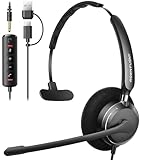
Overview: The Rownfusny USB headset positions itself as the ultimate connectivity champion for device-hopping professionals. With USB-C, USB-A, and 3.5mm options, it eliminates adapter clutter while delivering noise-cancelling performance for home and office use. The black, understated design fits any workspace aesthetic without drawing unnecessary attention.
What Makes It Stand Out: True universal compatibility is the headline feature—this headset works with virtually any device from modern laptops to legacy IP phones without additional dongles. The 180-degree rotating ear cups allow comfortable neck-resting during breaks, a thoughtful ergonomic touch rarely seen in this price range. Memory foam cushions provide premium comfort without the premium price tag, making extended wear feasible for long shifts.
Value for Money: At $26.99, you’re paying primarily for versatility. While audio components are standard, the triple-connection flexibility saves money on separate headsets or adapters. It’s ideal for consultants, freelancers, and IT professionals who work across multiple client systems and need one headset for everything, maximizing utility per dollar spent.
Strengths and Weaknesses: Strengths include unmatched connectivity options, comfortable memory foam, rotating ear cups for convenience, and straightforward inline controls. The unibody mic design enhances durability. Weaknesses include lack of Teams certification, no busy indicator, basic 40mm drivers without premium tuning, and a generic brand with limited support history. The microphone quality is good but not exceptional in noisy environments.
Bottom Line: For professionals juggling multiple devices, this headset is a connectivity Swiss Army knife. If you value plug-and-play versatility over brand prestige and premium audio, it’s a practical, cost-effective solution for hybrid work environments where compatibility is king and simplicity matters.
5. Callez Computer Headset, 3.5mm Cell Phone Headset with Mic Noise Cancelling, USB-C Wired Headphone for PC Laptop Mac iPhone Samsung Zoom Teams Call Center Home Office Work, in-line Controls

Overview: Callez targets the warranty-conscious professional with this lightweight 3.5mm/USB-C headset. Weighing just 2.7 ounces, it’s designed for all-day comfort while offering explicit compatibility with recent iPhone models through a bundled adapter. The headset aims to serve call centers, home offices, and mobile professionals alike with broad application support.
What Makes It Stand Out: The 2-year warranty and 45-day money-back guarantee provide peace of mind unmatched by most competitors in this price range. The 330-degree rotatable microphone allows precise positioning for optimal voice capture on either side. Explicit iPhone 15/16/17 compatibility (with adapter) addresses a common pain point for Apple users, while the breathable leather ear cushions enhance long-wear comfort significantly.
Value for Money: At $35.99, the extended warranty adds significant value that justifies the price premium over barebones alternatives. While audio specs are standard, the risk-free trial period and replacement coverage make it attractive for heavy daily users. The included USB-C to 3.5mm adapter saves additional purchase costs and expands device compatibility across modern devices.
Strengths and Weaknesses: Strengths include exceptional lightness, breathable leather cushions, flexible mic positioning, comprehensive warranty coverage, and specific modern iPhone support. The inline controls are responsive and intuitive for volume and call management. Weaknesses include incompatibility with older iPhones (7-14), lack of USB-A connection, no busy indicator light, and smaller brand recognition. The 3.5mm connection may bypass some device controls, and the driver size isn’t specified.
Bottom Line: Callez is perfect for professionals wanting warranty protection and recent iPhone compatibility. The lightweight design excels for marathon meetings, though connectivity limitations require checking your specific device compatibility first. It’s a safe, comfortable choice backed by strong support for those who prioritize peace of mind.
6. EKSA H8 USB Headset with Microphone for Work, Stereo Wired Computer Headphones with Mic Noise Cancelling, in Line Controls, 3.5mm Jack USB-C/A Over-Ear Headset for PC Laptop Office Call Center Teams

Overview: The EKSA H8 USB Headset delivers professional-grade audio performance for demanding work environments. This versatile headset combines 40mm large drivers with EKSAtelecom VoicePure Technology, suppressing up to 99.8% of environmental noise through its 270° adjustable boom microphone. The triple connectivity options—3.5mm jack, USB-C, and USB-A—ensure seamless integration across desktops, laptops, and mobile devices, while the 7.71-foot cable provides exceptional mobility at your workstation.
What Makes It Stand Out: The ENC noise cancellation technology rivals premium competitors, while the dedicated Microsoft Teams button streamlines workflow for collaborative professionals. Memory foam over-ear cushions and a reinforced adjustable headband provide genuine all-day comfort, addressing the primary pain point of office workers. The 270° mic rotation allows precise positioning for optimal voice capture.
Value for Money: At $49.99, the H8 positions itself as a mid-range powerhouse, undercutting premium brands like Jabra and Plantronics by 40-60% while delivering comparable audio fidelity and superior comfort features. The three-year warranty and 24/7 support significantly enhance long-term value, making it a smart investment for remote teams.
Strengths and Weaknesses: Strengths include exceptional noise cancellation, versatile connectivity, professional-grade comfort, intuitive inline controls, and Teams integration. Weaknesses involve the 3.5mm connection disabling button controls, and wired design limiting mobility compared to wireless alternatives. The over-ear design may feel warm during extended summer use.
Bottom Line: The EKSA H8 excels for professionals prioritizing call clarity and comfort in stationary work environments. For remote workers and call center agents seeking reliable, high-performance wired audio without premium pricing, this headset represents an outstanding investment.
7. awatrue EH05-U Wired USB Headset with Noise Cancelling Microphone for PC Laptop - Headphones with In-Line Control, Lightweight, Enhanced Sound & MIC Mute
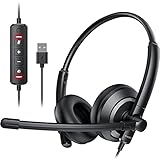
Overview: The awatrue EH05-U Wired USB Headset targets budget-conscious professionals needing reliable communication tools for remote work and online learning. Weighing merely 4 ounces, this ultra-lightweight headset integrates noise reduction technology to eliminate most ambient distractions, while the reinforced steel headband ensures durability uncommon in this price segment. The straightforward USB connection provides plug-and-play simplicity across PCs, Macs, and tablets.
What Makes It Stand Out: The combination of featherlight construction and embedded steel reinforcement creates an impressive durability-to-weight ratio. The 24-month warranty demonstrates manufacturer confidence rarely seen in sub-$30 headsets, while the dedicated microphone and speaker mute controls offer professional-grade convenience typically reserved for pricier models.
Value for Money: Priced at $26.99, this headset dramatically undercuts competitors while delivering essential features for clear communication. It costs 50% less than entry-level Logitech models while matching their core functionality, making it ideal for bulk deployments in educational or call center environments where budget constraints matter.
Strengths and Weaknesses: Strengths include exceptional affordability, ultra-lightweight design, steel-reinforced durability, straightforward operation, and an industry-leading warranty. Weaknesses involve basic audio drivers lacking richness, purely plastic construction beyond the steel band, and single USB connectivity limiting mobile device compatibility. The microphone pickup is adequate but not exceptional.
Bottom Line: The awatrue EH05-U serves as an excellent entry-level solution for users prioritizing cost savings and basic functionality. For students, remote workers on tight budgets, or organizations requiring bulk purchases, this headset delivers remarkable value despite its no-frills approach.
8. AOC Wireless Headset with Mic for Work, Bluetooth 5.4 Headphones with Noise Canceling Microphone, USB C, 30H, Clear Calls & Mic Mute for PC, Laptop, Cell Phones, Zoom - Black
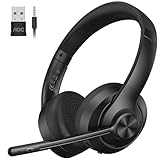
Overview: The AOC Wireless Headset represents a modern solution for professionals seeking untethered mobility without sacrificing call quality. Featuring Bluetooth 5.4 technology with triple connectivity options—wireless, USB dongle, and wired—this headset adapts seamlessly to multi-device workflows. The noise-canceling microphone effectively neutralizes office chatter and keyboard clicks, while the 30-hour battery life with in-use charging eliminates downtime concerns during critical meetings.
What Makes It Stand Out: The versatile connectivity matrix allows effortless switching between PC, mobile, and tablet without re-pairing. The one-touch microphone mute button on the boom provides instant privacy control, while Bluetooth 5.4 ensures stable connections across 30-foot ranges. In-use charging capability during calls demonstrates thoughtful engineering for power users.
Value for Money: At $59.99, this headset delivers premium wireless features at a mid-range price point, competing favorably against $80-100 alternatives from established brands. The 30-hour battery life alone justifies the investment for professionals in lengthy meetings or call center shifts, while triple connectivity adds exceptional versatility.
Strengths and Weaknesses: Strengths include exceptional wireless flexibility, marathon battery life, versatile connectivity, convenient mute controls, and all-day comfort padding. Weaknesses involve potential Bluetooth interference in dense offices, higher latency than wired alternatives, and a price premium over comparable wired models. The USB dongle occupies a port permanently.
Bottom Line: For mobile professionals and multi-device users, the AOC Wireless Headset offers compelling freedom and functionality. If wireless convenience and battery longevity outweigh absolute audio fidelity, this headset delivers outstanding performance for remote work and dynamic office environments.
9. Callez Wired Computer Headset, 3.5mm/USB-C Headset with Mic Noise Cancelling, Cell Phone Headphone for PC Laptop Mac iPhone Samsung Zoom Teams Call Center Home Office Work, in-line Controls

Overview: The Callez Wired Computer Headset prioritizes universal compatibility and extreme lightweight design for professionals constantly switching between devices. Weighing an astonishing 1.98 ounces, this on-ear headset features 330° rotatable microphone flexibility and includes both 3.5mm and USB-C connectivity options. The adapter bundle ensures compatibility with modern smartphones, tablets, and legacy systems, though iPhone 7-14 users require Apple’s Lightning adapter.
What Makes It Stand Out: The sub-2-ounce weight makes this the lightest professional headset available, virtually eliminating neck strain during marathon usage sessions. The rotatable microphone allows left or right-side positioning preference, while the 2-year warranty with 45-day money-back guarantee provides unmatched purchase protection in this category.
Value for Money: Priced at $32.99, this headset offers exceptional versatility and warranty coverage at a budget-friendly price point. The dual connectivity alone adds $10-15 value compared to single-interface competitors, while the weight advantage justifies the modest premium over basic models without such ergonomic considerations.
Strengths and Weaknesses: Strengths include unprecedented lightness, versatile connectivity, rotatable microphone, comprehensive warranty, and breathable leather cushions. Weaknesses involve on-ear design allowing sound leakage, smaller 30mm drivers producing less robust audio than 40mm alternatives, and adapter requirements for certain iPhone models. The cable length is shorter than some competitors.
Bottom Line: The Callez headset suits mobile professionals and minimalists seeking featherlight comfort and broad device compatibility. For users prioritizing weight savings and flexibility over immersive audio, this headset represents a smart, well-supported investment for hybrid work environments.
10. Project Telecom USB-A & USB-C, 2 Users, Monaural Noise Cancelling, Headset Splitter Training Supervising Coaching Bundle - Compatible with Microsoft Teams, Zoom, Cisco Webex, VoIP Apps
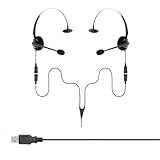
Overview: The Project Telecom Headset Splitter Bundle addresses a specific but critical need in call center training and quality assurance environments. This specialized solution enables two users to simultaneously monitor or participate in the same call through a purpose-built splitter system. The package includes two monaural headsets with adjustable noise-canceling microphones, allowing trainers to supervise operators in real-time without call disruption.
What Makes It Stand Out: This is the only plug-and-play training solution certified for Microsoft Teams, Zoom, and Cisco Webex that requires no software configuration. The binaural headset design for trainees ensures immersive focus, while the supervisor’s monaural configuration maintains environmental awareness. The integrated mute controls allow seamless trainer intervention when necessary.
Value for Money: At $150 for a complete two-user system, this bundle costs 40% less than purchasing separate components individually. For organizations conducting regular training, the efficiency gains and quality improvement rapidly offset the initial investment, particularly in high-turnover call center environments where onboarding speed impacts revenue.
Strengths and Weaknesses: Strengths include specialized training optimization, broad software compatibility, professional-grade components, true plug-and-play operation, and significant cost savings versus DIY solutions. Weaknesses involve niche application limiting individual purchase appeal, monaural design reducing supervisor audio immersion, and higher upfront cost than single headsets.
Bottom Line: This bundle is indispensable for call centers, sales teams, and customer service departments requiring structured training capabilities. For organizations focused on operator development and quality assurance, the Project Telecom system delivers unmatched functionality that single headsets simply cannot replicate.
Why Noise-Cancelling Technology Matters in Modern Call Centers
The Hidden Cost of Poor Audio Quality
Every garbled conversation forces agents to repeat themselves, escalating call duration by an average of 23 seconds per interaction. Multiply that across hundreds of daily calls, and you’re looking at measurable productivity hemorrhaging. Beyond metrics, cognitive load increases dramatically when agents strain to parse customer speech through background noise, leading to burnout and higher attrition rates—costs that dwarf any headset savings.
How Active vs. Passive Noise Cancellation Works
Passive noise cancellation is simply physical isolation: cushioned ear cups blocking sound waves. Active noise cancellation (ANC) is where the magic happens—tiny microphones sample ambient noise, then generate inverse sound waves that literally cancel out the disturbance. For call centers, we’re primarily concerned with microphone noise cancellation (sometimes called ENC), which protects the customer’s experience, though ear cup ANC helps agents maintain focus during after-call work.
Understanding USB-C Connectivity in Professional Headsets
The Shift from USB-A to USB-C in Office Environments
The USB-C revolution isn’t just about reversible connectors. By 2026, over 85% of enterprise laptops ship exclusively with USB-C ports, making backward compatibility adapters a hidden cost center. Native USB-C headsets deliver digital audio directly without analog conversion, eliminating the interference and quality degradation common in noisy office environments. Plus, they draw power efficiently, enabling advanced features without bulky batteries.
Power Delivery and Digital Audio Advantages
USB-C’s 5V/3A power delivery specification allows headsets to power multiple microphone arrays, built-in DSP chips, and even active noise cancellation without external power sources. The digital audio path means your voice is converted to pristine digital signals at the headset itself, bypassing your computer’s often-mediocre sound card entirely. This translates to consistent performance across different workstations—critical for hot-desking environments.
Key Features to Prioritize in Sub-$100 Call Center Headsets
Microphone Quality: Your Voice Is Your Product
Look for unidirectional boom microphones with noise gate technology that automatically mutes below certain decibel thresholds. Frequency response should emphasize the vocal range (300 Hz – 3.4 kHz) while aggressively filtering sub-bass (below 80 Hz) that carries HVAC rumble and high-frequency hiss above 8 kHz. The sweet spot is a microphone sensitivity around -38 dB ±3 dB—any hotter and you’ll pick up desk vibrations; any colder and you’ll need to boost gain, introducing noise.
Comfort for 8+ Hour Shifts
Weight distribution matters more than total weight. A 180-gram headset with a reinforced headband and memory foam pads outperforms a 150-gram model with stiff clamping force. Ear cup rotation (at least 90 degrees) prevents pressure points, while breathable fabric covers reduce heat buildup compared to leatherette. Pro tip: agents wearing glasses need extra-deep ear cavities to avoid temple pressure.
Durability and Build Quality on a Budget
At sub-$100 price points, manufacturers typically use reinforced polycarbonate instead of metal. The failure points are always the joints—look for headsets with visible strain relief at the headband hinges and cable entry points. Replaceable ear pads aren’t just a comfort feature; they extend lifecycle by 40% in shared-device environments. Check IP ratings too—IP32 resistance to sweat and dust prevents premature failure in high-usage scenarios.
Decoding Noise-Cancelling Technologies for Call Centers
ANC vs. ENC: What’s the Difference?
This distinction is crucial: ANC (Active Noise Cancellation) protects the wearer from environmental noise through inverse sound waves in the ear cups. ENC (Environmental Noise Cancellation) protects the caller by using multiple microphones to isolate the speaker’s voice. For call centers, ENC is non-negotiable, while ANC is a valuable productivity bonus. The best sub-$100 headsets now offer both, with ENC prioritized in the signal processing chain.
Hybrid Noise Cancellation Systems
Premium budget headsets employ hybrid systems: a feed-forward microphone faces outward to catch ambient noise before it hits the ear, while a feed-back microphone inside the cup catches what slips through. This dual-mic approach delivers 25-30 dB of noise reduction across a broader frequency spectrum than single-mic systems. For the microphone boom, dual-element arrays create a “beam” that focuses on mouth-position audio while ignoring off-axis noise.
AI-Powered Noise Suppression Trends for 2026
Machine learning models trained on millions of hours of call center audio now run on low-power DSP chips. These algorithms distinguish between human speech and transient noises (keyboard clicks, coffee sips, chair squeaks) with 95% accuracy, suppressing the latter in real-time. The key is on-device processing—cloud-based solutions introduce latency that ruins conversation flow. Look for headsets advertising “edge AI” or “local inference” capabilities.
Call Center-Specific Design Considerations
Monaural vs. Binaural Configurations
Single-ear (monaural) headsets allow agents to monitor office communications and feel less isolated, reducing “headset fatigue.” However, binaural designs improve focus and comprehension by up to 18% in noisy environments, according to 2025 UC Berkeley communication studies. For 2026, consider hybrid policies: binaural for inbound customer service, monaural for outbound sales where team coordination matters.
Inline Controls and Quick-Access Features
Physical buttons beat touch controls in call centers—agents can mute without looking. The ideal layout includes dedicated volume, mute, and answer/end keys with tactile differentiation. LED mute indicators visible in peripheral vision prevent accidental hot-mic situations. Some models now feature “busy light” integration that syncs with softphone status, automatically signaling “on call” to colleagues.
Compatibility with Leading VoIP Platforms
Plug-and-play certification for Microsoft Teams, Zoom, Cisco Webex, and Genesys Cloud ensures full feature support. Without official certification, advanced functions like remote call answer or busy light sync won’t work. Check for firmware update utilities that keep headsets compatible as these platforms evolve—2026’s Teams update will require new DECT security protocols that older firmware can’t handle.
The Sub-$100 Price Point: What to Realistically Expect
Where Manufacturers Cut Costs (And Where They Shouldn’t)
At this price, expect plastic construction, basic carrying cases, and 2-year rather than 3-year warranties. Acceptable compromises include non-swappable cables and standard (not premium) memory foam. Unacceptable cuts: single-microphone booms (no ENC), non-replaceable ear pads, lack of firmware update capability, and missing UC platform certifications. The best value hides in brands that skip fancy packaging to invest in DSP chips.
Warranty and Support Considerations
Look for minimum 2-year warranties with advance replacement options. Enterprise-focused vendors offer 24-hour replacement programs that ship a new unit before you return the faulty one. Avoid consumer-grade warranties requiring you to pay shipping both ways—this hidden cost can turn a $99 headset into a $120 headache. Check for dedicated business support lines; consumer CSRs won’t understand call center deployment issues.
Setting Up Your USB-C Headset for Maximum Performance
Windows and macOS Configuration Tips
Disable OS-level audio enhancements—they conflict with headset DSP. Set the default format to 16-bit, 48000 Hz (DVD quality) for optimal VoIP compatibility. In Windows 11 2026 Update, enable “USB Audio 2.0 Mode” in Device Manager to bypass legacy drivers. For macOS Sequoia, grant microphone permission at the system level, then again in each softphone app to prevent intermittent cutouts.
Software and Firmware Updates
Modern headsets require quarterly firmware updates to maintain compatibility with evolving VoIP platforms. Use vendor-supplied management software to push updates across your fleet—manual updates don’t scale. Enable automatic update checks but schedule installations during off-hours; a firmware flash mid-call is catastrophic. Keep a “golden firmware” version archived in case a new release introduces bugs.
Maintenance and Care for Longevity
Cleaning Protocols for Shared Devices
In hot-desking scenarios, implement daily sanitizing with alcohol-free wipes—alcohol degrades leatherette and polycarbonate over time. Remove and wash fabric ear pad covers weekly in warm soapy water; they should be completely dry before reattachment. Use compressed air on microphone ports monthly to prevent wax and debris buildup that muffles audio. UV-C sanitizing stations pay for themselves by reducing illness-related absenteeism.
Cable Management and Storage Best Practices
USB-C connectors are rated for 10,000 insertions, but yanking by the cable damages internal solder joints. Train agents to grasp the connector housing when unplugging. Use velcro straps (not zip ties) for loose cable management—tight bends create internal wire fractures. For storage, hang headsets on stands rather than tossing in drawers; even minor deformation of the headband affects clamping force and comfort.
Troubleshooting Common Issues
Audio Dropouts and Connectivity Problems
USB-C audio dropouts typically stem from power management, not the headset. Disable USB selective suspend in Windows power settings. On laptops, ensure the headset connects directly to a USB-C port—not through a hub sharing bandwidth with displays or storage. If using USB-C to USB-A adapters, verify they support USB 3.1 Gen 2; older adapters lack the pins for audio data channels.
Microphone Sensitivity and Background Noise
If customers report echo, lower the microphone boost to +10 dB maximum and enable acoustic echo cancellation in your softphone settings. For persistent background noise, check the microphone boom is positioned two finger-widths from the mouth and directly in line with it—angled booms defeat beamforming algorithms. Some headsets have a “training mode” that visually guides optimal positioning via LED indicators.
Future-Proofing Your Investment
Emerging Standards and Protocols
USB4 v2.0 arriving in late 2026 will double audio bandwidth, enabling lossless codecs. While current headsets will remain compatible, models with upgradeable firmware can unlock new features. Keep an eye on the new “UC Certified 2026” badge requirements, which mandate support for wideband audio (50 Hz – 14 kHz) and LE Audio for future Bluetooth bridging accessories.
Scalability for Growing Teams
Choose vendors offering centralized management platforms where you can provision, monitor, and troubleshoot headsets remotely. This prevents IT bottlenecks as you scale. Look for SKUs available in multi-packs with consolidated packaging—better for the environment and your receiving department. Standardize on one model across all roles to simplify spare parts inventory and agent training.
Frequently Asked Questions
1. Can sub-$100 USB-C headsets really compete with $200+ enterprise models?
Yes, for core call center functions. The premium tier offers better materials, longer warranties, and advanced analytics, but the actual microphone and speaker components often come from the same suppliers. The key is prioritizing models that invest in DSP chips over cosmetic features. You’ll sacrifice some durability and premium support, but audio quality can be nearly identical.
2. How do I test noise cancellation before deploying to my entire team?
Create a “noise torture chamber” using office recordings played through speakers at 75 dB. Have agents make test calls to a quality assurance team who rate background noise on a 1-5 scale. Test keyboard typing, nearby conversations, and HVAC noise separately. Most vendors provide 30-day evaluation units—use them in your actual environment, not a quiet conference room.
3. Are USB-C headsets compatible with our older USB-A computers?
They will work with a quality adapter, but you’ll lose some advanced features like power management and firmware update capability. Invest in USB-C to USB-A adapters with built-in DACs (Digital-to-Analog Converters) from reputable brands. Budget $15-20 per adapter and factor this into your total cost of ownership. For long-term compatibility, prioritize USB-C native headsets and use adapters as a bridge strategy.
4. What’s the typical lifespan of a sub-$100 call center headset?
With proper care, expect 18-24 months in high-usage environments. The first components to fail are usually ear pads (replaceable) and cables (non-replaceable on most budget models). Implementing proper cable management and cleaning protocols can extend this to 30 months. Plan for a 3-year depreciation cycle with one mid-life ear pad replacement.
5. How does AI noise suppression affect call recording quality?
AI suppression typically processes audio before it reaches your recording system, meaning recordings benefit from cleaner audio. However, some aggressive algorithms can clip the beginning of words. Test with your recording platform (NICE, Verint, etc.) to ensure compliance with “complete audio capture” requirements. Most enterprise-grade AI headsets allow you to adjust suppression aggressiveness.
6. Should we choose wired USB-C or wireless headsets for our call center?
For 2026, wired USB-C remains the gold standard for reliability, audio quality, and cost-effectiveness in stationary environments. Wireless introduces battery management headaches, interference in dense deployments, and security concerns. Consider wireless only for supervisors who move between desks, or if your office layout absolutely cannot accommodate cable management.
7. How do I handle hygiene with shared headsets in a post-pandemic workplace?
Implement a “personal ear pad” policy where each agent has their own removable pads that click onto shared headbands. This cuts costs while addressing 90% of hygiene concerns. Use UV-C sanitizing cabinets for headbands between shifts, and provide sanitizing wipes at each desk. Document your protocol—some industries require proof of hygiene measures for compliance audits.
8. What’s the difference between UC certification and MS Teams certification?
Microsoft Teams certification is a superset of general UC (Unified Communications) certification. Teams-certified headsets support proprietary features like “Teams button” integration and optimized audio profiles. UC-certified models work excellently with Teams but lack these specific enhancements. If Teams is your primary platform, the certification is worth seeking; for multi-platform environments, general UC certification suffices.
9. Can agents use these headsets for listening to music between calls?
Most call center headsets tune frequency response for voice clarity, boosting mids while suppressing bass and treble extremes. This makes music sound thin or tinny. However, many 2026 models include a “media mode” switch that broadens the frequency response. Check specs for a frequency range beyond the standard 300 Hz – 3.4 kHz telephony band if agent satisfaction between calls is a priority.
10. How do firmware updates impact our security posture?
Headset firmware can contain vulnerabilities that allow eavesdropping or Bluetooth hijacking. In 2026, the new USB Audio Security Protocol requires encrypted firmware updates. Ensure your vendor follows this standard and maintains a security bulletin. Disable automatic updates and test in a sandbox environment first—compromised firmware could become a backdoor into your voice network. Treat headsets as IoT devices in your security audit.