If you’re under 5'4" and find yourself swimming in standard office chairs, you’re not alone—and you’re not imagining the discomfort. Most ergonomic chairs are engineered for the average male frame (roughly 5'9" to 6'2"), leaving petite professionals with seat pans that dig into their calves, armrests that hit at shoulder level, and lumbar support that presses into their shoulder blades instead of their lower back. The result? Persistent back pain, poor circulation, and a productivity-killing battle with furniture that simply wasn’t built for you.
The good news? The furniture industry is finally waking up to the fact that “ergonomic” isn’t one-size-fits-all. Petite ergonomic chairs with narrow seats aren’t just scaled-down versions of standard models—they’re fundamentally re-engineered from the ground up to support smaller bodies with precision. Understanding what makes these chairs different (and what features truly matter) can transform your workday from a painful endurance test into comfortable, supported productivity.
Top 10 Petite Ergonomic Chairs with Narrow Seats
Detailed Product Reviews
1. CabLady S2 Petite Ergonomic Office Chair for Women, Small Frame Desk Chair with Adjustable Lumbar, Headrest & Footrest, Space-Saving Flip-Up Armrests
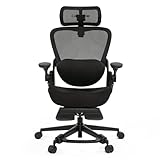
Overview: The CabLady S2 addresses a critical gap in ergonomic seating: premium comfort specifically engineered for petite frames. At $409.99, this chair targets women 4'9" to 5'11" who’ve struggled with oversized office furniture. It combines comprehensive adjustability with space-conscious design, featuring a 3.15-inch thick foam seat, dedicated lumbar cushion, and flip-up armrests that enable seamless desk integration.
What Makes It Stand Out: This chair’s 4D adjustability system distinguishes it from competitors. The one-touch recline button, coupled with adjustable headrest, armrests, footrest, and leg support, creates a truly personalized seating experience. The 90° flip-up arms with narrower spacing accommodate smaller shoulders perfectly, while the white nylon base provides anti-tip stability supporting up to 330 lbs—exceptional for this category. The 62-lb package arrives with clear illustrated instructions for straightforward assembly.
Value for Money: Priced at $409.99, the S2 sits in the mid-premium range. While significantly more expensive than generic office chairs, it undercuts high-end brands like Herman Miller’s Aeron Size A by hundreds of dollars while offering comparable adjustability. For petite professionals spending 8+ hours daily at their desk, the investment in proper spinal alignment and comfort justifies the cost over budget alternatives lacking tailored ergonomics.
Strengths and Weaknesses: Strengths include unmatched adjustability for petite users, space-saving flip-up arms, robust 330-lb capacity, and thick cushioning. The anti-tip base adds safety, and installation is genuinely simple. Weaknesses involve the substantial weight (62 lbs) making initial setup cumbersome, the premium price point may deter casual buyers, and the white base shows dirt more readily than darker alternatives. Some users might find the extensive adjustments overwhelming initially.
Bottom Line: The CabLady S2 is an excellent investment for petite professionals seeking comprehensive ergonomic support. Its thoughtful design eliminates the compromises smaller users face with standard chairs, making it worth every penny for serious home office setups.
2. CabLady S2 Petite Ergonomic Office Chair for Women, Small Frame Desk Chair with Adjustable Lumbar, Headrest & Footrest, Space-Saving Flip-Up Armrests

Overview: Engineered specifically for smaller physiques, the CabLady S2 redefines what petite users should expect from ergonomic seating. This $409.99 chair eliminates the common frustration of ill-fitting office furniture through precision design elements like reduced seat depth, lower height range, and targeted lumbar placement. It transforms the work experience for women who’ve previously felt dwarfed by standard ergonomic chairs.
What Makes It Stand Out: The S2’s standout feature is its holistic approach to petite ergonomics. Rather than simply scaling down a standard chair, it reimagines every component—from the 4D headrest that actually reaches shorter necks to the footrest that provides genuine leg support for smaller statures. The one-touch recline mechanism offers effortless positioning, while the flip-up arms create unprecedented desk flexibility. The 330-lb weight capacity demonstrates impressive engineering, exceeding many full-sized chairs.
Value for Money: At $409.99, this chair commands a premium but delivers proportional value. Comparable petite-specific chairs from established brands typically range $500-$700, making the S2 a relative bargain. The thick 3.15-inch foam seat and comprehensive warranty against the 62-lb sturdy construction suggest longevity that $200-$300 chairs can’t match. For daily users, the productivity gains and reduced physical strain amortize the cost within months.
Strengths and Weaknesses: Major strengths include the genuinely compact footprint, exceptional adjustability granularity, and thoughtful features like the low-position lumbar support. The flip-up arms are genuinely space-saving, and installation proves straightforward. On the downside, the chair’s substantial weight complicates delivery and positioning. The aesthetic, while modern, may not suit all office décors. Premium pricing puts it out of reach for budget-conscious shoppers despite its feature set.
Bottom Line: For petite users tired of compromising on comfort, the CabLady S2 delivers a tailored solution that justifies its price through superior ergonomics and build quality. It’s a smart long-term investment for dedicated home offices.
3. CabLady S1 Petite Ergonomic Office Chair Design with Detachable Pillow Lumbar Cushion, Coat Hanger, 2D Headrest & PU Armrests, Cloud Seat & Footrest Cute Desk Chair for Women Girls

Overview: The CabLady S1 offers a more accessible entry point into petite-specific ergonomic seating at $329.99. This chair maintains the brand’s commitment to smaller frames while introducing unique conveniences like a built-in coat hanger and detachable butterfly pillow lumbar system. Designed for women and girls seeking both comfort and practicality, it balances essential ergonomic features with thoughtful lifestyle additions.
What Makes It Stand Out: The S1’s dual-comfort backrest with detachable butterfly pillow solves the persistent problem of back suspension for petite users while allowing customization. The integrated coat hook on the 2D headrest represents rare attention to real-world office needs, keeping garments wrinkle-free during work sessions. Weighing 46 lbs, it’s notably lighter than its S2 sibling, and the “cloud seat” cushioning provides plush comfort without sacrificing support. The three-angle lockable recline adds versatility for work and rest.
Value for Money: At $329.99, the S1 positions itself as the value champion in the petite ergonomic category. It delivers 80% of the S2’s functionality at 80% of the cost, with the coat hanger and lighter weight as bonuses. While lacking the S2’s 4D armrests, the 2D adjustment remains adequate for most users. This price point competes aggressively against generic “petite” chairs from mainstream brands that lack comparable adjustability or dedicated design.
Strengths and Weaknesses: Strengths include the innovative coat hook, lighter weight for easier assembly, detachable lumbar pillow for customization, and attractive price point. The cloud seat cushioning provides immediate comfort. Weaknesses involve the 2D armrests offering less flexibility than 4D systems, the PU armrest material may wear faster than premium alternatives, and the lower weight capacity (implied by lighter build) may concern some users. The “cute” aesthetic might not suit professional environments.
Bottom Line: The CabLady S1 excels as a feature-rich, budget-conscious option for petite users prioritizing comfort and convenience. The coat hook alone makes it ideal for home offices where space is at a premium.
4. Alera Etros Series Petite Mid-Back Multifunction Mesh Chair, Black

Overview: The Alera Etros Series delivers no-frills ergonomic support for petite users at an accessible $201.02 price point. This mid-back mesh chair focuses on fundamental adjustability rather than premium features, making it an economical entry into properly fitted seating. While it lacks the extensive customization of higher-priced competitors, it provides essential ergonomic benefits for smaller frames without unnecessary complexity.
What Makes It Stand Out: The Etros Series stands out through its remarkable simplicity and value. The three-lever multifunction mechanism provides independent control of back angle, seat slide, and forward tilt—features often absent in budget chairs. The screwless assembly system represents genuine innovation, allowing tool-free setup that most users complete in under 15 minutes. Its black mesh design maintains a professional aesthetic suitable for any office environment while remaining breathable for extended use.
Value for Money: At $201.02, this chair dominates the budget petite category. It undercuts the CabLady S1 by nearly $130 while delivering core ergonomic functionality. While you sacrifice headrests, footrests, and thick padding, the essential seat depth adjustment and back angle control address primary petite-user concerns. For students, part-time remote workers, or businesses furnishing multiple stations, the cost savings are substantial without compromising basic spinal support.
Strengths and Weaknesses: Strengths include unbeatable price, surprisingly robust three-lever mechanism, easy screwless assembly, and professional appearance. The mesh back provides good ventilation. Weaknesses are significant: no headrest or footrest, basic armrests (likely non-adjustable), minimal cushioning on the seat, and a generic design that may not fit the very smallest frames (4'9") as well as dedicated options. The 330-lb capacity claim seems optimistic for this price point and build.
Bottom Line: The Alera Etros is a practical, budget-friendly choice for cost-conscious petite users needing essential ergonomics. It sacrifices luxury for affordability but delivers where it matters most—adjustable support.
5. SIDIZ T25 Petite Ergonomic Office Chair : Home Office Desk Chair for Petite Women (4’ 9" or Over), Adjustable Seat Height, Weight-Activated Auto Fit Tilt, Gaming Chair (White Mesh, Bright Blue Seat)

Overview: The SIDIZ T25 represents the premium tier of petite ergonomic seating at $419.00, distinguished by its award-winning design and innovative auto-fit technology. This chair targets tech-savvy users who value intelligent engineering over manual adjustments. With five international design awards and Greenguard certification, it combines aesthetic sophistication with evidence-based ergonomics for users 4'9" and taller.
What Makes It Stand Out: The T25’s patented weight-activated auto-fit tilt mechanism eliminates manual tension adjustment, intuitively responding to body weight for optimal recline resistance. This smart feature, combined with its striking white mesh and bright blue seat aesthetic, creates immediate differentiation. The chair’s pedigree includes recognition from Korea Good Design, Japan Good Design, and ACED Ergonomic Design Grand Prix—credentials no competitor matches. ANSI/BIFMA compliance ensures commercial-grade durability.
Value for Money: At $419.00, the T25 is the most expensive option reviewed, but its value proposition lies in sophisticated engineering and certified quality. The auto-fit technology alone justifies the premium for users frustrated with constant manual adjustments. While $10 more than the CabLady S2, it offers smarter tilt mechanics and internationally validated design. The Greenguard certification adds value for health-conscious buyers, particularly in home environments with children or allergies.
Strengths and Weaknesses: Strengths include revolutionary auto-fit tilt, award-winning design, stringent safety certifications, and a modern aesthetic suitable for gaming and professional environments. The 275-lb capacity, while lower than competitors, reflects realistic engineering. Weaknesses include the highest price point, limited manual override options for users preferring tactile control, and the bright color scheme may not suit conservative offices. The reduced weight capacity and potentially complex mechanism could mean higher repair costs.
Bottom Line: The SIDIZ T25 is ideal for design-conscious petite users seeking cutting-edge ergonomics with minimal fuss. Its auto-fit technology and award pedigree justify the premium for those prioritizing innovation and certified quality.
6. Branch Ergonomic Chair - A Versatile Desk Chair with Adjustable Lumbar Support, Breathable Mesh Backrest, and Smooth Wheels - Experience Optimal Comfort and Support - Graphite - White

Overview: Branch enters the Amazon marketplace with their Ergonomic Chair, a $389 graphite and white task chair designed for the modern workspace. This chair combines contemporary aesthetics with functional ergonomics, featuring eight adjustment points to customize your seating experience. The breathable mesh backrest and adjustable lumbar support target all-day comfort for home and office users seeking productive work environments.
What Makes It Stand Out: The minimalist design philosophy shines through with clean lines and a sophisticated graphite-white colorway that elevates any workspace. Eight points of adjustment—including seat height, depth, backrest, and armrests—provide comprehensive customization rarely found at this price point. The brand’s direct-to-consumer approach ensures quality construction built to last, while smooth-rolling wheels offer effortless mobility across floor surfaces.
Value for Money: At $389, the Branch Ergonomic Chair sits in the competitive mid-range segment. It undercuts premium competitors like Herman Miller while offering comparable adjustability and superior aesthetics to budget alternatives. The durable mesh construction and robust wheelbase justify the investment for professionals seeking long-term comfort without breaking the bank.
Strengths and Weaknesses: Strengths include excellent breathability, smooth mobility, modern styling, and multi-point adjustability. The chair accommodates various body types and promotes proper posture through its contoured cushioning. Weaknesses include limited armrest adjustability compared to high-end models and a seat cushion that may feel firm during extended use. Some users might prefer more padding over the mesh design.
Bottom Line: The Branch Ergonomic Chair delivers impressive value for remote workers and office professionals wanting style and substance. While not the cheapest option, its thoughtful design and reliable construction make it a smart investment for daily productivity and workspace enhancement.
7. SIDIZ T25 Petite Ergonomic Office Chair : Home Office Desk Chair for Petite Women (4’ 9" or Over), Adjustable Seat Height, Weight-Activated Auto Fit Tilt, Gaming Chair (White Plastic, Beige Seat)

Overview: The SIDIZ T25 Petite Ergonomic Office Chair addresses a critical market gap: proper ergonomic support for individuals 4'9" and taller. Priced at $419, this award-winning chair (five international design accolades) combines compact dimensions with sophisticated auto-fit technology, making it an ideal home office solution for smaller-framed users who struggle with standard-sized seating.
What Makes It Stand Out: The patented weight-activated auto-fit tilt mechanism eliminates manual adjustments, intuitively responding to your body weight for optimal support. This smart feature, combined with its diminutive footprint and minimalist aesthetic, earned recognition across Korea, Japan, and international design competitions. The chair’s Greenguard certification ensures safe indoor air quality for home environments.
Value for Money: While $419 positions the T25 at the premium end, it’s competitively priced for a specialized ergonomic solution. Standard chairs force petite users to compromise on fit; this targeted design prevents the long-term health costs of poor posture. The ANSI/BIFMA compliance and 250-pound capacity guarantee commercial-grade durability that justifies the investment.
Strengths and Weaknesses: Strengths include the revolutionary auto-tilt system, perfect proportions for petite frames, award-winning design pedigree, and robust build quality. The 30-day return policy reduces purchase risk. Weaknesses include limited appeal for average or taller users, a higher price point than generic chairs, and potentially fewer adjustment options compared to universal premium chairs with manual controls.
Bottom Line: For petite individuals frustrated by ill-fitting office chairs, the SIDIZ T25 is a game-changer. Its intelligent design and specialized focus justify the premium, delivering comfort that standard chairs simply cannot match for smaller users seeking proper ergonomic alignment.
8. EMIAH Ergonomic Office Chair with Foot Rest Criss Cross Chair with Wheels Reclining Executive Office Chair Mid Back PU Leather Swivel Computer Chairs Lumbar Support for Home Office (Black)

Overview: The EMIAH Ergonomic Office Chair redefines versatility at an accessible $149.99 price point. This mid-back PU leather chair features an integrated footrest and unique saddle-shaped cushioning, accommodating traditional seating and cross-legged positions. Designed for multi-purpose use—from work to gaming to relaxation—it offers impressive functionality for budget-conscious buyers seeking adaptable furniture solutions.
What Makes It Stand Out: The 90-155 degree recline range with retractable footrest transforms this office chair into a makeshift recliner for napping or reading. Its saddle-shaped cushion specifically supports cross-legged sitting, a rare feature that caters to flexible seating preferences. The included lumbar pillow adds customizable back support for extended sessions, while the high-density sponge provides lasting comfort.
Value for Money: At under $150, the EMIAH chair delivers exceptional value. Competitors with similar reclining and footrest features typically cost $250+. BIFMA certification and SGS-certified level 3 gas cylinder provide safety assurance typically absent in budget seating, while the 300-pound weight capacity exceeds many pricier alternatives. The 30-day service and one-year quality support further sweeten the deal.
Strengths and Weaknesses: Strengths include unbeatable versatility, footrest functionality, wide recline angle, safety certifications, and generous weight capacity. The PU leather offers easy cleaning and a sleek aesthetic. Weaknesses include reduced breathability compared to mesh chairs, mid-back design that may not suit tall users, and potential durability concerns with extensive recline mechanism use over time.
Bottom Line: The EMIAH chair is a standout budget option for users wanting more than basic seating. Its transform ative design and thoughtful features make it ideal for small spaces, multi-use rooms, or anyone seeking flexible comfort without premium pricing.
9. ProTraverse Wheelchairs for Adults,Transport Wheelchair Lightweight Foldable with Removable Cushion,Ergonomic Transfer Chair with 11-inch Rear Wheels for All Terrains,Travel Wheelchair,Blue

Overview: The ProTraverse Transport Wheelchair revolutionizes mobility assistance with its ultra-lightweight 23.1-pound aluminum frame that supports up to 300 pounds. Priced at $359.99, this foldable chair collapses to 21" x 12" x 27", making it ideal for travel via airplane, car, or public transit. It’s designed as a versatile transfer chair, not a self-propelled wheelchair, requiring caregiver assistance for operation.
What Makes It Stand Out: The S-shaped backrest ergonomically contours to the spine while removable, machine-washable zero-pressure cushions provide extended comfort. The transformative design allows the seat cushion removal to create a stable shower seat—an ingenious travel feature. Large 11-inch rear wheels and shock-absorbing front casters handle diverse terrains, from city sidewalks to uneven outdoor surfaces with enhanced maneuverability.
Value for Money: At $360, ProTraverse competes favorably with specialized transport chairs lacking its multi-functionality. The lifetime customer support, 3-year frame warranty, and 1-year parts replacement exceed industry standards. Considering its dual wheelchair/shower seat capability and premium portability, it offers significant value for frequent travelers who need reliable mobility assistance.
Strengths and Weaknesses: Strengths include exceptional portability, innovative shower seat conversion, terrain versatility, robust safety features (5mm aluminum frame, safety belt), and outstanding warranty coverage. The waterproof, non-slip armrests swivel for easy transfers. Weaknesses include its transport-chair limitation (requires caregiver assistance), non-removable armrests that may hinder some transfers, and a price point higher than basic transport chairs without advanced features.
Bottom Line: For those needing occasional mobility assistance combined with travel convenience, the ProTraverse is unmatched. Its clever design transforms travel challenges, making it essential for active individuals prioritizing independence and comfort on the go while maintaining safety and durability.
10. Branch Ergonomic Chair Pro - Mesh Office Chair with 14 Points of Adjustment - Height, Depth & Tilt Adjustable - 5D Armrests - Forward Tilt, Smooth Recline, and Lumbar Support - Black Boucle

Overview: The Branch Ergonomic Chair Pro represents the brand’s premium offering at $549, featuring an impressive 14 points of adjustment for ultimate personalization. This mesh office chair builds on the standard model with advanced features like 5D armrests, forward tilt mechanism, and enhanced lumbar support, targeting professionals who spend extensive hours at their desks and demand precise ergonomic control.
What Makes It Stand Out: The 5D armrests adjust in height, width, depth, pivot, and pad position—unmatched customization at this price tier. The two-way adjustable lumbar cushion moves vertically for precise spine alignment, while the forward tilt function promotes active sitting and posture variation. High-density molded foam maintains its shape during marathon work sessions, ensuring consistent support throughout the day.
Value for Money: While $549 enters premium territory, it’s substantially less than comparable chairs from legacy brands offering similar adjustability. The 14 customizable features rival $800+ competitors, making it a cost-effective choice for ergonomics enthusiasts. The investment pays dividends in posture health and daily comfort for serious professionals who prioritize their workspace wellbeing.
Strengths and Weaknesses: Strengths include exceptional adjustability, advanced armrest engineering, breathable mesh construction, forward tilt innovation, and durable high-density cushioning that resists compression. The chair adapts seamlessly to various body types and working styles. Weaknesses include a steep price for casual users, potentially overwhelming adjustment options for those wanting simplicity, and a design that prioritizes function over flashy aesthetics.
Bottom Line: The Branch Pro is a top-tier ergonomic solution for dedicated professionals seeking comprehensive customization. Its sophisticated engineering and reasonable premium pricing make it a wise investment for anyone prioritizing long-term health and productivity in their workspace.
Why Standard Office Chairs Fail Petite Users
Standard office chairs operate on a flawed assumption: that shrinking everything proportionally works for smaller bodies. It doesn’t. When manufacturers simply shorten the cylinder and call it a “petite” model, they ignore critical biomechanical differences. A 14-inch seat depth might fit a 6-foot user perfectly, but for someone with a 16-inch thigh length, that same seat cuts off circulation behind the knees. The result? Numbness, swelling, and increased pressure on the sciatic nerve.
The weight distribution patterns differ significantly too. A petite user weighing 110 pounds won’t engage a standard chair’s tilt mechanism designed for 150-250 pound users. The tension can’t adjust low enough, making the chair feel rigid and unresponsive. Even the angle of the backrest becomes problematic—what reclines comfortably for a taller person forces a petite user’s feet off the floor, creating pressure points and destabilizing posture.
The Anatomy of a Perfect Petite Ergonomic Chair
A truly petite-friendly chair shares DNA with custom orthotics more than it does with standard office furniture. Every component must be rethought through the lens of smaller anthropometric measurements. The ideal chair doesn’t just fit your body—it anticipates how your body moves, shifts weight, and maintains equilibrium throughout an eight-hour workday.
Seat Depth: The Make-or-Break Measurement
Seat depth is the single most critical dimension for petite users. Look for chairs offering 15-17 inches of depth from the backrest to the front edge. Anything beyond 18 inches will prevent you from sitting back against the lumbar support while keeping your feet flat on the floor. The gold standard is a seat slider mechanism that adjusts in half-inch increments, allowing you to fine-tune the depth to your exact femur length. Some premium models even offer 14-inch depths, perfect for users under 5'0".
Seat Width: Finding Your Goldilocks Zone
Narrow seats should measure between 17-19 inches wide, measured at the point where your hips actually rest. This prevents the awkward splaying of arms that occurs when you’re forced to perch on the edge of a 21-inch seat just to reach the floor. The side bolsters (if present) should be minimal and soft, not the aggressive racing-style wings that dominate many “compact” chairs. Remember: you want snug support, not constriction.
Backrest Height and Lumbar Support Positioning
The backrest should top out at 24-26 inches from seat to headrest (if equipped). More importantly, the lumbar support must adjust vertically through a 6-8 inch range, positioning between 5-9 inches above the seat pan. This allows the curve to nestle into your natural lordosis, not your mid-back. For users under 5'2", look for chairs where the lumbar mechanism starts as low as 4 inches above the seat.
Critical Adjustment Features for Tiny Frames
Adjustment ranges separate true petite chairs from marketing gimmicks. A chair that claims to be “petite-friendly” but offers standard adjustment ranges is essentially a standard chair wearing a smaller costume.
Armrest Height and Width Adjustability
Armrests must drop to at least 7 inches above the seat to support relaxed shoulders without hiking. Width adjustment is equally crucial—look for armrests that narrow to 14 inches apart (center-to-center) to keep your arms at a natural, neutral position. Four-dimensional adjustability (height, width, depth, and pivot) isn’t a luxury; it’s a necessity for preventing repetitive strain injuries in smaller frames.
Tilt Tension and Recline Range
The tilt tension mechanism must accommodate users down to 90 pounds while still providing meaningful resistance. Test this by sitting upright and gently leaning back—you should feel controlled, gradual support, not a sudden drop or rigid lock. The recline range should include a forward tilt of 5-10 degrees for task work and a rear recline of at least 120 degrees for brief restorative breaks. The pivot point should align with your hip joint, not behind it.
Seat Height Minimums and Maximums
The pneumatic cylinder must lower to at least 15 inches from floor to seat top, allowing feet to rest flat with knees at a 90-100 degree angle. For very petite users (under 4'10"), look for chairs with 14-inch minimum heights or consider a footrest in conjunction with a 15-inch chair. The maximum height should still reach 20-21 inches to accommodate various desk heights.
Lumbar Support Depth and Height Fine-Tuning
Depth adjustability of 1-2 inches allows you to control how aggressively the lumbar pushes forward. This is crucial for petite users with pronounced spinal curves or those recovering from back injuries. Combined with height adjustment, this creates a truly customized support system that adapts to your spine’s unique geometry.
Material Matters: Upholstery and Cushioning
The wrong materials can negate even perfect dimensions. Petite users exert less overall pressure but more concentrated pressure per square inch on smaller contact points, demanding specific material properties.
Memory Foam vs. High-Density Foam
High-density foam (2.5-3.0 lbs/ft³) outperforms memory foam for petite users. Memory foam requires body heat and weight to activate its contouring properties—resources petite bodies generate less of. High-density foam provides immediate, consistent support without the “bottoming out” sensation that occurs when lightweight users sit on standard foam cushions. Look for dual-layer construction: firm base foam with a 1-2 inch comfort layer.
Mesh vs. Fabric vs. Leather
Mesh offers excellent breathability and conforms well to smaller frames, but only if the weave is fine-tuned. Avoid aggressive, stiff meshes designed for heavier users—they’ll feel like sitting on a trampoline. Quality fabric upholstery with moderate stretch provides the best combination of comfort and durability. Genuine leather is rarely worth the premium for petite users; it breaks in based on pressure patterns your body won’t create, leading to premature sagging.
The Weight Capacity Question
Don’t automatically gravitate toward the highest weight capacity. Chairs rated for 250-300 pounds use stiffer components that lighter users can’t activate properly. Instead, look for chairs specifically rated for 90-150 pounds. These models use calibrated cylinders, tuned tilt mechanisms, and appropriately tensioned mesh that responds to your actual body weight. A chair rated for 120 pounds will feel more supportive and responsive than an “overbuilt” 300-pound chair that never engages its ergonomic features.
Price Tiers and What to Expect
Budget ($200-400): You’ll find basic petite chairs with essential adjustments—seat height, armrest height, and fixed lumbar. Seat depth adjustment is rare, and materials are basic. These work for short-term use but lack the durability for full-time work-from-home schedules.
Mid-Range ($400-800): This is the sweet spot for most users. Expect seat depth sliders, 3D armrests, adjustable lumbar, and tilt tension control. Build quality improves significantly, with metal bases replacing nylon and better foam density. Most users find a 5-7 year lifespan in this tier.
Premium ($800-1500): True bespoke adjustments, calibrated weight ratings, premium materials, and 10+ year warranties. These chairs offer half-inch incremental adjustments, dynamic lumbar that moves with you, and materials engineered specifically for lighter-weight users. The investment pays off for anyone spending 8+ hours daily in their chair.
Where to Shop for Petite-Friendly Chairs
Skip big-box office supply stores where floor models are limited to standard sizes. Instead, focus on specialty ergonomic retailers (both online and brick-and-mortar) that allow you to filter by seat dimensions. Many manufacturers now offer “petite” or “small” categories on their websites. Look for retailers with generous return policies—ideally 60-90 days—and free return shipping. Some companies even offer “try before you buy” programs where you can test a chair for two weeks before committing.
Red Flags: What to Avoid
Beware of chairs marketed as “compact” or “space-saving”—these refer to the chair’s footprint, not its fit for petite users. Avoid any chair where the manufacturer can’t provide specific dimensional drawings showing adjustment ranges. “One-size-fits-all” claims are immediate disqualifiers. Watch for armrests that only adjust in height; width and pivot are non-negotiable. Finally, steer clear of chairs with non-removable armrests, as they prevent you from getting close enough to your desk.
How to Properly Test a Chair Before Buying
If possible, visit a showroom with your actual work shoes and a laptop. Sit fully back in the chair with your feet flat on the floor. There should be 2-3 inches of space between the seat edge and your calves. Adjust the lumbar support to the lowest setting, then slowly raise it until you feel it nestle into your lower back curve—this should happen within the first 3-4 inches of adjustment. Test the armrests at their lowest setting; your shoulders should feel relaxed, not lifted. Finally, recline slowly. Your feet should stay flat, and the backrest should move with your spine, not away from it.
DIY Modifications and Accessories
Even the best chair might need tweaks. Add a coccyx-cutout cushion to reduce seat depth by 1-2 inches without sacrificing support. Use armrest pads to narrow width by an inch on each side. For chairs that won’t go low enough, a footrest with adjustable angles can compensate, but ensure it doesn’t force your knees above hip level. Lumbar pillows with vertical straps can fine-tune support position on chairs with limited adjustment. Just remember: modifications should enhance a good fit, not try to fix a fundamentally wrong chair.
Maintenance and Longevity Tips
Petite users often experience different wear patterns. Lubricate the pneumatic cylinder every six months with silicone spray to prevent the slow sinking that occurs when lightweight users don’t fully engage the seal. Tighten armrest bolts quarterly—they loosen faster when adjusted frequently. Rotate cushions monthly to prevent uneven compression from concentrated pressure points. For mesh chairs, vacuum the backrest monthly with a brush attachment to prevent dust buildup that stiffens the weave. Keep chairs away from direct sunlight, which degrades materials faster when pressure patterns are lighter.
The Health Impact of Proper Seating
The wrong chair doesn’t just cause discomfort—it creates a cascade of health issues. When your feet dangle, you compress the popliteal artery behind your knees, reducing blood flow by up to 40%. This causes fatigue, swelling, and increases risk of deep vein thrombosis during long work sessions. Improper lumbar support shifts spinal loading to your thoracic vertebrae, causing the forward head posture that leads to tension headaches and cervical issues. A properly fitted petite chair maintains neutral spine alignment, keeps joints in optimal positions, and reduces the micro-adjustments that cause muscle fatigue. Studies show that users in properly fitted chairs report 34% less end-of-day pain and 23% higher productivity scores.
Warranty and Return Policy Considerations
A manufacturer’s warranty reveals their confidence in petite-specific engineering. Look for at least 5-year warranties on components and 2 years on upholstery. Read the fine print—some warranties exclude users under a certain weight, bizarrely penalizing the very demographic these chairs serve. Return policies should include free return shipping; a $150 return fee can trap you in an ill-fitting chair. Some premium brands offer “fit guarantees” specifically for petite users, allowing exchanges if the chair doesn’t adjust to your dimensions within 30 days.
Frequently Asked Questions
What seat depth is ideal for someone 5'0" tall? For someone 5'0" with average proportions, aim for a seat depth of 15-16 inches. Measure your thigh from the back of your buttocks to the back of your knee while seated, then subtract 2-3 inches to find your perfect depth. Chairs with 14-inch minimum depths are ideal for users under 4'10".
Can I use a footrest instead of buying a petite chair? A footrest is a temporary fix, not a solution. While it helps with foot positioning, it doesn’t address seat depth, backrest height, or armrest width—all critical for proper ergonomics. Use a footrest only if your chair meets all other dimensional requirements but is 1-2 inches too high.
How much should I expect to spend for a quality petite ergonomic chair? Plan to spend $400-800 for a chair that will provide proper support and last 5+ years. Budget options under $300 often lack essential adjustments like seat depth sliders and appropriate weight calibration, while premium models above $800 offer diminishing returns for most users.
Is mesh or fabric better for petite users? Fabric generally wins for petite users because it provides consistent support without the stiffness issues that plague many meshes designed for heavier weights. However, high-quality, finely-woven mesh from premium manufacturers can offer superior breathability and conforming support.
What weight rating should I look for? Chairs rated for 90-150 pounds are ideal for petite users. Avoid chairs rated for 250+ pounds, as their components will be too stiff to engage properly with lighter body weight. Some manufacturers now offer “calibrated” models specifically tuned for users under 120 pounds.
Can armrests be too wide even if they adjust? Absolutely. Many chairs with “adjustable” armrests only move 1-2 inches inward, still leaving them too wide for narrow shoulders. Look for armrests that narrow to 14 inches center-to-center, and consider models with pivoting arm caps that angle inward for keyboard work.
How do I know if lumbar support is positioned correctly? Sit fully back in the chair and place your hands on your hips. The lumbar support should press gently into the space where your spine curves inward, typically 6-8 inches above your seat. If you feel pressure in your mid-back or it’s pushing your shoulders forward, it’s too high.
Are there any health risks to using a standard chair as a petite person? Yes. Long-term use of oversized chairs can cause sciatic nerve compression, thoracic outlet syndrome from elevated armrests, and chronic forward head posture. The circulatory issues from dangling feet can also increase DVT risk during long work sessions.
Should I consider a chair without armrests? Only if you have a height-adjustable desk that can lower to elbow level. Armrests support 10% of your body weight and reduce shoulder and neck strain. If you choose armless, ensure your desk height is precisely calibrated to keep elbows at 90-110 degrees without shrugging.
How often should I replace my ergonomic chair? A quality petite ergonomic chair should last 7-10 years with proper maintenance. Replace it when adjustments no longer hold, cushioning has compressed more than 1 inch, or you notice new aches that correlate with chair use. If your body changes significantly (pregnancy, surgery), reassess fit annually.