If you’ve ever felt like your office chair was designed for a giant, you’re not alone. Most ergonomic chairs on the market are built around average male proportions, leaving petite users—typically defined as those under 5'4"—dealing with seat pans that dig into the backs of their knees, armrests that hit at shoulder level, and lumbar support that lines up with their shoulder blades instead of their lower back. Add in the desire for a safe reclining mechanism, and the search becomes even more challenging. A properly fitted chair isn’t a luxury; it’s a necessity for preventing chronic pain, circulation issues, and the kind of fidgety discomfort that destroys productivity. The tilt lock feature, often misunderstood as just a “nice-to-have,” becomes critical for petite users who need to recline safely without sliding forward or straining their feet to maintain contact with the floor.
Understanding what makes a chair truly “petite-friendly” requires looking beyond marketing labels and diving into the mechanics of fit, function, and safety. The intersection of compact dimensions and sophisticated tilt mechanisms creates a unique set of engineering challenges that only a handful of manufacturers get right. Let’s explore what you need to know before investing in a chair that works with your body, not against it.
Top 10 Petite Ergonomic Chairs with Tilt Lock
Detailed Product Reviews
1. Alera Etros Series Petite Mid-Back Multifunction Mesh Chair, Black

Overview:
The Alera Etros Series Petite Mid-Back Multifunction Mesh Chair delivers targeted comfort at a reasonable price point. Designed specifically for smaller frames but engineered with enough adjustability to accommodate various body types, this chair represents a thoughtful approach to ergonomic seating. The black mesh design maintains a professional aesthetic suitable for any office environment.
What Makes It Stand Out:
The three-lever multifunction mechanism provides exceptional control over your seating position, allowing independent adjustment of back angle, seat slide, and forward tilt. The tool-less assembly is a standout feature—users can put the chair together without hunting for screws or tools, reducing setup time and frustration. While marketed toward petite users, its generous adjustment range makes it surprisingly versatile.
Value for Money:
At $201.02, this chair occupies the sweet spot between budget mesh chairs and premium ergonomic models. It offers more sophisticated adjustments than sub-$150 options while costing significantly less than high-end brands like Herman Miller or Steelcase. For petite professionals who’ve struggled with oversized chairs, the value proposition is particularly strong.
Strengths and Weaknesses:
Strengths include the intuitive three-lever control system, breathable mesh construction, and remarkably simple assembly process. The compact footprint fits well in smaller workspaces. Weaknesses include the mid-back design, which may not provide adequate upper back and shoulder support for taller users. The “petite” branding might unnecessarily limit its appeal to average-sized users who would also benefit from its features.
Bottom Line:
This chair excels for users under 5'6" seeking ergonomic adjustability without breaking the bank. The multifunction mechanism rivals more expensive options, and the screw-free assembly is genuinely innovative. While not perfect for everyone, it’s an intelligent choice for its target demographic.
2. CabLady S2 Petite Ergonomic Office Chair for Women, Small Frame Desk Chair with Adjustable Lumbar, Headrest & Footrest, Space-Saving Flip-Up Armrests

Overview:
The CabLady S2 positions itself as a premium ergonomic solution engineered explicitly for women and smaller-framed individuals. With a focus on proportional design, this chair addresses the common problem of oversized office furniture that dominates the market. Every component scales appropriately for users ranging from 4'9" to 5'11".
What Makes It Stand Out:
The chair’s comprehensive adjustability system includes a 4D headrest, dedicated footrest, and targeted lumbar support positioned for lower torsos. The 3.15-inch thick foam seat provides substantial cushioning, while the 90° flip-up armrests with narrower spacing accommodate slighter builds. The one-touch recline button offers intuitive position changes without complicated levers.
Value for Money:
At $409.99, this is a significant investment positioned in the premium category. However, for petite professionals who’ve never found a properly fitting chair, the cost justifies itself through improved comfort and potential health benefits. Comparable chairs from mainstream brands rarely address this demographic with such specificity.
Strengths and Weaknesses:
Strengths include the tailored ergonomic design, robust 330-pound weight capacity, space-saving armrests, and high-quality materials. The 62-pound package suggests substantial construction. Weaknesses include the niche market focus that may exclude average-sized users, the steep price point relative to general-purpose chairs, and the complexity of adjustments that may overwhelm some users.
Bottom Line:
For petite women seeking a chair that actually fits their frame, the CabLady S2 is worth every penny. The attention to proportional design is unmatched in this price range, though budget-conscious buyers may find better value in more universal options.
3. Ergonomic Office Chair Seat Depth Adjustable, Home Office Desk Chair with 3D Armrest, Mesh Office Chairs with Tilt Recline Lock,Thickened Soft Cushion, SGS Certified Gas Lift for Long Hours(Black)

Overview:
This ergonomic office chair punches above its weight class with features typically found in premium models. The adjustable seat depth is a game-changer for users who’ve struggled with fixed-depth seats that cut circulation or fail to support their thighs properly. The design accommodates an impressive height range from 5’ to 6'3".
What Makes It Stand Out:
The 3D armrests offer height, angle, and front-to-back adjustments—rare at this price point. Combined with three-position tilt lock (90°, 110°, 130°) and SGS-certified gas lift, the chair provides legitimate ergonomic credentials. The wider, thicker cushion addresses the common complaint of thin, uncomfortable budget chair seats.
Value for Money:
At $159.99, this chair dramatically undercuts competitors offering similar adjustability. It democratizes features like seat depth adjustment that usually command $300+ price tags. The 350-pound weight capacity further enhances its value proposition, accommodating a broader user base than many budget options.
Strengths and Weaknesses:
Strengths include exceptional adjustability for the price, high weight capacity, carpet-safe wheels, and thick cushioning. The tilt lock provides stable recline positions. Weaknesses include potential durability concerns from an unknown brand, possible quality control inconsistencies, and aesthetic simplicity that may not suit executive environments.
Bottom Line:
This is the budget ergonomic chair to beat. If you prioritize function over brand name and need genuine adjustability without emptying your wallet, it’s an outstanding choice. Perfect for home offices and budget-conscious businesses.
4. Modway EEI-757-BLK Articulate Ergonomic Mesh Office Chair in Black

Overview:
The Modway Articulate offers entry-level ergonomic support with a focus on simplicity and reliability. This chair targets users wanting basic ergonomic features without complexity or high cost. The breathable mesh back and generously padded 6-inch seat cushion provide fundamental comfort for standard workdays.
What Makes It Stand Out:
The 6-inch thick mesh seat cushion is unusually plush for a budget mesh chair, addressing the “hard seat” complaint common in this category. Passive lumbar support delivers basic lower back reinforcement without requiring adjustments. The chair comes in multiple colors, allowing some personalization beyond typical black office furniture.
Value for Money:
At $126.06, this is among the most affordable legitimate ergonomic chairs available. It sacrifices advanced adjustments to hit this price point, but maintains essential features like tilt lock, height adjustment, and swivel. For users needing simple, reliable seating, it offers better support than generic task chairs at similar prices.
Strengths and Weaknesses:
Strengths include the thick seat cushion, straightforward assembly, variety of color options, and 331-pound weight capacity. The dual-wheel casters roll smoothly on multiple surfaces. Weaknesses include passive (non-adjustable) lumbar support that may not suit all users, basic two-dimensional armrest adjustments, and a one-size-fits-all approach that won’t accommodate extreme heights or body types.
Bottom Line:
The Articulate is a solid starter ergonomic chair for average-sized users with modest needs. While it lacks the sophistication of pricier models, it delivers essential comfort and support at an unbeatable price. Ideal for students, remote workers on tight budgets, or secondary office spaces.
5. GABRYLLY Ergonomic Office Chair, High Back Home Desk Chair with Headrest, Flip-Up Arms, 90-120° Tilt Lock and Wide Cushion, Big and Tall Mesh Chairs for Man Woman, Black Task Chair

Overview:
The GABRYLLY Ergonomic Office Chair balances high capacity with thoughtful features for a wide demographic. Supporting users from 5'5" to 6'2" and up to 400 pounds, it prioritizes durability without sacrificing comfort. The high-back design with integrated headrest provides full spinal support for extended sitting sessions.
What Makes It Stand Out:
The 400-pound weight capacity exceeds most chairs in its price range, while the flip-up arms allow space-saving desk tucking. The four support points (head, back, hips, hands) create comprehensive ergonomics. A three-year warranty demonstrates manufacturer confidence rarely seen in sub-$200 chairs, and the breathable mesh construction suits long hours.
Value for Money:
At $192.50, this chair offers impressive specifications that bridge budget and mid-range categories. The high weight capacity, warranty coverage, and flip-up arms provide tangible value. It competes favorably with chairs costing $250-300 while including premium touches like the extended warranty.
Strengths and Weaknesses:
Strengths include exceptional weight capacity, generous warranty, flip-up armrests, breathable mesh, and wide seat. The assembly is straightforward (15-20 minutes). Weaknesses include the limited 90-120° recline range, potential size issues for users under 5'5", and basic armrest adjustability compared to true 3D/4D systems.
Bottom Line:
This is an excellent choice for average to tall users needing robust support and durability. The three-year warranty and high weight capacity make it a secure investment, though petite users should look elsewhere. Strong value for home offices and commercial settings alike.
6. Flash Furniture Nicholas Mid-Back Swivel Desk Chair with Wheels, Mesh Back, Padded Seat, and Armrests, Adjustable Height Mesh Ergonomic Office Chair, Black

Overview: The Flash Furniture Nicholas Mid-Back Swivel Desk Chair is a versatile seating solution that bridges the gap between office functionality and gaming comfort. Priced at $151.94, this chair features a ventilated mesh back, padded seat, and comprehensive adjustment controls designed to support users through long work or gaming sessions. Its mid-back design and rolling base make it suitable for various environments, from corporate offices to home gaming setups.
What Makes It Stand Out: This chair distinguishes itself with a sophisticated 3-paddle control system that offers independent adjustment of back height, angle, and tilt functionality. The ventilated curved mesh back is specifically engineered to prevent overheating while promoting better posture—a critical feature for users in warm climates or those prone to sweating during intense gaming sessions. The ability to lock the chair in an upright position or activate a rocking motion provides versatility that accommodates both focused work and relaxed gaming.
Value for Money: At $151.94, the Nicholas chair sits comfortably in the budget-friendly category without sacrificing essential ergonomic features. Comparable chairs with similar mesh construction and multi-function controls typically retail for $180-$250, making this an attractive option for cost-conscious buyers. The inclusion of assembly tools and clear instructions eliminates the hidden cost of professional setup, further enhancing its value proposition for students, remote workers, and gamers on a budget.
Strengths and Weaknesses: Strengths include excellent breathability from the mesh back, surprisingly robust adjustability at this price point, and straightforward 15-minute assembly. The padded swivel seat offers decent comfort for sessions up to 6 hours. Weaknesses are the mid-back design that may not provide adequate shoulder support for taller users, limited armrest adjustability beyond height, and a 250-pound weight capacity that excludes some users. The nylon base, while functional, lacks the premium feel of metal alternatives.
Bottom Line: The Flash Furniture Nicholas chair delivers exceptional bang-for-buck for average-sized users seeking a breathable, adjustable chair for moderate daily use. It’s ideal for students, remote workers, and casual gamers under 6 feet tall who prioritize ventilation and basic ergonomics over premium materials.
7. Mochi Chair Petite Ergonomic Chair — Comfortable Ergonomic Chair Designed Specifically for Women and Children, Height-Adjustable Chair is Suitable for Home, Office, and School environments (Cream)
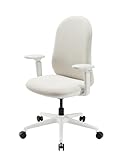
Overview: The Mochi Chair Petite Ergonomic Chair addresses a critical gap in the office furniture market with its dedicated design for women and children. At $269, this cream-colored chair combines space-saving dimensions with genuine ergonomic functionality. Engineered specifically for petite frames and compact workspaces, it offers professional-grade adjustments that larger chairs simply cannot provide to smaller users, making it perfect for makeup stations, dorm rooms, or home offices with low desks.
What Makes It Stand Out: The standout feature is the 4-dimensional armrest system that adjusts in height, width, depth, and angle—unprecedented flexibility for a chair in this category. The impressive 125-degree recline with two lock positions transforms from a focused work posture to a relaxed lounge position, while the 4-inch vertical lumbar adjustment ensures precise lower back support for users from 4'8" to 5'4". The 24-inch armrest clearance is a game-changer for compatibility with low-profile desks and vanity tables.
Value for Money: While $269 exceeds basic office chair pricing, it’s justified for the target demographic who typically struggle with ill-fitting standard chairs. Petite-specific ergonomic chairs often command $300-$400, making the Mochi competitively priced. The investment pays dividends in proper posture support and comfort that prevents long-term health issues caused by using oversized furniture. For petite professionals or students spending 8+ hours daily at a desk, this specialized design offers value that generic chairs cannot match.
Strengths and Weaknesses: Strengths include perfect proportions for smaller frames, exceptional armrest versatility, smooth recline mechanism, and elegant aesthetic. The cream color resists showing dust better than pure white. Weaknesses include a weight capacity that may not accommodate all users, limited color options, and a price point that might deter casual buyers. The seat cushion, while adequate, could be thicker for all-day comfort marathons.
Bottom Line: The Mochi Chair is a niche product that excels brilliantly within its target market. It’s an essential investment for petite women, teenagers, and anyone under 5'5" who has struggled with standard office chairs. The specialized ergonomics justify every penny.
8. CabLady S2 Petite Ergonomic Office Chair for Women, Small Frame Desk Chair with Adjustable Lumbar, Headrest & Footrest, Space-Saving Flip-Up Armrests

Overview: The CabLady S2 Petite Ergonomic Office Chair represents the premium tier of specialized seating for smaller frames. Priced at $412, this comprehensive solution targets women and petite users from 4'9" to 5'11" with a feature set that rivals high-end executive chairs. Its defining characteristic is the inclusion of a footrest—a rarity in task chairs—combined with flip-up arms and extensive adjustability that addresses nearly every pain point experienced by petite users in oversized office furniture.
What Makes It Stand Out: This chair’s one-touch recline button and 4D headrest demonstrate thoughtful engineering for petite ergonomics. The 3.15-inch thick foam seat and dedicated lumbar cushion provide plush comfort unmatched by thinner task chairs. The 90° flip-up armrests with narrower spacing accommodate smaller shoulder widths while enabling the chair to slide completely under desks, maximizing floor space. The adjustable footrest and leg support complete the full-body ergonomic system, allowing petite users to maintain proper 90-degree knee angles that standard chairs prevent.
Value for Money: At $412, the CabLady S2 commands a premium but delivers commensurate value for serious users. Comparable full-featured ergonomic chairs from brands like Herman Miller or Steelcase easily exceed $600, while lacking petite-specific proportions. The 330-pound weight capacity and sturdy white nylon base ensure durability, while the anti-tip design adds safety. For petite professionals working from home or in offices where they spend 40+ hours weekly, this chair prevents the chronic pain and productivity loss caused by ill-fitting furniture.
Strengths and Weaknesses: Strengths include unparalleled adjustability (headrest, footrest, lumbar, arms), thick supportive cushioning, space-saving flip-up design, and robust 330-pound capacity. The illustrated instructions simplify assembly. Weaknesses are the substantial price tag, 62-pound shipping weight that complicates delivery, and aesthetic that may not suit all office decors. The footrest, while innovative, may feel unnecessary to some users.
Bottom Line: The CabLady S2 is the ultimate ergonomic throne for petite users who refuse to compromise. While expensive, it’s a medical-grade investment in posture and productivity that pays for itself through eliminated chiropractor visits and enhanced work performance.
9. GABRYLLY Ergonomic Office Chair, High Back Home Desk Chair with Headrest, Flip-Up Arms, 90-120° Tilt Lock and Wide Cushion, Big and Tall Mesh Chairs for Man Woman, Grey Task Chair

Overview: The GABRYLLY Ergonomic Office Chair positions itself as a robust solution for larger users seeking breathable comfort and comprehensive support. Priced at $269.50, this high-back mesh chair accommodates individuals from 5'5" to 6'2" with a remarkable 400-pound weight capacity. Its design emphasizes four critical support points—head, back, hips, and hands—while the flip-up armrests and wide seat dimensions make it versatile for both spacious offices and compact workstations where space efficiency matters.
What Makes It Stand Out: The exceptional 400-pound capacity combined with a 5-year warranty immediately distinguishes this chair from competitors that typically cap at 250-300 pounds and offer 1-2 year warranties. The flip-up armrests aren’t just space-saving; they feature intuitive button-controlled height adjustment. The breathable mesh covers both seat and back, preventing the heat buildup common in foam-only chairs during 8-hour workdays. The 90-120° tilt lock provides flexible positioning without the complexity of multi-lever systems.
Value for Money: At $269.50, this chair offers outstanding value, particularly for bigger users who usually pay $350+ for comparable capacity. The 5-year warranty demonstrates manufacturer confidence and protects your investment long-term. The 400-pound rating, wide 20-inch seat, and high-quality mesh construction typically appear in chairs costing $400+. For users at the upper end of standard size charts, this chair eliminates the need for expensive big-and-tall specialty furniture while maintaining ergonomic integrity.
Strengths and Weaknesses: Strengths include industry-leading weight capacity, generous warranty, excellent breathability, smooth PU wheels safe for hardwood floors, and intuitive adjustments. The assembly is straightforward at 15-20 minutes. Weaknesses include a height range that may exclude users under 5'5", a 22-inch depth that requires substantial space, and mesh that may feel too firm for users preferring plush cushioning. The aesthetic is functional rather than executive.
Bottom Line: The GABRYLLY chair is a no-brainer for larger users seeking durable, breathable ergonomics without breaking the bank. The 5-year warranty and 400-pound capacity make it a wise long-term investment for home offices and professional settings alike.
10. COLAMY High Back Executive Office Chair- Ergonomic Home Computer Desk Leather Chair with Padded Flip-up Arms, Adjustable Tilt Lock, Swivel Rolling Chair for Adult Working Study-Ivory

Overview: The COLAMY High Back Executive Office Chair brings executive-style sophistication to the sub-$200 category at $168.64. Upholstered in bonded leather with an ivory finish, this chair targets style-conscious professionals who want the boardroom aesthetic without the premium price tag. The innovative inflatable lumbar support system and flip-up armrests demonstrate thoughtful features typically absent in budget executive chairs, making it suitable for both traditional offices and modern home workspaces.
What Makes It Stand Out: The inflatable lumbar support is a unique feature that allows users to customize lower back firmness—something usually found only in high-end automotive seating or premium ergonomic chairs. The bonded leather construction resists scratches, stains, and peeling better than standard PU leather, while the synchro tilt mechanism synchronizes seat and back movement for natural reclining. The 90° flip-up arms provide space-saving versatility without requiring detachment, maintaining the chair’s cohesive executive appearance.
Value for Money: At $168.64, this chair competes directly with basic leather executive chairs while offering superior features. Comparable bonded leather chairs with tilt functionality typically start at $200+, and the inflatable lumbar adds $50+ in value. The BIFIMA certification ensures reliable construction up to 275 pounds. For users wanting executive aesthetics on a budget, this chair delivers professional appearance and adjustable comfort that cheaper alternatives cannot match, making it ideal for home offices and entry-level executive suites.
Strengths and Weaknesses: Strengths include attractive bonded leather upholstery, innovative inflatable lumbar customization, space-saving flip-up arms, and smooth tilt tension control. The ivory color offers a fresh alternative to standard black. Weaknesses include a 275-pound capacity that lags behind mesh competitors, leather that may feel warm during extended use, and padding that may compress over time. The bonded leather, while durable, won’t match genuine leather’s longevity. The nylon base is functional but less premium than chrome.
Bottom Line: The COLAMY chair is perfect for style-focused users seeking executive aesthetics and customizable lumbar support at an accessible price. It’s best suited for moderate daily use in home offices or professional settings where appearance matters as much as function.
Understanding the Unique Needs of Petite Users
Petite ergonomics isn’t simply about shrinking a standard chair. Your biomechanical needs differ fundamentally from taller individuals. Shorter femurs mean standard seat depths force you to perch on the edge, eliminating back support and compressing the thighs. A lower center of gravity changes how weight distributes across the seat and backrest, affecting stability when reclining. Your shorter torso means lumbar curves must be positioned precisely—often 2-4 inches lower than standard chairs allow. These aren’t minor inconveniences; they’re design flaws that can lead to sciatica, forward head posture, and reduced blood flow to the lower extremities. A true petite chair addresses these issues at the engineering level, not just with adjustable components.
What is Tilt Lock and Why Does It Matter?
Tilt lock is your safety net and productivity tool rolled into one mechanism. It allows you to secure the backrest at a specific angle, preventing unwanted movement that could throw off your balance or posture. For petite users, this feature takes on heightened importance. When your feet barely touch the floor in a standard chair, reclining without a secure lock can cause your feet to lift completely, shifting weight onto your thighs and creating pressure points. A quality tilt lock lets you recline safely for phone calls or contemplation, then return to an upright, locked position for keyboard work—without fighting the chair’s tendency to rock backward. The mechanism should engage smoothly and hold firm under your full weight, even when you’re shifting or reaching for items on your desk.
The Anatomy of a Petite-Friendly Ergonomic Chair
Before diving into specific features, understand how these elements work as a system. A chair designed for smaller frames reimagines the relationship between seat pan, backrest, and tilt mechanism. The pivot points are positioned differently to accommodate a lower center of gravity. The tension adjustment range is calibrated for lighter body weights, preventing the “rocking horse” effect where the chair won’t stay reclined without constant pressure. Every component—from the cylinder stroke to the armrest width—must be proportioned correctly, or the entire system fails to support you properly.
Seat Depth: The Make-or-Break Measurement
This single measurement determines whether a chair will work for you. Ideal seat depth for petite users ranges from 15 to 17 inches, measured from the backrest to the front edge. To test fit: sit all the way back and check that you can fit 2-3 fingers between the back of your knees and the seat edge. Any less space cuts circulation; any more means you’re not getting proper thigh support. Some chairs offer sliding seat pans with 2-3 inches of adjustment, but beware—many still start at 18 inches at their shortest setting. Look for specifications that list the minimum seat depth, not just the adjustment range. A truly petite chair will have a native short depth, not a compromised standard depth.
Seat Height Adjustability: Getting Your Feet Flat
Your feet must rest flat on the floor with thighs parallel to the ground. For someone 5'0", this typically means a seat height range starting around 14.5 inches and extending to 18 inches. Standard chairs rarely go below 17 inches, forcing you to use a footrest—which then creates a new problem when you try to recline, as your feet lose contact with the support surface. Check the cylinder specifications carefully. Some manufacturers offer “low-height” cylinders as special orders, while purpose-built petite chairs include them standard. The adjustment lever should also be positioned where you can reach it easily without stretching or leaning awkwardly.
Lumbar Support Positioning for Shorter Torsos
Standard lumbar supports peak at 8-10 inches above the seat, perfect for someone 5'8" but hitting mid-back for a 5'2" user. You need the apex of the lumbar curve positioned 5-7 inches above the seat pan. Some chairs achieve this with vertically adjustable lumbar mechanisms that travel lower than usual. Others use fixed lumbar curves molded into the backrest at the correct height. The key is finding a chair where the lumbar support can align with your natural lordosis curve, not just somewhere in the general vicinity. Test this by sitting upright and feeling whether the support nestles into the small of your back or presses against your lower ribs.
Tilt Mechanism Types Explained
Not all tilts are created equal, and the mechanism type dramatically impacts your reclining experience. The three primary types are center tilt, synchronous tilt, and knee tilt. Each distributes your weight differently as you recline, affecting pressure on your legs and lower back. Understanding these differences helps you choose a mechanism that complements your lighter weight and shorter proportions rather than working against them.
Synchronous Tilt vs. Center Tilt: What’s Best for Petites?
Synchronous tilt mechanisms recline the backrest and seat pan at different ratios—typically 2:1 or 3:1. This keeps your feet on the floor and maintains a more natural posture throughout the recline range. For petite users, this is often superior because it prevents the “sliding forward” sensation that occurs when the seat pan tilts too dramatically. Center tilt, where the pivot point is near the center of the seat, creates a rocking motion that can be unstable for lighter individuals. Your weight may not be sufficient to control the recline smoothly, making the chair feel either too stiff or too loose. When testing chairs, pay attention to whether your feet stay planted and your thighs remain supported throughout the recline motion.
Tilt Lock Safety Features to Demand
A basic tilt lock might hold the chair in one or two positions, but petite users need more sophistication. Look for infinite tilt lock, which secures the backrest at any angle within the range. The mechanism should engage with a definitive click or indicator—no guessing whether it’s locked. Crucially, the release should require deliberate action, preventing accidental unlocking when you shift your weight. Some premium mechanisms include an anti-shock feature that prevents the backrest from slamming forward when you release the lock. This is particularly important if you recline frequently, as the sudden forward motion can jolt your neck and shoulders if you’re not prepared.
Weight Capacity and Its Hidden Implications
While petite chairs often have lower weight capacities (typically 200-250 lbs), this number reveals more than strength—it indicates the tension calibration. A chair rated for 300+ lbs will have tilt tension springs set for heavier weights, meaning you might not be able to recline it at all without throwing your whole body into it. Conversely, a chair with appropriate capacity for your weight will recline smoothly with gentle pressure. Don’t automatically equate higher capacity with better quality. Instead, match the chair’s design weight range to your body weight for optimal performance. Some manufacturers now specify a “recommended user weight range” rather than just a maximum, which is far more useful.
Armrest Adjustability in Compact Frames
Armrests that adjust only up and down aren’t enough. You need width adjustability to prevent your elbows from splaying outward, which rotates your shoulders forward and collapses your chest. Look for armrests that pivot inward and slide horizontally, bringing the support closer to your body. The height range should start low enough—around 7 inches above the seat—to support your forearms when your shoulders are relaxed. Pay attention to the distance between armrests at their narrowest setting; anything wider than 17 inches will force you into a perpetually expanded chest position, fatiguing your upper back muscles.
Backrest Height and Headrest Considerations
A full-height backrest on a standard chair may hit the back of your head, forcing your neck forward. Petite chairs often have lower backrests—around 22-24 inches tall—that support the thoracic spine without interfering with the head. If you want a headrest, it must adjust vertically down to at least 6 inches above the seat, and tilt forward to meet the natural curve of your neck. Many headrests adjust up for tall users but don’t drop low enough for petite frames. The headrest should support the weight of your head during recline without pushing it forward in the upright position.
Material Choices and Their Impact on Fit
The upholstery and padding affect not just comfort but dimensional fit. Thick memory foam can reduce effective seat depth by an inch or more, while mesh backs with pronounced lumbar bulges may position support incorrectly for your spine. Leather or vinyl upholstery tends to be less forgiving than fabric, creating pressure points if the underlying foam is too firm. For the seat pan, look for medium-density foam—soft enough to compress slightly under your lighter weight, firm enough to provide stable support. Mesh backs can be excellent for petite users because they conform to your specific shape, but only if the lumbar curve is positioned correctly in the frame.
The 90-90-90 Rule and Reclining Safety
The classic ergonomic principle—90-degree angles at ankles, knees, and hips—serves as your baseline for upright sitting. But when you engage tilt lock for reclining, these angles change intentionally. The key is maintaining support throughout the transition. Your feet should stay flat (or on a footrest if you’re under 5'0"), your lower back should remain in contact with the lumbar support, and your eyes should stay roughly level with the top third of your monitor. A proper tilt lock mechanism allows you to find and secure the angle that feels comfortable while preserving these alignment points. Never recline so far that you have to strain your neck forward to see your screen—this defeats the purpose and creates new problems.
Assembly and Adjustment for Petite Frames
Even the perfect chair arrives in a box, and assembly can be tricky when the components are sized for smaller dimensions. The base may be narrower, making the chair feel tippy until you understand its stability profile. During setup, adjust the tilt tension first—this is the most critical step for petite users. Turn the tension knob counterclockwise until you can recline smoothly using only your back muscles, without pushing with your feet. Then set your seat height, depth, and armrests before finally experimenting with tilt lock positions. Take photos of your optimal settings; most chairs have numbered indicators you can reference if someone else uses the chair or if you need to readjust after cleaning.
Warranty and Return Policies: Read the Fine Print
A 10-year warranty sounds impressive until you read the exclusions. Many warranties become void if the chair is used by someone outside the “recommended user height and weight range”—which is exactly what you’re trying to avoid. Look for brands that specifically mention coverage for petite users and clearly state their return policy for sizing issues. Some companies offer 30-day comfort guarantees, but you may be responsible for return shipping on a 50-pound chair. Before purchasing, contact customer service and explicitly ask: “If this chair doesn’t fit my 5'1” frame, can I return it at no cost?" Get the answer in writing if possible. This due diligence separates companies that truly understand petite ergonomics from those just using it as a marketing angle.
Budget vs. Investment: Long-term Value
You can find “petite” chairs for $200 and premium models for $1,200. The difference isn’t just brand name—it’s engineering tolerances and component quality. Budget chairs often achieve lower seat heights by using shorter cylinders but retain standard seat depths and backrest dimensions, creating a Frankenstein fit that solves one problem while ignoring others. Mid-range chairs ($500-$800) typically offer true proportional design but may use simpler tilt mechanisms. Premium chairs justify their cost through refined tilt lock feel, broader adjustment ranges, and materials that maintain their shape under lighter loads. Consider your sitting time: if you work 8+ hours daily, the cost per comfortable day quickly justifies a higher investment. A $1,000 chair that lasts 10 years costs 27 cents per day—less than most coffee.
Red Flags: What to Avoid When Shopping
Beware of chairs marketed as “petite” that only adjust seat height. If the seat depth is fixed at 18+ inches, it’s not a petite chair—it’s a standard chair with a marketing label. Avoid chairs where the tilt tension adjustment requires Herculean strength to turn; this indicates it’s calibrated for much heavier users. Steer clear of models where the lumbar support is described as “height-adjustable” but the adjustment range isn’t specified—many only move 2 inches, which isn’t enough. Be skeptical of “one-size-fits-all” chairs that claim to accommodate users from 4'11" to 6'6". Ergonomics doesn’t work that way; it’s a compromise that leaves extremes poorly served. Finally, avoid chairs with non-replaceable cylinders—if the height adjustment fails, you don’t want to replace the entire chair.
Making Your Final Decision
Your body is the ultimate judge, but you can’t test every chair. Create a shortlist based on specifications: seat depth under 17 inches, minimum seat height under 15 inches, and tilt tension rated for weights under 150 lbs. Then read reviews specifically from users your height, paying attention to comments about long-term comfort and mechanism durability. If possible, visit a showroom with your work shoes and a measuring tape. Sit for at least 15 minutes, testing each tilt lock position. Recline fully, return upright, and observe whether your feet stayed grounded and your back felt supported throughout. The right chair will feel like it disappears—you’re aware of comfort, not the chair itself. Trust that sensation; it’s what you’re paying for.
Frequently Asked Questions
What height qualifies as “petite” for ergonomic chair sizing? While there’s no universal standard, ergonomic chairs designed for petite users typically target individuals between 4'8" and 5'4". The most critical factor isn’t height alone but the combination of femur length, torso length, and weight. Someone 5'5" with proportionally short legs might need a petite chair, while a 5'2" user with longer legs might fit a standard depth. Focus on measurements rather than labels—if your popliteal height (back of knee to floor) is under 17 inches, you likely need a petite model.
Can I just use a footrest with a standard chair instead? A footrest solves the foot contact problem but creates new safety issues when reclining. When you tilt back, your feet often lose contact with the footrest, destabilizing your posture and transferring pressure to your thighs. The footrest also limits your ability to shift positions naturally and can become a tripping hazard. While it’s a temporary fix, it’s not a substitute for a properly fitted chair with appropriate seat height and depth.
How does tilt lock differ from tilt tension? Tilt tension controls how easily the chair reclines—it’s the resistance you feel when leaning back. Tilt lock fixes the backrest at a specific angle, preventing any movement. Think of tension as the gas pedal and lock as the parking brake. You need both working in harmony: set tension to match your weight, then use the lock to hold positions for different tasks. A chair with good tension but weak lock will drift, while a strong lock with poor tension feels jerky and uncontrollable.
What’s the safest reclining angle for computer work? For focused computer work, stay within 90-100 degrees of backrest angle. For reading or phone calls, 100-110 degrees reduces spinal disc pressure while keeping you engaged. Beyond 110 degrees, you’re in relaxation mode, which isn’t productive for desk work. The key is using tilt lock to secure these angles rather than floating in free recline, which forces your core muscles to constantly stabilize you. Always lock the chair when typing or mousing to maintain precision and shoulder alignment.
Will a petite chair last as long as a standard one? Durability depends on build quality, not size. In fact, petite chairs often experience less stress because they’re supporting less weight and force. The critical factor is whether the mechanism components—tilt lock gears, tension springs, adjustment levers—are sized appropriately for lighter loads. A well-engineered petite chair can easily last 10+ years. The warranty length is your best indicator of manufacturer confidence.
Can I remove the arms if they don’t adjust narrow enough? While some chairs allow arm removal, it’s not recommended. The arms provide structural stability to the backrest and help distribute forces during recline. Removing them can void your warranty and compromise the tilt mechanism’s integrity. Instead, look for chairs with armrests that pivot or slide to a narrow enough position. If you must remove arms, ensure the chair’s frame is designed to function without them—some models become wobbly when arms are detached.
How do I clean and maintain the tilt lock mechanism? Tilt lock mechanisms are typically sealed and require no lubrication. The best maintenance is using the lock regularly—mechanisms that sit unused for months can become stiff. Once a month, cycle through all lock positions five times while applying normal back pressure. Keep the area under the seat free of dust and debris, and avoid spilling liquids into the mechanism housing. If you hear grinding or feel sticking, contact the manufacturer immediately; forcing a failing lock can cause catastrophic mechanism failure.
Are mesh backs or padded backs better for petite users? Mesh excels at conforming to your specific shape and provides better breathability during long sits. However, the lumbar support is fixed in the frame—if it’s positioned wrong for your spine, you can’t adjust it. Padded backs with adjustable lumbar mechanisms offer more customization but can feel bulky and reduce seat depth. For most petite users, a mesh back with a vertically adjustable lumbar (that moves low enough) provides the best combination of support and fit. If you choose padding, ensure it’s not so thick that it effectively shortens the seat depth.
What’s the weight difference between petite and standard chairs? Petite chairs typically weigh 5-10 pounds less than their standard counterparts, primarily due to smaller base footprints and lighter backrest frames. A typical petite ergonomic chair weighs 35-45 pounds. This makes them easier to move and adjust, but don’t assume lighter means flimsy. The weight reduction comes from proportional engineering, not cheaper materials. In fact, the mechanism components are often more precisely calibrated, which can increase cost despite the smaller size.
How do I convince my employer to purchase a petite-specific chair? Frame it as a productivity and safety issue, not a preference. Provide your measurements and explain how an ill-fitting chair leads to discomfort, breaks to adjust position, and potential workers’ compensation claims for repetitive strain injuries. Reference OSHA ergonomic guidelines that specify proper fit. Offer to trial a chair for 30 days and measure your comfort and focus levels. Many employers have budgets for ergonomic equipment but lack knowledge about petite-specific needs. Provide them with specifications and explain that a properly fitted chair reduces long-term health costs—a compelling business case.