If you’ve ever stood up after a long workday feeling like your hips have aged decades, you’re not alone. Chronic hip tightness, sciatic nerve compression, and anterior pelvic pain have become the unspoken epidemic of the desk-bound workforce. While standing desks and ergonomic mats offer temporary relief, the real game-changer lies in how you sit—not just how often you stand. Enter the saddle chair: a deceptively simple seating solution that’s revolutionizing hip health by restoring your body’s natural alignment without forcing you to restructure your entire workspace. In 2026, the market has exploded with options that don’t require a four-figure investment, making hip relief accessible for under $300. But navigating this crowded field demands more than a quick Amazon search; it requires understanding the biomechanics, materials, and adjustability features that separate therapeutic seating from overpriced stools.
Top 10 Saddle Chairs for Hip Relief
Detailed Product Reviews
1. TUJOBA Modern Ergonomic Saddle Seat Kneeling Chair with Backrest, 360 Degrees Swivel Mobile Angled Posture Stool for Office, Black Leather

Overview: The TUJOBA saddle stool combines kneeling chair ergonomics with traditional saddle seating at an entry-level price point. Designed for mobile professionals who frequently shift positions, this hybrid approach targets posture correction through its angled seat and integrated backrest. With a height range of 17.75-23.625 inches and 330-pound capacity, it accommodates various body types and workstations.
What Makes It Stand Out: This product uniquely merges kneeling chair principles with saddle seating, offering a backrest rarely found in budget-friendly models. The thickened leather upholstery with high-elasticity sponge provides unexpected comfort for the price tier. Its 360-degree swivel and smooth-rolling casters deliver excellent mobility for dynamic work environments like dental offices or tattoo studios where frequent movement is essential.
Value for Money: At $58.69, this represents exceptional value—roughly half the cost of comparable ergonomic stools. While premium models offer thicker cushioning and higher weight capacities, TUJOBA delivers core ergonomic benefits without financial strain. It’s an ideal entry point for users uncertain about transitioning to saddle seating, minimizing investment risk while providing tangible posture support.
Strengths and Weaknesses: Pros: Unbeatable price point; innovative kneeling-saddle hybrid design; includes backrest support; smooth mobility; easy height adjustment. Cons: 330lb capacity limits heavier users; thinner padding compared to premium options; leather durability concerns with intensive daily use; limited height range may not suit very tall individuals.
Bottom Line: Perfect for budget-conscious professionals seeking ergonomic improvement without commitment. The TUJOBA stool delivers surprising functionality for under $60, making it an excellent trial option or secondary seating solution for mobile workstations.
2. Saddle Stool with Wheels Ergonomic - Thick Wide Saddle Cushion, Healthy Posture No Pain, Easy to Adjust, Smooth Rolling No Creaky Noises, Rolling Swivel Saddle Stool Chair for Salon Massage (Black)

Overview: The YEEZEE saddle stool positions itself as a mid-range ergonomic solution emphasizing comfort and quiet operation. With a 2.5-inch thick high-density memory foam cushion and 16-inch wide seat, it targets professionals in salons, massage therapy, and medical fields who spend extended periods seated. The 400-pound weight capacity and SGS/BIFMA-certified hydraulic system suggest robust engineering.
What Makes It Stand Out: This stool’s standout feature is its whisper-quiet rolling mechanism, utilizing precision dual-steel ball bearings and polyurethane wheels that eliminate the creaking common in economy stools. The triangular alloy grip structure underneath enhances stability during movement. Its thicker, wider cushion addresses a primary complaint about saddle stools—insufficient padding for all-day use.
Value for Money: Priced at $95.99, it bridges the gap between budget and premium options. You gain significant upgrades: memory foam versus basic sponge, certified hydraulic lift, superior casters, and 70lbs more weight capacity than entry-level models. For professionals working 6-8 hour shifts, the noise reduction and enhanced comfort justify the $40 premium over basic alternatives.
Strengths and Weaknesses: Pros: Exceptionally quiet operation; thick memory foam cushioning; wide seating surface; high 400lb weight capacity; certified safety standards; stable triangular support structure. Cons: Lacks backrest support; height range may be short for taller users; premium price point still lacks footrest; PVC leather may not breathe as well as genuine leather.
Bottom Line: An excellent choice for noise-sensitive environments like spas and medical offices. The YEEZEE stool’s smooth, silent operation and enhanced cushioning make it worth the mid-range investment for professionals prioritizing client comfort and their own endurance during long shifts.
3. Grace&Grace Ergonomic Rolling Saddle Stool Chair with Wheels Adjustable Swivel Stool with Back and Footrest Heavy Duty for Esthetician, Artist, Dental, Medical, Spa, Salon, Cutting, Home Office

Overview: The Grace&Grace stool represents the premium tier of ergonomic saddle seating, incorporating a backrest and footrest—features typically sold separately. Engineered for demanding professional environments, it supports 350-450 pounds with SGS and TUV-certified components. The larger seat accommodates heavier body types, while the 20-28 inch height range adapts to various workstations from salon chairs to drafting tables.
What Makes It Stand Out: This is the only product in its class combining three ergonomic elements: saddle seat, adjustable backrest, and footrest. The high-density foam with premium PVC leather and meticulous stitching demonstrates superior craftsmanship. Reinforced nylon casters work on all floor types, while the robust metal base with structural screws ensures longevity under heavy daily use.
Value for Money: At $159, it’s a comprehensive ergonomic solution that eliminates purchasing separate accessories. Considering individual backrests ($40-60) and footrests ($30-50), the integrated design offers savings. The dual certification and higher weight capacity provide peace of mind for heavy users. For professionals spending 8+ hours daily in their stool, this investment pays dividends in comfort and durability.
Strengths and Weaknesses: Pros: Complete ergonomic system (seat+backrest+footrest); highest weight capacity (450lbs); premium materials and construction; dual safety certifications; large seat accommodates heavier users; smooth operation on all floors. Cons: Highest price point; larger footprint may not fit tight spaces; assembly more complex than tool-free options; may be overkill for casual or part-time users.
Bottom Line: For full-time professionals seeking maximum ergonomic support, this is the gold standard. The Grace&Grace stool’s three-in-one design justifies its premium price by delivering comprehensive posture support that standalone stools simply cannot match. It’s a worthwhile investment for your long-term health and productivity.
4. Nolasalon Saddle Stool Chair with Wheels,Ergonomic Swivel Rolling Height Adjustable for Salon Beauty Clinic Dentist Tattoo Home Office

Overview: The Nolasalon stool targets premium buyers seeking hassle-free setup and exceptional mobility. Its cast-aluminum base provides strength without weight, while rollerblade-style wheels deliver superior floor protection and whisper-quiet movement. With an impressive 22.4-30.3 inch height adjustment range, it accommodates both standard desks and elevated workstations common in dental and beauty clinics.
What Makes It Stand Out: Three-minute tool-free assembly distinguishes this stool from competitors requiring wrenches and frustration. The rollerblade wheels are a game-changer for hardwood and luxury vinyl floors, preventing scratches while maintaining silent operation. The cast-aluminum base offers professional-grade stability at a lighter weight than steel alternatives, making it easier to transport between treatment rooms.
Value for Money: At $159, it competes directly with the Grace&Grace model but trades integrated accessories for convenience and floor protection. For salon owners and renters concerned about floor damage, the specialized wheels alone justify the cost. The time saved in assembly and the professional aesthetic appeal deliver strong ROI for businesses where appearance matters.
Strengths and Weaknesses: Pros: Tool-free 3-minute assembly; rollerblade wheels protect floors; exceptional height range (22.4"-30.3"); lightweight yet sturdy cast-aluminum base; quiet operation; professional appearance. Cons: No backrest or footrest included; 350lb capacity lower than some competitors; premium price without premium cushioning; may roll too easily on uneven floors.
Bottom Line: Ideal for beauty professionals, tattoo artists, and clinic owners who prioritize floor protection and rapid deployment. The Nolasalon stool’s rollerblade wheels and effortless assembly make it a practical choice for commercial environments where time is money and floor maintenance costs are a concern.
5. Seat Cushion for Office Chairs - Tailbone, Coccyx Pain Relief - Butt, Pressure & Sciatica Relief - Gaming, Wheelchair, Car & Desk Pillow, Black
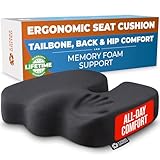
Overview: This orthopedic seat cushion offers a portable, affordable solution for tailbone and sciatica pain relief without replacing your existing chair. The U-shaped design suspends the coccyx to reduce pressure, while medium-firm memory foam maintains support during extended sitting. Measuring 17.7"x13.8"x2.8", it fits most office chairs, car seats, and wheelchairs, making it versatile for office workers, drivers, and gamers.
What Makes It Stand Out: Unlike full stool replacements, this cushion provides targeted pain relief at a fraction of the cost. The orthopedic doctor recommendation and anatomical contouring address specific medical concerns like herniated discs and sciatica. Its portability—with a carrying handle and lightweight design—allows users to maintain consistent support across multiple environments, from office to vehicle to sporting events.
Value for Money: At $29.95, this is the most cost-effective ergonomic intervention available. It transforms any standard chair into a pain-relieving seat without the $60-160 investment required for saddle stools. For users weighing 150-220 pounds, it delivers customized support that off-the-shelf chairs rarely provide. The removable, washable cover extends its lifespan, maximizing the already exceptional value.
Strengths and Weaknesses: Pros: Extremely affordable; portable across chairs/vehicles; orthopedic design for specific pain relief; medium-firm support maintains posture; removable breathable cover; non-slip base; doctor recommended. Cons: Only suitable for 150-220lb users; foam may compress over time; not a complete seating solution; U-shape may feel unusual initially; lacks height adjustment or mobility features.
Bottom Line: An essential accessory for anyone experiencing tailbone or lower back pain. This cushion delivers targeted relief and posture support at a price point that makes it an easy first step toward better ergonomics. It’s not a replacement for a quality chair, but it’s the best $30 you’ll spend on your comfort and spinal health.
6. Ergonomic Saddle Stool with wheels - Upgraded Thicker Leather Seat Cushion, Healthy Posture Correction, Silky Smooth Gliding, Adjustable Rolling Saddle Stool Chair for Salon Medical Massage, Black

Overview: This saddle stool targets professionals who spend long hours seated, offering an ergonomic alternative to conventional rolling chairs. Designed for salons, medical offices, and massage therapy settings, it combines a thick memory foam cushion with posture-correcting geometry. The black leather aesthetic delivers a professional appearance while promising durability and easy maintenance in demanding environments.
What Makes It Stand Out: The 2.5-inch high-density memory foam cushion sets this stool apart from thinner competitors, providing lasting comfort during extended shifts. Its unique saddle shape actively promotes proper spinal alignment by encouraging a neutral pelvic position, naturally discouraging the hunched posture common with traditional stools. The precision ball bearing system ensures exceptionally smooth, whisper-quiet movement across all floor types without leaving marks, a critical feature for shared workspaces.
Value for Money: At $86.39, this stool sits in the mid-range price bracket, offering premium features typically found in $120+ models. The industrial-grade aluminum construction and 400-pound weight capacity provide commercial-grade durability at a consumer-friendly price point. Compared to basic office stools lacking ergonomic design, the posture benefits alone justify the modest premium, making it a smart investment for health-conscious professionals.
Strengths and Weaknesses: Strengths include superior cushioning thickness, robust 400lb capacity, silent rolling mechanism, and genuine posture correction. The waterproof leather cleans easily, while the SGS-certified gas cylinder ensures safety. Weaknesses include limited height range that may not suit taller users, absence of backrest for those needing lumbar support, and lack of wheel locks for stationary stability during precise tasks.
Bottom Line: This saddle stool excels for professionals seeking ergonomic improvement without breaking the bank. Its thick cushioning and smooth operation make it ideal for dynamic work environments where mobility and posture matter. While taller users or those requiring back support should look elsewhere, it delivers exceptional value for salon workers, therapists, and medical staff prioritizing comfort and spinal health.
7. Saddle Stool Chair with Backrest and Footrest- Ergonomic Rolling Saddle Stools Hydraulic Swivel Adjustable Stool Esthetician Chair for Massage Beauty Salon Tattoo Dentist Clinic Home Office (Camel)

Overview: This premium saddle stool elevates the ergonomic seating experience by integrating a backrest and footrest into the design. Tailored for estheticians, tattoo artists, and dental professionals, the camel-colored chair combines sophisticated aesthetics with functional support. The inclusion of braking casters and enhanced padding addresses common complaints found in basic saddle stool models.
What Makes It Stand Out: The 4.75-inch thick seat cushion dramatically exceeds industry standards, providing exceptional pressure relief during marathon appointments. Its innovative concave backrest adjusts from 80° to 110°, offering personalized lumbar support rarely seen in this category. The dual-brake system on two of five casters provides crucial stability during precise procedures, while the footrest reduces leg fatigue and discourages unhealthy leg-crossing habits.
Value for Money: Priced at $158, this stool represents a significant step-up investment over backrest-free alternatives. However, the added back support, superior cushioning thickness, and braking system deliver tangible benefits that justify the 80% price premium for professionals working 8+ hour shifts. The TUV certification and commercial-grade materials ensure longevity, making it cost-effective over time compared to replacing cheaper models annually.
Strengths and Weaknesses: Major strengths include unparalleled seat thickness, adjustable tilt backrest, locking casters for stability, and comprehensive ergonomic design. The 400lb capacity and quality construction ensure durability. Weaknesses include higher price point, potential height unsuitability for shorter users (21.5" minimum), and larger footprint that may clutter smaller workspaces. The camel color, while attractive, shows wear more readily than darker options.
Bottom Line: This is the professional’s choice for all-day comfort and support. The backrest and braking system transform the saddle stool from a simple seat into a serious ergonomic workstation tool. While the investment is substantial, tattoo artists, dentists, and estheticians will recoup value through reduced fatigue and improved posture. Short users should verify height compatibility before purchasing.
8. Antlu Saddle Stool Chair with Back Support, Ergonomic Esthetician Stool Chair for Salon Tattoo Spa Medical Dentist Clinic (with Backrest, Camel)
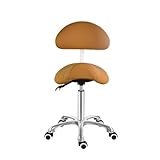
Overview: The Antlu Saddle Stool positions itself as a mid-tier ergonomic solution for wellness and medical professionals. With its distinctive camel upholstery and adjustable backrest, it targets users seeking posture support without the premium price tag of fully-loaded models. The stool promises easy assembly and robust construction suitable for demanding clinical and salon environments.
What Makes It Stand Out: The adjustable backrest with 80°-110° tilt range provides customizable lumbar support that adapts to various body types and working positions. Assembly takes approximately five minutes with included tools, a refreshing departure from complex ergonomic furniture. The 400-pound capacity and aluminum base deliver commercial-grade stability. Its 21"-28" height range accommodates taller workstations better than entry-level stools, making it versatile across salon, dental, and office settings.
Value for Money: At $149, this stool strikes a compelling balance between features and affordability. It undercuts similar backrest-equipped competitors by $10-30 while maintaining key specifications like 400lb capacity and tilt adjustment. The absence of a braking system or footrest explains the price difference, but core ergonomic benefits remain intact. For professionals prioritizing back support over absolute stability during stationary tasks, it offers excellent return on investment.
Strengths and Weaknesses: Strengths include tool-free assembly, adjustable backrest tilt, generous height range, and strong weight capacity. The design suits multiple professional environments effectively. Weaknesses include lack of wheel locks, no footrest for leg support, and thinner seat cushioning compared to premium alternatives. The camel color may clash with some decors and show stains. Documentation could be more detailed for optimal backrest positioning.
Bottom Line: The Antlu stool delivers solid ergonomic value for professionals wanting back support on a moderate budget. Its quick assembly and adjustable features make it accessible for small business owners and home practitioners alike. While it lacks advanced stability features, the core saddle design and tilt functionality provide meaningful posture benefits. Ideal for tattoo artists, spa therapists, and dentists who need mobility with occasional back support.
9. SweetSlubr Seat Cushion for Tailbone Pain Relief, Office Chair Cushion, Memory Foam Large Chair Cushion with Non-Slip Cover for Soft Support at Office Chair, Car Seat, Airplane Black/Large

Overview: This portable memory foam cushion addresses pressure point discomfort for sedentary individuals across multiple settings. Unlike full chair replacements, the SweetSlubr offers an affordable, immediate upgrade to existing seating. The black, large-format design targets tailbone pain specifically through ergonomic contouring, making it suitable for office workers, drivers, and frequent travelers seeking relief without investing in new furniture.
What Makes It Stand Out: The beveled edge design actively promotes proper pelvic alignment, reducing tailbone pressure more effectively than flat cushions. Its versatile 16"x18" dimensions fit everything from office chairs to airplane seats, providing consistent support wherever you go. The washable, non-slip cover ensures hygiene and stability, addressing common complaints about cushion migration. At just $25.99, it delivers therapeutic benefits at a fraction of ergonomic chair costs.
Value for Money: Exceptional value defines this product. For under $30, users receive orthopedic-grade pressure relief comparable to $80+ cushions. The multi-scenario usability eliminates need for separate car, office, and travel cushions. While it won’t fix underlying chair problems, it transforms uncomfortable seating into supportive surfaces. The durability of high-quality memory foam ensures months of consistent performance, making it one of the best cost-per-use ergonomic investments available.
Strengths and Weaknesses: Strengths include universal compatibility, effective tailbone pressure relief, machine-washable cover, non-slip base, and unbeatable price. The lightweight portability is ideal for commuters. Weaknesses include limited to no lumbar support, potential heat retention from memory foam, and compression over extended use (6+ months). It cannot address ergonomic issues beyond seating surface and may be too firm for users preferring plush softness.
Bottom Line: This cushion is a must-have for anyone experiencing sitting-related discomfort. Its affordability and portability make it a zero-risk entry point into ergonomic improvements. Office workers and long-haul drivers will notice immediate tailbone pressure reduction. While not a substitute for a complete ergonomic chair, it brilliantly augments existing seating. Purchase without hesitation if you need targeted pressure relief on a budget.
10. KKTONER Black Saddle Drafting Chair with Back Swivel Office Chair with Footrest Height Adjustable for Work Home Computer Task Stool Chair with Wheels

Overview: This drafting-height saddle stool targets users at elevated workstations, distinguishing itself with an impressive 34.5"-40.8" height range. The black PU leather design integrates a backrest and footrest, addressing common drafting chair limitations. Positioned as a versatile solution for standing desk users, architects, and artists, it combines saddle ergonomics with extended vertical adjustment at a budget-conscious price point.
What Makes It Stand Out: The exceptional height range accommodates standing desks and drafting tables that standard stools cannot serve. The integrated footrest combats leg fatigue during prolonged elevated seating, while the saddle shape reduces lumbar disc pressure compared to traditional flat drafting chairs. At $67.99, it’s one of the few sub-$100 options offering both back support and footrest at drafting heights, democratizing ergonomic access for home office users.
Value for Money: Outstanding value for standing desk converters and tall workstation setups. Competing drafting chairs with similar features typically start at $120+, making this a 40%+ savings. The inclusion of a footrest and backrest at this price point is remarkable. While materials reflect the budget tier, the functional design delivers core ergonomic benefits. For intermittent use or home offices, it outperforms price expectations, though heavy commercial use may reveal durability limitations.
Strengths and Weaknesses: Strengths include unmatched height range for the price, footrest inclusion, saddle ergonomic benefits, and easy assembly. The 360° mobility works well on hard floors. Weaknesses include lower weight capacity (unspecified but likely under 300lbs), thinner padding than premium models, absence of wheel locks, and potential stability concerns at maximum height. The basic PU leather may wear faster in commercial settings.
Bottom Line: This drafting stool is ideal for standing desk users seeking occasional seated breaks without sacrificing height. Its affordability makes it accessible for home offices and students. While not robust enough for heavy commercial use, it perfectly serves its niche as a tall, ergonomic perch. Purchase confidently if you need elevated seating with basic support; commercial users should invest in heavier-duty alternatives. The footrest and backrest make it a standout value proposition.
Understanding Saddle Chairs and Hip Relief
The Biomechanics of Open Hip Angles
Traditional chairs force your hips into a 90-degree flexion position that compresses the acetabulum and shortens the iliopsoas complex. Saddle chairs, by contrast, create a 135-degree “open” hip angle that allows the femoral head to sit more naturally in the socket. This position reduces pressure on the labrum and decompresses the sciatic nerve as it passes through the greater sciatic foramen. The key isn’t just the angle itself—it’s the dynamic relationship between your ischial tuberosities (sit bones) and the saddle’s contoured surface. When your weight distributes across these bony landmarks rather than soft tissue, you eliminate the pressure points that trigger referred pain patterns down the lateral hip and thigh.
Why 2026 is a Pivotal Year for Ergonomic Seating
Market Trends and Innovation
The ergonomic seating industry has reached an inflection point in 2026. Manufacturing advances in compression-molded foam and powder-coated steel bases have driven production costs down while quality has simultaneously improved. We’re seeing a democratization of features that were exclusive to clinical-grade equipment five years ago: multi-axis tilt mechanisms, memory foam layering, and weight-activated casters. This means your $300 budget now accesses technology previously reserved for dental operatories and surgical suites. The proliferation of direct-to-consumer brands has also eliminated markup layers, putting professional-grade hip relief within reach of home office workers and freelancers.
Regulatory Changes and Standards
New ANSI/BIFMA standards implemented in late 2025 now require saddle-style seating to undergo specific fatigue testing for pelvic support and dynamic load distribution. Chairs certified under these updated protocols guarantee a minimum 40,000-cycle lifespan for adjustment mechanisms—a critical metric for daily users. Additionally, California’s updated Prop 65 requirements have pushed manufacturers toward water-based adhesives and low-VOC upholstery, meaning your budget-friendly option is less likely to off-gas harmful compounds during those crucial first weeks of use.
Anatomy of Hip Pain: How Saddle Chairs Help
Common Hip Issues Addressed
Saddle chairs specifically target several pathologies. For piriformis syndrome sufferers, the open hip angle reduces external rotator tension. Those with femoroacetabular impingement (FAI) benefit from decreased anterior capsule compression. The forward-tilting pelvis engagement also alleviates symptoms of sacroiliac joint dysfunction by promoting neutral spine alignment. Even non-specific hip bursitis improves as weight shifts from the trochanteric region to the more robust ischial support structure. Understanding your specific pain pattern helps prioritize features—deeper saddle contours for FAI, moderate width for bursitis, and firm foam for SI joint stability.
The Science of Weight Distribution
The magic happens in the first 15 minutes of sitting. Quality saddle chairs feature a dual-density foam system: firmer support under the ischial tuberosities and softer cushioning along the pudendal nerve pathway. This prevents the “saddle anesthesia” that plagued early designs. The goal is achieving a 60/40 weight split between your sit bones and the remaining thigh/pelvic contact area. Too firm, and you create pressure hotspots; too soft, and you lose the postural benefits through hammock-style sinking. The $300 price sweet spot typically lands you a medium-density foam with a compression rating of 35-40 lbs/cubic foot—ideal for most body types under 250 pounds.
Key Features to Look for in Saddle Chairs
Seat Shape and Contouring
Not all saddles are created equal. The most therapeutic designs feature a “waterfall” front edge that prevents compression of the femoral neurovascular bundle. Look for a central groove or split-seat design that accommodates the coccyx and reduces pressure on the perineal region. The rear wings should support the gluteal muscles without forcing external rotation. For hip relief specifically, avoid overly narrow designs that pinch the greater trochanters; instead, opt for a seat width between 13-15 inches that allows your hips to find their natural “home” position.
Height Adjustment Range
Your saddle chair must accommodate both your desk height and your inseam length. The functional range should span from 21 inches (lowest) to 31 inches (highest) to cover users from 5'2" to 6'4". This is non-negotiable for hip relief because improper height negates the open-angle benefits. Pneumatic lifts in this price category typically offer 8-10 inches of travel, but check the specifications carefully—some budget models sacrifice top-end height to cut costs, which is a dealbreaker for taller individuals or standing desk converters.
Tilt Mechanisms
Static sitting is the enemy, even on a saddle. The best under-$300 options include either a forward tilt lock (5-15 degrees) or a dynamic “rocking” mechanism that encourages micro-movements. This subtle motion feeds proprioceptive input to your hip stabilizers, preventing the muscular deconditioning that occurs with rigid seating. Avoid models with rearward tilt only; you need anterior pelvic encouragement to truly decompress the hip capsules. Some advanced designs even include adjustable tilt tension, allowing you to customize the resistance based on your core strength and fatigue levels.
The $300 Price Point: What to Expect
Budget vs. Premium Features
At $300, you’re operating in the “prosumer” tier—above flimsy import stools but below clinical-grade equipment. Expect solid steel bases (not aluminum), dual-wheel casters, and at least one premium adjustment feature like tilt tension control. What you won’t get: genuine leather, memory foam layering thicker than 2 inches, or weight capacities exceeding 300 pounds. However, you can find hybrid foam formulations, powder-coated finishes, and five-year warranties if you know where to look. The key is identifying which features directly impact hip relief versus cosmetic upgrades.
Warranty Considerations
Read the fine print on warranty coverage. Reputable manufacturers in this category offer at least three years on the pneumatic cylinder and two years on upholstery. Some extend lifetime coverage on the base and casters. For hip relief users who depend on their chair daily, a shorter warranty often indicates lower-grade components that may sag or lose adjustability precisely when you need consistent support. Be wary of “limited lifetime” warranties that exclude commercial use—if you’re working from home full-time, that clause could void your claim.
Materials Matter: Upholstery and Padding
Breathable Fabrics vs. Leather Alternatives
Polyester mesh blends have become the gold standard for hip relief seating in 2026. They wick moisture, prevent heat buildup in the gluteal region, and maintain tension better than vinyl. While faux leather looks professional, it traps heat and can become sticky during long sessions, causing micro-movements that destabilize your pelvic position. If you must have a leather aesthetic, look for perforated PU blends with at least 0.9mm thickness to ensure durability without sacrificing breathability.
Foam Density and Memory Foam
The ideal saddle chair uses layered foam: a high-resilience base (45-50 density) for support, topped with 1-2 inches of memory foam for pressure mapping. Avoid single-layer designs, which either feel like concrete or bottom out immediately. In the sub-$300 range, you’ll encounter “air-infused” or “gel-infused” marketing terms—these are legitimate technologies that improve heat dissipation, but they shouldn’t replace proper density ratings. Always ask for the Indentation Load Deflection (ILD) rating; for hip relief, target 30-35 ILD for the top comfort layer.
Adjustability: The Non-Negotiables
Pneumatic vs. Hydraulic Lifts
Most consumer saddle chairs use pneumatic lifts (gas cylinders), which are lighter and smoother for frequent adjustments. Hydraulic systems, common in dental stools, offer finer control and higher weight capacities but add cost. In 2026, the quality gap has narrowed—premium pneumatic cylinders now rival hydraulic smoothness while maintaining the sub-$300 price point. The critical spec is the “stroke length” (travel distance); insist on at least 8 inches to ensure ergonomic versatility across different workstations.
Tilt Tension Control
This feature allows you to dial in the resistance of the rocking mechanism. For hip relief, start with lighter tension (easier to tilt) during your first two weeks to encourage frequent position changes. As your hip flexors lengthen and core strength improves, increase tension to build endurance. Chairs without this adjustment force you into a one-size-fits-all resistance that may either feel unstable or too rigid, undermining the therapeutic benefits.
Base and Mobility Considerations
Caster Types for Different Floors
Your hip relief journey depends on stable, predictable movement. Hard casters (nylon) work on carpet but can catch on transitions, jarring the hip joint. Soft polyurethane casters excel on hard floors but may sink into plush carpet. The 2026 solution is hybrid casters with a 60mm diameter—large enough to roll over cords and thresholds smoothly. Look for models with a brake option; locking the chair during tasks requiring precision prevents unconscious hip gripping that aggravates impingement symptoms.
Base Material and Stability
A five-point star base is mandatory, but the material matters more than you think. Nylon-reinforced bases save weight but flex under dynamic loads, creating micro-instabilities that your hip stabilizers must constantly correct. Powder-coated steel bases weighing 8-10 pounds provide the inertial stability needed for pain-free sitting. The base radius should extend at least 25 inches from center to prevent tipping during lateral reaches—a common cause of hip strain in compact home offices.
Weight Capacity and Durability
Don’t just look at the maximum weight rating; examine the recommended weight range. A chair rated for 300 pounds but optimized for 150-180 pounds will feel overly firm for lighter users and may not engage the tilt mechanism properly. Conversely, heavier users near the weight limit often experience premature foam compression. The durability sweet spot in the sub-$300 category is a 250-pound capacity with a recommended range of 120-230 pounds. This ensures the foam and mechanisms operate within their designed parameters, maintaining hip support consistency over years of use.
Aesthetics vs. Functionality
Let’s be honest—saddle chairs look unconventional. But 2026 design trends have introduced sleeker silhouettes with hidden adjustment mechanisms and neutral color palettes that blend into modern home offices. However, never sacrifice functional features for aesthetics. A beautifully minimalist chair without a split-seat design or adequate height range is just an expensive stool. Prioritize chairs where the aesthetic improvements—like concealed hardware or tapered bases—actually enhance functionality by reducing snag points and improving cleanability.
Setting Up Your Saddle Chair for Maximum Hip Relief
Proper Height Adjustment
The gold standard: with your feet flat on the floor, your hips should sit 3-4 inches above your knees. This creates the therapeutic 135-degree angle without overloading the patellofemoral joint. Use a footrest if your desk is too high—never lower the chair and compromise hip position. For standing desk users, the chair should adjust to at least 75% of your standing elbow height, allowing quick transitions without postural disruption.
Desk Compatibility
Your saddle chair will raise your eye level by 4-6 inches compared to traditional seating. Measure from the floor to your sternal notch in the saddle position, then ensure your monitor’s top bezel aligns with this measurement. Keyboard height becomes critical; consider a negative-tilt keyboard tray to maintain neutral wrist angles without forcing your hips into flexion. Many users overlook this, creating a compensatory forward lean that transfers strain directly to the anterior hip capsule.
Common Mistakes to Avoid
First, don’t overtighten the tilt mechanism out of fear of instability. This defeats the micro-movement benefits. Second, resist the urge to add cushions or seat pads—they alter the carefully engineered pressure distribution. Third, avoid crossing your ankles; this internally rotates the hip and compresses the deep external rotators. Fourth, don’t rush the transition—using a saddle chair for full 8-hour days immediately often triggers flare-ups as deconditioned muscles are suddenly engaged. Finally, never ignore base stability on uneven floors; a wobbling chair forces constant hip micro-adjustments that accumulate into fatigue.
Transitioning Period: What to Expect
Your first two weeks will involve relearning how to sit. Expect mild gluteal and adductor soreness as these muscles activate properly for the first time in years. Hip flexor tightness may temporarily feel worse as they lengthen—counter this with 2-minute kneeling hip flexor stretches every 90 minutes. Many users report an initial “perching” sensation and fatigue at the 90-minute mark. This is normal. Build tolerance incrementally: start with 45-minute sessions, alternating with a traditional chair, and add 15 minutes every three days. By week four, most users achieve comfortable all-day use with significantly reduced hip pain.
Maintenance and Longevity
Preserve your hip relief investment with simple weekly care. Wipe the upholstery with a damp microfiber cloth to prevent sweat salt from degrading the material. Monthly, check all bolts with a hex key—especially the seat-to-base connection, which bears dynamic loads. Annually, lubricate the pneumatic cylinder shaft with silicone spray to maintain smooth height adjustments. Foam compression is the primary failure mode; rotate the seat 180 degrees every six months if the design allows, ensuring even wear. Store the chair in a climate-controlled environment—extreme temperatures accelerate foam breakdown and cylinder seal degradation.
Where to Shop Smart in 2026
Online vs. Retail Showrooms
Online marketplaces offer unbeatable selection and pricing, but the return shipping costs on a 30-pound chair can negate savings. Look for retailers providing free 30-day trials with prepaid return labels. Physical showrooms, while limited in stock, allow you to test the critical hip-angle feel and height range compatibility with your actual desk setup. The 2026 hybrid model—ordering online after testing a similar floor model at a showroom—gives you the best of both worlds. Watch for seasonal sales cycles: Presidents’ Day and back-to-school periods often see 15-20% discounts on ergonomic seating, bringing premium features into the sub-$300 bracket.
Frequently Asked Questions
How long does it take for a saddle chair to relieve hip pain?
Most users notice reduced pressure within the first week, but significant pain relief typically requires 3-4 weeks of consistent use as your hip flexors lengthen and stabilizing muscles strengthen. The timeline varies based on your specific condition—piriformis syndrome often improves faster than femoroacetabular impingement.
Can saddle chairs worsen existing hip problems?
If you have advanced osteoarthritis or recent hip replacement surgery, consult your physical therapist first. For most conditions, properly adjusted saddle chairs reduce symptoms, but incorrect setup—especially excessive height or overly firm foam—can aggravate bursitis or labral tears during the adaptation period.
Are split-seat designs better for hip relief than solid saddles?
Split-seat designs excel for coccyx and perineal pressure relief, but the gap width is crucial. Too wide, and each side acts as a narrow saddle, increasing trochanteric pressure. For pure hip relief, a solid saddle with a central pressure-relief groove often provides more stable ischial support.
What’s the ideal desk height pairing for a saddle chair?
Your desk should be 8-10 inches above your seated elbow height. For most users, this means a fixed desk height of 28-30 inches or a standing desk adjusted to 39-42 inches. The key is maintaining neutral shoulder position without hunching, which would pull your pelvis into posterior tilt and negate hip benefits.
Do I need a footrest with a saddle chair?
If your feet don’t rest flat with hips above knees, absolutely. A footrest should be height-adjustable and tilt 10-15 degrees to support the entire foot. Avoid dangling feet—they engage hip flexors continuously, creating the exact tension you’re trying to eliminate.
How do I clean and disinfect a saddle chair without damaging the foam?
Use a pH-neutral cleaner (diluted castile soap works well) on a damp cloth. Never saturate the upholstery—moisture seeps into foam, degrading it and creating mold risks. For disinfection, 70% isopropyl alcohol in a spray bottle misted lightly (not sprayed directly) kills bacteria without breaking down vinyl or PU surfaces.
Can I use a saddle chair if I’m pregnant?
Many pregnant users find saddle chairs relieve symphysis pubis pain and improve pelvic alignment. However, the open hip angle may feel unstable as your center of gravity shifts. Prioritize models with a wider base radius and reduced tilt tension, and always consult your prenatal care provider.
Why does my lower back hurt when I first switch to a saddle chair?
This is typically transitional muscle soreness. Your lumbar spine is now bearing weight properly for the first time in years, and deep paraspinal muscles are reactivating. If pain persists beyond two weeks or feels sharp rather than muscular, check your height adjustment—you may be sitting too low, forcing lumbar flexion.
Are there weight limits for effective hip relief on budget saddle chairs?
Yes. Foam compression mechanics mean users over 230 pounds may not experience optimal pressure distribution, even if the chair is rated for higher capacities. Consider models with reinforced plywood seat bases rather than plastic pans, as these resist deformation under load.
How often should I replace my saddle chair for continued hip benefits?
With proper maintenance, expect 5-7 years of consistent performance. The foam will gradually lose resilience, reducing pressure relief. If you notice returning hip pain despite proper use, or if the pneumatic cylinder begins sagging throughout the day, it’s time to replace. Don’t wait for catastrophic failure—gradual degradation is subtle but undermines therapeutic value.