The modern cubicle is finally evolving beyond its static, sedentary reputation. As we approach 2026, workplace wellness has shifted from a perk to a fundamental expectation, and standing desk risers have become the stealth heroes of ergonomic transformation. Unlike full-desk replacements that require corporate approval and significant square footage, risers offer a nimble solution that respects the constraints of cubicle life while delivering profound health benefits. They’re the difference between enduring your workday and actively thriving through it.
But not all standing desk risers are created equal, especially when navigating the unique challenges of cubicle environments—low-hanging partitions, shared power sources, limited surface area, and the ever-watchful eye of facilities management. This comprehensive guide cuts through the marketing noise to equip you with the knowledge to select a riser that seamlessly integrates with your specific workspace, physical needs, and the technological trends shaping tomorrow’s offices.
Top 10 Standing Desk Risers for Cubicles
Detailed Product Reviews
1. VIVO 43 inch Corner Height Adjustable Cubicle Stand Up Desk Converter, V Series, Quick Sit to Stand Tabletop Dual Monitor Riser Workstation, Black, DESK-V000VC

Overview: The VIVO DESK-V000VC is a robust corner desk converter designed to transform any standard desk into an ergonomic standing workstation. This 43-inch pneumatic riser addresses the health concerns of prolonged sitting by enabling seamless transitions between sitting and standing throughout your workday. Built specifically for corner and cubicle configurations, it maximizes workspace efficiency while maintaining a relatively compact footprint.
What Makes It Stand Out: The patented pneumatic spring system delivers smooth, controlled height adjustments from 6 to 17 inches with a simple touch locking mechanism. The generous 43.3" x 28.3" surface accommodates dual monitors or laptop setups comfortably. Unlike many competitors, the synchronized keyboard tray moves with the main surface, maintaining ergonomic alignment. Its corner-specific design fits snugly into L-shaped desks and cubicles, making it uniquely versatile for office environments where space is at a premium.
Value for Money: At $249.99, this converter sits in the sweet spot between budget manual risers and premium electric models. You’re getting patented technology, substantial surface area, and reliable pneumatic assistance without the $300+ price tag of electric alternatives. The build quality justifies the investment for professionals seeking a long-term ergonomic solution.
Strengths and Weaknesses: Strengths include smooth pneumatic operation, spacious corner-friendly design, minimal assembly requirements, and sturdy 33-pound capacity. The synchronized keyboard tray is a major ergonomic win. Weaknesses include a height range that may not suit users over 6'2", and pneumatic systems require modest manual effort compared to electric motors. The black finish, while professional, shows dust and fingerprints readily.
Bottom Line: Ideal for corner desk users wanting premium features without electric pricing. Perfect for offices where quiet operation matters and users value reliability over motorized convenience.
2. VIVO 43 inch Corner Electric Height Adjustable Cubicle Stand Up Desk Converter, VE Series, Sit to Stand Tabletop Dual Monitor Riser with USB Port, Black, DESK-V000VCE

Overview: The VIVO DESK-V000VCE elevates the standing desk experience with electric-powered convenience. This 43-inch corner converter builds upon its manual sibling by adding a whisper-quiet motor and integrated USB charging port. Designed for professionals who prioritize effortless adjustment and modern amenities, it transforms static workstations into dynamic, health-conscious environments with the press of a button.
What Makes It Stand Out: The electric lift system eliminates manual effort entirely, offering smooth height transitions from 6.5 to 16.2 inches via an elegant control panel. The integrated USB port keeps devices charged without reaching for wall outlets—a subtle but game-changing feature for cable management. The 43.3" x 22" surface, while slightly shallower than the manual version, still handles dual monitors with ease. The quiet motor operation makes it office-friendly, avoiding disruption in shared spaces.
Value for Money: At $279.99, it’s only $30 more than the pneumatic model—a modest premium for electric convenience. Considering comparable electric converters often exceed $350, this represents excellent value. The added USB functionality and effortless adjustment justify the upgrade cost for most users.
Strengths and Weaknesses: Strengths include one-touch electric adjustment, whisper-quiet operation, USB charging port, and minimal assembly. The sturdy 33-pound capacity remains impressive. Weaknesses include a slightly narrower height range and reduced surface depth compared to the manual version. Electric components introduce potential long-term maintenance concerns, and the motor requires proximity to a power outlet.
Bottom Line: Perfect for users who adjust height frequently throughout the day or have mobility limitations. The small price premium delivers significant convenience returns, making it the superior choice for most buyers.
3. FITUEYES Height Adjustable Standing Desk 32” Wide Sit to Stand Converter Stand Up Desk Tabletop Workstation for Dual Monitor Riser FSD308001WB
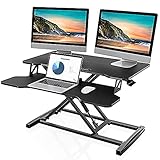
Overview: The FITUEYES FSD308001WB standing desk converter delivers ergonomic functionality at an entry-level price point. This 32-inch riser provides essential sit-stand capabilities without the premium cost of larger brands. Designed for budget-conscious professionals and home office users, it offers a straightforward solution to combat sedentary work habits while maintaining a small footprint that fits virtually any desk setup.
What Makes It Stand Out: The most compelling feature is the fully assembled delivery—unbox and start standing immediately. The impressive height range (4.3" to 19.8") accommodates users from 5'0" to 6'4", surpassing many pricier competitors. Dual gas springs provide smooth adjustment despite the budget price tag. At just 32 inches wide, it’s perfect for compact spaces while still supporting dual monitor configurations.
Value for Money: At $111.99, this converter undercuts most competitors by 50% or more. You’re getting core ergonomic benefits—height adjustability, decent weight capacity (33 lbs), and a functional workspace—without premium frills. For home offices or trial users, it’s a low-risk investment that delivers genuine health benefits.
Strengths and Weaknesses: Strengths include unbeatable price, fully assembled delivery, wide height range, and compact footprint. The gas spring mechanism operates smoothly for the price point. Weaknesses include a smaller surface (31.5" x 15.7") that feels cramped with dual monitors, less stability at maximum extension compared to heavier models, and basic aesthetic design. The keyboard tray is notably absent, limiting ergonomic optimization.
Bottom Line: An excellent starter converter for home offices or users testing the standing desk concept. Serious professionals with dual-monitor setups should invest in larger models, but budget buyers will find exceptional value here.
4. VIVO 43 inch Corner Height Adjustable Cubicle Stand Up Desk Converter, V Series, Quick Sit to Stand Tabletop Dual Monitor Riser Workstation, Rustic Vintage Brown, DESK-V000VCN

Overview: The VIVO DESK-V000VCN delivers identical functionality to its black counterpart in a warm Rustic Vintage Brown finish. This 43-inch corner converter targets design-conscious professionals who refuse to sacrifice aesthetics for ergonomics. It transforms corner desks and cubicles into active workstations while complementing modern farmhouse, rustic, or warm contemporary office decors that standard black converters disrupt.
What Makes It Stand Out: Beyond the eye-catching brown finish, this model retains the patented pneumatic spring system and synchronized keyboard tray that define the V Series. The 43.3" x 28.3" surface provides generous workspace for dual monitors, while the corner-specific geometry maximizes previously underutilized desk areas. The rustic aesthetic is genuinely unique in a market dominated by sterile black and gray options.
Value for Money: At $249.99—identical pricing to the black version—you’re not paying a premium for style. This represents excellent value for design-minded buyers who typically face upcharges for non-standard finishes. The same robust build quality and feature set make it a smart investment for curated workspaces.
Strengths and Weaknesses: Strengths include the distinctive rustic finish, smooth pneumatic operation, spacious corner-friendly design, and synchronized keyboard tray. The 33-pound capacity handles most setups comfortably. Weaknesses mirror the black model: height range may not suit very tall users, pneumatic operation requires manual effort, and the finish may clash with ultra-modern office aesthetics. The brown surface shows scratches more visibly than black.
Bottom Line: Choose this over the black version purely for aesthetic preference—the functionality is identical. Ideal for home offices or design-focused workplaces where visual cohesion matters as much as ergonomic performance.
5. X-Elite Pro 40" Corner Standing Desk Converter with Pneumatic Lift | Adjustable Sit to Stand Riser, L-Shaped Desks & Cubicles | Fully Assembled Computer Workstation (Matte Black)

Overview: The X-Elite Pro 40" Corner Standing Desk Converter positions itself as a premium alternative to VIVO’s offerings, emphasizing ready-to-use convenience and corner-specific optimization. This pneumatic riser arrives fully assembled, targeting professionals who value immediate deployment over complicated setup processes. Its design prioritizes depth and corner integration, making it a strong contender for L-shaped desk configurations.
What Makes It Stand Out: The 27.5" depth provides substantially more usable space than most competitors, allowing comfortable positioning of monitors at proper viewing distance. The pneumatic pump with squeeze-handle adjustment offers intuitive operation without electric motors or manual lifting. The angled edges fit seamlessly into corners, maximizing workspace efficiency. Fully assembled delivery means zero setup time—place and begin working immediately.
Value for Money: At $264.99, it competes directly with VIVO’s electric model while offering pneumatic simplicity. The ready-to-use convenience and superior depth justify the price premium over basic manual converters. However, the 40" width is slightly less than VIVO’s 43", potentially impacting dual-monitor spaciousness.
Strengths and Weaknesses: Strengths include fully assembled delivery, excellent depth for monitor positioning, smooth pneumatic adjustment, and corner-optimized geometry. The squeeze-handle operation is ergonomically intuitive. Weaknesses include slightly reduced width compared to VIVO models, unspecified keyboard tray (appears absent), and pneumatic systems requiring user effort. The matte black finish, while professional, offers limited aesthetic variety.
Bottom Line: Perfect for users prioritizing depth and instant setup over maximum width. A strong competitor to VIVO’s electric model, especially in corner configurations where the extra depth shines.
6. VIVO Height Adjustable 32 inch Stand Up Desk Converter, Quick Sit to Stand Tabletop Dual Monitor Riser Workstation, Black, DESK-V000S

Overview:
The VIVO Height Adjustable 32-inch Stand Up Desk Converter offers an affordable entry into ergonomic work setups. This black steel riser transforms any standard desk into a sit-stand workstation, featuring a 31.5" x 15.8" surface that accommodates dual monitors while maintaining a compact footprint.
What Makes It Stand Out:
Its patented pneumatic spring lift system enables smooth height transitions from 4.9 to 19.7 inches with a simple touch lock mechanism. The synchronized keyboard tray moves with the desktop, ensuring consistent ergonomics. The high-grade steel construction supports 26 lbs while remaining stable during adjustment.
Value for Money:
At $99.99, this converter delivers exceptional value compared to full standing desks costing hundreds more. The health benefits of reduced sedentary time far outweigh the investment, making it accessible for budget-conscious professionals seeking ergonomic improvements without replacing furniture.
Strengths and Weaknesses:
Strengths include near-zero assembly, smooth lift operation, sturdy build quality, and generous height range. The space-efficient design suits smaller desks. Weaknesses are the 26-pound weight limit restricting heavier monitor setups, and the fixed keyboard tray may not suit all ergonomic preferences. The surface area, while adequate, could feel cramped for users with extensive peripherals.
Bottom Line:
The VIVO DESK-V000S is an excellent budget-friendly choice for users wanting reliable sit-stand functionality without complexity. Ideal for dual monitor setups within weight limits, it offers smooth operation and solid construction at an unbeatable price point.
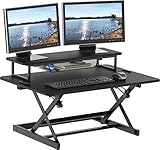
7. SHW 36-Inch Height Adjustable Standing Desk Sit to Stand Riser Converter Workstation, Black
Overview:
The SHW 36-Inch Height Adjustable Standing Desk Converter provides a mid-range solution for professionals seeking sit-stand flexibility. Measuring 36" x 24", this black workstation comfortably houses dual 24-inch monitors while offering a height range from 4 to 16 inches.
What Makes It Stand Out:
Its ergonomic design prioritizes stability with a solid structure supporting up to 30 lbs. The generous 36-inch width provides ample workspace without overwhelming standard desks. The patented frame design ensures steady operation during height transitions, making it reliable for daily use.
Value for Money:
Priced at $158.87, this converter sits in the sweet spot between budget and premium options. It offers larger surface area and higher weight capacity than entry-level models while remaining significantly cheaper than high-end alternatives. The investment pays dividends in comfort and productivity.
Strengths and Weaknesses:
Strengths include robust 30-pound capacity, spacious surface, stable construction, and intuitive operation. The 36-inch width accommodates most dual monitor configurations. Weaknesses include a 16-inch maximum height that may prove insufficient for taller users, potentially requiring additional monitor stands. The lift mechanism lacks the smoothness of pneumatic springs, and the weight capacity specs show inconsistency in documentation.
Bottom Line:
The SHW 36" converter is a solid mid-tier choice for users needing reliable dual-monitor support. While height range limitations may affect taller individuals, its stability and workspace area make it a worthwhile investment for standard office setups.
8. Flexpro Hero Corner Standing Height Adjustable 37 inch Desk Converter, for Cubicles & L-Shaped Desks, 2 Level Sit to Stand Workspace with Keyboard Shelf & Monitor Riser, (Black, 37 x 18 x 4.5 to 20)

Overview:
The Flexpro Hero Corner Standing Desk Converter addresses a specific need: converting corner and L-shaped desks into ergonomic workstations. At 37" x 18", this specialized riser maximizes typically underutilized corner space while supporting up to 35 lbs across its two-level design.
What Makes It Stand Out:
Its corner-friendly shape and hydraulic pump lift system enable smooth transitions up to 20 inches—higher than most competitors. The separate keyboard shelf and monitor riser create true ergonomic positioning, while the sleek black frame adds professional aesthetics to any office environment.
Value for Money:
At $239.99, this premium converter justifies its price through specialized design and superior specifications. For corner desk users, it’s often the only viable sit-stand solution, eliminating the need to replace expensive office furniture while delivering full ergonomic benefits.
Strengths and Weaknesses:
Strengths include unique corner compatibility, impressive 20-inch height range, robust 35-pound capacity, and independent keyboard tray. The hydraulic lift operates smoothly and reliably. Weaknesses center on the higher price point and larger footprint that may overwhelm smaller desks. Assembly, while simple, requires more steps than zero-assembly models. The specialized design offers no advantage for standard straight-desk users.
Bottom Line:
The Flexpro Hero Corner is the definitive choice for corner and L-shaped desk owners. Its specialized design, superior height range, and sturdy construction make it worth the premium for users who’ve struggled to find compatible sit-stand solutions.
9. VIVO Economy Single Top Height Adjustable 29 inch Standing Desk Converter, Sit Stand Tabletop Monitor and Laptop Riser Platform Workstation, DESK-V000U

Overview:
The VIVO Economy 29-inch Standing Desk Converter represents the simplest entry point to ergonomic workstations. This single-top riser features a 29.3" x 17.8" surface that fits virtually any desk layout while supporting up to 22 lbs for basic monitor and laptop configurations.
What Makes It Stand Out:
True to its “Economy” name, this model arrives completely preassembled—simply place it on your desk and start working. Its patented height locking mechanism provides smooth adjustment from 1.8 to 16.2 inches. The low-profile black design blends seamlessly into any environment while occupying minimal space.
Value for Money:
At $99.99, it matches the price of larger VIVO models while offering ultimate simplicity. This makes it ideal for minimalists, laptop users, or those wanting to test sit-stand benefits without commitment. The cost savings versus full standing desks remain substantial.
Strengths and Weaknesses:
Strengths include zero assembly, compact footprint, smooth operation, and immediate usability. The price point is attractive for budget-conscious buyers. Weaknesses include the 22-pound weight limit, lack of dedicated keyboard tray reducing ergonomic optimization, and smaller surface restricting multi-monitor setups. The 16.2-inch maximum height may prove inadequate for taller users.
Bottom Line:
The VIVO Economy model excels for users prioritizing simplicity and minimalism. Perfect for laptop-centric workflows or as an introduction to sit-stand desks, it delivers core functionality without frills, though power users will require more robust solutions.
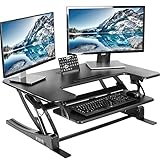
10. VIVO 36 inch Height Adjustable Stand Up Desk Converter, V Series, Quick Sit to Stand Tabletop Dual Monitor Riser Workstation, Black, DESK-V000V
Overview:
The VIVO 36-inch Height Adjustable Stand Up Desk Converter (V Series) elevates the brand’s offering with premium features and warranty protection. Its spacious 91cm x 56cm surface accommodates complex dual-monitor setups while supporting up to 33 lbs through dual pneumatic springs.
What Makes It Stand Out:
Dual pneumatic springs provide exceptionally smooth height adjustment from 17cm to 43cm (6.7" to 16.9"). The synchronized 64cm x 27cm keyboard tray maintains ergonomic alignment throughout transitions. Most notably, VIVO backs this model with a 3-year manufacturer warranty, demonstrating confidence in its steel frame construction.
Value for Money:
At $199.99, this represents a $100 premium over the 32-inch model but adds significant value through increased surface area, higher weight capacity, and warranty coverage. For professionals investing in long-term ergonomic health, the warranty and enhanced specs justify the cost over budget alternatives.
Strengths and Weaknesses:
Strengths include generous workspace, robust 33-pound capacity, ultra-smooth dual-spring lift, warranty protection, and sturdy construction. The keyboard tray is spacious and well-integrated. Weaknesses include the price jump and slightly more complex assembly requiring keyboard and foot attachment. The height range, while adequate, doesn’t reach the 20-inch maximum of some competitors.
Bottom Line:
The VIVO V Series 36" converter is ideal for professionals seeking premium features and peace of mind. The warranty, combined with superior lift mechanics and workspace, makes it a smart long-term investment for serious sit-stand users.
Understanding Standing Desk Risers for Cubicles
Standing desk risers—also known as desktop converters or toppers—are elevated platforms that sit atop your existing desk, transforming any surface into a height-adjustable workstation. For cubicle dwellers, these devices represent a revolutionary middle ground: you maintain your assigned furniture while gaining the flexibility to alternate between sitting and standing throughout the day. The best models for 2026 are engineered with spatial intelligence, recognizing that cubicle real estate is precious and that every inch must serve multiple purposes.
Why Cubicle-Specific Design Matters
Cubicles impose constraints that traditional office furniture rarely considers. Partition height determines maximum riser elevation without creating visual chaos in an open floor plan. Shared desk depths—often a shallow 24 inches—require compact footprint designs that don’t encroach on your keyboard area or monitor placement. Cable routing becomes a communal concern when power access is limited to floor-level outlets shared among multiple workstations. A riser designed specifically for cubicles addresses these micro-challenges through thoughtful engineering: tapered bases that fit snugly against modesty panels, integrated cable channels that keep cords from spilling into walkways, and adjustment mechanisms quiet enough to avoid disturbing neighboring colleagues during video calls.
Key Ergonomic Considerations
Proper Height Range
Your riser must accommodate both your seated eye level and your standing elbow height, typically ranging from 5 inches to 20 inches of vertical travel. For 2026, look for models with infinite stop positions rather than preset increments—this allows millimeter-perfect customization that adapts to your daily fluctuations in footwear, fatigue, and posture. The optimal standing height positions your elbows at a 90-degree angle with your forearms parallel to the floor, placing your monitor’s top bezel at or below eye level.
Monitor Positioning
Single-monitor users need a riser with a dedicated upper tier that supports VESA mounting or provides stable placement for screens up to 32 inches. Dual-monitor configurations demand a wider upper surface—minimum 36 inches—and reinforced stability to prevent wobbling when both displays are elevated. Consider risers with independent monitor adjustment arms that allow you to fine-tune screen distance, angle, and height separately from the keyboard platform, crucial for preventing neck strain during extended standing sessions.
Keyboard and Mouse Placement
The keyboard tray should extend far enough from the main platform to keep your wrists neutral and shoulders relaxed. A negative tilt capability—where the front edge sits lower than the back—promotes ergonomic wrist positioning. For 2026 models, seek out trays with adjustable width to accommodate ergonomic keyboards that split or curve, and ensure the mouse area sits at the same level as the keyboard to avoid reaching upward, which compresses shoulder joints over time.
Height Adjustment Mechanisms
Manual vs. Electric
Manual risers using counterbalance springs or gas pistons offer reliability and lower cost, requiring only a light squeeze of a lever to raise or lower the platform. They’re ideal for cubicles where power outlets are scarce or where you prefer not to manage another charging cable. Electric risers provide push-button convenience and programmable height presets—perfect for shared workstations or users with mobility limitations—but demand proximity to power and introduce a low hum during operation that may distract in silent office environments.
Pneumatic Systems
Pneumatic risers represent the sweet spot for many cubicle users in 2026. These systems use compressed air cylinders to assist lifting, delivering smooth, effortless adjustment without electricity. Modern pneumatic designs incorporate pressure gauges you can calibrate to your equipment weight, ensuring the platform stays exactly where you set it without drift. They’re notably quieter than electric motors and more precise than basic spring mechanisms, making them increasingly popular in corporate settings where acoustic privacy is valued.
Weight Capacity and Stability
A riser’s weight rating must account for your monitor (8-15 lbs), keyboard and mouse (2-3 lbs), and any additional peripherals like document holders or phone stands—plus a safety margin. Cubicle-grade risers should support at least 35 lbs on the upper tier and 10 lbs on the keyboard tray without exhibiting bounce when you type aggressively. Stability testing involves checking for front-to-back wobble at maximum height extension, a common failure point in budget models. Look for X-lift or Z-lift frame designs that distribute weight evenly and feature rubberized feet to grip your desk surface without damaging laminate finishes.
Workspace Dimensions and Layout
Desktop Surface Area
Your riser’s footprint should occupy no more than 70% of your desk’s depth, leaving precious front-edge space for notepads, coffee mugs, and personal items. The most cubicle-friendly designs feature a tapered base that narrows toward the back, allowing you to position the riser flush against your cubicle wall while maintaining access to corner desk real estate. Measure your desk’s exact dimensions—including any cutouts for cable management grommets—before committing to a model.
Corner Cubicle Solutions
Corner workstations present unique geometry challenges. Specialized wedge-shaped risers fit into 90-degree desk corners, maximizing surface area while preserving access to both wing sections. These designs often incorporate rotating keyboard trays that swing out toward either side, adapting to left- or right-handed users without requiring disassembly. For 2026, expect to see more corner risers with integrated monitor arms that articulate around the corner, effectively creating a wrap-around command center.
Material Quality and Durability
The materials defining premium risers in 2026 prioritize sustainability alongside performance. Bamboo composite surfaces offer natural antimicrobial properties and renewable sourcing, while powder-coated steel frames resist scratches and support heavier loads than aluminum alternatives. Avoid particleboard platforms in high-humidity office environments—they sag over time and swell when exposed to condensation from cold beverages. Instead, seek medium-density fiberboard (MDF) with moisture-resistant lamination or solid wood veneers that age gracefully. The finish should be textured enough to prevent devices from sliding but smooth enough for easy cleaning with standard office disinfectant wipes.
Cable Management Solutions
Effective cable management transforms a riser from a cluttered eyesore into a professional workstation. Integrated cable clips along the frame’s vertical columns keep power and data cords from dangling into your lap or snagging during height adjustments. The best 2026 models feature under-platform trays with weighted bases that prevent cables from pulling taut when you raise the desk. Some advanced designs include USB-C passthrough ports built directly into the keyboard tray, allowing you to charge devices without adding cable length. Remember to account for your monitor’s power brick—many risers now include a dedicated pouch or strap to secure bulky adapters underneath the upper tier.
Assembly and Installation
Tool-Free Options
Modern cubicle warriors demand installation that doesn’t require a toolbox or facilities approval. Tool-free risers arrive fully assembled or use hand-tightened cam locks that secure with a quarter-turn. These designs typically weigh under 50 pounds, making them manageable for solo setup without risking injury. The base should feature protective padding that prevents scratching your corporate desk surface—a small detail that saves headaches when it’s time to relocate or return the furniture.
Professional Installation
For electric models or risers exceeding 60 pounds, professional installation ensures proper calibration and protects your warranty. Many manufacturers now partner with national office furniture installers who can schedule after-hours setup to minimize work disruption. This service often includes initial ergonomic assessment and height preset programming, making it worthwhile for corporate bulk purchases or users with complex multi-monitor arrangements.
Budget Considerations
Standing desk risers for cubicles span from budget-friendly manual converters at $150 to premium electric models approaching $800. Your investment should align with daily usage frequency and equipment weight. For intermittent standing—under two hours daily—a quality manual riser in the $250-$400 range delivers excellent value. Heavy users or those with dual-monitor setups should budget $500+ for pneumatic or electric models with enhanced stability and smoother operation. Remember to factor in potential corporate wellness stipends; many employers reimburse 50-100% of ergonomic equipment costs, though they often require pre-approval to ensure compatibility with existing furniture standards.
Health Benefits
Alternating between sitting and standing every 30-60 minutes reduces lower back pressure by up to 40% and improves circulation to extremities. Studies tracking cubicle workers using risers report a 15% increase in perceived energy levels and a 12% reduction in afternoon fatigue. The act of adjusting your position subtly engages core muscles, preventing the muscular atrophy associated with prolonged sitting. For 2026, emerging research highlights cognitive benefits—standing meetings and focused work sessions show measurable improvements in creative problem-solving and decision-making speed, making your riser an investment in mental performance as much as physical health.
Potential Drawbacks
Standing desk risers add vertical mass to your workspace, which can feel imposing in low-partition cubicles where sightlines matter. The adjustment mechanism may create a slight learning curve, and improper height settings can exacerbate wrist or shoulder strain rather than alleviate it. Some users report initial leg fatigue or foot discomfort before building standing endurance—quality anti-fatigue mats are essential accessories, not optional add-ons. Additionally, risers reduce your seated desk’s usable surface area, requiring strategic decluttering and potentially necessitating a separate storage solution for documents and supplies.
Integration with Office Aesthetics
Your riser should complement, not clash with, corporate interior design. Neutral color palettes—charcoal, white, and natural wood tones—blend seamlessly with standard office furniture. For 2026, manufacturers are offering customizable panel inserts that match your company’s brand colors or cubicle fabric patterns, creating a cohesive look that satisfies facilities managers. Sleek, minimalist profiles with hidden adjustment mechanisms maintain the clean lines modern offices favor, while rounded edges prevent fabric snags on partition panels. Consider the riser’s visual weight; a bulky converter can make a small cubicle feel cramped, whereas a streamlined design preserves an open, airy atmosphere.
Future Trends for 2026
Smart Features
The next generation of risers integrates IoT sensors that remind you to change positions via gentle LED cues or smartphone notifications. Some models track your standing duration and calorie expenditure, syncing with corporate wellness platforms to earn incentive points. Voice control through virtual assistants allows hands-free adjustment during calls, while occupancy sensors automatically lower the riser when you step away, preserving energy in electric models and reducing wear on pneumatic seals.
Sustainable Materials
Environmental consciousness drives 2026 material innovation. Recycled ocean plastic frames, bio-based powder coatings derived from plant oils, and carbon-negative bamboo sourcing are becoming standard in premium models. Look for Cradle to Cradle certification and EPEAT ratings that verify sustainable manufacturing processes. These eco-friendly options often qualify for additional corporate sustainability grants, effectively reducing your net cost while aligning with company environmental goals.
Maintenance and Care
Extend your riser’s lifespan with quarterly maintenance. Wipe down pneumatic cylinders with a dry cloth to remove dust that can degrade seals. Lubricate manual adjustment pivots with silicone spray—avoid petroleum-based products that attract grime. For electric models, update firmware periodically to ensure smooth motor control and access new features. Tighten all accessible bolts every six months, as vibration from typing can gradually loosen connections. Store user manuals digitally; many manufacturers now provide QR codes on the riser itself for instant access to troubleshooting guides.
Warranty and Support
A robust warranty reflects manufacturer confidence. Seek minimum coverage of five years for the frame and two years for mechanical components, with electric motors warrantied for at least three years. Premium brands now offer lifetime coverage on structural elements and on-site repair services for corporate accounts. Evaluate support responsiveness through pre-purchase inquiries—companies that answer technical questions thoroughly before you buy typically deliver superior post-purchase assistance. Check for user community forums and video libraries; these resources often solve common issues faster than traditional support tickets.
Frequently Asked Questions
1. Will a standing desk riser damage my corporate-issued desk?
Quality risers feature protective rubber feet or felt pads that distribute weight evenly and prevent scratching. Most corporate furniture uses durable laminate that withstands typical riser loads. However, check with facilities management if you have a veneer desk, as concentrated weight can dent softer wood surfaces.
2. How much weight can I realistically place on a cubicle riser?
Standard models support 35-50 pounds on the upper tier and 10-15 pounds on the keyboard tray. This comfortably handles dual monitors, a laptop, and peripherals. Exceeding capacity causes instability and voids warranties. For heavier setups like all-in-one computers or multiple displays, opt for commercial-grade models rated for 60+ pounds.
3. Are electric risers too noisy for open office environments?
Modern electric risers operate at 40-50 decibels—quieter than normal conversation. The adjustment takes 10-15 seconds, creating minimal disruption. Pneumatic models are nearly silent, making them ideal for noise-sensitive spaces. If concerned, schedule adjustments between calls or during natural office ambient noise.
4. What’s the ideal standing-to-sitting ratio for cubicle workers?
Research recommends a 1:1 to 1:3 ratio—stand for 30-60 minutes, then sit for 30-60 minutes. Start with 15-minute standing intervals and gradually increase duration. Listen to your body; discomfort signals it’s time to sit. Use a timer or smart riser reminders to build consistent habits.
5. Do I need an anti-fatigue mat with my riser?
Yes. Standing on hard office carpet or flooring causes foot and leg fatigue within 20 minutes. A 3/4-inch thick anti-fatigue mat reduces pressure on joints and improves circulation. Choose mats with beveled edges to prevent tripping in tight cubicle spaces and antimicrobial surfaces for shared environments.
6. Can I use a monitor arm with a standing desk riser?
Many risers include integrated monitor mounts or reinforced grommet holes for aftermarket arms. Verify the riser’s upper tier thickness and weight distribution; some lightweight models can’t support the torque from monitor arms. Clamp-style arms work best with risers featuring solid frame edges rather than hollow construction.
7. How do I manage cables when the riser moves up and down?
Use the riser’s built-in cable management features, then add velcro straps to create slack loops that expand and contract with height changes. Secure power bricks under the platform with adhesive hooks. Route cables away from moving joints to prevent pinching. Some users add a small cable chain that extends like a bicycle chain, keeping cords organized during adjustment.
8. Will my riser fit if I have a corner cubicle desk?
Corner-specific risers feature wedge-shaped bases that nestle into 90-degree angles. Measure your corner’s depth on both wings; some corner desks are asymmetrical. Standard rectangular risers can work if placed on one wing, but you’ll lose usable surface area. Look for rotating keyboard trays that adapt to corner geometry.
9. How long does it take to assemble a typical riser?
Tool-free models require 5-10 minutes—just unbox, place on desk, and attach the keyboard tray. Manual and pneumatic risers with minimal assembly take 15-30 minutes using basic tools. Electric risers may need 45-60 minutes for motor calibration and cable management. Professional installation typically takes 30 minutes per unit.
10. Can I deduct a standing desk riser from my taxes?
If you’re self-employed or your employer requires a home office, the riser may qualify as a deductible business expense under IRS guidelines for ergonomic equipment. For traditional office employees, some states offer tax credits for wellness equipment purchases. Check with a tax professional and retain your receipt; many employers also accept receipts for reimbursement through wellness programs.