Your MacBook Pro is a powerhouse of productivity, but let’s be honest—those two or three USB-C ports can feel downright claustrophobic when you’re juggling external displays, backup drives, SD cards, and your charging cable. As we move deeper into 2026, the ecosystem of peripherals has evolved dramatically, making a high-quality USB-C hub with pass-through charging not just a convenience, but an essential piece of your daily workflow architecture. The right hub transforms your laptop from a sleek, minimalist slab into a command center, delivering power, data, and connectivity through a single, elegant connection.
But here’s the catch: not all hubs are created equal. The market is flooded with options that promise the moon yet deliver headaches—insufficient power delivery, flaky connections, overheating issues, and compatibility quirks that can bring your productivity to a grinding halt. This comprehensive guide cuts through the marketing noise to equip you with the technical knowledge and practical insights needed to identify a hub that truly complements your MacBook Pro’s capabilities. We’ll explore the nuances of power delivery standards, data throughput, thermal design, and the subtle features that separate exceptional hubs from the ones that’ll end up in your junk drawer.
Top 10 USB-C Hubs with Pass-Through Charging for MacBook Pros
Detailed Product Reviews
1. UGREEN Revodok Pro USB C Hub for Laptop 8 in 1 MacBook Docking Station 4K 60Hz HDMI, 100W PD Charging, USB-C & USB-A 10Gbps Data Ports, SD/TF Card Reader for MacBook Pro/Air, iPad Pro, XPS, Thinkpad

Overview:
The UGREEN Revodok Pro USB C Hub delivers exceptional versatility with its 8-in-1 design, featuring dual USB-C and USB-A ports, 4K@60Hz HDMI output, 100W Power Delivery, and SD/TF card readers. This compact docking station transforms a single USB-C port into a comprehensive workstation solution for creative professionals and power users who demand high-performance connectivity.
What Makes It Stand Out:
This hub distinguishes itself with 10Gbps data transfer speeds across all four data ports—double the standard 5Gbps found in most competitors. The 4K@60Hz HDMI output provides smooth, high-refresh video crucial for video editors and photographers, while the 30cm cable offers flexible positioning without cluttering your desk. Few budget hubs offer this combination of speed and video capability.
Value for Money:
At $19.98, this hub dramatically undercuts competitors while delivering superior specs. Comparable hubs with 4K@60Hz and 10Gbps speeds typically cost $35-50. You’re getting premium performance at budget pricing, making it an unbeatable value proposition for performance-conscious buyers.
Strengths and Weaknesses:
Strengths include blazing-fast 10Gbps transfers on all ports, 4K@60Hz video support, robust 100W pass-through charging, and broad device compatibility. The 30cm cable length is practical for most setups. Weaknesses are minor: the UGREEN brand, while reliable, lacks the legacy recognition of Belkin or Anker, and the plastic construction may not feel as premium as aluminum alternatives.
Bottom Line:
For users demanding maximum performance without breaking the bank, the UGREEN Revodok Pro is the clear winner. It outperforms hubs costing twice as much and is ideal for content creators, developers, and professionals who need speed and versatility.
2. Hiearcool USB C Hub for MacBook – 7-in-1 USBC Adapter with 4K HDMI, 100W PD, USB 3.0 5Gbps Ports, SD/TF Card Reader – USB-C Dongle for Office, Meetings, Travel & Home Setup-Space Grey

Overview:
The Hiearcool USB C Hub offers a 7-in-1 expansion solution tailored for MacBook users, combining 4K HDMI output, USB 3.0 ports, 100W Power Delivery, and SD/TF card readers in a sleek, space-gray aluminum chassis. Designed for mobile professionals, it balances functionality with portability and aesthetic integration.
What Makes It Stand Out:
This hub’s MacBook-optimized design features excellent heat dissipation through its aluminum construction and a compact form factor that slips effortlessly into any bag. The integrated cable eliminates dongle clutter, while the space-gray finish perfectly matches Apple aesthetics, making it as much a style accessory as a functional tool. This attention to design details sets it apart from generic plastic alternatives.
Value for Money:
Priced at $19.99, it sits in the budget-friendly category, offering reliable brand performance at a competitive price point. While it lacks the 10Gbps speeds of premium alternatives, it provides all essential ports for typical office and presentation needs without unnecessary cost inflation, delivering solid value for mainstream users.
Strengths and Weaknesses:
Strengths include the durable aluminum build, travel-ready compactness, seamless MacBook integration, and stable 100W pass-through charging. The integrated cable reduces connection issues. Weaknesses are the limited 5Gbps data speeds and 4K@30Hz HDMI output, which may disappoint creative professionals needing higher refresh rates or faster file transfers for large media files.
Bottom Line:
The Hiearcool hub excels as a dependable, portable solution for business travelers and students. If you prioritize build quality and MacBook aesthetics over cutting-edge speeds, this hub delivers solid performance at an attractive price, though power users should look elsewhere.
3. Belkin USB C Hub, 4-in-1 Multi-Port Laptop Dock with 4K HDMI, USB C Docking Station with 100 Watt Pass-Through Power Delivery, 2 X USB A Ports For MacBook Pro, Air, iPad Pro, Chromebook and More

Overview:
Belkin’s 4-in-1 USB C Hub positions itself as a premium, no-frills docking solution for professionals seeking trusted brand reliability. Featuring 4K HDMI, dual USB-A ports, and 100W Power Delivery, it focuses on core functionality rather than port proliferation, targeting corporate and enterprise users.
What Makes It Stand Out:
The Belkin name carries decades of connectivity expertise and enterprise-grade reliability. Its ultra-compact, minimalist design with aluminum finish complements premium laptops while reducing desk clutter. The hub prioritizes stable, consistent performance over flashy specifications, appealing to corporate environments where reliability trumps features and IT departments value vendor reputation.
Value for Money:
At $34.99, this hub commands a significant premium despite offering fewer ports than competitors. You’re paying primarily for the Belkin brand reputation and enterprise support infrastructure. While build quality is excellent, value-conscious buyers will find better feature-to-price ratios elsewhere, making this a brand-driven purchase rather than a value-driven one.
Strengths and Weaknesses:
Strengths include exceptional build quality, trusted brand reliability, stable performance, and professional aesthetics. The compact design is genuinely portable. Significant weaknesses are the limited four-port expansion, slower 5Gbps data transfer, 4K@30Hz video limitation, and high price point that doesn’t match the feature set compared to alternatives.
Bottom Line:
Choose the Belkin hub if brand trust and enterprise support are paramount. For individual users seeking maximum value and functionality, however, the high cost and limited port selection make it difficult to recommend over feature-rich alternatives at half the price.
4. Anker USB C Hub, 5-in-1 USBC to HDMI Hub with 4K Display, 5Gbps USB-C and 2 5Gbps USB-A Data Ports for MacBook Pro, MacBook Air, Dell XPS, Lenovo Thinkpad, HP Laptops and More (Blue)

Overview:
Anker’s 5-in-1 USB C Hub represents the brand’s signature approach: reliable, well-supported connectivity with essential features. Offering 4K HDMI, USB-C and dual USB-A ports with 5Gbps speeds, plus 100W Power Delivery, it targets mainstream users wanting trusted performance without complexity or premium cost.
What Makes It Stand Out:
Anker’s industry-leading 18-month warranty and customer service provide peace of mind unmatched by most competitors. The hub’s blue color option offers aesthetic variety, while Anker’s reputation for quality control ensures consistent performance. The brand’s extensive testing protocols mean fewer compatibility issues across diverse devices, reducing potential headaches.
Value for Money:
At $25.99, this hub occupies the sweet spot between budget and premium. While not the cheapest, the Anker warranty and reliability justify the modest premium. You’re investing in support infrastructure and quality assurance rather than raw specs, making it sensible for users who value dependability over cutting-edge performance.
Strengths and Weaknesses:
Strengths include the excellent warranty, reliable brand reputation, solid build quality, and broad compatibility. The 5-in-1 design covers most basic needs efficiently. Weaknesses are the standard 5Gbps data speeds, 4K@30Hz video limitation, and lack of SD card readers, which may require additional adapters for photographers and content creators.
Bottom Line:
The Anker hub is the safe, sensible choice for average users prioritizing reliability and support. It won’t impress spec enthusiasts, but its warranty and dependable performance make it ideal for students, office workers, and anyone wanting hassle-free connectivity without breaking the bank.
5. Afterplug Dual USB‑C Extender for MacBook with Case, 2-Port Pass‑Through Adapter for Thunderbolt 5/4/3 & USB4 – 240W PD, 8K Video, 80Gbps Data - Space Black

Overview:
The Afterplug Dual USB-C Extender serves a unique niche as a protective pass-through adapter rather than a traditional hub. It adds two high-performance USB-C ports while preserving your MacBook’s native capabilities, including 240W charging, 8K video, and 80Gbps data transfer for Thunderbolt and USB4 devices.
What Makes It Stand Out:
This is the only solution that maintains full Thunderbolt/USB4 performance while solving the common problem of case interference. Its solid aluminum construction acts as a port protector, extending your MacBook’s lifespan by reducing physical wear. The case-friendly design eliminates the frustration of removing cases for connections—a genuine quality-of-life improvement that no traditional hub addresses.
Value for Money:
At $9.99, this extender offers exceptional value for MacBook users seeking port protection and case compatibility. While it doesn’t add the variety of ports a full hub provides, it solves specific pain points at a fraction of the cost, making it a smart complementary accessory rather than a hub replacement.
Strengths and Weaknesses:
Strengths include unbeatable price, case-friendly design, port protection, zero performance throttling, and premium aluminum build. It preserves Thunderbolt 5/4/3 and USB4 capabilities perfectly. The obvious weakness is limited expansion—you only get two USB-C ports, lacking HDMI, USB-A, or card readers, making it unsuitable as a standalone docking solution for most users.
Bottom Line:
The Afterplug is an essential accessory for MacBook users with cases who need port protection and full bandwidth preservation. It’s not a hub replacement but a brilliant companion product. Buy this alongside a traditional hub for the ultimate setup, or alone if you only need USB-C expansion.
6. USB C Hub Multiport Adapter for MacBook Pro/Air, 10 in 1 USB C Dongle Mac HDMI Adapter, USBC Dock Compatible for iPad Pro, iMac, Dell, HP, Lenovo (4K@60Hz HDMI,SD/TF Card Reader,100W PD, 6 USB Ports)

Overview: This 10-in-1 USB-C hub transforms a single port into a comprehensive workstation solution. Designed for MacBook Pro/Air (2018-2025) and compatible with various USB-C devices, it delivers 4K@60Hz HDMI output, six USB ports, SD/TF card readers, and 100W power delivery. The versatile dongle supports data transfer up to 5Gbps via USB 3.0 ports while maintaining simultaneous charging capabilities.
What Makes It Stand Out: The standout feature is genuine 4K@60Hz HDMI output at this price point—a rarity among budget hubs that typically cap at 30Hz. The intelligent port distribution includes three USB 2.0 ports for peripherals like keyboards and mice, plus two USB 3.0 ports and a USB-C data port for high-speed devices. The 100W PD charging ensures your laptop stays powered even under heavy loads, while dual card readers accommodate photographers and content creators seamlessly.
Value for Money: At $19.98, this hub delivers exceptional value. Competitors with 4K@60Hz support often cost $30-40, and the 10-port configuration eliminates the need for multiple adapters. The inclusion of both USB 3.0 and 2.0 ports shows thoughtful design—reserving high-speed lanes for demanding devices while providing dedicated slower ports for input devices that don’t need 5Gbps bandwidth.
Strengths and Weaknesses: Strengths: True 4K@60Hz HDMI; 100W power delivery; excellent port variety (10 total); simultaneous SD/TF card access; broad device compatibility; competitive pricing.
Weaknesses: Three USB 2.0 ports are slower (480Mbps); USB-C port doesn’t support video output; requires DisplayPort Alt Mode compatibility; cannot use Apple USB SuperDrive; only one HDD/SSD supported at a time.
Bottom Line: This hub is a powerhouse for productivity users who need maximum connectivity without breaking the bank. The 4K@60Hz output and 100W charging make it ideal for dual-monitor setups and demanding workflows. While the USB 2.0 ports are a compromise, they’re perfectly adequate for keyboards, mice, and printers. If you want comprehensive expansion under $20, this is your best bet.
7. Afterplug Dual USB‑C Extender for MacBook with Case, 2-Port Pass‑Through Adapter for Thunderbolt 5/4/3 & USB4 – 240W PD, 8K Video, 80Gbps Data - Midnight

Overview: This specialized dual-port extender solves a specific problem: connecting USB-C devices to MacBooks with protective cases. Rather than a traditional hub, it acts as a short extension cable that preserves your MacBook’s native performance while adding minimal bulk. Engineered for MacBook Pro (2016+) and Air (2018+), it supports cutting-edge Thunderbolt 5/4/3 and USB4 standards.
What Makes It Stand Out: The case-friendly design is unique—most hubs require case removal, but this extender’s precise dimensions accommodate popular MacBook cases seamlessly. Its performance preservation is impressive: 240W PD charging, 8K video passthrough, and 80Gbps data rates match or exceed MacBook Pro specifications. The solid aluminum construction protects your MacBook’s fragile USB-C ports from wear, potentially extending your device’s lifespan.
Value for Money: At $9.99, this is an inexpensive insurance policy for your MacBook’s ports. While it doesn’t add ports like a traditional hub, it prevents costly repairs from worn USB-C connectors. For users who frequently plug/unplug devices, the durability benefits alone justify the price. However, those seeking expansion should look elsewhere—this is a niche solution, not a comprehensive hub.
Strengths and Weaknesses: Strengths: Case-compatible design; protects native ports; zero performance loss; supports 240W charging and 8K video; premium aluminum build; extremely affordable.
Weaknesses: Only two ports—no expansion benefit; limited to MacBooks; no additional connectivity; requires existing hub for multi-device setups; adds slight cable clutter.
Bottom Line: This extender is perfect for MacBook users with cases who need reliable connections without constant removal. It’s a specialized tool, not a hub replacement—think of it as port protection with convenience benefits. If you already own a hub but struggle with case interference, this is a no-brainer. For everyone else, traditional hubs offer better expansion value.
8. USB C Hub Adapter for MacBook Pro/Air M5 M4 M3 M2 M1 2025-2018 13" 15" 16", Mac Multiport Adapter, 8 in 2 MacBook Accessories Dongle with HDMI 4K, Thunderbolt 3, USB C&A Data Ports, SD TF Card Reader

Overview: Tailored specifically for MacBook Pro/Air models from 2016-2025, this 8-in-2 hub utilizes both USB-C ports for stable connectivity. It offers Thunderbolt 3 capabilities with 40Gbps data transfer, 5K@60Hz display support, and 100W power delivery. The sleek design integrates HDMI (4K@30Hz), multiple USB ports, and dual card readers into a compact form factor that matches MacBook aesthetics.
What Makes It Stand Out: The dual USB-C connection provides superior stability and bandwidth compared to single-port hubs, enabling Thunderbolt 3’s full potential. Unlike most hubs, it supports 5K@60Hz through its Thunderbolt 3 port while simultaneously handling 4K@30Hz via HDMI. The 100W PD charging (85W output) ensures optimal MacBook charging speeds. Its MacBook-specific design creates a seamless look that appears factory-installed.
Value for Money: Priced at $21.98, this hub sits in the sweet spot for Thunderbolt-equipped devices. Thunderbolt 3 hubs typically cost $40-60, making this an affordable entry point. The dual-connection design justifies the price premium over basic hubs, though the HDMI limitation to 4K@30Hz feels dated. For MacBook users seeking Thunderbolt benefits without premium pricing, it’s a compelling option.
Strengths and Weaknesses: Strengths: Thunderbolt 3 support (40Gbps/5K@60Hz); dual-port stability; 100W power delivery; simultaneous SD/TF card access; MacBook-specific design; comprehensive 8-port expansion.
Weaknesses: HDMI limited to 4K@30Hz; incompatible with bottom cases; M1/M2 MacBooks can’t drive dual external displays; no USB 3.0 speed on all ports; not compatible with Apple USB SuperDrive.
Bottom Line: This hub excels for Intel-based MacBook users needing Thunderbolt 3 performance. The dual-connection design provides reliability that single-port hubs can’t match. However, M1/M2 owners should note the dual-display limitation, and case users must remove bottom covers. If you prioritize Thunderbolt speeds and seamless integration, this is an excellent choice—just verify your display requirements first.
9. Glomtheia USB C Hub HDMI Multiport Adapter Dongles for MacBook Pro/Air Mac iPad Laptop, Tpye C Multiple Dock with 4k@30Hz HDMI, USB A 3.0, USB C 3.0, 100W Pass Through Charging

Overview: This compact 6-in-1 hub delivers essential connectivity in a budget-friendly package. Featuring a 4K@30Hz HDMI port, three USB-A 3.0 ports, one USB-C 3.0 data port, and 100W pass-through charging, it covers basic expansion needs for MacBook Pro/Air, iPad Pro, and other USB-C devices. The plug-and-play design requires no drivers and supports a wide range of operating systems.
What Makes It Stand Out: The value proposition is clear: reliable 4K output and 100W charging at a rock-bottom price. The three USB-A ports provide ample connectivity for peripherals, while the USB-C data port adds flexibility for newer devices. The 5Gbps transfer speed across all data ports ensures consistent performance. Its broad compatibility spans MacBooks, iPads, Chromebooks, and even Android phones, making it a versatile travel companion.
Value for Money: At $15.99, this is one of the most affordable hubs with both HDMI and 100W PD. While competitors charge $20-25 for similar specs, Glomtheia cuts costs by omitting SD card readers and limiting HDMI to 30Hz. For users without photography workflows or high-refresh-rate display needs, this represents excellent savings. The build quality feels adequate rather than premium, but functionally it delivers on all advertised promises.
Strengths and Weaknesses: Strengths: Extremely affordable; 100W pass-through charging; four high-speed data ports; broad device compatibility; compact and portable; simple plug-and-play operation.
Weaknesses: HDMI limited to 4K@30Hz; no SD/TF card slots; plastic build feels less durable; limited to six ports; USB-C port doesn’t support video; no Thunderbolt support.
Bottom Line: This hub is perfect for budget-conscious users needing basic connectivity. It handles external displays, charges your laptop, and connects peripherals simultaneously without fuss. While power users will miss the faster HDMI and card readers, students and casual users get everything they need for under $16. If you prioritize price over premium features, this delivers exceptional bang for your buck.
10. USB C Hub Multiport USB C Adapter for MacBook Pro 2023 2022 2021 2020,USB C Hub USB C to HDMI VGA SD TF Card Reader 3USB 3.0 and USB C Power Pass-Through Port
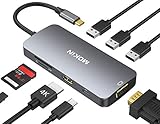
Overview: This 8-in-1 hub distinguishes itself with legacy VGA support alongside modern HDMI, making it ideal for mixed display environments. Targeting MacBook Pro models from 2020-2023, it combines a 4K@30Hz HDMI port, 1080p VGA output, three USB 3.0 ports, SD/TF card readers, and USB-C power pass-through. The versatile design accommodates both new and old projectors and monitors.
What Makes It Stand Out: The VGA port is increasingly rare but invaluable for conference rooms, classrooms, and older displays. The hub intelligently supports simultaneous card reading, allowing photographers to access SD and microSD cards concurrently. Three USB 3.0 ports provide 5Gbps transfers for external drives and peripherals. The power pass-through ensures your MacBook charges while using all ports, eliminating battery anxiety during presentations.
Value for Money: At $26.99, this hub commands a slight premium for VGA capability. Most VGA-equipped hubs cost $30-35, so the price remains competitive. The inclusion of both HDMI and VGA justifies the cost for business travelers and educators who encounter varied display setups. However, users without VGA needs can find better value in cheaper HDMI-only hubs with faster refresh rates.
Strengths and Weaknesses: Strengths: VGA and HDMI dual output; simultaneous SD/TF card access; three USB 3.0 ports; power pass-through charging; good for mixed display environments; solid MacBook compatibility.
Weaknesses: HDMI limited to 4K@30Hz; VGA restricted to 1080p; higher price than HDMI-only alternatives; no Thunderbolt support; single HDD/SSD limitation; not compatible with Apple USB SuperDrive.
Bottom Line: This hub is a specialist tool for users who regularly connect to older projection systems. The VGA port eliminates the need for separate adapters, streamlining your travel kit. While the 4K@30Hz limitation and higher price may deter some, business professionals and educators will appreciate the display flexibility. If you present in varied venues, this hub’s VGA addition makes it worth every penny. Otherwise, opt for a more modern, cheaper alternative.
Understanding Pass-Through Charging Technology
Pass-through charging sounds simple—plug your MacBook’s power adapter into the hub, and the hub passes power to your laptop while simultaneously powering itself and connected devices. However, the underlying technology is far more sophisticated. Modern hubs act as intelligent power distributors, negotiating power contracts between your MacBook Pro’s power adapter, the hub’s own components, and any bus-powered peripherals you’ve connected.
The key lies in the hub’s internal power management IC (integrated circuit), which must efficiently route power without causing voltage drops or excessive heat generation. In 2026, we’re seeing hubs that can dynamically allocate power based on real-time demand, ensuring your MacBook Pro receives its full charging potential even when you’re running power-hungry external SSDs and displays.
Why Your MacBook Pro Needs a USB-C Hub in 2026
Apple’s vision of a wireless future hasn’t quite materialized, and paradoxically, our need for physical connections has intensified. Professional workflows now demand multiple high-resolution displays, 10-gigabit ethernet for studio environments, legacy USB-A devices that refuse to die, and memory cards from cameras that still dominate commercial photography. A single USB-C port on your MacBook Pro simply cannot handle this reality.
Moreover, the 2026 MacBook Pro lineup has pushed Thunderbolt 5 capabilities to their limits, offering up to 120Gbps bandwidth. Without a properly designed hub, you’re leaving massive amounts of potential performance on the table. The right hub becomes a force multiplier, extending your laptop’s native capabilities while maintaining the clean, integrated experience Apple intended.
Power Delivery Standards Explained
The USB Power Delivery (USB-PD) specification has matured significantly, with the 3.2 revision becoming standard in 2026 hubs. This protocol enables bi-directional power flow and sophisticated power negotiation between devices. When shopping for a hub, you’ll encounter terms like “PD 3.2” and “Extended Power Range” (EPR), which supports up to 240W delivery.
Your MacBook Pro’s charging system communicates with the hub to request specific voltage and current combinations. A quality hub maintains this communication transparently, while inferior models can introduce latency or errors in this handshake, leading to intermittent charging or the dreaded “USB accessories disabled” warning. Look for hubs that explicitly state compliance with the latest PD specifications rather than vague “fast charging” claims.
Wattage Requirements for Different MacBook Pro Models
The 14-inch MacBook Pro with M5 Pro chip requires 96W for full-speed charging, while the 16-inch M5 Max demands a substantial 140W. This wattage difference is crucial when selecting a hub. A hub rated for 100W pass-through might keep your 16-inch model running, but it won’t charge the battery during intensive tasks like 8K video rendering or complex 3D simulations.
Consider your typical workload. If you’re a developer running Docker containers and multiple virtual machines, your MacBook is already drawing significant power. Add a hub that siphons 15W for its own operation, and you’re looking at a net charging deficit. The math is simple: your power adapter’s output minus the hub’s overhead must exceed your MacBook’s maximum draw for effective charging.
The 2026 MacBook Pro Ecosystem: What to Expect
Apple’s 2026 MacBook Pro refresh has introduced subtle but important changes to the Thunderbolt controller architecture. The new M5 series chips feature integrated USB4 v2 controllers with enhanced power management capabilities. This means hubs must be specifically designed to recognize and optimize for these controllers.
We’re also seeing increased adoption of USB-C PD 3.2’s Programmable Power Supply (PPS) mode, which allows for more granular voltage stepping. This reduces heat generation and improves charging efficiency. However, backward compatibility remains essential—you’ll want a hub that gracefully handles older USB-C devices without forcing them into incompatible power modes that could cause damage.
Port Selection Strategy: Quality Over Quantity
The “more ports is better” mentality leads many buyers astray. A hub with twelve ports means nothing if they share insufficient bandwidth or power. Focus on the ports you’ll actually use daily. For photographers, a UHS-III SD card slot and Thunderbolt 5 port might be non-negotiable. For musicians, low-latency USB-A ports with isolated power are critical to avoid ground loop hum in audio interfaces.
Consider port placement and spacing. In 2026, we’re seeing innovative vertical hub designs that minimize desk footprint while keeping ports accessible. Pay attention to whether USB-A ports provide 900mA (standard) or 1.5A (high-current) output—this determines whether they can reliably power external hard drives without auxiliary power.
Data Transfer Speeds: Thunderbolt 5 vs USB4
The speed race continues to confuse consumers. Thunderbolt 5 offers a theoretical maximum of 120Gbps, while USB4 v2 tops out at 80Gbps. However, these numbers represent total bandwidth across all ports, not per-port speeds. A hub might advertise “Thunderbolt 5 compatible” while only providing 40Gbps to each downstream port due to internal switching limitations.
Real-world performance depends on the hub’s chipset. Intel’s Barlow Ridge controller, prevalent in premium 2026 hubs, offers true 120Gbps switching with intelligent bandwidth allocation. Cheaper alternatives might use dual-chip designs that create bottlenecks when multiple high-bandwidth devices are active simultaneously. Always verify the hub’s sustained transfer rates under load, not just peak benchmarks.
Display Output Capabilities
Driving multiple displays is where hub quality becomes glaringly obvious. The M5 MacBook Pro supports up to four external displays, but your hub’s implementation determines whether you’ll actually achieve this. Look for hubs that support DisplayPort 2.1 with UHBR20 (Ultra High Bit Rate) signaling, enabling 8K@60Hz or dual 6K@60Hz configurations.
Multi-Stream Transport (MST) support is another critical feature, allowing daisy-chaining of compatible monitors. However, macOS’s handling of MST differs from Windows, requiring hubs with specific firmware optimizations for Apple systems. Some hubs include dedicated DisplayPort controllers that maintain EDID information even when displays are powered off, preventing annoying desktop rearrangements.
Build Quality and Thermal Management
A hub’s thermal design directly impacts longevity and performance. The compact form factors many users prefer create significant engineering challenges—packing multiple high-speed controllers and power conversion circuitry into a small space generates substantial heat. Premium hubs in 2026 utilize aluminum unibody construction that acts as a heat sink, with internal thermal pads transferring heat from critical components to the chassis.
Avoid hubs with plastic enclosures unless they include active cooling. Passive cooling through thermal mass is generally more reliable and silent. Check for venting patterns that promote natural convection. Some manufacturers now publish thermal performance graphs showing operating temperatures under sustained 100W power delivery and full bandwidth utilization—this level of transparency is a hallmark of quality.
Cable Design and Portability Considerations
The integrated cable is your hub’s lifeline and most common failure point. In 2026, we’re seeing a shift toward detachable cables using USB4-certified connectors, allowing replacement if damaged. Cable length matters more than you think—too short, and your hub dangles from your MacBook; too long, and you introduce signal degradation and power loss.
For mobile professionals, consider hubs with integrated cable management and travel pouches. The weight distribution should keep the hub stable on your desk without sliding around when cables are tugged. Some designs include magnetic mounting systems that attach to the side of your MacBook Pro or monitor stand, reducing clutter while keeping ports within easy reach.
Security Features in Modern Hubs
With USB devices increasingly targeted by sophisticated attacks, security-conscious buyers should look for hubs with built-in threat mitigation. Some 2026 models include hardware-based USB data blockers that prevent unauthorized data transfer when charging unknown devices. Others feature physical switches that electrically disconnect data pins, turning USB ports into “charge-only” mode.
Enterprise-grade hubs may include TPM (Trusted Platform Module) integration for secure device authentication and firmware signing. While overkill for most users, this feature ensures the hub’s firmware cannot be maliciously updated. For the privacy-minded, consider hubs with webcam and microphone disconnect indicators—physical LEDs that confirm when these devices are electrically isolated.
macOS Compatibility and Driver Requirements
Apple’s stringent requirements for Thunderbolt certification mean that properly certified hubs should work plug-and-play. However, some advanced features—like custom display configurations or specialized audio routing—may require companion apps from the manufacturer. These utilities should be available through the Mac App Store, ensuring they meet Apple’s security and stability standards.
Beware of hubs requiring kernel extensions (kexts) in macOS Sequoia and later. Apple has deprecated kexts in favor of DriverKit and user-space drivers. Hubs still relying on kexts may cause system instability or refuse to work in future macOS updates. Check the manufacturer’s support page for explicit compatibility statements regarding your specific macOS version.
Price vs. Performance: Finding the Sweet Spot
The price spectrum for quality hubs in 2026 ranges from $80 to over $300. Budget options typically cut corners on power delivery circuitry and use older chipsets that create bottlenecks. Mid-range hubs ($150-$200) often hit the optimal balance, offering full power delivery, adequate port selection, and solid build quality without luxury features you’ll never use.
Premium hubs justify their cost through exceptional thermal management, advanced security features, and future-proofed specifications that will remain relevant through your next MacBook upgrade. Consider the total cost of ownership—a $250 hub that lasts five years is cheaper than replacing a $100 hub every 18 months when it fails or becomes obsolete.
Common Pitfalls and How to Avoid Them
The most frequent mistake is purchasing a hub based on port count alone without verifying power delivery specifications. Another common error is ignoring the power adapter requirement—some hubs demand you use Apple’s original power brick, while others include their own high-wattage adapter that adds bulk and cost.
Watch for ambiguous marketing language. “Supports up to 100W charging” doesn’t mean it delivers 100W to your MacBook—it means it can handle a 100W input, but might only pass through 85W after hub overhead. Always look for explicit “pass-through wattage” specifications. Additionally, verify that HDMI ports support the version you need; HDMI 2.0 versus 2.1 makes the difference between 4K@60Hz and 8K@60Hz.
Setting Up Your Hub for Optimal Performance
Proper setup begins with using the correct USB-C port on your MacBook Pro. In 2026 models, the left-side Thunderbolt ports often have direct traces to the CPU, while right-side ports route through a controller hub. For bandwidth-intensive setups, always connect your primary hub to a left-side port.
Connect your power adapter directly to the hub’s designated PD input port—never daisy-chain through another device. For multi-display configurations, connect displays first, then power, allowing the hub to negotiate optimal bandwidth allocation. Consider using a powered USB-A port for bus-powered hard drives to prevent them from drawing power meant for your MacBook.
Frequently Asked Questions
Will using a USB-C hub with pass-through charging damage my MacBook Pro’s battery?
No, reputable hubs use certified USB-PD controllers that communicate directly with your MacBook’s power management system. Your MacBook controls the charging process, not the hub. However, using uncertified hubs with poor voltage regulation can cause micro-interruptions in charging that generate excess heat, potentially accelerating battery wear over time.
Can I use my MacBook Pro’s original power adapter with any USB-C hub?
Generally yes, but verify the hub’s input specifications match your adapter’s output. The 140W adapter included with 16-inch models requires a hub rated for at least 140W input. Some compact hubs are limited to 100W input and will throttle charging speeds with larger adapters. The hub should also support the same PD revision as your adapter for optimal performance.
Why does my MacBook Pro get warm when using a hub, even when idle?
The hub itself generates heat from its internal power conversion circuitry and controllers. This heat can transfer through the USB-C connector and cable. Additionally, some hubs keep data lines active even when idle, causing the MacBook’s Thunderbolt controller to remain in a higher power state. Premium hubs with intelligent power gating minimize this effect.
How many displays can I realistically connect through a single hub?
With M5 MacBook Pros, you can connect up to two 6K displays via a single Thunderbolt 5 hub, or one 8K display. For three or more displays, you’ll need either multiple hubs connected to separate MacBook ports or a specialized docking station with dual Thunderbolt uplinks. Most single-cable hubs top out at dual 4K@60Hz due to bandwidth constraints.
Is Thunderbolt 5 backward compatible with my older USB-C devices?
Absolutely. Thunderbolt 5 ports work seamlessly with USB4, USB 3.x, and Thunderbolt 3/4 devices. However, the reverse isn’t true—plugging a Thunderbolt 5 hub into a Thunderbolt 4 port will limit bandwidth to 40Gbps. The connector shape and basic USB-C functionality remain identical across generations.
What’s the difference between a USB-C hub and a Thunderbolt dock?
The distinction has blurred, but generally, Thunderbolt docks offer higher bandwidth (120Gbps vs 10-40Gbps), support for more displays, and often include their own power adapters. Hubs are typically bus-powered or use pass-through charging, making them more portable. Docks are stationary workspace solutions; hubs are mobile productivity tools.
Why do some hubs cause Wi-Fi and Bluetooth interference?
Poorly shielded hubs can emit electromagnetic interference in the 2.4GHz band, disrupting wireless signals. This is especially common with cheap hubs that cram components too densely. Premium hubs include RF shielding and proper grounding. If you experience interference, try using a USB extension cable to increase distance from your MacBook, or switch to 5GHz Wi-Fi.
Can I charge other devices from my hub while my MacBook is sleeping?
This depends on the hub’s standby power implementation and your MacBook’s power settings. Some hubs support “sleep-and-charge” functionality, maintaining power to designated ports when the host is asleep. However, this requires the hub to draw power from the wall adapter, not the MacBook. Check for “always-on” USB ports in the specifications.
How long should a quality USB-C hub last?
A well-built hub should serve you through 3-5 years of daily use or two MacBook upgrade cycles. The limiting factors are typically physical wear on the USB-C connector (rated for around 10,000 insertions) and eventual obsolescence as standards evolve. Hubs with detachable cables and firmware update capabilities offer the longest potential lifespan.
Are there any security risks in using public USB-C hubs or charging stations?
Yes. “Juice jacking” attacks targeting USB-C are increasingly sophisticated. Never use unknown hubs for data transfer—only charging. For travel, consider a data-blocking USB-C adapter that physically disconnects data pins. Some 2026 hubs include hardware switches to disable data on specific ports, turning any hub into a secure charging-only station when needed.