Tangled cables snaking behind your desk or server rack aren’t just an eyesore; they’re a productivity killer and a genuine safety hazard waiting to happen. That frustrating moment when you need to move your monitor and a spaghetti junction of power cords, USB cables, and audio lines threatens to pull everything down is all too familiar. In today’s world of multiple monitors, docking stations, and essential peripherals, managing this digital jungle is no longer optional—it’s critical for a professional, efficient, and hazard-free workspace, whether you’re in a bustling corporate office, a high-density data center, or even a serious home setup. The constant wear and tear from accidental tugs can damage expensive equipment, disrupt your workflow, and create unnecessary fire risks that nobody wants to deal with.
This is where the unsung hero of cable organization steps in: the cable management arm. Far more than just a simple clip or tray, a well-designed arm system provides dynamic, organized pathways for your cables, moving with your equipment. Experts consistently highlight their transformative impact, turning chaotic cable sprawl into a clean, professional, and highly functional setup. They protect your investment, streamline daily adjustments, and significantly reduce the time and frustration spent wrestling with cords. Choosing the right arm isn’t about picking the shiniest option; it’s about understanding your specific needs, the environment, and the technical requirements to find a solution that delivers seamless, long-lasting organization. Let’s explore the key factors that separate truly effective cable management arms from the rest.
Top 10 Cable Management Arms
Detailed Product Reviews
1. RackSolutions 1U Cable Management Arm
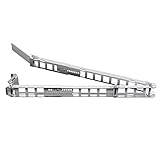
Overview: The RackSolutions 1U Cable Management Arm is engineered for server racks requiring cable organization with sliding equipment. It ensures cables remain tidy during server insertion and removal, preventing snags and maintaining airflow in dense rack environments.
What Makes It Stand Out: Its fully adjustable extension (28.5"–33") accommodates diverse rack depths, while universal compatibility with square/round-hole racks and major OEMs eliminates brand restrictions. The compact design minimizes space obstruction—a critical advantage over bulkier OEM alternatives—and reversible left/right mounting adds installation flexibility.
Value for Money: Priced competitively against OEM arms, it offers superior adaptability without premium costs. The space-saving build justifies investment for racks where every U counts, outperforming cheaper, non-adjustable kits that risk cable strain or poor fit.
Strengths and Weaknesses: Strengths: Exceptional adjustability, OEM-agnostic fit, space-efficient, tool-free side mounting. Weaknesses: Lacks included cable ties (requires separate purchase), slightly steeper learning curve for first-time installers.
Bottom Line: A top-tier, future-proof solution for professional rack setups; ideal for IT managers prioritizing flexibility and clean infrastructure without overspending. Highly recommended for mixed-vendor environments.
2. Generic 0M770R Cable Management Arm Kit for Dell PowerEdge 2U Server - Black Metal Rack Mount Cable Organizer with Nylon Ties

Overview: This budget-friendly kit targets Dell PowerEdge 2U server owners needing straightforward cable organization. It simplifies routing during maintenance by allowing the arm tray to extend from the rack, keeping cables secure yet accessible.
What Makes It Stand Out: Focused Dell compatibility ensures plug-and-play installation for PowerEdge 2U models. The included nylon ties and left/right rail mounting provide immediate usability, while the pull-out tray design streamlines server servicing without disconnecting cables.
Value for Money: An economical choice for Dell-centric racks, significantly undercutting OEM pricing. Though basic, it delivers core functionality reliably—ideal for cost-conscious SMBs or labs where brand-specific fit is non-negotiable.
Strengths and Weaknesses: Strengths: Low cost, Dell-optimized, includes ties, easy tray access. Weaknesses: Limited to Dell 2U (no cross-brand use), metal quality feels thin, minimal adjustability for non-standard racks.
Bottom Line: A no-frills, effective solution for Dell PowerEdge 2U users on a budget; skip if you need versatility beyond Dell or premium durability.
3. New for PowerEdge R320 R430 R630 R620 1U Cable Management Arm Kit 02J1CF 2J1CF 0C852H 0U030M 0HH932 0TY0HX 0HCT3Y

Overview: This replacement kit serves specific Dell PowerEdge 1U servers (R320/R430/R630/R620) with exact part-number matching. It’s designed for users needing OEM-equivalent arms without vendor markup.
What Makes It Stand Out: Direct compatibility with listed Dell models via precise part numbers (e.g., 02J1CF, 0C852H) ensures seamless integration. The listing emphasizes critical cross-referencing—users must verify part numbers against their hardware, avoiding model-number confusion.
Value for Money: Offers substantial savings over Dell’s official arms while maintaining functionality. However, value hinges entirely on correct part matching; incorrect purchases due to skipped verification negate cost benefits.
Strengths and Weaknesses: Strengths: Cost-effective Dell replacement, new condition, model-specific accuracy. Weaknesses: Zero universal use, high risk of buyer error without meticulous part-number checks, no added features beyond basic cable routing.
Bottom Line: Only recommended for Dell admins who rigorously confirm part numbers; otherwise, opt for more forgiving universal arms. Proceed with extreme caution.
4. HPE 733664-B21 Standard Cable Management Arm

Overview: HPE’s 733664-B21 is a no-nonsense cable management arm for HPE server racks. As a standard accessory, it focuses on fundamental cable routing without advanced features, targeting HPE ecosystem deployments.
What Makes It Stand Out: Brand authenticity guarantees perfect fitment with HPE racks and servers, eliminating compatibility guesswork. Its standardized HPE design ensures consistency across enterprise environments where uniformity matters more than customization.
Value for Money: Justifiable for HPE-only data centers prioritizing seamless integration, though it lacks adjustability or space-saving perks of third-party arms. Overpriced for mixed-rack setups given its bare-bones functionality and minimal specs disclosure.
Strengths and Weaknesses: Strengths: Guaranteed HPE compatibility, reliable OEM build, straightforward installation. Weaknesses: Non-adjustable, no universal fit, sparse documentation (e.g., depth range unlisted), poor value outside HPE ecosystems.
Bottom Line: A safe but uninspired choice for pure HPE racks; avoid if you seek flexibility or cost efficiency. Third-party alternatives often deliver more for less.
5. JACEPFY Drawer Outlet with USB C PD20W Fast Charger Station, Recessed Outlet, Power Cable and Cord Management Arm for Cabinets (Black)
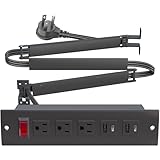
Overview: JACEPFY’s solution merges a recessed power outlet with USB-C charging and integrated cord management for drawers/cabinets—not a traditional rack cable arm. It targets desk or cabinet installations needing hidden power access.
What Makes It Stand Out: The 20W USB-C PD fast charger (with smart device detection) and dual USB ports are standout features. The rust-resistant galvanized cord arm protects cables during drawer movement, while UL certification ensures safety—a rarity in budget drawer outlets.
Value for Money: Excellent for its niche: combines charging, safety, and cable protection under $30. Outperforms generic drawer outlets with robust build and versatile output (5V–12V), though rack-focused users should note it’s not for server racks.
Strengths and Weaknesses: Strengths: Fast charging, UL safety, durable cord arm, easy 2" clearance install. Weaknesses: Only fits shallow-depth drawers, USB-C maxes at 20W (slower than premium chargers), not for server racks.
Bottom Line: A superb cabinet/desk power solution for homes or offices; skip if you need server-rack cable management. Ideal for clutter-free charging in kitchens or workstations.
6. JACEPFY Drawer Outlet Kit with Typec PD20W Fast Charger Station, 3 Outlet and Power Cable Arm for Kitchen Bathroom Cabinets (Black)

Overview: The JACEPFY Drawer Outlet Kit integrates a functional charging station directly into cabinetry drawers. Designed for kitchens, bathrooms, or desks, it combines two standard AC outlets with a 20W USB-C PD fast charger and a dedicated USB-A port, all concealed within a drawer when closed. Installation requires minimal 2-inch rear clearance.
What Makes It Stand Out: Its standout feature is the seamless integration of UL-listed power delivery (including intelligent device triage up to 20W) with a robust galvanized steel cable management arm. This rust-resistant arm prevents cord fraying, maintains drawer functionality, and ensures cables stay neatly retracted. The overload protection switch adds critical safety for concealed installations.
Value for Money: Priced competitively against standalone charging docks and basic drawer outlets, it offers exceptional value. Combining three powered points (2 AC + dual USB), professional-grade safety certifications, and durable wire management in one kit eliminates the need for multiple purchases and messy aftermarket solutions, justifying its cost for home or office organization.
Strengths and Weaknesses: Strengths: UL safety certification, PD 20W fast charging flexibility, rust-proof cable arm, space-efficient design, versatile room compatibility. Weaknesses: Limited to 2 inches of rear clearance (may not suit all cabinets), only one USB-C port, and black finish may not match all decors.
Bottom Line: An innovative, safety-focused solution for clutter-free charging in drawers. Ideal for modern kitchens or bathrooms seeking streamlined power access, it delivers robust performance and organization at a fair price, earning a strong recommendation for home organizers.
7. Dell Cable Management Arm 1U - Kit

Overview: This Dell Cable Management Arm is a specialized 1U (1.75-inch) height component designed exclusively for integration into standard server racks. It functions as a structured pathway to organize and route data and power cables within dense IT environments, attaching directly to rack-mounted hardware.
What Makes It Stand Out: Its key differentiator is seamless compatibility with Dell’s ecosystem of 1U rack-mounted servers and networking gear. Engineered for precision fitment, it ensures cables remain orderly during server sliding operations, minimizing strain and accidental disconnections—a critical factor in maintaining uptime in professional data centers.
Value for Money: While seemingly basic, its value lies in reliability and ecosystem integration. Purchased as a genuine Dell kit, it guarantees perfect alignment with Dell racks, avoiding compatibility headaches. For enterprise IT teams, the cost is justified by reduced cable management time and enhanced rack professionalism, though third-party alternatives may be cheaper for non-Dell setups.
Strengths and Weaknesses: Strengths: Exact 1U form factor for Dell racks, durable construction, simplifies cable routing during hardware access, reduces cable stress. Weaknesses: Zero versatility outside Dell 1U racks, lacks features like strain relief or integrated guides, minimal value for non-enterprise users.
Bottom Line: A niche, no-frills tool essential for Dell server rack maintenance. Recommended strictly for IT professionals managing Dell infrastructure where precise cable control impacts operational efficiency; not suitable for home or non-Dell environments.
8. Dell PowerEdge R520 R720 R720xd R820 Cable Management Arm YF1JW

Overview: The Dell YF1JW Cable Management Arm is a purpose-built accessory for specific PowerEdge server models (R520, R720, R720xd, R820). It mounts within the server chassis to manage internal cabling, ensuring clean routing and accessibility during maintenance or expansion tasks in data center deployments.
What Makes It Stand Out: Engineered for exact compatibility with listed PowerEdge generations, it ensures optimal cable routing without obstructing airflow or component access. As an OEM part, it integrates flawlessly with Dell’s chassis design, providing strain relief and organization critical for high-density server environments where cable chaos risks downtime.
Value for Money: Priced as a genuine Dell spare part, it offers predictable reliability for enterprise maintenance budgets. While costlier than generic arms, its precise fit prevents installation issues or damage to servers—a worthwhile investment for organizations prioritizing minimal downtime and adherence to Dell’s service specifications during hardware servicing.
Strengths and Weaknesses: Strengths: Model-specific precision fit, maintains server airflow integrity, simplifies technician access, Dell warranty compatibility. Weaknesses: Zero cross-compatibility (useless for other servers/racks), no advanced features, expensive compared to universal alternatives, requires technical know-how to install.
Bottom Line: A mission-critical component for Dell PowerEdge R520/R720/R820 maintenance. Highly recommended for data center technicians managing these exact server models; irrelevant and impractical for any other use case.
9. JACEPFY Drawer Outlet with USB C PD20W Fast Charger Station, Recessed Outlet, Power Cable and Cord Management Arm for Cabinets (White)

Overview: Functionally identical to Product #6 but in white, this JACEPFY kit installs a recessed power station inside drawers. It provides two AC outlets, a 20W USB-C PD fast charger (with 9V/2.22A support), and a USB-A port, targeting kitchens, bathrooms, or desks needing concealed yet accessible power.
What Makes It Stand Out: The white finish offers a cleaner aesthetic for light-colored cabinetry, while retaining all core innovations: UL-certified safety, intelligent device triage for optimal charging, and a galvanized steel cable arm preventing rust and cord damage. The 2-inch depth requirement ensures broad cabinet compatibility without complex modifications.
Value for Money: Mirroring Product #6’s value proposition, it excels by consolidating multiple charging solutions into one tidy, safe unit. The white variant specifically caters to modern, minimalist interiors where black might clash. Compared to buying separate outlets and cable organizers, it’s a cost-effective upgrade for a polished look.
Strengths and Weaknesses: Strengths: Discreet white design for seamless integration, PD 20W fast charging, UL safety certification, durable rust-proof arm, easy installation. Weaknesses: Same limitations as black model—only one USB-C port, strict 2-inch clearance need, and potential color mismatch in darker cabinets.
Bottom Line: The ideal choice for light-finished spaces seeking clutter-free charging. If white suits your cabinetry, it’s a top-tier recommendation; otherwise, the black version (Product #6) serves the same functional purpose.
10. Wire Sleeves for Cables -Mic Boom Arm Cables Sleeve, Tidy up the Wire Harness, Versatile, Flexible and Easy to Install by YOUSHARES (2PCS)

Overview: YOUSHARES’ cable sleeves are flexible, retractable tubes designed to bundle and conceal cables from mic boom arms, desks, or entertainment systems. This 2-piece kit uses durable plastic to transform tangled wires into a single, neat strand for cleaner setups in studios, offices, or homes.
What Makes It Stand Out: Its automatic retractable feature is unique—simply insert cables, and the sleeve contracts snugly without ties or clips. Made from flexible yet durable material, it accommodates varying cable thicknesses and bends effortlessly around stands or furniture, maintaining a professional look during movement.
Value for Money: Extremely affordable for two sleeves, it outperforms zip ties or velcro in aesthetics and reusability. While not for heavy-duty industrial use, it’s perfect for personal workspaces. The ease of installation (no tools) and versatility across mics, PCs, or TVs make it a budget-friendly organization essential.
Strengths and Weaknesses: Strengths: Retractable design for instant tidying, highly flexible installation, durable plastic resists kinking, clean professional appearance, multi-scene usability (2 included). Weaknesses: Limited to thin/light cables (not for thick power bundles), retractable grip may loosen over time with heavy use.
Bottom Line: A superb, no-fuss solution for taming desktop or mic arm cables. For under $10, it delivers visible clutter reduction and ease of use—highly recommended for streamers, office workers, or anyone seeking instant cable sanity.
Understanding Cable Management Arm Fundamentals
What Exactly Is a Cable Management Arm?
A cable management arm is a mechanical device designed to guide and organize cables between a fixed point (like a desk grommet hole or server rack mounting point) and movable equipment (such as a monitor, CPU, or server tray). Unlike static solutions, these arms pivot, extend, and retract, ensuring cables move smoothly without kinking, tangling, or experiencing excessive strain during adjustments. They act as a dedicated pathway, keeping everything contained and protected.
Core Benefits Beyond Simple Tidiness
The advantages extend far beyond aesthetics. Proper cable management arms significantly reduce physical stress on cable connectors and internal wiring, dramatically extending the lifespan of your valuable monitors, laptops, and peripherals. They eliminate tripping hazards in walkways and prevent accidental disconnections when moving equipment. Crucially, in environments like data centers, they ensure critical airflow isn’t obstructed by loose cables and provide unobstructed access for maintenance, which is vital for uptime and safety compliance.
Critical Factors for Selecting the Right Arm
Assessing Your Equipment Weight and Movement
The primary consideration is the weight and range of motion of the equipment you need to connect. Monitor arms supporting heavy dual 4K displays require significantly higher load capacity and sturdier construction than arms managing cables for a lightweight laptop dock. Consider not just the static weight, but the dynamic forces involved when tilting, swiveling, or extending the equipment. Underestimating this leads to sagging, instability, and potential failure.
Determining Required Cable Capacity and Size
Evaluate the number and thickness of cables that need routing. A basic setup with a single power cable and video cable has vastly different needs than a workstation with multiple power cords, HDMI, DisplayPort, USB hubs, Ethernet, and audio cables. Measure the combined diameter of your cable bundle. Arms have specific channel capacities; exceeding them causes friction, hinders smooth movement, and risks damaging cables over time. Remember to account for future expansion.
Compatibility with Mounting Points and Equipment
Not all arms fit all setups. Verify compatibility with your existing mounting hardware. Does your desk have a standard grommet hole? Are you mounting to a VESA plate on the back of a monitor? Is this for a server rack with specific rail mounting points? Some arms require specific adapter kits. Ensure the arm’s connection points (clamps, grommet mounts, rack ears) match your infrastructure precisely to avoid costly returns or makeshift solutions.
Key Design and Performance Features
Material Quality and Durability
The construction material directly impacts longevity and performance. High-grade steel offers superior strength and resistance to bending, especially for heavier loads, though it can be heavier overall. Reinforced polymers or composites provide a good balance of strength, weight, and corrosion resistance, often at a lower cost. Avoid flimsy plastics that crack under stress or UV exposure. Look for smooth internal channels that won’t abrade cable jackets.
Range of Motion and Flexibility
Consider the necessary movement for your workflow. Do you need the arm to extend far forward for presentations? Require significant height adjustment for sit-stand desks? Need 360-degree rotation for collaborative work? Evaluate the arm’s pivot points: ball joints offer smooth multidirectional movement but may require tension adjustment, while hinge-based systems provide precise, stable positioning in specific planes. Ensure the range covers all your typical usage scenarios without binding.
Cable Channel Design and Accessibility
How cables are loaded into the arm is crucial. Some require threading cables through the entire length during installation (tedious, especially with existing setups), while others feature snap-open channels or removable covers for easy loading and future cable additions/removals. Look for wide, smooth channels with rounded edges to prevent pinching and allow cables to glide effortlessly during movement. Internal dividers can help prevent signal interference between power and data cables.
Installation and Usability Considerations
Ease of Installation Process
A complex, tool-heavy installation is a major drawback. Look for arms designed for user-friendliness: intuitive clamping mechanisms, clear instructions, and minimal required tools (ideally just a standard hex key often included). Consider whether installation requires disassembling your current setup significantly. Pre-assembled sections or modular designs can save considerable time and frustration, especially for non-technical users.
Adjustability and Fine-Tuning Mechanisms
Once installed, can you easily fine-tune the position? Good arms feature adjustable tension controls at pivot points to counterbalance equipment weight perfectly, preventing drift or sag. These adjustments should be accessible and stable – knobs that slip or require excessive force are problematic. The ability to precisely set the resistance ensures smooth, controlled movement exactly where you need it.
Maintenance Requirements Over Time
Even robust arms need occasional attention. Consider how easily you can access pivot points for lubrication if needed (though many modern arms are sealed and maintenance-free). Check if tension controls remain stable or loosen over months of use. Arms with sealed bearings generally require less maintenance than those with exposed pivot points susceptible to dust buildup. Ease of cable replacement within the channel is also part of long-term usability.
Environmental and Application-Specific Needs
Suitability for Different Workspaces
The ideal arm varies drastically by environment. A home office might prioritize quiet operation and sleek aesthetics. An industrial setting demands extreme durability, resistance to oils or chemicals, and potentially higher load capacities. Data centers prioritize compatibility with specific rack standards (like EIA-310), dense cable management, and ensuring unrestricted airflow; arms here often have stricter fire safety ratings (like UL 94 V-0).
Handling Specialized Cables
Standard arms handle typical power and data cables well, but what if you use thicker industrial cables, coiled cords (like telephone handsets), or delicate fiber optic lines? Verify the arm’s channel size and smoothness can accommodate these without kinking or excessive bending radius. Fiber optics, in particular, require very gentle curves; specialized arms with larger bend radius guides might be necessary to prevent signal loss.
Noise Levels During Operation
While often overlooked, the sound of an arm moving can be distracting in quiet environments like recording studios, libraries, or executive offices. Higher-quality arms utilize precision bearings and dampening materials to operate almost silently. Cheaper models with loose tolerances or plastic-on-plastic contact can produce noticeable squeaks, creaks, or grinding noises during movement, which becomes irritating over time.
Long-Term Value and Investment
Evaluating Build Quality vs. Price Point
The cheapest option often leads to the fastest replacement. Scrutinize the build: thick metal components, smooth finishes, robust connectors, and quality pivot mechanisms. Does it feel substantial and well-constructed, or flimsy and hollow? While budget is a factor, investing in a well-made arm from a reputable manufacturer typically pays off through years of reliable service, avoiding the cost and hassle of frequent replacements.
Warranty Coverage and Manufacturer Support
A strong warranty is a vote of confidence from the manufacturer. Look for comprehensive coverage (ideally 5+ years) specifically covering structural integrity and mechanical function. Read the fine print – does it cover normal wear and tear? How responsive is the manufacturer’s support for warranty claims? Good support indicates they stand behind their product’s quality and are invested in customer satisfaction long after the sale.
Future-Proofing Your Setup
Technology evolves, and your cable needs might too. Consider an arm with slightly higher capacity than your current setup requires to accommodate future monitors, more peripherals, or thicker cables. Modular designs that allow adding extension sections later offer flexibility. Choosing a standard mounting interface (like common VESA patterns) also makes it easier to swap or upgrade components down the line without replacing the entire system.
Frequently Asked Questions
Frequently Asked Questions
How do I know if I need a cable management arm? If you frequently adjust your monitor position, have multiple cables causing tangles behind your desk, experience accidental disconnections, or want a cleaner, more professional setup, an arm is highly beneficial. They are essential for sit-stand desks and critical in server environments.
Can cable management arms damage my cables? Poorly designed arms with sharp edges, tight bends, or excessive friction can damage cables over time. High-quality arms feature smooth, wide channels with gentle curves specifically designed to protect cable integrity during movement.
Are cable management arms difficult to install? Installation complexity varies. Many modern arms designed for desks are user-friendly with clear instructions and minimal tools (often just a hex key). Server rack arms can be more complex but follow standardized procedures. Always check reviews regarding installation ease before purchasing.
Do I need a different arm for heavy monitors? Absolutely. Always match the arm’s specified weight capacity to the total weight of your monitor(s) and any attached accessories (like webcams). Exceeding capacity causes instability, sagging, and potential failure. Heavier setups require arms with reinforced construction and higher load ratings.
Can I add or change cables after the arm is installed? This depends on the design. Arms with snap-open channels or removable covers allow easy cable access. Those requiring full threading during initial setup make adding/changing cables much more difficult. Prioritize arms with user-serviceable channels for flexibility.
Will a cable management arm work with my specific desk? Check compatibility with your desk’s mounting options. Most use standard grommet holes (typically 2-3 inches in diameter) or clamp to the desk edge. Verify the arm’s mounting mechanism matches your desk’s structure and thickness before buying.
How do I prevent the arm from wobbling or vibrating? Wobbling usually indicates under-specification (arm too light for the load) or loose mounting. Ensure the arm’s capacity exceeds your monitor weight, the mounting is extremely secure (tightened properly to a solid surface), and all tension adjustment points are correctly set to counterbalance the weight.
Are cable management arms only for computer monitors? No, they are versatile. They are widely used in data centers for server cabling, in medical equipment, industrial control panels, retail kiosks, and even for managing cables on moving stages or broadcast equipment. The core principle of dynamic cable routing applies universally.
Can cable management arms handle hot cables (like high-wattage power supplies)? Quality arms are designed with heat-resistant materials. However, ensure cables themselves have adequate spacing within the channel to allow heat dissipation, especially for high-power devices. Avoid tightly bundling multiple hot power cables together inside the arm.
What’s the difference between a cable management arm and a cable tray? A cable tray is typically a static, open channel for organizing bundles of cables along a fixed path (like under a desk or in a rack). A cable management arm is a dynamic, articulated device that moves with equipment, guiding cables through their full range of motion without strain or tangling.