Imagine staring at your desk, surrounded by cables, peripherals, and that bulky keyboard eating up precious real estate. For minimalist enthusiasts, every millimeter counts—clutter isn’t just annoying; it actively undermines focus and calm. Tenkeyless (TKL) keyboards have quietly become the unsung heroes of clean, intentional workspaces, stripping away the numeric pad without sacrificing core functionality. As we move into 2026, this design philosophy isn’t just popular—it’s evolving into a sophisticated ecosystem where form and function converge seamlessly. If you’ve ever felt your setup was almost perfect but weighed down by unnecessary bulk, you’re not alone. The shift toward intentional minimalism is accelerating, and TKL keyboards sit squarely at its heart.
You might wonder: why ditch the numpad? It’s not just about saving space (though reclaiming 5-7 inches instantly transforms desk ergonomics). It’s about intentionality—every component earns its place. A well-chosen TKL keyboard pulls your mouse closer, reduces awkward arm stretching, and creates visual breathing room that declutters your mind as much as your surface. In 2026, advancements in materials, switch technology, and wireless integration mean sacrificing the numpad no longer means compromising on responsiveness, durability, or even customization. Whether you’re a writer chasing flow state, a developer debugging code, or a creative needing distraction-free focus, understanding what makes a TKL keyboard exceptional in today’s market is your first step toward a truly liberated workspace.
Top 10 Tenkeyless Keyboards
Detailed Product Reviews
1. SteelSeries Apex 3 TKL RGB Gaming Keyboard – Tenkeyless Compact Form Factor - 8-Zone RGB Illumination – IP32 Water & Dust Resistant – Whisper Quiet Gaming Switch – Gaming Grade Anti-Ghosting,Black

Overview:
The SteelSeries Apex 3 TKL is a budget-friendly tenkeyless membrane keyboard targeting gamers seeking durability and quiet operation without mechanical switch noise. Its compact design prioritizes desk space efficiency and esports ergonomics.
What Makes It Stand Out:
IP32 water/dust resistance offers rare protection for its price tier, safeguarding against spills and debris. The whisper-quiet membrane switches (rated for 20M presses) enable silent gaming, while 8-zone RGB lighting and dedicated multimedia controls enhance usability. Anti-ghosting ensures reliable input during intense sessions.
Value for Money:
At its sub-$50 price, it outperforms similarly priced membrane keyboards with esports-focused durability and customization. Though lacking mechanical tactility, it’s ideal for noise-sensitive environments where premium mechanicals are overkill or too loud.
Strengths and Weaknesses:
Strengths: Excellent spill resistance; near-silent operation; robust build quality; intuitive volume roller.
Weaknesses: Membrane switches lack tactile feedback preferred by mechanical enthusiasts; RGB is limited to zones (not per-key).
Bottom Line:
A pragmatic choice for budget-conscious gamers needing reliability and quiet performance, though mechanical switch devotees should look elsewhere.
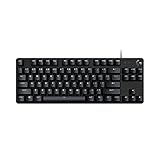
2. Logitech G413 TKL SE Mechanical Gaming Keyboard - Compact Backlit Keyboard with Tactile Mechanical Switches, Anti-Ghosting, Compatible with Windows, macOS - Black Aluminum
Overview:
Logitech’s G413 TKL SE merges mechanical performance with sleek aluminum construction, targeting competitive gamers who value premium build quality and Windows/macOS compatibility in a compact form.
What Makes It Stand Out:
The brushed aluminum top case provides exceptional rigidity and a premium aesthetic, while PBT keycaps resist shine and wear. Tactile mechanical switches deliver crisp feedback, and white LED backlighting ensures visibility without RGB complexity. Six-key rollover prevents input errors during fast gameplay.
Value for Money:
Priced mid-range (~$70), it justifies cost through durable materials and macOS support—a rarity among gaming keyboards. It’s more affordable than high-end RGB models but lacks per-key lighting, making it ideal for purists prioritizing build over flash.
Strengths and Weaknesses:
Strengths: Sturdy aluminum frame; long-lasting PBT keycaps; excellent macOS compatibility; responsive tactile switches.
Weaknesses: Monochrome backlight limits customization; no dedicated media playback controls.
Bottom Line:
Highly recommended for mechanical keyboard enthusiasts seeking a no-nonsense, durable TKL with cross-platform versatility and premium materials.
3. Logitech G PRO X TKL Rapid Tenkeyless Wired Gaming Keyboard with Magnetic Analog Switches, Rapid Trigger Mode, Adjustable Actuation, and Customizable RGB Lighting - Black

Overview:
Engineered for esports professionals, the G PRO X TKL Rapid leverages Hall-effect magnetic switches to deliver unparalleled speed and customization, redefining responsiveness in competitive FPS and MOBA gaming.
What Makes It Stand Out:
Magnetic analog switches enable Rapid Trigger Mode (instant key reactivation) and adjustable actuation points (1.0mm–3.8mm), allowing millisecond-level optimizations. LIGHTSYNC RGB syncs with on-screen action, while KEYCONTROL in G HUB supports complex macros and multi-layer key programming.
Value for Money:
At ~$160, it’s a premium investment, but the tournament-grade tech justifies the cost for serious competitors. Features like analog actuation outclass conventional mechanicals, offering tangible performance gains unmatched below $200.
Strengths and Weaknesses:
Strengths: Revolutionary magnetic switch customization; Rapid Trigger for faster firing; extensive macro support; vibrant LIGHTSYNC.
Weaknesses: High price; steep learning curve for customization; requires G HUB for full features.
Bottom Line:
Essential for competitive gamers demanding every possible edge, though casual players may find it over-engineered for their needs.
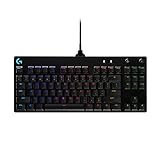
4. Logitech G PRO Mechanical Gaming Keyboard, Ultra Portable Tenkeyless Design, Detachable Micro USB Cable, 16.8 Million Color LIGHTSYNC RGB Backlit Keys
Overview:
Designed in collaboration with esports pros, this ultra-portable TKL focuses on tournament readiness with a lightweight build, detachable cable, and competition-optimized switches for travel-friendly performance.
What Makes It Stand Out:
GX Blue Click switches provide audible, tactile feedback for precise actuation, while LIGHTSYNC RGB stores static lighting profiles to onboard memory—critical for tournament systems blocking third-party software. The detachable Micro USB cable and compact frame streamline transport.
Value for Money:
Priced around $130, it excels as a travel-ready esports tool. Though pricier than basic TKLs, its pro-built durability, cable management, and software-free lighting make it indispensable for tournament attendees.
Strengths and Weaknesses:
Strengths: Tournament-proven portability; reliable GX Blue switches; onboard lighting memory; sturdy travel-friendly design.
Weaknesses: Loud clicky switches may disturb others; Micro USB (not USB-C) feels dated; no wireless option.
Bottom Line:
The definitive choice for competitive players needing a reliable, portable keyboard that performs flawlessly in high-stakes environments.
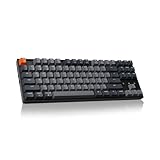
5. Keychron K8 Tenkeyless Wireless Mechanical Keyboard for Mac, White Backlight, Bluetooth, Multitasking, Type-C Wired Gaming Keyboard for Windows with Brown Switch
Overview:
The Keychron K8 bridges gaming and productivity with versatile wireless connectivity, Mac/Windows optimization, and tactile brown switches, catering to hybrid users who value portability and cross-device flexibility.
What Makes It Stand Out:
Triple-device Bluetooth 5.1 switching and USB-C wired mode enable seamless transitions between systems. Its 200-hour battery (backlight off), ergonomic tilt, and included Mac/Windows keycaps prioritize comfort for all-day use. Brown switches offer quiet tactility ideal for offices.
Value for Money:
At ~$75, it delivers exceptional versatility for budget-conscious hybrid users. The robust battery, Mac compatibility, and wireless freedom outshine similarly priced gaming-focused TKLs for non-competitive scenarios.
Strengths and Weaknesses:
Strengths: Outstanding battery life; effortless multi-device switching; Mac-optimized layout; comfortable ergonomics.
Weaknesses: White backlight lacks RGB flair; wireless mode limits anti-ghosting (6KRO); not tournament-grade for hardcore gaming.
Bottom Line:
A top pick for remote workers, students, and casual gamers needing a durable, multi-system keyboard—just skip it for intense competitive play.
6. HyperX Alloy Origins Core - Tenkeyless Mechanical Gaming Keyboard, Software Controlled Light & Macro Customization, Compact Form Factor, RGB LED Backlit, Tactile HyperX Aqua Switch,Black

Overview: The HyperX Alloy Origins Core is a premium tenkeyless mechanical gaming keyboard built for competitive play. Featuring custom HyperX Aqua switches, an aircraft-grade aluminum body, and vibrant RGB lighting, it targets gamers seeking reliability and a streamlined desktop setup without the numpad.
What Makes It Stand Out: Its standout features include the tactile, responsive Aqua switches (rated for 80 million keystrokes), ultra-durable aluminum chassis, and detachable USB-C cable for portability. The exposed LED design delivers exceptionally bright RGB effects, while HyperX NGENUITY software enables deep customization of macros, lighting, and game mode.
Value for Money: Priced mid-to-high for TKL keyboards, it justifies cost through superior build quality, long-lasting switches, and robust software. It outperforms cheaper plastic alternatives but faces competition from similarly priced Cherry MX-based models; ideal for gamers prioritizing durability and customization.
Strengths and Weaknesses:
Strengths: Exceptional aluminum build; bright, customizable RGB; reliable tactile switches; detachable cable; compact for mouse movement.
Weaknesses: Aqua switches may be too loud for some; no included wrist rest; software can be complex for beginners.
Bottom Line: A top-tier TKL keyboard for serious gamers who value premium construction, responsive tactile feedback, and extensive RGB customization. Highly recommended despite the steep price, especially for competitive play.
7. Razer Ornata V3 TKL Gaming Keyboard: Low Profile Keys - Mecha Membrane Switches - UV Coated Keycaps - Backlit Media Keys - 8 Zone RGB Lighting - Spill Resistant - Magnetic Wrist Wrest Snap Tap

Overview: The Razer Ornata V3 TKL merges mechanical-like feedback with membrane comfort in a compact tenkeyless design. Its mecha-membrane switches, low-profile keys, and magnetic wrist rest cater to gamers and typists seeking ergonomics and versatility for long sessions.
What Makes It Stand Out: Unique mecha-membrane switches deliver a snappy, clicky feel without full mechanical bulk. UV-coated keycaps resist wear, while dedicated backlit media keys and 8-zone RGB lighting enhance convenience. The spill-resistant design (up to 300ml) and seamless magnetic wrist rest add practical durability.
Value for Money: Positioned as a mid-range TKL, it offers excellent value by bridging mechanical responsiveness and membrane affordability. The included wrist rest and spill protection justify the price over basic membrane keyboards, though pure mechanical enthusiasts may prefer switch-specific alternatives.
Strengths and Weaknesses:
Strengths: Comfortable low-profile keys; durable UV-coated legends; useful media controls; spill-resistant; included magnetic wrist rest.
Weaknesses: RGB is limited to 8 zones (less vibrant than per-key); mecha-membrane lacks true mechanical precision; wrist rest snaps can feel flimsy.
Bottom Line: An ideal choice for hybrid users wanting mechanical-like feedback with membrane comfort and practical extras. Highly recommended for office-to-gaming transitions, though not for hardcore mechanical purists.
8. Cherry MX 8.2 TKL Wireless Gaming Keyboard. Compact TenKeyLess. Mechanical 87 Keys RGB Backlit Keys ABS Keycaps. MX Brown Switch. Aluminum Carrying Case Included.

Overview: The Cherry MX 8.2 TKL Wireless is a German-engineered, premium wireless mechanical keyboard featuring MX Brown switches, a solid aluminum housing, and sub-1ms latency. Designed for gamers demanding cable-free precision, it includes a metal carrying case for portability.
What Makes It Stand Out: True wireless gaming with near-wired responsiveness (via Bluetooth low latency) sets it apart. The authentic Cherry MX Brown tactile switches offer reliable German craftsmanship, while the elegant aluminum build and included metal case emphasize portability and durability for on-the-go gamers.
Value for Money: Premium-priced but justified by Cherry’s engineering pedigree, wireless reliability, and included case. Competes with wired TKLs at similar costs; worth the investment for wireless enthusiasts, though budget buyers may find wired alternatives more cost-effective.
Strengths and Weaknesses:
Strengths: Near-zero latency wireless; durable aluminum body; authentic Cherry MX Brown tactility; travel-friendly with case; vibrant RGB.
Weaknesses: ABS keycaps prone to shine over time; battery life lags behind some rivals; case adds bulk.
Bottom Line: A superb wireless mechanical TKL for gamers prioritizing portability and German-engineered reliability. Recommended for travelers or clean-desk setups, despite minor keycap durability concerns.
9. G.SKILL USB KM360 Professional Tenkeyless Mechanical Keyboard, Cherry MX Red, ABS Dual Injection Keycap, (White)
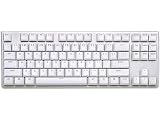
Overview: The G.SKILL KM360 is a no-frills, professional-grade TKL keyboard with Cherry MX Red linear switches and a minimalist white design. Focused on durability and portability, it targets gamers and typists seeking a reliable, travel-friendly mechanical board.
What Makes It Stand Out: Genuine Cherry MX Reds (50M+ keystroke rating) ensure smooth, silent linear action ideal for gaming and typing. The detachable USB-C cable, aluminum top plate, and ABS dual-injection keycaps (preventing wear) highlight its rugged, portable design. White LED backlighting adds subtle elegance.
Value for Money: Exceptional value in the mid-range segment. It undercuts many Cherry MX competitors while delivering identical switch quality and an aluminum build. Perfect for budget-conscious users who refuse to compromise on switch authenticity or portability.
Strengths and Weaknesses:
Strengths: Authentic Cherry MX Red switches; durable aluminum top plate; wear-proof keycaps; highly portable; quiet operation.
Weaknesses: Basic white-only backlighting (no RGB); minimal software customization; no wrist rest included.
Bottom Line: A stellar budget TKL for Cherry MX purists who prioritize switch quality and portability over flashy features. Highly recommended for gamers and professionals seeking a reliable, understated workhorse.
10. Corsair K55 CORE TKL RGB Gaming Keyboard – Tenkeyless, 8-Zone RGB, Quiet Membrane Keys, Spill Resistant, Media Keys, 1000Hz Polling – NA Layout – Black

Overview: The Corsair K55 CORE TKL is an affordable membrane-based gaming keyboard with a compact layout, targeted at casual gamers needing spill resistance and media controls without mechanical pricing.
What Makes It Stand Out: Its 300ml spill resistance and quiet membrane keys make it ideal for messy environments or shared workspaces. Eight-zone RGB lighting, dedicated media keys, and 1000Hz polling provide gaming flair, while the TKL design saves desk space for mouse movement.
Value for Money: Excellent value under $50. It outperforms basic membrane keyboards with gaming-focused features like responsive polling and customizable RGB, though mechanical switch enthusiasts will find it lacking depth. Perfect for budget builds or secondary setups.
Strengths and Weaknesses:
Strengths: Highly spill-resistant; quiet membrane keys; intuitive media controls; bright RGB zones; compact and affordable.
Weaknesses: Membrane keys lack mechanical feedback; RGB less customizable than per-key; plasticky build quality.
Bottom Line: A practical, budget-friendly TKL for casual gamers or office use where durability and media controls matter more than switch feel. Recommended for cost-conscious users needing a no-fuss, resilient keyboard.
Why Tenkeyless Fits Modern Minimalist Philosophy
The Space-Saving Imperative
In compact home offices and multifunctional workspaces, every inch matters. TKL keyboards eliminate the numeric pad, shrinking the footprint by 20-25% compared to full-size models. This isn’t just aesthetic—it repositions your mouse closer to your natural resting position, reducing shoulder strain during extended use. For hot-desking or secondary setups, the reduced size makes transport effortless without sacrificing typing accuracy. Consider how this shift aligns with broader minimalist trends: less physical distraction equals sharper mental clarity.
Ergonomic Benefits Beyond Aesthetics
Removing the numpad encourages a more neutral wrist posture by centering your hands over the keyboard’s home row. Paired with an adjustable desk or ergonomic stand, this configuration minimizes ulnar deviation (that awkward wrist bend toward the pinky side). Studies increasingly link sustained neutral postures to reduced repetitive strain injuries—making TKL layouts a proactive health investment, not just a style choice.
Psychological Impact of Visual Simplicity
A clean desk isn’t just Instagram-worthy; it’s scientifically linked to improved concentration. The absence of the numpad creates visual symmetry, reducing cognitive load. When your peripheral vision isn’t competing with extra keys, your brain defaults to a calmer, more task-oriented state. For neurodivergent users or those prone to sensory overload, this subtle reduction in visual noise can significantly boost productivity.
Key Features to Evaluate for Your TKL Setup
Switch Type Nuances Explained
Mechanical switches dominate the TKL space, but their variations matter deeply. Linear switches (smooth keystrokes with no tactile bump) suit rapid typists, while tactile variants provide subtle feedback ideal for accuracy-focused work. Clicky switches offer audible confirmation but may disrupt shared spaces. Crucially, switch stem design (e.g., box vs. traditional) now influences dust resistance and longevity—vital for low-maintenance minimalist setups.
Stabilizer Quality: The Hidden Performance Factor
Stabilizers for larger keys (like spacebar and enter) are make-or-break for TKL satisfaction. Poorly tuned stabilizers cause “rattling” or inconsistent presses, undermining the typing experience. Look for models with pre-lubed or costar stabilizers—these absorb vibrations and ensure even keypresses across the board. In 2026, many manufacturers prioritize stabilizer refinement as a silent differentiator.
Connectivity Options for Cable-Free Clarity
Wireless TKL keyboards now rival wired responsiveness, thanks to Bluetooth 5.3 and 2.4GHz dongles with sub-1ms latency. Multi-device pairing (switching between laptop, tablet, and phone) is essential for minimalist workflows. Prioritize models with hot-swappable switches and rechargeable batteries—eliminating disposable batteries aligns with sustainable minimalism. Wired USB-C remains relevant for latency-sensitive tasks but ensure clean cable management solutions are included.
Build Quality and Material Considerations
Frame Construction Durability
Aluminum top plates provide heft and rigidity, preventing flex during intense typing sessions, while plastic frames keep weight down for portability. Mid-2026 innovations include hybrid magnesium-aluminum alloys offering aircraft-grade strength at lighter weights. Avoid hollow-sounding frames—tap-test videos (if available) reveal internal bracing quality. A sturdy frame also minimizes desk vibration, preserving that zen-like workspace tranquility.
Keycap Material and Profile Selection
PBT plastic keycaps resist shine and wear far better than ABS, maintaining texture and legend clarity for years. Doubleshot legends (not printed) prevent fading. For minimalists, low-profile keycaps (like OEM or DSA) create a sleeker silhouette versus taller profiles. Match keycap color to your aesthetic—monochromatic schemes enhance visual cohesion, while subtle accent keys can add personality without chaos.
Weight Distribution and Stability
A well-balanced TKL keyboard shouldn’t slide during use. Look for non-slip silicone feet or weighted bases. Heavy aluminum models stay planted but challenge portability; lighter plastic versions need strategic weighting. Some 2026 designs integrate magnetic wrist rests that double as counterweights—elegant solutions for keeping everything anchored.
Customization and Long-Term Adaptability
Hot-Swappable Switch Sockets
This feature lets you change switch types without soldering—a game-changer for evolving preferences. Start with tactile switches, then swap to linear for gaming as needs shift. Verify socket compatibility (3-pin vs. 5-pin) with your preferred switch brands. For minimalists, this future-proofs your investment, avoiding the need for multiple keyboards.
Programmable Layers and Macros
Beyond remapping keys, modern TKLs offer multiple firmware layers (e.g., one for work apps, another for creative software). Complex macros can automate repetitive tasks, reducing physical and mental clutter. Open-source firmware support (like QMK/VIA) ensures community-driven updates, extending the keyboard’s relevance as your workflow evolves.
Modularity Through Accessories
Magnetic wrist rests, detachable palm pads, and modular stands transform a TKL into an ergonomic system. In 2026, look for standardized attachment points (like magnetic edges) that allow accessory swapping without adhesives or tools. This modularity supports minimalist principles—only use what you need, when you need it.
Ergonomic Integration with Your Workspace
Pairing with Mouse and Desk Setup
A TKL keyboard’s true value emerges when integrated holistically. Measure the distance between keyboard edge and mouse—the ideal is a fist-width gap. This prevents “mouse hunching.” Combine with a vertical mouse to maintain forearm neutrality. For standing desks, ensure the keyboard height allows elbows at 90-110 degrees without shoulder elevation.
Wrist Rest Compatibility
Not all wrist rests suit TKL profiles. Contoured models may clash with the keyboard’s stepped edges. Flat, memory foam, or gel rests with non-slip bases work universally. Crucially, your wrist should hover while typing—the rest is for brief pauses only. A minimalist setup avoids bulky rests that dominate the desk.
Lighting for Low-Visual-Noise Focus
Backlighting should enhance, not distract. Single-color LEDs with adjustable brightness (not RGB) minimize visual competition. Per-key lighting is unnecessary for minimalists—opt for edge lighting or subtle underglow that illuminates the workspace without the keyboard itself becoming a light source. Dark mode keycaps further reduce glare.
Sustainability and Ethical Considerations
Repairability and Longevity
Modular designs with replaceable parts (USB-C ports, stabilizers, keycaps) extend lifespan. Check if the manufacturer offers spare parts or repair guides. In 2026, right-to-repair certifications are emerging—prioritize brands committed to serviceability over disposable design.
Material Sourcing Transparency
Look for recycled aluminum frames, bio-based plastics, or PBT keycaps made from post-consumer waste. Certifications like EPEAT or B Corp signal ethical production. Minimalism isn’t just personal—it’s planetary. A keyboard built to last 10+ years with eco-conscious materials aligns with deeper minimalist values.
Packaging and Carbon Footprint
Excessive foam and plastic contradict minimalist ethos. Leading 2026 brands use molded pulp, recycled cardboard, and zero-plastic packaging. Some offset shipping emissions—small touches that resonate with intentionality-focused buyers.
Future-Proofing Your Investment
Firmware Update Support
Regular firmware updates fix bugs and add features (like new connectivity modes). Verify the manufacturer’s update frequency and community engagement. A keyboard with active firmware support avoids obsolescence, crucial for minimalist “buy once, cry once” mentalities.
Compatibility with Emerging Tech
As voice control and gesture interfaces evolve, ensure your TKL has dedicated media keys or macro support for new workflows. USB-C ensures compatibility with next-gen devices. Avoid niche connectivity (like proprietary dongles) that could become obsolete.
Resale and Upgrade Pathways
Hot-swap sockets and standard keycap profiles (Cherry MX-compatible) maintain resale value. Brands with active user communities often have thriving secondhand markets. This circularity supports minimalist principles—your keyboard’s end-of-life shouldn’t mean landfill.
Frequently Asked Questions
What exactly defines a tenkeyless keyboard?
A tenkeyless (TKL) keyboard omits the numeric keypad found on full-size models, typically featuring 87 keys instead of 104. It retains function keys, arrow keys, and navigation clusters, striking a balance between compactness and full functionality.
Is a TKL keyboard suitable for gaming?
Absolutely. The reduced width often improves mouse maneuverability, and modern TKL models feature gaming-grade switches with rapid actuation. Many competitive gamers prefer TKL layouts for this ergonomic advantage.
How do I clean a TKL keyboard effectively?
Use compressed air to dislodge debris between keys, then wipe keycaps with a microfiber cloth dampened with isopropyl alcohol. For deep cleaning, remove keycaps (ensure switch compatibility first) and soak them in soapy water—avoid submerging the keyboard itself.
Can I use a TKL keyboard with a Mac?
Yes, most modern TKL keyboards support macOS natively via USB-C or Bluetooth, often with dedicated Mac function keys (like Spotlight or Mission Control). Check for OS-specific firmware options.
Do TKL keyboards cost more than full-size versions?
Not necessarily. Pricing depends on materials and features, not layout. Premium TKL models may cost slightly more due to refined stabilizers, but budget options are equally accessible.
Will I miss the numeric keypad for data entry?
If you frequently input long numbers, consider a TKL with a toggleable numpad function (using the top-row keys). Otherwise, practice may be needed—but many find the ergonomic gains outweigh this adjustment.
How important is N-key rollover for TKL keyboards?
Critical for gaming or fast typing. N-key rollover ensures every keystroke registers simultaneously, even during complex chorded inputs. All reputable mechanical TKL keyboards now include this feature.
Are wireless TKL keyboards prone to latency?
Modern wireless TKLs using Bluetooth 5.0+ or 2.4GHz dongles achieve near-wired response times (under 5ms). For competitive gaming, wired remains ideal, but daily tasks won’t notice the difference.
What’s the average lifespan of a mechanical TKL keyboard?
With quality switches (rated for 50-100 million keystrokes), a well-maintained TKL keyboard lasts 5-10+ years. PBT keycaps and metal frames further extend longevity beyond the switches themselves.
Can I customize the look of my TKL keyboard?
Extensively. Swap keycaps for different colors/materials, add custom stabilizers for smoother typing, or even repaint the case. Hot-swap sockets make experimenting with switch types effortless—no soldering required.