Tired of tripping over tangled cords or staring at that jumbled mess of cables snaking across your apartment floor? You’re not alone. Cable management is one of those universal frustrations that becomes even more complicated when you’re renting. The thought of drilling holes or causing wall damage that could cost you your security deposit is enough to make anyone live with the chaos. Fortunately, adhesive cable clips have revolutionized how renters tackle this problem, offering a damage-free solution that keeps both you and your landlord happy.
But not all adhesive cable clips are created equal, especially when it comes to the unique challenges of rental properties. From questionable paint jobs to mysterious wall textures and strict lease agreements, renters face a specific set of obstacles that homeowners simply don’t. This comprehensive guide will walk you through everything you need to know about selecting, installing, and removing adhesive cable clips safely and effectively—ensuring your security deposit stays intact while your space stays organized.
Top 10 Adhesive Cable Clips for Renters
Detailed Product Reviews
1. 60 PCS XHF 5/8” Adhesive Cable Wire Clips Clear, Outdoor Christmas Light Clips, Cable Staples Cable Management Wire Organizer Cord Holder for Under Desk, Car, Wall, TV PC Ethernet Cable

Overview: This 60-pack of clear adhesive cable clips from XHF delivers a practical solution for organizing cables in homes, offices, and vehicles. At $6.99, these versatile clips handle everything from Christmas lights to Ethernet cables. The transparent design ensures they remain inconspicuous on any surface, making them ideal for visible installations where aesthetics matter. Their compact size and strong adhesive backing make them suitable for under-desk management, car dashboards, and wall-mounted TVs.
What Makes It Stand Out: The PA66 nylon construction combined with a robust adhesive creates a durable clip that won’t brittle or lose grip over time. Unlike many competitors, these promise true residue-free removal—a crucial feature for renters or anyone who reconfigures setups frequently. The clear material is particularly valuable for glass desks, white walls, and other light surfaces where black clips would create visual clutter. They work reliably on diverse materials including wood, metal, ceramic, and plastic.
Value for Money: At roughly $0.12 per clip, this pack hits the sweet spot between quality and affordability. You’re paying slightly more than budget options, but the superior adhesive and nylon material prevent the premature failure common with foam-based alternatives. The 60-piece quantity accommodates several small projects or one medium-sized installation, making it a cost-effective choice for typical cable management needs without excessive surplus.
Strengths and Weaknesses: Strengths include strong multi-surface adhesion, discreet clear design, durable nylon construction, and clean removal without damage. The size works perfectly for standard USB, Ethernet, and light-duty power cables. Weaknesses involve limited capacity for thick or bundled cables—the inner dimensions may not accommodate heavy-duty extension cords. The adhesive requires meticulous surface preparation (clean, dry, flat) to achieve maximum bond strength, which adds a minor installation step.
Bottom Line: These XHF clips excel for light to medium cable management tasks where appearance and clean removal are priorities. They outperform cheaper alternatives in longevity and reliability while maintaining an attractive price point. Perfect for renters, office workers, and anyone wanting a tidy setup without permanent alterations.
2. Adhesive Cable Clips Clear (40PCS, M), Upgraded Wire Holders for Wall, Strong Cord Organizer Under Desk, Car, PC, Christmas Light Indoor/Outdoor

Overview: This 40-piece set of clear cable clips offers a curated approach to cable management for $7.89. The package includes 35 medium-sized clips plus 5 specialized corner pieces, making it particularly suited for installations requiring directional changes. Designed for cables ranging from 0.14 to 0.28 inches in diameter, these clips target phone chargers, Ethernet cables, HDMI cords, and Christmas lights. The transparent design maintains clean aesthetics across various environments.
What Makes It Stand Out: The inclusion of five corner-specific clips sets this apart from standard packs, solving a common frustration with cable routing around edges and corners. The adhesive pads come pre-attached, eliminating the finicky step of aligning separate adhesive strips during installation. Detailed usage instructions demonstrate manufacturer confidence—recommending alcohol cleaning, 30-second firm pressure, and a 24-hour curing period for maximum adhesion. This attention to proper installation methodology significantly improves real-world performance.
Value for Money: At approximately $0.20 per clip, this is a premium-priced option relative to quantity. However, the specialized corner pieces and upgraded adhesive justify the higher cost if your project requires navigating corners. For straightforward linear runs, the value proposition weakens compared to larger-count packs. You’re essentially paying for convenience and specialized functionality rather than bulk quantity.
Strengths and Weaknesses: Strengths include the innovative corner clips, crystal-clear material, strong pre-attached adhesive, and comprehensive installation guidance. The clips hold firmly on glass, wood, and metal surfaces when properly installed. Weaknesses center on the limited 40-piece count and narrow cable diameter range, which excludes thicker power cords and bundled cables. The higher per-unit cost makes it less economical for large-scale projects. The adhesive’s strength depends entirely on following the preparation protocol.
Bottom Line: Ideal for targeted installations requiring corner routing, such as desk edges, window frames, or architectural features. The specialized design solves specific problems but isn’t the most economical choice for basic cable runs. Choose this when corner functionality outweighs quantity needs.
3. XHF 120 PCS Adhesive Cable Wire Clips Black, Outdoor Christmas Light Clips, Cable Management Wire Organizer Cord Holder for Under Desk, Car, Wall, TV PC Ethernet Cable

Overview: This substantial 120-pack of black adhesive cable clips from XHF provides exceptional quantity for large-scale organization projects at just $7.99. Manufactured from the same PA66 nylon and strong adhesive as their clear counterparts, these black clips excel at hiding on dark surfaces while securely managing USB cables, Ethernet cords, outdoor string lights, and TV cables. The generous count makes them perfect for whole-home installations or extensive outdoor lighting displays.
What Makes It Stand Out: The remarkable 120-piece quantity at this price point creates unmatched value for bulk needs. The black colorway is strategically advantageous for dark wood furniture, black desk legs, shadowed areas behind entertainment centers, and nighttime outdoor installations where visibility is undesirable. Like other XHF products, they utilize high-grade PA66 nylon that resists temperature fluctuations and UV degradation, making them genuinely suitable for outdoor applications without rapid deterioration.
Value for Money: At approximately $0.07 per clip, this represents the best per-unit value in the XHF lineup. You’re getting double the quantity of the 60-pack for only a dollar more—a compelling proposition for anyone with extensive cable management requirements. The pricing makes it feasible to over-purchase and keep spares for future projects, eliminating the need for multiple orders. For professional installers or homeowners tackling whole-house organization, this bulk pack dramatically reduces per-cable costs.
Strengths and Weaknesses: Strengths include outstanding quantity-to-price ratio, durable nylon construction, strong multi-surface adhesion, and outdoor suitability. The black color provides excellent camouflage on dark surfaces. Weaknesses involve the monochromatic limitation—black clips stand out conspicuously on white walls and light-colored furniture. The single-size design lacks flexibility for varying cable thicknesses, potentially requiring two clips for thicker cords. No corner-specific pieces are included, which may complicate angled installations.
Bottom Line: The definitive choice for large projects and dark-surface applications. Whether you’re wiring a home theater, securing outdoor holiday lights, or organizing a server rack, this bulk pack delivers professional-grade quality at consumer-friendly pricing. The value is undeniable for high-volume needs.
4. 100 PCS Adhesive Cable Clips Black (Small & Large), Upgraded Wire Holder for Wall Cord Organizer Cable Management Under Desk, Outdoor Light Clips Hooks for LED, Car Dash Cam, HDMI, Extension Cord

Overview: This versatile 100-pack offers two distinct clip sizes—50 small and 50 large—for $7.95, addressing the common limitation of one-size-fits-all solutions. The small clips handle USB, Ethernet, and dash cam cables, while the larger ones accommodate TV coax, HDMI, extension cords, and LED strips. Made from eco-friendly PA66 material with upgraded adhesive, this set provides comprehensive cable management for diverse household and automotive applications in a discreet black finish.
What Makes It Stand Out: The dual-size assortment is the headline feature, eliminating guesswork about compatibility and allowing you to manage mixed cable environments with a single purchase. The eco-friendly PA66 material appeals to environmentally conscious consumers without sacrificing performance. Precise dimensional specifications for both sizes enable accurate planning before installation. The upgraded adhesive formulation demonstrates improved bonding strength over first-generation products, particularly on challenging surfaces like textured walls and automotive dashboards.
Value for Money: At roughly $0.08 per clip, this pack delivers excellent value considering the size versatility. You’re essentially getting two specialized products for the price of one, making it more economical than buying separate packs of small and large clips. The ability to handle everything from thin phone chargers to thick power cables maximizes the utility of each piece, reducing waste from mismatched sizes. For mixed-cable environments like home theaters or workstations, this versatility translates to real cost savings.
Strengths and Weaknesses: Strengths include the practical size assortment, strong upgraded adhesive, eco-friendly material, and suitability for both indoor and outdoor use. The clips perform reliably across glass, wood, metal, and plastic surfaces. Weaknesses involve the black-only color option, which may clash with light décor. The adhesive requires careful surface preparation (alcohol cleaning, 30-second pressure, 24-hour cure time) that impatient users might skip, leading to failures. No corner-specific clips are included, potentially limiting routing options.
Bottom Line: The most versatile option for households with diverse cable types. The size assortment eliminates the frustration of clips that are too small or unnecessarily large, making this the smart choice for comprehensive organization projects. Strong value and thoughtful design make it a top recommendation.
5. 100 Pcs Cable Clips, Adhesive Cable Organizer Cord Holder Wire Clip Wire Management Self Adhesive Hooks Wire Holder for Office, Home (Black)

Overview: This straightforward 100-pack of black cable clips provides fundamental cable management for $8.46. Marketed as a universal solution for offices and homes, these self-adhesive hooks target network cables, computer cords, USB cables, TV wires, and light strings. The product emphasizes simplicity and longevity, positioning itself as a durable, compact option for everyday organization needs without specialized features or size variations.
What Makes It Stand Out: The focus on longevity and clean removal is the primary differentiator, with the manufacturer explicitly stating these are “built solidly for long service life.” The compact, space-saving design works well in tight quarters like behind furniture or crowded desk spaces. The universal 0.26-inch maximum diameter specification simplifies selection for users unsure about their cable sizes. The emphasis on tool-free installation and disassembly appeals to renters and non-technical users seeking hassle-free solutions.
Value for Money: At approximately $0.08 per clip, the pricing is slightly higher than comparable 100-packs, likely reflecting the claimed durability premium. However, the lack of size variation or specialized features makes this harder to justify compared to similarly priced alternatives offering more versatility. The value proposition rests entirely on whether the clips truly deliver extended lifespan as advertised. For basic needs, the price is fair but not exceptional—competitors offer more features at similar or lower price points.
Strengths and Weaknesses: Strengths include the straightforward design, claimed long service life, easy residue-free removal, and adequate 100-piece quantity for moderate projects. The clips work reliably on standard small-to-medium cables in home and office settings. Weaknesses center on the highest price per unit among the reviewed products, single-size limitation that excludes thick cords, and vague material specifications compared to competitors who explicitly mention PA66 nylon. The lack of detailed sizing information may lead to compatibility issues. No corner clips or outdoor-specific features are mentioned.
Bottom Line: A competent but unremarkable option in a crowded market. While functional for basic cable management, it faces stiff competition from better-specified alternatives at lower prices. Consider this only if maximum simplicity is your priority; otherwise, opt for products offering size variety or stronger material guarantees.
6. KGROTE 100PCS Cable Clips, Adhesive Wire Clips Strong Cord Clips Wire Holders, Cable Management Clips for Desk, Wall, Car, TV, Ethernet Cable (Clear, Small)

Overview: The KGROTE 100PCS Cable Clips offer a straightforward solution for taming cable clutter with an impressive quantity of small, clear adhesive clips. At just 16x15x8mm each, these PC plastic organizers are designed for smaller cables like phone chargers, USB cords, and ethernet cables. The set provides ample coverage for extensive cable routing projects throughout your home, office, or garage without requiring any tools or drilling.
What Makes It Stand Out: The sheer volume of 100 clips at this price point immediately distinguishes this package. Unlike competitors offering 20-40 pieces, KGROTE ensures you won’t run mid-project. The transparent design blends seamlessly with any decor, while the multi-surface adhesive works on desks, walls, glass, and even car interiors. The product doubles as holiday light clips, adding seasonal versatility beyond everyday cable management.
Value for Money: At $9.99 ($0.10 per clip), this represents exceptional bulk value. Purchasing smaller packs repeatedly would cost significantly more. While premium brands charge upwards of $0.20 per clip, KGROTE balances affordability with functionality, making it ideal for large-scale organization projects or users wanting spares on hand.
Strengths and Weaknesses: Strengths include the generous quantity, easy peel-and-stick installation, residue-free removal, and versatile surface compatibility. The clear material remains discreet. However, the small size limits use to cables under roughly 0.3 inches—thicker HDMI or power cables won’t fit. The recommended 2-hour wait time may be optimistic; real-world adhesion improves after 24 hours. Adhesive performance varies on textured surfaces.
Bottom Line: For those needing to organize numerous small-diameter cables, this bulk pack delivers outstanding value and convenience. Just ensure your cables fit the compact dimensions and allow extra curing time for best results.
7. 60 PCS Adhesive Cable Clips, Upgraded Wall Wire Clips for Cable Management, Strong Cord Clips Wire Holders for The Wall, Under Desk, Christmas Lights, Car, Dash Cam, Ethernet, Electric Wires Small
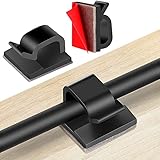
Overview: This 60-piece cable management set provides a hybrid approach with 50 adhesive clips and 10 nail-in clips as a bonus. Made from eco-friendly PA66 material, these organizers target users seeking both convenience and permanent installation options. The clear design accommodates cables up to 0.26 inches in diameter, covering most household and office wiring needs from ethernet to phone chargers.
What Makes It Stand Out: The inclusion of 10 traditional nail-in clips sets this apart from pure adhesive competitors, offering a fallback for critical installations or problematic surfaces. The eco-conscious PA66 construction appeals to environmentally aware consumers. A detailed pre-use protocol—cleaning with alcohol and 30-second press—demonstrates the manufacturer’s confidence in their adhesive formula.
Value for Money: At $7.55 for 60 pieces, the per-unit cost averages $0.126, positioning this as a mid-range option. The value proposition strengthens when considering the 10 bonus nail clips, effectively giving you two mounting systems. This eliminates the need to purchase separate hardware for challenging surfaces, saving both money and time.
Strengths and Weaknesses: Strengths include the dual installation methods, eco-friendly material, comprehensive instructions, and suitability for cables up to 0.26 inches. The 24-hour cure time recommendation shows realistic expectations. Weaknesses include having only 50 adhesive clips versus competitors’ 100-count offerings, and the nail option requires tools and damages surfaces. The adhesive may still struggle on rough textures despite preparation.
Bottom Line: This versatile kit suits users wanting adhesive convenience with nail-in security as backup. It’s perfect for mixed installations where some cables need permanent routing while others require temporary flexibility.
8. KGROTE 100PCS Cable Clips, Adhesive Wire Clips Strong Cord Clips Wire Holders, Cable Management Clips for Desk, Wall, Car, TV, Ethernet Cable (Clear, Medium)
Overview: KGROTE’s medium-sized cable clips deliver the same 100-count value as their small version but accommodate thicker cables measuring up to 0.4 inches in diameter. At 20x18.5x11mm, these clear PC plastic clips handle HDMI cords, robust ethernet cables, and multi-wire bundles that smaller clips cannot manage. The package maintains the brand’s commitment to tool-free, damage-free installation.
What Makes It Stand Out: The upsized dimensions directly address the most common complaint about small cable clips—limited cable capacity. You get the same bulk quantity advantage while managing virtually any common household or office cable. The crystal-clear design remains unobtrusive on any surface, and the same strong adhesive formula works across desks, walls, cars, and holiday lighting installations.
Value for Money: Priced at $13.99 ($0.14 per clip), this medium version costs 40% more than the small variant. However, the premium is justified if you manage mixed cable types. Buying separate small and large clips would cost significantly more. For users exclusively organizing thin phone cables, the small version remains more economical, but this offers future-proofing for unknown needs.
Strengths and Weaknesses: Strengths include versatile sizing for various cable diameters, large quantity, easy installation, and multi-surface compatibility. The clear material stays discreet. Weaknesses mirror the small version: the 2-hour wait time seems insufficient for maximum bond strength, and PC plastic durability lags behind premium PA66 alternatives. Adhesive performance drops on textured or porous surfaces despite cleaning.
Bottom Line: Choose this medium-sized pack if you manage diverse cable types or want one solution for all scenarios. The slight price premium eliminates the frustration of clips that are too small, making it the smarter long-term investment for most users.
9. 40PCS Strong Adhesive Cable Clips Clear, Premium Wire Holders for Wall, Strong Cord Organizer Under Desk, Car, PC, Christmas Light Indoor/Outdoor

Overview: This budget-friendly 40-piece set proves that effective cable management doesn’t require a large investment. At just $3.99, these clear adhesive clips offer straightforward organization for cables ranging from 0.14 to 0.28 inches in diameter. The compact base (1.18 x 0.43 inches) works well in tight spaces like behind desks, entertainment centers, or car dashboards where discretion matters.
What Makes It Stand Out: The unbeatable price point makes this an impulse-buy solution for light cable clutter. Despite the low cost, the manufacturer includes professional preparation instructions—alcohol cleaning and 30-second pressing—typically reserved for premium products. The clips handle both indoor and outdoor applications, including Christmas light installations, adding unexpected versatility to an entry-level product.
Value for Money: At $0.10 per clip, this matches bulk pricing despite the small pack size. For users with modest needs—perhaps a home office or single entertainment center—this eliminates waste from unused clips. The value proposition centers on paying only for what you need rather than committing to 60-100 piece sets that may sit in storage.
Strengths and Weaknesses: Strengths include exceptional affordability, clear discreet design, adequate cable range for most electronics, and professional installation guidance. The low commitment makes it ideal for first-time users testing adhesive clips. Weaknesses include unknown long-term adhesive quality, limited quantity for larger projects, and potential durability concerns with intensive use. The brand lacks the recognition of established competitors.
Bottom Line: Perfect for budget-conscious buyers or small-scale projects. If you’re organizing a few cables in one room, this 40-pack delivers sufficient quality without overbuying. For whole-house projects, consider larger sets instead.
10. SZFUDIGO Adjustable 3M Adhesive Cable Management Clips 50Pcs, Large self Adhesive Cable Ties Clips ,Suitable for Cable Management Under desks and on Walls(Black)

Overview: SZFUDIGO positions itself as the premium choice with 50 black, adjustable cable clips featuring genuine 3M adhesive and PA66 nylon construction. The adjustable design accommodates various cable diameters, while the flame-retardant 94V2 rating addresses safety concerns rarely considered by competitors. This product targets users prioritizing reliability and durability over maximum quantity.
What Makes It Stand Out: The 3M adhesive backing provides proven, consistent bonding power across temperatures and surfaces—a significant upgrade from generic adhesives. The adjustable clip mechanism eliminates size guesswork, securing everything from single USB cables to bundled cords. The flame-retardant rating offers peace of mind for power cables and high-heat environments, while the eco-friendly paper packaging reduces plastic waste.
Value for Money: At $7.99 for 50 clips ($0.16 per unit), this commands a 60% premium over budget options. However, the cost reflects legitimate quality improvements: 3M adhesive longevity, PA66 durability, and safety certification. For critical installations like dash cams or permanent desk setups, the reliability justifies the price. The value emerges from not having to replace failed clips.
Strengths and Weaknesses: Strengths include industry-leading 3M adhesive, adjustable sizing, flame-retardant safety rating, durable PA66 material, and environmentally conscious packaging. The black color provides a professional look on dark surfaces. Weaknesses include higher cost per clip, limited 50-count quantity, and black color may clash with light decor. The 24-hour cure time requires planning.
Bottom Line: For safety-critical or permanent installations, this premium option delivers reliability worth the extra cost. The adjustable design and 3M adhesive make it the most versatile and dependable choice for discerning users.
Why Adhesive Cable Clips Are a Renter’s Best Friend
Adhesive cable clips represent the perfect intersection of functionality and lease compliance. Unlike traditional cable management systems that require drilling, nailing, or screwing into walls, these clever devices use advanced adhesive technologies to create a semi-permanent bond that can be removed without a trace. For renters, this means you can finally route cables along baseboards, behind entertainment centers, and around door frames without violating your lease agreement.
The real magic lies in their versatility. Whether you’re dealing with charging cables, power cords, ethernet lines, or speaker wires, adhesive clips provide a customizable solution that adapts to your space rather than forcing you to adapt to it. They work in closets, kitchens, home offices, and entertainment areas—essentially anywhere cables create clutter. Plus, they’re incredibly cost-effective, allowing you to organize your entire apartment for a fraction of what built-in solutions would cost, both in materials and potential wall repairs.
Understanding Lease Agreements and Wall Damage
Before you stick anything to your walls, it’s crucial to understand what your lease actually says about modifications. Most standard rental agreements prohibit “alterations” to the property, which typically includes drilling holes, but the language around adhesive products is often vague. This gray area works in your favor, but only if you’re strategic about it.
Wall damage isn’t just about holes. Landlords can deduct from your security deposit for peeled paint, discolored spots, adhesive residue, and even texture changes. The key is understanding that damage is defined by what remains visible after you move out, not necessarily what you do during your tenancy. Adhesive cable clips, when chosen and used correctly, leave zero evidence they were ever there. However, using the wrong type or removing them improperly can create damage that costs far more than a few drilled holes would have.
Key Features to Look for in Renter-Friendly Cable Clips
Adhesive Strength vs. Removability
The adhesive is the heart of any cable clip, and for renters, it needs to perform a delicate balancing act. Too weak, and your cables will sag within days. Too strong, and you’ll take half the wall with you during removal. Look for clips specifically marketed as “damage-free” or “removable,” as these use acrylic foam adhesives engineered to maintain strong shear strength while allowing clean removal in the direction of the adhesive plane.
These advanced adhesives work by creating microscopic suction-like bonds with the surface rather than chemically bonding to it. When you pull the removal tab correctly, the adhesive stretches and releases cleanly. Cheaper clips use rubber-based adhesives that either fail prematurely or bond permanently, especially on painted surfaces. The sweet spot is a clip that can hold 2-3 times the weight of your cables for at least a year but removes with steady, deliberate pulling.
Surface Compatibility Matters
Not all walls are created equal, and neither are adhesives. The best renter-friendly cable clips work across multiple surface types: painted drywall, tile, glass, metal, and even textured surfaces. However, the real test is how they perform on flat paint, which is notoriously fragile and common in rentals because it’s cheap for landlords to apply.
Quality clips will specify which paint types they’re safe for. Those designed for semi-gloss or eggshell finishes might rip flat paint right off. Additionally, if you’re dealing with older apartments (pre-1978), consider that the paint might be oil-based or have multiple layers, which affects adhesion differently than modern latex paints. Always test in an inconspicuous area first—inside a closet or behind a door where wall damage would be less noticeable.
Weight Capacity and Cable Load
Cable clips come with specified weight limits, typically ranging from a few ounces to several pounds. But here’s what manufacturers don’t always tell you: that rating usually applies to ideal conditions—perfectly smooth, clean, flat surfaces with proper installation. In the real world of rental properties, you should derate those numbers by at least 30%.
Calculate the total weight of the cables you plan to secure. A standard USB-C cable weighs about 1.5 ounces, while a thick power cord can be 3-4 ounces. If you’re bundling multiple cables, you need clips rated for the cumulative weight. For heavy-duty applications like thick HDMI cables or power strips, look for clips with metal reinforcements and larger adhesive pads. Remember, it’s better to use multiple smaller clips than one overloaded large clip.
Material Quality and Durability
The clip material affects both performance and removability. Cheap plastic becomes brittle over time, especially when exposed to sunlight or heat from electronics. This brittleness means the clip might snap during removal, leaving the adhesive pad stubbornly attached to your wall. Opt for UV-stabilized plastics or silicone-based materials that maintain flexibility.
The adhesive pad’s construction is equally important. Premium clips use a continuous foam pad that distributes stress evenly. Budget options might use thin adhesive strips that concentrate force and increase failure risk. For renters, durability also means the clip should last your entire lease term without yellowing, cracking, or losing adhesion—because replacing them mid-lease means risking wall damage.
Surface Types Found in Rental Properties
Painted Drywall Challenges
Painted drywall is the most common wall surface in rentals and simultaneously the most problematic for adhesive products. The issue isn’t the drywall itself but the paint and primer application. Many landlords use minimal primer coats to save money, resulting in poor paint adhesion to the drywall paper. When you remove a cable clip, you might pull off the paint layer while the adhesive stays intact.
Newer construction often uses low-VOC paints that cure harder and provide better adhesion surfaces. Older apartments may have layer upon layer of paint, creating a weak sandwich effect. Test your wall’s paint adhesion by pressing a piece of packing tape firmly and removing it quickly. If paint comes off on the tape, you have fragile walls and need extra-gentle adhesive solutions.
Dealing with Textured Walls
Textured walls—whether knockdown, orange peel, or popcorn—present unique challenges. The adhesive needs to conform to the irregular surface while maintaining contact across enough area to hold. Standard flat adhesive pads only touch the high points, reducing effective bonding area by up to 70%.
For textured surfaces, look for cable clips with thicker, more conformable adhesive pads. Some premium options include a gel-like adhesive that flows into the texture valleys. Another strategy is using multiple smaller clips spaced closer together rather than fewer large clips. This distributes the load and increases the chance that each clip finds enough flat contact area to bond effectively.
Tile, Glass, and Other Non-Porous Surfaces
Bathrooms and kitchens in rentals often feature tile, glass, or metal surfaces where you might want to route cables for under-cabinet lighting or bathroom speakers. These non-porous surfaces are actually ideal for adhesive clips because they provide uniform contact and don’t have paint layers to damage.
The key consideration here is moisture resistance. Bathroom humidity can degrade standard adhesives over time, causing premature failure. Look for clips specifically rated for bathroom use or those using marine-grade adhesives. On glass, be extra cautious about residue—some adhesives can leave a hazy film that’s difficult to remove without harsh chemicals, which might violate your lease in other ways.
Apartment-Friendly Alternatives for Delicate Surfaces
Sometimes the best adhesive clip is no adhesive at all. For extremely delicate surfaces like wallpaper, unpainted plaster, or historic walls, consider alternative renter-friendly options. Magnetic cable clips that attach to metal door frames or baseboard heaters can work wonders. Self-adhesive cable raceways that distribute weight across a larger area reduce point loads on fragile walls.
Another clever approach is using furniture-mounted solutions. Clips that attach to the back of desks, entertainment centers, or bookshelves keep cables organized without touching walls at all. For baseboard cable routing, consider clips that wedge into the gap between carpet and baseboard, requiring zero adhesives while staying completely hidden.
Installation Best Practices for Damage-Free Results
Surface Preparation: The Critical First Step
The number one reason adhesive clips fail or cause damage is poor surface preparation. Even if your walls look clean, they’re coated with microscopic dust, oils, and residues that prevent proper adhesion. Start by wiping the area with isopropyl alcohol (70% or higher) and a lint-free cloth. This removes oils and residues without leaving moisture behind.
For painted walls, wait at least 30 days after painting before applying any adhesive. Fresh paint hasn’t fully cured and will almost certainly peel. In humid climates or during winter when windows stay closed, wipe down surfaces twice—dust and airborne oils accumulate faster. Never use cleaning products containing oils, waxes, or silicone before installation; these create invisible barriers that guarantee failure.
Proper Application Techniques
Temperature matters more than you think. Apply adhesive clips when the room is between 65-75°F. Too cold and the adhesive won’t flow into surface micro-textures. Too hot and it cures too quickly, reducing bond strength. Press the clip firmly for a full 30 seconds, applying steady pressure across the entire adhesive pad. This activates the pressure-sensitive adhesive and ensures maximum contact.
Use a small level to ensure your clips align properly—crooked clips create uneven stress that can lead to premature failure. For cable bundles, install the clip first, let it cure, then insert cables. Trying to hold cables in place while installing puts sideways stress on the adhesive before it’s fully bonded. If the clip has a removal tab, make sure it’s accessible and not pressed flat against the wall.
Cure Time: Why Patience Pays Off
That “24-hour cure time” on the package isn’t a suggestion—it’s a requirement for full strength. The adhesive undergoes a two-stage bonding process: initial tack (holds immediately) and full cure (reaches maximum strength). During the first 24 hours, avoid loading the clip with heavy cables or putting any stress on it.
If you must route cables immediately, use temporary support like painter’s tape to hold them in place while the adhesive cures. For heavy cable bundles, consider curing for 48-72 hours, especially in high-humidity environments. The longer cure time allows the adhesive to fully wet out the surface, creating a bond that’s actually stronger but paradoxically easier to remove cleanly because it hasn’t formed a permanent chemical bond.
Removal Techniques That Save Your Security Deposit
The moment of truth comes when you need to remove your cable clips. Never pull them off quickly or at a 90-degree angle to the wall. The correct technique is to pull the removal tab slowly, parallel to the wall surface, stretching the adhesive foam until it releases. This can take 12-18 inches of stretching for a large pad.
If the clip doesn’t have a removal tab, use dental floss or fishing line. Slide it behind the clip in a sawing motion to separate the adhesive from the wall. For stubborn residues, use a hairdryer on low heat to warm the adhesive for 30 seconds before removal. The heat softens the adhesive, making it more pliable and less likely to damage paint. Never use sharp tools like putty knives or metal scrapers—these will gouge walls and guarantee deposit deductions.
Common Renter Mistakes to Avoid
One of the biggest mistakes is overloading clips with too many cables. A clip rated for five cables might hold them initially, but over months the constant weight causes adhesive creep, slowly pulling away from the wall. Another frequent error is installing clips in high-temperature areas—above radiators, near electronics that vent hot air, or in direct sunlight. Heat degrades adhesive strength significantly.
Don’t install clips on freshly cleaned walls that are still damp from cleaning products. Moisture trapped under the adhesive pad creates a weak bond and can cause paint bubbling. Also avoid the temptation to reuse clips. The adhesive is designed for one-time use; removing and reapplying reduces strength by at least 50% and increases damage risk. Finally, never ignore the weight rating “just this once”—that single overloaded clip that fails can pull down your entire cable run and damage walls in the process.
Design and Aesthetic Considerations
Your landlord cares about wall condition, but you care about how your space looks. Clear cable clips disappear against most walls, but they can yellow over time and show dust. White clips blend with baseboards and trim, while black clips work well on dark furniture or entertainment centers. Consider the viewing angle—clips visible from seating areas should be as unobtrusive as possible.
Think about cable routing from a design perspective. Running cables along natural architectural lines—baseboards, door frames, crown molding—makes them less noticeable. Vertical runs are less visually intrusive than horizontal ones. For home offices, consider clips with built-in labels to identify cables easily. Some modern clips feature minimalist designs that almost look intentional, turning a necessary evil into a design element.
Cost Analysis: Budgeting for Your Cable Management
A single adhesive cable clip costs between $0.50 and $3.00, but the real cost consideration is failure and replacement. Budget clips might seem economical, but if they fail and damage walls, you’re looking at $50-$200 in paint touch-ups or deposit deductions. Premium clips that cost three times more but remove cleanly are actually cheaper in the long run.
For a typical one-bedroom apartment, you’ll need 20-30 clips for comprehensive cable management. Budget $30-$60 for quality clips rather than $10-$20 for questionable options. Factor in replacement costs if you’re a frequent mover—while the clips themselves aren’t reusable, the knowledge of what works in different apartments is invaluable. Consider it insurance for your security deposit.
Environmental and Safety Factors
Many renters don’t consider the environmental impact of their temporary solutions. Look for clips made from recyclable materials or those with minimal packaging. Some adhesives contain volatile organic compounds (VOCs) that continue off-gassing after installation—a concern in small, poorly ventilated apartments. Low-VOC adhesives are better for indoor air quality and often perform better on sensitive surfaces.
Fire safety is another overlooked aspect. Electronics cables can generate heat, especially when bundled. Ensure your clips don’t compress cables tightly enough to cause heat buildup. Look for clips with UL ratings or those made from flame-retardant materials. In kitchens, keep clips away from heat sources like stovetops and toasters, as high heat can cause adhesive failure and create falling cable hazards.
Complementary Renter-Friendly Cable Management Solutions
Adhesive clips work best as part of a comprehensive strategy. Combine them with cable sleeves or wraps to bundle cables between clips, reducing the number of clips needed and creating a cleaner look. Under-desk cable trays that attach with strong magnets or clamp mechanisms keep cables off the floor without touching walls at all.
For entertainment centers, use Velcro cable ties to group cables, then use just a few adhesive clips to anchor the bundles. Cable boxes or organizers hide power strips and excess cable length, reducing visual clutter. Remember the principle: the best renter-friendly solution is often a hybrid approach that minimizes wall contact while maximizing organization.
When to Consider Alternative Options
Sometimes adhesive clips aren’t the answer. If you have plaster walls older than 1980, the paint adhesion is often so poor that even the gentlest adhesive will cause damage. In these cases, consider tension-based solutions that fit between floor and ceiling, or furniture-based routing. Similarly, if your lease explicitly prohibits any adhesive products (rare but possible in historic buildings), respect those terms and explore freestanding cable management towers.
Extreme climates also warrant alternatives. In desert environments with huge temperature swings, adhesives expand and contract, leading to premature failure. In tropical climates with constant high humidity, even moisture-resistant adhesives struggle. In these situations, mechanical solutions that don’t rely on chemical bonds are more reliable and safer for your deposit.
Long-Term Value for Frequent Movers
If you move apartments every year or two, invest in learning which clip types work consistently across different surfaces. Create a “moving kit” with alcohol wipes, a small level, and a variety of clip sizes. Document what works—take photos of installations and note the surface type, clip brand, and performance after removal. This knowledge becomes invaluable.
Consider the total cost of ownership across multiple moves. A $50 investment in premium clips that survive three moves without incident is cheaper than three sets of $15 clips that damage walls each time. Some renters even negotiate with landlords, offering to professionally install proper cable management in exchange for permission to do so. This can be a win-win: you get better organization, and the landlord gets a permanent improvement.
Frequently Asked Questions
Will adhesive cable clips really come off without damaging my walls?
Yes, when you use high-quality clips designed for damage-free removal and follow proper installation and removal techniques. The key is pulling slowly parallel to the wall, not away from it. However, results depend on your wall’s paint quality and age. Always test in a hidden area first.
How long should I wait before hanging cables on newly installed clips?
Wait the full cure time specified on the package, typically 24 hours. For heavy cable bundles or humid environments, extend this to 48-72 hours. Premature loading is the most common cause of clip failure and potential wall damage.
Can I use adhesive cable clips on textured walls?
Yes, but you’ll need clips with thicker, more conformable adhesive pads designed for texture. Even then, use more clips spaced closer together to distribute the load. Standard flat adhesive pads have minimal contact area on textured surfaces and will likely fail.
What should I do if the clip doesn’t have a removal tab?
Use dental floss or fishing line in a sawing motion behind the clip to separate the adhesive from the wall. Warm the adhesive with a hairdryer first to make it more pliable. Never use metal tools that could gouge the wall.
Are there any surfaces where I should avoid adhesive clips entirely?
Avoid using them on wallpaper, unpainted plaster, freshly painted walls (less than 30 days), or surfaces that feel chalky or powdery. Also be cautious with flat paint in older buildings—it often has poor adhesion and will peel regardless of clip quality.
How many cables can I safely put in one clip?
Follow the manufacturer’s weight rating, not the cable count. As a renter, derate that number by 30% for safety. Generally, 3-4 standard charging cables or 2-3 thicker power cords per clip is a safe rule of thumb. When in doubt, use more clips.
Will heat from electronics affect the adhesive?
Yes, significant heat degrades adhesive strength. Keep clips at least 6 inches away from heat vents, electronics exhaust fans, and direct sunlight. For areas near warm devices, look for clips specifically rated for high-temperature applications.
Can I reposition a clip if I install it crooked?
No—repositioning dramatically reduces adhesive strength and increases damage risk. Remove it completely using proper technique and install a new clip. The adhesive is designed for one-time use only.
What if my lease specifically prohibits adhesives?
Honor your lease and explore alternative solutions like furniture-mounted clips, magnetic cable organizers, or tension-based systems. Violating lease terms over cable management isn’t worth the potential eviction or legal consequences.
How do I clean adhesive residue if removal leaves some behind?
Use a hairdryer to warm the residue, then roll it off with your finger or a rubber eraser. For stubborn spots, use a tiny amount of cooking oil on a cloth, then immediately clean that area with dish soap and water. Test any cleaning method in a hidden spot first to ensure it doesn’t damage paint.