Ultrawide monitors have revolutionized how we work, game, and create, offering expansive screen real estate that transforms productivity and immersion. But that gorgeous 34-inch, 38-inch, or even super-ultrawide display is only as good as its support system. Standard monitor stands leave your expensive panel sitting static on your desk, hogging space and locking you into one viewing angle. The right monitor arm liberates your ultrawide, floating it at the perfect ergonomic height while reclaiming precious desk space for what matters most.
This comprehensive guide dives deep into everything you need to know about selecting the perfect monitor arm for your ultrawide screen. We’ll explore weight capacities that actually matter, mounting mechanisms that won’t destroy your desk, and adjustment ranges that support healthy posture through marathon work sessions. Whether you’re a developer seeking the perfect coding setup, a creative professional color-grading footage, or a sim racer building the ultimate cockpit, understanding these fundamentals will save you money, prevent headaches, and protect your investment.
Top 10 Monitor Arms for Ultrawide Screens
Detailed Product Reviews
1. WALI Heavy Duty Single Monitor Arm for 17-49 Inch Flat Curved Ultrawide Screens, up to 33 Lbs, Adjustable Gas Spring Single Monitor Desk Mount for Home Office Gaming, VESA 75/100mm (GSM001XLN), Black

Overview: The WALI GSM001XLN delivers impressive heavy-duty performance at a budget-friendly price point. Designed to support ultrawide monitors from 17 to 49 inches weighing up to 33 pounds, this gas spring arm offers professional-grade adjustability for both home office workers and gamers seeking ergonomic relief without breaking the bank.
What Makes It Stand Out: The “Zero-Drift” gas spring technology ensures your monitor maintains perfect positioning without sagging—a common frustration with cheaper arms. The integrated cable management system routes wires cleanly through the arm, reclaiming over 80% of desk space compared to stock monitor bases. With ±75° tilt, ±90° swivel, and full 360° rotation, it provides exceptional flexibility for finding optimal viewing angles during marathon work or gaming sessions.
Value for Money: At $29.99, this monitor arm dramatically undercuts competitors while delivering features typically found in $60+ products. The inclusion of both C-clamp and grommet mounting options adds versatility, making it an exceptional value for anyone upgrading their setup on a tight budget.
Strengths and Weaknesses: Strengths: Unbeatable price-to-performance ratio; reliable zero-drift stability; comprehensive adjustability; dual mounting options; straightforward installation with included hardware. Weaknesses: 33-lb weight limit may not support the heaviest 49-inch ultrawides; C-clamp only accommodates desks up to 1.96" thick; less premium materials than pricier alternatives.
Bottom Line: The WALI GSM001XLN is the best budget monitor arm for most users, offering remarkable stability and features that make it feel far more expensive than its sub-$30 price tag.
2. VIVO Heavy Duty Aluminum Ultrawide Monitor Tension Arm for up to 49 inch Screens, Holds 44 lbs, Premium Desk Mount Stand Designed for Samsung Odyssey G9 and More, Black, STAND-V101V

Overview: The VIVO STAND-V101V positions itself as a premium solution specifically engineered for massive ultrawide displays like the Samsung Odyssey G9. Constructed from heavy-duty aluminum, this tension arm confidently handles monitors up to 49 inches and 44 pounds, making it ideal for high-end gaming rigs and professional workstations requiring rock-solid stability.
What Makes It Stand Out: The premium spring-assist tension arm provides buttery-smooth height adjustments with a light touch, perfect for frequently repositioning large screens. Its optimized tilting head structure offers +50° to -20° tilt range and 180° swivel, designed specifically for ultrawide curvature. The detachable VESA plate simplifies mounting these behemoth displays, while integrated cable management covers maintain a pristine aesthetic during adjustments.
Value for Money: At $79.99, this arm sits in the mid-premium tier. While significantly pricier than budget options, its aircraft-grade aluminum construction and 44-lb capacity justify the cost for users with heavy, expensive monitors who prioritize smooth operation and long-term durability.
Strengths and Weaknesses: Strengths: Exceptional 44-lb weight capacity; premium aluminum build; smooth tension-arm adjustment; Samsung Odyssey G9 optimization; sturdy C-clamp fits desks up to 3.2" thick; clean cable management. Weaknesses: Only 11 inches of height adjustment limits standing desk compatibility; higher price point; tilt range less extensive than some competitors.
Bottom Line: The VIVO STAND-V101V is a top-tier choice for Odyssey G9 owners and anyone with a heavy ultrawide who values premium materials and fluid adjustability.
3. HUANUO Single Monitor Arm for 13-49 inch Screens, Ultrawide Computer Monitor Mount Holds 26.48 lbs, Upgraded Adjustable Stand with USB, C-Clamp & Grommet Base, VESA 75x75 or 100x100mm

Overview: This HUANUO monitor arm blends ergonomic versatility with modern connectivity, supporting 13-49 inch displays up to 26.48 pounds. The integrated USB 3.0 port sets it apart from traditional mounts, making it particularly appealing for productivity-focused users who want to reduce cable clutter while maintaining easy access to high-speed data and charging.
What Makes It Stand Out: The built-in USB 3.0 port delivering 500MB/s transfer speeds is a rare find in this category. With an impressive 21.1-inch height adjustment and 25.6-inch extension range, it accommodates standing desks and deep workspaces effortlessly. Aerospace-grade aluminum alloy construction tested to 20,000+ fatigue cycles ensures decade-long reliability, while the generous desk thickness compatibility (0.39"-3.54") fits virtually any setup.
Value for Money: Priced at $64.99, this arm commands a premium over basic models but justifies it with USB integration and exceptional adjustability. For users who would otherwise purchase a separate USB hub, it represents significant savings and space efficiency.
Strengths and Weaknesses: Strengths: Integrated USB 3.0 port; extensive height and extension range; premium aluminum construction; wide desk compatibility; excellent cable management; 360° rotation. Weaknesses: 26.48-lb capacity insufficient for some 49-inch ultrawides; mid-range price may deter budget shoppers; USB cable adds slight installation complexity.
Bottom Line: The HUANUO arm is perfect for productivity enthusiasts who need maximum adjustability and integrated connectivity, making it worth the modest premium over basic models.
4. WALI Ultrawide Monitor Arm for 17-49 Inch Heavy Duty Curved Screens, Holds up to 44 Lbs, Adjustable Gas Spring Single Monitor Desk Mount with C-Clamp, Grommet Base, 75/100mm VESA, (GSM001XL), Black

Overview: The WALI GSM001XL represents a significant step up from its GSM001XLN sibling, boosting weight capacity to 44 pounds while maintaining the brand’s reputation for value. This heavy-duty gas spring arm handles the largest ultrawide monitors with confidence, making it ideal for users who need premium performance without crossing into triple-digit pricing territory.
What Makes It Stand Out: Withstanding 20,000+ fatigue tests (equivalent to 10 years of daily use), this arm promises exceptional longevity. The 44-lb capacity accommodates even the heaviest 49-inch curved displays, while the ±45° tilt and ±90° swivel provide solid ergonomic adjustment. The package includes both C-clamp and grommet mounts for desks 0.39"-3.15" thick, offering flexibility that rivals more expensive competitors.
Value for Money: At $52.99, this arm hits the sweet spot between budget and premium. It delivers heavy-duty capacity and durability that typically cost $70+, making it an intelligent upgrade for users with substantial monitors who don’t need flashy features.
Strengths and Weaknesses: Strengths: Robust 44-lb weight capacity; proven durability through extensive testing; dual mounting options; built-in cable management; straightforward installation; excellent price for capacity. Weaknesses: Tilt range narrower than some rivals; brand less recognized than Ergotron or AmazonBasics; gas spring may require occasional retensioning.
Bottom Line: The WALI GSM001XL is a smart mid-range investment for anyone with a heavy ultrawide monitor seeking reliable performance without unnecessary frills or expense.
5. HUANUO TitanLift Heavy Duty Monitor Arm for Screens up to 49", Holds 44 lbs, Aluminum Ultrawide Screen Desk Mount, Fully Adjustable Single Gaming Monitor Mount with Dual C-Clamp, Max VESA 100x100mm
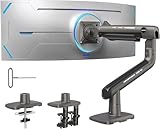
Overview: The HUANUO TitanLift stands as the flagship model in this lineup, engineered for uncompromising stability with massive ultrawide displays. Supporting up to 44 pounds and 49 inches, it features reinforced construction with 20% thicker arms and 30% wider base than standard models. This mount targets serious gamers and professionals who demand absolute rigidity for their premium displays.
What Makes It Stand Out: Rigorous 50,000-cycle motion testing and 3X load testing demonstrate exceptional engineering. The innovative dual C-clamp system provides superior stability, while the quick-install VESA head enables single-person mounting of large monitors. Effortless tension adjustment via side-access Allen key eliminates the frustrating under-arm adjustments common with other gas spring arms. The 22.5-inch extension and 19.6-inch height range offer premium positioning flexibility.
Value for Money: At $89.98, this is the most expensive option reviewed, but it delivers genuine premium construction and verified durability that cheaper arms cannot match. For users with $1,000+ monitors, the investment in stability is easily justified.
Strengths and Weaknesses: Strengths: Extreme durability (50,000+ cycles); reinforced, thicker construction; dual C-clamp for maximum stability; effortless side tension adjustment; smooth full-range motion; premium aluminum alloy. Weaknesses: Highest price point; may be over-engineered for monitors under 35 inches; limited VESA size support (max 100x100mm).
Bottom Line: The TitanLift is the ultimate heavy-duty arm for users who refuse to compromise on stability and want verified long-term reliability for their expensive ultrawide displays.
6. HUANUO Heavy Duty Monitor Arm for Ultrawide Screens up to 57", Holds 40 lbs, Aluminum Ultrawide Single Monitor Stand with 29.1" Max Height, Fully Adjustable Desk Mount, Max VESA 100x100mm

Overview: The HUANUO Heavy Duty Monitor Arm is engineered for users pushing the boundaries of screen real estate. Supporting ultrawide monitors up to 57 inches and 40 pounds, this industrial-strength solution targets professionals and gamers wielding massive curved displays. Its towering 19.5-inch pole delivers a class-leading 29.1-inch maximum height, making it ideal for standing desk setups and tall users.
What Makes It Stand Out: This arm’s extraordinary 57-inch compatibility and 40-pound capacity set it apart in a crowded field. The 25-inch arm extension provides exceptional reach, while the reinforced aluminum construction with 20% thicker arms ensures stability at full extension. The 50,000-cycle motion testing and 3X load certification demonstrate serious engineering commitment. Quick-install VESA head and side-mounted tension adjustments eliminate the awkward under-desk fumbling common with lesser mounts.
Value for Money: At $109.99, this premium arm commands a higher price but delivers proportional value for oversized monitor owners. Competitors supporting 57-inch displays often exceed $150, making HUANUO’s offering relatively economical for its class. The investment is justified if you’re protecting a $1,000+ ultrawide monitor.
Strengths and Weaknesses: Strengths include unmatched size compatibility, exceptional height range, robust build quality, and user-friendly adjustments. Weaknesses are the limited 100x100mm VESA pattern (some large monitors require adapters), potential overkill for standard monitors, and premium pricing that may deter budget buyers.
Bottom Line: For ultrawide enthusiasts with 49-57 inch displays, this arm is a worthwhile investment. Its stability, adjustability, and build quality provide peace of mind that cheaper alternatives cannot match.
7. VIVO Single 13 to 38 inch Ultrawide Monitor Arm Desk Mount, Regular Screens up to 32 inches, 22 lbs capacity, Fully Adjustable Stand with C-Clamp and Grommet Base, Black, STAND-V001

Overview: The VIVO STAND-V001 delivers essential monitor arm functionality at an entry-level price point. Designed for monitors ranging from 13 to 38 inches and supporting up to 22 pounds, this mount serves budget-conscious users with modest ultrawide displays or standard monitors. Its straightforward design focuses on core adjustability without premium frills.
What Makes It Stand Out: Remarkable affordability at $34.99 makes this the most accessible reliable monitor arm on the market. The toolless hand-tightening clamp enables installation in minutes without rummaging for tools. Integrated cable management clips keep wires organized along the arms and center pole—a feature often omitted in budget models. VIVO’s established brand reputation provides confidence in basic quality assurance.
Value for Money: This arm redefines budget value. While limited to 22-pound capacity and 16-inch height adjustment, it costs a third of mid-tier competitors. For users with 34-inch ultrawides under 22 pounds or standard 27-32 inch monitors, no better value exists. The savings could fund other desk upgrades.
Strengths and Weaknesses: Strengths include unbeatable price, easy toolless installation, cable management, and VIVO reliability. Weaknesses are modest weight capacity restricting heavier ultrawides, limited height range inferior for standing desks, and shorter extension compared to premium arms.
Bottom Line: Perfect for budget setups and lighter monitors. If your display fits within its specifications, this arm delivers 80% of the premium experience for 30% of the price, making it an intelligent, practical choice.
8. ErGear 13 to 49 inches Single Monitor Mount for Ultrawide Screens,Holds 26.5lbs,Heavy Duty Single Monitor Arm,Single Monitor Stand with Swivel,Tilt,Rotation for Home and Office,VESA 75/100mm
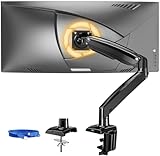
Overview: ErGear positions itself as a feature-rich mid-range contender, supporting ultrawide monitors up to 49 inches and 26.5 pounds. This arm targets users seeking premium functionality without premium pricing, offering an impressive 26.5-inch extension and 21-inch height adjustment suitable for varied workspace configurations.
What Makes It Stand Out: The integrated USB 3.0 hub distinguishes this arm from all competitors, providing front-access charging and data ports that eliminate reaching behind monitors. Aircraft-grade aluminum construction ensures stability at full extension, while the 10-minute toolless setup appeals to non-technical users. Hidden cable management routes wires cleanly through the arm itself.
Value for Money: At $54.99, this arm hits a sweet spot. It undercuts premium brands by $40-50 while offering comparable adjustability and a unique USB hub feature. The 26.5-inch reach exceeds many pricier alternatives. For users wanting maximum functionality per dollar, this represents exceptional value.
Strengths and Weaknesses: Strengths include the USB hub, extensive extension, solid build quality, and competitive price. Weaknesses are the 26.5-pound capacity, which may insufficiently support the heaviest 49-inch models like the Samsung Odyssey G9, and ErGear’s lesser-known brand status compared to VIVO or HUANUO.
Bottom Line: An excellent choice for users prioritizing connectivity and reach. If your monitor weighs under 26.5 pounds, this arm delivers premium features and adjustability at a mid-tier price, making it a smart, forward-thinking purchase.
9. ARES WING Ultrawide Monitor Arm for 17 to 49 Inch Heavy Duty Curved Screen, Holds 44 Lbs, Adjustable Gas Spring Monitor Arm Desk Mount with C Clamp, Grommet Base, 75/100 Vesa Mount, Black

Overview: The ARES WING monitor arm targets heavy-duty applications with its impressive 44-pound weight capacity and gas spring mechanism. Supporting 17 to 49-inch monitors, this mount handles the bulkiest ultrawide displays, including the Samsung Odyssey G9, without breaking a sweat. Its robust steel and aluminum construction promises durability under demanding conditions.
What Makes It Stand Out: The 44-pound capacity leads this product category, accommodating virtually any consumer ultrawide monitor. The gas spring mechanism provides smooth, effortless height adjustment from 8.7 to 18.7 inches. Topside installation eliminates uncomfortable under-desk work, while the detachable VESA plate simplifies monitor attachment. The design specifically acknowledges compatibility challenges with popular models like the Odyssey G9.
Value for Money: At $69.99, this arm offers heavy-duty performance at a mid-range price. Competing gas spring arms with similar capacity typically cost $90-120. For users with weighty displays, this represents significant savings without compromising on the critical capacity requirement.
Strengths and Weaknesses: Strengths include best-in-class weight capacity, smooth gas spring adjustment, straightforward installation, and competitive pricing. Weaknesses are limited desk thickness compatibility (C-clamp only 0.5"-1.8"), modest height range compared to pole-mounted alternatives, and shorter 22.4-inch extension.
Bottom Line: Ideal for owners of heavy ultrawide monitors who prioritize weight capacity above all. If you’re supporting a 40+ pound display, this arm provides necessary strength and smooth operation at an attractive price point.
10. VIVO Premium Aluminum Monitor Arm for Ultrawide Screens up to 49 inches and 33 lbs, Heavy Duty Single Desk Mount, Pneumatic Height, Max VESA 100x100, Black, STAND-V101G1

Overview: VIVO’s Premium Aluminum Monitor Arm elevates the brand’s offerings with a focus on build quality and smooth operation. Supporting ultrawide monitors up to 49 inches and 33 pounds, this mount employs a pneumatic spring for fluid height adjustment. The premium aluminum construction and quick-release VESA bracket target users seeking refinement in their workspace ergonomics.
What Makes It Stand Out: The pneumatic spring lift mechanism provides exceptionally smooth 13-inch vertical adjustment, outperforming mechanical counterbalance systems. The elbow spring gauge allows precise weight calibration for perfect positioning. Premium aluminum construction offers both aesthetic appeal and corrosion resistance. VIVO’s quick-release VESA bracket enables monitor swaps without tools, a convenience feature for multi-monitor households.
Value for Money: At $99.99, this arm sits in the premium tier. While more expensive than the ARES WING or ErGear, it justifies the cost through superior materials, smoother operation, and VIVO’s proven reliability. For users valuing tactile refinement and brand trust, the premium is warranted. However, the 33-pound limit may not justify the price for heavy monitor owners.
Strengths and Weaknesses: Strengths include premium aluminum build, pneumatic smoothness, quick-release VESA, excellent cable management, and brand reputation. Weaknesses are the 33-pound capacity limiting compatibility with heaviest ultrawides, reduced 180° swivel/rotation versus 360° competitors, and premium pricing.
Bottom Line: Best suited for users with monitors under 33 pounds who prioritize smooth operation and premium build quality. If you value refinement over raw capacity, this VIVO arm delivers a polished, reliable experience.
Why Standard Monitor Arms Fail Ultrawide Screens
The physics of ultrawide monitors create unique challenges that basic monitor arms simply aren’t engineered to handle. A 34-inch ultrawide can weigh anywhere from 15 to 25 pounds—nearly double the load of a standard 27-inch display. That weight distribution becomes even more problematic with super-ultrawide 49-inch models that approach 30+ pounds. Entry-level arms designed for lighter panels use thinner gauge aluminum and basic spring mechanisms that quickly fatigue under sustained load.
The torque generated by an ultrawide’s extended width creates rotational stress at the mount point, causing sagging, drifting, and that maddening phenomenon where your carefully positioned screen slowly tilts throughout the day. Premium ultrawide-specific arms incorporate reinforced joints, upgraded gas springs or mechanical springs with higher Newton ratings, and wider VESA plates to distribute stress. They also account for the center-of-gravity shift that occurs when you tilt these panels, preventing the “nodding” effect common with inadequate arms. Understanding this fundamental difference explains why spending more on a purpose-built solution isn’t just recommended—it’s essential for safety and functionality.
Understanding Weight Capacity Ratings
Weight capacity isn’t just a suggestion—it’s the critical threshold between stable performance and catastrophic failure. When evaluating monitor arms, you’ll encounter two metrics: static load capacity and dynamic load capacity. Static capacity refers to the maximum weight the arm can hold when stationary, while dynamic capacity indicates what it can support while moving through its full range of motion. For ultrawide monitors, dynamic capacity is the more important spec.
Always build in a 20-30% safety margin below the stated maximum. A monitor arm rated for 30 pounds might technically hold your 28-pound super-ultrawide, but it will operate at its mechanical limits, resulting in stiff adjustments, premature spring fatigue, and potential failure after months of use. Gas spring arms should be selected based on their Newton rating—a 200N spring supports approximately 20 pounds, while 300N handles closer to 30 pounds. Mechanical spring arms offer more consistent performance over time but require manual tension adjustment. Check your monitor’s weight without the factory stand, as this “net weight” is what matters for mounting calculations.
Decoding VESA Mount Standards
The VESA (Video Electronics Standards Association) mount pattern is the universal language of monitor arms, but ultrawide displays sometimes speak a different dialect. Most monitors use 100x100mm or 75x75mm patterns, but larger ultrawides increasingly adopt 200x100mm or even 200x200mm configurations to distribute load across more mounting points. Some manufacturers recess the VESA mount deep within the chassis, requiring specialized adapter plates or spacers to achieve proper engagement.
Before purchasing any arm, physically inspect your monitor’s VESA pattern with a ruler and note its depth from the rear panel surface. Some ultrawide arms include adjustable VESA heads that accommodate multiple patterns, while others require purchasing a separate adapter. Pay attention to the mounting screw length—too short and they won’t engage securely, too long and they can damage internal components. Quality arms include various screw lengths and spacers. For curved ultrawides, ensure the VESA plate is wide enough to clear the curve’s radius without putting pressure on the panel edges, which can cause stress marks on the LCD over time.
Desk Mounting Mechanisms Explained
Your desk’s construction fundamentally determines which mounting options are viable. Clamp mounts—the most popular choice—require a desk edge thickness between 0.4 and 3.5 inches and need at least 2.5 inches of clearance underneath. Solid wood, bamboo, and quality MDF desks handle clamps beautifully, but particle board, glass, and hollow-core desks present serious risks. For glass desks, never use a clamp; the concentrated pressure will eventually cause shattering.
Grommet mounts provide superior stability by distributing weight through a central hole in your desk, making them ideal for heavy ultrawides. They require a 0.4 to 3-inch thick desk with a pre-drilled hole between 2.25 and 3 inches in diameter. Freestanding bases offer ultimate flexibility for rental spaces or unconventional desks but sacrifice stability and desk space. For ultrawides over 30 pounds, consider through-bolt mounting if your desk construction allows—it provides the most secure connection by sandwiching the desk surface between reinforced plates. Always check your desk’s material composition and thickness with calipers before committing to a mounting method.
Arm Configurations for Ultrawide Setups
Single-arm configurations dominate ultrawide setups, but the specific design matters enormously. Straight-arm designs offer cleaner aesthetics and slightly better weight distribution for heavy panels, while articulated arms with multiple joints provide greater positional flexibility. For dual-ultrawide configurations—common among traders and developers—dual-arm setups must be evaluated based on their independent adjustment capabilities. Some budget dual arms share a central pole, limiting how far each monitor can move.
Stacked configurations, where an ultrawide sits below a smaller secondary monitor, require specialized high-clearance arms with extended vertical poles. Consider future expansion: a single heavy-duty arm today might accommodate a larger ultrawide upgrade tomorrow, while a dual-arm setup provides immediate flexibility for a laptop-plus-monitor arrangement. The arm’s reach—how far it extends from the mount point—becomes critical for deeper desks. A 24-inch reach ensures you can pull the monitor close for focused work while pushing it back when you need desk space.
The Importance of Range of Motion
Range of motion defines your ergonomic freedom. For ultrawides, prioritize tilt range (-15° to +10° minimum) to combat glare and accommodate sitting and standing positions. Swivel range (at least 90° left/right) lets you share your screen in collaborative environments. Height adjustment should provide 12-16 inches of travel to support both 5'2" and 6'5" users in proper ergonomic positioning.
Rotation (portrait mode) is largely irrelevant for ultrawides but check that the arm’s design doesn’t accidentally allow it—unwanted rotation indicates loose joints. For curved ultrawides, parabolic adjustment (the ability to slightly rotate the monitor around its vertical axis) helps align the curve with your viewing position. Premium arms offer friction control at each joint, letting you dial in resistance so adjustments feel intentional but not difficult. Pay attention to the arm’s folded depth; when pushed back, it shouldn’t protrude more than 6 inches from the wall or desk edge.
Material Science: Build Quality Deep Dive
The difference between a $50 arm and a $300 arm lives in the materials. Entry-level arms use die-cast aluminum for joints and stamped steel for arms, resulting in flex, creaking, and eventual joint slop. Mid-tier arms upgrade to extruded aluminum arms with CNC-machined joints, offering better tolerances and reduced flex. Premium ultrawide arms feature forged aluminum critical joints, gas springs from reputable manufacturers like Suspa or Stabilus, and steel reinforcement in high-stress areas.
Finish quality matters beyond aesthetics. Powder coating provides better scratch resistance than paint, while anodized aluminum maintains its appearance through years of adjustments. Check the VESA plate thickness—anything under 3mm will flex under load. The internal bushings in each joint determine long-term smoothness; polymer bushings wear quickly, while bronze or bearing-grade plastic bushings last years. Weight the arm yourself if possible; a quality single-arm for ultrawides should weigh 8-12 pounds. Lighter arms cut corners on materials that compromise stability.
Integrated Cable Management Solutions
Cable management transforms a good setup into a professional one. Look for arms with integrated channels rather than simple clips—channels conceal cables completely while allowing easy access. The channel should accommodate at least three cables: power, DisplayPort/HDMI, and USB. Some premium arms include snap-on covers that hide cables while maintaining tool-free access for changes.
Consider cable length requirements. When your ultrawide moves through its full range, cables must have enough slack without creating loops that snag. Measure your cable runs at maximum extension, then add 6 inches. Cable stress relief points prevent connector damage; quality arms include rubber grommets at entry and exit points. For standing desk users, ensure the cable management can handle repeated vertical movement without pinching. Some arms offer optional cable management kits with neoprene sleeves that bundle wires attractively while providing flexibility. Remember that ultrawide monitors often have side-facing ports; your cable routing must accommodate this without creating tight bends that degrade signal quality.
Ergonomic Principles for Ultrawide Positioning
Proper ultrawide positioning follows the 1/3 rule: the top third of the screen should sit at or slightly below eye level when you’re seated in your neutral posture. This prevents the neck extension that causes tech neck. The monitor should be 20-26 inches from your eyes—closer than you think—because the peripheral zones of ultrawides require eye movement, not head movement.
For curved ultrawides, position the curve’s center point directly in line with your sternum, creating an equidistant viewing distance across the panel. The curve radius (1800R, 1500R, etc.) should match your viewing distance; a 1000R curve viewed from 30 inches away creates distortion. Tilt the monitor so the screen surface is perpendicular to your line of sight when looking at the center. This reduces glare and maintains color accuracy. For multi-user workstations, prioritize arms with quick-adjust tension so each person can reposition without tools. Remember that ultrawides increase visual scanning distance—proper arm positioning can reduce this by up to 40%, decreasing eye fatigue.
Installation Prerequisites and Best Practices
Preparation prevents poor performance. Before installation, create a full-size paper template of your monitor’s dimensions and simulate the arm’s range of motion on your desk. This reveals clearance issues with shelves, walls, or other equipment. Gather a proper toolkit: a ratchet wrench with extension for tight spaces, a torque screwdriver to avoid overtightening VESA screws, and a stud finder if you’re considering wall mounting.
For clamp installations, place a piece of leather or dense rubber between the clamp and desk surface to prevent compression marks. Tighten clamp bolts in an X-pattern to distribute pressure evenly. When mounting the monitor, keep the factory foam inserts on until the arm is fully adjusted—they protect the screen during positioning. Set the arm’s tension with the monitor at its highest intended position; this ensures the spring can support the load where gravity works against it most. Document your tension settings with photos for future reference. Always have a second person assist with mounting ultrawides over 32 inches—one slip can crack a panel or cause injury.
Micro-Adjustments and Tension Calibration
The magic of a premium monitor arm lives in its micro-adjustment capabilities. After initial installation, spend 15 minutes fine-tuning each joint’s friction. Most quality arms use Allen-key adjustments at pivot points. Start with the base joint (the one connecting to your desk), setting it firm enough to resist accidental bumps but loose enough for intentional movement. Move upward through each joint, adjusting tension to match the load it bears.
Gas spring arms feature a tension adjustment mechanism—typically a knob or bolt near the spring. Turn it while supporting the monitor until the screen stays put at any height without drifting. The sweet spot is when you can move the monitor with light pressure but it holds position when released. For mechanical spring arms, this involves adding or removing spring pre-load, a more time-consuming but more durable solution. Check adjustments after 48 hours of use; springs settle slightly. Re-torque all bolts after one week, then monthly for the first three months. This break-in period reveals any manufacturing tolerances that need addressing before they become problems.
Design Aesthetics and Workspace Harmony
Your monitor arm should complement, not complicate, your workspace vision. Minimalist setups benefit from arms with hidden hardware and color-matched finishes. Industrial workspaces might prioritize raw aluminum or black powder coating that hides wear. Consider the arm’s visual weight—thin profiles create a floating effect, while bulkier designs communicate robustness.
Color matching goes beyond black and silver. Some premium arms offer white, space gray, or custom colors to match specific monitor brands. The arm’s folded profile matters when the monitor is pushed back; a low-profile design keeps sightlines clean. For glass-top desks, consider arms with decorative base covers that hide the mounting hardware. Cable color coordination—black cables against white walls create visual clutter. Route cables through white or metallic sleeves that blend with your environment. Remember that your monitor arm is a permanent visual element; its design should age gracefully and adapt to future monitor upgrades without looking outdated.
Budget Considerations and Value Proposition
The monitor arm market spans from $30 budget models to $500+ premium solutions. The $50-75 range offers basic functionality for monitors under 20 pounds but uses minimal materials and provides limited adjustment ranges. The $100-150 sweet spot introduces gas springs, better cable management, and improved build quality suitable for most 34-inch ultrawides. The $200-300 category delivers forged joints, premium springs, extended warranties, and aesthetic refinement for 38-inch and smaller super-ultrawides.
Above $300, you’re paying for extreme weight capacity (40+ pounds), specialized features like electric height adjustment, or brand prestige. Consider total cost of ownership: a $150 arm that lasts five years costs $30 annually, while a $50 arm that fails in 18 months and potentially damages your $1,000 monitor is a false economy. Factor in resale value—premium arms retain 40-60% of their value on secondary markets. For business environments, amortize the cost across productivity gains; proper ergonomics reduce sick days and increase output by measurable percentages. Set your budget based on your monitor’s value: spend 15-20% of the monitor’s cost on its arm for appropriate protection and performance.
Critical Buying Mistakes to Avoid
The most expensive mistake is buying based on price alone. A “heavy-duty” label without specific weight ratings is marketing fluff—demand Newton ratings or pound specifications. Another common error is ignoring desk thickness requirements; that gorgeous solid wood desk might exceed a clamp’s maximum thickness, requiring expensive modification. Don’t assume all VESA mounts are equal—measure your pattern and depth precisely.
Many buyers overlook the arm’s minimum extension; if you have a shallow desk, an arm that only folds to 8 inches deep will leave your monitor hanging over the edge. Avoid arms with plastic tension cams—they crack under sustained load. Check warranty terms carefully; some brands exclude ultrawide monitors despite adequate ratings. Don’t forget about future needs; buying an arm that barely handles your current monitor eliminates upgrade paths. Finally, beware of arms with non-standard mounting hardware—proprietary bolts or unusual thread patterns make finding replacement parts impossible. Stick to industry standards and brands with established parts distribution.
Future-Proofing Your Monitor Arm Investment
Technology evolves, but quality engineering endures. When selecting an arm for your current ultrawide, consider where display technology is heading. 40-inch+ ultrawides are becoming mainstream, requiring arms rated for 35+ pounds. OLED ultrawides are lighter than LCDs but have different center-of-gravity characteristics; arms with adjustable balance points accommodate this shift. USB-C power delivery integration is emerging, with some arms featuring built-in cable management sized for thicker hybrid cables.
Choose arms with modular designs that allow component upgrades rather than complete replacement. Swappable VESA heads, upgradeable springs, and replaceable joints extend useful life. Consider mounting standard compatibility; an arm that works with both clamp and grommet today can adapt to a new desk tomorrow. For standing desk users, ensure the arm’s vertical range exceeds your desk’s travel height by at least 6 inches. Brands with active engineering and regular product updates are more likely to offer backward-compatible accessories. An arm that seems over-specified today might be perfectly matched for your next monitor in two years.
Maintenance and Long-Term Care
A quality monitor arm requires minimal maintenance but benefits enormously from periodic attention. Every six months, wipe down the arm with a microfiber cloth and isopropyl alcohol to remove dust and oils that accelerate wear. Apply a single drop of PTFE-based lubricant to each joint’s pivot point—never use oil-based lubricants that attract dust. Check all Allen bolts with a torque wrench, tightening to the manufacturer’s specification (usually 8-12 Nm for critical joints).
For gas spring arms, cycle the monitor through full height range 10 times monthly to keep the seal lubricated. Inspect the VESA mounting screws quarterly; thermal cycling can cause them to back out slightly. If you notice squeaking, it’s likely a bushing wearing—address it immediately before it damages the joint. For mechanical spring arms, check spring pre-load annually; springs lose about 2% of their tension per year under constant load. Store your adjustment tools in a labeled bag attached to the arm’s base—this ensures you can make changes without hunting for the correct Allen key. Document your settings with photos each year; this creates a baseline to identify when adjustments are needed.
Frequently Asked Questions
Can any monitor arm support a 49-inch super-ultrawide? Not safely. Standard arms are rated for 20-25 pounds max, while most 49-inch ultrawides weigh 30-35 pounds. You need an arm specifically rated for 35+ pounds dynamic load with a VESA pattern of 200x200mm or larger. Check the Samsung G9 or Dell U4919DW specifications as benchmarks for what super-ultrawide support truly requires.
Will a monitor arm damage my desk? Only if used improperly. Quality clamps distribute load across several square inches and include protective pads. The real risk is overtightening on particle board or hollow-core desks, which can crush the material. For these desk types, use a 12-inch square of 1/4-inch plywood between the clamp and desk surface to distribute pressure, or opt for a freestanding base.
How do I know if my desk is too thick for a clamp? Measure with calipers, not a tape measure. Most clamps accommodate up to 3.5 inches, but premium models handle up to 4.5 inches. If your desk exceeds this, consider a grommet mount (which works with any thickness) or a custom through-bolt solution. Never modify a clamp to fit a thicker desk—it compromises the mechanical advantage and safety.
Is gas spring or mechanical spring better for ultrawides? Gas springs offer smoother adjustment and hold position better for monitors under 25 pounds. For heavier ultrawides, mechanical springs provide more reliable long-term support and are rebuildable. Premium gas springs from German manufacturers like Suspa rival mechanical springs for durability, but budget gas springs fail faster. Choose based on your monitor’s weight and how frequently you’ll adjust position.
Can I mount my ultrawide on a wall instead of my desk? Yes, but with caveats. Wall mounts must be anchored to studs—not drywall anchors—for ultrawide weights. Use a stud finder to locate solid backing, and choose a mount rated for at least 1.5x your monitor’s weight. Wall mounting eliminates desk vibration but fixes viewing distance; ensure your desk depth provides 20+ inches of viewing distance before committing.
Why does my monitor arm slowly droop throughout the day? This indicates insufficient spring tension or a worn gas spring. First, increase tension following the manufacturer’s adjustment procedure. If that fails, the spring has lost its pressure and needs replacement. For mechanical springs, the pre-load nut may have loosened. This is a safety issue—address it immediately before the monitor drops suddenly.
How much desk space does a monitor arm really save? A typical ultrawide stand occupies 12x9 inches of desk space. A monitor arm reduces this to a 4-inch diameter clamp or grommet hole, reclaiming over 100 square inches. More importantly, it frees the area under your monitor for task lighting, document holders, or simply a cleaner aesthetic. The psychological benefit of an uncluttered sightline is equally valuable.
Should I buy an arm with USB ports built-in? Generally, no. Integrated USB hubs add failure points and often use slower USB 2.0 speeds. They also increase cable stiffness, making arm adjustment harder. Run a separate powered USB hub on your desk for better performance and easier replacement. Focus your monitor arm budget on mechanical quality, not gimmicky features that compromise core function.
How do I prevent cable strain when moving my monitor? Leave service loops—generous slack loops secured with Velcro ties—at both the monitor and desk ends. Use cables 2 feet longer than the minimum required length. Secure cables to the arm at multiple points with flexible anchors that allow sliding, not fixed clamps. For standing desks, use a cable management tray that moves with the desk, keeping the monitor-arm-to-desk cable segment constant.
What’s the warranty sweet spot for monitor arms? Five to ten years indicates manufacturer confidence in mechanical components. One-year warranties suggest disposable construction. Lifetime warranties are marketing fluff—read the fine print for exclusions. The best warranties cover gas spring replacement and include free parts shipping. A 5-year warranty on a $200 arm costs $40 annually in amortized risk protection, making it a smart investment for expensive ultrawide monitors.